
Research article · 2022 · Full text
International Journal of Research in AgronomyThe role of conservation agriculture in sustainable crop production: A review
Volume 5(2) · Pages 215–221 · DOI: 10.33545/2618060x.2022.v5.i2c.178 ↗
Research areasAgricultural Innovations and Practices
Abstract
Author-writtenThe objective of this review paper is to organize relevant literature on roles of conservation agriculture in sustainable crop production using the results of researches undertaken in different parts of the world at different times. Relevant materials including journal articles reviews and short communications were used to organize the review. The world population is expected to increase from 7.7 billion in 2019 to 9.7 billion in 2050 which need additional food on the current demand. To meet the world`s food demand, agricultural systems around the world are required to change from the current scenario to produce more food sustainably. In this regard Conservation Agriculture has been advocated as an agricultural system capable of attaining the sustainable intensification required to meet world food demand. Conservation helps to preserve the potential of soil biological features while also ensuring long-term production. Conservation agriculture is a crop production system aimed at reducing the effort and cost of farming in a way that protects and improves agricultural soils productivity. In spite of its widespread promotion activities as a strategy to sustainably intensify agriculture in Sub-Saharan Africa, the adoption of conservation agriculture is still limited. Several studies conducted on conservation agriculture had shown that CA has increased crop yields under the implementation of the integrated practices of conservation Agriculture than each practice separately. Conservation agriculture could be adopted for improved yield with sustainability and environmental safety in different parts of the world if appropriately implemented.
Summary
Source-checkedPlain-language reading of the full paper, prepared with AI and checked against the text. Each point links to the authors' own words.
Why it matters
- Global food demand is expected to rise significantly as the human population is projected to grow from 7.7 billion in 2019 to 9.7 billion by 2050. View evidence ↗
- Current agricultural systems must transition toward more sustainable production methods to meet future global food requirements. View evidence ↗
- Conservation agriculture (CA) is designed to improve soil productivity while reducing the overall cost and effort associated with farming. View evidence ↗
The question
- The objective of this review is to organize and analyze global research literature regarding the role of conservation agriculture in achieving sustainable crop production. View evidence ↗
What they did
- The authors compiled the review using journal articles, existing reviews, and short communications. View evidence ↗
- The review focuses on the three core pillars of CA: minimum soil disturbance (no-tillage), permanent soil cover, and crop rotation or intercropping. View evidence ↗
What they found
- Zero-tillage reduces greenhouse gas emissions compared to animal-based tillage, which releases methane, a gas 21 times more potent than carbon dioxide. View evidence ↗
- Across various practices, conservation agriculture increased average crop yields by 4.6%. View evidence ↗
- Implementing all three CA principles (reduced tillage, mulching, and rotation/intercropping) resulted in a maize yield increase of 8.4%, more than double the effect of reduced tillage alone. View evidence ↗
- In one reported case, CA increased wheat grain output by 79%, raising yields from 950 kg/ha under conventional agriculture to 1700 kg/ha. View evidence ↗
- Experimental plots using conservation agriculture showed a 27.7% increase in lentil yields compared to conventional systems. View evidence ↗
- No-tillage treatments increased grain yields by 3%, 41%, and 45% when compared to stubble mulch, deep tillage, and conventional treatments, respectively. View evidence ↗
- In maize-bean systems, CA increased bean straw yield by 13% and intercrop bean grain yields by 7% over conventional practices. View evidence ↗
What it means
- The authors conclude that integrating all CA practices (reduced tillage, mulching, and rotation/intercropping) is more effective for increasing crop yields than applying any single practice alone. View evidence ↗
- The authors state that the success of CA depends on the development of appropriate equipment to allow farmers to implement the system correctly. View evidence ↗
- Despite promotion, the adoption of conservation agriculture remains limited in Sub-Saharan Africa. View evidence ↗
Visual summary
1 visualsIllustrations explain the paper; they do not show study data.
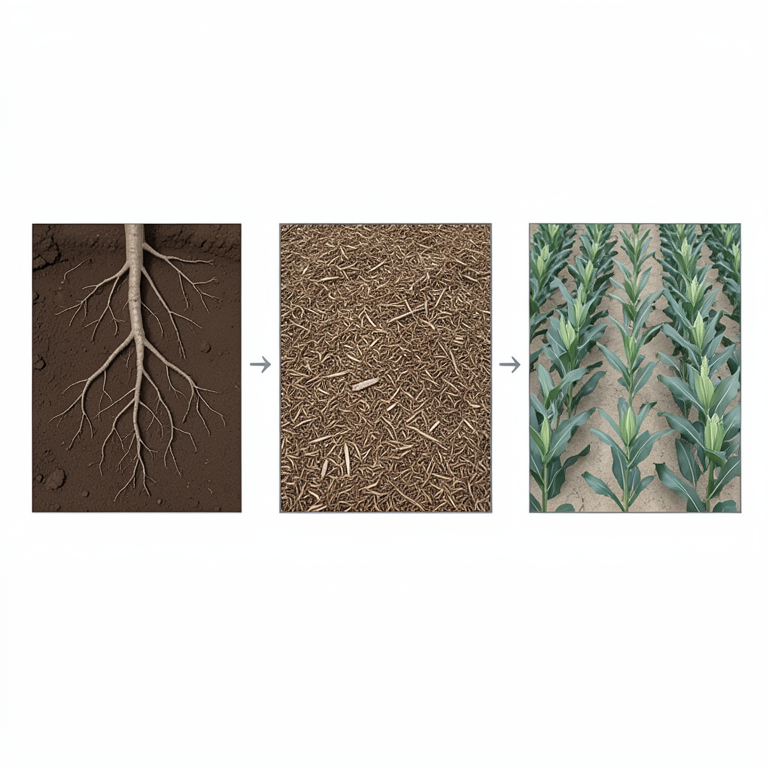
The Three Pillars of Conservation Agriculture
AI-generated conceptual illustration (maize and legume crops in a field). It explains the idea and does not show study data.
View source evidence ↗Introduction
According to Roser (2013) [71] , the world human population is expected to increase from 7.7 billion in 2019 to 9.7 billion in 2050. This fast increase in population needs additional food. In order to meet the world`s food demand, agricultural systems around the world must change to produce more food in a more sustainable manner (Capone et al., 2014) [15] . Conservation agriculture (CA) has been advocated as an agricultural system capable of attaining the sustainable intensification required to meet world food demand, besides its challenges (Kassam et al., 2009; Lal, 2015) [47,53] . According to Hobbs et al. (2008) [40] , conservation agriculture is a minimal soil disturbance (notill, NT) and permanent soil cover (mulch) combined with rotations, is a recent agricultural management system that is gaining popularity in many parts of the world. Conservation agriculture practice is a crop production system that remains a permanent soil cover through preservation crop residues on the surface of soil with reduced and zero tillage to increase biological processes above and below the soil (Baker et al., 2007) [4] . It is an agricultural practice that involves the management of soil, water, and agricultural resources in order to produce economically and ecologically sustainable agricultural production (Lal, 2006) [52] . CA enhances the soil organic matter content, decrease soil loss, increase soil nutrient availability and quality for plant and save costs than tillage based agriculture (Hobbs, 2007) [39] . Conservation agriculture focuses on increasing yields and revenues while balancing agricultural, economic, and environmental goals (Dumanski et al., 2006) [26] . CA is not "business as usual," focusing on maximizing yields while exploiting the soil and agro-ecosystem resources. It argues that the combined social and economic benefits of integrated production and environmental conservation, such as lower material and labor costs, outweigh the benefits of production alone.
Sustainable crop production as part of conservation agriculture refers to an agricultural production system that does not impact the environment, biodiversity, or agricultural crop quality. It deals with keeping the soil alive with organic matter, integrated pest management and reduction in usage of pesticides, protecting biodiversity, ensuring food safety and food quality, improving the quality of nutrient, and fertilizing the soil with organic fertilizers (Imadi et al., 2016) [44] . Based on the benefits of CA, this review paper was compiled having objectives of reviewing the roles of conservation agriculture in sustainable crop production.
Review of findings 2.1 Benefits and Adoption of Conservation Agriculture 2.1.1 Benefits of CA
Agriculture is one of the human activities that benefits most directly from ecological services (Chabert & Sarthou, 2020) [17] . As a result of the losses in soil productivity due to soil degradation, conservation agriculture arose as a viable alternative to traditional agriculture (Nyirenda & Balaka, 2021; Pooniya et al., 2021) [67,69] . It was reported by several scholars that Conservation agriculture is an agricultural technique that preserves arable land and also restoring degraded areas (Brown et al., 2021; Lahmar et al., 2012; Sharma & Dhaliwal, 2021) [14,51,75] . Conservation agriculture helps to preserve the potential of soil biological features while also ensuring long-term production (Akter et al., 2021; Sharma & Dhaliwal, 2021) [2,75] . It is a production system aimed at reducing the effort and cost of farming in a way that protects and improves agricultural soils (Dogliotti et al., 2014) [24] .
Adoption of CA
Conservation Agriculture has been widely adopted around the world in the USA, Brazil, Argentina, Australia and Canada. It holds tremendous potential for all farms from small to large and all agro-ecological systems (Derpsch, 2008) [23] . Farmers in South America created and rapidly accepted conservation agriculture since it considerably reduced soil erosion, lowered labor expenses, and typically resulted in higher income and a better standard of living for the farmers (Bakker et al., 2002; Lahmar, 2010) [5,50] . Conservation agriculture has been widely promoted as a strategy to sustainably intensify agriculture in Sub-Saharan Africa (SSA), while adoption is still limited (Bouwman et al., 2021; Komarek et al., 2021; Mvula & Dixon, 2021) [13,49,66] . Conservation agriculture implementation in Africa, particularly in semi-arid locations, encountered obstacles that are distinct from where conservation agriculture is originated (Fowler & Rockstrom, 2001) [31] . The ability of farmers to keep crop residues and guarantee effective weed management in semi-arid regions (300-500 mm annual rainfall) is critical to the success of conservation agriculture (Giller et al., 2009) [33] . Most crop leftovers are grazed in situ by livestock or moved to the kraal to improve quantity and quality of manure, and farming systems are generally mixed crop-livestock systems with low crop production (Erenstein, 2002; Zingore et al., 2007) [27, 90] . Droughts are prevalent, and rainfall is mono-modal and unpredictable, with considerable variability both within and between seasons (Challinor et al., 2007) [18] . The adoption of CA is perhaps most urgently required by smallholder farmers, especially those in dry areas facing declining yields and acute labor shortages (Harvey et al., 2014) [37] . Conservation agriculture was practiced on about 180 mega hectares of cropland globally in the 2015/16 cropping season with varying amounts across the continents covering about 12.5% of the total global cropland indicating 69% more than in the 2008/2009 season (Kassam et al., 2009) [47] . In Ethiopia, adoption has been claimed to be large in places where conservation agriculture has been effectively shown for example, in some sections of Amhara, Oromia, and Tigray (Jirata et al., 2016) [45] .
Basic principles of Conservation Agriculture
The guiding principles involved in CA include minimizing disturbance of the soil (no-tillage), maintaining soil cover and rotation or intercropping.
Minimum soil disturbance
Minimum soil disturbance is one of the pillars on which the Conservation Agriculture rests. It is to avoid mechanical soil disturbance as possible for the development of agricultural activity (Kassam et al., 2009) [47] . The use of machinery which has been developed to allow sowing on plant residues, it is necessary to select the type of machine best suited to the conditions of each field. The timely planting of crops can be delayed due to the time required for tillage with subsequent reductions in yield potential (Hobbs & Gupta, 2003) [40] . In the use of tractors for tillage, tractors consume large quantities of fossil fuels that add to costs and also emitting greenhouse gases (mostly CO2) and contributing to global warming when used for plowing (Grace et al., 2003) [34] . Tillage systems which are animal-based are also expensive since farmers have to maintain and feed a pair of animals for a year for this purpose. Animals also emit methane, a greenhouse gas 21 times more potent for global warming than carbon dioxide while zero-tillage reduces these costs and emissions (Grace et al., 2003) [34] . Minimum tillage in combination with other regenerative practices enhances soil aggregation, water infiltration and retention, and carbon sequestration (Hobbs et al., 2008) [41] . Combined with permanent soil cover, minimum tillage has been shown to result in a build-up of organic carbon in the surface layers (Lal, 2006) [52] . It has also been reported that no tillage changes the physical and chemical properties of soil (Rhoton et al., 1993) [70] , improves soil porosity (Holthusen et al., 2018) [42] , reduces soil evaporation (Baumhardt et al., 2017) [8] .
Maintaining the soil covered
Covering the soil plays a significant role in implementation of conservation agriculture. Permanent soil cover even after regular crops are harvested from the field is one of the foundational principles of conservation agriculture. Soil cover can be divided into two categories namely crops and cover crops are examples of living plant material while crop waste and tree and shrub pruning are examples of mulch or dead plant material (Hartwig & Ammon, 2002) [35] . To keep the soil covered, a combination of mulch and living plants can typically be used. Cover crops are plants planted when regular crops are off the field and are planted to protect soil rather than for the purpose of being harvested (Langdale et al., 1991) [54] . Many authors reported that cover crops can increase the soil porosity, aggregate stability, water holding capacity, the size of the microbial population and its activity and nutrient cycling (Drinkwater & Snapp, 2007; Haruna & Nkongolo, 2015; Lotter et al., 2003) [25,36,58] . To keep the soil system healthy, there shouldn't be any soil left bare since leaving the land uncovered results in evaporation and runoff (Bayer et al., 2000) [9] . Furthermore, when raindrops fall on bare soil, they destroy soil aggregates, clog soil pores, and reduce water infiltration rapidly, resulting in run-off and soil erosion (Bayer et al., 2000) [9] . In contrary to bare soils, in continuously covered soils water is constantly absorbed by the crops and cover crops, or mulch keep the soil moist and prevents it from drying out (Hoorman et al., 2009) [43] .
Crop rotation
Crop rotation is also among the principles of Conservation Agriculture which plays significant role in the success of CA. Among other agronomic practices, crop rotations are valuable practices that can be recommended in many regions for ensuring sustainability and long term profitability (Selim, 2019) [74] . Recently researches showed that crop rotation is a foundational component of sustainability and long-term profitability without requirements to additional financial investments (Lockie et al., 1995; Sartori et al., 2005; Selim, 2019) [57,72,74] . It has been reported that rotations have considerable positive influence on yield potential (Fischer et al., 2002; Peterson & Varvel, 1989) [30, 68] . When compared to the monoculture systems, crop rotations offer the greatest opportunity for increasing productivity of average yield and maximizing farmer's income (Mallarino & Rueber, 2006; Yousaf et al., 2016) [60,84] . It has been reported that cultivation of legume genotypes significantly increased grain yield of subsequent maize compared to that of maize planted in previous fallow and maize plots (Yusuf et al., 2009) [87] . A significant increase in maize grain yield was reported for plots rotated with the different legume genotypes relative to the yield of continuous maize crop. The crop rotation effects `influencing the yield of legume-cereal systems are an intricate interaction of chemical, biological, and physical components of the soil system (Yusuf et al., 2009) [87] .
Intercropping
It is another principle of CA. Intercropping is a valuable agricultural strategy that allows two or more crops to grow in the same area at the same time, increasing land use efficiency (Yu et al., 2015). It is a way to create ecological balance, increase diversity in an agricultural ecosystem, increasing the quantity and quality of crops and reduce yield damage to pests, diseases and weeds (Mousavi & Eskandari, 2011) [63] . With modernization of agricultural equipment today, crops are mainly monoculture which means that soil biota and root exudate is fed with only one type of nutrients given by the sole crop. The advantages of intercropping in comparison with sole cropping is due to the difference in competition for the use of available resources (Mahapatra, 2011) [63] . Crops of different species under intercropping are not in a competition for the same niche due to morphological and physiological differences and competition between species is less than competition within species (Ziemer, 1979) [89] . Moreover, with intercropping, there is a contribution to field diversity, feeding the soil biology with many types of nutrients that accelerate growth of plants (Meena & Lal, 2018) [62] . Availability of different types of nutrients in soil due to intercrops reduce the need for chemical fertilizer application and the soil built its resilience and becomes more stable resulting in an economic benefit. With several crops grown at the same time, risk of one crop failure is not disastrous because there are other crop types left. Risk of agronomy failure in multi cropping systems is lower than pure cropping systems (Stanojevic, 2021) [77] . The results of the intercropping under reduced tillage and mulching showed that no-tillage with straw mulching significantly improved water use efficiency (WUE) as compared to straw incorporation only, and the increasing WUE effect of intercropping was greater than that of monoculture (Yin et al., 2018) [83] .
Sustainable Crop production
Sustainable crop production not only meets human food and fiber needs, but also improves the environment and natural resource quality (Cassman et al., 1998; Spiertz, 2010) [16,76] . Sustainable crop production from an ecological perspective, must consider the agricultural ecosystem and other ecosystems directly or indirectly affected by agricultural production practices (Dale & Polasky, 2007) [22] . It is also important to understand the multiple connections and inter dependencies that exist within and among ecosystems and ecological components. Furthermore, statements about sustainability are only possible in relation to a specific location, differentiated over space and time, and for each of the ecosystems involved (Warren et al., 2008) [81] . Agricultural crop production is ecologically sustainable if productivity as well as the ability to function including the regenerative power and buffering capacity of the open system in which plants grown are maintained to the utmost extent possible (Lewandowski et al., 1999) [55] . The world population is expected to increase from 7.7 billion in 2019 to 9.7 billion in 2050 (Roser, 2013) [71] . As a result, in order to meet the world`s food demand, agricultural systems around the world must change to produce more food in a more sustainable manner (Capone et al., 2014) [15] . When compared to conventional tillage (CT) systems, Conservation Agriculture (CA) has the capacity to improve soil physical, chemical, and biological soil quality characteristics (Basavanneppa et al., 2017) [6] . Improved bio-physico-chemical soil quality, in turn, has an impact on ecosystem services and crop production system sustainability by reducing climate variability and increasing the sink for carbon sequestration within the soil (Yadav et al., 2017) [82] . Conservation agriculture is a good way to encourage an agricultural production system with more microbial life in the soil (Verhulst et al., 2010) [80] . Conservation agriculture systems require a total paradigm shift from conventional agriculture with regard to management of crops, soil, water, nutrients, weeds, and farm machinery (Bernard & Lux, 2017) [11] . Conservation agriculture was reported as sustainable and eco-friendly crop production technique in the fragile eco systems of semi-arid tropics and has been explained as an agricultural system capable of attaining the sustainable intensification required to meet world food demand, despite of its limitations (Kassam et al., 2009) [47] . In the conventional agriculture, management practices extensively use various tillage operations for plowing of the land for preparation of seedbed and to keep weed down, i.e., moldboard or animal drawn plow or harrowing, drilling, cultivator, etc. (Bakker et al., 2002) [5] . These tillage operations are repeated many times; due to this conditions break down the soil structure and destroy pore and soil becomes prone to erosion and leads to heavy cost of time, fuel, and labor (Dabney et al., 2004) [21] . Conventional tillage exposes soil to air and sunlight which causes oxidation of organic matter and leads to low carbon content in soil which affects soil structure (Arshad et al., 1990) [3] . In conventional agriculture practices residue burning and external inputs are common agricultural practices that result in soil degradation owing to loss of organic matter, erosion, and compaction (Adhikary et al., 2020) [1] . Tillage tends to accelerate the oxidative decomposition of organic matter, resulting in higher CO2 emissions above and beyond those produced by regular soil respiration processes (Kassam et al., 2009) [47] .
Crops yield under conservation agriculture
Conservation agriculture can produce larger yields and potentially more steady earnings (Kassam et al., 2010) [46] . Conservation agriculture is a productive system with improved interactions between the four factors of productivity physical better characteristics of porosity for root growth, water movement, and root respiration gases; chemically raised cat-ion exchange capacity of soils gives better capture, with greater control/release of nutrients; biologically more organisms, organic matter, and its transformation products; hydrologicalmore water (Kassam et al., 2009) [47] . Conservation agriculture has been shown to boost crop yields in many studies. In southern Africa, for example, it was reported that conservation agriculture yielded higher corn yields than conventional tillage (Thierfelder et al., 2015) [78] . Similarly, in another report it was indicated that CA practices increased crop yield by 4.6% on average from different CA practices (Zheng et al., 2014) [88] . Marc Corbeels et al. (2020) [20] reported that higher crop yields under CA practices that comprised at least the principle of no-or reduced tillage showed 3.7% higher yield on average than those under conventional tillage and yields were significantly higher for maize 4.0% while differences were observed for the other crops (cotton, cowpea, rice, sorghum and soybean). The maize yields under no or reduced tillage alone without mulching and crop rotation/ intercropping (RT-M-IR) were not significantly different from yields under conventional tillage. However, with mulching (RT+M-IR), CA had a significantly positive effect of 3.9% on maize yields. Under the implementation of all the three CA principles (RT+M+IR), the CA effect was more than double 8.4% (Corbeels et al., 2020) [20] . From the results it has been shown that CA has positive effect of on yields is caused by crop residue mulching and the use of crop rotations or intercropping. Mulching provides ground cover and adds organic matter to the soil with beneficial effects on several soil processes, including rainfall infiltration (Findeling et al., 2003) [29] , soil aggregation (Beare et al., 1994) [10] and soil biological activity (Schoenau & Campbell, 1996) [73] . Improved soil functioning can boost crop yields, particularly in low-input cropping systems with limited external nutrient inputs such as smallholder farming (Uphoff, 2003) [79] . In a maize-bean cropping system, it was reported that conservation agriculture increased bean straw yield and intercrop bean grain yields by 13 and 7%, respectively, as compared to conventional practices (Liben, 2018) [56] . According to Khorami et al. (2018) [48] , effective tillers per m 2 and yield of wheat genotypes were affected by tillage practices in the research conducted on wheat for two consecutive years in Iran. It has been shown that the reduced tillage of the conservation agriculture produced maximum yield as compared to conventional tillage and no tillage treatments (Khorami et al., 2018) [48] . Similarly, when compared to conventional agriculture, which yielded 950 kg/ha, the conservation agriculture program boosted wheat grain output by 79 percent (1700 kg/ha) (Ghosh et al., 2015) [32] . In another study, the impact of several CA-based rice-wheat and maize-wheat cropping systems on soil quality improvement was investigated and found that the CA-based maize-wheat system outperformed the rice-wheat system (Choudhary et al., 2018) [19] . When comparing conservation agriculture to conventional agriculture, a 27 percent improvement in wheat crop output was reported (Bashour et al., 2016) [7] . According to the same author, conservation agriculture experimental plots increased lentil yield by 27.7% compared to conventional system. It was also shown that on average, the no tillage treatment increased grain yield by 3, 41, and 45% compared with stubble mulch, deep tillage, and conventional treatments respectively (Fatumah et al., 2021) [28] . Water conservation and other benefits such as decreased soil erosion and increased organic matter content result in improved soil physical qualities when less tillage is used with more residue preservation (Blanco-Canqui & Lal, 2008) [12] . Reports indicated that Conservation Agriculture resulted in a higher and more profitable sorghum production (Yousif & Babiker, 2015) [85] , increased yield of Sweet sorghum (Sorghum bicolor (L.) Moench) which is a popular biofuel feedstock, that requires minimal inputs and thrives in semiarid climates with poor fertility soils (Malobane et al., 2018) [61] . No-tillage systems produced higher faba bean grain yields and yield components than conventional tillage systems (Muñoz-Romero et al., 2011) [64] . Conservation agriculture has become a popular form of climate-smart agriculture in Africa, with the goal of improving smallholder farmers' climate change resilience (Hermans et [38,49,65] .
Summary
The focus of Conservation Agriculture is achieving high and sustained production, attaining acceptable earnings and environmental conservation. CA tries to reverse the damage caused by traditional agricultural methods. It is also known as resource efficient agriculture, and it strives to conserve, improve, and make efficient use of natural resources by integrating the management of available soil, water, and biological resources as well as external inputs. The integration of the practices of CA such as reduced or no tillage, mulching, rotation or intercropping increases crop yield than implementing the practices separately. Crop production in the coming periods is expected to produce more food with less land by making better use of resources and reducing environmental impact. Crop management techniques that increase physical, biological, and chemical soil health indicators while lowering farmer costs including CA are important. A prerequisite for the success of CA is the development of adequate and appropriate equipment to enable farmers to properly use this system. Overcoming old tillage beliefs by encouraging participatory farmer experimentation with this technology will increase its acceptance. The effectiveness of CA implementation could be achieved in large part by addressing important issues encountered in the field which will necessitate CA system adoptions to the sites and farmers circumstances.
References
74 in the original paper- Basavanneppa M, Gaddi AK, Chittapur B, Biradar D, Basavarajappa R. Yield maximization through resource conservation technologies under maize-chickpea cropping system in vertisols of Tunga Bhadra Command Project Area of Karnataka. Research on Crops. 2017;18(2):225-231.
- Bashour I, Al-Ouda A, Kassam A, Bachour R, Jouni K, Hansmann B, Estephan C. An overview of Conservation Agriculture in the dry Mediterranean environments with a special focus on Syria and Lebanon. AIMS Agriculture and Food. 2016;1(1):67-84.
- Baumhardt R, Schwartz R, Jones O, Scanlon B, Reedy R, Marek G. Long-term conventional and no-tillage effects on field hydrology and yields of a dryland crop rotation. Soil Science Society of America Journal. 2017;81(1):200-209.
- Bayer C, Mielniczuk J, Amado TJ, Martin-Neto L, Fernandes SV. Organic matter storage in a sandy clay loam Acrisol affected by tillage and cropping systems in southern Brazil. Soil and Tillage Research. 2000;54(1-2):101-109.
- Beare MH, Hendrix P, Cabrera M, Coleman D. Aggregate-protected and unprotected organic matter pools in conventional-and no-tillage soils. Soil Science Society of America Journal. 1994;58(3):787-795.
- Bernard B, Lux A. How to feed the world sustainably: An overview of the discourse on agroecology and sustainable intensification. Regional Environmental Change. 2017;17(5):1279-1290.
- Bouwman T, Andersson J, Giller K. Adapting yet not adopting? Conservation agriculture in Central Malawi. Agriculture, ecosystems & environment. 2021;307:107224.
- Capone R, Bilali HE, Debs P, Cardone G, Driouech N. Food system sustainability and food security: Connecting the dots. Journal of Food Security. 2014;2(1):13-22.
- Cassman KG, Peng S, Olk D, Ladha J, Reichardt W, Dobermann A, et al. Opportunities for increased nitrogenuse efficiency from improved resource management in irrigated rice systems. Field Crops Research. 1998;56(12):7-39.
- Chabert A, Sarthou JP. Conservation agriculture as a promising trade-off between conventional and organic agriculture in bundling ecosystem services. Agriculture, Ecosystems & Environment. 2020;292:106815.
- Challinor A, Wheeler T, Garforth C, Craufurd P, Kassam A. Assessing the vulnerability of food crop systems in Africa to climate change. Climatic change. 2007;83(3):381-399.
- Choudhary M, Jat HS, Datta A, Yadav AK, Sapkota TB, Mondal S, et al. Sustainable intensification influences soil quality, biota, and productivity in cereal-based agro ecosystems. Applied Soil Ecology. 2018;126:189-198.
- Corbeels M, Naudin K, Whitbread AM, Kühne R, Letourmy P. Limits of conservation agriculture to overcome low crop yields in sub-Saharan Africa. Nature Food. 2020;1(7):447454.
- Dabney S, Wilson G, McGregor K, Foster G. History, residue, and tillage effects on erosion of Lossiah soil. Transactions of the ASAE. 2004;47(3):767.
- Dale VH, Polasky S. Measures of the effects of agricultural practices on ecosystem services. Ecological economics. 2007;64(2):286-296.
- Derpsch R. No-tillage and conservation agriculture: A progress report. No-till farming systems. Special publication. 2008;3:7-39.
- Dogliotti S, García M, Peluffo S, Dieste J, Pedemonte A, Bacigalupe G, et al. Co-innovation of family farm systems: A systems approach to sustainable agriculture. Agricultural Systems. 2014;126:76-86.
- Drinkwater LE, Snapp S. Nutrients in agroecosystems: Rethinking the management paradigm. Advances in agronomy. 2007;92:163-186.
- Dumanski J, Peiretti R, Benites J, McGarry D, Pieri C. The paradigm of conservation agriculture. Proceedings of world association of soil and water conservation. 2006;1(2006):58-64.
- Erenstein O. Crop residue mulching in tropical and semitropical countries: An evaluation of residue availability and other technological implications. Soil and Tillage Research. 2002;67(2):115-133.
- Fatumah N, Tilahun SA, Mohammed S. Water use efficiency, grain yield, and economic benefits of common beans (Phaseolus vulgaris L.) under four soil tillage systems in Mukono District, Uganda. Heliyon. 2021;7(2):e06308.
- Findeling A, Ruy S, Scopel E. Modeling the effects of a partial residue mulch on runoff using a physically based approach. Journal of Hydrology. 2003;275(1-2):49-66.
- Fischer R, Santiveri F, Vidal I. Crop rotation, tillage and crop residue management for wheat and maize in the subhumid tropical highlands: I. Wheat and legume performance. Field Crops Research. 2002;79(2-3):107-122.
- Fowler R, Rockstrom J Conservation tillage for sustainable agriculture: An agrarian revolution gathers momentum in Africa. Soil and Tillage Research. 2001;61(1-2):93-108.
- Ghosh B, Dogra P, Sharma N, Bhattacharyya R, Mishra P. Conservation agriculture impact for soil conservation in maize-wheat cropping system in the Indian sub-Himalayas. International Soil and Water Conservation Research. 2015;3(2):112-118.
- Giller KE, Witter E, Corbeels M, Tittonell P. Conservation agriculture and smallholder farming in Africa: The heretics' view. Field Crops Research. 2009;114(1):23-34.
- Grace PR, Harrington L, Jain MC, Philip Robertson G. Long-Term Sustainability of the Tropical and Subtropical Rice-Wheat System: An Environmental Perspective. Improving the Productivity and Sustainability of Rice-Wheat Systems: Issues and Impacts. 2003;65:27-43.
- Hartwig NL, Ammon HU. Cover crops and living mulches. Weed science. 2002;50(6):688-699.
- Haruna SI, Nkongolo NV. Cover crop management effects on soil physical and biological properties. Procedia Environmental Sciences. 2015;29:13-14.
- Harvey CA, Rakotobe ZL, Rao NS, Dave R, Razafimahatratra H, Rabarijohn RH, et al. Extreme vulnerability of smallholder farmers to agricultural risks and climate change in Madagascar. Philosophical Transactions of the Royal Society B: Biological Sciences. 2014;369(1639):20130089.
- Hermans TD, Whitfield S, Dougill AJ, Thierfelder C. Bridging the disciplinary gap in conservation agriculture research, in Malawi. A review. Agronomy for sustainable development. 2020;40(1):1-15.
- Hobbs PR. Conservation agriculture: What is it and why is it important for future sustainable food production? Journal of agricultural science-Cambridge. 2007;145(2):127.
- Hobbs PR, Gupta RK. Resource-Conserving Technologies for Wheat in the Rice-Wheat System. Improving the Productivity and Sustainability of Rice-Wheat Systems: Issues and Impacts. 2003;65:149-171.
- Hobbs PR, Sayre K, Gupta R. The role of conservation agriculture in sustainable agriculture. Philosophical Transactions of the Royal Society B: Biological Sciences. 2008;363(1491):543-555.
- Holthusen D, Brandt AA, Reichert JM, Horn R. Soil porosity, permeability and static and dynamic strength parameters under native forest/grassland compared to notillage cropping. Soil and Tillage Research. 2018;177:113124.
- Hoorman JJ, Islam R, Sundermeier A, Reeder R. Using cover crops to convert to no-till. Crop. Soils. 2009;42:9-13.
- Kassam A, Friedrich T, Shaxson F, Pretty J The spread of conservation agriculture: justification, sustainability and uptake. International Journal of Agricultural Sustainability. 2009;7(4):292-320.
- Khorami SS, Kazemeini SA, Afzalinia S, Gathala MK. Changes in soil properties and productivity under different tillage practices and wheat genotypes: A short-term study in Iran. Sustainability. 2018;10(9):3273.
- Komarek AM, Thierfelder C, Steward PR. Conservation agriculture improves adaptive capacity of cropping systems to climate stress in Malawi. Agricultural Systems. 2021;190:103117.
- Lahmar R. Adoption of conservation agriculture in Europe: Lessons of the KASSA project. Land use policy. 2010;27(1):4-10.
- Lahmar R, Bationo BA, Lamso ND, Guéro Y, Tittonell P. Tailoring conservation agriculture technologies to West Africa semi-arid zones: Building on traditional local practices for soil restoration. Field Crops Research. 2012;132:158-167.
- Lal R. Enhancing crop yields in the developing countries through restoration of the soil organic carbon pool in agricultural lands. Land degradation & development. 2006;17(2):197-209.
- Lal R. Sequestering carbon and increasing productivity by conservation agriculture. Journal of soil and water conservation. 2015;70(3):55A-62A.
- Lewandowski I, Härdtlein M, Kaltschmitt M. Sustainable crop production: Definition and methodological approach for assessing and implementing sustainability. Crop science. 1999;39(1):184-193.
- Lockie S, Mead A, Vanclay F, Butler B. Factors encouraging the adoption of more sustainable crop rotations in South-East Australia: Profit, sustainability, risk and stability. Journal of Sustainable Agriculture. 1995;6(1):6179.
- Lotter DW, Seidel R, Liebhardt W. The performance of organic and conventional cropping systems in an extreme climate year. American Journal of Alternative Agriculture. 2003;18(3):146-154.
- Mahapatra S. Study of grass-legume intercropping system in terms of competition indices and monetary advantage index under acid lateritic soil of India. American Journal of Experimental Agriculture. 2011;1(1):1-6.
- Malobane ME, Nciizah AD, Wakindiki II, Mudau FN. Sustainable production of sweet sorghum for biofuel production through conservation agriculture in South Africa. Food and Energy Security. 2018;7(3):e00129.
- Mousavi SR, Eskandari H. A general overview on intercropping and its advantages in sustainable agriculture. Journal of Applied Environmental and Biological Sciences. 2011;1(11):482-486.
- Muñoz-Romero V, López-Bellido L, López-Bellido RJ Faba bean root growth in a Vertisol: Tillage effects. Field Crops Research. 2011;120(3):338-344.
- Mupangwa W, Nyagumbo I, Liben F, Chipindu L, Craufurd P, Mkuhlani S. Maize yields from rotation and intercropping systems with different legumes under conservation agriculture in contrasting agro-ecologies. Agriculture, ecosystems & environment. 2021;306:107170.
- Mvula A, Dixon A. Farmer experiences of Tiyeni's 'deepbed farming'conservation agriculture system in Malawi. Agroecology and Sustainable Food Systems. 2021;45(2):175-196.
- Nyirenda H, Balaka V. Conservation agriculture-related practices contribute to maize (Zea mays L.) yield and soil improvement in Central Malawi. Heliyon. 2021;7(3):e06636.
- Peterson TA, Varvel G. Crop yield as affected by rotation and nitrogen rate. III. Corn. Agronomy Journal. 1989;81(5):735-738.
- Pooniya V, Biswakarma N, Parihar C, Swarnalakshmi K, Lama A, Zhiipao R, et al. Six years of conservation agriculture and nutrient management in maize-mustard rotation: Impact on soil properties, system productivity and profitability. Field Crops Research. 2021;260:108002.
- Rhoton F, Bruce R, Buehring N, Elkins G, Langdale C, Tyler D. Chemical and physical characteristics of four soil types under conventional and no-tillage systems. Soil and Tillage Research. 1993;28(1):51-61.
- Sartori L, Basso B, Bertocco M, Oliviero G. Energy use and economic evaluation of a three year crop rotation for conservation and organic farming in NE Italy. Biosystems engineering. 2005;91(2):245-256.
- Schoenau JJ, Campbell CA. Impact of crop residues on nutrient availability in conservation tillage systems. Canadian journal of plant science. 1996;76(4):621-626.
- Selim M. A review of advantages, disadvantages and challenges of crop rotations. Egyptian Journal of Agronomy. 2019;41(1):1-10.
- Sharma S, Dhaliwal S. Conservation agriculture based practices enhanced micronutrients transformation in earthworm cast soil under rice-wheat cropping system. Ecological Engineering. 2021;163:106195.
- Spiertz H. Food production, crops and sustainability: Restoring confidence in science and technology. Current Opinion in Environmental Sustainability. 2010;2(5-6):439443.
- Stanojevic AB. Conservation agriculture and its principles. Annals of Environmental Science and Toxicology. 2021;5(1):018-022.
- Thierfelder C, Matemba-Mutasa R, Rusinamhodzi L. Yield response of maize (Zea mays L.) to conservation agriculture cropping system in Southern Africa. Soil and Tillage Research. 2015;146:230-242.
- Uphoff N. Higher yields with fewer external inputs? The system of rice intensification and potential contributions to agricultural sustainability. International Journal of Agricultural Sustainability. 2003;1(1):38-50.
- Warren DL, Glor RE, Turelli M. Environmental niche equivalency versus conservatism: Quantitative approaches to niche evolution. Evolution: International Journal of Organic Evolution. 2008;62(11):2868-2883.
- Yadav R, Yadav M, Kumar R, Parihar C, Yadav N, Bajiya R, Ram H, et al. Role of biochar in mitigation of climate change through carbon sequestration. Int J Curr Microbiol App Sci. 2017;6(4):859-866.
- Yin W, Guo Y, Hu F, Fan Z, Feng F, Zhao C, et al. Wheatmaize intercropping with reduced tillage and straw retention: A step towards enhancing economic and environmental benefits in arid areas. Frontiers in plant science, 2018, 1328.
- Yousaf M, Li X, Zhang Z, Ren T, Cong R, Ata-Ul-Karim ST, et al. Nitrogen fertilizer management for enhancing crop productivity and nitrogen use efficiency in a riceoilseed rape rotation system in China. Frontiers in plant science. 2016;7:1496.
- Yousif LA, Babiker EH. Effect of conservation agriculture on sorghum yield in rainfed areas Southern Gedarif State, Sudan. J Agric. Sci. Eng. 2015;1:89-94.
- Yu Y, Stomph TJ, Makowski D, van der Werf W. Temporal niche differentiation increases the land equivalent ratio of annual intercrops: A meta-analysis. Field Crops Research. 2015;184:133-144.
- Yusuf A, Abaidoo R, Iwuafor E, Olufajo O, Sanginga N. Rotation effects of grain legumes and fallow on maize yield, microbial biomass and chemical properties of an Alfisol in the Nigerian savanna. Agriculture, ecosystems & environment. 2009;129(1-3):325-331.
- Zheng C, Jiang Y, Chen C, Sun Y, Feng J, Deng A, et al. The impacts of conservation agriculture on crop yield in China depend on specific practices, crops and cropping regions. The Crop Journal. 2014;2(5):289-296.
- Ziemer RR. Evaporation and transpiration. Reviews of Geophysics. 1979;17(6):1175-1186.
- Zingore S, Murwira HK, Delve RJ, Giller KE. Influence of nutrient management strategies on variability of soil fertility, crop yields and nutrient balances on smallholder farms in Zimbabwe. Agriculture, ecosystems & environment. 2007;119(1-2):112-126.