
Research article · 2022 · Full text
International Journal of Agriculture and NutritionAssessment of recipe from Eleusine coracana (Finger millet) enriched with Adansonia digitata (Baobab) for sustainable health of pregnant women
Volume 4(2) · Pages 124–130 · DOI: 10.33545/26646064.2022.v4.i2b.117 ↗
Research areasAfrican Botany and Ecology StudiesAgriculture and Rural Development Research
Abstract
Author-writtenThis study assessed the nutritional values of recipe developed from Eleusine coracana (finger millet) and enriched with Adansonia Digitata (baobab) towards sustainable health amongst pregnant women. The study determined differences in proximate, mineral, and vitamin characteristics of finger millet cereal enriched with baobab flour and ordinary finger millet cereal. The study adopted the research and development (R and D) cycle. All chemical analyses were carried out using AOAC (1995) method. Some of the findings include minor increase in moisture of the enriched finger millet cereal (6.01%) compared to the ordinary finger millet cereal (5.81%); the crude protein content of the enriched flour evaluated was 13.91% compared to the ordinary flour which was 8.42%, low Sodium (10.10%); potassium (77.21%); Iron (8.12%); Zinc (2.11%), and Copper (1.67%) were high. The study recommended that awareness creation by nutritionists during counseling sessions on the usefulness of the potentials inherent in baobab pulp flour to nutrient enrichment of foods for pregnant women, and that the baobab-enriched finger millet cereal flour can be used for several purposes such as swallows, gruels among others.
Summary
Source-checkedPlain-language reading of the full paper, prepared with AI and checked against the text. Each point links to the authors' own words.
Why it matters
- Proper prenatal care, including specialized nutrition, is essential for the health of both the mother and the unborn child. View evidence ↗
- Many pregnant women lack access to healthy diets, which puts them at a significant risk of malnutrition. View evidence ↗
- Iron deficiency is the most frequent cause of anemia during pregnancy, highlighting the need for iron-rich dietary intake. View evidence ↗
The question
- The study aimed to assess the nutritional value of a finger millet cereal recipe enriched with baobab to support the sustainable health of pregnant women. View evidence ↗
What they did
- The researchers used a research and development (R&D) cycle to design and evaluate the fortified diet. View evidence ↗
- The recipe ingredients, including baobab fruit powder, finger millet powder, groundnut, honey, and dry ginger, were sourced from Mile 3 Market in Port Harcourt. View evidence ↗
- Chemical analyses of the cereal samples were performed following the AOAC (1995) method. View evidence ↗
What they found
- The enriched finger millet cereal (EFMC) showed a minor increase in moisture content (6.01%) compared to the ordinary cereal (5.81%). View evidence ↗
What it means
- The authors conclude that baobab is an effective agent for enriching foods to improve nutrition for pregnant women during gestation. View evidence ↗
- The authors recommend that the baobab-enriched finger millet cereal flour be used for various food preparations, such as gruels and swallows. View evidence ↗
Visual summary
2 visualsIllustrations explain the paper; charts are replotted from the paper's own table values.
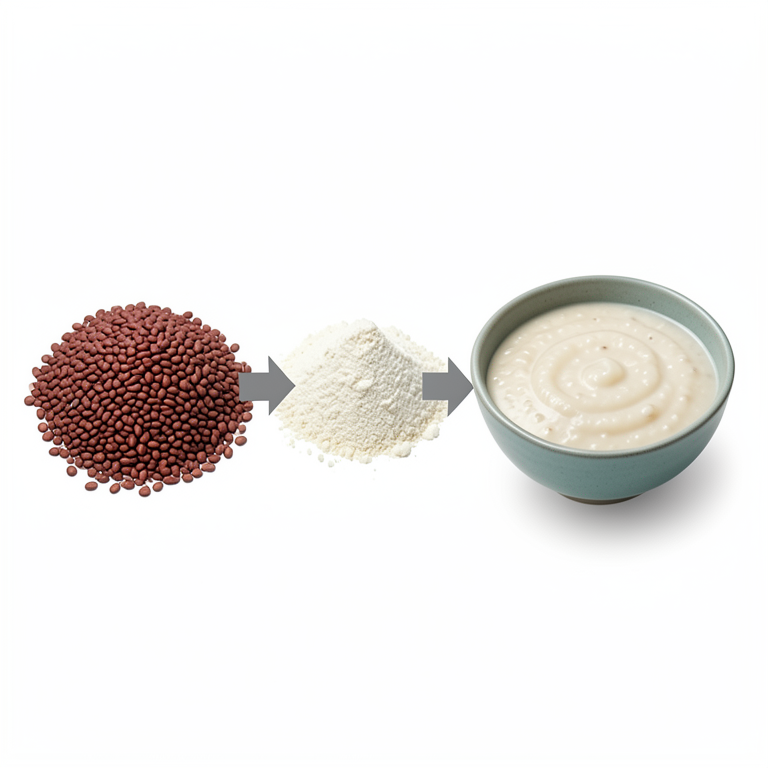
Nutritional Enrichment Concept
AI-generated conceptual illustration (Finger millet grains and baobab fruit powder). It explains the idea and does not show study data.
View source evidence ↗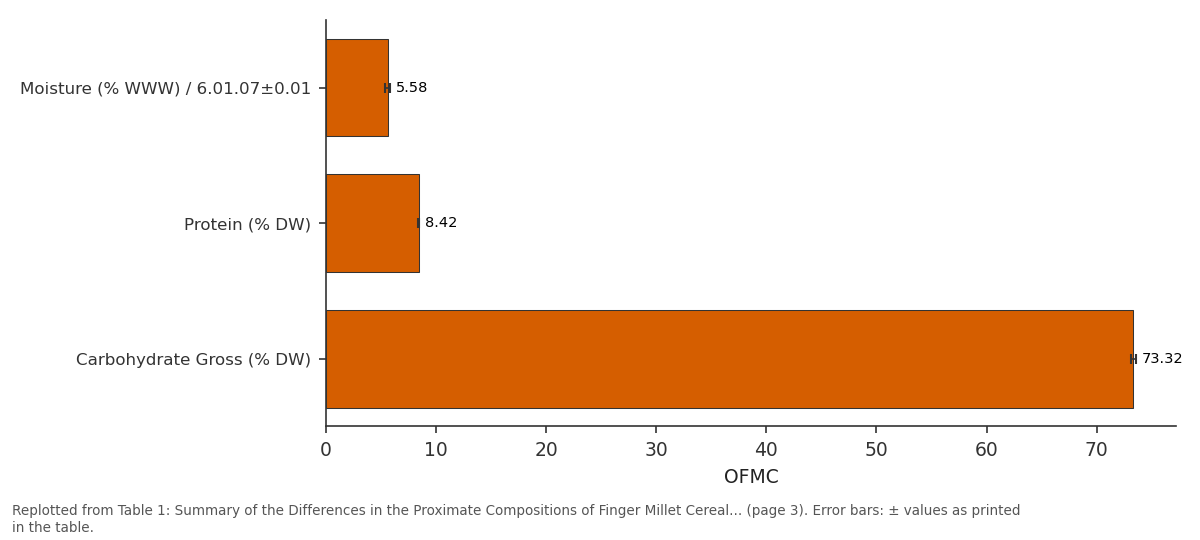
OFMC: Moisture (% WWW) /... vs Protein (% DW) vs Carbohydrate Gross (%...
Replotted from Table 1 (page 3) of the original paper. Every bar is the paper's own table value.
View source evidence ↗Figures & tables
From the original paper Table 1
 Table 2
 Table 3
Introduction
It is particularly important to get proper prenatal care while a woman is pregnant to ensure the good health of the mother and her unborn child. Prenatal care which includes period of special nutrition and enables the doctor to monitor the pregnancy and be alerted to any potential problems. The health of both mother and child may suffer when proper prenatal care is lacking. Prenatal care includes a period of adequate nutrition for the pregnant woman. Diet and lifestyle are important determinants of health of both mother and offspring, starting from the preconceptional period (Abu-Saad & Fraser, 2010) [1] . In particular, current research underscores that the first 1000 days of life (from conception up to two years of life) are crucial for the prevention of adulthood diseases (Athena et al., 2020) [2] and that specific maternal conditions during the periconceptional period (particularly obesity and excessive weight gain during pregnancy) are associated with high birth weight, obesity and alterations in glucose metabolism in children and, later, in adults, with increased cardiometabolic risk (Wiseman et al., 2007) [3] . Sustainable health during pregnancy is the ability to acquire, convert, allocate, distribute, and utilize energy with maximum efficiency during this period. The World Health Organization (Kawai et al., 2011) [4] has emphatically stated the importance of promoting nutrition for quality health during pregnancy. A healthy diet during pregnancy contains adequate energy, protein, vitamins and minerals, obtained through the consumption of a variety of foods, including green and orange vegetables, meat, fish, beans, nuts, pasteurized dairy products and fruit (Abu-Saad & Fraser, 2010) [1] . Unfortunately, many pregnant women are denied access to healthy diet thereby subjecting them to great risks of malnutrition. Pregnant women require varied diets and increased nutrient intake to cope with the extra needs during pregnancy. Use of dietary supplements and fortified foods have been encouraged for pregnant women to ensure adequate supply of nutrients for both mother and foetus. In developing countries, the availability of local crops reveals the prospects for improved recipe development to support pregnant women's nutrient requirements. A recipe development implies the development of new diets from existing food crops. On the other hand, food fortified is the enrichment of existing foods or diet the nutrient base of the new food recipe. For example, in this study, the researcher identified baobab, a commonly undermined food crop as a fortifier for recipe developed from millet cereal. Millet (Panicum miliaceum) is a cereal grain that belongs to the Poaceae family, commonly known as the grass family.
It is widely consumed in developing countries throughout Africa and Asia. While it may look like a seed, millet's nutritional profile is similar to that of sorghum and other cereals (Gentilini, 2002) [5] . Millet has gained popularity in the West because it's gluten-free and boasts high protein, fiber, and antioxidant contents (Chowdary & Bisarya, 2020) [6] . Like most cereals, millet is a starchy grain-meaning that it's rich in carbs. Notably, it also packs several vitamins and minerals (Alwan et al, 2015) [8] . However, for the purpose of this study, the finger millet is adopted Eleusine coracana (Finger millet) provides more essential amino acids than most other cereals. These compounds are the building blocks of protein; finger millet boasts the highest calcium content of all cereal grains, providing 13% of the DV per 1 cooked cup (100 grams) (Kumar et al, 2016) [9] . Calcium is necessary to ensure bone health, blood vessel and muscular contractions, and proper nerve function. Pregnant women need to ensure that their diet provides enough nutrients and energy for the baby to develop and grow properly. They also need to make sure that her body is healthy enough to deal with the changes that are occurring. For a healthy pregnancy, the mother's diet needs to be balanced and nutritiousthis involves the right balance of proteins, carbohydrates, and fats, and consuming a wide variety of foods like millets (Alwan et al, 2015) [8] . On its own, Adansonia Digitata (baobab) so long associated with childbirth, is fitting that the fruit of this ancient African tree also happens to be one of the most effective natural supplements for pregnancy and new motherhood. As the only fruit in the world that dries while it is still hanging on the branch, baobab fruit powder contains 6x vitamin C of an orange, and is almost 50% fibre (half soluble and half insoluble) and contains more antioxidants than any other whole fruit, supporting a wide range of health benefits during pregnancy (Maes, 2021) [10] . Iron is essential to the human body to build enough healthy red blood cells and keep the haemoglobin at the right level. If the body lacks the right amount of iron, one could become anemic. Iron deficiency is by far the most common cause of anemia in pregnancy, so it's important to make sure pregnant women are getting enough in their diets.
Statement of the
Statement of the
Materials and methods
Materials and methods
Design of the Study:
The study adopted the research and development (R and D) cycle proposed by Gall, Gall and Borg (2003) [23] . These activities were articulated into four (4) major phases in this study, namely: production of a nutrient-fortified diet from finger millet and baobab; determination of the proximate composition of the diet developed from finger millet and baobab, and determination of the nutrient content of the diet developed from finger millet and baobab.
Instrument for Data Collection:
The first category of instruments for the study included food sample produced from the raw materials of finger millet and baobab.
Sources of Raw Materials:
The materials for this study which includebaobab fruit powder, finger millet powder, dry ginger, groundnut, Honey, were purchased from Mile 3 Market, Port Harcourt. Sweetener to taste (Honey). Baobab fruit powder Water
Ingredients
Ingredients
Preparation of finger millet enriched with baobab fruit powder (BFP)
Roast groundnut a little to enable you peel off the red skin. Set aside the clean groundnut Mix clean sand free finger millet (dry), adding ginger, clove, and groundnut. Mill all together into a fine smooth powder. Put a pot of boiling water on fire, and allow water to boil. Fetch from the smooth mixed finger millet powder, and mix some quantity of the powder in a bowl to make the cereal.
Add little cold water and make a paste for the cereal. Making sure that there is no lumps in the mixed paste cereal. Add the boiling water to the already mixed cereal, and turn it to a consistency level until it is smooth without any lumps in it. Add 1 or 2 table spoons of Baobab and add any sweetener of your choice into the cereal and mix well for consumption.
Results:
The results of the research questions were presented in the Tables below:
Research Question: What are the differences in the proximate compositions of finger millet cereal enriched with baobab flour and ordinary finger millet cereal for the sustainable health of pregnant women? Table 3 shows the differences in the vitamin compositions of finger millet cereal enriched with baobab flour and ordinary finger millet cereal towards the sustainable health of pregnant women. The results revealed that when enriched with the baobab pulp, there are significant increases in all of the Vitamins tested for: Vitamin A (9.220.02); Vitamin B 6 (5.810.02); Vitamin C (8.610.01); Vitamin E (0.300.02), and slightly for Vitamin K (0.950.05).
| Samples | Vitamin A (iu) | Vitamin B6 (mg/100 g) | Vitamin C (mg/100 g) | Vitamin E (mg/100 g) | Vitamin K (mg/100 g) |
|---|---|---|---|---|---|
| EFMC | 9.220.02 | 5.810.02 | 8.610.01 | 0.300.02 | 0.950.05 |
| OFMC | 8.340.02 | 5.120.03 | 2.300.00 | 0.210.06 | 0.920.03 |
Table text extracted from the original PDF; superscript letters are shown inline. The original table image is below.
View original table image
Discussion of findings
The study examined the differences in the proximate compositions of finger millet cereal enriched with baobab The findings revealed a minor increase in the enriched finger millet cereal which had 6.01% compared to the ordinary finger millet cereal (5.81%). This increase in moisture could be as a result of the process of mixture which may have introduced some liquid drops. According to these results, there were significant different p<0.05 in moisture content of the EFMC and the OFMC. However, this value is still within the ideal moisture level for flour in order for it have a lasting life span and prevent spoilage. Krebs et al., (2015) [18] had noted that moisture that is higher than 12% in flour subjects the flour to early spoilage. The low moisture content of EFMC makes it easy to store at room temperature and less prone to fungal and microorganism infections. The Moisture content of food is influenced by the type of food, food variety, and storage conditions (Bothwell, 2016) [14] . Flours with moisture content above 14 percent are not often stable at room temperature and as a result organism in them will start to grow, producing off odours and flavours.
The ash content of food gives an idea of the total quantity of the mineral elements in the food. Ash content indicates the total inorganic compositions after the moisture and organic materials (fats, proteins and carbohydrates) have been removed by oxidation or incineration in usually muffle furnace. The ash content of the enriched finger millet cereal (EFMC) was 2.23% to 2.83% without a significant difference in the ordinary finger millet (OFMC). These values were similar to the range of values reported by Kristanti and Herminiati (2019) [11] and Hertzel (2013) [12] . The EFMC and OFMC did not differ significantly to each other p>0.05. Babu et al. (2014) [13] reported that the amount of ash present in a food sample played an important role while determining levels of essential minerals. It could be observed that as the ratio of OFMC flour decreased in the mixture, there was a corresponding increase in ash content of the mixed flour. High ash content as result of baobab flour addition to finger millet flour could imply increase quantity of minerals in mixed flour. Ash is the total mineral content of food sample. Minerals are essential micronutrients which serve variety of essential functions for pregnant women in metabolism and are among the parts of biomolecules such as hemoglobin, deoxyribonucleic acid (DNA), and adenosine triphosphate (ATP) (Zimmermann, 2012) [16] .
The crude protein content of the enriched flour evaluated was 13.91% compared to the ordinary flour which was 8.42%. These values agree with the work of Bothwell (2016) [14] and that of Babu et al. (2014) [13] . The crude protein of the mixed flour and the ordinary flour were significantly different p<0.05 from each other. This could be attributed to the high protein content in finger millet flour. Cereals such as finger millet have high protein values. This result indicated that the purpose of fortification, which was to increase the protein content of pregnant women, was achieved while at the same time producing a shelf stable product due to its lower moisture content. Crude protein is the value obtained by quantitating the nitrogen in a sample using the Kjeldahl method in which the nitrogen compounds in the sample is digested by sulfuric acid to give ammonia; sodium hydroxide is added (Koletzko et al, 2011) [15] . A steam distillation is conducted. Under alkaline conditions, the distilled ammonia is absorbed in the acid and measured by titration and then multiplying the results by the factor 6.25 (6.38 for milk products) (Zimmermann, 2012) [16] .
The fat content of the enriched flour was observed to be 2.25% which is lower than the ordinary flour which had 7.94%. This range of value was very much similar to the values of 1.30% to 7.34% reported by Carlsen M.H et al, (2010) [17] for proximate composition and functional properties of different grain flour composites for industrial applications.
In case, you are overweight and pregnant, the infant is destined to become obese, as indicated by an examination report (Bothwell, 2016) [14] . In the event that it exceeds the desired level, it will affect the product stability as the unsaturated fatty acids are more vulnerable to oxidative rancidity (Krebs et al., 2015) [18] . Flours with high fat content are good as flavor enhancers and beneficial in improving the lusciousness of food in which it is integrated. Fats contribute to food flavor. When feeds are stored for a prolonged period, ether extract gradually decreases. This is because the unsaturated fatty acids in feeds are polymerized oxidatively, absorbing oxygen in air and becomes insoluble in ether (Zimmermann, 2012) [16] . The carbohydrate content of the enriched finger millet cereal flour was 72.84% compared to the ordinary finger millet cereal (73.32%) which were similar to the range of values of 68.23 to 74.10 g/100 g and 52.62 to 72.58% reported by Athena et al., (2020) [2] and Alwan et al., (2015) [8] , respectively. There was a decrease in carbohydrate as the ratio of the enriched flour decrease in the mixed flour. The high carbohydrate content of the enriched flour suggested its usefulness in combating protein-energy malnutrition (PEM) during pregnancy, as there is carbohydrates to provide energy to the body to spare protein. Then protein can be used for its primary functions; building and repairing worn out tissues, instead of being used as source of energy (Athena et al, 2020) [2] . Carbohydrates are good sources of energy. A high concentration of carbohydrates is desired in breakfast meals and for pregnant women. Carbohydrates provide energy that help pregnant moms gain appropriate weight during pregnancy. In general, moms within normal weight prior to getting pregnant should gain about 11 -16 kg during the entire pregnancy (Kawai et al., 2011) [4] . The crude fiber of the enriched flour was 1.65% compared to 2.51% in ordinary finger millet. The fiber content of the sample was slightly significantly different (p>0.05). Crude fiber contents of the blends decreased slightly as the level of the cereal flour substitution increased. This can be as a result of high crude fiber contents of the cereal which had greater effect on the cereal (Athena et al., 2020) [2] . Crude fiber clearly corresponds only to the feeds of plant origin considering the constituent compounds; however, a small quantity of it is contained in the feeds of animal origin. This is due to organic residue that is undissolved by alkali/acid boiling is observed in the feeds of animal origin, and also the residue is chitin and some scleroprotein (Albuminoid) that are completely different from the so-called crude fiber in content. The crude fiber helps to prevent heart diseases, colon cancer, diabetes, etc. (Wuraola, 2010) [19] . Crude fiber reduces the rate of release of glucose into blood stream and also reduces intercolonic pressure thereby reducing the risk of colon cancer (Ige, 2019) [20] . Plant fiber is mainly made up of cell wall which comprised of indigestible carbohydrates such as cellulose, hemicellulose, pectin, and lignin.
International Journal of Agriculture and Nutrition https://www.agriculturejournal.net
Consuming fiber-rich foods will not result in weight gain. Fiber helps to control your cholesterol levels. Hence, one can also prevent the risk of all cardiovascular problems during pregnancy. Fiber also helps to lose weight faster after the delivery (Krebs et al., 2015) [18] . The total energy of the enriched flour was 723.21 kcal compared to 443.24 kcal in the ordinary finger millet cereal per 100 g of flour. 1 kcal is equal to 4.184 kJ. Carbohydrates yield an average of 4 kcal/g, protein kcal/g (Although the primary role of protein is not for energy), and fat 9 kcal/g. Energy is an essential property of food especially for pregnant women. The energy the body requires for talking, walking, working, relaxing, breathing, etc. is supplied by the food we eat. Carbohydrates are primary energy source for cells, especially cells of the central nervous system (CNS) and red blood cells (Kawai et al., 2011) [4] . The energy content of foods are measured by their carbohydrates, fats, and, in some cases, protein contents. The high carbohydrate content of the enriched flour suggested that it can be used in combating protein-energy malnutrition (PEM), as there are carbohydrates to provide energy to the body to spare protein. Protein will then be used for its primary functions; building and repairing worn out tissues, instead of being used as energy source (Zimmermann, 2012) [16] .
Carbohydrates and fats are good sources of energy.
The results also showed that the enriched finger millet cereal had the following scores for minerals: Calcium (299.01%); Magnesium (86.52%); Sodium (10.10%); Potassium (77.21%); Iron (8.12%); Zinc (2.11%), and Copper (1.67%). There was significant increases in the Calcium, Magnesium, Potassium, Iron and Zinc after enrichment with the baobab. These results and values are supported by Bothwell (2016) [14] and Wuraola (2010) [19] who noted that the seed and fruit pulp of the baobab are excellent sources of potassium, calcium, and magnesium, but poor sources of iron, zinc, and copper. However, the increase in Iron and Zinc could be occasioned by the mixture which included groundnut. Athena (2020) [2] noted that groundnuts are good sources of iron and zinc. Mineral deficiencies remain high in Africa, especially in rural communities subsisting on monotonous cereal-based diets (Wiseman et al, 2007) [3] . The effects of adding locally available plant foodstuffs rich in minerals and promoters of mineral bioavailability, namely baobab fruit powder has been appraised. Micronutrients requirements change in response to changes in the body and increased periods of growth (Mert, 2019) [21] . During pregnancy, when the woman's nutritional intake also provide for the growing fetus, a woman's requirement for numerous micronutrients increases. Calcium's key function is to ensure the proper growth and structure of teeth and bones. Low calcium intake throughout life, and particularly in periods of rapid growth such as pregnancy, increases the risk of osteoporosis later in life, particularly after menopause (Wiseman et al, 2007) [3] . More so, Iron is a component of a number of essential proteins, including haemoglobin which is essential for transporting oxygen in the blood. Inadequate iron intake can lead to a range of iron deficiency disorders, from low iron stores at the mild end of the spectrum to iron deficiency anaemia at the severe end. Symptoms of these disorders include fatigue, jaundice and reduced work capacity. A woman's iron requirement increases considerably during pregnancy (Krebs et al., 2015) [18] .
Zinc is a micronutrient which plays a role in maintaining the structural integrity (normal form) of proteins and regulates gene expression (how genes and genetic traits are replicated in the DNA). It is mainly stored in bones and muscle tissues. Zinc deficiency during pregnancy is associated with an increased risk of pregnancy complications, including: Pre-eclampsia (high blood pressure and urinary protein concentrations during pregnancy); premature rupture of membranes (when a woman's amniotic sac/pregnancy water breaks before she experiences contractions); and preterm delivery (Kawai et al., 2011) [4] . Magnesium is a micronutrient which works with more than 300 enzymes involved in energy generation and glycolysis (Break down of sugars and carbohydrates). It also plays a role in regulating the function of other minerals including calcium and potassium (Krebs et al., 2015) [18] . About half the magnesium in the human body is found in bones and a further third is stored in muscle and soft tissues. Maternal magnesium deficiency increases the risk of pre-eclampsia and pre-term delivery. There is also some evidence of an association with low birth weight (Wiseman et al. 2007) [3] . Moderate-severe deficiency is also associated with an increased risk of hypercalcaemia (Excessive levels of calcium in the blood). The findings on vitamin compositions of finger millet cereal enriched with baobab flour and ordinary finger millet cereal towards the sustainable health of pregnant women revealed that the enriched flour are as follows: Vitamin A (9.22%); Vitamin B 6 (5.81%); Vitamin C (8.61%); Vitamin K (0.95%), as against the ordinary finger millet cereal which had the following: Vitamin A (8.34%); Vitamin B 6 (5.12%); Vitamin C (2.30%); Vitamin K (0.92%). These results are supported by the values of Ikeme (2021). The fi9ndings imply that the baobab has significant potential to improve the nutrient values of foods. Evidence suggests that combined vitamin A-iron supplementation is most effective in reducing the incidence of iron-deficiency anaemia during pregnancy.
Although further research is needed, one study also showed that women who took vitamin A supplements while they were pregnant were 40% less likely to die during pregnancy or childbirth than those who did not take the supplements (Mert, 2019) [21] . Vitamin A plays an important role in developing and maintaining eye health. It also regulates cell growth and protects fertility and the immune system. During pregnancy, vitamin A is particularly important for ensuring optimal eye development in the embryo (A fertilized egg in the very early stages of pregnancy, before it takes on human characteristics). Vitamin A regulates the way in which cells differentiate to form different parts of the eye including the: Conjunctivathe mucous membrane which covers the front of the eyes and the eyelids; corneathe front section of the eye; photoreceptor rod cells (rod shaped cells in the eye's retina which sense dim light and help individuals to see at night); and cones cells (cells in the eyes which sense bright light and are important for seeing in daylight). It also plays an important role in regulating the development of the spinal cord, vertebrae, limbs, heart and ears of the embryo. Vitamin B6 is essential for DNA synthesis (production of new DNA) as well as maintaining normal blood and neurological (Brain) function. A woman's vitamin B6 requirement increases during pregnancy in relation to the requirement of the growing fetus (Kawai et al., 2011) [4] .
Vitamin C is a water soluble vitamin, also called ascorbate or L-ascorbic acid. Unlike most other animals, humans and primates cannot produce vitamin C in their bodies, and must therefore obtain their requirement from dietary sources. Vitamin C is an antioxidant which may protect us from some diseases and ageing (Mert, 2019) [21] . It is also important for the production of collagen (a component of skin) bones, cartilage, muscles and blood vessels. Vitamin C is an essential micronutrient for ensuring good dental health for the pregnant woman and her fetus, as it plays an important role in the development of healthy gums.
Adequate vitamin C intake also increases an individual's absorption of non-haem iron (Brahimi, 2014) [22] .
The most important role of vitamin K is in regulating blood clotting. It regulates both coagulation (thickening of the blood) and anti-coagulation (Thinning of the blood).
Vitamin K deficiency can lead to bleeding disorders, in particular increased clotting time, which may be particularly dangerous during delivery. Low vitamin K intake is also associated with an increased risk of hip fracture.
Conclusion
Poor nutrition during pregnancy is associated with a range of health risks for pregnant women and their developing fetus. In can also affect the health of the child in the long term. This study has revealed that baobab can be utilized in the enrichment of foods for pregnant women in other to improve the potentials for proper feeding during gestation. A woman who is poorly nourished during pregnancy is more likely to give birth to a low birth weight infant. Low birth weight is associated with an increased risk of poor childhood growth and development, as well as chronic health. Baobab inclusion improved mineral and vitamins values of finger millet cereal. This is probably because it is rich in both citric acid and ascorbic acid. It is nearly as effective as citric acid addition in enhancing bio accessibility of these minerals and its inclusion in staple cereal food products could be a useful alternative or complement to conventional fortification for communities in rural areas.
Recommendations: Based on the findings of the study, the following recommendations were made. 1. There is for awareness creation by nutritionists during counseling sessions on the usefulness of the potentials inherent in baobab pulp flour to nutrient enrichment of foods for pregnant women. 2. The governments at all levels should encourage and support the planting of the baobab tree in rural areas of the state. This will help in improving access to the fruit in the future. 3. Sensitization the need for to adopt safety practices during food preparations should be made a priority during counselling. 4. The baobab-enriched finger millet cereal flour can be used for several purposes such as swallows, gruels etc.
Figures and tables from the paper
| Samples | Moisture (% WWW) | Protein (% DW) | Fat (% DW) | Crude Fibre (D % W) | Ash (% DW) | Carbohydrate Gross (% DW) | Energy Values (kcal/100 g) |
|---|---|---|---|---|---|---|---|
| EFMC | 6.01.07±0.01 | 13.91±0.05 | 2.25±0.09 | 1.65±0.04 | 2.23±0.05 | 72.84±0.08 | 723.21±0.02 |
| OFMC | 5.58 ± 0.21 | 8.42 ± 0.04 | 7.94 ± 0.06 | 2.51 ± 0.06 | 2.51 ± 0.11 | 73.32 ± 0.23 | 443.24±1.06 |
Table text extracted from the original PDF; superscript letters are shown inline. The original table image is below.
View original table image
| Samples | Calcium mg % | Magnesium mg % | Sodium mg % | Potassium mg % | Iron mg % | Zinc mg % | Copper mg % |
|---|---|---|---|---|---|---|---|
| EFMC | 299.01±0.03 | 86.52±0.04 | 10.1±0.05 | 77.21±0.00 | 8.12±0.20 | 2.11±0.01 | 1.67±0.00 |
| OFMC | 70.89 ±0.02 | 16.42±0.01 | 19.95±0.03 | 9.95±0.04 | 0.74±0.01 | 0.45±0.03 | 4.73±0.01 |
Table text extracted from the original PDF; superscript letters are shown inline. The original table image is below.
View original table image
References
16 in the original paper- Abu-Saad K, Fraser D. Maternal Nutrition and Birth Outcomes. Epidemiologic Reviews 2010;32:5-25. DOI: 10.1093/epirev/mxq001
- Athena P, Zandile B, Laura B, Michael D, Ashley N, Carinne A, et al. First 1000 days: first-time mothers' understanding and experiences of nutritional care. Early Child Development and Care. 2020;192(10):1561-1569. https://doi.org/10.1080/03004430.2020.1815720
- Kawai K, Spiegelman D, Shankar AH, Fawzi WW. Maternal multiple micronutrient supplementation and pregnancy outcomes in developing countries: metaanalysis and meta-regression. Bulletin of the World Health Organization. 2011;89(6):402-411B. World Health Organization. http://dx.doi.org/10.2471/BLT.10.083758
- Gentilini U. Challenges in defining direct measures of hunger and food insecurity in Bangladesh: Findings from ongoing fieldwork. In Proceedings of international scientific symposium on measurement and assessment of food deprivation and under nutrition June 26-28, 2002. Rome: Food and Agriculture Organization of the United Nations; c2002. p. 301-303. https://www.fao.org/3/y4250e/y4250e.pdf
- Chowdary DM, Bisarya D. Review of Finger millet (Eleusine coracana L.) on Nutrition and health benefits. International Journal of All Research Education and Scientific Methods (IJARESM). 2020;8(11):1319-1323.
- Alwan NA, Cade JE, McArdle HJ, Greenwood DC, Hayes HE, Simpson NA. Maternal iron status in early pregnancy and birth outcomes: Insights from the Baby's Vascular health and Iron in Pregnancy study. British Journal of Nutrition. 2015;113(12):1985-1992. doi: 10.1017/S0007114515001166.
- Kumar A, Metwal M, Kaur S, Gupta AK, Puranik S, Singh S, et al. Nutraceutical Value of Finger Millet [Eleusine coracana (L.) Gaertn.], and Their Improvement Using Omics Approaches. Front. Plant Sci. 2016;7:934. Doi:10.3389/fpls.2016.00934
- Kristanti M, Herminiati P. Characteristics of physical, chemical, and organoleptic properties of inulin-enriched pudding as a complementary food. IOP Conference Series: Earth and Environmental Science. 2019;251(2):10-19. Doi:10.1088/1755-1315/251/1/012032
- Babu BK, Agrawal PK, Pandey D, Jaiswal JP, Kumar A. Association mapping of agro-morphological characters among the global collection of finger millet genotypes using genomic SSR markers. Molecular Biology. 2014;41(2):5287-5297. Doi:10.1007/s11033014-3400-6
- Bothwell TH. Iron requirements in pregnancy and strategies to meet them. American Journal of Clinical Nutrition. 2016;72(1):257-264. doi: 10.1093/ajcn/72.1.257S.
- Zimmermann MB. The effects of iodine deficiency in pregnancy and infancy. Paediatr Perinat Epidemiol. 2012;26(1):108-17. Doi:10.1111/j.13653016.2012.01275.x.
- Carlsen MH, Halvorsen BL, Holte K. The total antioxidant content of more than 3100 foods, beverages, spices, herbs and supplements used worldwide. Nutr J. 2010;9:3. https://doi.org/10.1186/1475-2891-9-3
- Krebs NF, Domellöf M, Ziegler E. Balancing Benefits and Risks of Iron Fortification in Resource-Rich Countries. J Pediatr. 2015;167(4):20-25.
- Wuraola E. The feeding relationship: problems and interventions. Journal of Pediatrics. 2010;117(2):S181S189.
- Ige D. Prevention of rickets and vitamin D deficiency in infants, children, and adolescents. Pediatrics. 2019;122(16):1142-1152.
- Mert S. Amino acid profiles after sprouting, autoclaving, and lactic acid fermentation of finger millet (Eleusine coracana) and kidney beans (Phaseolus Vulgaris L.). Journal of Agriculture and Food Chemistry. 2019;48(7):3081-3085.