
Research article · 2023 · Full text
International Journal of Veterinary Sciences and Animal HusbandryPhytochemical screening and total antioxidant potential of Momordica charantia extract
Volume 8(5) · Pages 91–94 · DOI: 10.22271/veterinary.2023.v8.i5b.694 ↗
Research areasDiverse Scientific Research StudiesTransgenic Plants and ApplicationsNatural Antidiabetic Agents Studies
Abstract
Author-writtenMedicinal plants, known for their accessibility and cost-effectiveness, have a historical track record as therapeutic sources. Today, there's increasing awareness regarding the overuse and misuse of synthetic drugs. Efforts worldwide aim to explore and document ethnomedicinal wisdom and scientific research on medicinal plants. Throughout history, plants and herbal remedies have served as medicinal solutions, and recent research has validated many traditional claims about their therapeutic properties. This study aimed to measure the total phenolic and flavonoid content and evaluate antioxidant activity in Momordica extracts. Soxhlet extraction was employed to prepare the extracts, resulting in varying yields. Qualitative phytochemical analysis identified alkaloids, saponins, flavonoids, tannins, and glycosides in the extracts. Among the solvents used, aqueous extracts displayed the highest phenolic and flavonoid content and significant DPPH radical scavenging activity. In conclusion, Momordica extracts represent abundant sources of natural antioxidants, with their properties varying depending on the solvent employed.
Summary
Source-checkedPlain-language reading of the full paper, prepared with AI and checked against the text. Each point links to the authors' own words.
Why it matters
- Medicinal plants are historically valued as therapeutic sources because they are cost-effective and easily accessible. View evidence ↗
- There is a growing public concern regarding the misuse and over-prescription of synthetic medications. View evidence ↗
- Phenolic compounds found in medicinal plants act as antioxidants that protect cells from oxidative damage caused by free radicals. View evidence ↗
The question
- The study aimed to evaluate the antioxidant activity and measure the total flavonoid and phenolic content of Momordica extracts. View evidence ↗
What they did
- Fresh Momordica leaves were shade-dried for 40-45 days, powdered, and extracted using Soxhlet extraction with six solvents of varying polarity. View evidence ↗
- Total phenolic content was measured as μg Gallic acid equivalents (GAE) per ml, and total flavonoid content was measured as μg Quercetin equivalents (QE) per ml. View evidence ↗
- Antioxidant activity was assessed using the DPPH radical scavenging method to calculate IC50 values, which represent the concentration needed to inhibit 50% of DPPH radicals. View evidence ↗
What they found
- The extractive yield from 50g of leaves ranged from 3.49g (lowest in chloroform) to 12.07g (highest in aqueous extract). View evidence ↗
- Qualitative screening found that all extracts contained phenols, flavonoids, proteins, and several other phytochemicals, though some specific compounds like steroids were only in certain extracts. View evidence ↗
- The aqueous extract had the highest total flavonoid content at 265.47 μg QE/mg, while the acetone extract had the lowest at 45.68 μg QE/mg. View evidence ↗
- The highest total phenolic content was observed in the aqueous extract (43.35 μg GAE/mg) and the lowest in the hexane extract (29.55 μg GAE/mg). View evidence ↗
- The aqueous extract showed the strongest DPPH scavenging activity with the lowest IC50 value of 10.49 μg/ml, compared to the benzene extract's 12.13 μg/ml. View evidence ↗
What it means
- The authors conclude that Momordica extracts possess significant antioxidant potential and can inhibit free radical generation in vitro. View evidence ↗
- The findings validate the traditional use of Momordica in herbal medicine and suggest its promise as a therapeutic agent. View evidence ↗
Visual summary
3 visualsIllustrations explain the paper; charts are replotted from the paper's own table values.
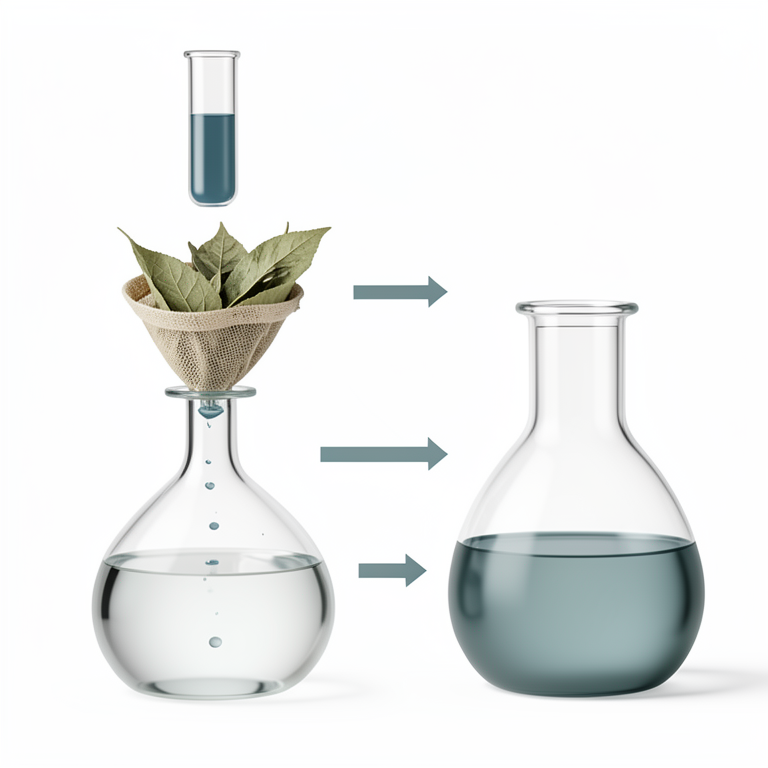
Soxhlet Extraction Process
AI-generated conceptual illustration (Momordica charantia leaves). It explains the idea and does not show study data.
View source evidence ↗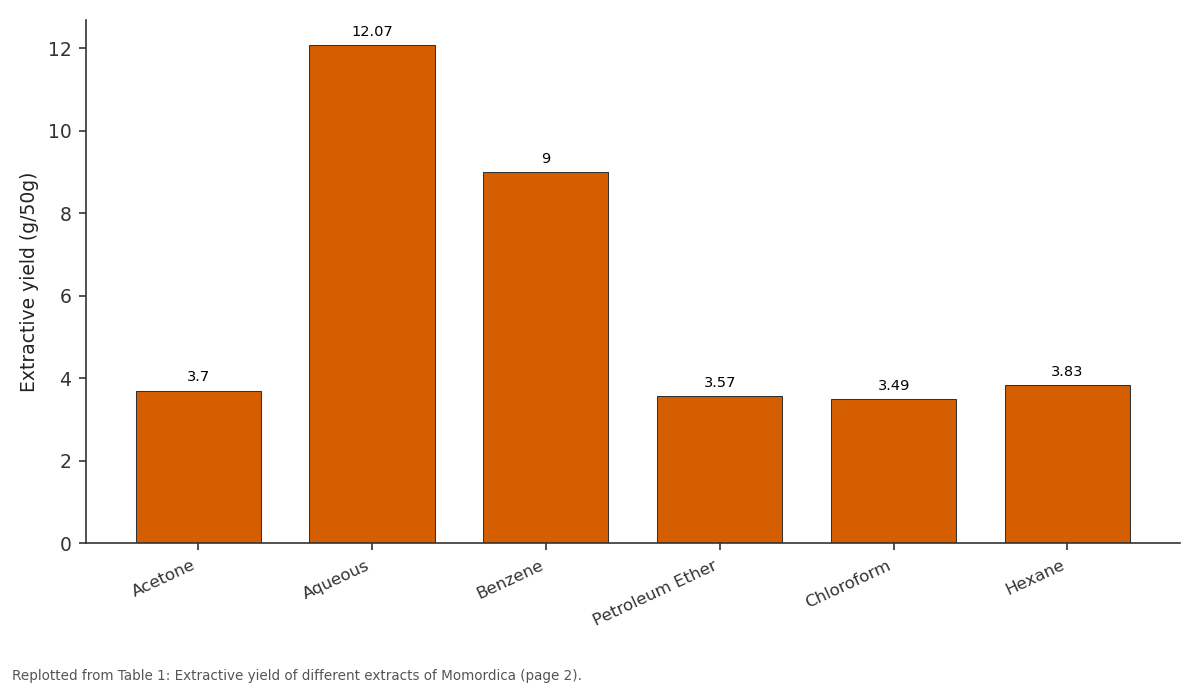
Extractive yield (g/50g): Acetone vs Aqueous vs Benzene vs Petroleum Ether vs Chloroform
Replotted from Table 1 (page 2) of the original paper. Every bar is the paper's own table value.
View source evidence ↗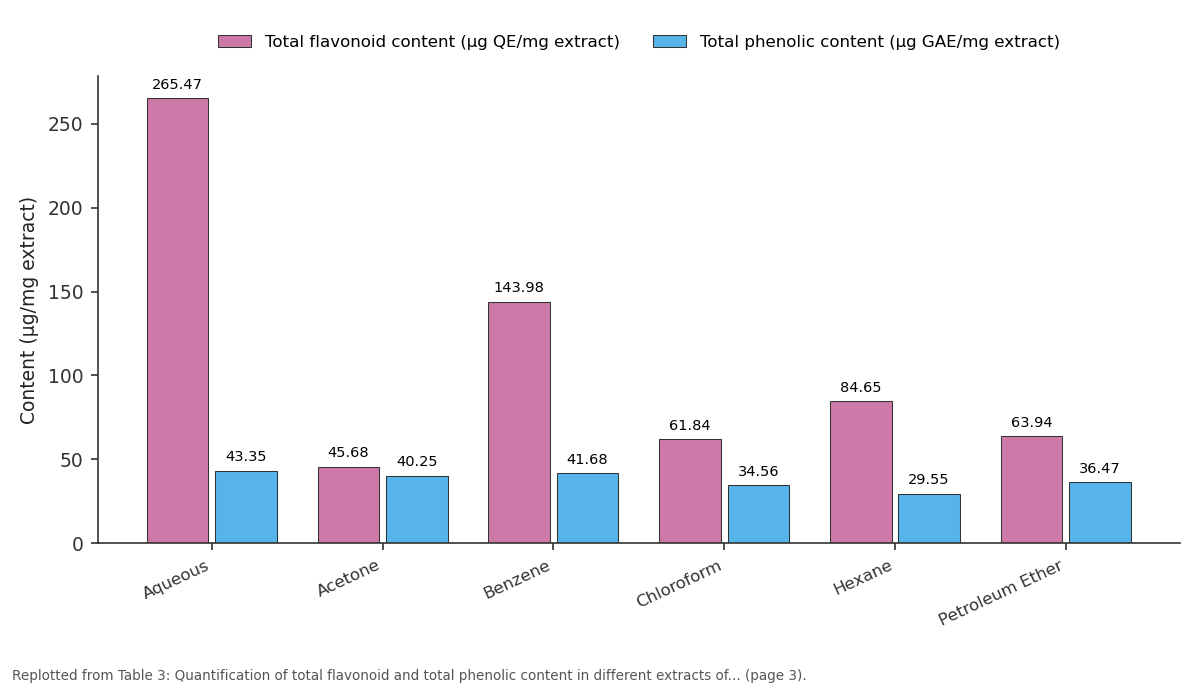
Total flavonoid content (μg QE/mg extract) and Total phenolic content (μg GAE/mg extract): Aqueous vs Acetone vs Benzene vs Chloroform vs Hexane
Replotted from Table 3 (page 3) of the original paper. Every bar is the paper's own table value.
View source evidence ↗Figures & tables
From the original paper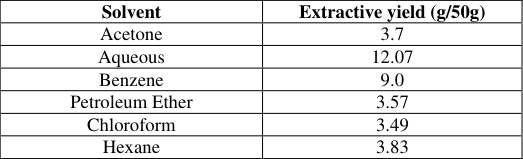 Table 1
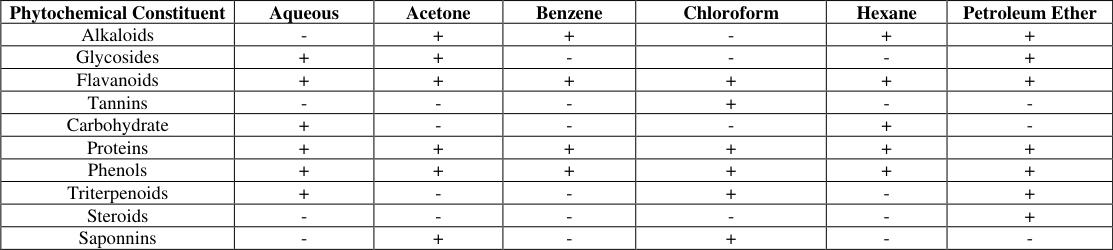 Table 2
 Table 3
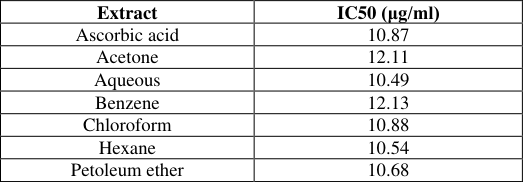 Table 4
Introduction
Medicinal plants have long been recognized as readily available and cost-effective sources of therapeutic agents throughout history. In recent times, there is growing public awareness of the over-prescription and misuse of synthetic medications (Cowan 1999) [6] . Globally, approximately 7,500 medicinal plants have been utilized for treating various ailments. This has sparked a rising interest worldwide in researching and analyzing plant-based products for their potential health benefits. Efforts are being made across the world to explore and document ethnomedicinal knowledge and scientific research related to medicinal plants (Ganie and Yadav 2014) [10] . Throughout history, plants and herbal remedies have served as medicinal solutions. Recent research conducted over the past few decades has substantiated numerous traditional claims regarding the therapeutic properties of various plants. India's rich biodiversity features numerous plant species renowned for their medicinal attributes (Jain, Khatana et al. 2019) [12] . Ancient practices of using various parts of these plants to address health concerns have a long history. Purohit and Vyas estimated that around 70,000 plant species have been employed as herbal remedies at different times. Medicinal plants, abundant in phenolic compounds, provide a range of biological effects, including their role as antioxidants. These antioxidants can augment our natural defense mechanisms, protecting cells from oxidative damage caused by free radicals (Dwivedi 2007) [9] . Momordica charantia, commonly known as Bitter Melon or Karela, is a tropical vegetable found in Indian cuisine and valued in folk medicine for its potential in managing diabetes. The Latin name "Momordica" refers to the leaf's jagged edges, resembling bite marks. In Ayurveda, this fruit is considered a tonic, stomachic, stimulant, emetic, antibilious, laxative, and alterative. Bitter melon has a history of use in various Asian traditional medicine systems. Its bitterness can aid digestion, benefiting those with sluggish digestion, dyspepsia and constipation. Although it may worsen heartburn and ulcers in some cases, its demulcent and mild inflammation-modulating properties often mitigate these effects, as reported in traditional use and clinical experience (Kumar, Sharathnath et al. 2010) [17] . The major chemical constituents of MC include hetero polysaccharides (galactose, glucose, arabinose, rhamnose, and mannose), proteins and peptides (e.g., momordins, momorcharins, MAP30, and MC lectin, which are part of the ribosome-inactivating proteins family), terpenoids, saponins (Cucurbitanes and cucurbitacines), flavonoids, phenolic compounds, and various other compounds like essential oils, fatty acids, amino acids, and sterols (Anilkumar et [2,30,7] . Numerous phytochemicals, including momorcharins, momordicilin, charantin, cucurbitacins, and diosgenin, have been isolated from bitter melon (Murakami, Emoto et al. 2001) [24] . Lifestyle and dietary habits contribute to chronic low-grade inflammation, impacting immune function and gut microbiota. Dietary components have potential in modulating chronic inflammatory conditions and aiding in their treatment, although much remains unclear about their specific antiinflammatory mechanisms (Minihane, Vinoy et al. 2015) [23] . Momordica charantia (MC) dietary supplementation has been extensively studied for conditions like T2DM, dyslipidemia, obesity, and cancer, highlighting its potential for lowering blood sugar and lipids. However, clinical trials have yielded inconclusive results (Alam, Uddin et al. 2015) [1] . MC extracts were found to inhibit inflammation by targeting the NF-kB pathway. They reduced TNF-α production and the expression of inflammatory genes in RAW 264.7 cells while decreasing NF-kB activity and phosphorylation of various signaling molecules (Renushe et al, 2022; Kobori, Ohnishi-Kameyama et al. 2008) [29,16] . These extracts also lowered NO and prostaglandin E2 production and suppressed inducible NO synthase and IL-1β expression (Lii, Chen et al. 2009) [21] . In addition, MC extract demonstrated dose-dependent inhibition of NO production and downregulated ERKs and Akt, reducing NF-kB and AP-1 activity (Svobodova, Barros et al. 2017; Kumar and Reddy, 2012) [32,20] . In a clinical trial, water-soluble bitter melon fruit extract significantly reduced blood glucose levels in NIDDM diabetics during OGTT. Bitter melon leaf extracts (water, ethanol, methanol) displayed broad-spectrum antimicrobial activity (Khan and Omoloso 1998) [14] . MC and its phytochemicals, including alpha and beta-momorcharin, lectin, and MAP 30, exhibited in vitro antiviral effects against various viruses, including HIV, Epstein-Barr, herpes, coxsackievirus B3, and polio. Notably, MAP 30, a 30 kDa protein, demonstrated promising anti-HIV activity, while alpha momorcharin displayed abortifacient, tumor suppressive, and anti-HIV properties (Ng, Chan et al. 1992) [25] .
Materials and methods
Various chemicals, including DPPH, Quercetin, Gallic acid, and others from Sigma Chemicals. Importantly, all chemicals used were of analytical grade. Fresh Momordica were washed, shade-dried for 40-45 days at room temperature, powdered, and then subjected to Soxhlet extraction using solvents of increasing polarity: petroleum ether, benzene, chloroform, acetone, hexane, and aqueous solution (Deyab, Elkatony et al. 2016) [8] . The resulting extract was concentrated, dried, and stored in brown bottles at room temperature. These extracts were later analyzed for various secondary metabolites, including phenols, flavonoids, tannins, saponins, alkaloids, glycosides, phytosterols, steroids, and carbohydrates (Khan, Shah et al. 2016) [15] . The total phenolic content in leaf extracts was determined using the Folin Ciocalteu method with Gallic acid (25-200 ug/ml) as the calibration standard, expressed as Gallic acid equivalents (GAE) per gram of extracts. In a 96-well plate, 50 μl of the extract (1 mg/ml) or standard solution were mixed with 50 μl of distilled water, 50 μl of 10% Folin Ciocalteu phenol reagent, and 50 μl of 1M sodium carbonate solution. After a 60-minute incubation at room temperature, shielded from light, absorbance was measured at 750nm using a microplate reader. Total phenolic content was expressed as μg GAE per ml of plant extracts (Sembiring, Elya et al. 2018) [31] . Total flavonoid content in Ficus religiosa leaf extracts was determined using the aluminum chloride method with Quercetin (25-200 ug/ml) as the standard, expressed as Quercetin equivalents (QE) per gram of extract. After mixing 50 μl of extract (1 mg/ml) or standard solution with 10 μl of 10% aluminum chloride, 150 μl of 95% ethanol, and 10 μl of 1M sodium acetate in a 96-well plate, the mixture was incubated for 40 minutes at room temperature, shielded from light. Absorbance was measured at 415nm using a microplate reader, and total flavonoid content was expressed as μg QE per ml of plant extracts (Sembiring, Elya et al. 2018, Aparna, Madhuri et al. 2021) [31,3] . The DPPH radical scavenging activity of various extracts was assessed following the Jose Prieto method with slight modifications. In a 96-well plate, we combined 20 μl of extract stock solution (1.075 to 200ug/ml) with 180 μl of DPPH solution (0.147mM). After a 30-minute incubation at room temperature in darkness, we measured absorbance at 517nm using a microplate reader. Methanol served as the blank, and ascorbic acid acted as the positive standard. These tests were conducted in triplicate, and IC50 values (the concentration causing 50% DPPH inhibition) were calculated (Prieto 2012) [27] .
Results and Discussion
Momordica extracts yielded between 3.49 and 12.07 g per 50 g of leaves, with the highest in aqueous and the lowest in chloroform. Phytochemical screening identified alkaloids, flavonoids, glycosides, phenols, tannins, terpenoids, saponins, and steroids in all extracts. Momordica extracts showed varying total flavonoid content, ranging from 61.84 to 265.47 μg Quercetin equivalent (QE) per milligram. Among these, the highest content was in the aqueous extract (265.47 μg QE/mg), followed by benzene (143.98 μg QE/mg), hexane (84.65 μg QE/mg), petroleum ether (63.94 μg QE/mg), chloroform (61.84 μg QE/mg), and acetone (45.68 μg QE/mg). The phenolic content in Momordica extract varied from 29.55 to 43.35 μg Gallic Acid Equivalents (GAE) per milligram. The highest phenolic content was found in aqueous extracts (43.35 μg GAE/mg), followed by benzene (41.68 μg GAE/mg), acetone (40.25 μg GAE/mg), petroleum ether (36.47 μg GAE/mg), chloroform (34.56 μg GAE/mg), and hexane (29.55 μg GAE/mg). IC50 values, indicating the concentration at which the extracts neutralized 50% of DPPH radicals, were determined using the DPPH free radical scavenging method, with ascorbic acid as the standard. The inhibitory activity, observed within 30 minutes, for Momordica extracts and ascorbic acid, at varying concentrations (ranging from 10.49 to 12.13 μg/ml), ranged from approximately 44.38% to 49.78%. Flavonoids and phenolic compounds, naturally occurring in various plant parts, serve as antioxidants, known for their free radical scavenging and antioxidant properties due to their reducing and chelating abilities. Table 3 summarizes the phenolic and flavonoid content in Momordica extract, with the highest total phenolic content (TPC) recorded at 43.35 μg/mg GAE and a significant flavonoid content (TFC) of 265.47 μg/mg QE, highlighting its quality. Flavonoids, influenced by environmental, genetic and seasonal factors, contribute to disease defense (Kumar and Roy 2018) [19] . Plant foods rich in flavonoids, such as flavonols, play a crucial role in protecting against conditions like coronary heart disease and dementia. Rutin, a potent plant-based antioxidant known as quercetin-3-rutinoside, offers various health benefits, including managing diabetes, oxidative stress, microbial infections, cancer, and cardiovascular issues (Rauf, Imran et al. 2017) [28] . Momordica exhibits variable values for total phenolic content (TPC) and total flavonoid content (TFC), with the highest yield in aqueous extract and the lowest in hexane and acetone. Aqueous and Benzene extracts of Momordica yield the most. Phytochemical analysis identified alkaloids, flavonoids, glycosides, phenols, tannins, and terpenoids in various extracts, while steroids and tannins were absent in all ether extracts. These findings are consistent with previous studies that also found similar compounds in Ficus religiosa leaf extracts (Ghadigaonkar, Reddy et al. 2021) [11] . Momordica is a potent antioxidant source, with aqueous extracts containing the highest total flavonoid content, followed by benzene, hexane, petroleum ether, chloroform and acetone extracts (Pal, Sharma et al. 2018) [26] . Aqueous extracts of Momordica also exhibited the highest total phenolic content, followed by benzene, acetone, petroleum ether, chloroform and hexane extracts. All Momordica extracts demonstrated significant, dose-dependent DPPH scavenging activity, indicating their ability to neutralize reactive oxygen species (Balakrishnan, Shrivastava et al. 2014, Maimonaparveen, Madhuri et al. 2021) [4,22] . The benzene extract showed the highest DPPH radical scavenging activity among all extracts (Jyothi, Reddy et al. 2009, Charde, Dhongade et al. 2010) [13,5] .
| Name of the extract | Total flavonoid content (μg QE/mg extract) | Total phenolic content (μg GAE/mg extract) |
|---|---|---|
| Aqueous | 265.47 | 43.35 |
| Acetone | 45.68 | 40.25 |
| Benzene | 143.98 | 41.68 |
| Chloroform | 61.84 | 34.56 |
| Hexane | 84.65 | 29.55 |
| Petroleum Ether | 63.94 | 36.47 |
Table text extracted from the original PDF; superscript letters are shown inline. The original table image is below.
View original table image
Conclusion
Phytochemicals are gaining recognition for their unique therapeutic properties and applications in human and animal health. This study emphasizes the antioxidant potential of Momordica extracts, demonstrating their ability to inhibit the generation of free radicals in vitro through significant dosedependent DPPH scavenging activity. The aqueous extract exhibited the highest DPPH scavenging activity, with phenolic compounds playing a key role in antioxidant action and protection against oxidative stress. This suggests that Momordica holds promise as a therapeutic agent for various ailments, while also validating the traditional use Momordica in herbal medicine.
Figures and tables from the paper
| Solvent | Extractive yield (g/50g) |
|---|---|
| Acetone | 3.7 |
| Aqueous | 12.07 |
| Benzene | 9.0 |
| Petroleum Ether | 3.57 |
| Chloroform | 3.49 |
| Hexane | 3.83 |
Table text extracted from the original PDF; superscript letters are shown inline. The original table image is below.
View original table image
| Phytochemical Constituent | Aqueous | Acetone | Benzene | Chloroform | Hexane | Petroleum Ether |
|---|---|---|---|---|---|---|
| Alkaloids | - | + | + | - | + | + |
| Glycosides | + | + | - | - | - | + |
| Flavanoids | + | + | + | + | + | + |
| Tannins | - | - | - | + | - | - |
| Carbohydrate | + | - | - | - | + | - |
| Proteins | + | + | + | + | + | + |
| Phenols | + | + | + | + | + | + |
| Triterpenoids | + | - | - | + | - | + |
| Steroids | - | - | - | - | - | + |
| Saponnins | - | + | - | + | - | - |
Table text extracted from the original PDF; superscript letters are shown inline. The original table image is below.
View original table image
| Extract | IC50 (μg/ml) |
|---|---|
| Ascorbic acid | 10.87 |
| Acetone | 12.11 |
| Aqueous | 10.49 |
| Benzene | 12.13 |
| Chloroform | 10.88 |
| Hexane | 10.54 |
| Petoleum ether | 10.68 |
Table text extracted from the original PDF; superscript letters are shown inline. The original table image is below.
View original table image
References
25 in the original paper- Anilkumar B, Reddy AG, Kalakumar B, Rani MU, Anjaneyulu Y, Raghunandan T, et al. Sero-biochemical studies in sheep fed with Bt cotton plants. Toxicology international. 2010;17(2):99.
- Aparna K, Madhuri D, Lakshman M, Anilkumar B, Swathi B, Ravikumar Y, et al. Study of ameliorative effect of quercetin on methotrexate induced toxicity on body weights and haematological parameters in albino Wistar rats. J Pharm. Innov. 2021;10(7):1434-1436.
- Balakrishnan S, Shrivastava S, Karchulli M, Jha M. Protective effect of Ficus religiosa on Cyclophosphamide induced oxidative stress in brain. International Journal of Research in pharmacy and chemistry. 2014;4:654-660.
- Charde RM, Dhongade HJ, Charde MS, Kasture A. Evaluation of antioxidant, wound healing and antiinflammatory activity of ethanolic extract of leaves of Ficus religiosa Int J Pharm Sci Res. 2010;19(5):73-82.
- Cowan MM. Plant products as antimicrobial agents." Clinical microbiology reviews. 1999;12(4):564-582.
- Dandawate PR, Subramaniam D, Padhye SB, Anant S. Bitter melon: A panacea for inflammation and cancer. Chinese journal of natural medicines. 2016;14(2):81-100.
- Deyab M, Elkatony T, Ward F. Qualitative and quantitative analysis of phytochemical studies on brown seaweed, Dictyota dichotoma. International Journal of Engineering Development and Research. 2016;4(2):674678.
- Dwivedi S. Terminalia arjuna Wight & Arn. A useful drug for cardiovascular disorders." Journal of ethnopharmacology. 2007;114(2): 114-129.
- Ghadigaonkar S, Reddy AG, Kalakumar B, Anilkumar B. Screening of antioxidant and free radical scavenging activities of Terminalia arjuna Roxb. Pharma Innov. J. 2021;10:1-5.
- Jain C, Khatana S, Vijayvergia R. Bioactivity of secondary metabolites of various plants: A review. Int. J Pharm. Sci. Res. 2019;10(2):494-504.
- Jyothi K, Reddy A, Gopi K, Kumar B, Reddy G. A study on free radical-induced renal toxicity due to cyclophosphamide and its amelioration with N-acetyl cysteine. Toxicology International. 2009;16(2):137.
- Khan M, Omoloso A. Momordica charantia and Allium sativum; Broad Spectrum Antibacterial Activity. 생약학회지. 1998;29(3):155-158.
- Kobori M, Ohnishi-Kameyama M, Akimoto Y, Yukizaki C, Yoshida M. α-Eleostearic acid and its dihydroxy derivative are major apoptosis-inducing components of bitter gourd. Journal of Agricultural and food chemistry. 2008;56(22):10515-10520.
- Kumar DS, Sharathnath KV, Yogeswaran P, Harani A, Sudhakar K, Sudha P. A medicinal potency of Momordica charantia. International Journal of Pharmaceutical Sciences Review and Research. 2010;1(2):95-100.
- Pavan Kumar Naik B, Samapika Dalai, Mallikarjunarao K, Praveen Kumar. Combining ability studies in bitter gourd (Momordica charantia L.) for yield and yield attributes. Int. J Hortic. Food Sci. 2022;4(1):54-56. DOI: 10.33545/26631067.2022.v4.i1a.86
- Kumar V, Roy BK. Population authentication of the traditional medicinal plant Cassia tora L. based on ISSR markers and FTIR analysis. Scientific reports. 2018;8(1):10714.
- Kumar AB, Reddy AG. Effect of N-Acetyl L Cysteine (NAC) against oxidative stress-induced neurotoxicity due to lead, cadmium and combination in wistar rats. International Journal of Pharma and Bio Sciences. 2012;3;403-418.
- Lii CK, Chen HW, Yun WT, Liu KL. Suppressive effects of wild bitter gourd (Momordica charantia Linn. var. abbreviata ser.) fruit extracts on inflammatory responses in RAW 264.7 macrophages. Journal of Ethnopharmacology. 2009;122(2):227-233.
- Minihane AM, Vinoy S, Russell WR, Baka A, Roche HM, Tuohy KM, et al. Low-grade inflammation, diet composition and health: Current research evidence and its translation. British Journal of Nutrition. 2015;114(7):9991012.
- Murakami T, Emoto A, Matsuda H, Yoshikawa M. Medicinal foodstuffs. XXI. Structures of new cucurbitane-type triterpene glycosides, goyaglycosidesa,-b,-c,-d,-e,-f,-g, and-h, and new oleanane-type triterpene saponins, goyasaponins I, II, and III, from the fresh fruit of Japanese Momordica charantia L." Chemical and pharmaceutical bulletin. 2001;49(1):54-63.
- Ng T, Chan W, Yeung H. Proteins with abortifacient, ribosome inactivating, immunomodulatory, antitumor and anti-AIDS activities from Cucurbitaceae plants." General Pharmacology: The Vascular System. 1992;23(4):575-590.
- Pal S, Sharma S, Surbhi KD. Antioxidant and antimicrobial properties of leaves of Ficus religiosa (Peepal tree). International Journal of Green and Herbal chemistry. 2018;7:67-74.
- Renushe AP, Banothu AK, Bharani KK, Mekala L, Kumar JM, Neeradi D. Vincamine, an active constituent of Vinca rosea ameliorates experimentally induced acute lung injury in Swiss albino mice through modulation of Nrf-2/NF-κB signaling cascade. International Immunopharmacology. 2022;108:108773.
- Schrot J, Weng A, Melzig MF. Ribosome-inactivating and related proteins. Toxins. 2015;7(5):1556-1615.
- Svobodova B, Barros L, Calhelha RC, Heleno S, Alves MJ, Walcott S, et al. Bioactive properties and phenolic profile of Momordica charantia L. medicinal plant growing wild in Trinidad and Tobago. Industrial crops and products. 2017;95:365-373
Cited by 1
From OpenAlex, OpenCitations and reference lists read by Scinovex
- Evaluation of antioxidant and antacid activities of crude methanol and peptide extracts of Momordica charantia, Luffa cylindrica, and Jatropha curcas ↗
Mubo Adeola Sonibare, Idayat Adeola Akinwumi, Joseph Temidire Sunmonu · Functional Food Science · 2024
Background: There are many uses for therapeutic-based compounds in the food and pharmaceutical industries, and natural products are one of the best sources of these compounds. Momordica charantia (Family Cucurbitaceae), Luffa cylindrica (Family Cucurbitaceae), and Jatropha curcas (Family Euphorbiacece) have been documented for various medicinal applications. Objective: This study aimed to assess the anti-ulcer and antioxidant properties of M. charantia,…
❝ 2PDF