
Research article · 2023 · Full text
International Journal of Veterinary Sciences and Animal HusbandryCardiac toxicity in experimentally induced hypothyroid rats and alleviation by Withania Somnifera and Shilajit
Volume 8(5) · Pages 26–30 · DOI: 10.22271/veterinary.2023.v8.i5a.687 ↗
Research areasPhytochemicals and Medicinal Plants
Abstract
Author-written96 female Sprague-drawly rats of 21 days old were divided into 8 groups with twelve rats in each group. Methimazole (0.02 %) was administered for induction of Hypthyroidism and its effects were ameliorated with Shilajt and Withania somnifera @100 mg /Kilo gram body wt. for 3 months. At the end of 3 months, lipid and thyroid profiles were analysed from serum. In each group 6 rats were sacrificed. Heart was collected for molecular studies and estimation of oxidative stress in homogenates. Rest, 48 female rats were mated with 24 euthyroid adult males and all the pregnant rats were administered with drugs as above. The rats after 21 days were then sacrificed and heart was collected for histopathological studies. The glutathione, serum T3 and T4 concentrations, in hypothyroid group were significantly (p
Summary
Source-checkedPlain-language reading of the full paper, prepared with AI and checked against the text. Each point links to the authors' own words.
Why it matters
- Thyroid hormones are essential for regulating how the cardiovascular system performs. View evidence ↗
- Hypothyroidism is often associated with hypercholesterolemia, seen in approximately 80% of affected dogs. View evidence ↗
- Herbal medicines may be able to treat metabolic disorders by working synergistically across different biological steps. View evidence ↗
The question
- The study aimed to evaluate whether Withania somnifera and Shilajit could effectively treat hypothyroidism and its associated disorders. View evidence ↗
What they did
- The experiment used 96 female Sprague-Dawley rats, 21 days old, divided into eight groups of twelve rats each. View evidence ↗
- Hypothyroidism was induced using 0.02% Methimazole, and treatments of Withania somnifera and Shilajit (100 mg/kg body weight) were administered for three months. View evidence ↗
- Researchers measured lipid profiles monthly and thyroid hormones at the end of the third month using blood samples. View evidence ↗
- To study generational effects, 48 female rats were mated with euthyroid males and treated during pregnancy, with offspring hearts analyzed at 21 days. View evidence ↗
What they found
- Histopathology of hypothyroid rats (Group II) revealed heart damage including muscle bundle separation, fibroblast proliferation, endocardial hemorrhages, and edema. View evidence ↗
- Rats treated with the combination of Withania somnifera and Shilajit (Group VIII) showed heart sections similar to normal control groups. View evidence ↗
What it means
- The authors conclude that Withania somnifera and Shilajit alleviate the harmful effects of hypothyroidism through their antioxidant and endocrine-stimulating properties. View evidence ↗
- The authors state that the combined synergistic use of these herbs is more effective than using either herb alone. View evidence ↗
Visual summary
2 visualsIllustrations explain the paper; charts are replotted from the paper's own table values.
Synergistic Herbal Protection
AI-generated conceptual illustration (rat heart tissue). It explains the idea and does not show study data.
View source evidence ↗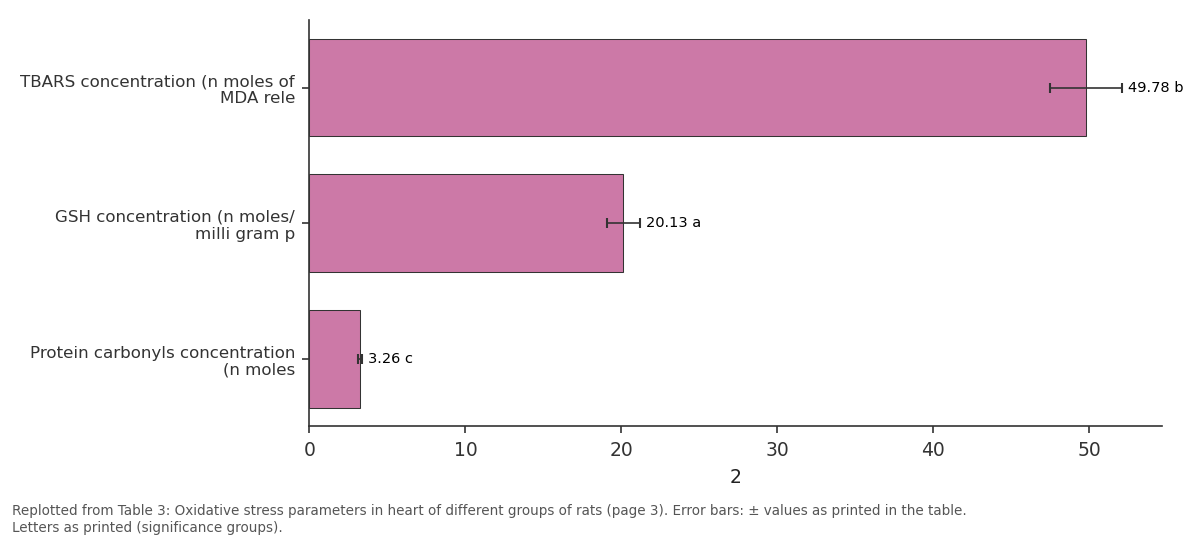
2: TBARS concentration (n... vs GSH concentration (n... vs Protein carbonyls...
Replotted from Table 3 (page 3) of the original paper. Every bar is the paper's own table value.
View source evidence ↗Figures & tables
From the original paper Table 1
 Table 2
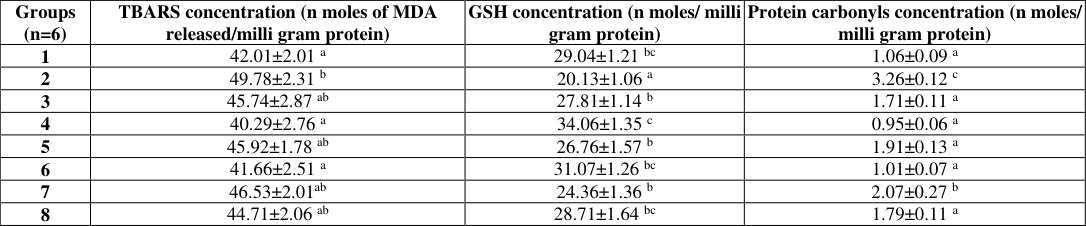 Table 3
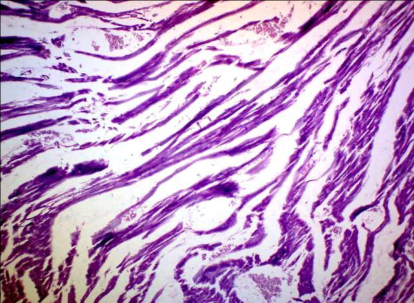 Figure 1
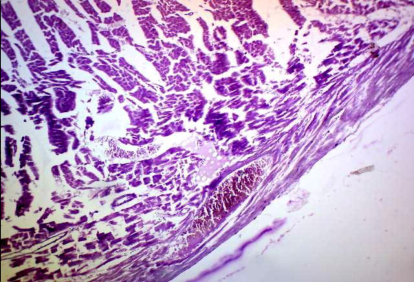 Figure 2
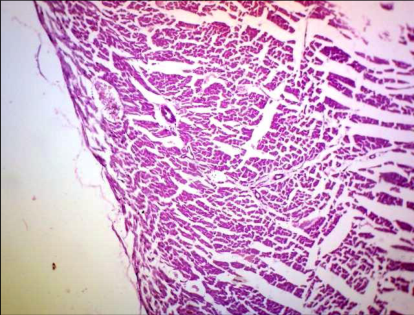 Figure 3
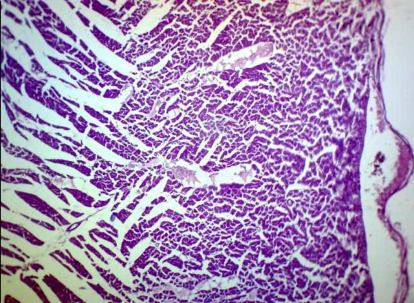 Figure 4
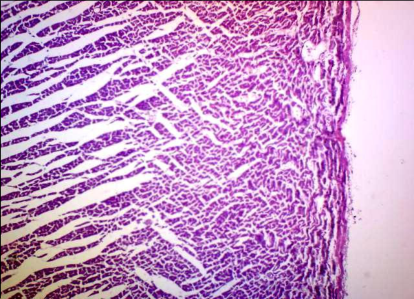 Figure 5
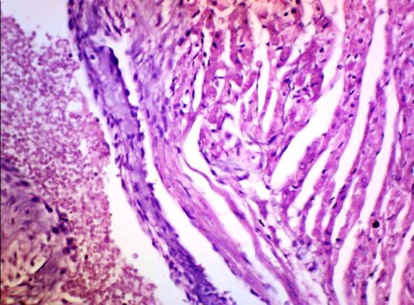 Figure 6
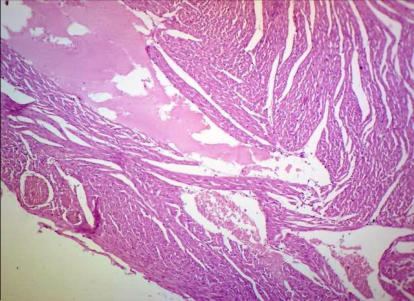 Figure 7
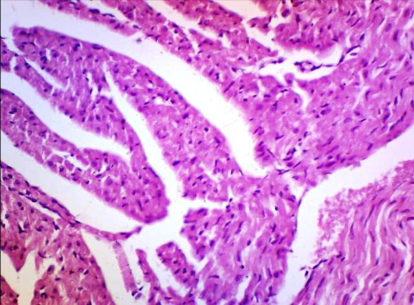 Figure 8
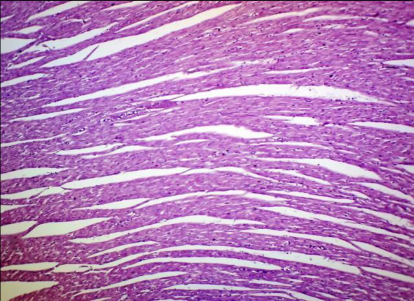 Figure 9
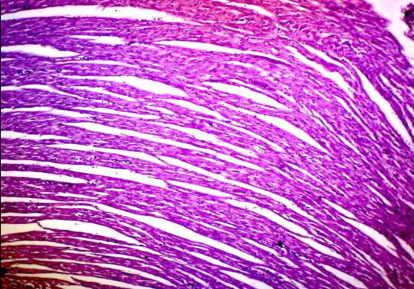 Figure 10
Introduction
Thyroid hormones play a number of key roles in the regulation of cardiovascular performance. However, the possible contributions of thyroid dysregulation to the pathogenesis of heart failure remain insufficiently studied [1] . TThe classic serum biochemical abnormality is hypercholesterolemia, which occurs in ~80% of dogs with hypothyroidism. The thyroid hormones, triiodothyronine (T 3 ) and thyroxine (T 4 ), modulate several physiological processes in organisms and are critical in the growth, development, differentiation and maintenance of metabolic homoeostasis. The ability of thyroid hormones to induce anabolic and catabolic pathways, such as lipogenesis and lipolysis, contributes to thyroid hormone-induced increase in energy expenditure, besides several mechanisms involved in this effect, such as sympathetic activity modulation. Thyroid hormones stimulate lipid synthesis, mobilisation and degradation [2] , The cardiovascular system is particularly sensitive to the effects of thyroid hormone. Increased or decreased concentrations of circulating thyroid hormone can produce clinically apparent changes in cardiovascular function. This article discusses the actions of thyroid hormone on the cardiovascular system and the clinical cardiac manifestations associated with thyroid dysfunction [3] . Herbal drugs have proven to be useful in number of diseases. Metabolic disorders are some disorders which progress at a slower rate but damage the whole functioning of the body. Conventional drugs available for these disorders cure symptomatically. Herbal drugs have the capacity to cure such metabolic disorders synergistically at different steps [4] . The objective of this study lies in usage of Withania and Shilajit for treating hypothyroidism and related disorders effectively.
Materials and Methods
Ninety six female Sprague-drawly rats of age 21 days, were bought from Mahaveeraa enterprises, Hyderabad. The study was conducted in the animal house of Veterinary Pharmacology & Toxicology Department, with appropriate dark and light cycle and temperature (25-27 °C). Polypropylene cages, mash feed and ad libitum water was arranged for rats. They were kept for a period of five days for acclimatisation. The study was carried out with acceptance of Institutional Animal Ethics Committee (IAEC), College of Veterinary Science, Rajendranagar.
Experiment-1
The rats were sorted into eight groups with twelve rats in each group and the experiment was conducted for a period of 3 months with following drug schedule:
Hypothyroidism with Methimazole @ 0.02% Group 3
Withania somnifera root extract control @100 milli gram/ Kilogram body weight Group 5
Hypothyroid +Withania somnifera root extract @100 milli gram/ Kilogram body weight Group 6
Shilajit control @100 milli gram/ Kilogram body weight Group 7
Hypothyroid + Shilajit @100 milli gram/ Kilogram body weight Group 8 Hypothyroid +Withania somnifera root extract @ 100 milli gram/ Kilogram body weight. +Shilajit @ 100 milli gram/ Kilogram body weight Blood samples were procured at monthly intervals from retro orbital puncture for estimation of lipid profile (CHOD / PAP, Peg / CHOD -PAP method for the determination of HDL cholesteroll in serum, GPO / PAPP method for the determination of triglycerides in serumm). At the end of third month, thyroidd Hormones (RIA, DiaSori kits, USA) were estimated from sera of blood. After treating for three months, from each group, six rats were sacrificed and heart, was collected for histopathological studies in suitable preservatives and further stored at -20 °C for analysis of GSH [5] , TBARS [6] and protein carbonyls [7] in homogenates.
Rest of 48 female rats, six from every group of the above experiment were mated with 24 male adult euthyroid rats of age above 3 months (procured from Mahaveera Enterprises, Hyderabad) and all the 48 pregnant rats were treated with methimazole and other treatments as mentioned above up to 17 th day of gestation. Pups were reared till 21 days. The rats were then sacrificed and heart was collected in suitable preservatives for histopathology studies.
Results
Results
Thyroid profile
The serum Triiodothyronine and Thyroxine hormone concentration (nano gram / deci liter) of the group 2 was significantly (p<0. 05) lesser than group 1 while the values in groups 3, 4, 5, 6 and 8 were comparable to group 1.
Triiodothyronine concentration in group 7 was significantly (p<0.05) lesser than group 1. The serum Thyroid Stimulating Hormone concentration (µ IU / ml) of the group 2 was significantly (p<0.05) increased than group 1 and was significantly lesser in groups 3 to 8 than group 2 (Table : 1). The alterations in thyroid profile of group 2 rats might be due to methimazole's inhibition of the enzyme thyroperoxidase, facilitating iodine's addition to tyrosine residues on the hormone precursor thyroglobulin. Thus the reduction in T 3 and T 4 through negative feedback mechanism could have stimulated pituitary to release more TSH [8] . Immunomodulation effect of Withania has a stimulatory effect on a sluggish thyroid and increased serum T 4 concentration [9] . Adaptogenic activity of Shilajit improved thyroid profile by controlling thyroid gland function [10] .
Serum lipid profile
In serum lipid profilee, the concentration of total cholesteroll (mg/dl), high density lipoprotein cholesteroll (milli gram / deci liter) and triglycerides of the normal control groupp 1, Withania control groupp and Shilajitt control groupp was significantly (p<0.05) less than those of group 2. The groupss 3, 5 and 8 showed significant (p<0.05) decrease of total cholesterol, comparedd to group 2 while in group 7 concentration was significantly (p<0.05) higherr thann groupp 1 and the treatmentt groups 3, 5, 7 and 8 showed significant (p<0.05) reduction in triglycerides (Table :2). The rise in low-density lipoprotein cholesterol and highdensity lipoprotein cholesterol levels were due to decreased clearancee of chylomicron remnants in hypothyroidism. The rise in triglycerides and high-density lipoprotein cholesterol levels were due to decreased activity of lipoprotein lipase and facilitation of cholesterol transfer from these lipoproteins to HDL-C [11] . Withania due to it's hypotriglyceridaemic, hypocholesterolaemic and hypop-hospholipidaemic effects reduced total cholesterol and triglycerides levels in the present study [12] . Shilajit due to its direct action on lipid metabolic pathways, reduced total cholesterol and triglycerides markedly [13] .
Oxidative stress parameters TBARS and protein carbonyls (n moles/mg protein) revealed a significant (p<0.05) rise in group 2 as compared to group 1 while the groups 4 and 6 respectively showed a significant (p<0.05) decrease compared to group 2. The values in groups 3, 5, 7 and 8 are lower compared to group 2.
The concentration of GSH (n moles/mg protein) decreasedd significantly (p<0.05) in group 2 compared to group 1.The groups 3 to 8 showed a significant (p<0.05) raise in GSH concentrationn compared to group 2 (Table 3) These alterations were due to hyperlipidemia in hypothyroidism that increased lipid peroxidation and hydrolyses of lipid peroxides. Also, increased aldose reductase activity reducess NADPH and there is raise in ROS [14] . DDecreased GSH levels in the present study might be due to reduced activity of G6PD that catalyses the NADPH and acts as a the important intracellular reductant in the cells which is needed for coupling of GSH [15] . Ashwagandha exhibits superoxide scavenging capacity and has ability to bleach the stable DPPHh, that indicated its antioxidant activity [16] . Antioxidant activity of shilajit might be due to presence of resonance stabilized soft-spin semiquinone free radicals, that produce free radical scavenging and antioxidant effects against paramagnetic NO, SO 3 -and OH radicals [17] .
Histopathology (Parent stock)
No lesions of pathological significance were observed in group I, III, IV and VI both in parent and F1 generation. In group II, section of heart showed separation of muscle bundles with moderate loss of branching pattern and striations and increase in interfibrillary space. Moderate congestion, proliferation of fibroblasts, mild to moderate mono nuclear cell infiltration, hemmorhages in endocardium, vacuolation and edema was noticed (Figs. 12). In group V, mild congestion in the endocardium, loss of striations in muscle fibres and mild mono nuclear cell infiltration in comparison to group II (Fig. 3). In group VII, sections showed discontinuity in muscle bundles with edema and mild congestion in the endocardium. (Fig. 4). In group VIII, sections were similar to that of normal control groups (Fig. 5).
F1 Generation
Sections in group II showed marked congestion, haemorrhages in both endocardium and myocardium. In myocardium significant oedema, muscle bundles separation, MNC infiltration, degeneration, loss of striations and increased interfibrillar space was observed (Figs. 67). In group V, mild congestion in the endocardium, less separation of muscle bundles and loss of striations in muscle fibres was noted (Fig. 8). In group VII mild changes like congestion, separation of muscle bundles were observed (Fig. 9). In group VIII, sections were almost comparable to that of normal control groups (Fig. 10). The alterations noticed were due to disproportionate production of ROS that are correlated with the organ oxidative stress parameters [18] . The improved lesions in groups 5 and 7 and no lesions in group 8 are due to antistress, cardioprotective and immunomodulatory actions of Ashwagandha, shilajit and their combination [19] .
Conclusion
The present study indicated that, biochemical and histopathological alterations in the study indicated cardiotoxicity at molecular level. The organ damage might be due to thyroid hormones deficiency that leads to free radicals release. Administration of Withania somnifera and Shilajit individually and combined alleviated the deleterious effects caused by hypothyroidism due to their antioxidant and endocrine stimulant properties. Synergistic action of herbs in alleviating the effects of hypothyroidism is superior to administration of herbs individually.
Acknowledgement
AcknowledgementsAuthors thank DST (INSPIRE FLLOWSHIP) for funding the experiment and PV Narsimha Rao Veterinary University for providing the infrastructure for the study. I am also thankful to the subjects of my research for sacrificing their lives for a noble cause.
Figures and tables from the paper
| Groups (n = 6) | T3 (nano gram / deci liter) concentration | T4 (micro gram /deci liter) concentration | TSH (µ IU / milli liter) concentration |
|---|---|---|---|
| 1 | 115. 68±4. 46 b | 4. 71±0. 14 b | 0.05±0. 01 a |
| 2 | 101. 15±4. 06 a | 3. 01±0. 24 a | 5.91±0. 45 c |
| 3 | 110. 73±4. 84 b | 4. 36±0. 18 b | 0. 87±0.03 b |
| 4 | 118. 03±4. 69 b | 4. 79±0. 17 b | 0. 03±0.007 a |
| 5 | 111. 74±4. 17 b | 4. 24±0. 17 b | 1. 04±0.03 b |
| 6 | 116. 62±5. 02 b | 4. 69±0. 19 b | 0. 04±0. 009 a |
| 7 | 106. 78±4. 71 a | 3. 45±0. 12 a | 1.91±0.16b |
| 8 | 113. 19±4. 76 b | 4. 31±0. 21 b | 0.51±0.12b |
Table text extracted from the original PDF; superscript letters are shown inline. The original table image is below.
View original table image
| Groups (n=6) | Total cholesterol (milli gram / deci liter) | Triglycerides ((milli gram / deci liter) | HDL ((milli gram / deci liter) |
|---|---|---|---|
| 1 | 137. 05±7. 19 a | 36. 47±2. 03 ab | 33. 75±3. 47 a |
| 2 | 172. 71±7. 29 c | 49. 63±3. 01 c | 51. 06±4. 08 c |
| 3 | 149. 13±6. 72 b | 37. 14±2. 87 b | 41. 06±3. 72 b |
Table text extracted from the original PDF; superscript letters are shown inline. The original table image is below.
View original table image
References
15 in the original paper- Panel RD, Kienle DVM, David Bruyette DVM, Paul D, Pion DVM. Effects of Thyroid Hormone and Thyroid Dysfunction on the Cardiovascular System. Veterinary Clinics of North America: Small Animal Practice. 1994;24(3):495-507.
- Anshita G, Suchita W, Bina G, Chanchal DK. Herbal drugs for thyroid treatment. Interntional journal of pharmacy and biological sciences. 2016;6(1):62-70.
- Moron MS, Depierre JW, Mannervik B. Levels of glutathone, glutathione reductase and glutathione S transferase in rat lung and liver. Biochimica et Biophysica Acta. 1979;582:67-68.
- Balasubramanian KA, Manohar M, Mathan, VI. An unide ntified inhibitor of lipid peroxidation in intestinal mucos. Biochemica et Biophysica Acta. 1988;962:51-58.
- Levine RL, Garland D, Oliver CN, Amici A, Climent I, Lenz AG, et al. Determination of carbonyl content in oxidatively modified proteins. Methods in Enzymology. 1990;186:464-478.
- Chakrabarthi S, Guria S, Samantha I, Das M. Thyroid dysfunction modulates glucoregulatory mechanism in rats. Indian Journal of Experimental Biology. 2007;5:549-553.
- Bhattacharyaa SK, Muruganandam AV. Adaptogenic activity of Withania somnifera: an experimental study using a rat model of chronic stress. Pharmacology, Biochemistry and Behavior. 2003;75:547-555.
- Meena H, Pandey HK, Arya MC, Ahmed Z. Shilajit: A panacea for high-altitude problems. International Journal of Ayurveda Research. 2010;1(1):37-40.
- Pearce EN, Wilson PW, Yang Q, Vasan RS, Braverman LE. Thyroid function and lipid subparticle sizes in patients with short-term hypothyroidism and a population-based cohort. Journal of Clinical Endocrinology and Metabolism. 2008;93(3):888-894.
- Udayakumar R, Sampath K, Mariashibu TS, Rajesh M, Anbazhagan VR, Chang SK, et al. Hypoglycaemic and Hypolipidaemic Effects of Withania somnifera Root and Leaf Extracts on Alloxan Induced Diabetic Rats International Journal of Molecular Sciences. 2009;10(5):2367-2382.
- Trivedi NA, Mazumdar B, Bhatt JD, Hemavathi KG. Effect of shilajit on blood glucose and lipid profile in alloxan-induced diabetic rats. Indian Journal of Pharmacology. 2004;36(6):373-376.
- Mancini A, Raimondo S, Segni CH, Persano M, Gadotti G, Silvestrini A, et al. Thyroid Hormones and Antioxidant Systems: Focus on Oxidative Stress in Cardiovascular and Pulmonary Diseases International Journal of Molecular Sciences. 2013;14:23893-23909.
- a and striatum. Journal of Ethnopharmacology. 2001;74:1-6.
- Ghosal S, Lal J, Jaiswal AK, Bhattacharya SK. Effects of Shilajit and its Active Constituents on Learning and Memory in Rats? Phytotherapy Research. 1993;7:29-34.
- Nasra N, Ayuoba B, Nagla A, El-Shitanyc D, Alamae MN. Thymoquinone protects against hypothyroidisminduced cardiac histopathological changes in rats through a nitric oxide/antioxidant mechanism. Biomedical Research. 2015;27(1):93-102.