
Research article · 2023 · Full text
International Journal of Biology SciencesFungal deterioration of historical monument with reference to Jaleshwarnath temple of Shivpur, Chhattisgarh, India
Volume 5(2) · Pages 19–21 · DOI: 10.33545/26649926.2023.v5.i2a.166 ↗
Research areasBuilding materials and conservationLichen and fungal ecologyMycorrhizal Fungi and Plant Interactions
Abstract
Author-writtenStone objects may support novel communities of microorganisms that are active in bio-deterioration process. Bio-film on the sandstone monuments contains a complex of consortia of Bryophyta and Fungi. The Bryophyta make up the photosynthetic part of the bio-film while hyphae, filaments and spores take part as fungal components. These structures make a dense layer by intertwining over the surface of sandstone monuments. In the present investigation 10 samples were collected from different sites of Jaleshwarnath temple of Shivpur of Chhattisgarh and their surroundings. The five (05) fungal species were isolated which have dominance over sandstone structures of the monuments. During investigation period it was observed that Aspergillus sp. was found most dominant. The identified micro fungi cause discoloration as well as mechanical exfoliation of building stone material that was analyzed through mechanical hyphae penetration and production of dark pigments and organic acids.
Summary
Source-checkedPlain-language reading of the full paper, prepared with AI and checked against the text. Each point links to the authors' own words.
Why it matters
- Stone structures can host unique microbial communities that actively contribute to the process of biological deterioration. View evidence ↗
- Bio-films found on sandstone monuments typically consist of a complex mixture of fungi and Bryophyta. View evidence ↗
- The Jaleshwarnath temple is constructed from sandstone, a material characterized by its porous nature. View evidence ↗
The question
- The study aimed to investigate the fungal species present on and around the Jaleshwarnath temple in Shivpur, Chhattisgarh. View evidence ↗
What they did
- Researchers collected a total of 10 samples from various locations within the temple and its surrounding areas. View evidence ↗
- Micro-organisms were isolated using a combination of sample culturing and direct incubation in a moist chamber. View evidence ↗
- Purified fungal cultures were identified through mycological techniques and cross-referenced with established literature and manuals. View evidence ↗
What they found
- Five distinct fungal species were isolated that dominate the sandstone structures of the monument. View evidence ↗
- Aspergillus niger was the most prevalent species, exhibiting the highest frequency, density, and abundance, followed by Chaetomium globosum and Fusarium oxysporum. View evidence ↗
- The identified fungi cause stone discoloration and mechanical exfoliation via the production of organic acids, dark pigments, and the penetration of hyphae. View evidence ↗
What it means
- The authors conclude that Aspergillus niger is the dominant species at the Jaleshwarnath temple, reflecting its strong adaptation to the local environment. View evidence ↗
- The authors state that Aspergillus niger contributes to the deterioration of stone surfaces by producing organic acids that solubilize stone and chelate minerals. View evidence ↗
Visual summary
1 visualsIllustrations explain the paper; they do not show study data.
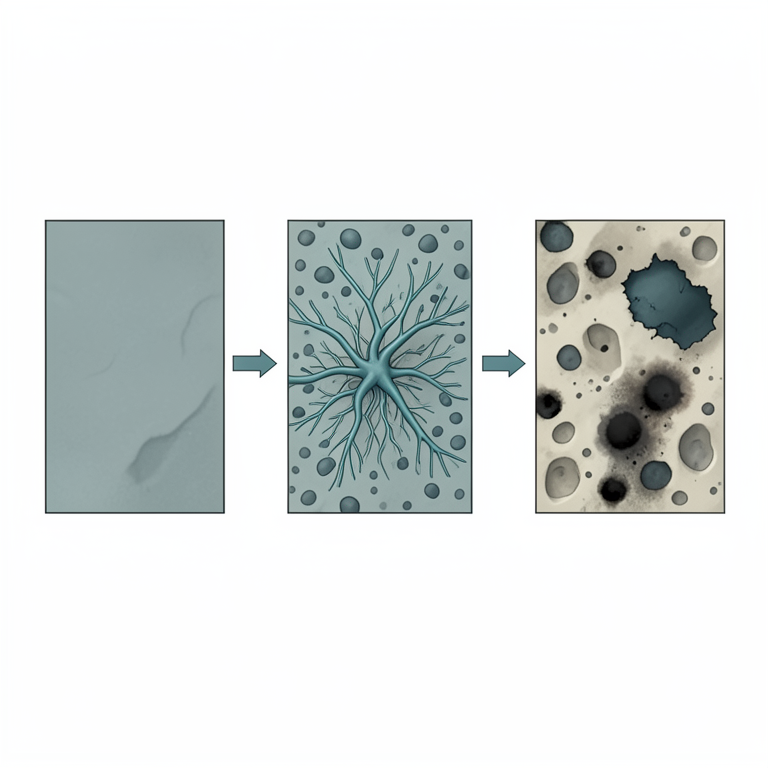
Mechanism of Fungal Stone Deterioration
AI-generated conceptual illustration (Sandstone surface of an ancient temple). It explains the idea and does not show study data.
View source evidence ↗Figures & tables
From the original paper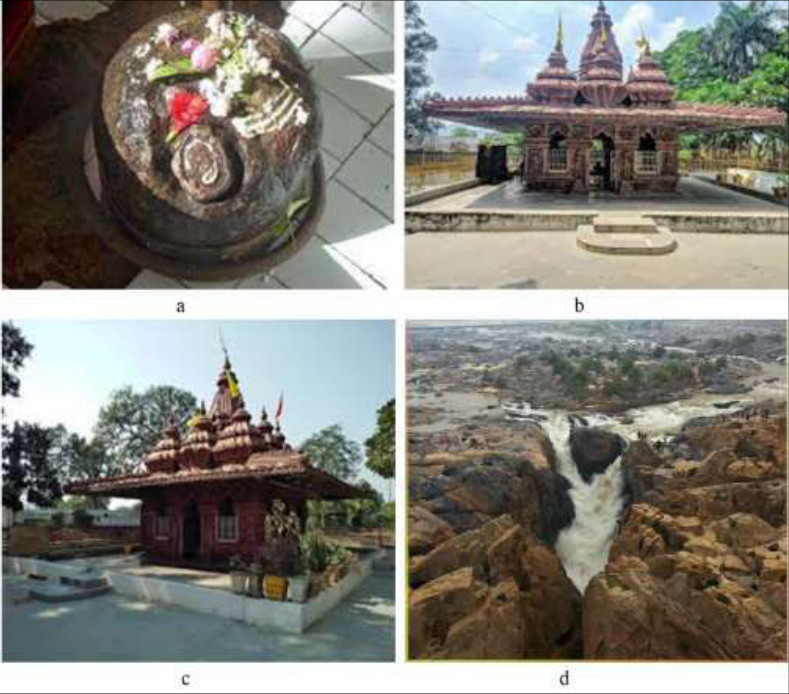 Figure 1
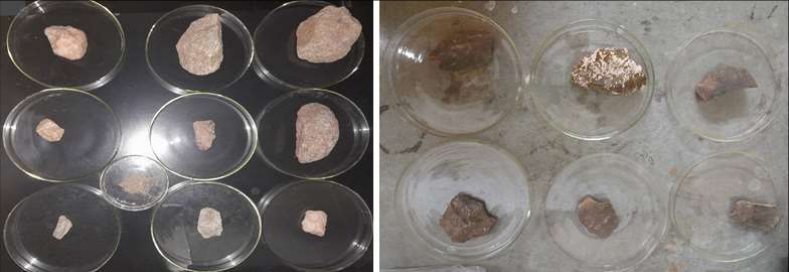 Figure 2
Introduction
Shivpur is a little town situated around 40 kilo meter far from district head quarter of Surguja of Chhattisgarh state in India. This antiquated sanctuary devoted to Lord Shiva is situated in Shivpur town in the midst of pleasant characteristic environment (under the sky). This sanctuary is otherwise called Jaleshwarnath Mandir. It is a mainstream journey goal that draws in an immense horde of devotees from distant spots. On the event of Maha Shivratri and Basant Panchami, an enormous celebration is arranged here. This ancient temple is built in Shivpur village near Pratappur of Chhattisgarh. This temple is the most famous and beautiful place of Pratappur of Surguja district. There is dense forest and mountains all around here. This temple is located a little away from Pratappur-Balrampur Highway Road. Here Shivling is sitting in the main sanctum sanctorum. The specialty of this temple is that Shivling is sitting here. Here water flows from the sitting point of Shivling and this water continues to flow like this throughout the year and for 24 hours. There is a water kund is made here, where lotus flowers are planted. This temple is very well built. A fair is organized here on Sawan Monday and Mahashivaratri, in which people from far and wide come to visit. Many deities are available here for darshan. Here Nandi Bhagwan, Jagannath Puri, huge idol of Hanuman Ji, ancient Shivling and many more idols are available to darshan. All these images are very beautiful. This place is very beautiful and people will love coming here.
Conservation issue
Jaleshwarnath temple built of sand stone which is porous in nature. The stone surface of the temple has become blackish in appearance due to deposition of dist, dirt, and dried vegetation and micro vegetation growth on an exterior as well as interior portions. The depositions are seeming to be very old as depicted by the formation of secondary lichens of dull green pale white colour which are present all over the stone surface. Due to these depositions the aesthetic beauty of the temples is affected badly. Furthermore, scientific point of view these depositions are very harmful for the health of the stone surface because these Increase in humidity level due to high rainfall and also thick forest cover had affected the stone surface. The exterior portion of temple had become blackish due to deposition of dried moss, lichens & bacterial slime. Accumulation of dust and dirt was also a base for the growth of micro vegetation which secretes organic acid causing which harmful to the structure (Kumar & Kumar, 1999) [7] . Stone chipping of temple was taking place which was in need of urgent consolidation.
Materials and Methods a) Sampling and Isolation of Fungi
A total of 10 Samples were collected from various locations of Jaleshwarnath temple & surrounding of the temple and brought to the laboratory under aseptic conditions. The isolation of micro-organisms was done by culturing the samples and by direct incubation of samples in moist chamber. The purified fungal cultures were identified by using mycological techniques and were compared with the available authentic literature, reviews and mycological manuals (Alexopoulus, 1978; Barnett & Hunter, 1978; Gilman, 1995 and Gupta, et al., 2015) [2,3,5,6] .
b) Calculations
Various myco-ecological parameters have been calculated using the following formulae.
Results and Discussion
During screening for search of mycoflora, total five species of fungal organisms were isolated from Jaleshwarnath temple at Shivpur. In the temple Aspergillus niger shows maximum frequency, Density as well as Abundance followed by Fusarium oxysporum& Chaetomium globosum. Some of the fungal species are confined to particular area i.e. Aspergillus fumigatus, Chaetomium globosum and Rhizopus nodosus. These confinements of fungal species depend on environmental conditions of the area, which varies from geographical area to area (Gupta et al. 2015) [6] .
In the present study Aspergillus species are the most common species found in the sites (Observation table-1). It has also been shown in the laboratory that fungal species such as Aspergillus niger were able to solubilize powdered stone and chelate various minerals in a rich glucose medium because they produce organic acids such as gluconic, citric, and oxalic acids (Lapidi & Schipa, 1973) [1] . The toxic metabolites produced by various species of fungal organisms function as chelating agents that can leach metallic cations, such as Iron, Magnesium etc. from the stone surface. Laboratory experiments have demonstrated that basic rocks are more susceptible to fungal attack than acidic rocks. In the present study Aspergillus are the most common species found in the sites. Aspergillus niger released certain metal ions from the rock samples (Boyle & Voight, 1973 and Gupta, et al., 2015) [4,6] .
Conclusion
Conducted at Jaleshwarnath temple in Shivpur identified five fungal species, with Aspergillus niger being the most prevalent, showing highest frequency, density, and abundance. This underscores its adaptation and dominance in the temple environment, potentially influenced by specific local conditions. The presence of other fungi like Fusarium oxysporum and Chaetomium globosum, each with its own spatial distribution, highlights the diverse ecological niches within the temple. Laboratory experiments further revealed the ability of Aspergillus niger to solubilize stone and chelate minerals through organic acid production, demonstrating its role in biogeochemical processes affecting stone surfaces. These findings contribute to our understanding of fungal ecology in cultural heritage sites, emphasizing the dynamic interaction between fungal species and their environment, which can vary significantly across geographical regions.
Acknowledgement
AcknowledgementAuthor are gratitude to thanks Dr. Alok Tripathi, Director General, NRLC, Lucknow and Additional Director General, Archaeological Survey of India, New Delhi for their encouragement and guidance.
Figures and tables from the paper
References
3 in the original paper- Boyle JR, Voight GK. Biological weathering of silicate minerals: Implications for tree nutrition and soil genesis. Plant and Soil. 1973;38:191-201.
- Gupta SP, Sharma DN, Chandrol GK, Misra R, Minj DK. Myco-Ecological Study of Fungal Flora on Deteriorating Sandstone Structures of Historical Monument Kala Dera-I Temple of Jammu & Kashmir State (India). (IJIRSET) International Journal of Innovative Research in Science, Engineering and Technology. 2015;4(10):10298-10302.
- Kumar R, Kumar AV. Biodeterioration of stone in tropical environments USA. Journal Paul Getty Trust. 1999;(0-89236-550):1-2.