
Research article · 2022 · Full text
International Journal of Agriculture and NutritionThe perception of Information communication technologies (ICTs) and perceived organizational support among extension workers in North central Nigeria
Volume 4(1) · Pages 56–60 · DOI: 10.33545/26646064.2022.v4.i1a.110 ↗
Research areasEducational Technology and Optimization
Abstract
Author-writtenThe study assesses the perception of ICTs and perceived organizational support among extension workers in North central Nigeria. Data were collected through the use of a questionnaire to 291 respondents, simple random sampling method was employed. Mean, frequency, standard deviation, correlation coefficient, and Multi-linear regression were used for data analysis. Findings reveal a moderate level of ICTs training, high level of ICTs application and moderate level of Perceived organizational support. Based on result from the Bivariate correlation, the result revealed a positive and significant correlation between ICTs application (r=0.309) and job performance at P
Summary
Source-checkedPlain-language reading of the full paper, prepared with AI and checked against the text. Each point links to the authors' own words.
Why it matters
- Information communication technologies (ICTs) consist of various tools and resources used for the creation, storage, and exchange of information. View evidence ↗
- In agriculture, ICTs can improve the effectiveness of extension programs and help farmers access critical time-sensitive data like market prices and disease outbreaks. View evidence ↗
- Competent extension workers are vital for Nigerian agricultural development as they act as the primary link between farmers and government, research institutes, and policymakers. View evidence ↗
The question
- The study aimed to examine levels of ICT training, application, and organizational support, and to determine how these factors relate to and explain variances in extension workers' job performance. View evidence ↗
What they did
- The researchers used a random sampling method to select participants from a total population of 1,279 agricultural extension workers across four states in north central Nigeria. View evidence ↗
- Data were collected via questionnaires from a sample size of 291 respondents. View evidence ↗
- The analysis employed mean, frequency, standard deviation, correlation coefficients, and multi-linear regression. View evidence ↗
What they found
- The majority of respondents (66.7%) were found to have a moderate level of ICT training. View evidence ↗
- Most respondents (61.9%) reported a high level of ICT application, with a mean score of 3.68. View evidence ↗
- Perceived organizational support was most commonly rated as moderate (37.1%) by the respondents. View evidence ↗
- There is a significant positive correlation (r=0.309, P<0.01) between the application of ICTs and the job performance of extension workers. View evidence ↗
- Regarding the quantity of work, ICT training explained 37% of the variance, while work experience explained 58%. View evidence ↗
- The quality of work was explained by perceived organizational support (48%) and ICT training (47%). View evidence ↗
- The speed of work was explained by perceived organizational support (45%) and ICT training (43%). View evidence ↗
What it means
- The authors conclude that there is a clear link between ICT training, perceived organizational support, and the speed of work among agricultural extension workers. View evidence ↗
Visual summary
2 visualsIllustrations explain the paper; charts are replotted from the paper's own table values.
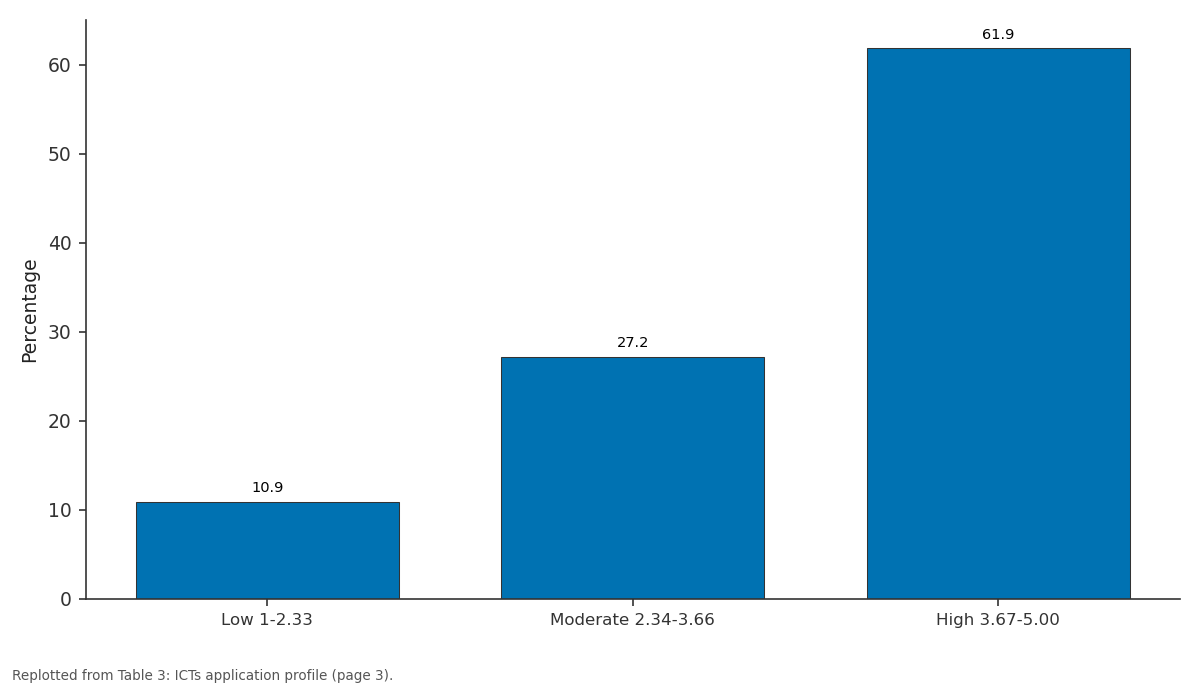
Percentage: Low 1-2.33 vs Moderate 2.34-3.66 vs High 3.67-5.00
Replotted from Table 3 (page 3) of the original paper. Every bar is the paper's own table value.
View source evidence ↗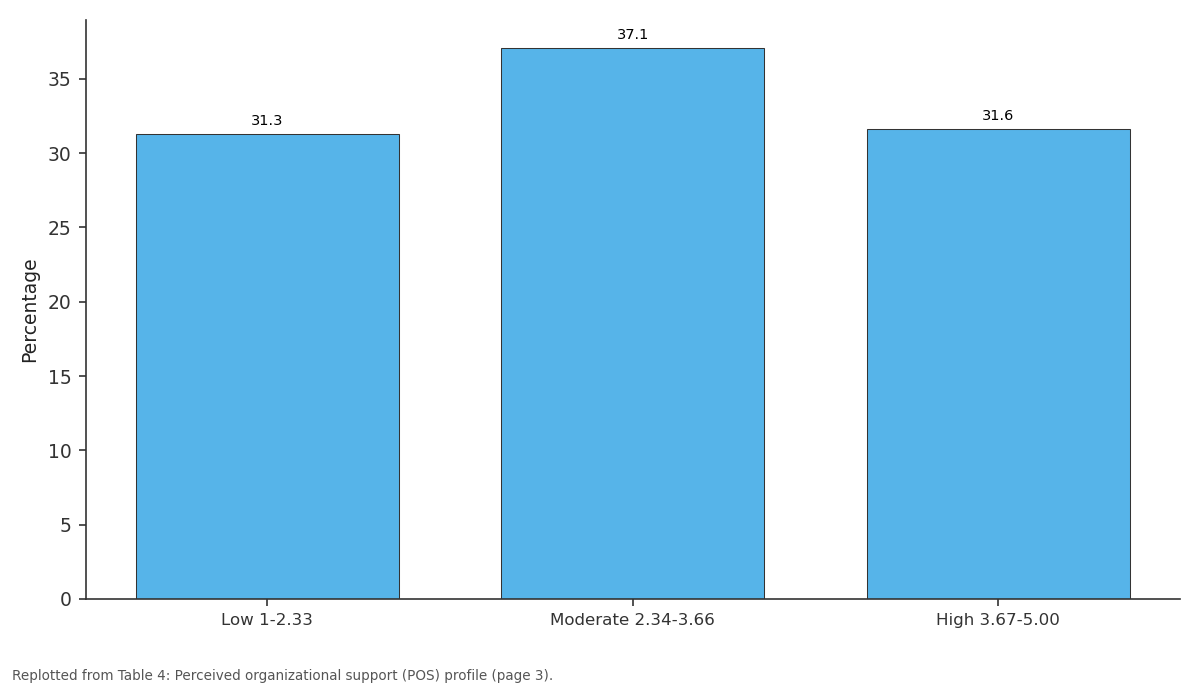
Percentage: Low 1-2.33 vs Moderate 2.34-3.66 vs High 3.67-5.00
Replotted from Table 4 (page 3) of the original paper. Every bar is the paper's own table value.
View source evidence ↗Figures & tables
From the original paper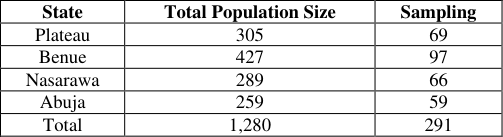 Table 1
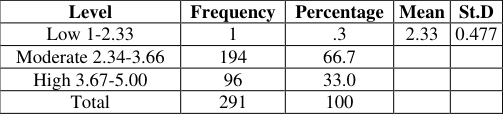 Table 2
 Table 3
 Table 4
 Table 5
 Table 6
 Table 7
 Table 8
Introduction
The world is said to be a global village due to the exploitation in information and communication technologies (ICT). ICT refers to as a diverse set of technological tools and resources used to transmit, store, create, share or exchange information. These technological tools and resources include computers, the internet (websites, blogs and emails), live broadcasting technologies (radio, television, Webcasting), recorded broadcasting technologies (podcasting, audio and video players and storage devices) and telephony (fixed or mobile, satellite, visio/video-conferencing, etc.) UNESCO (2017) [1] . It has become a game changer in boosting productivity and efficiency in different fields of knowledge especially Agriculture. Wolfert et al., (2017) [2] observed that technological advancement in the area of digital platforms such as e-commerce, agro-advisory apps, big data, computational power, and satellite systems like remote sensing, among others, quicken communication and information sharing among farmers in recent years. ICT has the potential to increase the capacity of farmers to meets demands through collective learning, sharing time-sensitive information such as market prices, disease outbreak, improving effectiveness of extension programs and structures, involving farmers in assessing their own needs, promoting brainstorming by multiple stakeholders, creating innovative technologies for development, promoting business and credibility (Mustapha et al., 2022) [3] . For ICT-based extension to be effective, both the general public and extension personnel have to be competent in using technology (Hamernik and Crosby, 2015) [4] . According to Vijayraghavan and Singh (2005) [5] development of requisite competencies amongst the extension workforce within extension organizations is directly linked to training of extension personnel. Furthermore, Madukwe (2006) [10] opined that the increased use of information and communication technologies in extension requires continuous training of personnel of extension service delivery in any country. Training constitutes a basic concept in human resource development. Training has to do with developing a particular skill to a desired level through instructions and practice. Therefore, in the context of this study ICT Training means the act of increasing the knowledge and skill of an extension agent about ICT.
Problem Statement
The rate at which ICT application is increasing in every sector of the world has triggered the development of variety of ICT applications in the Agriculture sector to aid effective and timely access to information by farmers, extension agents and other players within the sector. According to Anh et al., (2019) [6] , ICT Applications have the potential to identify and find solutions to some of the numerous problems faced in the field of Agriculture, which includes prolonged droughts, pest and diseases outbreaks, seasonality and spatial dispersions of farming; high transaction costs and information asymmetry. Employers-Employee' relationship is a critical factor that determines the conduciveness and harmony of a working environment. The manner employees interpret how an organization values them may be vital for determining their attitudes benefiting the organization (Baheshtifar and Zare 2012) [7] . One gauge of this relationship is expressed in Perceived Organizational Support (POS). POS is the degree to which employees perceives the organization cares about their well-being and values their contribution (Robbins et al., 2018) [8] . When workers sense support and compassion from association, they will then put forth an effort to help attain organization goals. A satisfied employee finds his/her job less stressful, regularly attends work, is committed to the organization, readily engages in prosocial behaviors, does not consider leaving his/her job, and likely to have improved job performance. One underlying factor that keeps affecting agricultural development in Nigeria is availability and accessibility of competent extension workers. This is because they are the bridge between the farmers and research institutes, Government, policies makers and other key players in the sector. In advanced food sufficient countries, agricultural extension is seen as the application of scientific research and new knowledge to agricultural practices through farmer education. The world and its environment are changing which implies that extension workers must also change in tandem with these developments by gaining requisite knowledge and skills on how to use modern ICTs. The need to train the extension workers on ICT cannot be over-stated. According to Yakubu et al., (2013) [9] , the benefits of ICT were not fully utilized due to poor training among others.
There is also the need to evaluate how the extension workers view the organization support available to them. This study intends to assess level ICT Training and Application and Perceived Organizational Support among extension workers in North Central States in Nigeria.
Methodology
For the purpose of this study, random sampling method was employed. The total population of agricultural extension workers (1,279)
Results and Discussion
Results and Discussion
ICTs training Profiles
This section presented and was able to discussed the levels of ICTs training profile. The constructs were measured on 5point Likert scale ranging from 1-5. In the study the mean level of 1 to 2.33 were considered low, 2.34 to 3.66 were regarded as moderate and whereas 3.67 to 5 were considered high. Of Agricultural extension workers in south central Nigeria had been determined using frequency and percentage. The results are presented on the Tables 2 below. The descriptive analysis on the ICTs training of agricultural extension workers on Table 4.2 showed that the total average mean score is 2.33 and average standard deviation of 0.477. Out of the total number of 291 respondents, 1 (.3) were in low level, 194 (66.7) were in their moderate level and 96 (33.0) were in their high level. This implies that majority of the respondents were at the moderate level of ICTs training. Therefore, they need more training to enable them obtained additional skills in order to achieve high level of training to efficiently carry out their duty. The result corresponds to the findings of Nyarko and Kozári, (2021).
| Level | Frequency | Percentage | Mean | St.D |
|---|---|---|---|---|
| Low 1-2.33 | 91 | 31.3 | 3.00 | 0.83 |
| Moderate 2.34-3.66 | 108 | 37.1 | ||
| High 3.67-5.00 | 92 | 31.6 | ||
| Total | 291 | 100 |
Table text extracted from the original PDF; superscript letters are shown inline. The original table image is below.
View original table image
ICTs application profile
This section presents and discussed the levels of ICTs application profile. The constructs were measured on 5 point Likert scale ranging from 1-5. In the study the mean level of 1 to 2.33 were considered low, 2.34 to 3.66 were regarded as moderate and whereas 3.67 to 5 were considered high. The respondents had been determined using frequency and percentage. The results are presented on the Tables 3 below. Based on the mean score of 3.68, and standard deviation of 0.88, as shown on Table 4.3, the descriptive analysis shows that, out of 291 respondents, 61.9% were of the perception that they were in their high level, 27.2% showed moderate level and 10.9% of the respondents reported a low level of ICTs application. This finding implies that, most of the respondents had high level of ICTs application. The findings are in line with the work of Onyemekihian (2021) [11] , which reported that majority of agricultural extension workers 72.3% used the ICT in their extension services delivery to farmers.
Perceived organizational support profile
This section captured and discussed the levels of Perceived organizational support profile. The measurement was carried out on 5-point Likert scale ranging from 1-5. In the study the mean level of 1 to 2.33 were considered low, 2.34 to 3.66 were regarded as moderate and whereas 3.67 to 5 were considered high. The respondents had been determined using frequency and percentage. The results are presented on the Tables 4 below. The mean score 3.0 standard deviation of 0.83 of the overall number of respondents (291) on Table 4.4 revealed their perception on level of perceived organizational support. The findings indicated that, 31.3% of the respondents were in their low level of perceived organizational support, 37.1% were in their moderate level while 31.6% were in their high level of perceived organizational support. This implies that most of them had moderate level of perceived organizational support at (37.1%). The study is in line with that of Ladebo et al., (2005) [12] , who reported that, the overall ratings showed that the respondents moderately agreed to the views that their organizations were supportive. It was also supported by Eisenberger et al. (2016) [13] who opined that it is therefore clear that employees mostly feel moderately to highly valued by their organization.
Relationship between ICTs application and job performances of the respondents:
The result on Table 5 presented and discussed the bivariate correlation between ICTs application and Job performances of agricultural extension workers. The result revealed that, there was a positive and significant correlation between ICTs application (r=0.309) and job performance of agricultural extension workers at P<0.01. This implies that, there was a moderate effect in the relationship between the two variables. The result further implies that, as ICTs application increases or decreases, job performances of extension workers tends to move in same directions. The result was significant at 99% confidences level. The r 2 0. 5476 shows about 54.8% variances between variables. The result is in consistence with that of the study of Onyema, Chiemek (2023) who found that there is a significant positive correlation between ICT usage and the level of employee performance.
The ICTs explain the variances in job performance
The findings indicated that, among all the variables used in the multi-linear regression based on the stepwise method, only ICTs training and one of the respondents demographic (experiences) was related to Quantity of work. The result revealed that, the R 2 value of ICTs training was 0.37, thus implying that ICTs training explained 37% on Quantity of work of the respondents. The result also showed that the respondents characteristics in terms of work experiences was related to Quantity of work, with R 2 value of 0.58, this shows that work experiences of respondents explained Quantity of work in terms of job performances with about 58%.
Acknowledgement
AcknowledgementsThe authors acknowledged the Tertiary Education Trust Fund (tetfund) for funding this research. The authors also thank the Directors of Agricultural development program of Adamawa, Bauchi, Gombe and Taraba. The extension agents, agricultural officers, enumerators and editors for their contributions to this article.
Figures and tables from the paper
| State | Total Population Size | Sampling |
|---|---|---|
| Plateau | 305 | 69 |
| Benue | 427 | 97 |
| Nasarawa | 289 | 66 |
| Abuja | 259 | 59 |
| Total | 1,280 | 291 |
Table text extracted from the original PDF; superscript letters are shown inline. The original table image is below.
View original table image
| Level | Frequency | Percentage | Mean | St.D |
|---|---|---|---|---|
| Low 1-2.33 | 1 | .3 | 2.33 | 0.477 |
| Moderate 2.34-3.66 | 194 | 66.7 | ||
| High 3.67-5.00 | 96 | 33.0 | ||
| Total | 291 | 100 |
Table text extracted from the original PDF; superscript letters are shown inline. The original table image is below.
View original table image
| Level | Frequency | Percentage | Mean | St.D |
|---|---|---|---|---|
| Low 1-2.33 | 32 | 10.9 | 3.68 | 0.88 |
| Moderate 2.34-3.66 | 79 | 27.2 | ||
| High 3.67-5.00 | 180 | 61.9 | ||
| Total | 291 | 100 |
Table text extracted from the original PDF; superscript letters are shown inline. The original table image is below.
View original table image
| Variables | R2 | Std Err. |
|---|---|---|
| ICTs training | 0.37 | 0.06532 |
| Experiences | 0.58 | 0.06498 |
Table text extracted from the original PDF; superscript letters are shown inline. The original table image is below.
View original table image
| Variables | R2 | Std Err. |
|---|---|---|
| ICTs training | 0.47 | 0.44298 |
| Perceived Organizational support | 0.48 | 0.43707 |
Table text extracted from the original PDF; superscript letters are shown inline. The original table image is below.
View original table image
| Variables | R2 | Std Err. |
|---|---|---|
| ICTs training | 0.43 | 0.44333 |
| Perceived Organizational support | 0.45 | 0.4371 |
Table text extracted from the original PDF; superscript letters are shown inline. The original table image is below.
View original table image
References
11 in the original paper- UNESCO International Forum on ICT and Education 2030, Qingdao, China, 2017, (2).
- Wolfert S, Ge L, Verdouw C, Bogaardt MJ. Big Data in Smart Farming -A review. Agricultural Systems. 2017;153(69):80. https://doi.org/10.1016/j.agsy.2017.01.023 Google Scholar.
- Mustapha S, Man N, Shah AJ, Kamarulzaman NH, Tafida AA. Factors influencing the adoption of ICT'S in extension service delivery among the extension agents in North-East, Nigeria. Sarbad Journal of Agriculture. 2022;38(1):149-159.
- Hamernik D, Crosby G. Exploring new opportunities for extension. Cooperative extension workshop. 2015. Available online from http://www.csrees.
- Vijayraghavan K, Singh YP. Managing human resources within extension. In improving Agricultural Extension: A Reference manual. Swanson, A, J. (Eds). Extension, Education and Communication Service, Research, Extension and Training Division, Sustainable Development Department, FAO, 2005.
- Anh NH, Bokelmann W, Thuan NT, Nga DT, Minh NV. Smallholders' preferences for different contract farming models: empirical evidence from sustainable certified coffee production in Vietnam. J Sust. 2019;11(14):1-26, 10.3390/su11143799
- Beheshtifar M, Zare E. Effect perceived organizational support on employees' attitudes toward work, Science Series Data Report. 2012;4(9):28-34.
- Robbins SP, Judge TA, Breward K. Essentials of organizational behavior (First Canadian Edition ed.). Pearson Education, 2018.
- Yakubu DH, Abubakar BZ, Atala TK, Muhammad A. Use of Information and Communication Agricultural Technologies among Extension agents in Kano State, Nigeria. Journal of Extension. 2013;17(1):256-268.
- Madukwe MC. Delivery of agricultural extension services to farmers in developing countries. Wagenigen. The Netherlands. CTA Publication. 2006.
- Onyemekihian J, Onyekwuma ES. Relationship between National Interest and Global Interest in Foreign Policy of a State. Social Science Research. 2021, 7(1).