
Research article · 2023 · Full text
International Journal of Agriculture and Food ScienceComparative toxicological observations of Tivra gandha, Akarkara, Pushkarmool and Chichori indigenous biorational extractives for the management of okra aphid, Aphis gossypii Glover (Hemiptera: Homoptera: Aphididae) under laboratory trials
Volume 5(2) · Pages 11–19 · DOI: 10.33545/2664844x.2023.v5.i2a.140 ↗
Research areasInsect Pest Control StrategiesInsect Resistance and GeneticsPesticide Exposure and Toxicity
Abstract
Author-writtenAn experiment was conducted to assess the comparative toxicological biopotentency of certain asteraceous botanicals ie. Tivra gandha (Chromolaena odorata), Akarkara (Acemella paniculata), Pyrethrum Daisy (Tanacetum cinerariifolium), Pushkarmool (Inula racemosa) and Chichori (Cichorium intybus) extractives were carried out under laboratory condition against nymph and adults of okra ahid, Aphis gossypii. The okra leaves were used as food for the nymph and adults of A. gossypii. Okra leaves were treated with different concentrations (0.5,1.0 and 2.0 per cent) for two minutes. The treated leaves were left under electric fan for about half an hour, to make a dry film of the extracts on the leaves for each set of extract and one control. The treated foods were kept in jar (23cm x 10 cm) on moist filter paper. The untreated leaves were dipped in Benzene + emulsified water only. Ten starved aphids were released in each jar along with control. Three replicates per treatments were maintained. Number of aphids dead in treated food were recorded and mortality of aphids were calculated over control was estimated. It was seen that extract of Tivra gandha (Chromolaena odorata) possessed significant results. It killed 80.86 per cent aphids followed by followed by Akarkara (Acemella paniculata) (78.26 per cent), Pyrethrum Daisy (Tanacetum cinerariifolium) (66.59 per cent) Pushkarmool (Inula racemosa) (53.55per cent) > Chichori (Cichorium intybus) (46.42 per cent) aphid mortality, respectively. The insecticide Tivra gandha, Chromolaena odorata differs significantly from the remaining ones except Akarkara, Acmella paniculata.
Summary
Source-checkedPlain-language reading of the full paper, prepared with AI and checked against the text. Each point links to the authors' own words.
Why it matters
- Okra is a valuable vegetable for rural populations due to its content of vitamins, dietary fiber, and protein. View evidence ↗
- The okra aphid, Aphis gossypii Glover, is a significant pest that heavily infests okra crops during the winter. View evidence ↗
The question
- The study aimed to evaluate the insecticidal toxicity of various plant extracts to identify the most effective ones for managing the okra aphid, Aphis gossypii Glover. View evidence ↗
What they did
- The research was conducted at the Department of Zoology, D.B.S. College in Kanpur, Uttar Pradesh, India. View evidence ↗
- Five asteraceous plant extracts were tested: Tivra gandha (leaves), Akarkara (leaves), Pyrethrum Daisy (aerial parts), Chichori (aerial parts), and Pushkarmool (roots). View evidence ↗
- The researchers tested the extracts at concentrations of 0.5%, 1.0%, and 2.0%. View evidence ↗
- Mortality was measured by releasing ten nymphs and adults of Aphis gossypii into petri-dishes and recording deaths at 6, 12, and 24 hours. View evidence ↗
What they found
- Tivra gandha (Chromolaena odorata) was the most effective extract, killing 80.86% of the aphids. View evidence ↗
- Other extracts followed in effectiveness: Akarkara (78.26%), Pyrethrum Daisy (66.59%), Pushkarmool (53.55%), and Chichori (46.42%). View evidence ↗
- Higher concentrations were more lethal, with the 2.0% concentration killing 80.33% of pests, compared to 64.23% for 1.0% and 53.74% for 0.5%. View evidence ↗
- Mortality increased over time, reaching a maximum of 72.11% after 24 hours, compared to 67.15% at 12 hours and 59.04% at 6 hours. View evidence ↗
What it means
- The authors conclude that these botanical extracts could serve as sustainable alternative insecticidal agents for managing economic pests and mosquitoes. View evidence ↗
- The use of these biorational extractives is recommended to reduce the reliance on harmful synthetic insecticides. View evidence ↗
Figures & tables
From the original paper Table 1
 Table 2
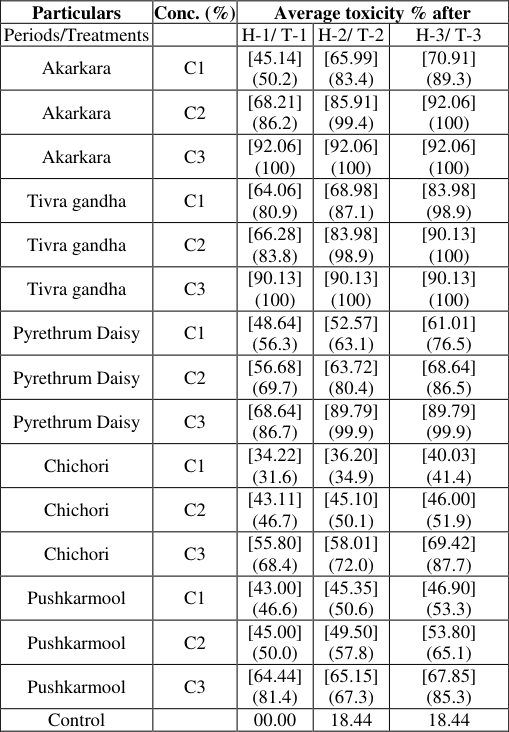 Table 3
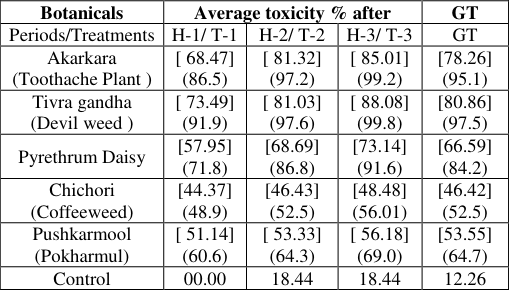 Table 4
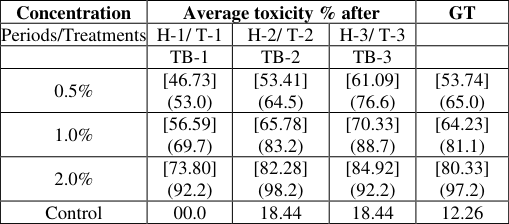 Table 5
 Table 6
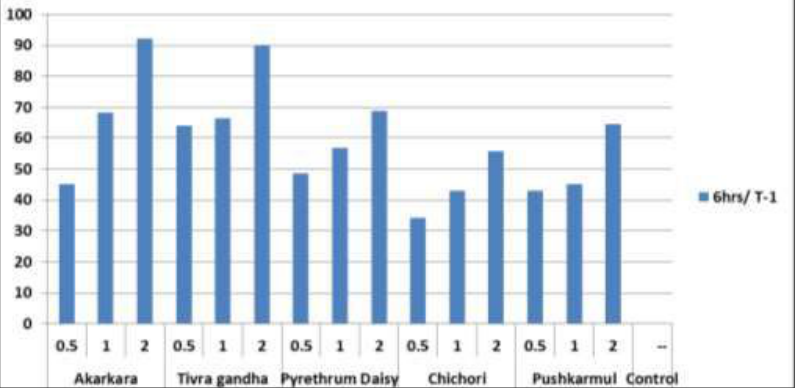 Figure 1
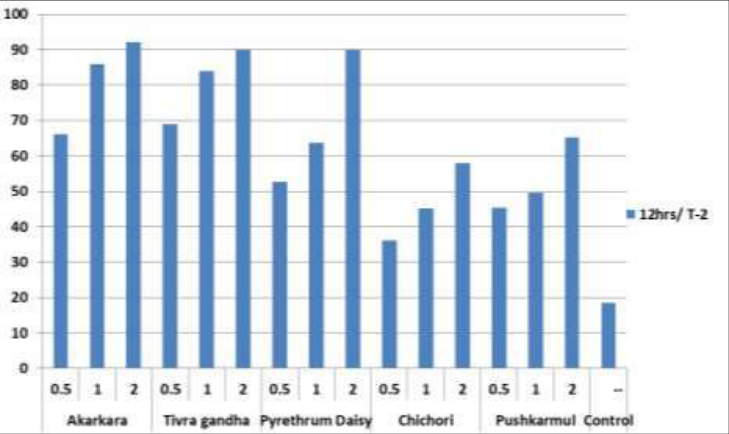 Figure 2
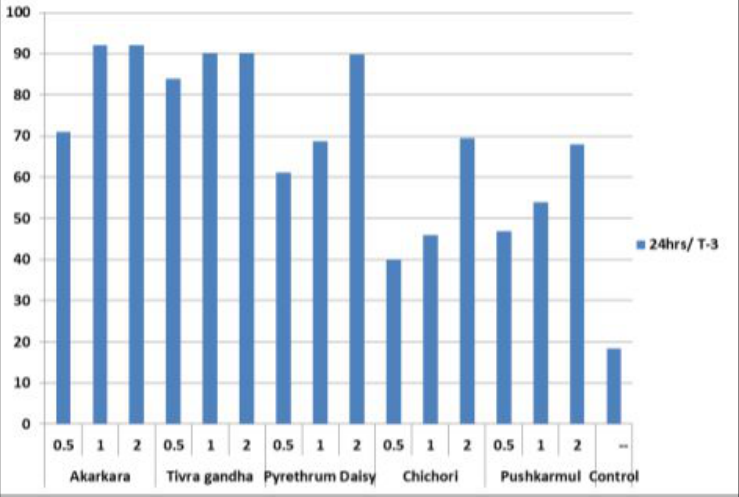 Figure 3
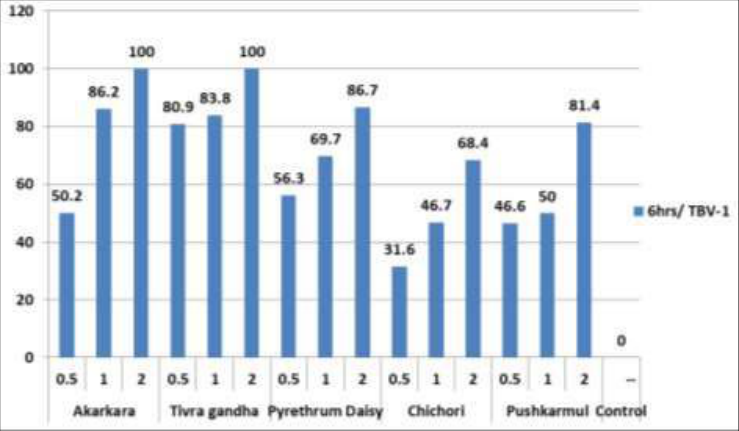 Figure 4
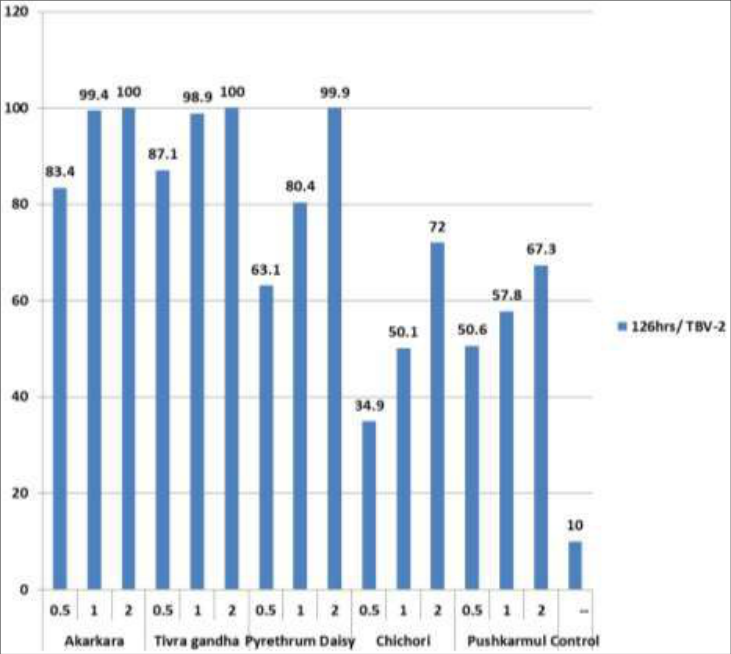 Figure 5
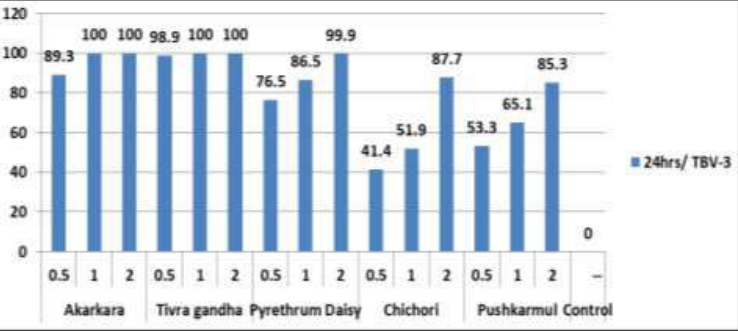 Figure 6
Introduction
Okra is a perfect villager's vegetable possesses protein and dietary fiber and vitamins. Okra, Abelmoschus esculentus fulfils the demand of vegetables during rabi and kharif season. Radake and Undirwade, 1981 reported that mucilaginous substance obtained from okra which is used in industrial and medicinal application [1] . Maramag 2013 stated that the fresh leaves, buds, flowers and pods are consumed by the human being as food in different ways [2] . Similarly, Mishra. 2002 reported that edible parts of okra have best nutritional quality and potential health promoting component. Okra immature fruits are consumed as vegetables in another way. The edible parts of okra have best nutritional values and potential health promoting component. So that okra"s stems were also possessed fibers for economically pregnant women, heart and blood sugar patients. It also has anti-cancer properties. In brown sugar production its stem and roots are utilized in sugar cleaning [38] . The major insects-pest infesting on okra crop are as Earias vittella Fab. Aphis gossypii Glover, Earias insulana Biosduval, Amrasca biguttula biguttula Ishida. Bemisia tabaci Genn., Dysdercus koenigii, Mylabris pustulata and Sylepta derogate (Chaudhary and Dadheech, 1989) [6] . Some studies have been made for the management of okra major pest in agro-climatic condition of Kanpur. Among these insect pests, okra aphid, Aphis gossypii Glover and E. vittella are causing damage to okra marketable fruits, which are unfit for human consumption. Its larvae damaged 35% to crop yield (Chaudhary et al. 2012) [7] . The okra aphid, Aphis gossypii Glover (Hemiptera: Aphididae) is an important insect-pest infested enormously on okra crop in winter season. The aphids infested at the early stage of crop development. Leclant Deguine, 1994 reported that okra plant infested with nymphs and adults of aphid and reduced development of young leaves [8] . In the feeding behaviour, aphids excrete honey dew which seriously endanger causing fungal infection in reducing the okra yield (Dang et al. 2010) [9] reported that the application of indiscriminate use of synthetic insecticides to ensure higher okra yield which causes adversely affect to environment, leading to the pollution in various ways [10] . The continuous application of chemical insecticide was effective in reducing the insect-pest population. viz; aphid. Jassid, fruit and shoot borer, and whiteflies etc. But they cause toxic hazardous, environmental pollutions and risk to human health (Park et al. 2011) [11] . Hence, the applications of synthetic insecticides are not allowed. Their side effects have forced to develop naturally occurring, eco-friendly, non-hazardous, biodegradable aphidicidal agents to control the insect pest of okra. The naturally occurring indigenous plant extractives have ability to prevent okra insect-pest infestation using different formulations compared to a standard synthetic insecticide. The plant extractives as insecticides exhibited anti-insect properties for the control of insect-pest infesting on okra vegetable. The research work on bio-rational herbal insecticides against agricultural various crops since last three decades. The extractives were used to control the many insect-pests of crop and vegetables. The research work on bio-rational, crude, refined plant extractives against a number of vegetables and crop insect-pest were used and reported considerable anti-insect properties which were found effective in controlling the insect pest infestation. Various researchers tested nimbecidine (neem derivative) and imidacloprid (Chemical insecticides) for the control of okra pests. Among them, nimbicidine gave significant result, yield percentage increases from 21.63 percent to 69.91 percent. Many research workers engaged on development of naturally occurring herbal products for their insect-pest toxicological compatibility, feeding deterrent activities against okra and other crop insect pest (Deshpande and Tipnis 1977, Dev and Koul, 1997 and Antonius and Hagazy 1987) [12,13,14] . Adhikari (1984) [15] were used methanalic garlic, Datura and Neem (NSKE) extract against infestation of Earias vittella on okra crop under field trials. Out of them, A. indica seed kernel extract showed highest larval mortality (LD50 1322 ppm), followed by garlic (2018 ppm) and Datura (2052 ppm) extract, respectively [15] . Sardana and Kumar (1989) tested 2.0 percent neem, A. indica seed oil against Earias vittella under field trials which control the E. vittella infestation and increased the crop yield in comparison [16] . Shukla et al. (1996) [17] tested the different concentrations of plant extract/oil as Neem product, Achook and chemical insecticides Fenvalerated and malathion against Earias vittella infesting on okra under field trials. Out of them Fenvalerate 20 EC 0.005% gave significant result in controlling the pest insect and provided (70.75 q/ha) yield. [17] . Adiroubane and Letchoumanane (1998) [4] reported Ocimum sanctum, Adhatoda vesica, Vitex negundo, endosulfan, carbaryl and their combination products were proved effective in controlling cotton jassid and fruit borer. Borah (1995) [18] conducted an experiment to test the certain synthetic insecticides against E. vittella, which produced effective okra yield [19] . Klocks (1989) reported that Tagetes minuta oil significantly control blowfly. The Tagetes minuta oil has been active phototoxic compound against larvae of mosquitoes and proved better larvicidal potentials [20] . Pascual-Villalobos and Robledo (1998) tested Cichorium intybus L. and Reichardia tingitana L. extract against Rhizopertha dominica Fabr. and reported that C. intybus and R. tingitana produced 70-100% of mortality [21] . Liu et al. (2006) tested root extract of Inula racemosa Hook. They isolated a derivative soalantolactone against stored grain weevil, Sitophilus oryzae (L.) and reported a strong insecticidal biopotency [22] . A number of plants like T. minuta showed significant repellent effect (IR = 0.04) to the red flour beetle (Padin et al. 2013) [23] and insecticide of bio potency to storage pest and pathogenic organism (Gbolade et al. 2011) [24] . In natural environment, there are various botanicals flora and their species and their varieties, which are not even touched by the insect-pest to consume. So that, such botanical must have certain rejectant biochemicals, which exhibit some anti insect feeding biopotential. Such botanicals are being utilized for management of insect-pest. The chosen asteraceous biorationals species was also found deterrent to the targeted insects of okra, Abelmoschus esculentus Linn. Moench (Senatore et al. 2004) [25] . The botanical extractives were selected due to following reason. Primarly, the botanical extractives are doubtlessly ecofriendly in nature. Secondly, they are mostly consumed by the human beings cattels and beneficial insects i.e. pollinator, predators and parasites. Tertiary, botanical extractives are relatively cheaper than synthetic insecticides. In the quest of recent investigations to insect pest management viz., exploration of cheap and effective insecticides, the repellent and antifeedants suit well as far as Indian conditions are concerned, where the mass of farmers inadequate funds and technical knowledge. It is required that production of insecticides of botanical products should be encouraged in our nation. The use of these insecticides on crops, stored grains, vegetables and trees should be encouraged and popularized for the control of insect pest, where the vegetables are to be harvested for sale shortly after spraying. This will ensure the production of good quality vegetables for human consumption with safe limits of their residues.
Materials and Methods
Experiments were conducted in the Plant product laboratory and experimental field of Department of Zoology, D.B.S. College, Kanpur, U.P., India The present studies on bioefficacy of aqueous extracts of different plant material against okra aphid, Aphis gossypii Glover (Hemiptera: Aphididae) were carried out during kharif season of 2008-09 with the view to find out the insecticidal toxicity and to find out the most effective ten plants extracts against okra aphid, Aphis gossypii Glover. The technique adapted and the materials used during the course of studies were as under.
Physiographic situation of Kanpur Nagar
Geographically, the Kanpur Nagar is located on latitudes 25.45 and 26.56 North and longitudes 19.31 and 84.34 East and at an elevation of about 127.117 meter above the mean sea level and mid north to Indo-Gangetic region. The area falls in the belt of semi-arid to sub humid and subtropical climatic conditions. The normal period for onset of monsoon in this region is the 3 rd week of June which lasts up to the end of September and sometimes even up to the first week of October. The mean rainfall is 1100 mm recorded mostly from June to September.
Test Insect and Host Plant
In the present investigation, indigenous naturally occurring certain asteraceous plants extracts have been used for their biological efficacy against nymphs and adults of okra aphid, Aphis gossypii Glover (Hemiptera: Aphididae) on Okra plant was used in experimental procedure under laboratory condition. The larvae of E. vittella and nymphs and adults of A. gossypii were collected from on Okra fields of farmer at Fattepur Dakshin village, Kanpur Nagar for conducting the experiments. During the period of study, the feeding habits of larvae and nymphs were noted. 1. Okra aphid, Aphis gossypii Glover (Hemiptera: Aphididae) 2. Host plant okra, Abelmoschus esculentus (Linn.)
Moench (Malvales: Malvaceae)
Field collection of Test Insects:
To obtain regular supply of aphid, Aphis gossypii for in vivo and in-vitro experimental trials, the culture of test insect were reared in laboratory with okra, Abelmoschus esculentus ver. Parbhani kranti leaves and unripe fruits as food materials. For rearing of aphid, Aphis gossypii were collected from research field and placed into rearing jars containing fresh okra leaves and fruits. The rearing jars were provided sand for pupation. The newly emerged nymphs and adults were separated service and released in fresh okra leaves and fruits bearing jars. The leaves and fruits having eggs and early as hatching started, the newly hatched aphids were transferred to another fresh jar with okra food on moist filter paper.
Procurement of raw plant materials:
The plant materials used in the present investigation were collected mainly from wasteland wild areas and some plants were collected from cultivated fields of the farmers. The collected materials were dried in shade, made into powder and the extracts were prepared with the help of soxhlet apparatus using petroleum ether or alcohol as solvent. The regular experiments of selected five asteraceious botanical soxhlet extractives regarding insecticidal bio-potentials were conducted on nymph and adults of Aphis gossypii under laboratory conditions. Pushkarmool (Pokharmul) Inula racemosa Hook. f Roots
Survey and Data collection of
Survey and Data collection of
Preparation of powder:
Fresh collected plant parts (leaves, flowers and seeds, rhizomes etc.) were washed with distilled water and kept in the laboratory for 7 days and air drying followed by day by day sun drying before making powder, Electric grinder was used to have coarse powder then these were passed through a 60-mesh sieve to get fine powder. Powders were kept in polythene bags at room temperature and properly sealed to prevent quality loss (Chandel 2017) [26] .
Preparation of botanical extracts:
For the extraction, Soxhlet Apparatus was used; about 20 g powder from each category of powder were extracted with 300 ml of different solvent (petroleum ether and distilled water). Extraction of each category of powder was done in about 12 hrs. After soxhlet extraction, the material was run on rotary evaporator. The extracts were concentrated on rotary evaporator by removing the excess solvent under vacuum as per Chandel et al. 2018 [27] . After evaporation of solvent with rotary evaporator the remaining extracted material was kept on water bath for removing remaining solvent from the extracts. The extracts were stored at 4 C prior to application.
Apparatus used for experiment:
Plastic jars (capacity 23 cm × 10 cm), petri-dishes, muslin cloth, Soxhlet apparatus, electric grinder, fresh okra leaves, unripe fruits, solvents, selected plant extract etc. were used in the present investigation. All the laboratory equipments were sterlized before applications. The jars used for experiment were disinfected with alcohol.
Preparation of Stock Solution:
For stock solution, 50 ml, extract in each case was taken into reagent bottles and 50 ml. benzene was added in it to dissolve the constituents of the materials. The mouth of the bottles were stopper with airtight corks after which, these bottles containing the solutions were kept in refrigerator.
2.10
The Insecticidal Formulations: Five concentrations (0.5, 1.0, 2.0 percent) were used for experiments on insecticidal and repellent tests in the laboratory conditions. However, only three concentrations (0.5, 1.0 and 2.0 percent) were used for insecticidal test in the laboratory and contact test in the field experiment. The different concentrations of the herbal extracts were prepared from the stock solution using benzene as solvent and Triton X-100 as emulsifier. The level of solvent and emulsifier were kept constant as per Bharti and Chandel 2017 [28] .
Preparation of Various Concentrations:
To make various concentrations of extract the required quantity of the stock solution was calculated with the help of following formula.
The calculated amount of extracts to make different concentrations from the stock solution and amount taken are presented investigation.
Amount required × Concentration required Amount of Stock Solution = Concentration of Stock Solution
Amount required × Concentration required Amount of Stock Solution = Concentration of Stock Solution
Bioassays:
The Soxhlet extractives were diluted with different solvent, (20 mg/ml.). The extracts were topically applied. The solvent was allowed to evaporate at room temperature from treated leaves and fruits of nymph and adults of Aphis gossypii (15 male and 15 female) were released in the treated okra jars A. The jars used for experiment were covered with pieces of cloth size of jars with rubber band. For control no extract was applied on okra leaves, only the solvent of respective extract was applied on the treated food and allowed to evaporate. There was three replicates for each treatment and control.
Insecticidal (Feeding Toxicity) Test
The nymphs and adults of Aphis gossypii were used for experiment purpose. The insecticidal tests of the plants extract were performed by dry-film technique. One ml. of solution (selected plant extractives) was sprayed per petridish. Each concentration was tested in three replications. There was one control (Benzene + emulsified water). To record the mortality, the sprayed petri-dishes were gently shaken under an electric fan until the asteraceous 5 extracts liquid phase evaporated, leaving behind a uniform dry film of extract on the glass surface.
Inside each pair of petri-dish, ten nymphs and adults of Aphis gossypii and selected beneficial insects were released and allowed to remain there for mortality in 6hr, 12hr and 24hr. The data were arranged in tabulated form and calculated their mean mortality percent of the test organism.
Similarly, the toxicity of asteraceous extractives against beneficial targeted insect were also assessed. The mortality percentage of nymph and adults of Aphis gossypii were converted into angular values (Sin -1 √ percentage.). The data were statistically analyzed to test the significance and compared the respective concentrations with control on the basis of percentage reduction of nymph and adults of Aphis gossypii as described in Abbott formula (Abbott's 1925) [29] .
The results are summarized in Tables 3 to 4 and Figures1 to 6 for Aphis gossypii. The result indicated control versus treated" and "Control versus treatment was significant while Insecticides x concentrations was found non-significant. The table 5 indicates that all the three concentrations of all extractives were differing significantly from each other. 2.0 percent concentration was superior to 1.0 and 0.5 percent. The extract of all selected asteraceous plant extract with 2.0 percent concentration killed the maximum percentage (80.33 percent) of nymphs and adults followed by 1.0 percent concentration (64.23 percent) and 0.5 percent (53.74 percent) of nymphs and adults respectively. [30][31][32][33][34][35][36] .
Osariyekemwen et al. (2017) [35] tested root extract of C. odorata showed 74.0 percent adult mortality to Callosobruchus maculatus Fabr and reported promising insecticidal biopotency [37] . Ahad et al. (2016) tested 1.0, 2.0, and 4.0 percent extracts of certain plant extract. Among them, Xanthium strumarium extract showed cent percent mortality to C. chinensis [38] .
Conclusion
The present study reports the successful management of aphids. It was seen that extract of Tivra gandha (Chromolaena odorata) possessed significant results. It
Figures and tables from the paper
| S. N. | Local Name | Scientific Name | Plant Prats |
|---|---|---|---|
| 1. | Akarkara (Toothache Plant) | Acmella paniculata Well | Leaves |
| 2. | Tivra gandha (Devil weed) | Chromolaena odorata | Leaves |
| 3. | Pyrethrum Daisy | Tanacetum cinerariifolium (trev.) Vis. | Aerial parts |
| 4. | Chichori (Coffee weed) | Cichorium intybus (L) | Aerial parts |
| 5. | Pushkarmool (Pokharmul) | Inula racemosa Hook. f | Roots |
Table text extracted from the original PDF; superscript letters are shown inline. The original table image is below.
View original table image
| Concentration (%) | Amount of Stock Solution (ml) | Amount of Benzene (ml) | Amount of Emulsifiable Water (ml) | Total Amount (ml) |
|---|---|---|---|---|
| 0.50 | 5.00 | 20.00 | 475.00 | 500.00 |
| 1.00 | 10.00 | 15.00 | 475.00 | 500.00 |
| 2.00 | 20.00 | 5.00 | 475.00 | 500.00 |
Table text extracted from the original PDF; superscript letters are shown inline. The original table image is below.
View original table image
| Concentration | Average toxicity % after | — | — | GT |
|---|---|---|---|---|
| Periods/Treatments | H-1/ T-1 | H-2/ T-2 | H-3/ T-3 | |
| Extract | [59.04] | [67.15] | [72.11] | [66.10] |
| (73.9) | (84.8) | (91.9) | (83.4) | |
| Control | 0.00 | 10.00 | 10.0 | 4.25 |
Table text extracted from the original PDF; superscript letters are shown inline. The original table image is below.
View original table image
References
34 in the original paper- Radake SG, Undirwade RS. Seasonal abundance and insecticidal control of shoot and fruit borer, Earias sp. on okra, Abelomoschus esculentus (L.). Indian Journal of Entomology. 1981;43(3):283-287.
- Maramag RP. Diuretic potential of Capsicum. Frutescens L., Corchorus oliturius L, Abelmoschus esculentus L. Asian Journal of Natural and Applied Science. 2013;2(1):60-69.
- Mishra HP. Field evaluation of some newer insecticides against aphid, Aphis gossypii and jassids, Amrasca biguttula biguttula on okra. Indian Journal of Entomology. 2002;64(1):80-84.
- Adiroubane D, Letchoumanane S. Field efficacy of botanical extracts for controlling major insect pests of okra, Abelmoschus esculentus. Indian Journal of Agricultural Sciences. 1998;68(3):168-170.
- Susan EI, Christian OO, Emeka NK, Catherine EC, Michael OR. The assessment of floral abundance and composition of Neni-Nimo watershed in Anaocha L.G.A. of Anambra state, Nigeria. Int. J Biol. Sci. 2021;3(1):01-09. DOI: 10.33545/26649926.2021.v3.i1a.20
- Chaudhary HR, Dadheech LN. Incidence of insects attacking okra and the avoidable losses caused by them. Annals of Arid Zone. 1989;28(3-4):305-307.
- Dang QL, Lee GY, Choi YH, Choi GJ, Jang KS, Park MS, et al. Insecticidal activities of crude extracts and phospholipids from Chenopodium ficifolium against melon and cotton aphid, Aphis gossypii. Crop Protection. 2010;29(10):1124-1129.
- Park HJ, Baek MY, Cho JG, Seo KH, Lee GY, Moon SJ, et al. Insecticidal alkaloids on aphids from Corydalis turtschaninovii tubers. Journal of the Korean Society for Applied Biological Chemistry. 2011;54:345-352.
- Deshpande RS, Adhikari PR, Tipnis HP. Stored grain pest control agents from Nigella sativaand Progostemon heyneanus, Bull. Grain Technology. 1977:12(3):232-234.
- Antonius AB, Hagazy G. Feeding deterrant activity of certain botanical extracts against cotton leafwarm, Spodoptera littralis Baised. American Journal of Agricultural Science. 1987;32(1):719-729.
- Adhikari S. Result of field trials to control common insect pest ofokra, Hibiscus esculentus L. in Togo by application of crude methonalic extracts of leaves and seed kernels of neem tree, Azadirachta indica A. Juss, Zeitschrift fur Angewandte Entomologie, 1984;98(4):327-331.
- Sardana HR, Kumar NKK. Effectiveness of plant oils against leaf hopper and shoot and fruit borer on okra. Indian Journal of Entomology. 1989;51(2):167-171.
- Shukla A, Agrawal RK, Pathak SC. Efficacy and economics of some insecticides and plant products against the infestation of okra shoot and fruit borer, Earias vittella (Fab.). Crop Research. 1996;12(3):367373.
- Borah RK, Langthasa S. Incidence of thrips Scirtothrips dorsalis Hood in relation of date of transplanting on chilli in hill zone of Assam. PKV Res. J. 1995;92:191192.
- Pascul-Vilialobos MJ, Robledo A. Screening for antiinsect activity in Mediterranean plants. Industrial Crops and Products. 1998;8(3):183-194.
- Sushmetha V, Malarvannan S, Abarna V. Comparative studies on biophysical and biochemical basis of resistance in Brinjal and chilli against aphid (Aphis gossypii). Int. J Biol. Sci. 2022;4(2):108-111. DOI: 10.33545/26649926.2022.v4.i2b.85
- Padin SB, Fuse C, Urrutia MI, Dal Bello GM. Toxicity and repellency of nine medicinal plants against Tribolium castaneum in stored wheat, Bulletin of Insectology. 2013;66(1):45-49.
- Gbolade AA, Onayade OA, Ayinde BA. Insecticidal activity of Ageratum conyzoides L. volatile oil against Callosobruchus maculatus F. in seed treatment and fumigation laboratory test. International Journal of Tropical Insect Science. 2011;19(2-3):237-240.
- Senatore F, Napolitano F, Mohamed MAH, Harris PJC, Minkeni PNS, Henderson J. Antibacterial activity of Tagetes minuta L. (Asteraceae) essential oil with different chemical composition. Flavour and Fragrance Journal. 2004;19(6):574-578.
- Bruchidae). International Journal of Entomology Research. 2017;2(6):88-93.
- Chandel BS, Vajpai S, Singh V, Singh A. Toxicity of azadirachtin, -asarone, acorenone, Acorus calamus Linn. and Azadirachta indica A. Juss against painted bug, Bagrada cruciferarum Kirk. (Hemiptera: Pentatomidae). Life Sciences Bulletin. 2011;8(2):194198.
- Bharti, Chandel. Biorational and Ecofriendly Insecticidal Approch of Asteraceae Plant Extract against Spotted Ballworm, Earias vittella Fabricius (Leidoptera: Noctuidae) on Okra, Abelmoschus esculentus Linn. (Moench) in Kanpur Region. Journal of Entomology and Zoology Studies. 2017;5(4):19931999.
- Abbott WS. A method of computing the effectiveness of an insecticide, Journal of the American Mosquito Control Association. 1987;3(2):302-303.
- Gautam K, Rao PB, Chauhan SVS. Insecticidal properties of some plants of family asteraceae against Spilosoma obliqua. Indian Journal of Entomology. 2003;65(3):363-367.
- Owolabila Moses S, Ogundajo A, Yusuf KO, Lajide L, Villanueva HE, et al. Tuten and William N. Setzer Chemical Composition and Bioactivity of the Essential Oil of Chromolaena odorata from Nigeria, (Record of Natural Products) Rec. Nat. Prod. 2010;4(1):72-78.
- Chandel BS, Vajpai S, Singh V, Singh A. Toxicity of azadirachtin, asarone, acorenone, Acorus calamus Linn. and Azadirachta indica A. Juss against painted bug, Bagrada cruciferarum Kirk. (Hemiptera: Pentatomidae). Life Sciences Bulletin. 2011;8(2):194198.
- Chandel BS, Bajpai AB, Singh A. Antifeeding and Insecticidal Potentials of Verbenaceous Botanicals against grubs of Henosepilachna vigintioctopunctata Fabr. (Coleoptera: Coccinelidae) Asian Journal of Experimental Sciences, Science. 2013;27(1):37-45.
- Uyi O, Ekhator F, Ikuenobe CE, Temitope BI, Aigbokhan EI. Chromolaena odorata invasion in Nigeria: A case for coordinated biological control. Management of Biological Invasions. 2014;5(4):377393.
- Omokhua AG, Mcgaw LJ, Finnie JF, Van Staden J. Chromolaena odorata (L.) R.M. King and Rob. (Asteraceae) in sub-Saharan Africa: A synthesis and review of its medical potential. Journal of Ethnopharmacology. 2016;183:112-122.
- Osariyekemwen OI, Osarieme G. Repellence and toxicological activity of the root powder of an invasive alien plant, Chromolaena odorata (L.) (Asteraceae) against Callosobruchus maculantus (Fab.) (Coleoptera: chrysomelidae) uyi, Animal Research International. 2016;13(3):2510-2517.
- Uyi OO, Benedicta Obi N. Evaluation of the repellent and insecticidal activities of the leaf, stem and root powders of Siam weed, Chromolaena odorata against the cowpea beetle, Callosobruchus maculatus. Journal of Applied Sciences and Environmental Management. 2017;31(3):511-518.
- Ahad MA, Nahar MK, Amin MR, Suh SJ, Kwon YJ. Effect of weed extracts against pulse beetle, Callosobruchus chinensis L. (Coleopteran: Bruchidae) of mung bean. Bangladesh Journal of Agricultural Research. 2016;41(1):75-84.
- Calisir S, Yildiz MU. A study on some physic-chemical properties of Turkey okra (Hibiscus esculenta) seeds. Journal of Food Engineering. 2005;68(1):73-78.
- Liu CH, Mishra AK, Tan RX. Repellent, insecticidal and phytotoxic activities of isolantolactone from Inula racemosa. Crop Protection. 2006;25(5):508-511.