
Research article · 2023 · Full text
International Journal of Biology SciencesAssessment of the prevalence of diabetes and malaria co-infection among patients attending clinic at Umuguma general hospital, Owerri west local government Area, Imo State
Volume 5(2) · Pages 01–03 · DOI: 10.33545/26649926.2023.v5.i2a.162 ↗
Research areasMalaria Research and ControlDigital Imaging for Blood Diseases
Abstract
Author-writtenMalaria and diabetics are frequent diseases especially in Sub-Sahara African countries. To assess diabetes and malaria co-infection among patients attending clinic at Umuguma General Hospital, Owerri West Local Government Area of Imo State, a total of 169 subjects including 70 males and 99 females within the age range of 20 and above 60 years were included in the study. The data was analyzed using simple percentage and frequency table. Results revealed overall prevalence of (23.1%) diabetes, (71.0%) malaria and (20.7%) co-infection. Age 51-60 years recorded higher prevalence of diabetes (33.3%) and malaria (79.2%) while age
Summary
Source-checkedPlain-language reading of the full paper, prepared with AI and checked against the text. Each point links to the authors' own words.
Why it matters
- Diabetes is a chronic metabolic condition marked by high blood glucose levels that can lead to significant disability and early death. View evidence ↗
- Malaria is highly prevalent in Nigeria, which is one of 15 African nations accounting for 80% of global cases and 78% of deaths. View evidence ↗
- The co-occurrence of malaria and diabetes is a common and threatening health issue in developing countries, often associated with high mortality rates. View evidence ↗
The question
- The study aimed to determine how common the co-infection of diabetes and malaria is among patients at Umuguma General Hospital. View evidence ↗
What they did
- The research was conducted at Umuguma General Hospital in Owerri West Local Government Area between September and December 2014. View evidence ↗
- The study population consisted of 169 patients (70 males and 99 females) aged 20 years and older. View evidence ↗
- Blood glucose levels were measured using a glucometer, following the 2006 WHO diagnostic criteria for diabetes. View evidence ↗
- The researchers analyzed the collected data using frequency tables and simple percentages. View evidence ↗
What they found
- The overall prevalence rates among the participants were 23.1% for diabetes, 71.0% for malaria, and 20.7% for co-infection. View evidence ↗
- Females showed slightly higher prevalence rates than males for diabetes (24.2% vs 21.4%), malaria (71.7% vs 70.0%), and co-infection (21.2% vs 18.6%). View evidence ↗
- Civil servants had the highest prevalence of diabetes and co-infection (26.7%), while artisans had the highest prevalence of malaria (87.1%). View evidence ↗
What it means
- The authors concluded that there is a low prevalence of diabetes and malaria co-infection across the studied socio-demographic groups. View evidence ↗
- The authors recommend further research into the profile of severe malaria specifically within diabetic populations. View evidence ↗
- The authors note that the study was not originally designed to assess the specific influences on malaria infection within a heterogeneous population. View evidence ↗
Visual summary
1 visualsIllustrations explain the paper; they do not show study data.
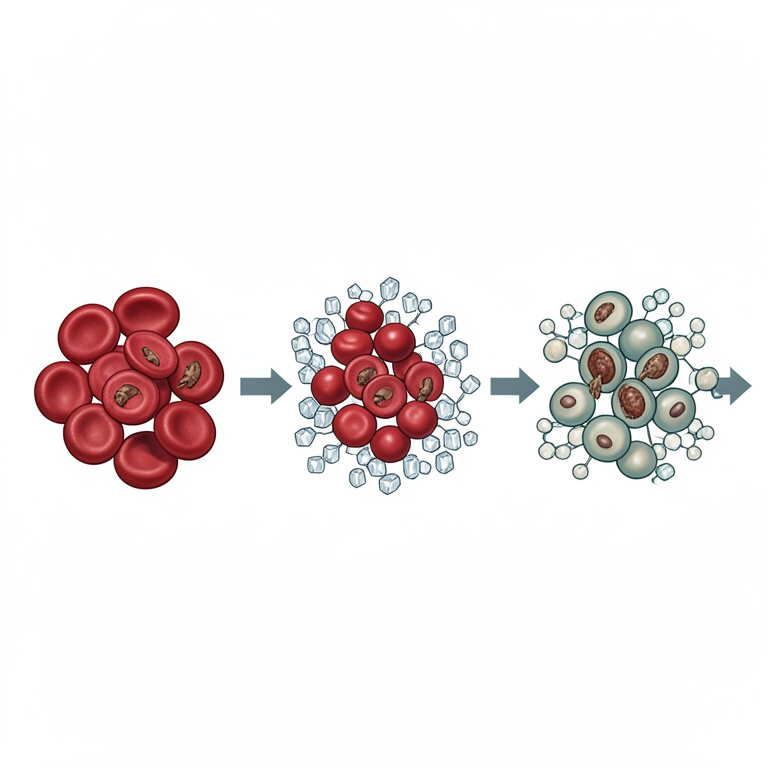
Overall Prevalence Comparison
AI-generated conceptual illustration (Human blood cells and glucose molecules). It explains the idea and does not show study data.
View source evidence ↗Figures & tables
From the original paper Table 1
 Table 2
 Table 3
Introduction
Diabetes is a persistent metabolic infection characterized by chronic hyperglycemia resulting from absolute deficiencies in insulin secretion; its effects cause significant morbidity, disability and premature mortality (Adeleye, 2021) [2] . Diabetes is a disease characterized by abnormally high blood glucose and the excretion of excess glucose in the urine (Gosh et al., 2004, Wild et al., 2004) [6,15] . Malaria is prevalence in Nigeria resulting to morbidity and mortality. Nigeria is among the 15 African countries responsible for 80% of global malaria cases and 78% of deaths (WHO, 2015) [14] . Co-infection of malaria and diabetes mellitus is a threatening common disease in developing countries with high rate of deaths (Ikekpeazu et al., 2010) [7] . According to Acquah et al. (2014) [1] , malaria and diabetes co-infection continues to suppress millions of people globally especially in developing countries. Diabetes and malaria co-infection are regarded as a global phenomenon signifying that developing countries independently or dependently struggle for diabetes and malaria. As a result of this, hence the need to adequately examining the interaction between diabetes and malaria co-infection and its compounding health effects accumulated to increased incidences of diabetes and the prevalence of malaria in sub-Saharan African (Acquah et al., 2014) [1] . It has been reported that co-infection of diabetes and malaria diseases are common in developing countries including Nigeria. Assessment of the biochemical profile of diabetic patients with malaria is urgently needed to examine the likely contribution of malaria infection of the hepatic organ to the pathophysiology of diabetes (Ikekpeazu et al., 2010) [7] . Danquah et al. (2010) [5] suggests that increased diabetes prevalence could increase the number of people at risk for malaria infection. Treatment of patients with malaria and diabetes has been challenging (Brown, 2008, Mohapatra, 2001) [3,9] , because of the effect of the parasites and anti-malarial particularly quinine on glucose homeostasis. Effective management of both diseases can help reduce the risk (Buse et al., 2008, Brown, 2008) [4,3] ; however, many people are not even aware that they are under attack of malaria and diabetes until they develop one of its complications. The essence of this study is to assess the prevalence of Diabetes and Malaria Co-infection among patients attending clinic at Umuguma General Hospital.
Study Area
Study Area
Study Sample/Population
The study sampled 169 subjects between the age of 20 years to 60 years and above, including 70 males and 99 female patients visiting Hospital for medical services.
Ethical Considerations
Approval was obtained from the Department of Animal and Environmental Biology, Faculty of Biological Science, Imo State University Owerri. Informed consents of the participants sought for and they were assured of the confidentiality of information. However, since the data was extracted from archives of secondary data, the ethical violation of the confidentiality and consequences of data collection on respondents were ruled out. Also, an administrative approval was obtained from the chosen hospital to conduct the study in their hospital.
Sample Collections
Local dialect was used for the participants. Blood sample were collated using a septical means for fasting blood glucose level every day, from Monday to Friday. Glucometer was used to measure blood glucose using World Health Organization (WHO) criteria for diagnosis of diabetes (2006). The questionnaire covered the subject's sex, age, weight, height, local government area, family history of diabetes, blood sugar status, knowledge and management of diabetes, type of diabetes suffering, interval of blood sugar monitoring, diabetes complications experiencing, ulcers, diet, management medications, blood pressure status etc.
Statistical Analysis
The data obtained was subjected to statistical analysis using percentage and frequency table.
Results
Results
Discussion
Diabetes has been a chronic and costly disease associated with severe complications which pose severe risks for families (Vangen et al., 2003; WHO, 2008) [12,13] . Malaria is another human disease which pose huge risk to human and its a vector-borne infectious disease caused by protozoan parasites (genus plasmodium) widespread in the tropical and subtropical regions including parts of the America, Asia and Africa. In this study, a total of 169 patients participated in the study. The highest age range of participants revealed that more respondents falls between the age range of 51-60 with their numbers and percentage recorded to 48 (28.4%), followed by age range 41-50 recording 39 (23.1%), >60 recording 35 (20.7%), 31-40 recording 31(18.3%), and 20-30 recording the least of 16(9.5%). More so, it was revealed that females participated more than males indicating 58.6% females against 41.4% males. Furthermore, their occupational status, showed that more of the respondents were traders (32.0%) followed Civil servants (26.6%), farmers (23.1%), and the least participants were artisans (18.3%). Result on the prevalence of diabetes, malaria and co-infection among patients in the study area revealed overall prevalence of diabetes (23.1%), malaria (71.0%) and co-infection (20.7%) as shown in Table 1. This agreed with the work of Okell et al. (2009) [11] , Muller et al. (2005) [10] , Jones, and Ward (2002) [8] . In gender relation, it was observed that males recorded prevalence of 21.4% diabetes, 70.0% malaria and 18.6% co-infection while their female counterparts were seen to have highest percentage infection prevalence of which 24.2% had diabetes, 71.7% malaria and 21.2% were co-infected. In relation to occupation, result shows that civil servants (26.7%) recorded highest of diabetes and co-infection prevalence, followed by farmers (23.1%); artisans had highest (87.1%) of malaria prevalence followed by traders (81.1%). The impact of semi-immunity on controlling parasitemia may weaken with advancing diabetes mellitus and immune dysfunction (Muller et al.
| Age in years | No. Examined | Diabetes (%) | Malaria (%) | Co-infection (%) |
|---|---|---|---|---|
| 20-30 | 16 | 0 (0.0) | 9 (56.3) | 0 (0.0) |
| 31-40 | 31 | 5 (16.1) | 21 (67.7) | 5 (16.1) |
| 41-50 | 39 | 8 (20.5) | 29 (74.4) | 7 (17.9) |
| 51-60 | 48 | 16 (33.3) | 38 (79.2) | 13 (27.1) |
| <60 | 35 | 10 (28.6) | 23 (65.7) | 10 (28.6) |
| Total/Overall prevalence | 169 | 39 (23.1) | 120 (71.0) | 35 (20.7) |
Table text extracted from the original PDF; superscript letters are shown inline. The original table image is below.
View original table image
2005) [10] , as suggested by the observed risk increase with increasing glucose concentration. Moreover, low-level infections in patients with 2 diabetes mellitus may constitute an unrecognized infectious reservoir in areas where malaria is endemic (Okell et al. 2009) [11] . Our data stem from a study that was not designed to assess influences on malaria infection in a heterogeneous population. The actual reasons for the increase of malaria infection are unclear; the risk increase with rising glucose concentration is a sign of biologic plausibility. Such risk could result from impaired defense against liver and/or blood-stage parasites and from prolonged persistence.
Conclusion and Recommendations
This connection of diabetes and malaria co-infection in this study is fascinating but not certain. The groups with diabetes were significantly small compared to the population of the study. The finding of this study shows a low prevalence of co-infection of diabetes and malaria in relation to sociodemographic characteristics (age, gender and occupation) of the study participants. Therefore, this study recommends studying the profile of severe malaria in diabetics.
Acknowledgement
AcknowledgmentsThe teams of researchers sincerely thank all participants at Umuguma General Hospital, Owerri West Local Government and also acknowledge the research team of the Imo State University, Owerri, especially team from public health physiology, public health parasitology and microbiology for their unrelated efforts in making this study a success.
Figures and tables from the paper
| Age in years | No. Examined | Diabetes (%) | Malaria (%) | Co-infection (%) |
|---|---|---|---|---|
| Male | 70 | 15 (21.4) | 49 (70.0) | 13 (18.6) |
| Female | 99 | 24 (24.2) | 71 (71.7) | 21 (21.2) |
| Total/Overall prevalence | 169 | 39 (23.1) | 120 (71.0) | 35 (20.7) |
Table text extracted from the original PDF; superscript letters are shown inline. The original table image is below.
View original table image
| Occupation | No. Examined | Diabetes (%) | Malaria (%) | Co-infection (%) |
|---|---|---|---|---|
| Farmers | 39 | 9 (23.1) | 23 (58.9) | 8 (20.5) |
| Traders | 54 | 12 (22.2) | 44 (81.1) | 9 (16.7) |
| Artisans | 31 | 6 (19.4) | 27 (87.1) | 6 (19.4) |
| Civil servants | 45 | 12 (26.7) | 26 (57.8) | 12 (26.7) |
| Total/Overall prevalence | 169 | 39 (23.1) | 120 (71.0) | 35 (20.7) |
Table text extracted from the original PDF; superscript letters are shown inline. The original table image is below.
View original table image
References
12 in the original paper- Acquah S, Boampong JN, Eghan BA, Eriksson M. Evidence of Insulin Resistance in Adult Uncomplicated Malaria: Result of a Two-Year Prospective Study, Malaria Research and Treatment; 2014:2014:136148. doi: 10.1155/2014/136148.
- Adeleye JO. The hazardous terrain of Diabetes mellitus in Nigeria: The time for action is now. Research Journal of Health Sciences. 2021;9(1):69-76.
- Brown WV. Microvascular complications of diabetes mellitus: renal protection accompanies cardiovascular protection. The American Journal of Cardiology. 2008;102(12A):10L-13L.
- Danquah I, Bedu-Addo G, Mockenhaupt FP. Type 2 Diabetes mellitus and increased risk for malaria infection, Emerging Infectious Diseases. 2010;16(10):1601-1604.
- Gosh RW, Moore AF, Florez JC. Genetic architecture of type 2 diabetes: Recent progress and clinical implications. Diabetes Care. 2004;32(6):1107-15.
- Ikekpeazu EJ, Neboh EE, Maduka IC, Nwagbara IJ, Nwobodo MW. Type-2 diabetes mellitus and malaria parasitaemia: Effect on liver function tests, Asian Journal of Medical Sciences. 2010;2(5):214-217.
- Jones K, Ward SA. Biguanide-atovaquone synergy against Plasmodium falciparum in vitro. Antimicrobial Agents and Chemotherapy. 2002;46(8):2700-3.
- Mohapatra NM. Cases of Gestational Diabetes. The prevalence of asymptomatic diabetes. American Journal on Diabetes. 2001;23(4):231-239.
- Muller LM, Gorter KJ, Hak E, Goudzwaard WL, Schellevis FG, Hoepelman AI. Increased risk of common infections in patients with type 1 and type 2 diabetes mellitus. Clinical Infectious Diseases. 2005;41(3):281-288.
- Okell LC, Ghani AC, Lyons E, Drakeley CJ. Submicroscopic infection in Plasmodium falciparumendemic populations: A systematic review and metaanalysis. The Journal of Infectious Diseases. 2009;200(10):1509-1517.
- Vangen R, Tucker SB, Flannigan SA. The Physiologic Replacement of Insulin, an elusive goal. Medical Journal. 2003;321:363-370.
- Wild S, Roglic G, Green A, Sicree R, King H. Global prevalence of diabetes: estimates for the year 2000 and projections for the year 2030. Diabetes Care. 2004;27(5):1047-53.