
Research article · 2023 · Full text
International Journal of Veterinary Sciences and Animal HusbandryEarly antibody responses to experimental haemorrhagic septicaemia vaccinated of bali cattle
Volume 8(2) · Pages 14–16 · DOI: 10.22271/veterinary.2023.v8.i2a.483 ↗
Research areasLivestock Farming and Management
Abstract
Author-writtenAntibodies or immunoglobulins (Ig) are important molecules found in serum that can respond specifically to antigens that stimulate their production. Immunoglobulin M (IgM) is the first antibody formed in the immune response. The present study was carried out in Bali cattle to assess the antibody response to the Haemorrhagic Septicaemia vaccine. Thirty Bali cattle were vaccinated with the Haemorrhagic Septicaemia vaccine. Serum was collected at 0 and 7-day post-vaccination. Immunoglobulin M titers before and after vaccination were estimated by IgM ELISA Kit and carried out at the BBVet, Denpasar. The result showed that the response of animals before vaccination was statistically different from the response of animals after vaccination. Regarding the changes observed in IgM for 7 days post-vaccination, research results show that vaccine administration can induce IgM titers concentration in serum significantly increased. In conclusion, the Bali cattle vaccinated with the HS vaccine could increase IgM titers concentration after 7 days.
Summary
Source-checkedPlain-language reading of the full paper, prepared with AI and checked against the text. Each point links to the authors' own words.
Why it matters
- Bali cattle are an indigenous Indonesian breed valued for their reproductive superiority, disease resistance, and adaptability, making them vital for national livestock development. View evidence ↗
- Septicemia Epizootica (Haemorrhagic Septicaemia) is a significant infectious disease in cattle, and vaccination is used to control its spread. View evidence ↗
- Immunoglobulin M (IgM) is the first antibody produced during the immune response to infection or vaccination and is critical during the early stages of infection. View evidence ↗
The question
- The study aimed to measure IgM antibody titers in Bali cattle following vaccination against Septicaemia Epizootica to determine the time required for the vaccine to produce an antibody response. View evidence ↗
What they did
- The experiment involved 30 Bali cattle, aged 10-12 months, located at the Simantri farm in Bangli, Bali. View evidence ↗
- Each animal was administered 5 ml of the Haemorrhagic Septicaemia (HS) vaccine from Pusvetma, Surabaya. View evidence ↗
- Blood samples were collected at day 0 and day 7 post-vaccination and analyzed using an IgM ELISA kit. View evidence ↗
- A Student T-test with a 5% significance level was used to compare IgM levels between the pre-vaccination and 7-day post-vaccination time points. View evidence ↗
What they found
- The average IgM titer in the cattle before vaccination was 0.617 µg/ml. View evidence ↗
- Seven days after vaccination, the average IgM titer increased to 1.4192 g/ml. View evidence ↗
- There was a statistically significant difference (p < 0.05) in the antibody response between the pre-vaccination and post-vaccination groups. View evidence ↗
- The administration of the HS vaccine significantly increased the mean concentration of IgM in the serum within 7 days (p < 0.05). View evidence ↗
What it means
- The authors conclude that the HS vaccine successfully increases IgM titer concentrations in Bali cattle after 7 days. View evidence ↗
- The study did not perform repeated IgM examinations, meaning the long-term progress of IgM levels was not determined. View evidence ↗
Visual summary
1 visualsIllustrations explain the paper; they do not show study data.
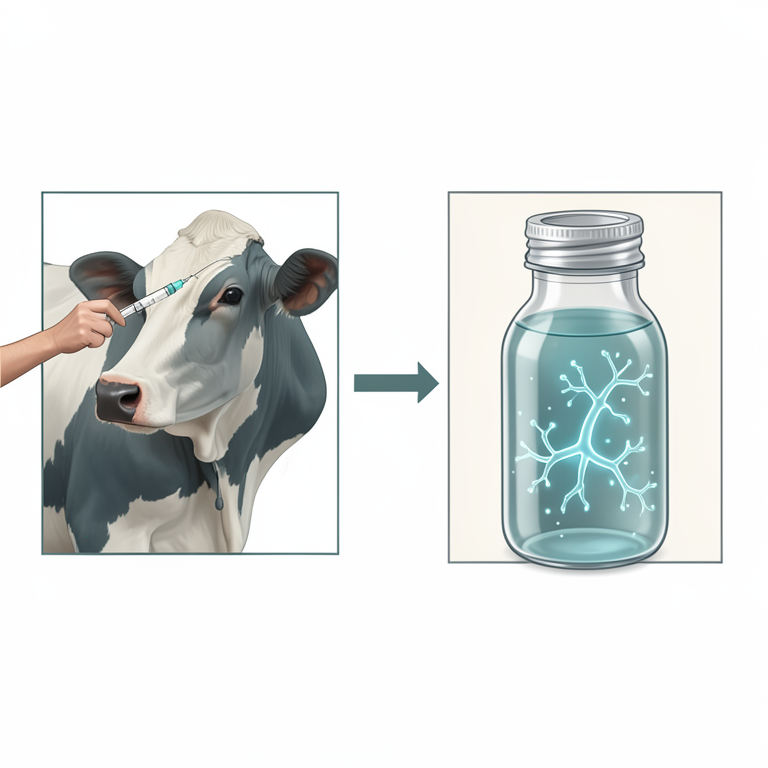
Vaccination Response Timeline
AI-generated conceptual illustration (Bali cattle). It explains the idea and does not show study data.
View source evidence ↗Introduction
Bali cattle are the pride of Indonesia and are an indigenous cattle breed from Bali with various advantages, such as being superior in terms of reproduction, resistant to diseases, and being able to live in various environments (Suastiningsih et al. 2020) [1] . Bali cattle play an important role in livestock development in Indonesia (Puja et al. 2018) [2] , and in Balinese society, because Bali cattle are livestock that can be used to cultivate land and fields, as a source of income, and as a provider of protein. Bali cattle farming business in general developed in rural areas and managed directly by the community, both in groups and individually Bali cattle health is an important factor in breeding, especially in cattle the first weeks of life are closely related not only to mortality rate but also have an impact on morbidity. During The first month of life, cattle are susceptible to the proliferation of microorganisms that frequently cause disease. The animal disease is one of a major threat to the sustainable production of high-producing animal (Doeschl-Wilson et al., 2021) [3] . Disease can directly affect production and livestock productivity due to morbidity and mortality (Perry and Grace, 2009) [4] however, is also a major source of risk for livestock business development. Of the several known infectious diseases, one of them is Septicemia Epizootica. In overcoming this disease, vaccination has been carried out to limit the spread as well as to free cattle from this disease. Protection of cattle from infection or due to vaccination is mediated by antibodies, in particular neutralizing antibodies immunoglobulin G (IgG), immunoglobulin A (IgA), and immunoglobulin M (IgM). In infected or vaccinated cows, the first antibody produced is IgM. IgM is the first antibody isotype expressed during B-cell development and the first humoral antibody responder and is found in all animal species. IgM-producing plasma cells are shortlived cells. These cells have long-term memory induced by vaccination. IgM is a humoral antibody that is very important in the first few days of infection (Jones et al., 2020) [5] . IgM molecules are found in the pentamer form and are the largest immunoglobulin and are generally secreted by infectious cells and primary immunization. This study aimed to determine the titer of IgM antibodies and to provide information on the period required for vaccination to produce Ig, against the Septicaemia Epizootica vaccine in the serum of experimentally vaccinated Bali cattle.
Materials and Methods
Materials and Methods
Animal
The study was conducted at the Integrated agriculture system cattle farm (Simantri) in Bangli Bali. A total number of 30 Bali cattle were used. The cattle were 10-12 months of age. The animal administration 5 ml HS vaccine (Pusvetma, Surabaya). All animals were in clinically good health. The cattle used were humanely handled, and this research was approved by The Animal Ethics Committee, Faculty of Veterinary Medicine, Udayana University.
Sample collection
Blood samples were drawn directly from all animals from the jugular vein into plain Vacutainers (Becton Dickinson, Meylan, France). The tube containing blood is tilted so that all the serum comes out on the surface and is left until a complete clot is formed, and serum is collected for IgM examination. Blood samples were collected 0 and 7 days after vaccination.
Immunoglobulin M-Test
Samples were analyzed immediately after collection by Immunoglobulin M Elisa Kit (Bathyl Laboratories Inc.) according to the manufacturer's protocol. The analysis of IgG was performed at the Balai Besar Veteriner, Denpasar.
Data analysis
The Student T-test was used to compare the level of IgM between 0 and 7 days after vaccination. A 5% level of significance was used (Heath,2000) [6] . Data analyses were carried out using SPSS for Windows version 25.
Results and Discussion
The results of the examination showed that the average titers of IgM in an animal before vaccination was 0.617 µg/ml. At 7 days after vaccination, the animal had titers of IgM an average of 1.4192 g/ml (Table 1). The response of animals before vaccination was statistically significantly different from the response of animals after vaccination (p<0.05). Regarding the changes observed in IgM for 7 days postvaccination, research results show that vaccine administration can induce IgM to mean concentration in serum significant (p<0.05) increased in 7 days Although HS is classed as a disease that can cause major economic loss in cattle, the nature of the immune response to P. multocida is poorly understood. In this study, P. multocida is enough to promote the production of IgM. The results of this study are different from the results of El-Nagar et al. (2020) [7] , which reported that there was no increase in the concentration of IgM post-vaccination following primary vaccination. In this study, there is a relationship between the induction of humoral immunity and active protection in cattle vaccinated with the HS vaccine. The immune system consists of molecules and cells that are integrated and genetically responsible for the control of stimuli both from outside the body and from inside the body, including microorganisms. In vertebrates, the body's resistance depends on two types of body defenses, namely, the innate immune response and the acquired immune response (adaptive immunity) (Zheng et al., 2020) [8] . One of the important immune components in the body's defense system against extracellular bacterial infections such as Pasteurella multocida is an antibody. Antibody formation begins with peptide antigen processing via MHC II to Th2 cells. The antigenic peptide is then bound by MHC II and presented to the cell surface through the process of endocytosis. The antigenic peptide is then responded to by Th2 cells via a cell surface receptor molecule called TCR. The interaction between B cells and Th2 cells triggers the release of various cytokines such as IL-4, IL-5, and IL-13 which trigger the proliferation of B cells into plasma cells to produce antibodies (Pal and Chakravarty, 2020) [9] . The formation of this immune system is called the humoral immune response (Janeway et al, 2009) [10] . Immunoglobulin M (IgM) is the first antibody formed by plasma cells in the immune response against a foreign pathogen (Sathe and Cusick, 2021) [11] . Most B cells contain IgM on their surface as an antigen receptor and are known as B cell receptors or BCRs (B cell receptors). BCR molecules present on the surface of B cells are usually in the form of IgM monomers. In the primary immune response, IgM monomer is released by plasma cells and forms a pentamer structure. Therefore, in response to infection or immunization, IgM is formed earlier in the primary immune response than IgG, therefore high IgM levels are an indication of early infection (Ouchida et al., 2012) [12] . Therefore, Ig-M is the first immunoglobulin to appear when animals are exposed to a disease or exposed to external antigens. IgM are initially expressed during B cell ontogeny and are the first antibodies secreted following exposure to foreign antigens (Keyt et al., 2020) [13] . The cattle used before being vaccinated IgM titers were very low, indicating that there was no HS exposure before vaccination. IgM increased after being given a vaccination. This shows that exposure to the primary vaccination has been able to increase the formation of IgM. This result is in line with a study conducted by Qureshi and Saxena (2014) [14] , on cattle vaccinated with the HS vaccine antibody concentration was revealed to increase over the initial pre-vaccination stage. However, this antibody could not develop and sustain adequate levels of antibody for a long duration. In this study, repeated IgM examinations were not carried out so that in this study the progress of IgM was not known.
Conclusions
Early immune response to the HS vaccine was found to increase after 7 days. The average titers of IgM in an animal before vaccination was 0.617 µg/ml. At 7 days after vaccination, the animal had titers of IgM an average of 1.4192 g/ml. The response of animals before vaccination was statistically significantly different from the response of animals after vaccination. Regarding the changes observed in IgM for 7 days post-vaccination, research results show that vaccine administration can induce IgM to mean concentration in serum significantly increased in 7 days.
Acknowledgments
We would like to thank Udayana University for funding through the PUPS (Research Study Program). The authors would like to thank all farmers for their participation.
References
11 in the original paper- Suastiningsih IGAK, Trilaksana IGNB, Puja IK. Evaluation of one shot and two shot prostaglandin injection on estrus response in bali cattle. International Journal of Veterinary Science. 2020;9(3):409-412. DOI:10.37422/IJVS/20.040
- Puja IK, Sulabda IN, Wandia IN. Microsatellite polymorphisms and its relationship with calving interval and gestation period in bali cattle. Advances in Animal and Veterinary Sciences. 2018;6(5):197-200.
- Doeschl-Wilson A, Knap PW, Opriessnig T, More SJ. Review: Livestock disease resilience: From Individual to Herd Level Animal. 2021;15(1):100286. https://doi.org/10.1016/j.animal.2021.100286.
- Perry B, Grace D. The impacts of livestock diseases and their control on growth and development processes that are pro-poor. Philosophical transactions of the Royal Society of London. Series B. Biological Sciences. 2009;364(1530):2643-2655. DOI: 10.1098/rstb.2009.0097.
- Jones K, Savulescu AF, Brombacher F, Hadebe S. Immunoglobulin M in Health and Diseases: How Far Have We Come and What Next? Frontiers in Immunology. 2020;11:595535. DOI:10.3389/fimmu.2020.595535.
- El-Nagar HA, El-Hais AM, Farag MS. Impact of buffalo dams treatment with probiotics on growth Performance, immune responses and blood components of their newborn Calves. Egyptian Journal of Animal Production. 2020;57(3):101-109.
- Zheng D, Liwinski T, Elinav E. Interaction between microbiota and immunity in health and disease. Cell Research. 2020;30(6):492-506. https://doi.org/10.1038/s41422-020-0332-7
- Sathe A, Cusick JK. Biochemistry, Immunoglobulin M. [Updated 2021 Dec 28]. In: Stat Pearls [Internet].
- Ouchida R, Mori H, Hase K, Takatsu H, Kurosaki T, Tokuhisa T, et al. Critical role of the IgM Fc receptor in IgM homeostasis, B-cell survival, and humoral immune responses. Proceedings of the National Academy of Sciences USA. 2012;109(40):E2699-E2706.
- Keyt BA, Baliga R, Sinclair AM, Carroll SF, Peterson MS. Structure, Function, and Therapeutic Use of IgM Antibodies. Antibodies. 2020;9(4):53. DOI:10.3390/antib9040053.
- Qureshi S, Saxena HM. Estimation of titers of antibody against Pasteurella multocida in cattle vaccinated with hemorrhagic septicemia alum precipitated vaccine. Veterinary World. 2014;7(4):224-228.