
Research article · 2023 · Full text
International Journal of Advanced Biochemistry ResearchThe potential ameliorative role of naringenin against 5-Fluouracil induced nephrotoxicity toxicity
Volume 7(2S) · Pages 94–99 · DOI: 10.33545/26174693.2023.v7.i2sb.194 ↗
Research areasDrug-Induced Hepatotoxicity and ProtectionChemotherapy-induced organ toxicity mitigationChronic Kidney Disease and Diabetes
Abstract
Author-written5-Fluouracil-induced nephrotoxicity causes alterations in renal markers and kidney morphology by increased oxidative stress, inflammation and apoptosis play an important role in the pathogenesis of kidnry injury. The present study was assessed to mitigative action of naringenin (NG) powder in 5-FU induced toxicity. We divide forty eight animals into 4 groups (n=12) and sacrificed on 14th and 28th day and reported that NG treatment significantly decrease in blood urea nitrogen-BUN and creatinine value, lipid peroxidation and inflammatory markers - tumour necrosis factor (TNF-α), interleukin -1β (IL-1β), Nuclear factor Kappa beta (NF-κB) with increased concentrations of interleukin-10 (IL-10), albumin along with increase in endogenous antioxidant enzymes-superoxide dismutase (SOD) and glutathione peroxide (GSH). In addition to theses, histological alterations also clarified that 5-FU induced distorted renal corpuscles and tubules with inflammatory cell infiltrations and severe congestion were decreased by NG treatment. Our results suggest that NG have ameliorative action against 5-FU induced nephrotoxicity, however, NG on 28th day much better results than 14th day in all parameters.
Summary
Source-checkedPlain-language reading of the full paper, prepared with AI and checked against the text. Each point links to the authors' own words.
Why it matters
- 5-Fluorouracil (5-FU) is a widely used anticancer drug for treating various solid tumors due to its broad antitumor activity. View evidence ↗
- Despite its benefits, 5-FU can cause significant organ toxicities, including damage to the kidneys (nephrotoxicity). View evidence ↗
- Naringenin (NG) is a natural phytochemical known for its antioxidant, anti-inflammatory, and anti-apoptotic properties. View evidence ↗
The question
- The study aimed to test the hypothesis that naringenin could protect against 5-FU-induced kidney toxicity through antioxidant and anti-inflammatory pathways. View evidence ↗
What they did
- The experiment used 48 Wistar rats, aged 3 months and weighing between 180 and 210 grams. View evidence ↗
- Rats were divided into four groups of 12: a saline control, a 5-FU group (20 mg/kg), an NG group (100 mg/kg), and a combined NG and 5-FU group. View evidence ↗
- Animals were sacrificed on the 14th and 28th days to collect blood and kidney tissues for analysis. View evidence ↗
- Renal function was measured by quantifying urea, blood urea nitrogen (BUN), and creatinine levels in the serum. View evidence ↗
What they found
- NG treatment reduced the severity of kidney lesions, with most sections showing normal glomeruli and reconstructed tubules by day 28. View evidence ↗
Figures & tables
From the original paper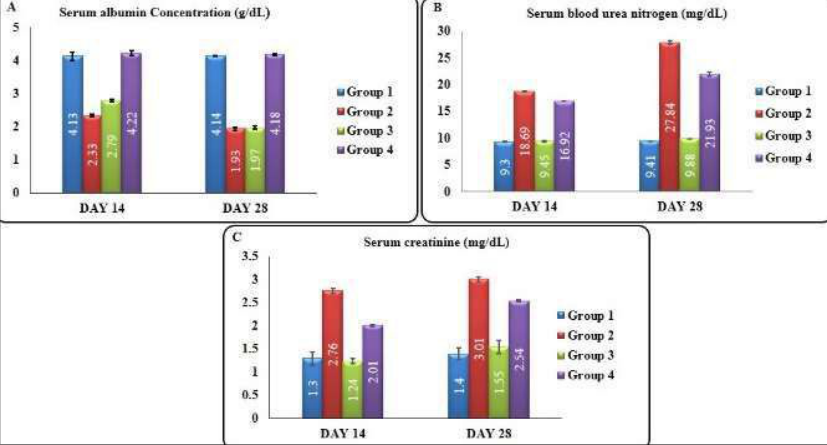 Figure 1
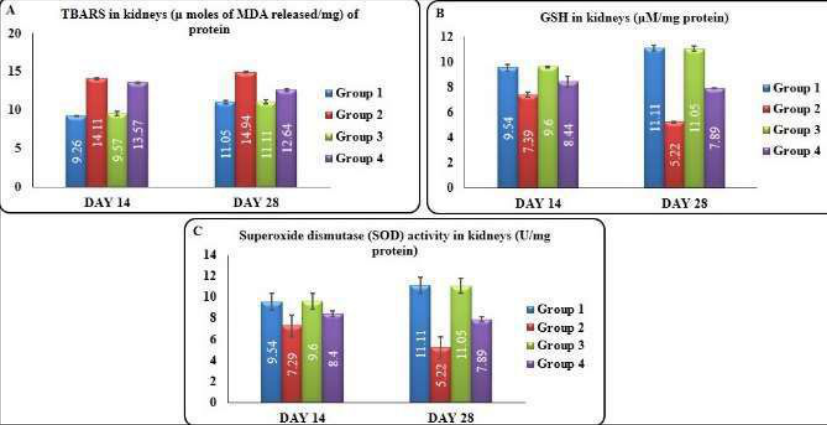 Figure 2
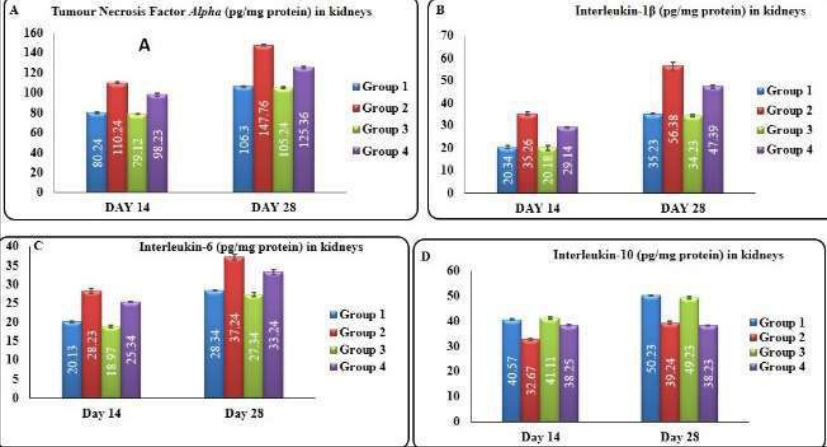 Figure 3
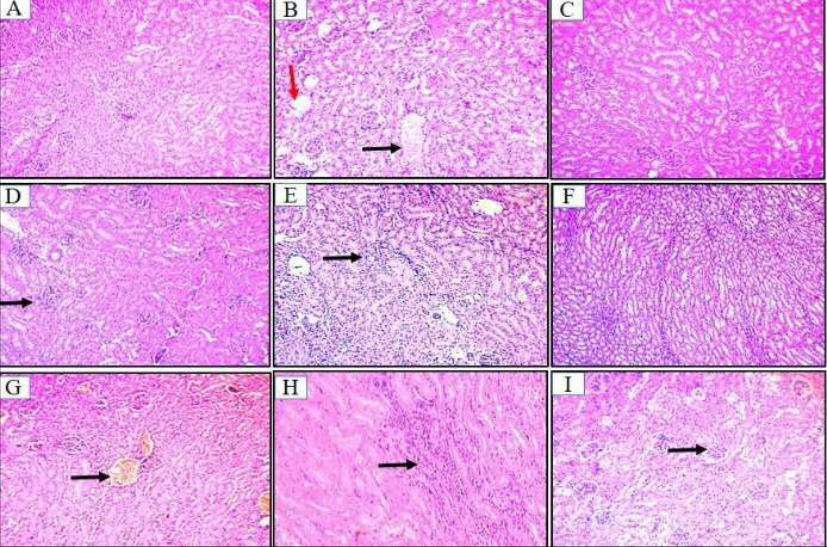 Figure 4
Introduction
Cancer is a life-threatening disease posing challenges to the scientific community today, in spite of significant advancements in biological sciences (Rossi et al., 2023) [1] . Several anticancer drugs are being used to inhibit proliferation of cancer cells (Alfarouk et al., 2015) [2] . Under ideal conditions, anticancer treatments would destroy cancer cells without causing harm to healthy tissues. However, there is currently not even a single substance is totally safe without toxic effects (Rossi et al., 2021) [3] . The fluoropyrimidine antimetabolite known as 5-FU was developed in 1957 by Heidelberg et al. and has been used clinically for the past 40 years, second most commonly used agent to treat a variety of solid tumours due to its broad antitumor activity and its synergism with other medications (Miura et al., 2010) [4] . It exerts its effect through disrupts the metabolism of nucleosides in the malignant cell and incorporates them into DNA and RNA during S phase by inhibiting thymidylate synthase leading to cytotoxicity and cell death (Chibber, 2012) [5] . Apart from its benefits, 5-FU chemotherapy causes implications in a organs of patients like emesis, mucositis and organ toxicities-cardio, hepato and nephrotoxicity (Lamberti et al., 2014) [6] Furthermore, previous studies observed that 5-FU is catabolized α-fluoro-β-alanine (FBAL), urea, ammonia and carbon dioxide resulting nephrotoxicity (Rashid et al., 2014; Saif et al., 2009) [8,7] . In addition to it, 5-FU also responsible to increase oxidative stress, apoptosis and capable of damaging biomolecules, altered blood flow through disturbed renal tubules and decreasing the activity of antioxidant enzymes through stimulation of altered signaling pathways (Arab et al., 2018, Badawoud et al., 2017, Rashid et al., 2014) [9,10,8] . Recent evidence shows overexpression of inflammatory mediators such as TNF-α, NF-κB and interleukins are markers in 5-FU-injected rats (Al-Asmari et al., 2016) [11] . NG is an orally available natural phytochemical with anti-oxidant, anti-inflammatory (Regugadevi and prabu, 2009) [12] and anti-apoptotic property through activating intracellular anti-oxidant by inhibiting NF-κB pathway (Chen et al., 2012) [13] , reduce oxidative stress (Renugadevi and Prabu, 2009) [12] and it helps in an effort to further investigate beneficial potential of its use in clinical cancer treatments, we studied its effects against 5-FU-induced nephrotoxicity in rats. We hypothesised that NG would protect against 5-FUinduced nephrotoxicity via anti-oxidant and antiinflammatory nuclear factor-kappa B (NF-κB) pathway.
Materials and Methods
Chemicals: All chemicals are procured from Qualigens Private limited, India (Mumbai) and SRL Private limited, India. 5-FU was procured from celon laboratories private limited, Hyderabad, India. Naringin (CAS No: 10236-47) was obtained from Sigma (SAC-St Louis, MO, USA). Experimental animals and design. Wistar rats (n=48), weight (180-210 grams) at 3 months age included in this study were acquired from jeeva life sciences (ISO 9001:2015 certified company) With 10 days acclimatization prior to study, embeded in adequate moisture and controlled temperature at 70% Humidity, 12hours (h) light, 12 h dark, 25 °C temperature for experimental study with standard chow and water. The study was authorized by Animal Ethics Committee (No.9/24/C.V.Sc., Hyd. IAEC-Rats/ 12.06.2021). The rats were assigned to experimental four groups (N=12), Group I: control-received normal saline. Group II: 5-FU (20 mg/kg b. wt five intaperitoneal injections 1-5 days). Group III -NG 100 mg/kg b. wt orally. Group IV rats received both NG and 5-FU. The toxic dose for 5-FU-induced nephrotoxic was based previous literature (Arab et al., 2018). Rats were anaesthetized on 14 th and 28 th day of sacrifice and blood samples were collected and removed the kidneys. Blood, followed by kidney tissue samples were collected for various analysis-oxidative stress parameters and inflammatory cytokines and histopathological examination was conducted.
Blood sample collection and determination of kidney function indices
Blood was collected into heparinized tubes and centrifuged for 10 minutes (min), used to evaluate BUN and creatinine levels. Quantitative estimation of the renal function markersurea, BUN and creatinine was carried out in serum stored at 4 °C using commercial kits by RANDOX following manufacturer's instructions.
Oxidative stress parameters:
The kidney tissues were collected and transferred to eppendorf tubes and stored at -80 °C until further biochemical parameters were measured. Renal tissues were homogenized, centrifuged and super anted was collected to examined levels of MDA (Balasubramanian, et al., 1988) [15] , total protein (lowry et al., 1951) [14] and antioxidant enzymes SOD (Madesh and Balasubramanian, 1998) [16] , GSH (Ellman, 1959) [17] in the renal tissue homogenate.
Inflammatory cytokines
We assessed the levels of Renal tissue inflammatory cytokines (TNF-α, IL-6 and IL-10 were measured in renal tissue homogenates using ELISA kits; absorbance was recorded spectrophotometrically at 450 nm using the ELISA microplate reader. The results were expressed as mean ± standard deviation.
Histopathology
A 10% formalin solution was used to preserve the kidney for 48 h, rinsed under running water, then tissue were encased in paraffin blocks, sections were cut 5 µm thickness using a microtome device, dyed and observe under Leica DM microscope.
Statistical analysis
All data were presented as the mean standard error of mean (±SEM). Analysis of variance with Dunnett posthoc testing was carried out to determine differences in parameters between variables (Snedecor and Cochran, 1994) [18] .
Results
Evaluation of oxidative stress parameters and inflammatory cytokine strom, there is no significant difference between group-1 (control) and group-3 (NG), used as comparison with other groups.
Serum biomarkers
There was a considerable increase in values of Creatinine and BUN and with decreased albumin in toxic group were observed. According to Fig. 1, there was a significant (P<0.05) decrease in these values of concentration due to anti-oxidant property in group-4 with increase in albumin concentration (Fig. 1).
Oxidative stress
When compare to control group, there was a significant increase in MDA value, which indicate that renal tissue undergo lipid peroxidation. In addition to it, there was a lowered values of MDA is observed in group-4 rats due to anti-oxidant property (Fig. 2 A). There was a significantly (P<0.05) lowered concentration of anti-oxidant enzymes-GSH and SOD levels were observed in group 2 rats. However, concentration of elevated levels of these enzymes were observed when treated with NG due to anti-oxidant property in group-4 rats (Fig. 2 B-C).
Inflammatory cytokines
Inflammatory cytokine levels (TNF-α, IL-1β and NF-κB) in renal tissue homogenate were found in the group-2 to be considerably (P 0.05) higher in concentration than the control group-1 rats (Fig. 3 A-C). Due to NG treatment, group 4 rats showed concentrations of lowered levels of these enzymes. Similarly concentration of IL-10 levels were increased in group-4 rats when compared with group-2 rats (Fig. 3 D).
Histopathology
The kidney sections of group 1and group 3 rats showed normal histological details of renal parenchyma on 14 th and 28 th day of experiment (Fig. 4 A,C). The kidney sections of group 2 on 14 th day showed swollen to shrunken glomeruli and congestion of periglomerular blood vessles, mild tubular epitheliual degeneration, increase in Bowmen's capsule space, mild cystic dilatation, diffuse infiltration of MNCs (Fig. 4 B). On 28 th day of experiment of group 2 rats showed same lesions as 14 th day but changes are severe with MNCs (interstitial nephritis) degeneration of tubular epithelium, cystic dilatations and periglomerular haemorrhages (Fig. 4 E-H). In group 4, the kidney sections revealed swollen and shrunken glomeruli, mild dilation of tubules, mild degeneration of tubular epithelium and infiltration of MNCs in the interstitial spaces. On 28 th day, most of the kidney sections showed normal glomeruli and reconstructive appearance of tubules (Fig. 4 I). Discussion 5-FU, an anticancer drug, is the third most commonly associated with organ toxicity due to ROS production (Sara et al., 2018) [19] . A promising strategy for reducing the nephrotoxic side effects of chemotherapy based on the 5-FU alternative ameliorative drug NG may be demonstrated to have significant success with add-on usage with it. In the current experimental study we observed the ramifications of research, which gives an idea of the ability of NG to mitigate 5-FU-induced nephrotoxicity in this section. NG exerts its nephroprotective properties and aids in maintaining the redox balance within renal cells by neutralizing ROS production, preventing oxidative stress and preserving cellular integrity. The anti-inflammatory properties of NG also prevent the synthesis of pro-inflammatory cytokines, which lessens the inflammatory response and subsequent tissue damage in the kidneys. 5-FU, an antimetabolite, has two metabolic pathways (Maring et al., 2002) [20] . 1. Primarily in anabolic metabolism, it inhibits thymidylate synthase, which is a deficiency of thymidine, in addition, it further causes cytotoxic cell death by interfering with the synthesis of DNA and causing cell death (Miura et al., 2021) [4] 2. Secondly, as a catabolic process, it converted into Flurocitrate and inhibits krebs cycles, and decreases ATP production, further causing cell death. It also affects iron homeostasis, which is responsible for ROS production via fenton reaction (Yousef and Aboelwafa, 2017) [21] . 3. Also convereted into alpha fluro beta alanine, ammonia and co 2 in liver, reaches the kidney which is the main reason to cause nephrotoxicity by 5-FU (Li et al., 2022) [22] .
The disturbance in levels of BUN and creatinine in elevated and lowered in albumin concentration in present study are suggestive of renal dysfunction, which implies glomeruli, which were positively correlated in the present study through histopathological changes. These similar findings were observed by Rashid et al. 2014 [8] and reported that intraglomerular blood flow alteration, further disturbance in GFR, results in hemodynamic imbalance between vasoconstrictive and endothelial permeability interactions, causing increases in creatinine and urea, due to 5-FU nephrotoxicity associated with direct drug metabolites FBAL might induce tubular and glomerular damage followed by activation of pro-inflammation, oxidative stress, apoptosis and retard renal ultra renal filtration might be cause for elevated BUN and creatinine levels and lowered albumin value by Rashid et al. (2014) [8] ; Badawoud et al. (2017) [10] ; Arab et al. (2018) [9] and Famurewa et al. (2019) [23] .
Reactive oxygen species (ROS) and oxidative stress have previously been mentioned as contributing factors to the multiorgan toxicity caused by 5-FU (Diba et al., 2021) [24] through interfering with the mitochondrial electron transport chain and impairing kidney redox status (Adikwu, 2019) [25] . This finding was confirmed by decreasing kidney antioxidant status-GSH and SOD along with increase in MDA levels in our study. Thus, reduce the ability to scavenge free radicals and cause oxidative stress (Gelen et al., 2017) [26] . Lipid peroxide (MDA), a reliable marker for assessment of oxidative stress is significantly increased, SOD and GSH are the cellular antioxidant enzymes, essential in reducing tissue damage brought on by free radicals, which result in cellular damage and necrosis of kidneys, which are decreased which are responsible for 5-FU nephrotoxicity (Gulcin and Beydemir, 2013) [27] This results coincides with previous studies (Rashid et al., 2014) [8] ; Aikemu et al. (2016) [28] ; Arab et al. (2018) [9] and Sengul et al. (2021) [29] . Whereas, NG ameliorates increasing oxidative stress through scavenging free radicals with consequent suppression of hydroxyl radical generation produced by 5-FU and ameliorative effect is on 28 th is more compare to 14 th day indicating the chronic protective effect of NG, these similar findings are also in agreement with previous studies (Pari and Amudha, 2011; Turgut et al. 2016) [30,31] . The current findings revealed that 5-FU instigated robotics inflammatory cytokines by increasing in inflammatory cytokines-TNF-α, IL-1β, NF-κB and decreasing in antiinflammatory cytokines which was evidenced in 5-FU toxic group. Previous reports have evidenced that particularly NF-κB are involved in 5-FU induced kidney injury (Rashid et al., 2014) [8] translocates to the nucleus and transcription of inflammatory genes-TNF-α and IL-1β. The current research showed that NG efficiently inhibited the proinflammatory and NF-κB pathways, demonstrating its extensive antiinflammatory IL-10 levels in group-4 suggesting that NG has anti-inflammatory effect (Mahmoud et al., 2013) [32] . These results are in harmony with the previous studies through Nrf2 pathway (Chen et al., 2012) [13] .
In addition to alteration to these above changes in serum biomarkers, oxidative stress and inflammation, histopathological changes observed are severs degenerated renal, swollen to shrunken glomeruli, mild tubular epithelium degeneration, focal areas of mild intertubular haemorrhages and increase in Bowmen's capsule space, mild cystic dilatation and diffuse infiltration of MNCs on 14 th day of experiment. On 28 th day, the sections revealed shrunken glomeruli with vacuolar degeneration with vacuoles, severe periglomerular congestion, interstitial nephritis, degeneration of tubular epithelium and intertubular haemorrhages. The structural and functional changes of kidneys in 5-FU group are positively complementing each other with respect to biochemical results (elevated mean values of BUN and serum creatinine) and oxidative stress parameters of present study and it might be due to excessive production of free radicals along with toxic metabolite production (FBAL, urea and ammonia) (Arab et al., 2018 and Gelen et al., 2021) [9,33] . In group 4 rats, the kidney sections showed mild shrunken glomeruli and mild tubular changes were observed. This might be due to protective effect of NG antioxidant effect on 5-FU nephrotoxicity (Turgut et al., 2016) [31] .
Conclusion
Our research study gave an idea of comparing 5-FU treatment with NG to 5-FU treatment alone has consistently shown enhanced renal function through glomerular filtration rate (GFR), lower serum creatinine and blood urea nitrogen levels and maintain the overall structure of the kidneys along with increasing antioxidant status and decreasing in the inflammatory marked through NF-κB pathway more on chronic study (28 days) than 14 days. These results indicate that naringenin is essential for preventing nephrotoxicity against 5-FU. Hence we conclude that NG action is much better protective action in chronic studies.
Acknowledgement
Acknowledgments:We would like to express our gratitude to P.V. Narsimha Rao Telangana Veterinary University
References
30 in the original paper- Alfarouk KO, Stock CM, Taylor S, Walsh M, Muddathir AK, Verduzco D, et al. Resistance to cancer chemotherapy: Failure in drug response from ADME to P-gp. Cancer Cell International. 2015;15(1):71-75.
- Miura K, Kinouchi M, Ishida K, Fujibuchi W, Naitoh T, Ogawa H, et al. 5-FU metabolism in cancer and orallyadministrable 5-FU drugs. Cancers. 2021;2(3):17171730.
- Chibber S, Farhan M, Hassan I, Naseem I. White lightmediated Cu (II)-5FU interaction augments the chemotherapeutic potential of 5-FU: an in vitro study. Tumour Biol. 2011;32:881-892.
- Lamberti M, Porto S, Zappavigna S, Addeo E, Marra M, Miraglia N, et al. A mechanistic study on the cardiotoxicity of 5-fluorouracil in vitro and clinical and occupational perspectives. Toxicology letter. 2014;227(3):151-156.
- Saif MW, Shah MM, Shah AR. Fluoropyrimidineassociated cardiotoxicity: revisited. Expert Opinion on Drug Safety. 2009;8(2):191-202.
- Rashid S, Ali N, Nafees S, Hasan S K, Sultana S. Mitigation of 5-fluorouracil induced renal toxicity by chrysin via targeting oxidative stress and apoptosis in Wistar rats. Food and Chemical Toxicology. 2014;66(23):185-193.
- Arab HH, Salama SA, Maghrabi IA. Camel milk ameliorates 5-Fluorouracil induced renal injury in rats: Targeting MAPKs, NF-kB and PI3K/Akt/eNOS pathways. Cellular Physiology and Biochemistry. 2018;46(4):1628-1642.
- Badawoud MH, Elshal EB, Zaki AI, Amin HA. The possible protective effect of L-arginine against 5Fluorouracil induced nephrotoxicity in male albino rats. Folia Morphologica. 2017;76(4):608-619.
- Al-Asmari AK, Al-Zahrani AM, Khan AQ, Al-Shahrani HM, Ali Al Amri M. Taurine ameliorates 5-flourouracilinduced intestinal mucositis, hepatorenal and reproductive organ damage in Wistar rats: A biochemical and histological study. Human and Experimental Toxicology. 2016;35(1):10-20.
- Renugadevi J, Prabu SM. Naringenin protects against cadmium-induced oxidative renal dysfunction in rats. Toxicologist. 2009;256(2):128-134.
- Chen S, Ding Y, Tao W, Zhang W, Liang T, Liu C. Naringenin inhibits TNF alpha induced VSMC proliferation and migration via induction of HO-1. Food and Chemical Toxicology. 2012;50(9):3025-3031.
- Lowry OH, Rosebrough NJ, Farr AL, Randall RJ. Measurement of protein with the Folin phenol reagent. Journal of Biological Chemistry. 1951;193 (1):265-275.
- Balasubramanian KA, Manohar M, Mathan VI. An unidentified inhibitor of lipid peroxidation in intestinal mucosa. Biochimica et Biophysica Acta (BBA)-Lipids and Lipid Metabolism. 1988;962(1):51-58.
- Madesh M, Balasubramanian KA. Microtiter plate assay for superoxide dismutase using MTT reduction by superoxide. Indian Journal of Biochemistry and Biophysics. 1998;35(3):184-188.
- Ellman GL. Tissue sulfhydryl groups. Archives of biochemistry and biophysics. 1959;82(1):70-77.
- Sara JD, Kaur J, Khodadadi R, Rehman M, Lobo R, Chakrabarti S, et al. 5-Fluorouracil and cardiotoxicity: A review. Therapeutic Advances in Medical Oncology. 2018;10:1-18.
- Maring JG, Van Kuilenburg A, Haasjes J, et al Reduced 5-FU clearance in a patient with low DPD activity due to heterozygosity for a mutant allele of the DPYD gene. Br J Cancer. 2002;86:1028-1033.
- Yousef HN, Aboelwafa HR. The potential protective role of taurine against 5-fluorouracil-induced nephrotoxicity in adult male rats. Experimental and Toxicologic Pathology. 2017;69(5):265-274.
- Famurewa AC, Asogwa NT, Aja PM, Akunna GG, Awoke JN, Ekeleme-Egedigwe CA, et al. Moringa oleifera seed oil modulates redox imbalance and iNOS/NF-κB/caspase-3 signaling pathway to exert antioxidant, anti-inflammatory and antiapoptotic mechanisms against anticancer drug 5-Fluorouracil induced nephrotoxicity in rats. South African Journal of Botany. 2019;127(2):96-103.
- Diba M, Seghatoleslam A, Namavari M, et al Potential protective role of cyrtopodion scabrum in antioxidant parameters in serum and liver of rats with 5-fu-induced oxidative damage. Arch Razi Inst. 2021;76:95-105.
- Adikwu E, Biradee I, Ogungbaike TO. Therapeutic benefit of resveratrol in 5-Fluorouracil-induced nephrotoxicity in rats. Biomedical Research Journal. 2019; 6(2):72-75.
- Gelen V, Sengul E, Gedikli S, Atila G, Uslu H, Makav M. The protective effect of rutin and quercetin on 5-FU induced hepatotoxicity in rats. Asian Pacific Journal of Indian Medicine. 2017;7(7):930-934.
- Gulcin I, Beydemir S. Phenolic compounds as antioxidants: carbonic anhydrase isoenzymes inhibitors. Mini-Rev Med Chem. 2013;13:408-430.
- Aikemu A, Amat N, Yusup A, Shan L, Qi X, Upur H. Attenuation effect of Abnormal Savda Munziq on liver and heart toxicity caused by chemotherapy in mice. Experimental and Therapeutic Medicine. 2016;12(1):384-390.
- Sengul E, Gelen V, Yildirim S, Senturk E, Dag Y, Eser G, et al. Investigation of Effects of Silymarin in 5Fluorouracil Hepatotoxicity and Nephrotoxicity in Mice. Research Square. 2021;2(5):1-10.
- Pari L, Amudha K. Hepatoprotective role of naringin on nickel-induced toxicity in male Wistar rats. European Journal of Pharmacology. 2011;650(1):364-370.
- Turgut NH, Kara H, Elagoz S, Deveci K, Gungor H, Arslanbas E. The protective effect of naringin against bleomycin-induced pulmonary fibrosis in Wistar rats. Pulmonary medicine. 2016;10(6):1-12.
- Mahmoud AM. Hematological alterations in diabetic rats-role of adipocytokines and effect of citrus flavonoids. Journal Experimental and Clinical Sciences Internatinal Journal. 2013;12(4):647-657.
- Gelen V, Sengul E, Yildirim S, Senturk E, Tekin S, Kukurt A. The protective effects of hesperidin and curcumin on 5-Fluorouracil induced nephrotoxicity in mice. Environmental Science and Pollution. 2021;28(34):1-10.
- Tung VW, Ritchie JB. Exploring the essence of memorable tourism experiences. Annals of tourism research. 2011 Oct 1;38(4):1367-86.