
Research article · 2023 · Full text
International Journal of Veterinary Sciences and Animal HusbandryDevelopment of beef cattle potency through more sustainable and ethical production and consumption to deal with the meat crisis
Volume 8(1) · Pages 08–13 · DOI: 10.22271/veterinary.2023.v8.i1a.459 ↗
Research areasLivestock Farming and Management
Abstract
Author-writtenBeef cattle are a type of large ruminant livestock that have become part of the smallholder farming system and are reared under various maintenance patterns. Beef cattle farming is a livestock business where the main commodity is meat. Beef cattle are usually reared and endeavored to reach the maximum weight or even exceed the proper weight. This paper concludes that the skills and knowledge of breeders regarding livestock management greatly determine the level of productivity of these livestock. Therefore, increasing knowledge, skills and changing the behavior of breeders in raising livestock is very necessary, if farmers do not know the technical aspects of beef cattle development properly. In this way, the goal of meeting regional and national meat needs will not be achieved, as well as the level of meat productivity to meet food needs will not be met and the profits obtained by breeders will not be optimal.
Summary
Source-checkedPlain-language reading of the full paper, prepared with AI and checked against the text. Each point links to the authors' own words.
Why it matters
- Indonesia possesses significant potential as a food source due to its agricultural climate and animal husbandry capabilities. View evidence ↗
- Indonesia has failed to achieve beef self-sufficiency because the livestock organization system has not met its required allotments. View evidence ↗
- Beef is a high-value protein source, providing 18.8 grams of protein per 100 grams, which is higher than that of poultry, rabbits, goats, or buffalo. View evidence ↗
The question
- The paper examines how the knowledge and skills of breeders in livestock management impact the productivity of beef cattle. View evidence ↗
What they did
- The authors conducted a review of beef cattle potency, focusing on production, consumption, and the role of breeder knowledge. View evidence ↗
- The analysis categorizes Indonesian beef cattle rearing into three systems: intensive, extensive, and mixed farming. View evidence ↗
What they found
- Utilizing just 50% of existing potential land could accommodate 29 million livestock units (ST). View evidence ↗
- With a population of nearly 223 million and a growth rate of 1.01% per year, Indonesia represents a significant market for livestock. View evidence ↗
- The beef cattle breeding industry faces high pre-weaning calf mortality rates, which can reach 50%. View evidence ↗
- The service per conception rate is high at 2.60, attributed to limited artificial insemination facilities. View evidence ↗
- Beef cattle require between 20 and 40 liters of drinking water per head per day. View evidence ↗
- Recommended feeding rations consist of 10-12% forage and 1-2% concentrate relative to the animal's body weight. View evidence ↗
- To maintain health and environmental standards, cattle cages should be located 100 meters away from human settlements. View evidence ↗
- Livestock businesses are classified by income level: side businesses (<30% income), business branches (30-70% income), and main businesses. View evidence ↗
What it means
- The authors conclude that it is essential to increase the knowledge, skills, and behavior of breeders to improve beef cattle development. View evidence ↗
- The authors recommend improving production systems through group institutions to empower the economic status of farmers. View evidence ↗
Visual summary
1 visualsIllustrations explain the paper; they do not show study data.
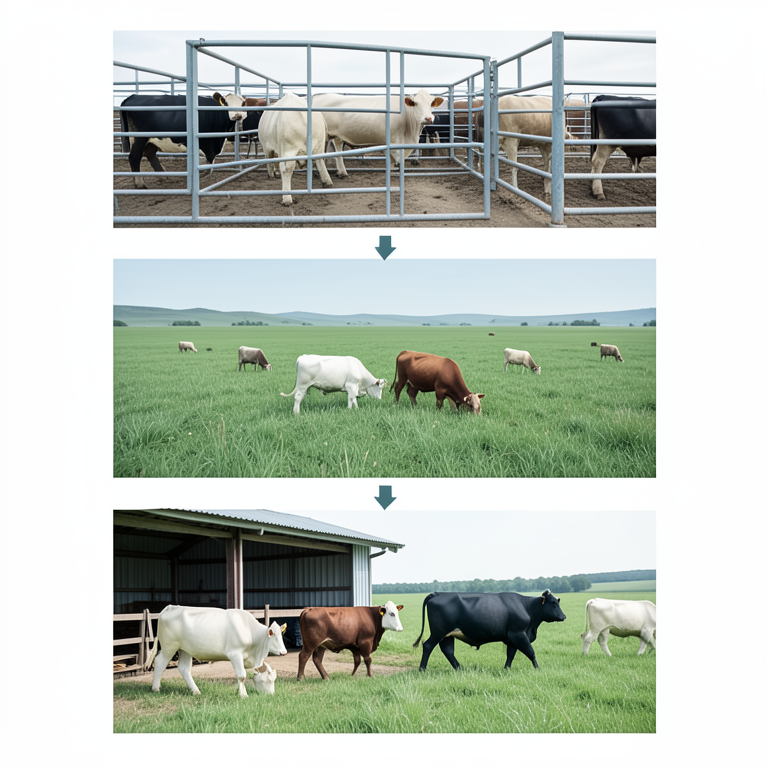
Beef Cattle Rearing Systems
AI-generated conceptual illustration (beef cattle). It explains the idea and does not show study data.
View source evidence ↗Introduction
Indonesia is an agrarian country supported by an agricultural climate and animal husbandry which has tremendous potential as a food source. From an agricultural standpoint, Indonesia has a very high amount of rice-producing land, in addition to providing agricultural staples such as cassava, soybeans, corn and others. From the animal husbandry perspective, Indonesia's ability to produce chicken, lamb and goat meat is beyond doubt. It is proven that every year the need for these meats is met, unlike beef. Broadly speaking, the non-fulfillment of beef self-sufficiency in Indonesia is due to the livestock organization system that has not fulfilled the allotment, so that the target is not achieved. There are four parties that should synergize, namely the government, society, entrepreneurs, and investors. The government has the ability to create policies related to livestock, the community is able to provide support for the achievement of successful beef cattle, entrepreneurs who have innovative ideas and high fighting spirit with qualified managerial capabilities, and are supported by unlimited funding by investors will provide a livestock climate that is extraordinary.
Beef cattle market potential
The need for beef continues to increase along with increasing public awareness of the importance of balanced nutrition, population growth, and increasing people's purchasing power. One of the efforts to meet the domestic demand for beef is to increase the population, production and productivity of beef cattle. Indonesia with a population of nearly 223 million people with a growth rate of 1.01%/year is a potential market for livestock products. The import volume of beef cattle and their processed products is quite large, equivalent to 600 or 700 head/year. In terms of existing potential, Indonesia should be able to meet the demand for food of animal origin and has the potential to become an exporter of livestock products. This is possible because it is supported by the availability of livestock and breeder resources, land with various types of forage crops, by-products of the agricultural industry as a source of feed, and the availability of technological innovations.
If only 50% of the potential of existing land can be utilized, the number of livestock that can be accommodated will reach 29 million livestock units (ST). Not to mention if the existing natural meadows are repaired and the quality is increased by using superior grass so that their capacity increases significantly.
The development of the beef cattle industry has very good prospects by utilizing available land and feed resources (agricultural and plantation waste), especially outside Java. Some people say that the potential for agricultural land that has not been utilized reaches 32 million hectares of abandoned land, 11.50 million hectares, and 5.40 million hectares of homestead land, not including peat and lebak lands. However, the reality shows the development of beef cattle has not been able to meet domestic demand for meat, apart from being susceptible to disease. This is probably due to various weaknesses in the livestock development system. Therefore, it is necessary to formulate an appropriate, community-based, and economically profitable beef cattle business institutional and development model.
Beef cattle development policy
Beef cattle farming is still partially developed so it is not yet integrated from upstream to downstream. The development of livestock agribusiness has the potential to be seen from the available resources, both natural resources and livestock resources. However, local resources that are managed in supporting the productivity of beef cattle are not maximized. Beef cattle farming is developed on a small scale, so it has not been developed with a business orientation. Large-scale beef cattle farming has been developed by other countries as industrial businesses such as Australia, New Zealand, Brazil and Europe (Lovarelli et al., 2020) [10] . Studies based on the potential utilization of local resources are urgently needed in accelerating the increase in beef cattle productivity. Until now, the development of beef cattle farms is carried out jointly by the government, the community (small-scale breeders), and the private sector. The government sets the rules of the game, facilitates and oversees the flow and availability of products, both in quantity and quality, so that they meet halal requirements, are safe, nutritious and healthy. The private sector and the community play a role in realizing the adequacy of livestock products through production, import, processing, marketing and distribution of beef cattle products. In general, the development of a type of business is influenced by various factors, one of which is the support of government rules and policies. In this case, the will of the government (governmental will) and the legislature play an important role, in addition to research institutions and universities (Lerner et al., 2017) [8] . Tóth et al., (2018) [15] state that government policies in livestock development are still top down. Policies like this ultimately make it difficult for various parties, especially stakeholders. The question is how to make public policies based on research results by involving stakeholders and policy makers through dialogue forums, then the results are put on the agenda so that they can be used in formulating national, regional and international policies. The beef cattle business system in both the study area and other areas is basically the same. Beef cattle farming develops in a small-scale pattern and is developed as a side business, sales are made when farmers need funds for the needs of family members (Lerner et al., 2017) [8] . The development of beef cattle farming by increasing the population is difficult to develop given the conversion of land in rural areas. Various policies proclaimed by the government but need to be realized optimally. Feed constraints need to be minimized by utilizing unused land or land that is not used for farming. These lands need to be optimized so that the availability of feed increases. Land use is regulated in government regulation Number 48 of 2013 concerning Pet Cultivation. Article 6 (1) the regency/municipality regional government is obligated to designate a land as a public grazing area. Then it is continued in paragraph (2) that the determination of a land as a public grazing area as referred to in paragraph (1), is carried out if the area has available land that allows and prioritizes small-scale livestock cultivation. The public grazing area as referred to in paragraph (2) functions as: a) producer of forage plants; b) place of natural marriage, selection, castration, and service of artificial insemination; c) place for animal health services; and/or d) place or object of research and development of livestock and animal health technology (Government Regulation Number 48 of 2013).
The role and benefits of beef cattle
Beef cattle are ruminant livestock which indeed have an important role for human needs. Both in the need for animal protein, it also has other benefits in various fields of life such as in industry and agriculture. Thus, ruminant livestock such as beef cattle cannot be separated from human life because they have become a basic household need. In Indonesia, for example, market demand for livestock products is very high and the fact is that this demand cannot be fulfilled by domestic livestock products. As a result, the number of imports of beef or meat is quite high. As a result, the country's foreign exchange also rose and of course it harmed everyone. The high market demand is due to the high number of household needs for meat. From the facts that occurred in Indonesia, We know that ruminants are very important, especially beef cattle, in meeting human meat (protein) needs. In addition, there are still many benefits that humans can get from livestock such as beef cattle. Beef cattle have an important role for humans. This is because beef cattle have enormous benefits and cover various areas of human life. Not only as a food ingredient, but also as a source of business. Beef cattle are very supportive and able to cover market needs if the management or management system is good. Beef cattle have quite a lot of functions and benefits for humans such as a source of high-quality animal protein, as a support for the family economy and long-term savings, as manure (manure), as a source of industrial raw materials, and are also often used as animals needed in religious ceremonies. Beef has higher calorie and protein commodities than other ruminant livestock such as buffalo and goats as well as other livestock such as poultry and rabbits. Every 100 grams of beef contains 18.8 grams of protein. Protein from beef is called animal protein which has an amino acid structure similar to that of humans, cannot be made by the body (essential), the amino acid composition is relatively more complete and balanced. The digestibility of animal protein is better than vegetable protein (from plants). Beef cattle are not only a source of protein but also a source of family income. More advanced breeders make livestock business the main source of income, and usually a source of family income. Starting from the sale of meat, which is really needed in the market, to the excrement which has economic value. Besides being able to provide material benefits, the beef cattle business can also create jobs for workers, especially in semi-commercial livestock businesses and commercial breeders. People who have experience and knowledge in doing business can make beef cattle business a business without the need to raise livestock. By collaborating with breeders, businesses can benefit in terms of sales, both in the area and distributed to other areas. Depending on the high price variations. In addition, especially for traditional conventional breeders, they usually use beef cattle for longterm savings and will be used if there is an urgent and sudden need, namely by selling the cow. In addition, in some tribes, beef cattle are a symbol of social status because the price is quite expensive.
Breeding and fattening
Indonesia still needs a lot of beef cattle breeds, this is because beef cattle breeds are one of the determining production factors and have strategic value in efforts to support the fulfillment of the demand for feeder cattle and meat, especially in supporting beef self-sufficiency. The main way to improve the balance between supply and demand for livestock is highly dependent on the availability of quality seeds. Therefore, efforts to improve quality and provide seeds that meet standards in sufficient quantities and are available on an ongoing basis and at affordable prices must be pursued continuously. The potential of local beef cattle as meat producers has not been utilized optimally through improved maintenance management. Local cattle have several advantages, namely their high adaptability to the local environment, being able to utilize low quality feed, and having good reproductive power. Beef cattle raising systems in Indonesia are divided into three, namely: intensive, extensive, and mixed farming. In intensive rearing, the cows are kept continuously or only at night and during the day the cattle are grazed. The pattern of intensive cattle rearing is mostly practiced by cattle breeders in Java, Madura and Bali. In extensive rearing, livestock are kept in pastures with sedentary farming patterns or in forests. This pattern is mostly practiced by breeders in East Nusa Tenggara, Kalimantan, and Sulawesi. Of the two ways of rearing, most are people's businesses with the characteristics of a household business scale and small livestock ownership, using simple technology, are labor intensive, and based on the principle of family organization (De Vries & Marcondes, 2020) [4] . Based on the scale of the business and the income level of the breeders, Barker et al (2018) [1] classify livestock businesses into three groups, namely: 1) livestock as a side business, namely farmers working on agricultural commodities, especially food crops, while livestock is only a side business to meet family needs ( subsistence) with a level of income from livestock <30%, 2) livestock as a business branch, namely breeders operating mixed farming with livestock and income levels from livestock business reaching 30-70%, 3) livestock as the main business, namely breeders managing livestock as main business. In addition, livestock as an industry by cultivating livestock specifically (specialized farming) and the level of income from livestock business reaches 100%. Commercial livestock business is generally carried out by breeders who have large capital and apply modern technology. Livestock business requires large capital, especially for the procurement of feed and seeds. This large cost is difficult for breeders to meet in general who have limited capital (Charlton, & Rutter, 2017) [3] . Paulsen et al. (2019) [12] state that there are several problems in the beef cattle breeding industry, namely: 1) the service per conception rate is quite high, reaching 2.60, due to limited artificial insemination service facilities, both frozen semen availability, inseminator labor and transportation problems, 2) the calving interval is too long, and 3) the pre-weaning calf mortality rate is high, some reach 50%. Therefore, the nursery business must be accompanied by efforts to reduce feed costs. One of the efforts to reduce feed costs is to utilize garden and factory waste as a source of feed through integrated raising of cattle in plantation areas or food crop areas. Integrated beef cattle breeding with food crops or oil palm plantations also makes it easier to carry out breeding programs to improve the genetic quality of livestock. According to Paulsen et al. (2019) [12] , improving the genetic quality of beef cattle in Indonesia is carried out through refining, developing pure cattle, and crossing. Improving the genetic quality of local beef cattle aims to increase body weight, growth rate, and reproductive efficiency through selection, while increasing productivity is sought through providing quality bulls, improving brood performance and mating systems, providing adequate feed, and adequate management systems, development of pure cattle, and crossing (crossing). Improving the genetic quality of local beef cattle aims to increase body weight, growth rate, and reproductive efficiency through selection, while increasing productivity is sought through providing quality bulls, improving brood performance and mating systems, providing adequate feed, and adequate management systems. Breeding programs that can be relied on through marriage arrangements using superior livestock, both natural mating and injecting (artificial insemination). In addition, for the long term, it is hoped that each district/city will form a Seed Source Area. So that in the future to have a province that is one of the centers for producing superior livestock breeds in Indonesia and is consistent in its implementation supported by related stakeholders. Efforts to improve multi-genetic quality include improving the genetic quality of beef cattle breeds, this is one of the most decisive factors and has strategic value in supporting the acceleration of production rates. So that efforts are needed to develop sustainable cattle breeding. To achieve successful mating of cows, it is recommended to be timely. This means that the implementation of the mating of the mother cow refers to the period of lust for the mother cow. A reference that can be used to mate cows if they are in heat in the morning is the right time to mate them in the evening of the same day. If they are just married the next day, the marriage is too late, or even failure. In realizing a sustainable animal husbandry by implementing strict discipline through an integrated pattern of breeding and raising livestock, including by implementing a clear, accurate and disciplined recording system, strictly selecting quality broodstock, artificial insemination and embryo transfer, management maintenance that supports a profitable cattle breeding business.
Maintenance Management
Beef cattle maintenance management includes three systems, namely intensive maintenance, semi-intensive maintenance and extensive maintenance. Intensive maintenance is most often used in Indonesia, because all maintenance is carried out in the cage. Cattle that are kept intensively are more efficient because they receive more regular treatment in terms of feeding, cleaning the stables, and bathing the cows. The semiintensive rearing system is where livestock are kept in pens and grazed. A semi-intensive rearing system, namely cattle raised in pens from start to harvest. The extensive rearing system is where livestock are kept by releasing them to grazing fields. Extensive rearing system, in which cattle are released to pasture during rearing.
Housing management
The stable is the place where the cow lives during the fattening stage. The stables must be cleaned every day to keep the cows healthy. Good cages are not close to settlements, have waste management and water availability. The distance between the cage and the settlement is 100 m, the waste disposal is channeled, the water supply is sufficient and it is far from crowds. Cages have several functions, namely protecting cows, being comfortable for livestock, non-slip floors reducing the risk of injury to livestock, facilitating maintenance, especially in feeding and drinking and facilitating health monitoring. The function of the barn is as a place of refuge as well as the ongoing various activities of livestock. Types of cages include individual cages, group cages, stud cages, brood cages, quarantine cages. Stable management that is not in accordance with the requirements can disrupt livestock productivity and have an impact on the surrounding environment. Cages that are built not only protect livestock from rain, heat, cold and strong winds or protect against thieves and predators, but cages built must meet the requirements of a good enclosure. A good cage is far from human settlements, has good ventilation and air temperature, is efficient in management, strong and durable, does not have an impact on the surrounding environment and makes it easier for workers in production processes such as feeding, cleaning cages and handling health. The above maintenance procedures can be found in commercial farms and smallholder farms. A good cage model, good cage requirements, can pay more attention to housing management to support the establishment of a livestock business and prevent the emergence of various diseases that can harm the community.
Feeding management
Feed ingredients are food ingredients given to livestock for survival, production and reproduction. Feed ingredients for beef cattle are concentrate and forage. Concentrates can come from plants, nuts and tubers such as corn, wheat, soybeans and cassava. Concentrates can also come from animals such as meat meal and fish meal. Forages can be in the form of elephant grass, king grass, Indigofera sp and lamtoro. Cow feed can be provided in the form of forages and concentrates. Feeding aims to meet the needs of life as well as for growth and reproduction. Cattle in their infancy require adequate feed both in terms of quality and quantity. Feed is the highest cost in livestock business, with good feeding management it can reduce these costs. Feeding management is expected to be able to optimally increase the body weight of livestock in accordance with the genetic potential of livestock. Feeding has two methods, namely ad libitum and restricted. Ad libitum feeding is continuous feeding and feed is always available, while restricted feeding is restricted feeding. Feeding livestock needs to take into account biological efficiency and economic efficiency. A good feeding technique to get good body weight gain is to adjust the time interval between giving concentrate and forage. It is better to give concentrate about 2 hours before giving forage so that the digestion process runs optimally.
Giving feed by adjusting the time interval between giving concentrate and forage will increase production. The main feed given to beef cattle is in the form of quality forage and is able to provide added value to the body weight gain of beef cattle. Recommendations suggested by the Pamekasan regency animal husbandry in the brochure Management of Fattening Beef Cattle (2007) to provide forage for beef cattle 10-12% and concentrate feed to be given 1-2% of the body weight of the beef cattle. Provision of beef cattle feed rations are not given at once in large quantities. It is recommended that the Pamekasan Regency Animal Husbandry Agency in the Complete Guide to Beef Cattle be fed three times a day, namely in the morning at 7-8 a.m. the beef cattle are given a little forage and half a ration of concentrate. At 12 noon half of the remaining forage is given back and at 3 pm the remaining concentrate is given back to the beef cattle and at 5 pm the remaining forage is given back to the beef cattle. It is recommended that the forage that will be given to the beef cattle is chopped first which will make it easier for the beef cattle to consume the forage. In addition to feeding, beef cattle farmers must also pay attention to, namely providing drinking water to beef cattle which must be provided all the time with a drinking water requirement of 20-40 liters/head/day. Nutrient requirements are very important for the basic needs of livestock. Nutrient requirements depend on body weight, growth phase and the environment in which livestock are kept. Provision of animal feed must be in accordance with the nutrients needed by livestock to meet basic life needs, growth and reproduction. To increase the concentration and activity of microorganisms in the rumen, it is necessary to pay attention to the feed substances contained in a feed ingredient. The type of agricultural and plantation waste that has the potential to be seen from its quality is cereal straw. Meanwhile, seen from the production of rice straw, leaves and shoots of sugar cane ranks first. The low quality of rice straw, leaves and shoots of sugar cane is caused by high levels of cellulose and lignin; while the content of nutrients, essential minerals and vitamins is low. Physical treatment can be carried out to improve the quality of agricultural and plantation waste by expanding the feed surface and softening the texture of the material. The treatment includes chopping, crushing, grinding and pelletizing. Biological treatment is an effort to lighten the work of rumen microbes. In this treatment the fiber material gets enzymatic activity by microbes outside the rumen.
Disease control
Disease control in beef cattle is divided into two, namely preventive and curative. Preventive is an act of disease prevention activities, the efforts made are sanitation and keeping livestock clean. Cleanliness of pens and livestock must always be considered, as well as the equipment used so that they do not get sick (Naylor et al, 2018) [11] . Curative is an act of disease treatment activities, livestock affected by the disease must be treated immediately so that it does not affect productivity and is not contagious. Administering drugs, vitamins and deworming regularly is useful for maintaining health and treating livestock from disease (Terefe et al., 2017) [14] . Apart from taking precautions, you also need to be aware of several infectious and deadly diseases such as anthrax, foot and mouth disease, and surra. Anthrax disease is caused by the bacterium Bacillus anthracsis which lives in the soil in the form of spores. The symptoms of beef cattle infected with anthrax are shortness of breath, trembling and convulsions. Transmission of anthrax through food, drinking water, insects, air and direct contact. Anthrax is a zoonotic disease, namely livestock disease can be transmitted to humans. Prevention and control of anthrax is done through anthrax serum vaccination in healthy cows. Foot and mouth disease is a deadly disease and quickly spreads to other cows. Foot and mouth disease is caused by a rhinovirus that lives in the muscle tissue and spinal cord of cattle. Foot and mouth disease transmission through food, drinking water, tools and cages contaminated with foot and mouth disease. Prevention and control of foot and mouth disease is carried out by routinely vaccinating healthy beef cattle. Surra disease is caused by certain Trypanosoma parasites that live in the red blood cells of beef cattle. Symptoms of beef cattle attacked by surra disease are indicated by the presence of hair loss with dry, dirty and scaly skin and decreased appetite. Transmission of surra disease is caused by the bite of the Tabanus cattle fly, ticks, ticks and Anopheles mosquitoes. Disease control is carried out by eradicating disease-spreading insects through spraying pesticides.
Agribusiness systems and beef cattle partnerships
The livestock business partnership system has been regulated by Regulation of the Minister of Agriculture of the Republic of Indonesia (Permentan) Number 13 of 2017 and states that livestock business partnerships are cooperation between livestock businesses on the basis of the principles of mutual need, strengthening, benefit, respect, responsibility and dependence. One of the partnership systems for beef cattle farming is the rowdy system. The gaduhan system is one of the livestock business partnership systems with a profit sharing pattern, which is a partnership relationship between breeders, or between breeders as executors who run cultivation businesses that are financed or owned by livestock companies and/or companies in other fields. The rowdy system has the potential to increase the productivity of local livestock to reduce imports of feeder cattle. Efforts to increase the competitiveness of the people's beef cattle business technically can be done by increasing productivity so that the product can be sold at a fairly cheap price level without reducing the farmers' profits. Expansion of economic activities that have the opportunity to be carried out is to encourage integrated farming activities that include several commodities, such as the integration of livestock crops or plants-livestock-fish. The concept of agribusiness looks at an agricultural business including livestock as a whole (holistic), starting from the subsystem of providing production facilities, production, processing to marketing. According to Dlamini, & Huang (2020) [5] the agribusiness concept or agribusiness system development strategy has the following characteristics: 1) based on utilizing the diversity of resources that exist in each region (domestic resource based), 2) accommodating to the quality of various human resources and not relying too much on imports and large foreign loans, 3) export oriented in addition to utilizing the market domestic, and 4) multifunctional, namely capable of providing a large and broad multiplier impact. Development of agriculture and animal husbandry based on the concept of agribusiness needs to pay attention to two important things; firstly, trying to strengthen the subsystems in a vertically integrated system in one management unit, and secondly creating efficient agribusiness companies in each subsystem. If this can be realized then the competitiveness of livestock products (meat, milk and eggs) will increase. Beef cattle agribusiness is defined as a business activity that handles various aspects of the production cycle in a balanced way in a complete policy package through managing the procurement, supply and distribution of production facilities, cultivation activities, marketing management by involving all stakeholders, with the aim to obtain balanced and proportional benefits for both parties (breeders and private companies). The beef cattle agribusiness system is an activity that integrates the development of the agricultural sector simultaneously with the development of the industrial sector and related services in a beef cattle industry cluster. These activities cover four subsystems, namely the upstream agribusiness subsystem, the aquaculture agribusiness subsystem, downstream agribusiness subsystem, and supporting service subsystem (Leso et al., 2020) [7,9] . According to et al. (2020) so that the development of the agribusiness system can accommodate the goal of increasing product competitiveness and at the same time involving middle to lower scale farmers, there are three alternative activities that can be carried out, namely: 1) vertical integration which is managed professionally by a private company, 2) vertical integration carried out jointly by farmers who are members of a cooperative or other organization, and 3) a combination of the two or known as a business partnership system. The partnership is intended as a business development effort based on cooperation between companies and smallholder farms, and basically is a vertical partnership. This cooperation implies that both parties must obtain benefits and benefits (Varma et al., 2021) [16] . According to Galama et al. (2020) [7,9] , a partnership is a partnership of various agribusiness actors, starting from pre-production, production to marketing activities. Partnerships are based on the principles of equality of position, mutual need and mutual benefit as well as the existence of agreement between partners to share costs, risks and benefits (Duval et al. 2020) [6] . An example is the broiler chicken partnership business. In this partnership, the company acts as the core and the farmer as the plasma. In the production process, breeders only provide labor and cages, while the company provides seeds, feed, medicines, production technical services and animal health (Britt et al., 2021) [2] . The application of the partnership concept between farmers as partners and the company needs to be carried out as a special effort so that the beef cattle business, both as the main and supporting business, can run in balance. These special efforts include financial and technical coaching as well as management aspects. Good, focused and consistent management development for beef cattle breeders as partners will improve business performance, which in turn can increase income. Therefore, through partnerships, whether carried out passively or actively, it will foster cooperation and form healthy business relationships (Pulina et al. 2020) [13] .
Conclusion
Raising beef cattle is very profitable, because they not only produce meat and milk, but also produce manure and as labor. Cows can also be used to train carts. Cow dung also has economic value, because it is an organic fertilizer that is needed by all types of plants. Cow dung can be a source of nutrients that can improve soil structure so that it becomes more loose and fertile. Improving the empowerment of livestock can be through increasing knowledge and forming institutional breeders directed towards the formation of a business cooperative so that farmers can increase their income and welfare. The key factor in livestock development is the improvement of the existing production system based on group institutions that empower the farmer's economy. To achieve successful mating of cows, it is recommended to be timely. This means that the implementation of the mating of the mother cow refers to the period of lust for the mother cow. A reference that can be used to mate cows if they are in heat in the morning is the right time to mate them in the evening of the same day. If they are just married the next day, the marriage is too late, aka failure. If lust is at night, the right time is to be married the next morning and it is too late if the new marriage is done after 15.00 the next day. If they are just married the next day, the marriage is too late, aka failure. If lust is at night, the right time is to be married the next morning and it is too late if the new marriage is done after 15.00 the next day. If they are just married the next day, the marriage is too late, aka failure. If lust is at night, the right time is to be married the next morning and it is too late if the new marriage is done after 15.00 the next day.
References
15 in the original paper- Barker ZE, Diosdado JV, Codling EA, Bell NJ, Hodges HR, Croft DP, et al. Use of novel sensors combining local positioning and acceleration to measure feeding behavior differences associated with lameness in dairy cattle. Journal of Dairy Science. 2018;101(7):6310-6321.
- Charlton GL, Rutter SM. The behaviour of housed dairy cattle with and without pasture access: A review. Applied Animal Behaviour Science. 2017;192:2-9.
- De Vries A, Marcondes MI. Overview of factors affecting productive lifespan of dairy cows. Animal. 2020;14(S1):s155-s164.
- Dlamini SI, Huang WC. Towards intensive co-operated agribusiness: a gender-based comparative Borich needs assessment model analysis of beef cattle farmers in Eswatini. Agriculture. 2020;10(4):96.
- Duval E, Von Keyserlingk MA, Lecorps B. Organic dairy cattle: Do European Union regulations promote animal welfare? Animals. 2020;10(10):1786.
- Galama PJ, Ouweltjes W, Endres MI, Sprecher JR, Leso L, Kuipers A, et al. Symposium review: Future of housing for dairy cattle. Journal of dairy science. 2020;103(6):5759-5772.
- Lerner AM, Zuluaga AF, Chará J, Etter A, Searchinger T. Sustainable cattle ranching in practice: Moving from theory to planning in Colombia's livestock sector. Environmental Management. 2017;60(2):176-184.
- Leso L, Barbari M, Lopes MA, Damasceno FA, Galama P, Taraba JL, et al. Invited review: Compost-bedded pack barns for dairy cows. Journal of Dairy Science. 2020;103(2):1072-1099.
- Lovarelli D, Bacenetti J, Guarino M. A review on dairy cattle farming: Is precision livestock farming the compromise for an environmental, economic and social sustainable production? Journal of Cleaner Production. 2020;262(2):121409.
- Naylor R, Hamilton-Webb A, Little R, Maye D. The 'good farmer': farmer identities and the control of exotic livestock disease in England. Sociologia Ruralis. 2018;58(1):03-19.
- Paulsen KM, Stuen S, Das Neves CG, Suhel F, Gurung D, Soleng A, et al. Tick-borne encephalitis virus in cows and unpasteurized cow milk from Norway. Zoonoses and Public Health. 2019;66(2):216-222.
- Pulina G, Tondo A, Danieli PP, Primi R, Matteo Crovetto G, Fantini A, et al. How to manage cows yielding 20,000 kg of milk: Technical challenges and environmental implications. Italian Journal of Animal Science. 2020;19(1):865-879.
- Terefe Y, Girma S, Mekonnen N, Asrade B. Brucellosis and associated risk factors in dairy cattle of eastern Ethiopia. Tropical Animal Health and Production. 2017;49(3):599-606.
- Tóth E, Deák B, Valkó O, Kelemen A, Miglécz T, Tóthmérész B, et al. Livestock type is more crucial than grazing intensity: Traditional cattle and sheep grazing in short-grass steppes. Land Degradation & Development. 2018;29(2):231-239.
- Varma VS, Parajuli R, Scott E, Canter T, Lim TT, Popp J. Dairy and swine manure management-Challenges and perspectives for sustainable treatment technology. Science of the Total Environment. 2021;778:146319.