
Research article · 2023 · Full text
International Journal of Statistics and Applied MathematicsSpeech recognition for Arabic numbers using empirical mode decomposition
Volume 8(2) · Pages 13–18 · DOI: 10.22271/maths.2023.v8.i2a.940 ↗
Research areasSpeech and Audio ProcessingSpeech Recognition and SynthesisInfant Health and Development
Abstract
Author-writtenOne of the main uses of artificial intelligence is automatic speech recognition. In this study, empirical mode decomposition is used to enhance the detection of speech dysarthria for speech recognition the problem in this paper is how to distinguish between the spoken words in Arabic we chose speech recognition by Empirical Mode Decomposition (EMD) to analyze the sound they were results as a confusion matrix results which indicates a classifier high accuracy (0.8966). Using 29 sounds to recognize by the EMD method the primary objective of this paper is to use EMD to Dysarthria speech recognize Arabic speech in real-time.
Summary
Source-checkedPlain-language reading of the full paper, prepared with AI and checked against the text. Each point links to the authors' own words.
Why it matters
- Speech signals are difficult to analyze because they are extremely non-linear and non-stationary. View evidence ↗
- Dysarthria is a motor speech disease resulting from abnormalities that impair the control of speaking movements. View evidence ↗
- Arabic is a widely spoken language, serving as the official language for 22 countries and spoken by over 400 million people. View evidence ↗
The question
- The study aims to determine how to improve speech recognition for Arabic speakers who suffer from dysarthria. View evidence ↗
What they did
- The researchers used the Empirical Mode Decomposition (EMD) method for automatic speech recognition to address the problem. View evidence ↗
- The dataset consisted of 29 sounds divided into three groups: 'wahed' (10 sounds), 'Ethneen' (10 sounds), and 'Thalathah' (9 sounds). View evidence ↗
- Speech signals were captured via direct audio recordings at various times of day and under different emotional or physical states (e.g., sickness, joy, or sadness). View evidence ↗
- A minimum distance classifier was employed to classify unseen spoken words. View evidence ↗
What they found
- The classifier achieved a high accuracy of 0.8966, as indicated by the results of the confusion matrix. View evidence ↗
- The EMD method used in this study produced better results compared to the methods used by Mohammed Sidi Yakoub et al. (2020) and Surbhi Bhatia et al. (2022). View evidence ↗
What it means
- The authors conclude that the EMD speech technique is effective for improving the quality of dysarthria speech recognition. View evidence ↗
- Future work will focus on expanding the study to include more similar words and different speech movements. View evidence ↗
- The authors suggest that future research could incorporate Probabilistic Neural Networks (PNN). View evidence ↗
Visual summary
1 visualsIllustrations explain the paper; they do not show study data.
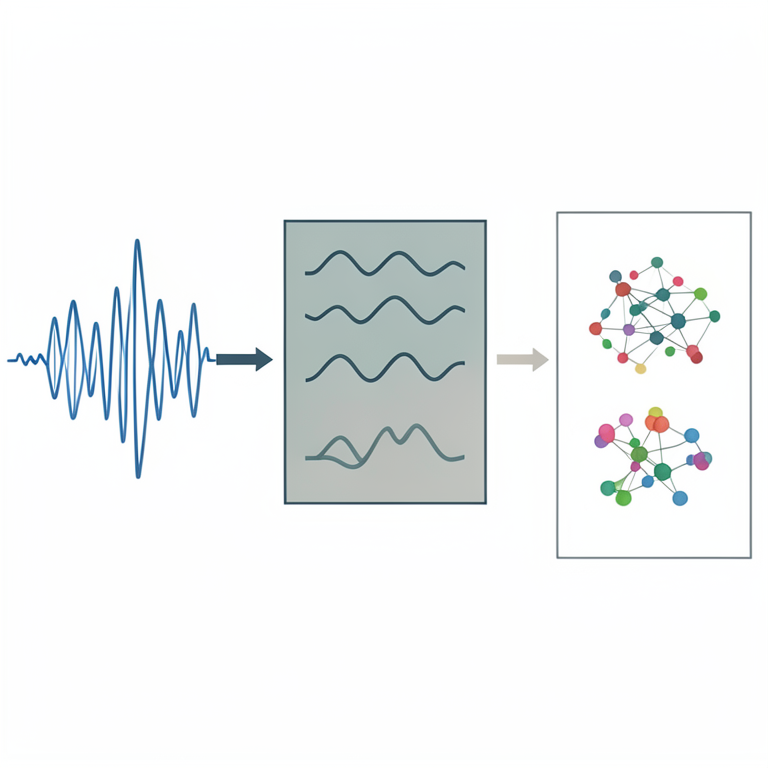
Speech Recognition Pipeline
AI-generated conceptual illustration (A digital audio waveform of a human voice). It explains the idea and does not show study data.
View source evidence ↗Figures & tables
From the original paper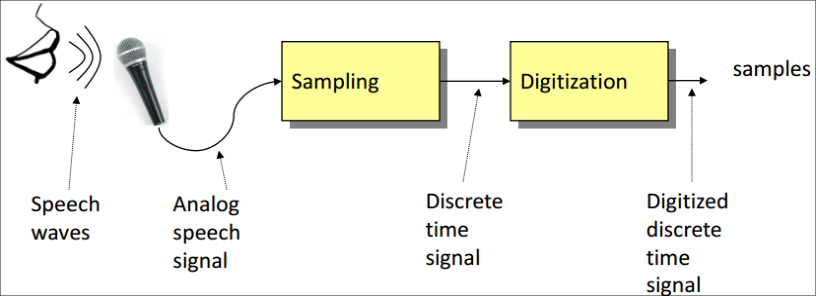 Figure 1
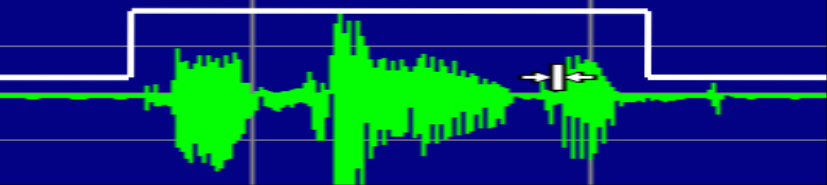 Figure 2
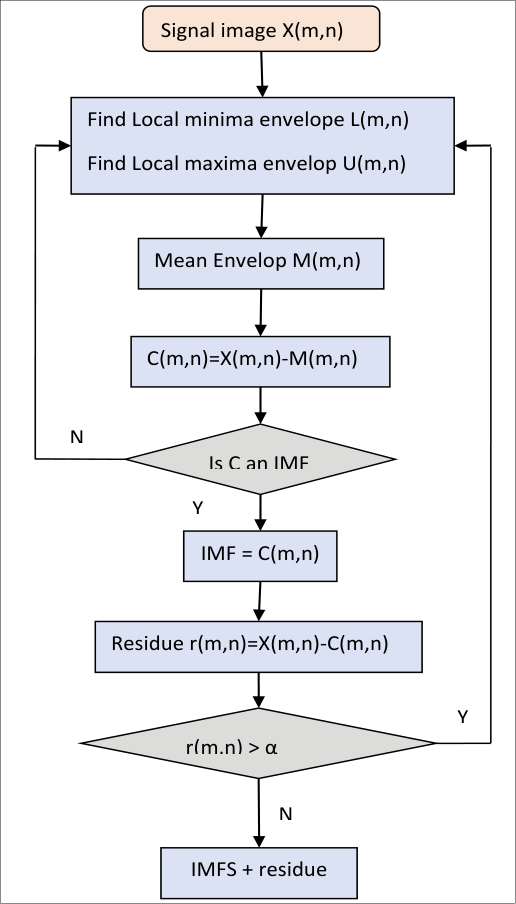 Figure 3
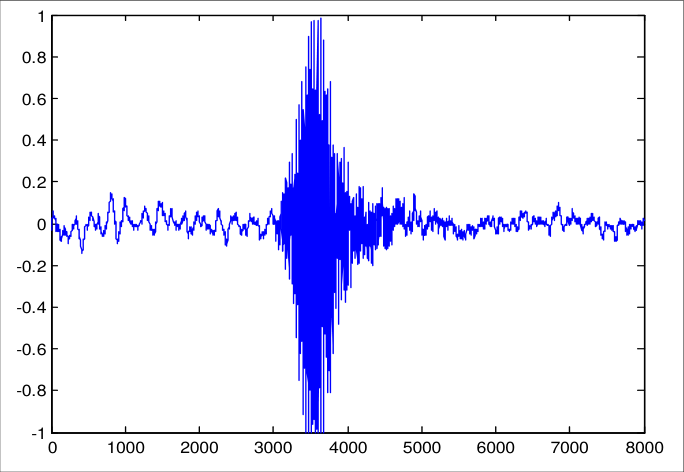 Figure 4
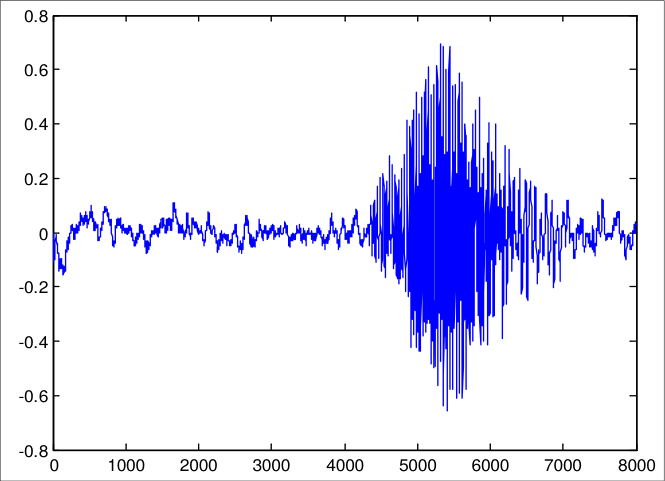 Figure 5
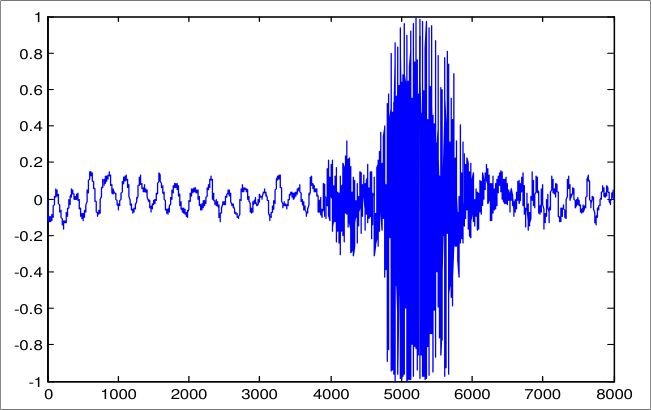 Figure 6
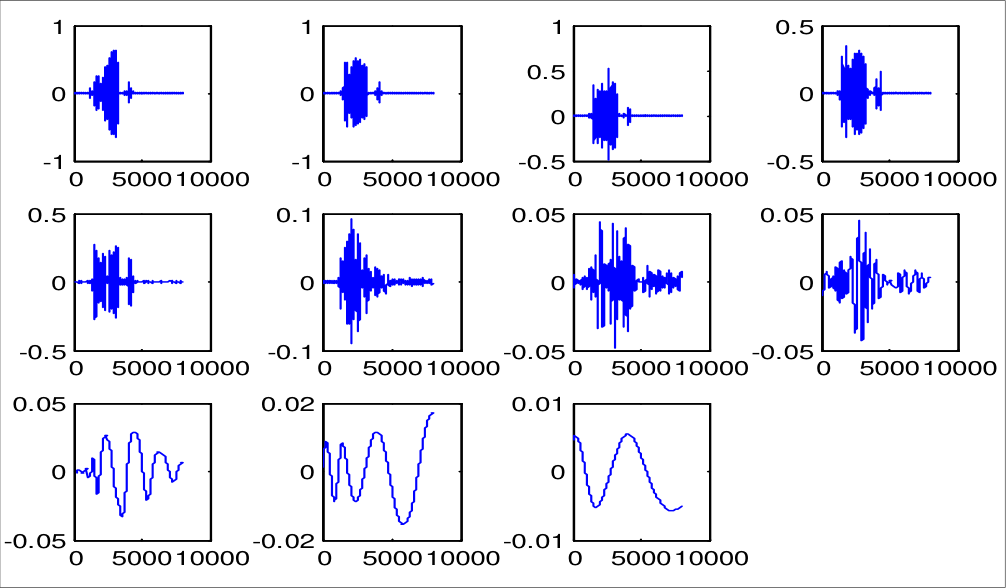 Figure 7
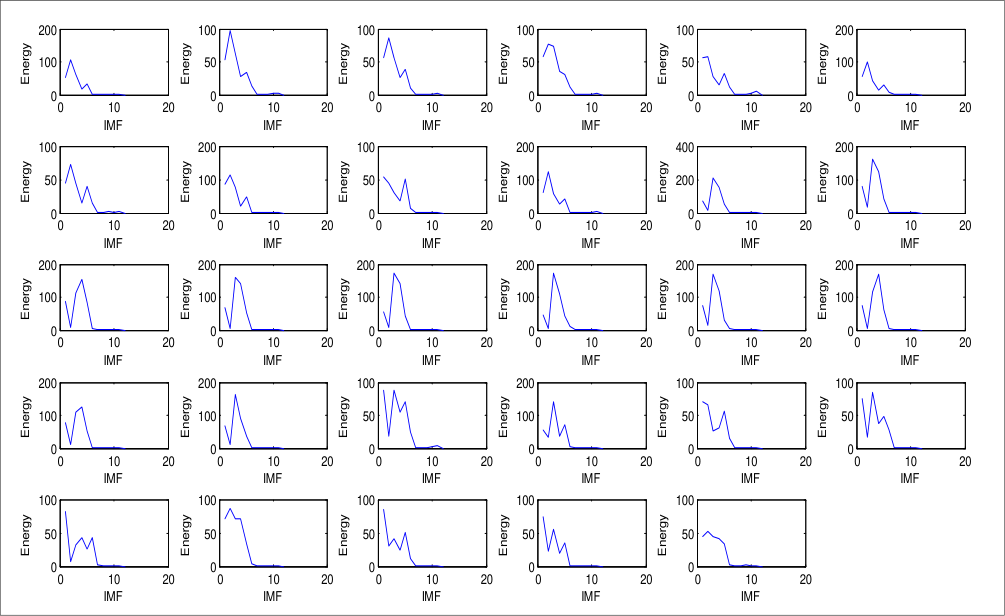 Figure 8
Introduction
Speech is the major form of communication between people, giving birth to the several subfields of speech processing that are now in use. Speech is an extremely non-linear, nonstationary signal, making it difficult to find this information. It is a signal generated by a highly developed psycho-acoustic system that humans have been using for thousands of years. Yet, it is more than just a tool for communication. It is a signal that contains a lot of information about the speaker, including their age, height, physical characteristics, general health, identity, mood, accent, and more [10] . Arabic is the official language of 22 countries and is spoken by more than 400 million people. It is regarded as being the fourth most widely spoken language online. Sharaf and Atwell MSA a variant of Arabic used in literary works and the Qur'an, which is written as well as used in official speeches, daily letters, and other informal situations. Machine Translation (MT) and Sentiment Analysis (SA) are the two tasks on which the majority of work has been done in SA over the past ten years [1] . A motor speech disease called dysarthria is caused by a number of abnormalities that affect the ability to control and carry out speaking movements. a loss of balance or a weakening of the speechrelated muscles [6] .We used one of the applications of artificial intelligence automatic speech recognition to speech recognition of artificial intelligence empirical mode decomposition method. The problem in this paper is how to distinguish how to improve speech recognition for Arabic-speaking people who have dysarthria. We chose automatic speech recognition through the empirical mode decomposition method to solve that problem.
Automatic Speech Recognition Process
SR's principal objective is to make it possible for machines to hear, understand, and react to spoken information. Typically, the aim of ASR systems is to analyze, extract, classify, or recognize the information spoken by people. The four steps for the speech recognition system are: [9] To assure accurate recognition, Figure 2 depicts using signal energy in the endpoint detection process.
Extraction of Features Using Empirical Mode Decomposition (EMD)
Described how to adaptively decompose non-stationary signals that use the EMD approach, which produces a residue and a set of intrinsic mode functions that represent the signal's numerous oscillations. The EMD technique is a very effective tool for signal analysis, de-noising, and filtering because EMD is a great visualization tool for the hidden sub-signals in a non-stationary signal [3] . Detrending as well as numerous other uses. EMD adaptive analysis is well suited for defect identification in industrial flat surface products because it can discover short-term changes like minute flaws in a picture. The image's various spatial frequencies are separated by the following IMFs. The highest spatial frequency component in a picture is represented by the first IMF. The following high spatial frequency component is represented by the second IMF, and so on. The trend in the image is represented by the residence as an illumination trend. Sifting method the following sifting algorithm [4] To reconstruct the original image:
, where L is the number of Intrinsic mode functions [12] .
Fig 3:
Flowchart of the Sifting Process [3]
Results and Discussion
We inserted the voice directly called Automatic speech recognition by Matlab language. The problem Patients with dysarthria speech produce sounds similar to those made by the first sound of a sound, however, it may be intermittent, intermittent, inaccurate, gasping, irregular, inaccurate, or monotonous, depending on the location of the damage Reading. In the work. The following figure 4, figure 5, and figure 6 shows the signal of each number. The entered data is saved in an array, and then the feature is extracted by EMD. The numbers that were entered are "اﺛﻨﺎن" ,"واﺣﺪ", and ,"ﺛﻼﺛﺔ" and after extracting the traits, we trained the data, and finally we tested the data. The number "ﺛﻼﺛﺔ" is the number with the most error rate because its letters are the most similar to the number ."اﺛﻨﺎن" We using 29 sounds to dividing into groups the first group represent the sound word (wahed) that numbers 10, the second group represents the sound (Ethneen) that numbers 10, and the third group represent the sound (Thalathah) that number 9. Access to the speech signal by direct audio recording at different times of the day, some in the morning when we wake up and some at other times when we are sick, or when we are in a state of joy or sadness. A comparison was made between the method used and two previous works, and we found that the method used has a better result than the two previous methods, which are Mohammed Sidi Yakoub, et al. (2020) [7] and Surbhi Bhatia et al. (2022) [5] .
Signal image X(m,n) The proposed approach has been tested on a limited data set consisting of three words (10 Wahed, 10 Ethneen, and 9 Thalathah). EMD Decomposition of a spoken word into 11 IMFs As shown in the following figure (7). To classify unseen spoken words a minimum distance classifier has been used according to the following formula: Assuming that z be the feature vector for the unknown input word, and let f1, f2, f3 be templates (for Wahed, Ethnan and Thalatha) for the three classes. Then the error in matching z against fk is given by || z -fk || .The vector u's norm is represented to here as || u ||. A minimum-error classifier determines the class for which the error is minimum by computing || z -fk || for k = 1 to 3. We refer to this as a minimum-istance classifier because || z -fk || also represents the distance between z and fk. Obviously, a minimumdistance classifier is a template matching method. Testing Results for 29 sounds which belong to 3 spoken words.
Conclusion
The EMD speech technique is used to improve the quality of dysarthria speech one of the most difficult languages to distinguish between its words is Arabic, so we chose this problem and try to find the best solution. We look forward to expanding our work in the future by taking similar words and having different movements " "ﻛﺴﺮة" "ﺿﻤﺔ" ﻓﺘﺤﺔ" .Future work In fact opens up a new idea with Populistic Neural Networks (PNN) and we think that in the future can use PNN.
Figures and tables from the paper
References
11 in the original paper- Guellil I, Saâdane H, Azouaoua F, Gueni B, Nouveld D. Arabic natural language processing: An overview, 2021 Journal of King Saud University: Computer and Information Sciences. 2021;33(5):497-507.
- Flandrin P, Rilling G, Goncalv`esv P. Empirical Mode Decomposition as a filter bank, IEEE Signal Processing Letters. 2004;11(2):112-114.
- Bhatia S, Devi A, Alsuwailem RI, Mashat A. Convolutional Neural Network Based Real Time Arabic Speech Recognition to Arabic Braille for Hearing and Visually Impaired, Frontiers in Public Health. 2022;10:110. doi:0.3389/fpubh.2022.898355.
- Enderby P. In Handbook of Clinical Neurology (110 ed.) Disorders of communication: Dysarthria (Elsevier B. V). 2013;110:273-281. https://www.sciencedirect.com/science/article/pii/B97804 44529015000228. https://doi.org/10.1016/B978-0-44452901-5.00022-8
- Yakoub MS, Selouani S, Zaidi BF, Bouchair A. Improving dysarthric speech recognition using empirical mode decomposition and convolutional neural Network, EURASIP Journal on Audio, Speech, and Music Processing. 2020;2020(1):1-7.
- Gulzar T, Singh A, Kumar D, Rajoriya, Farooq N. A Systematic Analysis of Automatic Speech Recognition: An Overview, International Journal of Current Engineering and Technology. 2014;4(3):1664-1675.
- Sharmaa R, Vignolob L, Schlotthauerc G, Colominasc MA, Rufinerb LH, Prasanna SRM. Empirical Mode Decomposition for adaptive AM-FM analysis of Speech: A Review Speech Communication. Journal -Elsevier. 2017;88:39-64.
- Demir B, Erturk S. Empirical Mode Decomposition PreProcess for Higher Accuracy Hyperspectral Image Classification, IGARSS 2008-2008 IEEE International Geoscience and Remote Sensing Symposium. 2008;2:939-941.
- Shan M, Ablimit M, Hamdulla A. EEMD and Double Thresholds Integrated Voice Activity Detection. 2022 3rd International Conference on Pattern Recognition and Machine Learning (PRML). IEEE; c2022. p. 273-279.
- Li H, Jiang Z, Shi Z, Han Y, Yu C, Mi X. Wind-speed prediction model based on variational mode decomposition, temporal convolutional network, and sequential triplet loss. Sustainable Energy Technologies and Assessments. 2022;52:101980.
- Xue Y, Yu Y, Yin K, Li P, Xie S, Ju Z. Human In-hand Motion Recognition Based on Multi-modal Perception Information Fusion. IEEE Sensors Journal. 2022;22(7):6793-6805.