
Research article · 2023 · Full text
International Journal of Veterinary Sciences and Animal HusbandrySalmonella detection from Bali cattle faeces
Volume 8(1) · Pages 81–83 · DOI: 10.22271/veterinary.2023.v8.i1b.470 ↗
Research areasFood and Agricultural SciencesLivestock Farming and Management
Abstract
Author-writtenSalmonellosis is one of the diseases that can infect Bali cattle. This disease is caused by Salmonella bacteria that can give multiple symptoms from fever, diarrhea, abortion and Food Borne disease that can harm humans. In order to conduct preliminary diagnoses, see the prevalence and prevent the spread of this bacteria, faecal isolation from Bali cattle should be researched. 30 samples of Bali cattle faeces from various locations were used for this research. The samples were transported using Stuart Transport media and then enriched in Selenite Broth media. The samples were continued to be isolated to Xylose Lysine Deoxycholate (XLD), Triple Sugar Iron Agar (TSIA), Simmon's Citrate Agar (SCA), and Sulfide Indole Motility (SIM) media. The result showed that Salmonella can be isolated from faeces. From 30 faecal samples, 11 samples (36%) show signs of Salmonella bacteria morphology. After further testing with SIM media test, from 11 samples, 3 confirmed Salmonella morphology and 8 showed Edwardsiella characteristic, this found need to further investigate.
Summary
Source-checkedPlain-language reading of the full paper, prepared with AI and checked against the text. Each point links to the authors' own words.
Why it matters
- Bali cattle are critical for industrial development and supporting tourism in Indonesia and Bali due to their potential for meat and seed provision. View evidence ↗
- Salmonellosis, caused by Salmonella bacteria, is a strategic disease that threatens Bali cattle. View evidence ↗
- Salmonella infection can cause fever, diarrhea, and abortion in animals, and can also cause foodborne diseases in humans. View evidence ↗
The question
- The study aimed to determine if Salmonella bacteria could be isolated from the feces of Bali cattle. View evidence ↗
What they did
- The researchers collected 30 random fecal swabs from Bali cattle across various locations in Bali. View evidence ↗
- Samples were transported in Stuart Transport media, enriched in Selenite Broth for 24 hours, and then transferred to Xylose Lysine Deoxycholate (XLD) media. View evidence ↗
- Suspected Salmonella colonies were confirmed using biochemical tests including Triple Sugar Iron Agar (TSIA), Simmon's Citrate Agar (SCA), and Sulfide Indole Motility (SIM) media. View evidence ↗
What they found
- Initial screening on XLD media showed that 11 out of 30 samples (36%) exhibited growth characteristic of Salmonella bacteria. View evidence ↗
- SIM media testing revealed that 3 samples were indole-negative, H2S-positive, and motile, while 8 samples were indole-positive, H2S-positive, and motile. View evidence ↗
- The 8 samples that tested positive for indole were suspected to be Edwardsiella bacteria rather than Salmonella. View evidence ↗
- TSIA media tests were positive, showing a color shift from red to yellow and the presence of H2S. View evidence ↗
- Despite the bacterial detection, the cattle did not exhibit symptoms of Salmonellosis at the time of sample collection. View evidence ↗
What it means
- The authors conclude that Salmonella bacteria can be detected in Bali cattle feces using basic media tests. View evidence ↗
- The authors suggest that the positive results may be linked to the poor cleanliness and biosecurity of traditional Balinese cattle cages. View evidence ↗
- The authors state that the finding of 8 samples showing Edwardsiella characteristics requires further investigation. View evidence ↗
Visual summary
1 visualsIllustrations explain the paper; they do not show study data.
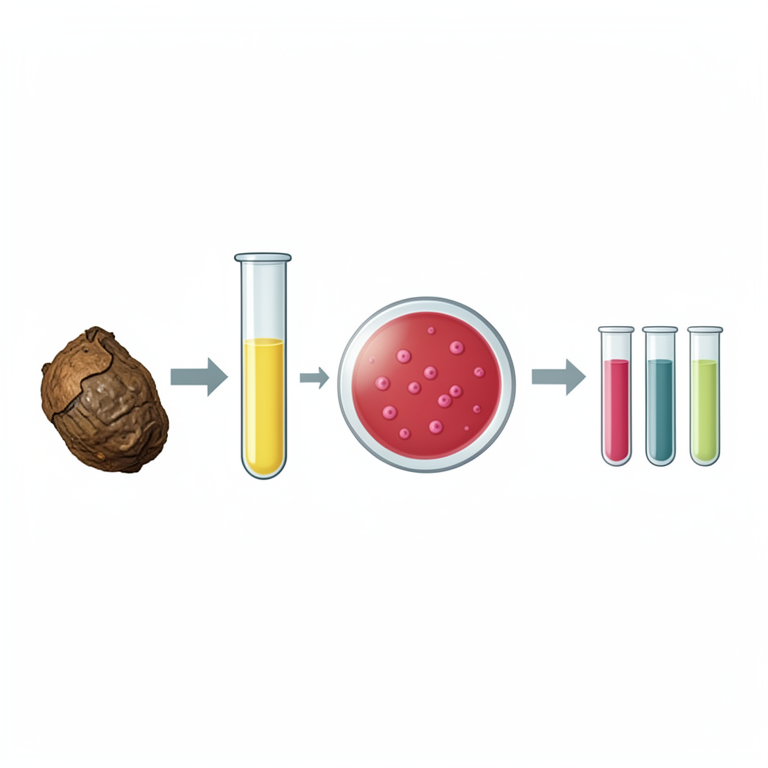
Salmonella Detection Workflow
AI-generated conceptual illustration (Bali cattle faeces and laboratory culture media). It explains the idea and does not show study data.
View source evidence ↗Figures & tables
From the original paper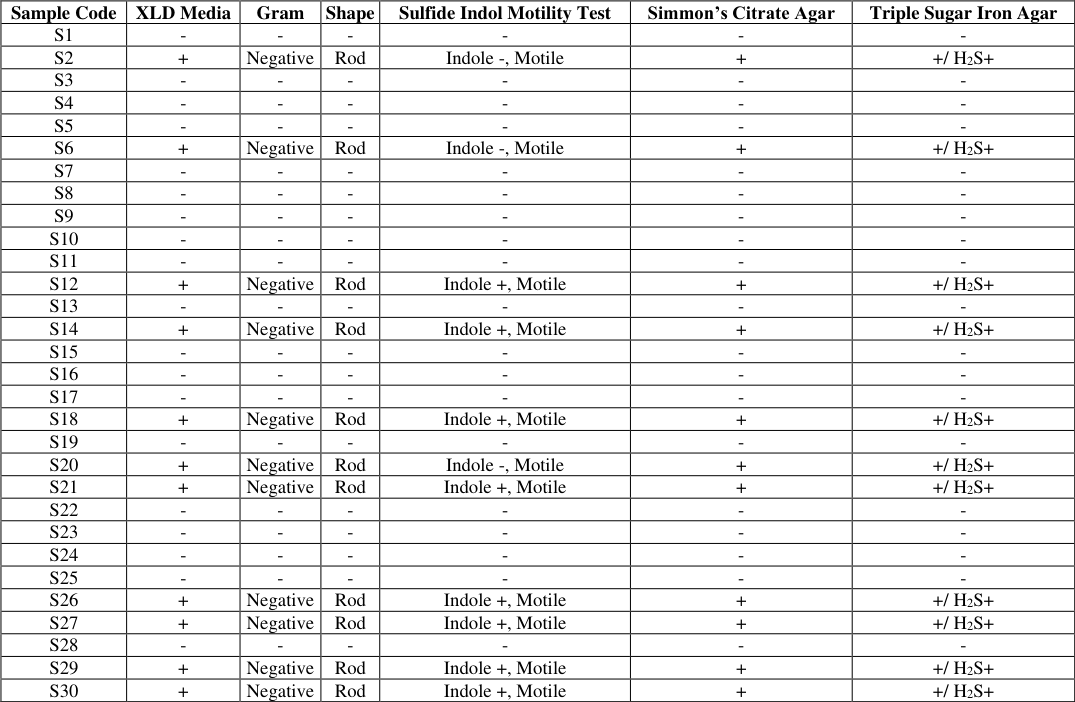 Table 4
Introduction
Bali cattle (Bos sondaicus, Bos javanicus, Bos/Bibos banteng) are one of the most important types of cattle for industrial development to support tourism in Bali and Indonesia in general. This is because Bali cattle have excellent potential for the provision of meat and seeds. After all, they have good adaptability with good quality reproductive characteristics (Suranjaya et al., 2010) [1] . The development of strategic diseases in livestock is very worrying, Bali Cattle is an idol for breeders in Bali, they are a source of animal protein that is still not sufficient to meet the needs of the community (Yulastri et al. 2018) [2] . One of the strategic diseases that threaten Bali cattle is Salmonellosis, this disease is a bacterial disease caused by Salmonella sp. This bacteria is a facultative anaerobic gram-negative belonging to the Enterobacteriaceae family. There are 2 species in the genus, Salmonella enterica, and Salmonella bongori. The most relevant infection in dairy cattle is caused by Salmonella enterica (Smith, 2009) [3] . Adult cows suffering from acute salmonellosis will show symptoms of fever, lethargy, lack of appetite, and decreased milk production followed by diarrhea, in which watery stools contain blood and mucus. Animals that are pregnant can suffer abortion with symptoms or without showing other signs of illness. Common symptoms of salmonellosis are fever, lack of appetite, lethargy, dehydration, and emaciation. Death can occur 3-4 days after suffering from illness and can heal by itself after a few weeks or months (Pudjiatmoko, 2014) [4] . Salmonella is also the cause of Food Borne diseases or diseases caused by contaminated food. Symptoms of the disease experienced include nausea, diarrhea, stomach cramps, fever, chills, headache, and vomiting caused 8-72 hours after consuming contaminated food (Jay et al, 2005) [5] . Animals suffering from Salmonella infection can become persistent carriers. Other than being found in faeces, Salmonella can also be isolated from soil, water, and sewage contaminated with faecal material from salmonellosis patients (Ray, 2001) [6] . The isolation of Salmonella from the faeces of dairy cows or calves as well as the environment on dairy farms is increasingly common, faecal samples were collected from approximately 30 healthy cows on each of 121 dairy operations across 17 states. Forty percent of the dairy operations had at least 1 cow that was Salmonella positive (United States Department of Agriculture, 2007) [7] . In Bali cattle, this data still needs further research, so it is necessary to research to detect these bacteria so that prevention and treatment can be carried out immediately and the disease does not spread to harm animals and humans.
The purpose of this study was to determine whether Salmonella bacteria could be isolated through faecal examination of Bali cattle. The benefit of this study is to provide preliminary data on whether Salmonella bacteria can be isolated through Bali cattle feces and to see how much Salmonella prevalence is in the field for easier and faster handling.
Materials and Methods
Materials and Methods
Sample
Samples were 30 faecal swabs from Bali cattle and were taken randomly in various locations in Bali.
Methods
The faecal swab was isolated and transported using Stuart Transport media and then enriched in Selenite Broth media for 24 hours, and then they were transferred to Xylose Lysine Deoxycholate (XLD) media for further identification. Salmonella produces a black sphere in the middle of the colony as a result of H 2 S gas production (Afriyani et al., 2016) [8] . Colonies suspected of being Salmonella on XLD media were continued at the confirmation stage through biochemical tests using Triple Sugar Iron Agar (TSIA), Simmon's Citrate Agar (SCA), and Sulfide Indole Motility (SIM) media. The results of the data from the identification of Salmonella bacteria are presented descriptively.
Result and Discussion
The result shows from 30 faecal samples, 11 samples (36%) show positive on XLD media, with signs of Salmonella bacteria colony growth as shown in table 4.1. and another 19 samples have no growth in the media. The colony shows black colonies on XLD media, where the bacteria can produce H 2 S that makes the centre of the colony will be black (Afriyani et al, 2016) [8] . Salmonella on XLD agar appears as red or pink colonies with or without a black centre (Wallace & Hammack, 2007) [9] . The gram stain shows gram-negative with rod-shaped bacteria according to Salmonella morphology (Yang et al. 2020) [10] . Salmonella has two layers of cell walls, an outer layer composed of lipopolysaccharide and protein, and an inner layer composed of peptidoglycan which is thinner than Gram-positive bacteria (Darmawan, 2017) [11] . Sulfide Indol Motility media showed mixed results, 8 samples showed positive indole, with positive H 2 S, and were motile, while 3 samples showed negative indole results with positive H 2 S and were motile. Salmonella sp gave positive results in the motility test which was characterized by the growth of bacteria that spread, motile, and the presence or absence of H 2 S (Afriyani et al, 2016) [8] . According to Cappuccino & Sherman (1987) [12] , the Salmonella test result will show negative in the indole test, with no red ring-formed appearing on the surface of the media, and positive in the motility test, in which root-liked form appears in media. The 8 samples that have positive result seems to refer to the Edwardsiella bacteria, but they need further identification.
| Sample Code | XLD Media | Gram | Shape | Sulfide Indol Motility Test | Simmon’s Citrate Agar | Triple Sugar Iron Agar |
|---|---|---|---|---|---|---|
| S1 | - | - | - | - | - | - |
| S2 | + | Negative | Rod | Indole -, Motile | + | +/ H2S+ |
| S3 | - | - | - | - | - | - |
| S4 | - | - | - | - | - | - |
| S5 | - | - | - | - | - | - |
| S6 | + | Negative | Rod | Indole -, Motile | + | +/ H2S+ |
| S7 | - | - | - | - | - | - |
| S8 | - | - | - | - | - | - |
| S9 | - | - | - | - | - | - |
| S10 | - | - | - | - | - | - |
| S11 | - | - | - | - | - | - |
| S12 | + | Negative | Rod | Indole +, Motile | + | +/ H2S+ |
| S13 | - | - | - | - | - | - |
| S14 | + | Negative | Rod | Indole +, Motile | + | +/ H2S+ |
| S15 | - | - | - | - | - | - |
| S16 | - | - | - | - | - | - |
| S17 | - | - | - | - | - | - |
| S18 | + | Negative | Rod | Indole +, Motile | + | +/ H2S+ |
| S19 | - | - | - | - | - | - |
| S20 | + | Negative | Rod | Indole -, Motile | + | +/ H2S+ |
| S21 | + | Negative | Rod | Indole +, Motile | + | +/ H2S+ |
| S22 | - | - | - | - | - | - |
| S23 | - | - | - | - | - | - |
| S24 | - | - | - | - | - | - |
| S25 | - | - | - | - | - | - |
| S26 | + | Negative | Rod | Indole +, Motile | + | +/ H2S+ |
| S27 | + | Negative | Rod | Indole +, Motile | + | +/ H2S+ |
| S28 | - | - | - | - | - | - |
| S29 | + | Negative | Rod | Indole +, Motile | + | +/ H2S+ |
| S30 | + | Negative | Rod | Indole +, Motile | + | +/ H2S+ |
Table text extracted from the original PDF; superscript letters are shown inline. The original table image is below.
View original table image
In SCA media, the results are all samples were positive because the media were able to change their colour from green to blue. This test confirms that the isolated bacteria are Salmonella bacteria but besides S.typhi and S.paratyphi A. because they have different results (Safitri et al., 2019) [12] . The change colour in media means that bacteria use citrate as the only carbon source (Tilleand & Scott's, 2013) [14] . On this research 11 from 30 samples show positive result.
Salmonella growth on the TSIA media shows positive result and with the present of H 2 S. The media's colour shifted from red to yellow as a result of the positive TSIA test findings. This tint of yellow denotes glucose fermentation by the bacteria. The presence of black precipitate at the butt indicates the present of H 2 S gas. Salmonella sp. bacteria employ sodium thiosulphate as a source of sulfur to create H2S, as evidenced by the ensuing black colour (Budiarso et al., 2009) [15] . Salmonella should cause the top part of TSIA media turn red and the bottom turn yellow. If H 2 S is created, it combines with ferrous sulfate (III), resulting in the formation of a dark precipitate of ferric sulfide FeS (II) at the tube's bottom (Midorikawa et al, 2014) [16] . All test result that conducted in this research showed the morphology of Salmonella bacteria even though there is some doubt in the SIM media, that showed from 11 positive samples, 3 samples are Salmonella and 8 samples is most likely Edwardsiella bacteria but as general result, Salmonella bacteria is able to detected through Bali cattle faeces using basic media test. The samples collection was carried out in traditional Balinese cattle cage, with a poor level of cleanliness, so it makes positive results. However, the cattle not showing Salmonella symptom when the data was collected. It is possible that the farmer bring the bacteria and contaminate the cage, due to the cleanliness of the cage and poor biosecurity, this bacteria can be found in the faeces that spread around the cage. Salmonella can survive in water, soil, and on a variety of surfaces, and can persist for at least one year in soil (Davies & Wray, 1996) [17] . These abilities of Salmonella will be dangerous if we still not obeying the biosecurity and the cage cleanliness. The present of this bacteria in the environment will increase the risk of infection to the cattle when their immune system are low.
Conclusion
Salmonella detection from Bali cattle faeces is possible to do. From 30 faeces samples that collected from Bali cattle, 11 samples (36%) show Salmonella morphology in XLD media, but after further testing with SIM media test, from 11 samples, 3 confirmed Salmonella morphology and 8 showed Edwardsiella characteristic.
Acknowledgement
AcknowledgementsThe author is grateful to the Udayana University Research Grant Project, all Department of Agriculture staff in Bali, Indonesia, all veterinary fellow colleague, and students who participated in this research.
References
9 in the original paper- Suranjaya IG, Ardika IN, Indrawati RR. Faktor-Faktor yang Mempengaruhi Produktivitas Sapi Bali di Wilayah Binaan Proyek Pembibitan dan Pengembangan Sapi Bali di Bali. Majalah Ilmiah Peternakan. 2010;13(3):83-87.
- Yulastari NME, Satriawan IK, Sadyasmara CAB. Sistem Dinamis Ketersediaan Daging Sapi di Provinsi Bali. Jurnal Rekayasa dan Manajemen Agroindustri. 2018;6(4):345-355.
- United States Department of Agriculture (USDA) USDA-APHIS-VS-CEAH; Fort Collins (CO): 2007.
- Salmonella, listeria and campylobacter on US dairy operations; c1996-2007.
- Afriyani A, Darmawi D, Fakhrurrazi F, Manaf ZH, Abrar M, Winaruddin W, et al. Isolation of Salmonella sp. in Feces of Broiler Chicks at Ulee Kareng Market Banda Aceh. Jurnal Medika Veterinaria. 2016;10(1):74-76.
- Yang C, Li H, Zhang T, Chu Y, Zuo J, Chen D. Study on antibiotic susceptibility of Salmonella typhimurium L. forms to the third and fourth generation cephalosporins. Scientific Reports. 2020;10(1):3042. DOI: 10.1038/s41598-020-59456-8.
- Safitri E, Hidayati NA, Hertati R. Prevalensi Bakteri Salmonella Pada Ayam Potong Yang Dijual Di Pasar Tradisional Pangkalpinang. Ekotonia. Jurnal Penelitian Biologi, Botani. Zoology and Microbiology. 2019;4(1):25-30.
- Midorikawa Y, Nakamura S, Phetsouvanh R, Midorikawa K. Detection of Non-Typhoidal Salmonella Using a Mechanism for Controlling Hydrogen Sulfide Production. Open Journal of Medical Microbiology. 2014;04(1):90-95. 10.4236/ojmm.2014.41010.
- Davies RH, Wray C. Persistence of Salmonella enteritidis in poultry units and poultry food. British Poultry Science. 1996;37(3):589-596.
Cited by 1
From OpenAlex, OpenCitations and reference lists read by Scinovex
- Isolation and Characterization of Cellulolytic Lactic Acid Bacteria from Soymilk Waste as Probiotic Candidates for Broiler ↗
International Journal of Veterinary Science · 2023
Lactic acid bacteria (LAB) have the potential to be used as probiotics for broilers because they have the ability to release enzymes, one of those is cellulase enzyme.However, the lactic acid bacteria are still unknown; thus, they need to be found.This study aims to find cellulolytic LAB from soymilk waste as a probiotic candidate for broiler chickens.This research was conducted…
❝ 11PDF