
Research article · 2021 · Full text
International Journal of Veterinary Sciences and Animal HusbandryReview on yersiniosis and its public health importance
Volume 6(6) · Pages 37–41 · DOI: 10.22271/veterinary.2021.v6.i6a.449 ↗
Research areasYersinia bacterium, plague, ectoparasites researchZoonotic diseases and public health
Abstract
Author-writtenYersinia belongs to the Enterobacteriaceae family and is widely found distributed in the environment. Of more significance to food safety is Y. enterocolitis very important in a foodborne zoonosis with substantial importance to public health. Enteropathogenic Yersinia species can grow at low temperatures, refrigerated foodstuffs can become able to cause contaminations. Swine and wild animals are common reservoirs. Y. enterocolitica is primarily a foodborne pathogen found in some food-producing animals such as pigs and other mammals. After ingestion of contaminated water or food, Y. enterocolitica colonizes the intestine causing yersiniosis, an acute gastrointestinal condition. Y. enterocolitica is a zoonotic disease known to infect humans via ingestion of faeces-contaminated foods (raw and ready-to-eat) and handling undercooked meat, sewage-contaminated water, etc. In humans, the clinical symptoms of yersiniosis appear most commonly as gastrointestinal disturbances, such as enteritis, enterocolitis and gastroenterocolitis accompanied by fever and often severe bloody diarrhoea. Refrain from feeding captive wildlife raw pork/game meat and undercooked chitlins; Staff working with captive wildlife should practise good hand washing after contact with animals but there is no vaccination available or recommended for wildlife as medical prophylaxis.
Summary
Source-checkedPlain-language reading of the full paper, prepared with AI and checked against the text. Each point links to the authors' own words.
Why it matters
- Yersinia is a genus of bacteria from the Enterobacteriaceae family that is ubiquitous in the environment. View evidence ↗
- Yersinia enterocolitica is a particularly significant foodborne zoonotic pathogen with substantial implications for public health. View evidence ↗
- Because enteropathogenic Yersinia species are psychrotrophic and can grow at low temperatures, they can contaminate refrigerated foods. View evidence ↗
The question
- The objective of this review is to use existing research to provide an overview of yersiniosis as a zoonotic foodborne disease and its role in public health. View evidence ↗
What they did
- The authors conducted a literature review based on existing research regarding yersiniosis. View evidence ↗
What they found
- In 2011, the European Union confirmed 7,017 cases of yersiniosis, representing an approximate 3.5% increase over 2010. View evidence ↗
- In Poland, yersiniosis incidence decreased from 0.67 per 100,000 inhabitants (257 cases) in 2011 to 0.6 per 100,000 inhabitants (231 cases) in 2012. View evidence ↗
- The primary reservoirs for Yersinia enterocolitica include swine, wild animals, and some domestic pets like sick puppies and kittens. View evidence ↗
- The consumption of undercooked pork products and meat is the most frequent cause of Y. enterocolitica infection. View evidence ↗
- Human yersiniosis typically presents as gastrointestinal issues (enteritis, enterocolitis, or gastroenterocolitis) accompanied by fever and frequently severe bloody diarrhea. View evidence ↗
- Yersiniosis can cause abdominal pain and vomiting lasting 1 to 3 weeks, with particularly severe forms occurring in children under 5 years old. View evidence ↗
- The incubation period for Y. enterocolitica ranges from 3 to 10 days, while the infectious period typically lasts 2 to 3 weeks. View evidence ↗
- Stool culture is required for the definitive laboratory identification of Yersinia. View evidence ↗
What it means
- The authors conclude that yersiniosis is a significant public health concern and a key cause of zoonotic infection regardless of the infection's origin. View evidence ↗
- The authors state that more investigation is needed to understand the specific public health impact of Yersinia and how to control it, particularly in Ethiopia. View evidence ↗
Visual summary
1 visualsIllustrations explain the paper; they do not show study data.
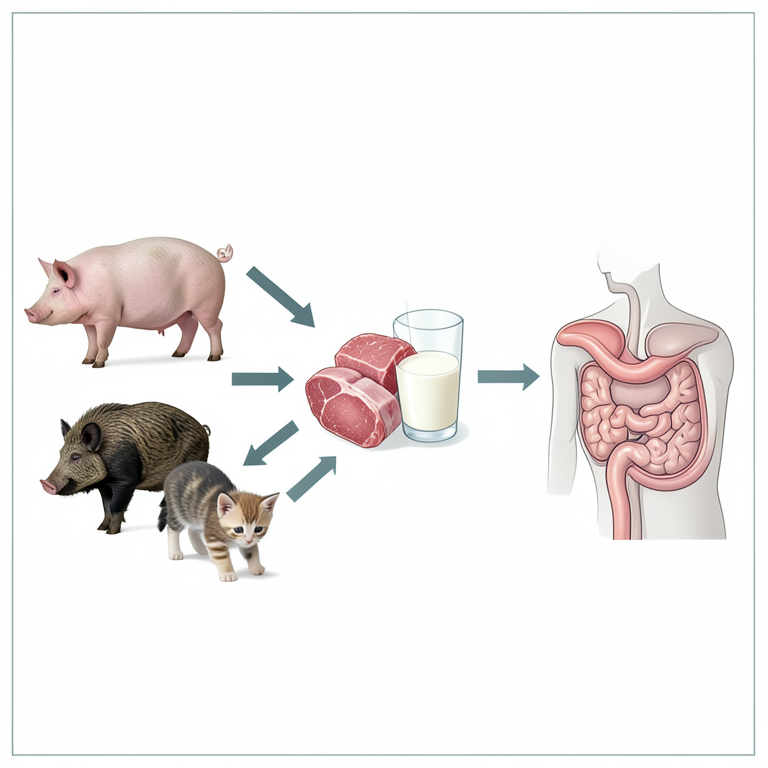
Transmission Cycle of Yersiniosis
AI-generated conceptual illustration (Yersinia enterocolitica transmission cycle involving pigs, wild boars, domestic cats, dogs, raw pork, and unpasteurized-). It explains the idea and does not show study data.
View source evidence ↗Introduction
Yersinia is one of the foodborne pathogen which belongs to the Enterobacteriaceae family and is ubiquitous in the environment [1] . Yersinia pestis is the major cause of bubonic plague, which has rare case occurrence. Y. enterocolitis is very important pathogen in food safety which is known by causing appendicitis-like symptoms. Yersinia is psychrotrophic bacteria that can survive outside of the host environment Similar with Listeria. The incidence of Y. enterocolitica is low when considered but its high occurrence related with vacuum-packed meats or chilled foods of vegetable origin [2] . The low incidence of Yersinia infections can also occur due to the high infectious dose is required and due to lack of selective diagnostic methods. Y. enterocolitica and Y. pseudo tuberculosis are also noted as psychotropic bacteria, being able to grow at temperatures of 4 °C or even lower. Rodents are the common natural reservoirs of Yersinia species; other mammals can occasionally serve as hosts. Y. pestis transmitted to humans through flea bites and sometimes become airborne during pandemics. Yersinia is enteropathogenic bacteria which has the capacity to grow at low temperatures able contaminate refrigerated foodstuffs. The main reservoirs of Yersinia are Swine and wild animals [2] . Y. enterocolitica is the causative agent of yersiniosis which has a public health importance especially regarding foodborne zoonosis. Y. enterocolitica is widespread in the environment and animal populations, posing a potential source of infection in humans. Yersinia enterocolitica can cause agreat food contaminant that is major cause of yersiniosis. 7,017 cases of yersiniosis were confirmed in the European Union in 2011, approximately it was increased by 3.5% when compared with 2010. A total of 257 yersiniosis cases were reported In Poland in 2011 and the percentage of incidence was 0.67 per 100,000 inhabitants. In 2012, the number of confirmed yersiniosis cases decreased to 231, with an incidence rate of 0.6 per 100,000 inhabitants [3] . In Europe Yersinia enterocolitica is the third major causal agent of gastrointestinal manifestations [4] . Yersinia can cause a varieties of illnesses in humans like Crohn's disease, yersiniosis, mesenteric lymphadenitis, pseudo appendicitis, and systemic infectious disease, commonly known as plague.
Plague is mainly caused by Y. pestis which has been responsible for three human pandemics throughout history. This plagues documented from the sixth to eighth centuries, the ''Black Death'' from the fourteenth to nineteenth centuries, and the modern plague from the nineteenth century to the present time [5] . Y. enterocolitica is the main a foodborne contaminant found in food animals including pigs and other mammals. Once contaminated water or food is consumed, it colonizes the intestine causing yersiniosis which cause acute gastrointestinal infection. The main signs of yersiniosis includes fever, abdominal pain, vomiting, and diarrhea. It is mainly treated by continuous course of antimicrobial therapy [6] . Y. pseudo tuberculosis is the least common of the three Yersinia pathogenic strains. It causes an illness characterized by fever and acute abdominal pain arising from mesenteric lymphadenitis, an inflammation of the lymph nodes [7] . Y. enterocolitica is one of three human pathogenic species in the genus Yersinia. They are a genus in the family Enterobacteriaceae. It can be transmitted by the ingestion of contaminated food products including vegetables, milk products, and meat. The optimum growth temperature of Yersinia is about 30 o C, and it is similar with Monocytogenes that can grow at refrigeration temperatures and also survive under the freezing process. The clinical signs of Y. enterocolitica infection (yersiniosis) include diarrhoea (which may be bloody in severe cases), mild fever, abdominal pains, and possibly vomiting [8] . The State Sanitary inspection responsible for the supervision of human infectious diseases in Poland constantly monitors the epidemiologic situation, including that of yersiniosis. Due to the fact that yersiniosis is a zoonosis, the State Sanitary Inspection representatives should stay in permanent contact with the State Veterinary Inspection by exchanging information on the current epidemiologic and epizootic situation [9] . According to the World Health Organization, the lack of medical prevention of the disease, sanitary and hygienic conditions in slaughterhouses, and public information campaigns are crucial. Informing and educating society on the need to follow basic hygiene rules, especially in contact with food, is essential in preventing the spread of factors that are the causative agents of gastrointestinal infections, including Y. enterocolitica. Yersinia (mainly enterocolitica) can be caused by eating a variety of foods, including milk and milk products, raw meat (beef, pork, chicken, and lamb), poultry, eggs, vegetables, bean sprouts, tofu, seafood, and others [10] . Yersinia are able to reproduce in vacuum-packed foods and at refrigeration temperature. Refrigeration of contaminated foods at manufacturing and consumer sites result Yersinia species that can survive and thrive in food. The increased ingestion of processed foods where in contamination can occur after pasteurization can also potentiate the risk of outbreaks. The spread in the international food trade and changes in livestock farming and the food industry can leads to the occurrence of yersiniosis globally [2] . Therefore the objectives of this paper are to give clue based on the existing research on yersiniosis as a zoonotic foodborne disease and consequently to provide an overview of the role of yersiniosis in public health.
Literature Review Aetiology
In total, there are 18 species of Yersinia, three of which are important human pathogens associated with zoonotic infections; Y. pestis causes plague and Y. pseudo tuberculosis and Y. enterocolitica facilitate the occurrence of yersiniosis. Y. enterocolitica; Its source includes animals, especially swine, and entered into the body through ingestion of contaminated food, especially undercooked pork, unpasteurized milk, water Blood transfusion [11] . Yersinia pestis can be transmitted to humans subcutaneously through flea bites and can become airborne during pandemics. Yersinia pseudo tuberculosis (with subspecies) is associated with intestinal infections and mesenteric lymphadenitis [12] .
Source of Infection and Transmission
1. Fecal-oral transmission can also occur through ingestion of contaminated food or water and also through contact with infected people and animals; 2. Wild and domestic animals including pets animals (sick puppies and kittens) and swine are the major reservoirs of Y. enterocolitica; 3. Y. pseudo tuberculosis is a zoonotic disease of several types' wild and domestic birds and animals, mainly among rodents and other small mammals such as turkeys, ducks, geese, pigeons, pheasants, and canaries. 4. Humans are accidental hosts of Yersinia infection; 5. Y. enterocolitica infection is most often caused by consumption of undercooked meat and pork products; 6.unpasteurized milk or chemically untreated water can also the main source of the infection; 7. Transfusion of blood from infected person who were asymptomatic or direct faecal-oral, person-to-person transmission is also possible; 8. Human carriage take 2-6 weeks, or longer if untreated stay up to 6 months. Long-term carriers are also possible [13; 14] .
Food born Transmission
According to outbreak investigations, and historical Netherland studies including a case-control study performed in 1995-1996, identified risk factors that include consumption of pork products, association with backyard slaughter of pigs (possible zoonotic exposure), animal contact, possible personto-person contact, and contact with untreated water or unarticulated sewage [15] . International studies have reported that pigs are an important reservoir for Y.E and the pathogenic Y.E serotypes that are most frequently found in pigs and pork products are those most commonly reported in human infections [16] . Often YE infections are linked to the consumption of undercooked contaminated pork or crosscontamination of other food items during the handling and preparation of raw pork [17] . Several case-control studies and a systematic review and meta-analysis study by Guillier et al., 2019 published internationally to support this observation. However, other food items such as raw milk, pasteurized milk, water, fresh vegetables, and produce have been implicated, suggesting that sources other than pork may also be important [19] . A reduced storage time (under one day) or a storage temperature (below 4 0 C) would largely reduce the proportion of packages containing high numbers of pathogenic Y. enterocolitica [20] .
Waterborne Transmission
Outbreaks of Y. enterocolitica has been attributed to the consumption of untreated drinking water internationally [21] . Consumption of water from a home supply increases the risk for intestinal YE infection. This risk factor may be different for urban populations. Rural households may draw their drinking water from the surface, ground, or rainwater sources which are not subject to the same drinking water standards as community water supplies [22] and may be contaminated by animals or birds. Studies internationally have reported the detection of pathogenic Y.E in environmental waters and untreated water (and sewage) [23] .
Human-to-Human Transmission
Yersiniosis is rarely transmitted through sustained person-toperson transmission, but there have been previous Y. enterocolitica outbreaks internationally in which a food handler was implicated [24] . A nosocomial outbreak of diarrheal disease due to Y. enterocolitica has been reported in Canada. Asymptomatic bacteremia in blood donors has historically led to fatal transfusion outcomes in Netherland. In 1997, it was reported that eight cases of transfusionassociated transmission resulting in five deaths had occurred in Netherland in the preceding five years [25] .
Public health impacts of Yersiniosis
Risks to public health Y. enterocolitica is a zoonotic disease known to infect humans via ingestion of faeces-contaminated foods (raw and ready-toeat) and handling undercooked meat, sewage-contaminated water, etc. Due to the high prevalence of gastrointestinal illness, it serves as a major food safety concern, especially in low-and middle-income countries. Local or regional public health officials should be notified of clinical cases immediately [26] . If livestock facilities are infected, Y. enterocolitica can cause severe economic loss due to decreased thriftiness (meat production, milk production) and mortality. Developing countries are particularly at risk of economic consequences [13] .
Clinical signs of yersiniosis
In animals, Y. enterocolitica infections are most often asymptomatic; however, in clinical cases, acute or chronic diarrhoea, possibly with blood, and inflammatory lesions in the intestines are noticed. Yersiniosis may also appear as sepsis with suppurative lesions in the internal organs, skin lesions (i.e. erythema), arthritis or mesenteric lymphadenitis and reproductive disorders. Research reports indicate that pigs are a predominant reservoir of Y. enterocolitica strains pathogenic to humans. In this species, clinical symptoms of yersiniosis are rarely observed, excluding diarrhea, generally seen in young animals up to 8 weeks of age [27] . Companion animals are becoming an increasingly important factor in the epidemiology of Y. enterocolitica infections in humans. Dogs thought to be asymptomatic carriers may be affected with enteritis accompanied by weakness, in appetence, bloody diarrhoea, vomiting, arrhythmia, and sometimes jaundice or respiratory disorders, leading to death. Yersiniosis accompanied by gastrointestinal disturbances has also been reported in cats. Cases of familiar epidemic yersiniosis have been recently reported and attributed to very close contact, especially of young children, with infected domestic animals [28] . In case of humans, the signs of yersiniosis manifested most commonly as gastrointestinal problems, such as enteritis, enterocolitis and gastroenterocolitis followed by fever and often severe bloody diarrhoea [29] . Vomiting and abdominal pain lasting for 1-3 weeks are also observed. These forms are especially severe in children under 5 years of age and may be sporadic, familial, or epidemic with a varying degree of severity [30; 31] .
Diagnosis of Yersiniosis Clinical diagnosis
The incubation period of Y. enterocolitica is between 3-10 days, and the infectious period is usually 2-3 weeks. Clinical signs in wild and domesticated mammals are highly variable and are dependent upon strain and serotype as well as host species (e.g., humans develop the diarrhoeal disease more commonly). Infected animals may present with decreased thriftiness, diarrhea, and dehydration. Livestock is not known to develop clinical signs aside from decreased thriftiness and sudden mortality [32] . Y. enterocolitica is an intracellular pathogen that survives within macrophages; infections may persist within lymph nodes and other lymphoid tissue for an extensive period of time. Specific invasion sites and survival times depend on a range of virulence factors. Y. enterocolitica produces a heat-stable enterotoxin that causes diarrhoea in mammals, including humans. Lesions of the disease include Muco Haemorrhagic diarrhoea; multifocal hepatic and splenic necrosis; Mesenteric lymphadenopathy; Ulcerative gastroenterocolitis [33] .
Differential diagnoses Salmonellosis,
Shigellosis, Appendicitis Clinical manifestations of Y. enterocolitica infection include diarrhoea, abdominal pain, fever, and vomiting. However, these clinical features, along with hematologic or biochemical data, do not differentiate the diagnosis of Yersinia from other bacterial causes, such as Salmonella and Campylobacter [34] . Definitive laboratory identification depends on stool culture. Yersinia is known to grow poorly on agar commonly used for culturing Salmonella-Shigella and Campylobacter. Therefore, if there is clinical suspicion, the microbiology laboratory should be reminded to use appropriate selective agar for Y. enterocolitica to improve the detection rate [35] .
Prevention and Control Public health measures
Public Education: 1. Undercooked/raw pork meat should not be consumed 2. Only pasteurized milk or milk products should be consumed; 3. Washing of hands with soap and water prior to eating and preparing food, after contact with animals, and after handling raw meat is very basic; 4. Separate cutting boards for meat and other foods should be used independently. All cutting boards, counter-tops, and utensils with soap and hot water after preparing raw meat; 5. Dispose of animal faeces in a sanitary manner [36] .
Sanitary and Medical prophylaxis
Refrain from feeding captive wildlife raw pork/game meat and undercooked chitlins; Staff working with captive wildlife should practise good hand washing after contact with animals but there is no vaccination available or recommended for wildlife as medical prophylaxis.
Conclusions and recommendations
The occurrence of yersiniosis as well as its great tendency to cause zoonotic infections, make this disease a continuous challenge and a subject of investigation by several research groups justifying the continued attention in this area. Independently from the origin of the infection, yersiniosis has been shown to be important in public health and therefore may play a role as the cause of zoonotic infection. It is known that much investigation is required to specify the problem of Yersinia in public health, especially in Ethiopia and the way to control it. The role of Yersinia in zoonotic infections is crucial to determine and study the best control strategies to be used in veterinary practice in order to reduce zoonotic infections and ensure food safety and quality. So based on this, the following recommendations are indicated The research gap regarding yersiniosis in public health requires special attention, especially in Ethiopia to divert the problems of Yersinia in foodstuff. Specific and clear strategies to control the yersiniosis infection still require further studies. Regular monitoring of food safety and sanitation be enhanced to promote the prevention of the problem.
List of abbreviations
List of abbreviations
References
27 in the original paper- Drummond N, Murphy BP, Ringwood T, Prentice MB, Buckley JF, Fanning S. Yersinia enterocolitica: a brief review of the issues relating to the zoonotic pathogen, public health challenges, and the pork production chain. Foodborne pathogens and disease. 2012;9(3):179189.
- Gupta V, Gulati P, Bhagat N, Dhar MS, Virdi JS. Detection of Yersinia enterocolitica in food: An overview. Eur. J Clin. Micro Biol. Infect. Dis. 2015;34:641-650.
- Ul Ain Q, Ahmad S, Azam SS. Subtractive proteomics and immunoinformatics revealed novel B-cell derived Tcell epitopes against Yersinia enterocolitica: an etiological agent of Yersiniosis. Microbial pathogenesis. 2018;125:336-348.
- Parkhill J, Wren BW, Thomson NR, Titball RW, Holden MTG, Prentice MB, et al. Genome sequence of Yersinia pestis, the causative agent of plague. Nature. 2001;413(6855):523-527.
- Bulbulo E, LU HÇ, Kantarçeken B, Ali ÇET, NKAYA MG, EZBERC F. Yersinia pseudotuberculosis colitis presented with severe gastrointestinal bleeding. Turk J Gastroenterol. 2010;21(2):179-182.
- Furman S, Sadkowska-Todys M. Yersiniosis in Poland in 2011. Przegl Epidemiol. 2013;67:221-225.
- Fredriksson-Ahomaa M, Korkeala H. Low occurrence of pathogenic Yersinia enterocolitica in clinical, food, and environmental samples: A methodological problem. Clinical Microbiology Reviews. 2003;16;220-229.
- Zadernowska A, Chajęcka-Wierzchowska W, Łaniewska-Trokenheim Ł. Yersinia enterocolitica: a dangerous, but often ignored, foodborne pathogen, Food Reviews International. 2014;30(1):53-70.
- Boqvist S, Pettersson H, Svensson A, Andersson Y. Sources of sporadic Yersinia enterocolitica infection in children in Sweden, 2004: A case-control study. Epidemiol. Infect. 2009;137:897-905.
- Guillier L, Fravalo P, Leclercq A, Thébault A, Kooh P, Cadavez V, et al. Risk factors for sporadic Yersinia enterocolitica infections: A systematic review and metaanalysis. Microbial. Risk Anal. 2020 (accessed on 4 may; c2022.
- MacDonald E, Heier BT, Nygard K, Stalheim T, Cudjoe KS, Skjerdal et al. Yersinia enterocolitica outbreak associated with ready-to-eat salad mix, Norway, Emerg. Infect. Dis. 2012;18:1496-1499.
- Van Damme I, De Zutter L, Jacxsens L, Nauta MJ. Control of human pathogenic Yersinia enterocolitica in minced meat: Comparative analysis of different interventions using a risk assessment approach. Food Micro biolology. 2017;64:83-95.
- Isobe J, Kimata K, Shimizu M, Kanatani J, Sata T, Watahiki M. Water-borne outbreak of Yersinia enterocolitica O8 due to a small scale water system. Kansenshogaku Zasshi. 2014;88:827-832.
- Moriki S, Nobata A, Shibata H, Nagai A, Minami N, Taketani T, et al. Familial outbreak of Yersinia enterocolitica serotype O9 biotype 2. Journal of Infectious and Chemotherapy; 2010;1656-58.
- Falcao JP, Brocchi M, Proença-Módena JL, Acrani GO, Correa EF, Falcao DP. Virulence characteristics and epidemiology of Yersinia enterocolitica and Yersiniae other than Y. pseudotuberculosis and Y. pestis isolated from water and sewage. J Appl. Micro Biol. 2004;96: 1230-1236.
- Martins BTF, Botelho CV, Silva DAL, Lanna F, Grossi JL, Campos-Galvão MEM, et al. Yersinia enterocolitica in a Brazilian pork production chain: Tracking of contamination routes, virulence and antimicrobial resistance. Int. J. Food Micro Biology. 2018;276:5-9.
- Bolton DJ, Ivory C, McDowell DA. Small study of Yersinia enterocolitica in pigs from birth to carcass and characterisation of porcine and human strains. Food Control. 2013;33:521-524.
- Schlundt J. New directions in foodborne disease prevention. International Journal of Food Microbiology 2002;78:3-17.
- Kot B, Fenotypowe, Genotypowe cechy pałeczek, 2006. Yersinia enterocolitica oraz ich znaczenie w wykrywaniu potencjalnie chorobotworczych szczepow, Rozprawa naukowa nr 85. Wydawnictwo Akademii Podlaskiej in Polish. 2002;85(5):241-52.
- Platt-Samoraj A, Szweda W, Siwicki AK. Wpływ zakazen. Yersinia enterocolitica psow i kotow Na występowanie jersiniozy u człowieka. Med Weter, 2000;56(6):379-381.
- Carter JE, Nelson JJ. Four-month-old female infant with bloodwy diarrhea. Yersinia enterocolitica infection. Pediatr Infectious Disease Journal. 2007;26:664-665.
- Jagielski M, Rastawicki W, Kałużewski S, Gierczyński R. Yersiniosis -unappreciated infectious disease. Przegl Epidemiol. 2002;56:57-64.
- Gastroenterologia Polska. 2001;11:69-74.
- Stolk-Engelaar VM, Hoogkamp-Korstanje JA. Clinical presentation and diagnosis of gastrointestinal infections by Yersinia enterocolitica in 261 Dutch patients. Scandinavian Journal of Infectious Diseases. 2006;28(6):571-575.
- Miyata E, Jimbo K, Kyodo R, Suzuki M, Kudo T, Shimizu T. Differentiation of Yersinia enterocolitica enteritis from other bacterial enteritides by ultrasonography: a single-center case-control study, Pediatr Neonatol. 2022;63:262-268.
- El Qouqa IA, El Jarou MA, Samaha AS, Al Afifi AS, Al Jarousha AM. Yersinia enterocolitica infection among children aged less than 12 years: a case-control study, Int J Infect Dis. 2011;15:48-53.
- Zdolec N, Kis M. Meat Safety from Farm to Slaughter Risk-Based Control of Yersinia enterocolitica and Toxoplasma gondii, Processes. 2021;9(5):815.
Cited by 6
From OpenAlex, OpenCitations and reference lists read by Scinovex
- Psychrotrophic Bacteria Threatening the Safety of Animal-Derived Foods: Characteristics, Contamination, and Control Strategies ↗
Hyemin Oh, Jeeyeon Lee · Food Science of Animal Resources · 2024
Animal-derived foods, such as meat and dairy products, are prone to spoilage by psychrotrophic bacteria due to their high-water activity and nutritional value. These bacteria can grow at refrigerated temperatures, posing significant concerns for food safety and quality. Psychrotrophic bacteria, including Pseudomonas, Listeria, and Yersinia, not only spoil food but can also produce heat-resistant enzymes and toxins, posing health risks.…
❝ 33PDF - Phylogenetic relationship, genomic heterogeneity, and population structure of Yersinia enterocolitica biotype 1A isolated from pork and poultry meat ↗
Mingming Yu, Yimeng Wang, Xiaoyan Hao, Lidan Jiang, Dehui Liu, Yongbo Sun et al. · Food Research International · 2025
❝ 7 - An investigative study on Yersinia enterocolitica in animals, humans and dried milk in New Valley Governorate, Egypt ↗
Sotohy A. Sotohy, Mohamed Diab, Rania Mohamed Ewida, Allaa Aballah, Nehal K. Alm Eldin · BMC Microbiology · 2024
BACKGROUND: Yersiniosis is one of the most significant intestinal disorders caused by Yersinia enterocolitica and affects both humans and animals. This study aimed to investigate the prevalence of Y. enterocolitica in New Valley Governorate, Egypt in animals, humans, fresh milk and dried milk. Additionally, this study analyzed the presence of virulence genes, including ail and Yst in tested isolates and…
❝ 6PDF - Development of a Multiplex TaqMan Real-Time PCR Assay for the Simultaneous Detection and Differentiation of Three Pathogenic Yersinia Species ↗
Xue Yang, Xin Lei, Yongjun Luo, Jiali Wang, Qiuyu Fan, Xiaofang Yan et al. · Veterinary Sciences · 2026
Three pathogenic species of the genus Yersinia, including Plague-associated Yersinia pestis, Yersinia pseudotuberculosis, and Yersinia enterocolitica, are commonly associated with human infection. Current qPCR detection methods are mainly limited to the identification of one or two Yersinia species in a single reaction tube, while multiplex assays for multiple genera have been more commonly reported. Therefore, the present study aimed to…
❝ 1PDF - The Fate of Yersinia pseudotuberculosis in Raw Fermented Meat Products ↗
Radka Hulánková, Irena Svobodová · Applied Sciences · 2025
Yersinia pseudotuberculosis is a foodborne pathogen with an animal reservoir, thus being able to spread via contaminated meat. The survival of Y. pseudotuberculosis during the ripening and storage of artificially contaminated spreadable fermented sausage (Teewurst) and dry fermented sausage was studied, with initial counts of 8 log, 6 log, and 3 log CFU/g. While the pathogen was completely inhibited in…
❝ 1PDF - The Black Death: A Historical Overview of Zoonotic Plague ↗
International Journal of Agriculture and Biosciences · 2023
This comprehensive review explores the socioeconomic effects, types, outbreaks, historical background, and transmission of the Yersinia pestis which caused the zoonotic plague.One of the deadliest pandemics in human history, the Black Death, is reviewed, with special attention to how it affected the Europe in the fourteenth century.The three known forms of plague-pneumonic, septicemic, and bubonic-are described in depth, emphasizing the…
❝ 0PDF