
Research article · 2021 · Full text
International Journal of Veterinary Sciences and Animal HusbandryAnalyzing morphological variation and genetic diversity aiming to improve productive performance of kalij pheasant (Lophura leucomelanos) through better plan of nutrition
Volume 6(6) · Pages 16–19 · DOI: 10.22271/veterinary.2021.v6.i6a.391 ↗
Research areasLivestock and Poultry ManagementAnimal Nutrition and PhysiologyBird parasitology and diseases
Abstract
Author-writtenPheasants are some of the most hunted bird species in Nepal. There are very few studies and findings done regarding Kalij Pheasant which are still insufficient to learn more scientifically about the kalij pheasant, especially in relation to utilizing its potential as a good quality source of meat but by not threatening to its genetic diversity (Garson et al. 2000). Eight species of pheasants are recorded in Nepal:Common Peafowl (Pavo cristatus), Red Junglefowl (Gallus gallus), Himalayan Monal (Lophophorus impejanus), Satyr Tragopan (Tragopan satyra), Blood Pheasant (Ithaginis cruentus), Cheer Pheasant (Catreus wallichii), Koklass Pheasant (Pucrasia macrolopha), and Kalij Pheasant (Lophura leucomelanos). Pheasants are commonly known birds in Nepal. There is a high degree of sexual dimorphism with the male bird being typically larger and more colorful than the smaller brown female. Up to the 8th week of rearing only the pheasants were fed with all-mash pelleted mixture starter, where 1 kg of feed contained 27.32% of protein and 2 800 kcal ME. From the 9th to the 16th week the birds were given the grower mixture, containing 24.21% of protein and 2 765 kcal ME, while starting from the 17th week to the end of rearing the finisher mixture, containing 18.06% of protein and 2 750 kcal ME should be feeded controlled environmental conditions (Smulikowska and Rutkowski 2005). They have a diploid number of 81 and 82 for females and males, respectively, with the sex chromosomes always unpaired in females. The complete mitochondrial genome is 1662 bp long and is composed of 13 typical protein coding genes, 22 tRNA genes, 2 rRNA genes. The females are not territorial, construct a nest on the ground, and lay 6-14 eggs, laying one egg a day. Hatching can take 23-28 days and fledging takes 7-12 days, with the time to complete independence being 70-80 days. They generally live for 11-18 years in captivity, and approximately 3 years in the wild. Males may have an annual survival rate of 7%, compared with 21-46% for females.
Summary
Source-checkedPlain-language reading of the full paper, prepared with AI and checked against the text. Each point links to the authors' own words.
Why it matters
- Pheasants are among the most heavily hunted bird species in Nepal. View evidence ↗
- The Kalij pheasant population is reduced by threats such as illegal hunting, trapping for meat, traditional medicine, pet keeping, deforestation, and forest fires. View evidence ↗
- There is consumer demand for Kalij pheasant meat due to its taste and perceived medicinal properties. View evidence ↗
The question
- The general objective is to develop a nutritional plan to improve the productive performance of the Kalij pheasant for commercial meat production while protecting genetic diversity. View evidence ↗
What they did
- The study aims to characterize the morphological traits of both male and female birds to establish a diverse base population. View evidence ↗
- The research intends to determine genetic variation among different groups to maintain diversity for quality meat production. View evidence ↗
- The study proposes to measure hematological parameters and carcass quality across different genetic groups under various feeding regimes. View evidence ↗
- Carcass quality assessments will be performed on birds approximately 1.5 years old weighing between 1.3 and 1.5 kg. View evidence ↗
- Carcass trait analysis will involve measuring both the live body weight and the carcass weight. View evidence ↗
What they found
- Kalij pheasants have a diploid number of 81 for females and 82 for males. View evidence ↗
- The mitochondrial genome of the species is 1662 bp long, consisting of 13 protein-coding genes, 22 tRNA genes, and 2 rRNA genes. View evidence ↗
- Females lay 6-14 eggs (one per day), with hatching taking 23-28 days and complete independence reached in 70-80 days. View evidence ↗
- Lifespans are 11-18 years in captivity versus approximately 3 years in the wild, with females having a higher annual survival rate (21-46%) than males (7%). View evidence ↗
What it means
- The authors expect the study to determine the potential of Kalij pheasants for commercial quality meat production. View evidence ↗
- The authors note that existing scientific studies and findings regarding the Kalij pheasant are currently insufficient. View evidence ↗
Figures & tables
From the original paper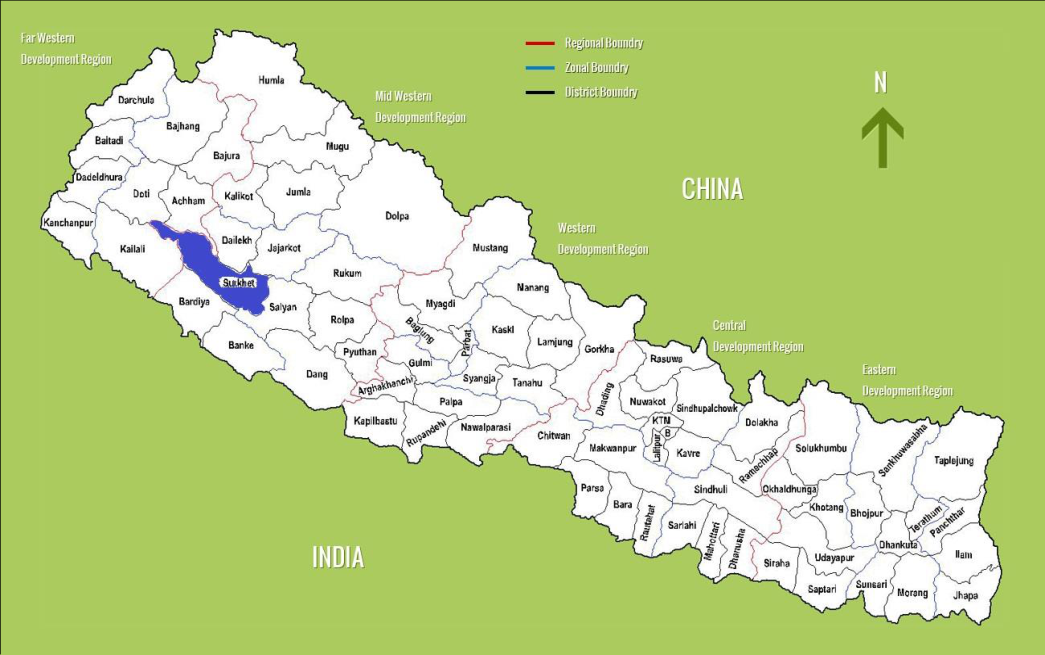 Figure 1
Introduction
Pheasants are some of the most hunted bird species in Nepal. Conservation threats to this group of species overlap in most cases and includes illegal hunting, trapping for meat, use of body parts for age old traditional healing practices, and pet keeping. Deforestation and forest fire are also known to be direct cause of reduction in number of kalij Pheasant (Fuller et al. 2004). Specific threat includes: killing of Common Peafowl, Himalayan Monal, Satyr Tragopan and kalij pheasant is for their body parts which have high value. The national and global status of kalij and red junglefowl is least concern, and it's population is unknown, but has been estimated about 3000 to 5000. The national status of this bird is that it is a near threatened bird (Esen et al. 2010). Nepal government has granted the rearing license for the Kalij Pheasant. Now a day many hotels and restaurant targeted the flow of costumer at many aspect. They are killed for, food, feather and entertainment; they can be hunted in some of hunting reserves. There are very few studies and findings done regarding Kalij Pheasant which are still insufficient to learn more scientifically about the kalij pheasant, especially in relation to utilizing its potential as a good quality source of meat but by not threatening to its genetic diversity (Garson et al. 2000). Due to taste and medicinal purpose people are attracted to the consumption of kalij meat. The people are also attracted with morphological characters and tradition in flow of rearing of kalij as companion type decorative bird. To protect the native breeds of kalij by enhancing the knowledge of farming and decreasing the hunting pressure is one of the important aspects to be considered. Pheasants are native to Asia, but have been introduced elsewhere as a game bird. There are 35 species of pheasant belonging to 11 genera (Giuseppe et al. 2018) [4] . Pheasants are kept under commercial conditions in range systems while in intensive ones can be kept both in cages and in deep litter floor. A minimum space allowance suitable for pheasants is 4-8 m 2 per bird in range conditions and only 0.5 m 2 per breeder when kept intensively. Body weight of adult male 900-1200 g, and adult female 700-900 g. These birds are between 7 and 16 weeks of age and are sold during the summer (Switzer et al., 2011). Eight species of pheasants are recorded in Nepal:Common Peafowl (Pavo cristatus), Red Junglefowl (Gallus gallus), Himalayan Monal (Lophophorus impejanus), Satyr Tragopan (Tragopan satyra), Blood Pheasant (Ithaginis cruentus), Cheer Pheasant (Catreus wallichii), Koklass Pheasant (Pucrasia macrolopha), and Kalij Pheasant (Lophura leucomelanos). Pheasants are commonly known birds in Nepal. However, very little information is available on their ecology and population status among the scientific and the conservation fraternity. Despite few sporadic studies, many potential areas are still unexplored. Thus, there is a need to undertake a detail study on population and ecology of pheasant communities suggesting a need for long term studies (Switzer et al., 2011). There is a high degree of sexual dimorphism with the male bird being typically larger and more colorful than the smaller brown female. Males typically have multicolored plumage with long, pointed and barred tails with heads ranging from glossy dark green to iridescent purple. The males having rich chestnut, golden brown and black markings on the tail and body with a dark green head and red face watling, there may or may not be a white neck, ring and males are conspicuous and noisy. The female is mottled, with paler brown and black and with a shorter tail and no wattles or pinnae, the latter being the tufts of feathers behind the eyes. Males are rather variable depending on the subspecies involved, but all have an at least partially glossy bluish-black plumage, while females are overall brownish (Moulin et al., 2003).
Rationale of study
Kalij pheasent have been associated with social and religious status of people living in Asia and Europe. Nepal government granted the rearing licence for the Kalij Pheasant. Now a day many hotel and resturant targeted the flow of costumer at many aspect. They are killed for food, feather and entertainment, they can be hunted in some of hunting reserves. There are very few studies and findings are done regarding Kalij Pheasant which are still insufficient about the kalij pheasant. Due to taste and medicinal purpose people are attracted to the consumption of kalij meat. The people are also attracted with morphological character and tradition in flow of rearing of kalij as companian type decorative bird. To protect the native breeds of kalij by enhancing the knowledge of farming and decreasing the hunting pressure.
Statement of problems
Kalij pheasant is most demanded bird by farmers, hotels, restaurants and for decorative use due to its attractiveness, meat quality and taste. Very limited studies have been carried out with respect to overall growth and reproductive performance of kalij pheasantin Nepal. Besides, performance of kalij pheasant and its different feeding regimes have not been formulated to date which is the utmost need for the commercial farmers. Meat quality and composition is another important trait of kalij with respect to increased profitability of kalij rearing and human health perspectives. Thus, the proposed study will cover all these dynamics including kalij pheasant production, productivity, feeding management and meat quality issues.
Objective
General objective: Develop nutritional plan and ways to improve productive performance of Kalij pheasant to help promote this species for commercial meat production purpose by also aiming to protect biological diversity and genetic improvement. Specific objectives: 1) To characterize major morphological traits of male and female kalij pheasant in order to establish base population of having diverse group so as to work on nutritional aspects to improve growth performance 2) To determine genetic variation of different groups of kalij pheasant and to establish genetic variation with the purpose of maintaining diverse group of kalij peasants as a potential source of quality meat production through appropriate nutritional management. 3) To determine hematological parameters and carcass quality of kalij pheasant with diverse genetic groups raised under different nutritional and feeding management regimes
Literature review Nutritional habitat
They prefer a diet consisting of wastegrain, weed, seeds, fruits, leaves and insects. In the native range, they feed on plant matter such as fruits, seeds, leaves, buds and a small amount of animal matter such as insects. Where the species is introduced it is an opportunistic omnivore, feeding on a diverse range of food, but preferring energy-rich items such as cultivated grains, mast and fruits. Crops eaten include maize (Zea mays), wheat (Triticum), barely (Hordeum vulgare) and flax (Linum). In North America, weed seeds eaten include foxtail (Setaria), ragweed (Ambrosia) and sunflower (Helianthus annus). Fruits eaten include wild grape (vitis), apples (Malus), and blackberries (Rubus). The birds also eat grasshoppers (Orthoptera), caterpillars (Lepidoptera), crickets (Gryllidae) and snails (Gastropoda) (Switzer et al., 2011). Up to the 8th week the birds kept in the rearing house under controlled environmental conditions, and starting from the 9th week to the end of rearing in partially roofed aviaries. Up to the 8th week of rearing only the pheasants were fed with allmash pelleted mixture starter, where 1 kg of feed contained 27.32% of protein and 2 800 kcal ME. From the 9th to the 16th week the birds were given the grower mixture, containing 24.21% of protein and 2 765 kcal ME, while starting from the 17th week to the end of rearing the finisher mixture, containing 18.06% of protein and 2 750 kcal ME should be feeded controlled environmental conditions (Smulikowska And Rutkowski 2005).
Genetic information
They have a diploid number of 81 and 82 for females and males, respectively, with the sex chromosomes always unpaired in females. The complete mitochondrial genome is
1662 bp long and is composed of 13 typical protein coding genes, 22 tRNA genes, 2 rRNA genes.
Reproductive biology
They have a polygamous mating system, where males have a harem of females and take no part in rearing the chicks. Males actively defend a territory and crow in an attempt to attract females to mate with. Females choose to mate with males with intermediate similarity of histocompatibility complex and with long tails and ear tufts. The females are not territorial, construct a nest on the ground, and lay 6-14 eggs, laying one egg a day. Larger clutches occur when more than one female lays her eggs in the same nest. The nest is a shallow depression in the ground, often lined with plant material (BirdLife International, 2015).
Hatching can take 23-28 days and fledging takes 7-12 days, with the time to complete independence being 70-80 days. The highest growth rate of the body weight and measurements in pheasants up to the 8th week of rearing, however the body weight growth expressed as a percentage was highest up to the 3rd week of life and accounted for 147%, from the 3rd to the 8th week of life -119%, and at successive evaluation dates it was clearly decreasing (Joanna Kuźniacka and Marek Adamski 2010).
Materials and methods
Materials and methods
Site selection District profile
Surkhet district is the province capital of Karnali Province. Surkhet is one of the ten districts of karnali located about 600 km west of the national capital Kathmandu. The district's area is 2488.64 square km which is longest in Nepal.
Geographical location
Geographic location of Surkhet is: latitude from 28 0 20 N to 28 0 58' N and longitude from 80 0 59' E to 82 0 02' E. Altitude ranges from 198 meter to 2347 meter from mean sea level.
Climate
Surkhet also has a diverse climate because of huge altitude variation, from 198meter to 2347meter. Therefore, hot and dry sub tropic to cool temperate climates are found in the district. Average temperature ranges from 37.
Figures and tables from the paper
References
6 in the original paper- Baral HS, Inskipp C. Important Bird Areas in Nepal: Key sites for conservation. Bird Conservation Nepal, Kathmandu and Birdlife International, Cambridge, UK 2005.
- Bhattarai BR, Wright W, Khatiwada AP. Illegal hunting of prey species in the northern section of Bardia National Park, Nepal: implications for carnivore conservation. Environments, 2016;3(4):32.
- Bump G, Bohl WH. Red junglefowl and kalij pheasants. US Fish and Wildlife Service 1961.
- Di Giuseppe AM, Russo R, Ragucci S, Landi N, Rega C, Chambery A, et al. Myoglobin from common pheasant (Phasianus colchicus L.): Purification and primary structure characterization. Journal of Food Biochemistry 2018;42(2):e12477.
- Acharya R. Survey of Cheer Pheasant in Lower Kaligandaki Valley, Mustang, Nepal. A final report submitted to King Mahendra Trust for Nature Conservation (KMTNC), Annapurna Conservation Project, World Pheasant Association, UK and School of Environmental Science and Sustainable Development, Nepal. Unpublished 2004.
- Severin K, Mašek T, Janicki Z, Konjević D, Slavica A, Hrupački T. Copunisation of pheasants at different age. Vet Arhiv Suppl 2006;76:211-9.