
Research article · 2021 · Full text
International Journal of Veterinary Sciences and Animal HusbandryPrevalence of bovine fasciolosis in and around anchar Woreda, West Hararghe, Eastern Ethiopia
Volume 6(6) · Pages 42–50 · DOI: 10.22271/veterinary.2021.v6.i6a.453 ↗
Research areasHelminth infection and control
Abstract
Author-writtenThe present study was conducted from April 2015 up to the end of November 2015 in the west Hararghe Zone Oromia Region, Eastern part of Ethiopia in and around Anchar district with the aim to know or to determine the prevalence, of bovine fasciolosis in and around Anchar and to recommend the controlling method of fasciolosis in study area. The method employed in the study area was sedimentation technique. A total of 385 were selected randomly from the study populations and from the total examined 79(20.5%) cattle were positives for fasciolosis. The recorded fasciolosis prevalence was varying from 18.9% to 25.5% in the different sites of the study area and the overall rate of prevalence 20.8. The prevalence of disease in age (Young) 2.45% and Adult 28, 89% Sex (Male) 1.63% and female 37.81% and body condition (poor) 22.1% and 19.46% was recorded. Infection rate different age, sex, site and body condition of animal showed no statistically significant different. Finally, a few points of recommendation were forwarded to alleviate the problems of fasciolosis in this area.
Summary
Source-checkedPlain-language reading of the full paper, prepared with AI and checked against the text. Each point links to the authors' own words.
Why it matters
- Bovine fasciolosis is an economically significant parasitic disease in farm animals caused by trematodes of the genus Fasciola. View evidence ↗
- Despite having a large cattle population of over 31 million, Ethiopia's livestock productivity is limited by factors such as disease and malnutrition. View evidence ↗
The question
- The study aimed to determine the prevalence of bovine fasciolosis in and around the Anchar district and to recommend appropriate control methods. View evidence ↗
What they did
- The research was conducted from April to November 2015 in the Anchar district of the West Hararghe Zone, Oromia Region, Eastern Ethiopia. View evidence ↗
- A total of 385 cattle were randomly selected from four sites: Injicha, Dindin, Seka, and Inchinni. View evidence ↗
- The study used the sedimentation technique for the coprological examination of fecal samples. View evidence ↗
- Data were analyzed using the SPSS 16 chi-square test, with a p-value of less than 0.05 considered statistically significant. View evidence ↗
What they found
- The overall prevalence of bovine fasciolosis among the 385 examined cattle was 20.5% (79 positive cases). View evidence ↗
- Prevalence varied by site, with the highest rate in Dindin (25.27%) and the lowest in Seka (18.36%). View evidence ↗
- Female cattle showed a higher prevalence of 37.81% (76/201) compared to male cattle at 1.63% (3/184). View evidence ↗
- Cattle in good body condition had a prevalence of 45.82% (78/182), while those in poor condition had a prevalence of 0.492% (1/203). View evidence ↗
- Despite the numerical differences, the infection rates across different ages, sexes, sites, and body conditions were not statistically significant. View evidence ↗
What it means
- The authors conclude that fasciolosis is prevalent in the study area and requires attention from both livestock owners and veterinarians. View evidence ↗
- The authors recommend strategic anthelmintic treatment with flukecidal drugs twice a year, specifically before and after the rainy seasons. View evidence ↗
- The authors state that further studies on the disease's epidemiology, the ecology of intermediate snail hosts, and control mechanisms are needed to develop better control strategies. View evidence ↗
Visual summary
2 visualsIllustrations explain the paper; charts are replotted from the paper's own table values.
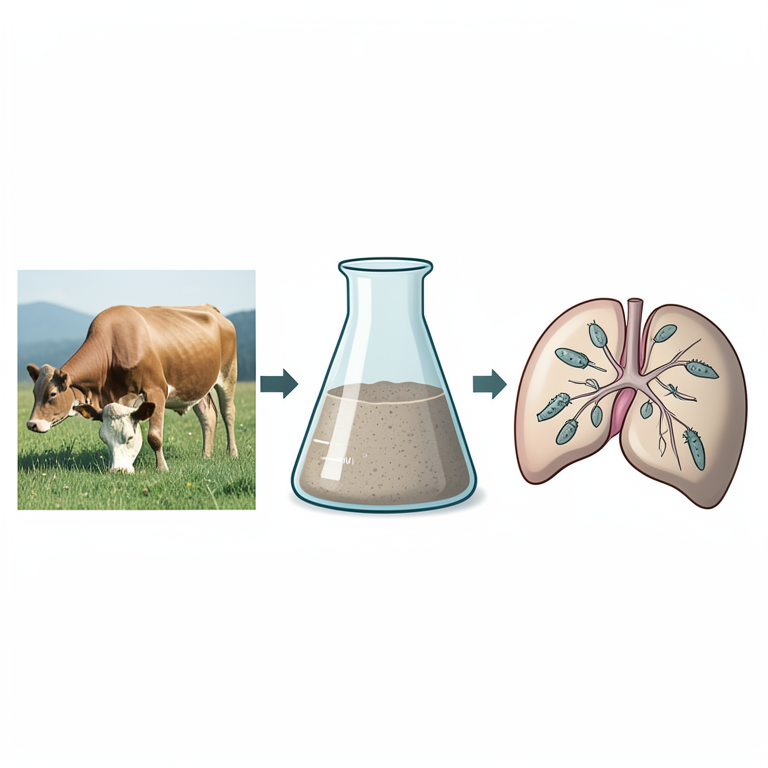
Study Overview
AI-generated conceptual illustration (Bovine cattle and Fasciola hepatica liver flukes). It explains the idea and does not show study data.
View source evidence ↗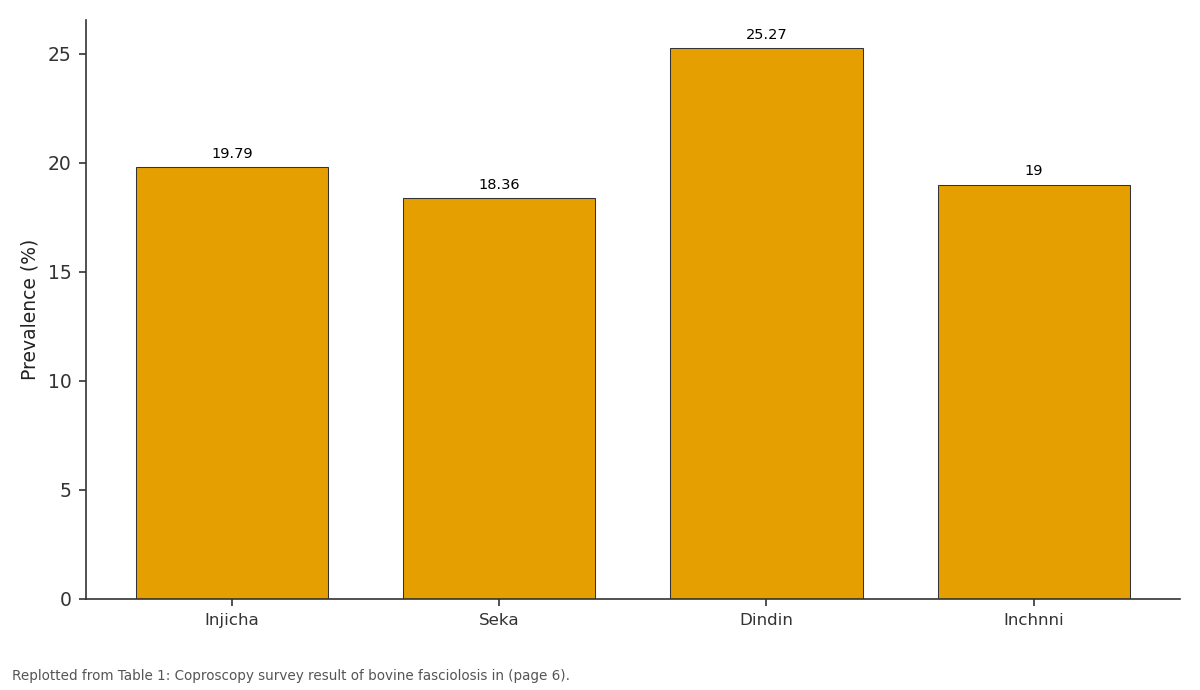
Prevalence (%): Injicha vs Seka vs Dindin vs Inchnni
Replotted from Table 1 (page 6) of the original paper. Every bar is the paper's own table value.
View source evidence ↗Figures & tables
From the original paper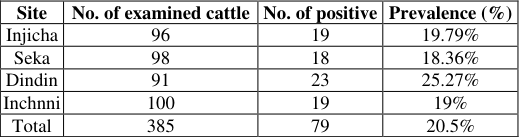 Table 1
 Table 2
 Table 3
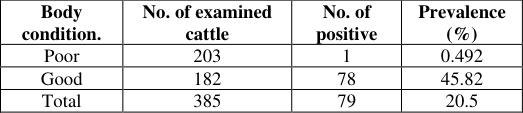 Table 4
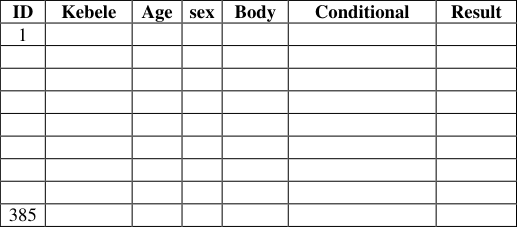 Table 5
Introduction
Bovine fasciolosis, is economically vital parasite disease of farm animals because of fasciolidae, which might be trematodes, of the genus fasciola. Mostly vital species of this genus are Fasciola gigantica and fasciola hepatica. Ethiopia is one of the countries with the best populace of cattle, greater than 31 million, farm animals (FAA, 1993) [13] . But the productiveness is a way much less than the ability because of numerous constraints like sickness, malnutrition, and conventional management the wealthy ability from the cattle zone isn't efficaciously exploited (Grabber, 1978). Fasciolosis is disease caused by the Fasciola gigantica and fasciola hepatica and they are one of the most familiar helminthes contamination of rumainant in distinct a part of the sector together with Ethiopia. The presence of fasciolosis because of fasciola gigantic and fasciola hepatica a in the Ethiopia has lengthy been recognised and its occurrence and financial importance has been suggested with the aid of using numerous workers (Abuna et al., 2009., Argaw, 1998., Yilma and Malone., 1998., Takele, 1995., Rahmeto, 1992) [1,4,53,42,33] . Fasciola gigantica and fasciola hepatica occurs relatively in cooler semi-highland and highlands and lowlands respectively, in which the intermediate is abundantly to be had for the duration of the moist season (Urquhart et al., 1996.) [46] fasciolosis happens typically as a persistent sickness in farm animals and the severity frequently relies upon at the dietary popularity of host (Graber, 1975). It is chargeable for an extensive unfold morbidities and mortalities particularly in farm animals and sheep characterized with the aid of using weight loss, anemia, hypoproteinemia (Yadata, 1994) [50] . The impact due fasciolosis also can expressed in phrases of mortality, morbidity, decreased boom charge, livers condemnations at slaughterhouse, discount in traction powers, much less weight gain at birth, improved susceptibility to secondary contamination and the price of management measures (Malone et al., 1998, and Njau and scholtens., 1991) [25,30] . Diagnosis is primarily based medical sign and seasonal incidence in endemic regions however preceding exam, hematological check, and exam of feaces for fluke egg are useful. Coprological evaluation remains typically hired to diagnosis bovine fasciolosis regardless of the reality that egg can't be detected till after the latent duration of contamination, whilst a good deal of the livers harm has already occurred (Rokni et al., 2003).
Morphology
The adult pasasite fasciola hepatica have flat leaf-like frame that measures 20-30 mm lengthy with the aid of using 8-15 wide (Dunn, 1978) [11] . Its anterior part elongation (cephalic cone) in which the oral and ventral suckers, which can be nearly same length are placed. The vitellaria are exceedingly branched and diffuse withinside the posterior and lateral area of the frame. Fasciola huge is parasite very much like fasciola hepatica. Its length may also range 25-75mm lengthy with the aid of using, 15 mm wide's (Soulsby, 1982) [39] . Additionally, the cephalic cone is comparably shorter than that of fasciola hepatica, and its frame even extra of like in shape (Soulsby 1982) [39] . The eggs of Fasciola hepatica are oval, operculate, large (150mmxmm), and yellow and approximately instances the dimensions of strongyles egg (Urquhart et al., 1996) [46] . The egg of Fasciola is huge and its length measures up to (200nmx100hm) (Dunn, 1998).
Life Cycle
The existence of life cycle of fasciola species is regular of digenic trematode. Eggs laid with the aid of using the advert ult parasite withinside the bile ducts in their hosts by skip into the duodenum with bile the eggs then leave the hosts via the faeces. At these stages, egg remains now no longer embryonated, similarly improvement to maturation is taking about weeks. The eggs hatched to launch the motile miracidium, to find and enters the intermediate snail's host. Then want to locate the best host to penetrates is a pressing one, for the one's miracidia failing to prepare. Commonly die within 24 hours. After the penetration of the s nail, the miracidia lose its cilia and emerge as sporocyst (Radostits et al., 1994). The sporocyst forming and dividing radial (have sucker and primitive intestine), and a completely mature radia displaying radia and cercaria phases. the cercaria of fasciola species have a rounded frame measuring about 0.5 mm lengthy the motile cercaria snails regularly leaves the shell 4 to 7 weeks after contamination with the aid of using migrating via the tissue of snail. This is during wet situation whilst acritical temperature of 10 oc is exceeded (Rodostits et al., 1994).
On growing from the snails circadian, attached to sub-merged blade of grasses or different flora like watercress, and the tail falls aways and the cercarial frame secret 4 layered cyst masking from cytogeneses gland placed at the lateral areas of the frame. The formations of the wall may also soak up to 2 days, the metacercaria (Encysted and resistant cercariae) is the infective from of the definitive host. Commonly, the metacercaria are infectious to ruminants which includes livestock and sheep, moreover to different mammals along with human beings. One meracidium hatching from a fluke egg can produce as much as 4,000 infective cysts (Metacercariae) because, of the vegetative multiplications on the sporocyst and radia stage the metacercarial cyst is handiest fairly resistance, now no longer being capable of live on dry conditions. If, they'll live on for as much as a year (Dunn, 1978, Soulsby, 1982., Andrews, 1999) [11,39,2] contamination via has a car of contamination in non-endemic regions. The metacercarial cyst, whilst ingested on my own with the tainted flora with the aid of using the definitive hosts, enters to the small intestine, liberating the younger parasite, that penetrate the intestine wall, coming into the peritoneal cavities. From that part it, moves without delay to the livers, over a period of about seven days. The young flukes (Adeloscaria) then enter the livers tissue, via which it moves, to feeding on bloods, for approximately 6 weeks. Then, the flukes enter the bile ducts, and mature in to absolutely a duct parasite after approximately 3 months from preliminary contamination. Egg manufacturing then begins and finishing the existence cycle (Dunn, 1978). Adult fluke were lives on for decades withinside the livers of inflamed host and lays among 20,000 to 50,000 eggs in keeping with days. The charge of egg manufacturing is chargeable for the diploma of pasture infection and for that reason significantly impacts the epidemiology of the disorder and additionally motivated with the aid of using the grazing addiction of the animals. Animals which graze in moist marshy regions desired with the aid of using intermediate hosts are much more likely to emerge as inflamed. Characteristically, lengthy, and moist season are related to a better charge of contamination (Andrews, 1999) [2] .
Host Range 2.4.1. Intermediate host
Genus Lymnaea snails are the intermediates host for the genus fasciola. The epidemiology's of fasciola is depending on the ecology of this snail intermediate hosts. Lymnaea species is mostly vital withinside the transmissions of fasciola hepatica. It includes Lymnaea truncatula, in North America. Lymnaea tormentors in Australia. Other species, that have been incriminated withinside the transmission of fasciola hepatica, includes, Lymnaea viator and Lymnaea Diaphena (South America), Lymnaea columinela (USA, Australia, Central America and New Zeeland), Lymnaea humilus (North America) (Soulsby, 1982., Dunn, 1978) [39,11] . Lymnaea truncatula is mostly not unusual place intermediate hosts for fasciola hepatica in specific a part of the world (Njau et al., 1991) [30] , and in parts Ethiopia (Graber, 1974). And it is amphibious, and even though they spend hour, in shallow water. They sometimes emerge directly to nearby mud. They can withstand summertime season draught or iciness freezing for numerous months with the aid of using the respectively hibernating deep or estivating withinside the mud (Urquhart et al., 1996) [46] . It prefers, wet temperatures condition (15-22 o C) via it seem that diverse observed us the tropics have
diversifications to better temperature commonly withinside the lowland regions and may be kind and live on the 26 o C with enough moisture. The mostly vital intermediate hosts of the fasciola huge is Lymnaea natalensis and Lymnaea auricularia (Urquhart et al., 1996., Soulsby, 1982., Dunn, 1978) [46,39,11] . Lymnaea auricuaria that's the additionally the vital species withinside the southern part of USA, the Middle East, and pacific islands. Lymnaea natalensis is diagnosed intermediate hosts for the fasciola huge (Yilma and Malone., 1998) [53] . And different species serving as secondary hosts to this species are Lymnaea referencens and Lymnaea acuminate (Indian and Pakstan) and Lymnaea natalensis is exactly aquatic snail frequently observed in Africa it serves as intermediate hosts for fasciola huge, calls for well oxygenated, and unpolluted water bodies, and might estimate during dried periods. The requirement optimal temperature for the entirety of the parasite improvement degree with the withinside the snails is 22 to 26 o C. Though, in irrigation regions snail breeding is much less circumscribed and could be maintain all the years round, besides for length of extreme temperatures levels (Urquhart et al., 1996) [46] .
Final host
Final host is chargeable for the development and laying of a giant wide variety of egg. Hosts of fasciola hepatica is mostly mammal, livestock and sheep's being mostly vital Fasciola gigantica impacts a wide variety of home animals and is observed in low land areas changing fasiola hepatica. In the uncommon host which includes moons of the fluke perhaps observed in aberrant site which includes the lungs (Urquhart et al., 1996) [46] .
Epidemiology
Fasciolosis is disorder because of liver fluke reason fasciola hepatica and fasciola gigatica. These species of parasites are extensively dispensed in regions in which climatic situation are probably moist at some stage in the year which the life of parasites is in large part depending on those factors, and additionally the feasible prevalence of parasites is interrelate host fasciola huge predominate considering the fact that F. hepatica is extra localize species. F. gigantica is observed in which ever ecological situation are favorable to the intermediate host which includes boundaries of lakes flood susceptible regions low mendacity marshes and the drainage ditches. It is absent from quickly swimming pool, and water areas that disappear withinside the dry seasons (Soulsby, 1982) [39] . Distributions and the form of intermediate hosts (Lymnaea) additionally range relying on localities for examples, Lymnaea truncatula, is exceedingly dispensed in Europe, Asia, some of Africa and Northern America, whilst, whilst Lymnaea natalensis is taken into attention to be African snail host (Troncy, 1989) [44] .
Factors Affecting the Production of Metacercariae 2.5.1.1 Availabilities of Satiable Snail Habitat
The greatest vital intermediate hosts of fasciola is Lymnaea truncatula, and Lymnaea natalensis. The availability of those intermediate host relies upon on climatic circumstance, for instansis. Lymnaea truncatula pick moist dust to loosen water and everlasting habitat consist of the financial institution of the channels or streams and the age of small pond. Hoof marks, wheels ruts or rain ponds. Foot marks, wheels furrows or rain pond may also offer following heath rainfall and flooding, brief habitats, fields with clumps rushes are regularly suspected sites. Though a moderate acidic PH surroundings is most excellent for Lymnaea truncantula, immoderate acidic PH degrees are factors consisting of arise in peat baggage and regions of sphagnum moss (Kendall, 1954) [23] .
Temperature
Temperature is a vital component distressing the fee of growth of snails of the level of the parasite out of doors of the very last hosts. A men, daytime, or evening time temperatures of 10 oc or above is essential each for snail and all sports quit at 50oc. that is additionally minimal variety for the improvement and hatching of fasciola hepatica egg. However, it's miles most effective whilst temperature upward push to 15oc and it kept above that degree a importance duplication of snail and flukes larval level ensures (Urquhart et al., 1996) [46] .
Moisture
The best moisture circumstance for the snail breeding, and the improvement of fasciola hepatica within snails are furnished whilst rain exceeds transpiration, and discipline saturation reached. Such circumstance also is significant for the developing fluke eggs, for mirabilis attempting to find snail and for the spreading of circariae being sheds shape the snail (Urguhart et al., 1996) [46] 2.5.1.4. PH Areas with clumps of footages are not unusual place length or they've moderate PH eggs hatched at 27 oc will grow and hatch within a PH variety of four.2 to 9, however over PH 8.0 improvement is prolonged (Rowcliff and Ollerenshaw, 1960) [36] .
Clinical signs
The scientific factures of fasciolosis may have acute, subacute and continual forms. The acute fasciolosis takes place as ailment outbreak following a huge, however extraordinarily quick time period consumption of metacercarial (Urquhart et al., 1996) [46] . The excessive fluke consumption is regularly the end result of positive seasonal and fluke manipulate measures. It usually takes place whilst shares are pressured to graze in drought. Animal tormented by acute Fasciolosis is specially belly ache and soreness and can expand jaundice (Soulsby, 1982) [39] , in a few cases, liver tablet may also rapture and fluid may also lick in to the peritoneal hollow space inflicting dying because of peritonitis. More usually, on ingestions of less metacercariae, fever and eosinophilia are seen. Death typically consequences from blood loss because of hemorrhage and tissues destructions resulting from migratory juvenile fluke (Soulsby, 1982) [39] . Sub-acute Fasciolosis is resulting from ingestion of a slight of quantity of metacercariae is characterized through anemia, jaundice and sick thrift, the migrating fluke reasons significant tissue damages hemorrhage big and especially liver harm. The end result is extreme anemia. Liver failure and dying in 89-10 weeks (Urquhart et al., 1989) [45] . Chronic fasiolosis is mostly not unusual place animal syndrome in livestock. It takes place whilst the parasite reaches, the hepatic bile ducts. The fundamental outcomes are bile duct obstructions, destructions of liver tissues, hepatic fibrosis, and anemias. The start of scientific signal is slow, animal come to be steadily anemia and anorexia's because the mature flukes come to be energetic with in bile duct and signal may also consist of dependent. Death in the end takes place whilst animal will become extreme. Cattle are usually gift with signal of weight losses, anemia, and continual diarrhea (Mitchell, 2001) [28] . Additionally, a circumstance regarded as" black ailment" is a problem, which typically is deadly. Here, as secondary contamination because of the bacteria clostridium novy kind B, proliferating, a necrotic lesion for the deadly result (Radostits et al. 1994).
Pathogens and Pathophysiology
Pathogenesis of the fasciolosis fluctuates in line with the parasitic improvement section. The developmental levels are biliary levels and parenchyma. The parenchymal section takes place during the migration of fluke and from the harm to the bile ducts mucosal membranes through their cuticle's spines (Urquhart et al., 1989) [45] . Occurrence of flukes withinside the biliary channel elicities substantial tissue's reaction, main to cholangio hepatitis. The wall of the duct will becomes infiltrated with eosinophilia, Iymphocytes and macrophages. And in the end come to be substantially thickened from fibron proliferations and calcifications (Jones et al., 1996) [20] . The decrease, movement and hobby of adolescent flukes via the liver parenchyma is likewise related to hepatic fibrosis, which inhabit intra-parenchyma maturation and calcified cholangitis which defers flukes of their hepatogenic activaties each of those lesion related phenomena assist livestock to withstand continual fasiolosis (Fraser et al., 1991) Besides, the truth that liver possesses substantial features fallback and deteriorating ability assist animals to live on with none huge development of hepatic features even till there of the organ is damaged (Cartlone et al., 1995). Fasciolosis has important impact on blood component (Plasma proteins) Hypoalbuminemia and hyphoglobuinamia usually arise in liver flukes' contamination in all the hosts species. During the parenchyma level of the contamination, liver harm resulting from the migration flukes' compromises liver features, which in sheeps and calves is pondered in a weakening of plasma albumin awareness credited in part to lessen fee of synthesis and in part to an enlargement of the plasma volumes (Urquhart et al., 1989) [45] . Nevertheless, during biliary level of the contamination lack of blood from hematophagia and into gut is too significant, inflicting extreme anemia that artificial ability of the liver is inadequate to update the lack of albumins that excretions through the Hyper plastic bile ducts (cholangitis). Therefore, a revolutionary lack of plasm albumin takes place in all contamination host species, beginning from across the time the fluke commences blood feeding. This brings about disorder of intravascular and extravascular oncotic pressures main to improvement of edema (Urquhart et al., 1996) [46] .
Diagnostic processes to Fasciolosis
Diagnosis of the fasciolosis is each in animal and guy may also contain concerns of diverse factors including history, medical finding, and widespread epidemiology of the disorder affirmation in all instances may be made both via way of means of faecal exam or restoration of worms at autopsy exam. Currently serological and molecular strategies are evolved via way of means of diverse researcher. Examination of the enzyme and hematological profile also are recognized to provide vital due as to the existence of Fasciolosis in animas (Payne, 1990) [32] .
History and clinical manifestation
Infection with fasciola hepatica, is normally related to herd and flocks that graze moist, marshy land fasciola significant makes use of a water snails as its intermediate hosts. Hence, contamination with this species is related to cattle consuming from snail infected watering locations in addition to with grazing moist land which can be seasonally in dateless (Payne, 1990) [32] . In acute instances of Fasciolosis, surprising dying and intense anemia, excessive fluke egg remember, dying takes place 12-20 weeks after contamination and in continual fasciolosis sluggish wasting, intense anemia with ascites, bottle jaw edema and really excessive fluke egg remember may also cause dying extra 20 weeks after invasion (Troncy, 1989, Reinekke, 1983, Soulsby, 1982) [44,39] .
Post mortem Examination
The greatest straight and dependable approach for the analysis of fasciolosis is liver exam at slaughtered or necropsy. In acute fasciolosis, where can be peritonitis, specifically at the visceral floor of the hepatic capsules. Then livers is swollen. friable and has capsular punctures noticeable via way of means of hemorrhagic (VEIN, 2004) [47] . Calcification of bile duct and growth of the gall bladder are traits lesions discovered in continual instances of fasciolosis. Advanced biliary cirrhosis in which the end products a hard fibrotic liver wherein the bile duct is prominent, thicken fibrous and in livestock, regularly calcified. Histological, the fibrosis is formed via way of means of restore to the migrant tract and a cholangitis, fluke and several eggs (Soulsby, 1982) [39] .
Faecal Examination
Two factor wishes to be saved in thoughts even as decoding faecal inspections end results for fasciola hepatica: a). the prepatent duration is for fasciola hepatica is two to three months. As a result, fluke egg can't be confirmed early withinside the contamination. An institution of livestock can be wearing an excessive burden of young, fluke, however no fluke eggs could display up of their manure. b). the measurable extent of fluke egg counts is doubtful. Fluke egg pool withinside the gall bladder and occasionally by skip in to the faces the fluke egg assume any given day regularly has tittle courting to the wide variety of fluke withinside the liver; an animals with a terrible fecal can be parasitized, in which as an excessive fecal fluke egg remember ought to simply be a excessive wide variety of egg leave-taking the gallbladder that day, in preference to a goal fluke burdens (Briskey, 1998) [6] . Sedimentation process focusses each faeces and egg at the lowest of a liquid medium normally water and hit upon mostly parasites egg or cyst which have too excessive a particular enormity particularly trematode (fluke) eggs (Hendrix, 1998) [19] . Fecal examination for fluke egg needs use of faecal sedimentations, formalin ether or floatation's strategies. Faecal examinations for fluke egg require use faecal sedimentation, formalin -ether, or floatation approach (Antonia, 2002., William, 1997, and Kaufman, 1996) [3,49,22] .
Treatment
The older capsules including carbon tetrachloride hexachlorophene and hexa-chlorothene are nevertheless utilized in a rare international location. One of the selection capsules is triclabendazole which do away with all growing tiers over 1 week old. Other capsules are rapoxanide, closantel and nitroxnil, as a way to do away with flukes over 4 weeks old (Urquhart et al., 1996) [46] . Outbreak of continual fasciolosis may be efficiently reared with a unmarried dose of any of set up of dims (rafoxanide, nitroxynii, borotianide, closeted oxyclozanid and triclabendazoles). Albendazole and natobimin is likewise powerful organist grownup fluke albeit at multiplied dosage rate (Urquhart et al., 1996 & Data 2006) [46] . In lactating cows in which the milks is used for human consumptions the above drug is both banned or have prolonged withdrawal duration in mostly international locations and has milk with retaining time of up to a few days. Effectiveness of triclabendazole is among 90% and 100% in opposition to immature and mature flukes (Markos, 2000) [27] .
Controls and Preventions of Fasciolosis 2.10.1 Applications of strategic Treatment
Prophylaxis with the aid of using capsules includes removal flukes with the aid of using ordinary remedy. Since nearby climatic situations encouraged infections. They must be taken into consideration whilst figuring out the time of remedy it's far glaring that the manage techniques for liver flukes' contamination range in step with the vicinity and control practices. Two remedies are advocated in step with years for the Sahel vicinity. the primary is given at stop of wet seasons (October-November) to get rid of the grownup parasite to in order that the animal by skip the dry season in appropriate situation and to keep away from infection from the stop different dry seasons (March, April or not often later) whilst the mature fluke travel via the hepatic parenchyma. For the next one remedy best capsules which are energetic towards immature flukes must be used (Fischer, 1989) [15] .
Control of snail 2.10.2.1 Chemical methods.
The usage of mollucsicides for the management of snail intermediate hosts is a capability device for the management of fluke infection. Before thinking about chemical manage of snail, it must be cited that several habitats are topographically incorrect for using mollucsicides and it's far frequently very hard to use them efficiently. They are poisonous to the surroundings, collaboration among adjacent houses is needed for required for powerful cowl and ordinary (at the least early) software is needed because speedy repopulation of snail may also occur (Jorgan and Brian., 1994) [21] .
Biological Methods.
Description from numerous components of the arena shows that some of plates have molluscicidal houses. Planting of those timber and shrubs alongside watercourses and irrigation channels can decreases the wide variety of snails in proportion (Jorgan and Brian, 1994) [21] .
Management of snail habitats
Respectable drainage and the constructing of dams at suitable web website online marshy and low-mendacity location may also lessen the snail hassle. Water hollow must be controlled anywhere feasible to save you each concentrating of the water with dirt from inflamed animals and improvement of Lymnaea natalensis. For these functions all swimming pools or again waters must be crammed in and changed with the aid of using properly or tanks. This is best feasible in will devices including ranches or breeding farms. Troughs close to properly must be raised in will devices including ranches far from pasture infection with metacercariae. This may also best be feasible whilst the wide variety of animal concerned is minor. Start right watering centers to save you animals consuming from lake, pond and stream (Jorgan and Brian, 1994) [21] .
Forecasting the occurrences of the Disease.
The geographical, records machine (GIS) may be used to outline the epidemiology's and distributions of fasciolosis primarily based totally on climates, geographical and soil hydrological data. The existence cycle of liver fluke and the superiority of fasciolosis are domination in climate (Soulsby, 1982) [39] . For casting, the incidence of fasciola with the aid of using the use of geographic records machine (GIS) for forged version primarily based totally on wetness and thermal regime become evolved to evaluate the threat of fasciolosis. The precise biology and existence cycle method of fasciolosis make it and amenable to powerful models, geographic records machine and destiny professional or know-how primarily based totally machine. This machine could we used to endorse farmer and small holder at the mostly suitable manage method for protective their animals (Smyth, 1994) [38] .
Bovine Fasiolosis in Ethiopia.
In Ethiopia, F.hepatica is huge unfold in regions with altitude zero 1200 to 2560 m.a.s.l while, fasciola big seems to the mostly not unusual place species in regions under 1800 meter above sea degree. Both fasiola species co-exist in regions with mind-set ranging among 1200 to 1800 m.a.s.l (Yilma and Malone., 1998) [53] . Ethiopia is one of the nations with appropriate climatic situations for the life of fasciolosis. The sickness purpose extreme hassle in serious problems in cattle populace of the country. Both the fasciola gepatica and fasciola hepatica are discovered in Ethiopia and transmitted with the aid of using the snail known as Lymnaea truncatula, and Lymnaea natalensis correspondingly. Their pathogenic importance relies upon at the favorability of surroundings they live (Graber., 1978).
Public Health Importance of Fasciolosis
Ain the human cases of fasciolosis is rising as an critical sickness at some stage in the arena. The instances are related in the main with the consuming of watercress's infected with metacercariae. Fasciola hepatica can be obtained with the aid of using guy, now no longer immediately from the livestock someone need to ingest the metacercariae with a view to emerge as inflamed (fasey and Marsden., 1960). The worldwide estimate occurrence is among 2.4 r and17 million human infections, and further, one hundred eighty million prone to contamination (Kendal, 1954) [23] . The diploma of pathogenicity of fasciola hepatica to guy relies upon many features, specifically the wide variety of worms gift and the organism inflamed, for instance, the occurrence of fasciola hepatica withinside the bile duct of guy purpose plenty of signs like malaise, irregular fever, weight reduction and anemia Adult fasciola hepatica also can be discovered in unusual sites including withinside the lung and subcutaneously. At this time, the parasite is discovered withinside the cyst comprising brownish purulent things, they will be eliminated surgically (Chandler, 1999). The irregular human contamination become additionally stated in Ethiopia (Yilma., 1985) [51,52] .
Material and Methodology
Material and Methodology
Study Area
This study was conducted from April 2015 to end of November 5, 2015 in the west hararghe zone of oromia regional state of eastern parts of Ethiopia in and around Anchar woreda, which is about 310 km far away from Addis Ababa city as information gained from Anchar Agricultural office (2014). Ancchar geographically located between 8'26'N and 36'20'E and of an altitude of 1500_2300m.a.s.l. The woreda have kola, woina-dega, and dega respectively. Also, the woreda has 8.87'of grazing land, 42.8 farmland, 7.2 forest, 0.2 swampy and 40'hill. The number of woreda population is estimated to be 119180 live in rural and 29358 live in urban. The livestock of woreda 52197 cattle 15230 sheep, 11090 goat, 2504 equine, 38364 poultry, and the production of Animal in the woreda is extensive management system. The mean annual rain fall of the woreda is 1950mm and the minimum and mostly average temperature ranges between the 12.4 o C and 24 o C respectively.
Study Population
Study population includes cattle of local bread which managed under traditional cattle, management system. There are total number of 52197 cattle in Anchar woreda. From the total, number of cattle, 385 cattle's were taken from (Injicha, Dindin, Seka, and Inchinni) in and around Anchar woreda. Entirely to determine, the prevalence of bovine fasciolosis in and around Anchar woreda 385 cattle was randomly selected.
Study Design
The cross-sectional study design was used for this research, with the assumptions that it could aid to get understanding of the current state of problem by describing it in relation to determine and know the prevalence of bovine fasciolosis, in and around Anchar.
Sampling and Sampling Size
Sampling method was simple random sampling techniques used to select the animal that used for the study of the prevalence of bovine fasciolosis in this study area. To determine and to know the sample sizes, the bovine fasciolosis prevalence of 50% was taken into consideration in Anchar woreda. The samples desired for the study were calculated, according to the formula given by thrusfield (1995) with 95% confidence interval, at 5% obsolete precision. Therefore, sampler size of 385 was considered for this study. Formula for sample size determination is given below Where N= Required Sample Size. Pexp = The Expected Prevalence. d = The Absolute Precision.
Totally, 385 cattle were, randomly sampled in and around Anchar to determine, the prevalence rate.
Study Methodology
Random sampling of fecal sample from the overall of 385 cattle were collected, directly from the rectums into the universal laboratory sampling bottle that contain 10/ formalin as preservative for further laboratory investigations, then transport to laboratory for detail ceroscopy examination. during the face every l sampling information on Kebele, sex, age, and body condition of each animal were recorded. Animals were classified into two groups Young (1-3years) and Adult (>3years). Further processing of the fecal sample in the laboratory were employed using sedimentation techniques (Urqa hart et al., --1996) (Annex 2).
Statistical Analysis
The total prevalence's rate was calculated based on the fecal tested positive result by diving the number positive result of animal by total number of animals tested. The whole raw data generated, from the study of were entered into MSEXCEL data base system. The data imported into the data base system where information such as age, sex, site, and body condition. Statistical analysis was done using SPSS 16 computer chisquare (x 2 ) test to determine, the variation in infection prevalence in sex, age, body condition and sites/kebeles significances were considered with the p-value less than 0.05. At the time of study period from April 2015 to the end of November 2015, 385 cattle were examined from four sites /kebeles to determine the prevalence of bovine fasciolosis in and around Anchar out of 385 examined cattle, about 79(20.5%) cattle were positive for the fasciolosis. The higher prevalence was prevailed in Dindin (25.27%) and the lower one was in Seka (18.36%). The statistical analysis showed there is significant difference (p>0.05) in prevalence in sites.
Prevalences of Bovine fasciolosis in Age category
During this study period, cattle were categorized based on their ages group (1-3year) young and greater than (>3years) are adult based on this categorization of animal in ages, prevalence of bovine fasciolosis, was studied in & around Anchar their as it can be shown from the Animal age classification of field area showed. From122 examined young (1-3year) cattle about 3(2.45%) cattle were positive for the fasciolosis and among the 263, examined adult cattle (>3year), 76 (28.89%) of them were positive for the fasciolosis with an overall prevalence of 20.5%. The statistical analysis revealed that, there is not significant difference (p>0.05) in the prevalence between the age group.
Prevalence's of Bovine fasciolosis in Sex category
From the overall number of 385 cattle's that randomly selected and examined in and around Anchar woreda, about 184 were male of which 3(1.63%) of them, were positive of fasciolosis, and 201 of them were female from which 76(37.81) of them, were positive for fasciolosis. The statistical analysis showed that no significant difference (p>0.05) in prevalence between the sex categories as indicated from the following table.
Discussion
In this present study, the data provided the prevalence on the bovine fasciolosis in and around Anchar woreda. Out of 385 faecal sample analyzed 79(20.5%) founds to be positive by using sedimentation method, as diagnostics method which represent prevalence, of bovine fasciolosis in and around Anchar woreda. The result presented that there is significant variation (p>0.05) between the sites. The previous studies showed from different parts of Ethiopia, Yadeta (1994) [50] 81.6% in Ambo, Adem (1994) 56.6%in Ziway, Fekadu (1988) 62.2% in Bahir dar, Rehmeto (1992) [33] 34% in Wolliso and other revealed a much higher prevalence rates as compared to the present finding. This variance in prevalence's of fasciolosis, in Ethiopia may be, associated with differences in ecological factors accessible for the intermediate host snail. The 20.5% prevalence of bovine fasciolosis found in this study is agree with 18.99% prevalence of bovine fasciolosis stated at sodo, by Wassie (1995) [48] by means of fecal sample. This study presented that, there is not significant associations (p>0.05) among the prevalence and the age, sex, body conditions in the study area. The possible description may be that cattles in the study area grazes in not the same common grazing lands and not the same agro ecological condition. Therefore, the chance, of becoming infected or getting disease, is therefore, not the same and primary release of young stocks with adult.
Conclusions and Recommendation
This study presented on the prevalence of bovine fasciolosis for the period of eight (8) months in the west hararghe zone of oromia region in and around Anchar woreda showed that prevalence of 20.5%. Risk factor (Site, age, sex, and body condition) includes in the study but there is no significant different between the prevalence. Therefore, it is possible to conclude that fasciolosis is the prevalent diseases in the study area, and the disease need due consideration both from the livestocks owner and the veterinarian in the light of present study. Finally, the following recommendations are forwarded. 1. Strategic anthelminthic treatments with its appropriate flukecidal drugs should be experienced two times a year. i.e., previously and after the rainy seasons, to eradicate the fluke load of the animal and lessen the pasture adulteration by fecal eggs, shedding's, thus disturbing the life cycle. 2. Combinations of control actions including drainage, grazing managements and fencings should be used to guarantee acceptable degree of control in the long run. 3. Additional studies on the epidemiology's of this disease, ecology of the snail intermediate hosts and control mechanisms are valuable in the arrangement and programming controls strategies. 4. Finally, the farmers should be well trained, educated and learnt about the information's of the diseases control programs, and good managements systems if lively future and improvements in the livestock's productions is needed.
Annex Annex one Body Condition Scoring
According to the Mari Heineken, (1989) during the study period body condition are classified in to good and poor based up body scoring method.
Body condition score 1: the individual sinuses are sharp to the touch and easily distinguished Body condition score 2: the spinouts processes can be indentified individually when touched but feel round than sharp.
Body condition score 3: the spinouts processes can only with very firm pressure and area of either side of the tail head have some fat cover.
Body condition score 4: Fat cover around tail had is easily seen as slight moods, soft to touch, the spinouts process of the cannot be felt.
Body condition of score 5: the bone structure of the animal is no longer noticeable and the tail head is almost completely buried in fatty tissue. Body condition of animal was classified in to 2, as poor and good Body condition score-1 and 2-poor Body condition score-3, 4 and 5-good
Annex II
Sedimentation Technique 1. 5gm of faces measured approximately and break down in 50ml of tape and stirred well with a stirring road until homogenize. 2. The mixture is strain through a sieve. As much water as possible will press out of the debris through the sieve and the debris left on the screen will discard. 3. Poured in to a conical centrifuge tube and centrifuge at 1500 rpm for 5 minutes 4. The supernatant discarded and the sediment was agitated until thick homogenous fluid was obtained at the bottom of the tube after addition of one drop of methyl blue. 5. Then take by using pipette and drop on the microscopic slide then cover slip. 6. Examined by low power microscopy.
Annex-III Data format used in collection of data Zone west Hararghe District Anchar Woreda For feacal collection
Annex-III Data format used in collection of data Zone west Hararghe District Anchar Woreda For feacal collection
Figures and tables from the paper
| Site | No. of examined cattle | No. of positive | Prevalence (%) |
|---|---|---|---|
| Injicha | 96 | 19 | 19.79% |
| Seka | 98 | 18 | 18.36% |
| Dindin | 91 | 23 | 25.27% |
| Inchnni | 100 | 19 | 19% |
| Total | 385 | 79 | 20.5% |
Table text extracted from the original PDF; superscript letters are shown inline. The original table image is below.
View original table image
| Age. | No. of examined cattle | No. of positive | Prevalence % |
|---|---|---|---|
| Young | 122 | 3 | 2.45% |
| Adult | 263 | 76 | 28.89% |
| Total | 385 | 79 | 20.5% |
Table text extracted from the original PDF; superscript letters are shown inline. The original table image is below.
View original table image
| Sex. | No. of examined cattle | No. of positive | Prevalence% |
|---|---|---|---|
| Male | 184 | 3 | 1.63% |
| Female | 201 | 76 | 37.81% |
| Total | 385 | 79 | 20.5% |
Table text extracted from the original PDF; superscript letters are shown inline. The original table image is below.
View original table image
References
37 in the original paper- Andrews SJ. The life cycle of fasciola hepatica. In: fasciolosis (Dalton, J. ed). CABI publishing Wallingford, UK, 1999, 1-30.
- Antonia M, Conceicao P, Rute M, Durao, Isabel H, Costa Jose, et al. Evolutions of a simple sedimentation method (Modified Maccmaster) for diagnosis, veterinary parasitology. 2002;105:337-343.
- Argaw K. Epidemology of bovine fasiolosis in Galama Awraja (Arsi). In: Ethiopia veterinary Association preceding of the 12 th conference, 11-12 June, Addis Ababa, 1998, 35-42.
- Briskey DW. Diagnosis of liver fluke infection in cattle. Veterinary Bulletin, 1998, 68
- Carlton WW, McGavin MD. Special veterinary pathology, second edition. University Graphics, Mosby. Year book. INC, 1995, 81-109.
- Chandler AC. presice de parasitology.5 th ed. Paris, Mason et. Cie. 1949;139:1085.
- Drug Administration and Control Authority of Ethiopia. Standard Treatment Guidelines for veterinary practice, 2006, 47-49
- Fasey RV, Marsden PD. fasciolosis in man, an outbreak in Hampshire. In: fasciolsis (Dalton, J.P. ed). CABI. Publishing, walling ford, UK, 1960, 422-442.
- Fischer MS, Raspsay R. Manual on tropical veterinary parasitology. The Ruminants. The merck veterinary manual, seventh edition. Merck and co. Inc. Raahways, N. J., U.S.A, 1989, 1832.
- Graber M. Helminth and helminthiasis of domestic and wild animal in Ethiopia. 1975;1:77-91.
- Graber M. Helminth and helminthiasis of domestic and animal in Ethiopia. Rev eleven. Med. Vet pays. Trop. 1995;1:13-95.
- Hendrix CM. Diagnostic veterinary parasitology. 2 nd edition. Auburn University Alabama Mosby, 1991, 4546. http:/www.dpd//.cdc./gov/dpdx/HTLM/Fasciolosis.HTM
- Jorgen H, Brain P. the epidemiology, diagnosis and control of helminth Parasite ofruminants. A hand book. Rome: Food and agricultural organization of the United Nation, 1994, 72.
- Kaufman J. parasitic infection of domestic animals, a diagnostic manual. Berlin Germany, Ciba-Geigy, 1996, 6-8.
- Kendall S. fasiolosis in Pakistan. Ann.Trop. parasit. 1954;48:307-313.
- Kendall SB, Ollerenshaw CB. The effect of nutrition on the growth of Fasciola hepatica in its snail host. Proceedings of the nutrition Society. 1963;22:41-46.
- Malone JB, Gomes R, Hansen, Yilma JM, Sligenberg J, Snijder F, et al. A geographic information system on potential distribution And abundance of fasciola hepatica and fasciola gigantic in east Africa based On food and agricultural organization database, veterinary parasitology. 1998;78:87-101.
- Maqbool A, Hayat CS, Alchrar T, Hashmi A. Epidimology of fasiolosis in Under different managemental condition. Vet. Chiv. 2002;72:221-228.
- Markos T. Effect of Triclabendazole (Fascinex) on acute fasciolosios in sheep in Central highland of Ethiopia. Bull. Anim. HLTH. Prod. Afr. 2002;48:87-92.
- Njau BC, Scholtens RG. The role of traditional harvested hay in Transmission of bovine fasciolosis in Ethiopia Highland. Vet. Res. Com. 1991;14:125-127.
- Ollerenshaw CB. Some observations on the epidemiology of fascioliasis in Relation to the timing of molluscicide applications in the control of the disease. Veterinary Record. 1971;88:152-164.
- Payne WJA. An introduction to animal husbandary in tropics, fourth edition. Blank Well, science. Oxford. London, 1990, 47-74.
- Reineke RK. Veterinary helminthology. Butter works. Durban professional Pup0lishers, PTY. Ltd, 1983, 250258.
- Rowcliff SA, Ollen Shaw CB. observation on the bionomics of the egg of Fasciola hepatica. Ann. Trop. Med. Parasite. 1996;54:172-181
- Sloss MW, Kempt RR, Anne MZ. Veterinary clinical parasitology. 5 ed ISBN, 1978, 20-21
- Smyth D. Introduction animal parasitology, 3 rd ed. Cambrdge University press.UK, 1994, 203-212.
- Soulsby EJL. Helminth, arthropods and protozoa of domesticated animals seventh edition, Baliare Tindall, London, UK, 1982, 40-52.
- SPSS (Statistic Programme for social scinence) for windows 10.0. 1999. SPSSInc. Chicago.
- Tadele T, Worku T. The prevalence and economic significance of Bovinefasiolosis ai Jimma abattor, Ethiopia. Internet journal of veterinary medicine. 2007;3:13
- Thrushfield M. 1995. Veterinary epidemiology second edition, University of Edinbergh, Blackwell Science, 1995, 180-188.
- Troncy PM. Helminth of and poultry in tropical Africa. In: Fisher. Manual Of tropical veterinary parasitology. CAB international UK, 1989, 63-73.
- Urquhart GM, Armour JD, Duncan JL, Jening FW. Veterinary Parasitology. Low priced ed. English language book societ longman, Black well, 1989, 286
- Urquhart GM, Armour JL, Duncan L, Dunn AM, Jening FW. Veterinary parasitology. 2 nd ed. Blackwell, London, 1996, 103-113
- VEIN. Sheep health and prodaction. Post graduate foundation in veterinary science Of University of Sydney, 2004, 508.
- William FJ. Veterinary parasitology reference manual. 4 th ed. Washington state, 1997, 5-7
- Yilma J. Economic significance of bovine Fasciolosis: An assessment trial at Debrezeit government abattoir. 2 nd student scientific Journal. F.V.M, A.A.U. Debrezeit, Ethiopia, 1985, 47.
- Yilma JM, Malone JB. A great geographic information system fore cast model For strategic control of fasiolosis in Ethiopia. Vet. Parasitology. 1998;78:103-127.