
Research article · 2021 · Full text
International Journal of Veterinary Sciences and Animal HusbandryImpact of probiotics on volatile fatty acid production and methane emission of lactating dairy cows
Volume 6(6) · Pages 20–25 · DOI: 10.22271/veterinary.2021.v6.i6a.392 ↗
Research areasRuminant Nutrition and Digestive PhysiologyEffects of Environmental Stressors on Livestock
Abstract
Author-writtenThe significant job of probiotics in the weight control plans of ruminants is to balance rumen digestion which improves supplement usage proficiency and creature execution. Probiotics might update the ability of colonizing the gastrointestinal tract. Methane, a by-product of rumen fermentation is considered to affect herbivores as it brings about gross energy misfortune to the climate. Additionally, methane gas radiating from enteric fermentation in ruminants is a significant supporter of ozone depleting substance outflow that essentially prompts an unnatural weather change which is a significant danger to economical domesticated animals’ creation universally. An experiment to study the impact of single and mixed strain probiotics on methane discharge in dairy cows was carried out. Gas produced during in-vitro gas production was siphoned from each sample and taken for rumen methane analysis using a GC-flame ionization detection (FID) gas chromatography. Data were exposed to analysis of variance utilizing General Direct Model and mean partition done utilizing Tukey's (HSD) test at 0.05 huge level. Consequences of rumen methane discharge showed that probiotic supplementation significantly affected methane gas emanation. Methane emission differed between 68, 267.861 ml (Treatment 5) and 73.265 ml (T4). A blend of Lactobacillus plantarum and Saccharomyces cerevisiae diminished rumen methane discharge when utilized in balance in dairy cows and accordingly highlighting a synergistic impact between the two microorganisms.
Summary
Source-checkedPlain-language reading of the full paper, prepared with AI and checked against the text. Each point links to the authors' own words.
Why it matters
- Methane emissions from enteric fermentation in ruminants contribute to greenhouse gas levels, which drive climate change and threaten global livestock production. View evidence ↗
- Methane production is detrimental to the animals themselves, as it results in a loss of 4-12% of the gross energy from the feed they ingest. View evidence ↗
- Probiotics are used as feed additives to manage the rumen microbial population and fermentation, which can improve the efficiency of feed utilization. View evidence ↗
The question
- The study aimed to evaluate how single and combined strains of Lactobacillus plantarum and Saccharomyces cerevisiae affect methane emissions in lactating dairy cows. View evidence ↗
What they did
- The basal diet for the cows consisted of 70% Rhodes grass hay and 30% dairy meal concentrate on a dry matter basis. View evidence ↗
- Five treatments were tested: a control (T1), 40g L. plantarum (T2), 40g S. cerevisiae (T3), a mix of 20g each (T4), and a mix of 40g each (T5). View evidence ↗
- Rumen fluid was collected from a single donor steer that was fed each of the five experimental diets for seven days consecutively. View evidence ↗
- Methane gas analysis was conducted using a SHIMADZU GC-9A gas chromatograph with flame ionization detection. View evidence ↗
What they found
- The addition of S. cerevisiae, either alone (T3: 46,428.455 ml/KgDM) or with L. plantarum (T5: 68,267.861 ml/KgDM), significantly increased methane production compared to the control (22,487.755 ml/KgDM) and L. plantarum alone (27,254.394 ml/KgDM). View evidence ↗
What it means
- The authors conclude that while these probiotics improve rumen fermentation and the propionate/acetate ratio, they only reduce methane emissions when used in moderation. View evidence ↗
- Further research is needed to determine if L. plantarum or its metabolites directly affect methanogens or influence other rumen organisms that provide the substrates for methane production. View evidence ↗
Visual summary
2 visualsIllustrations explain the paper; charts are replotted from the paper's own table values.
Experimental Treatment Groups
AI-generated conceptual illustration (lactating dairy cows). It explains the idea and does not show study data.
View source evidence ↗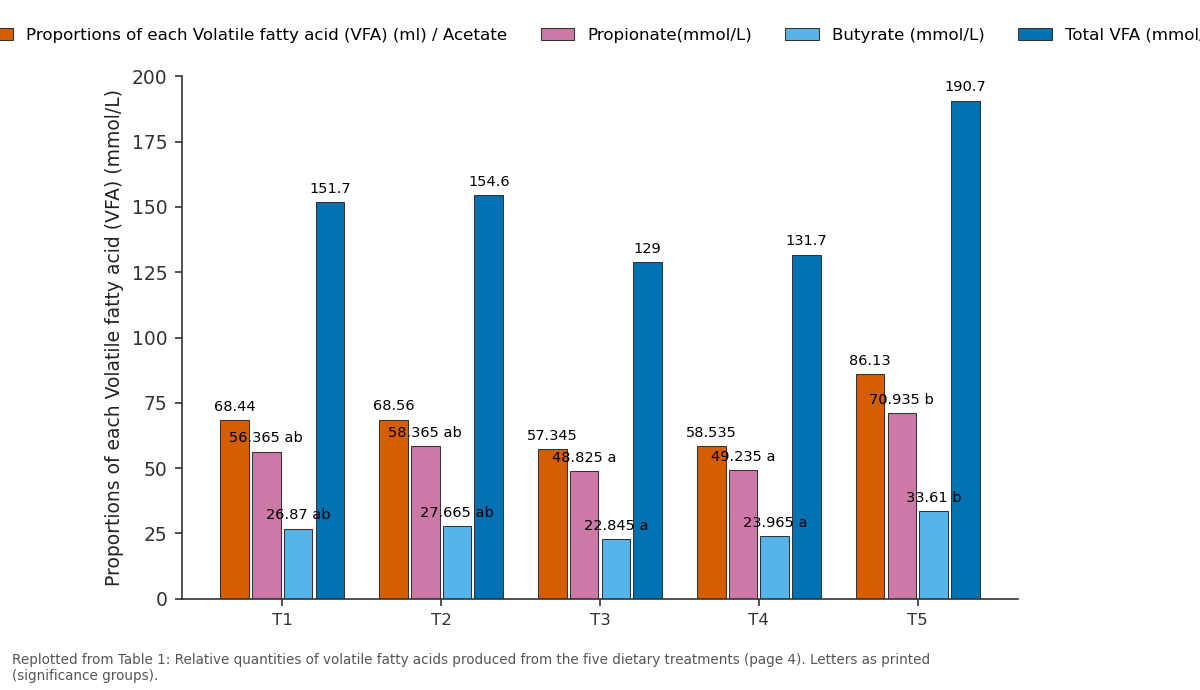
Proportions of each Volatile fatty acid... and Propionate(mmol/L) and more: T1 vs T2 vs T3 vs T4 vs T5
Replotted from Table 1 (page 4) of the original paper. Every bar is the paper's own table value.
View source evidence ↗Figures & tables
From the original paper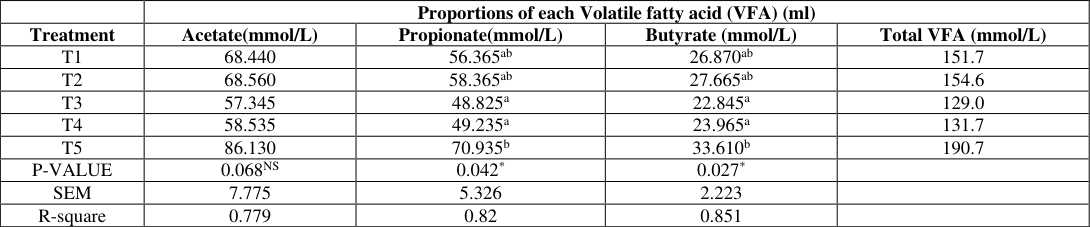 Table 1
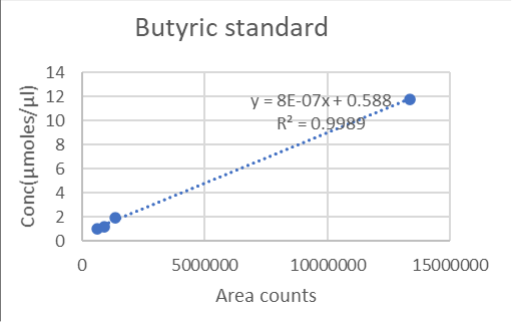 Figure 1
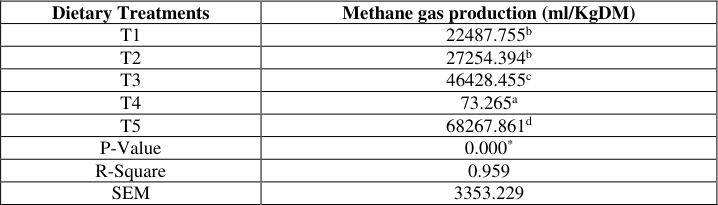 Table 2
Introduction
Methane (CH 4 ) and Carbon dioxide (CO 2 ), significant parts of ozone-depleting substances (Greenhouse gases) are majorly created during livestock production. Greenhouse gases significantly contribute to global warming, environmental degradation, and pollution [1] . 20% of the total greenhouse gas (GHG) emission is contributed by dairy farming from the livestock sector. Enteric methane is the largest source at 39% of dairy emissions [2] . The two most important factors that determine total methane production include the quantity of feed consumed and its digestibility. High methane emissions in the tropics are credited to the lowquality roughages/feed accessible to the animals [3]. Fibrous plant material is separated into supplements with the assistance of a local area of organisms through the intestinal aging interaction [4]. The final results of intestinal fermentation are hydrogen, carbon dioxide, and methyl-containing intensify which are utilized by various gatherings of rumen methanogenic archaea to CH 4 , which is burped and breathed out from the animal lungs and delivered into the environment [5] . Rumen methane discharge can be controlled through direct ruminal intercession [6]. The fermentation products of hydrogen and carbon dioxide are utilized by rumen methanogens to deliver methane thus intensifying that straightforwardly restrain the movement of the methanogens are probably going to lessen or wipe out methane creation [7]. The utilization of feed added substances, for example, probiotics in ruminant nourishment is utilized to control the rumen microbial populace and accordingly ruminal aging to augment the productivity of feed usage [8] . Expanded productivity in supplement usage prompts diminished methane creation which increments natural security [9] . Dietary alteration is straightforwardly connected to changes in the rumen maturation example and sorts of final results.
Helpful dietary changes give two-overlap benefits which remember further developed creation and decrease for GHG discharge [10] . Decrease in methane gas from intestinal maturation adds to a critical decrease in ozone harming substance discharges by dairy steers [11] . This is viewed as basic given that methane gas outflow by ruminants is considered to have adverse consequences in herbivores as 4-12% of feed gross energy ingested by these is lost through methane gas creation [12] . The microbial arrangement of probiotic items goes from a solitary strain to a blended strain or species synthesis. Numerous business items utilize blended strain probiotics, albeit the advantages of utilizing more than one strain or animal type in a solitary item have not been set up [13] . The probiotic impact may be subject to the dose of the probiotic, strain of probiotic and diet piece. Saccharomyces cerevisiae and Lactobacillus plantarum when utilized as a solitary strain in the eating routine of lactating dairy cows have been known to diminish methane outflow [14] . In any case, there is a lack of data in the writing on their effect on rumen methane emanation when utilized in the mix as blended strain. A need to foster proficient taking care of procedures to lessen methane gas creation by utilizing fitting strain(s) of probiotics, which further develops feed assimilation and supplement digestion in herbivores and which additionally protects the climate for feasible animals' creation is required [15] . This review assessed the effect of single and blended strains of Lactobacillus plantarum and Saccharomyces cerevisiae of methane emanation in lactating dairy
Materials and Methods
Materials and Methods
Site of study
Chemical Proximate analysis of the feed samples, in-vitro gas production, culturing cells, and methane production analysis procedures were done in the Animal Nutrition Laboratory, Department Saccharomyces cerevisiae of Animal Science of Egerton University, Kenya. Lactobacillus plantarum cells were cultured in the Microbiology Laboratory of Egerton University.
Preparation of probiotics
Culturing Saccharomyces cerevisiae; this was bought from Menengai Agrovet (Jewel V xpc 400 g). 400 grams (400g) of the dairy concentrate were mixed with 400ml of water in a ration or 1:1, thoroughly mixed to make a slurry in an anaerobic jar. The slurry was autoclaved at 121 o C at 1 atmosphere (atm) in a TUR OFFNEN type 23 autoclave for 15 minutes for adequate sterilization. This was then left to cool and its pH adjusted 4.0 using citric acid. 5g of Saccharomyces cerevisiae were added to the slurry and incubated in the oven at 32 o C for 7 days. Part of the slurry with created Saccharomyces cerevisiae cells was blended in with peptone water. 3.75 g of peptone were mixed in 250 ml of refined water and eighteen plates were organized each with 20 ml; plates were plated and brought forth in the oven at 32 o C for seven days. These were used for counting the colonyforming units (CFU) Culturing Lactobacillus plantarum; frozen Lactobacillus plantarum secludes were revived to make them practical. De Man Rogosa Sharpe (MRS) AGAR suitable for the growth of lactobacillus species was used as the enhancement media. 2.08 g of stock was mixed in 40 ml of distilled water. The samples were then autoclaved for 15 minutes at 121 o C 1 atm in a TUR OFFNEN type 23 autoclave for sterilization. Ensuing to cooling to room temperature, Lactobacillus plantarum cells were then situated into the course of action and hatched in a stove at 37 o C for 16 hr, turbidity checked and 24hrs later the cells were prepared for culturing Media preparation; 19.5g of the potato dextrose agar was lowered in 200 ml of water and the combination was autoclaved for 15 minutes. Subsequent to cooling, 20ml of the arrangement was filled the Petri dishes and permitted to solidify. The cells are streaked onto the surface and set in an anaerobic container set in a stove at 37 o C for 16 hours; after which the cells are collected and brought into the probiotic diet. Colony counting; utilizing a sequential dilution method, 1ml of diluted sample was added to 9ml of peptone water in a 10ml bottle and the bottle sterilized. Dilution bottles one to ten were made ready. The tenth, ninth and eighth dilution jugs were used to draw tests for inoculating the Petri dishes for colony count. An example was loaded up with the Petri dishes, Petri dishes were carefully turned to ensure the media covers the plate fairly. The Potato Dextrose Agar was allowed to settle and form a gel. The Saccharomyces cerevisiae plates were brooded at 32 °C for 7 days while the Lactobacillus plantarum plates were hatched at 37 °C for 48 hours. Following 7 days and 48 hours respectively, all states were counted using a magnifying colony counter. Colony forming units (cfu) were counted and ranged from 1 x 10 7 cfu to 1 x 10 10 cfu These were used to form a probiotic diet where the autoclaved dairy meal was the carrier. A probiotic diet was formulated utilizing 400 g of Dairy meal mixed with 400 ml of water in a proportion of 1:1 and disinfected at 121 o C at 1.5 atm for 30 minutes using a TUR NUR WECHSELSTROM MELAG type 23 autoclave. Saccharomyces cerevisiae enhanced probiotic diet was adjusted to 4.0 using citrus extract estimated utilizing AD1020 pH/mV/ISE to accomplish ideal developing conditions. While for Lactobacillus plantarum the pH was kept at 7. After inoculation, 20 g and 40 g of the probiotic diet were measured and placed into separate tubes to be added to the dairy meal as treatment procedures before feeding. Dietary formulations; the steer was fed a diet composed of a consisting of 70% Rhodes grass hay and 30% dairy meal concentrate on a dry matter basis as the basal diet. Treatments were supplemented with probiotics which were mixed with the dairy meal. Treatment 1 (T1) which was the control consisted of the basal diet without any addition of inoculum, Treatment 2 (T2) was basal diet + 40 g of Lactobacillus plantarum, Treatment 3 (T3) was basal diet + 40g of Saccharomyces cerevisiae, Treatment 4 (T4) was basal diet + 20 g of Saccharomyces cerevisiae + 20 g of Lactobacillus plantarum and Treatment 5 (T5) was basal diet + 40g of Saccharomyces cerevisiae + 40 g of Lactobacillus plantarum. Methane gas production; In-vitro studies were directed to recognize the best probiotic strain that lessens methane gas outflow in lactating dairy cows. The methods utilized in the test were in-vitro dry matter degradability (IVDMD) and in vitro gas creation. Gas produced was sampled for further analysis. One steer was used as a donor for rumen fluid. It was fed on the experimental diets T1, T2, T3, T4, and T5 with each dietary treatment being administered for 7 days before rumen liquor was collected for analysis on the 7 th day consecutively. Rumen fluid was collected at 08:00 hr before morning feeding. One liter of rumen liquid from the contributor creature was put away in a bottle cup. This was sifted through two layers of cheesecloth to gain stressed rumen fluid which was then flushed with carbon dioxide (CO 2 ) to stay aware of anaerobic conditions. Part of the rumen fluid was analyzed for the volatile fatty acid profile. Rumen fluid was utilized in combination with buffers to simulate the action of saliva. The module glass was greased petroleum jelly to ease the sliding of the piston and prevent gas escape then the silicon rubber closed with a plastic clip. The fermentative activity of the mixed microbial population of treatments was determined using the gas production technique as described by Menke et al., 1979. The rumen fluid and buffer medium were mixed in the ratio of 1:2 (v/v). 30 ml of the buffer-rumen fluid mixture were added into syringes holding the treatment diet samples, shaken gently and any air bubbles released. The substrate was weighed to 0.200±0.02 g DM to contain around 0.14 g of DM of Rhodes grass roughage and 0.06 g of DM of dairy dinner concentrate (a spot of probiotic for each treatment added) and distributed into 100-ml changed glass needles fitted with cylinders. Thusly, 30 ml of cradled rumen liquid were apportioned into syringes containing substrate with various strains of probiotics and blank syringes without substrate. The syringes with the substrate and those with blanks were incubated in a water bath maintained at 39 o C for 96 hr taking readings at 0, 3, 6, 9, 12, 24, 48, 36, 72, and 96 hr of incubation. The gas produced was determined as the total increase in volume minus the mean blank value from the recorded gas production of all samples to give the net gas production. The net gas volumes data was then fitted in the equation of Ørskov and Mcdonald (1979) to determine the potential degradability of the feed. The model was fitted using NEWAY excel software version 6
where: Y= the volume of gas produced (ml) at time t, a= the gas production from the immediately soluble fraction (ml), b = the gas production from the immediately degradable fraction (ml) at time t, a + b = the potential gas production (ml), c = the rate constant of gas production (fraction/h) After 96 hr of fermentation, ruminal fluid was collected for clarification. Ruminal fluid was clarified by centrifugation at 13,000 x g at 4 o C for 10 minutes. 2-3 drops of Hydrochloric acid were added to lower the pH to 4-5 and stop any further fermentation process. The concentration of the VFAs (acetate, butyrate, and propionate) was determined using a Gas chromatography Varian Star 3400 cx. 1μl of the sample was injected into the GC system with the CX series. This was equipped with a Flame ionization detector with Nitrogen as a carrier gas with the column temperature kept at 80-150 o C, injector kept at 170 o C, and detection temperature at 180 o C. The analysis was isothermal for 13 minutes. VFA was quantified from the chromatography peak areas using calibration done from samples of known calibration.
Statistical analysis
Effect of the treatments (probiotics) on volatile fatty acid (VFA) production was tested by analysis of variance using the General Linear Model procedure of the SAS (2003) as;
where: Y ijk = measurement of volatile fatty acid production due to effect i th diet treatment μ = overall mean α i = effect of i th diet treatment, where і = (1, 2, 3, 3, 4, 5) ε ijk = random error associated with Y ijk
The gas produced from the in vitro digestibility test was taken for further analysis using a chromatography test to identify the presence and proportion of methane in the gas. A suitable aliquot of gas collected from Gas-tight culture bottles (250 ml capacity) consisting of rumen contents and feed samples, were withdrawn from the tip of the incubation bottles using glass modules, and the composition of gas in the headspace of bottles was determined using gas chromatography. The methane gas (CH 4 ) analysis was performed by GC-flame ionization detection (FID) using a gas chromatograph (SHIMADZU, GC-9A) equipped with a Hayesep Q packing column (2.44 M_1/8 in._2.0mm ID) [16,17,18] . The gas samples collected from the dietary treatments were run in Gas Chromatography (SHIMADZU, GC-9A) by injecting 1µL of the sample into the injection port using Gas chromatography varlan STAR 3400 cx. The samples were run for 10 minutes. The peak areas and retentions of the methane were calculated and reported by the digital processor. The percentage of the methane gas composition was calculated by expressing each peak area as a percentage of the total peak area After 96 hr, gas produced from the in vitro gas production technique process was collected into a gas vail and taken to a GC ionization flame for further analysis. 1μl of gas was sampled from the gas and injected into the GC flame with injection temperature at 120 o C, injector kept at 150 o C, and detection temperature at 180 o C. The methane composition of the headspace was measured by gas chromatography (state model). An external standard with known concertation composition of methane was run; its retention time, area peaks, and injection volume were determined. The statistical model used was;
where: Y ijk = measurement of methane emission associated with effect i th diet treatment μ = overall mean α i = effect of i th diet treatment, where і = (1, 2, 3, 3, 4, 5) ε ijk = random error associated with Y ijk Analysis of variance (ANOVA) was done using the General linear model (GLM) of Statistical Analysis Systems (SAS 2009) computer package. Tukey's test at a significant level of 0.05 was done to determine mean separation.
Results
The results of volatile fatty acid production are shown (Table 1) and Figure 1below Results in volatile fatty acid production show that while there was no significant (P>0.05) change in acetate across the dietary treatments inoculated with Lactobacillus plantarum and Saccharomyces cerevisiae either singly or in combination, that for Propionate and Butyrate was significantly different (P<0.05). Overall dietary treatment (T5) that was inoculated with 40 g of yeast and 40 g of Lactobacillus plantarum and 40 g of Lactobacillus plantarum had significantly (P<0.05) higher levels of both propionate and butyrate compared to the control basal diet. A similar trend was also observed in total volatile fatty acid production from Dietary treatments T1 to T5 with the later (T5) having the highest total VFA at 190.7 ml. The high R-square value also indicated a significant (P<0.05) influence of inoculation with the two strains either singly or in combination on the VFA production (Table 1 & Figure 1) The results on gas production show that Saccharomyces cerevisiae cultures either singly or in combination with Lactobacillus plantarum increased methane gas production significantly (P<0.05) compared to the control diet and the treatment inoculated with Lactobacillus plantarum (Table 2).
| Dietary Treatments | Methane gas production (ml/KgDM) |
|---|---|
| T1 | 22487.755b |
| T2 | 27254.394b |
| T3 | 46428.455c |
| T4 | 73.265a |
| T5 | 68267.861d |
| P-Value | 0.000* |
| R-Square | 0.959 |
| SEM | 3353.229 |
Table text extracted from the original PDF; superscript letters are shown inline. The original table image is below.
View original table image
| — | Proportions of each Volatile fatty acid (VFA) (ml) | — | — | — |
|---|---|---|---|---|
| Treatment | Acetate(mmol/L) | Propionate(mmol/L) | Butyrate (mmol/L) | Total VFA (mmol/L) |
| T1 | 68.440 | 56.365ab | 26.870ab | 151.7 |
| T2 | 68.560 | 58.365ab | 27.665ab | 154.6 |
| T3 | 57.345 | 48.825a | 22.845a | 129.0 |
| T4 | 58.535 | 49.235a | 23.965a | 131.7 |
| T5 | 86.130 | 70.935b | 33.610b | 190.7 |
| P-VALUE | 0.068NS | 0.042* | 0.027* | |
| SEM | 7.775 | 5.326 | 2.223 | |
| R-square | 0.779 | 0.82 | 0.851 |
Table text extracted from the original PDF; superscript letters are shown inline. The original table image is below.
View original table image
The results show that probiotic supplementation had a significant effect on methane emission with methane emission varying between 68, 267.9 ml (Treatment 5) and 73.3 ml (T4) and this fact is supported by the high R-square value of 0.959
Discussion
Probiotics effectively affect different parts of rumen digestion, particularly stomach-related cycles and that's just the beginning so cellulolysis and the amalgamation of microbial protein [19] . Various strains of probiotics distinctively affect rumen organisms. With respect to consequences of CH 4 emission intensity, Muñoz et al. 2016 revealed that the expansion of Saccharomyces cerevisiae was trailed by a better return of CH 4 /DMI and digestible organic matter intake. This is in concurrence with high methane emission in Treatment 3 (T3) and treatment 5 (T5) which were both enhanced with Saccharomyces cerevisiae. As a characteristic feed added substance, Saccharomyces cerevisiae adds to adjust and stabilize rumen microbiota, keep a positive pH and maintain a favorable pH and enhance the formation of fermentation end-products in the rumen, and improve ammonia utilization by ruminal bacteria [20] . This impact may be subject to the dose or the strain of Saccharomyces cerevisiae, and diet arrangement. In this study, the inoculation with 40 g of Saccharomyces cerevisiae in addition to 40 g of Lactobacillus plantarum appeared to boost rumen microbial fermentation leading to the observed significantly high levels of propionate, butyrate, and total VFA production besides increasing methane gas emission. Comparative with Saccharomyces cerevisiae, there is little data managing their likely impacts on hydrogen transfer mechanisms and methanogenesis. One instrument of activity could be to move hydrogen use from methanogenesis to reductive acetogenesis [21] . This was seen with increased acetate production in treatments enhanced with Saccharomyces cerevisiae however this doesn't convert into diminished methane production maybe because of mixed culture of prior rumen microbiota. In vitro studies have shown gainful impacts of taking care of Saccharomyces cerevisiae on growth and hydrogen usage and acetate production by acetogenic microorganisms detached from a rumen of sheep, even within the sight of methanogens [22] . On their Lactic acid bacteria (LAB) are unable to start the assimilation and digestion of plant underlying polysaccharides like cellulose and hemicellulose and are not viewed as significant supporters to rumen fermentation in herbivores subsisting on high fiber basal diets [23] . The low emission of methane in treatment two (T2) enhanced with Lactobacillus plantarum could be because of the utilization of Lactobacillus plantarum or their metabolites to move the rumen aging so that there is a relating decline in CH 4 creation, or utilization of Lactobacillus plantarum or their metabolites to straightforwardly hinder rumen methanogens and utilization of Lactobacillus plantarum or their metabolites to restrain explicit rumen microorganisms that produce hydrogen or methyl-containing intensifies that are the substrates for methanogenesis. Expansion of Lactobacillus plantarum may have animated the development of lactic utilizing bacteria prompting increased production of propionate and a resulting decline in the hydrogen accessibility for methane creation. Fermentation pathways that advance propionate kind of rumen fermentation have been accounted for to redirect hydrogen to the development of C-H bonds hence expanding the extent of propionate and diminishing methane gas production. This is affirmed by the presence of high volumes of propionate in treatment 2 (T2). Lactobacillus plantarum can lessen CH 4 creation successfully however the impact is stressed ward and it isn't perceived whether the Lactobacillus plantarum or their metabolites influence the actual methanogens, or regardless of whether they influence the other rumen organisms that produce substrates important for methanogenesis. In Treatment 4 (T4) where 20 g of each strain were utilized, both methane and propionate were insignificant in light of the fact that the Saccharomyces cerevisiae and Lactobacillus plantarum utilized were in moderately little amounts to impact any distinguishable change. Treatment 5 (T5) had the most noteworthy methane and propionate creation due to the consolidated impact of Lactobacillus plantarum and Saccharomyces cerevisiae which was accessible in adequate sums and perhaps because of a synergistic impact between the two strains. From the study, it was noticed that the expansion of Saccharomyces cerevisiae expanded methane production on a ml/Kg Dm basis.
Conclusion
It is concluded from this study that the use of Lactobacillus plantarum and Saccharomyces cerevisiae singly and in combination improved rumen fermentation and increased the propionate/acetate ratio and can reduce methane emission only when used in moderation. However, further studies are required to elucidate understand if Lactobacillus plantarum their metabolites influence the actual methanogens, or regardless of whether they influence the other rumen organisms that produce substrates fundamental for methanogenesis.
Acknowledgement
AcknowledgmentGrateful to the Center of Excellence in Sustainable Agriculture and Agribusiness Management CESAAM of Egerton University for funding this research.
References
23 in the original paper- Ugbogu EA, Elghandour MM, Ikpeazu VO, Buendía GR, Molina OM, Arunsi U et al. The potential impacts of International Journal of Veterinary Sciences and Animal Husbandry http://www.veterinarypaper.com dietary plant natural products on the sustainable mitigation of methane emission from livestock farming. Journal of Cleaner Production 2019;213:915925.
- Broucek J. Production of methane emissions from ruminant husbandry: a review. Journal of Environmental Protection 2014;5(15):1482.
- Sejian V. Global climate change: Role of livestock. Asian Journal of Agricultural Science 2011;3:19-25.
- Leahy SC, Kearney L, Reisinger A, Clark H. Mitigating greenhouse gas emissions from New Zealand pasturebased livestock farm systems. Journal of New Zealand Grasslands 2019, 101-110.
- Chaucheyras F, Fonty G, Bertin G, Gouet P. In vitro H2 utilization by a ruminal acetogenic bacterium cultivated alone or in association with an Archaea, methanogen is stimulated by a probiotic strain of Saccharomyces cerevisiae. Applied and Environmental Microbiology 1995;61(9):3466-3467.
- Bhatta R, Uyeno Y, Tajima K, Takenaka A, Yabumoto Y, Nonaka I, et al. The difference like tannins on in vitro ruminal methane and volatile fatty acid production and on methanogenic archaea and protozoal populations. Journal of Dairy Science 2009;92(11):55125522.
- Hook SE, Wright ADG, McBride BW. Methanogens: methane producers of the rumen and mitigation strategies. Archaea, 2010.
- Tirado-González DN, Miranda-Romero LA, Ruíz-Flores A, Medina-Cuéllar SE, Ramírez-Valverde R, TiradoEstrada G. Meta-Analysis: effects of exogenous fibrolytic enzymes in ruminant diets. Journal of Applied Animal Research 2018;46(1):771-783.
- Eckard RJ, Grainger C, De Klein CAM. Options for the abatement of methane and nitrous oxide from ruminant production: A review. Livestock Science 2010;130(13):47-56.
- Haque MN. Dietary manipulation: a sustainable way to mitigate methane emissions from ruminants. Journal of animal science and technology 2018;60(1):1-10.
- Moss AR, Jouany JP, Newbold J. Methane production by ruminants: its contribution to global warming. In Annales de zootechnie EDP Sciences 2000;49(3):231-253.
- Migwi PK, Bebe BO, Gachuiri CK, Godwin I, Nolan JV. Options for efficient utilization of high fiber feed resources in low input ruminant production systems in a changing climate: A review 2013.
- Vinderola CG, Mocchiutti P, Reinheimer JA. Interactions among lactic acid starter and probiotic bacteria used for fermented dairy products. Journal of Dairy Science 2002;85(4):721-729.
- Al-Shawi SG, Dang DS, Yousif AY, Al-Younis ZK, Najm TA, Matarneh SK. The potential use of probiotics to improve animal health, efficiency, and meat quality: A Review. Agriculture 2020;10(10):452.
- Arowolo MA, He J. Use of probiotics and botanical extracts to improve ruminant production in the tropics: A review. Animal Nutrition 2018;4(3):241-249.
- Denev S, Tzonka, Peeva, Radulova P. and Stancheva, Nevyana and Staykova, Genoveva and Beev, Georgi and Todorova, P. and Tchobanov Yeast Cultures in ruminant nutrition. Bulgarian Journal of Agricultural Science 2007;13:357-374.
- Ungerfeld EM. Shifts in metabolic hydrogen sinks in the methanogenesis-inhibited ruminal fermentation: a metaanalysis. Frontiers in Microbiology 2015;6:37.
- Chaucheyras F, Fonty G, Bertin G, Gouet P. In vitro H2 utilization by a ruminal acetogenic bacterium cultivated alone or in association with an Archaea, methanogen is stimulated by a probiotic strain of Saccharomyces cerevisiae. Applied and Environmental Microbiology 1995;61(9):3466-3467.
- Santra A, Karim SA. Rumen manipulation to improve animal productivity. Asian-Australasian Journal of Animal Sciences 2003;16(5):748-763.
- Chaucheyras-Durand F, Chevaux E, Martin C, Forano E. Use of yeast probiotics in ruminants: Effects and mechanisms of action on rumen pH, fiber degradation, and microbiota according to the diet. Probiotic in Animals 2012, 119-152.
- Ungerfeld EM. Shifts in metabolic hydrogen sinks in the methanogenesis-inhibited ruminal fermentation: a metaanalysis. Frontiers in Microbiology 2015;6:37.
- Elghandour MM, Kholif AE, López S, Mendoza GD, Odongo NE, Salem AZ. In vitro gas, methane, and carbon dioxide productions of high fibrous diet incubated with fecal inocula from horses in response to the supplementation with different live yeast additives. Journal of Equine Veterinary Science, 2016;38: 64-71.
- Oladosu Y, Rafii MY, Abdullah N, Magaji U, Hussin G, Ramli A, Miah G. Fermentation quality and additives: a case of rice straw silage. BioMed research international 2016.