
Research article · 2021 · Full text
International Journal of Veterinary Sciences and Animal HusbandryTherapeutic efficacy of imidocarb on feline cytauxzoonosis: A case study
Volume 6(4) · Pages 51–52 · DOI: 10.22271/veterinary.2021.v6.i4a.368 ↗
Research areasViral Infections and VectorsVector-borne infectious diseasesRabies epidemiology and control
Abstract
Author-writtenCytauxzoonosis is an emerging, life threatening vector born infectious disease of domestic and wild cats, caused by an apicomplexan haemoprotozoa, Cytauxzoon sp. An eighteen months old male domestic cat having body weight approximately 2 kg was presented to TVCC, W.U.A.F.S., Kolkata-37, West Bengal on 19/03/2019 with a history of ectoparasitic infestation, inappetance from 4 days. Clinical examination revealed that there were 102.4° F of body temperature, trachycardia and increased respiratory rate. On closed observation there were pale mucous membrane, mild dehydration, depression and swelling of lymph nodes. On the basis of history and clinical signs the case was suspected for haemoprozoan infection and for that peripheral blood smear was send for examination. On the basis of the report of blood smear examination the case was diagnosed as feline cytauxzoonosis. For medical intervention Imidocarb (BABIMIDO®, @3.5mg/kg B.W.) intramuscularly and Atropine Sulphate (Atropine®, 0.04mg/kg B.W.) subcutaneously were given. To combat the condition of anaemia the cat was treated with haematinic Syrup (Sharkoferrol, 1ml daily) orally. After two weeks of treatment the cat appeared normal in health and again blood smear was send for examination. The blood smear examination report show negative for any haemoprotozoa.
Summary
Source-checkedPlain-language reading of the full paper, prepared with AI and checked against the text. Each point links to the authors' own words.
Why it matters
- Cytauxzoonosis is a life-threatening infectious disease affecting wild and domestic cats, caused by the apicomplexan haemoprotozoa Cytauxzoon sp. View evidence ↗
- The primary vector for this disease is the lone star tick (Amblyomma americanum), which acquires the parasite by feeding on infected hosts. View evidence ↗
- While primarily endemic to the southern and southeastern United States, the distribution of the disease has expanded and has been reported in other locations, including India. View evidence ↗
The question
- The study aims to evaluate the therapeutic efficacy of imidocarb in treating a case of feline cytauxzoonosis. View evidence ↗
What they did
- Diagnosis was performed using a peripheral blood smear, which revealed ring or dot-shaped piroplasms within the erythrocytes. View evidence ↗
- The treatment regimen included intramuscular injections of Imidocarb (3.5 mg/kg) administered one week apart, and subcutaneous injections of Atropine Sulphate (0.04 mg/kg). View evidence ↗
- Supportive care included daily oral administration of 1 ml of haematinic syrup to treat anemia and the topical application of Notix talc to control ticks. View evidence ↗
What they found
- Initial clinical signs included a body temperature of 102.4°F, tachycardia, increased respiratory rate, pale mucous membranes, mild dehydration, depression, and swollen lymph nodes. View evidence ↗
What it means
- The authors conclude that cytauxzoonosis is a severe acute febrile illness with high mortality, where diagnosis is confirmed by the presence of piroplasms in red blood cells alongside compatible clinical history. View evidence ↗
Visual summary
1 visualsIllustrations explain the paper; they do not show study data.
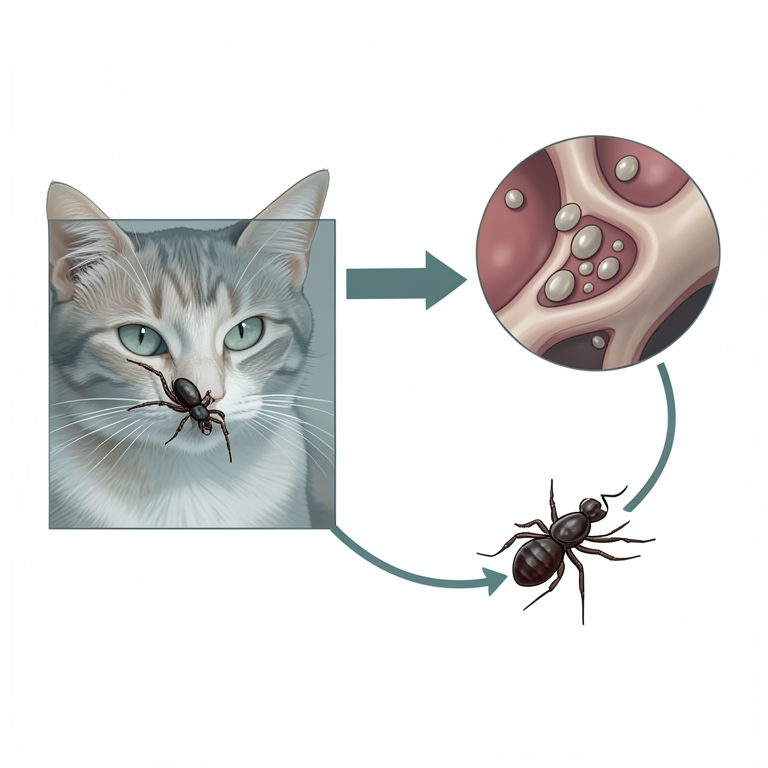
Transmission Cycle
AI-generated conceptual illustration (Domestic cat and Amblyomma americanum tick). It explains the idea and does not show study data.
View source evidence ↗Figures & tables
From the original paper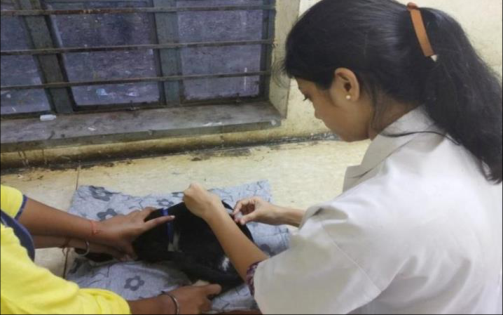 Figure 2
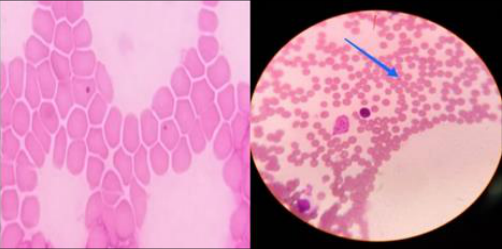 Figure 1
Introduction
Cytauxzoonosis is an emerging, life –threatening infectious disease of domestic and wild cats caused by a apicomplexan hemoprotozoa, Cytauxzoon felis (Albert et. al., 2015) [6] within the family Theileridae and their closest relatives are Theileria sp. The agent is transmitted by Amblyomma americanum (the lone star tick), is the principal vector (Ridgway) that acquire the infection by feeding on parasite infected hosts. Experimentally, Dermacentor variabilis (the American dog tick) has also been shown to be a capable vector though the contribution of this tick in natural infection is unclear (Ridgway). Natural host for C. felis is the bobcat, which acts as a reservoir host of parasite and include bobcats and domestic cats that have recovered from infection.
Feline cytauxzoonosis was first reported in 1976 in Missouri, with four fatal cases (Jin-Lei Wang et.al, 2017) [2]. The disease has been found to be endemic mainly in domestic cats in the southern and southeastern United States (Jin-Lei Wang et.al, 2017) [2]. The distribution of this disease has expanded in recent years (Jaime L. Tarigo, 2015) [3] and is also reported from various geographical location including India.
History and observation A eighteen months old male domestic cat having 2 kg body weight was presented at Belgachia Clinics, Kolkata (West Bengal). On physical examination the clinical signs were inappetance for 4 days, slight dehydration, pale mucous membrane, depression/lethargy and swelling of lymph node. On clinical examination the cat revealed 102.4°F body temperature, increased respiratory rate and tachycardia and there was a history of tick infestation. Diagnosis and treatment Finding a tick on the cat may help with the diagnosis, but in many cases, the cat may have got rid of the ticks before showing any symptom or illness.
Blood tests are helpful in diagnosing this disease. In the present case based upon the clinical signs and symptoms, the cat was advised for thin blood smear examination and it was positive for haemoprotozoa, http://www.veterinarypaper.com Cytauxzoonfelis. In microscopic identification there was presence of a ring or dot shaped piroplasm in the erythrocyte [Fig. 1]. Fig 1: showing the presence of Cytauxzoon felis in peripheral blood cytauxzoonosis includes administration of antiprotozoal drugs and supportive care.
Discussion
Cytauxzoonosis is a life threatening tick-transmitted protozoal disease affecting wild and domestic felids (Meinkoth et. al., 2005) [4] caused by Cytauxzoon felis (Carli et. al., 2014) [5]. To control the tick’s topical product was advised. The antiprotozoal therapy of Imidocarb dipropionate was given by intramuscular injection, 1 week apart. It is generally well tolerated, although it can cause transient pain at the site of injection.
Acute adverse effect results from anti- cholinergic activity and include vomiting, shivering, hyper salivation, lacrimation, diarrhoea, agitation, lethargy, pyrexia and periorbital swelling. Atropin sulphate was given to reduce the side effects of Imidocarb and it was administered by sub- cutaneous injection stat [Fig. 2]. As the organism destroy the blood cell, haematinic was prescribed for increasing the blood cell volume. Fig 2: Administration of Atropine Sulphate
Conclusion
Cytauxzoonosis is a severe acute febrile illness with a high mortality rate in domestic and wild cats. Presence of piroplasms in RBCs confirms infection and compatible history and clinical findings support a diagnosis of acute disease. As it is a haemoprozoan disease, treatment of
References
6 in the original paper- Ridgway MD. Feline cytauxzoonosis. University of Illinois College of Veterinary Medicine.
- Wang JL, Li TT, Liu GH, Zhu XQ, Yao C. Two tales of Cytauxzoon felis infections in domestic cats. Clinical microbiology reviews 2017;30(4):861-885.
- Tarigo JL, Scholl EH, Bird dM, Brown CC, Cohnl A, dean GA, et al. A novel candidate vaccine for cytauxzoonosis inferred from comparative apicomplexan genomics. PloS one 2015;8(8):e71233.
- Meinkoth JsH, Kocan AA. Feline cytauxzoonosis. Vet Clin North Am Small Anim Pract 2005;35:89-101.
- Carli E, Trotta M, Bianchi E, Furlanello T, Caldin M, Pietrobelli M, et al. Cytauxzoon sp. Infection in Two Free Ranging Young Cats: Clinicopathological Findings, Therapy and Follow Up. Turkiye razitol Derg 2014;38:185- 9.
- Lloret A, D Addie Diane, Boucraut-Baralon C, Egberink H, Frymus T, Gruffydd- Jones T, et al. European Advisory Board on Cat Diseases. Cytauxzoonosis in cats: ABCD guidelines on prevention and management. J Feline Med Surg 2015;17(7):637-41. smear represented by blue arrow. For medical intervention Imidocarb (BABIMIDO®, @3.5mg/kg B.W.) Intramuscularly and Atropine Sulphate (Atropine®, 0.04mg/kg B.W.) subcutaneously were given. To combat the condition of anaemia the cat was treated with haematinic Syrup (Sharkoferrol, 1ml daily) orally. Powder Notix talc was prescribed for topical application to control the ticks.