
Research article · 2021 · Full text
International Journal of Veterinary Sciences and Animal HusbandryAssessment of sheep fattening practices under smallholder farmers in Genji district of West Wollega, Western Oromia, Ethiopia
Volume 6(4) · Pages 18–25 · DOI: 10.22271/veterinary.2021.v6.i4a.362 ↗
Research areasRangeland Management and Livestock EcologyAnimal Diversity and Health StudiesAgriculture and Rural Development Research
Abstract
Author-writtenThis study was conducted in Genji district to assess sheep fattening practice, under small holder farmers in the district. The study area was stratified into midland and lowland agro ecologies followed by purposive selection of five villages based on sheep production potential and accessibility. A total of 183 households (HHs) were randomly selected from sheep producers (126 and 57 from midland and lowland agro ecologies, respectively). Each HH was interviewed with a semi-structured pretested questionnaire to collect data regarding fattening practices. Significance of difference is declared at (p
Summary
Source-checkedPlain-language reading of the full paper, prepared with AI and checked against the text. Each point links to the authors' own words.
Why it matters
- Sheep are economically vital for small-scale farmers as they provide a buffer against the risks of crop failure caused by drought and unpredictable rainfall. View evidence ↗
- Sheep fattening is considered a profitable strategy because the market value per kilogram of live weight rises as the animal's weight and body condition improve. View evidence ↗
What they did
- The researchers randomly selected 183 sheep-producing households (126 from midlands and 57 from lowlands) across five purposively chosen villages. View evidence ↗
- Data on fattening practices were collected using a pretested, semi-structured questionnaire administered in the local language. View evidence ↗
- The study used SPSS Version 20 to perform descriptive statistics and Pearson Chi-square tests to analyze socio-economic data and fattening practices. View evidence ↗
What they found
- Less than half of the sheep-owning respondents (45.4%) actually practiced sheep fattening. View evidence ↗
- The most common approach was extensive fattening of the Horro breed, utilizing free grazing with occasional local feed supplements. View evidence ↗
- The majority of sheep used for fattening came from the farmers' own herds (75.9%), followed by market purchases (16.9%). View evidence ↗
- Uncastrated rams were the most preferred animals for fattening (86.7%), while castrated rams and old ewes were rarely used. View evidence ↗
- Generating family income was the primary motivation for fattening, cited by 82.1% of midland and 66.6% of lowland households. View evidence ↗
- Most farmers preferred to fatten sheep at 1.5 years of age (55.4%), with fewer preferring ages of 2.0 years (24.1%) or older. View evidence ↗
- Health condition was the top priority for selecting sheep for fattening in both agro-ecologies, followed by the animal's age. View evidence ↗
- The scale of operation was small, with 49.4% of farmers fattening only 2-3 sheep per cycle. View evidence ↗
- Wooden floors were the most common bedding material (75.9%), while earthen floors were used by 16.9% of farmers. View evidence ↗
What it means
- The authors conclude that sheep fattening is a viable livelihood activity in Genji due to the availability of sheep and the short fattening duration. View evidence ↗
- The authors note that inadequate housing and water sources currently limit the potential productivity of sheep fattening in the region. View evidence ↗
Visual summary
3 visualsIllustrations explain the paper; charts are replotted from the paper's own table values.
Sheep Fattening Workflow
AI-generated conceptual illustration (Ethiopian sheep (rams)). It explains the idea and does not show study data.
View source evidence ↗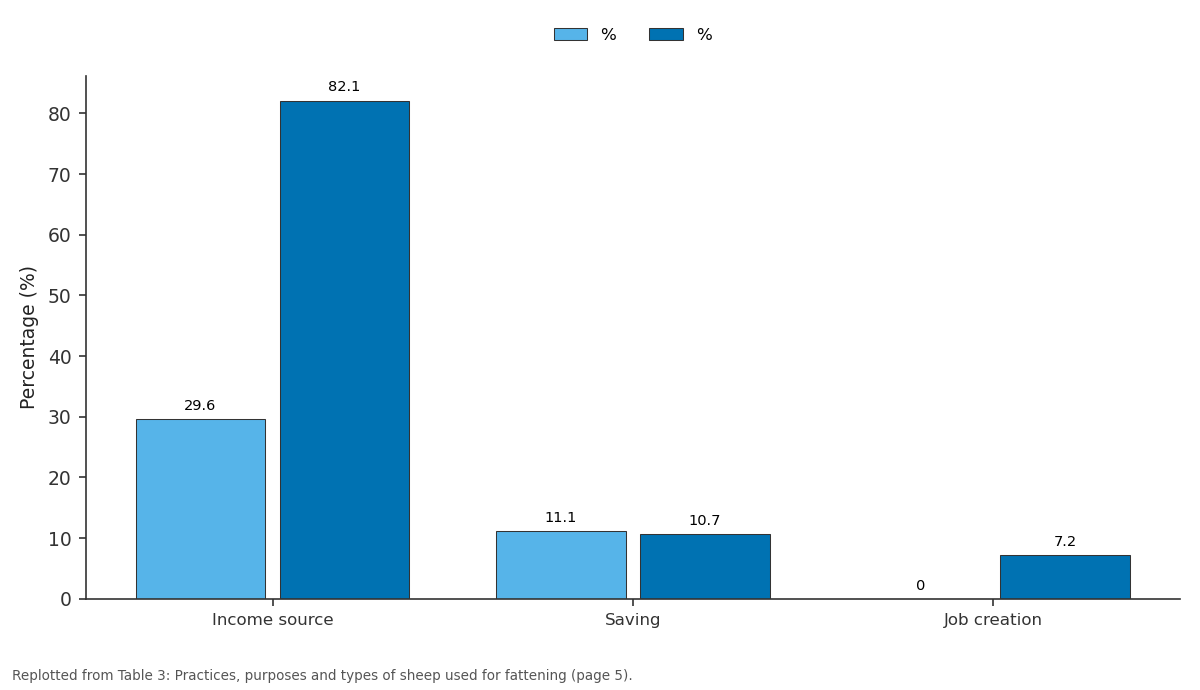
% and %: Income source vs Saving vs Job creation
Replotted from Table 3 (page 5) of the original paper. Every bar is the paper's own table value.
View source evidence ↗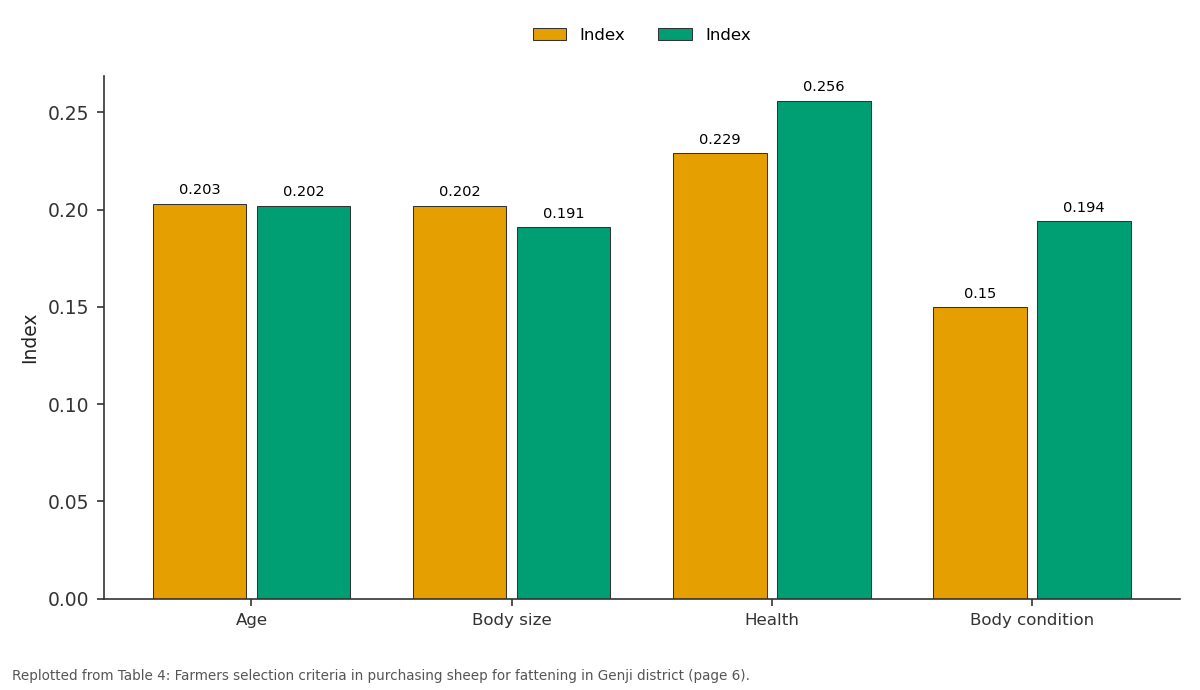
Index and Index: Age vs Body size vs Health vs Body condition
Replotted from Table 4 (page 6) of the original paper. Every bar is the paper's own table value.
View source evidence ↗Figures & tables
From the original paper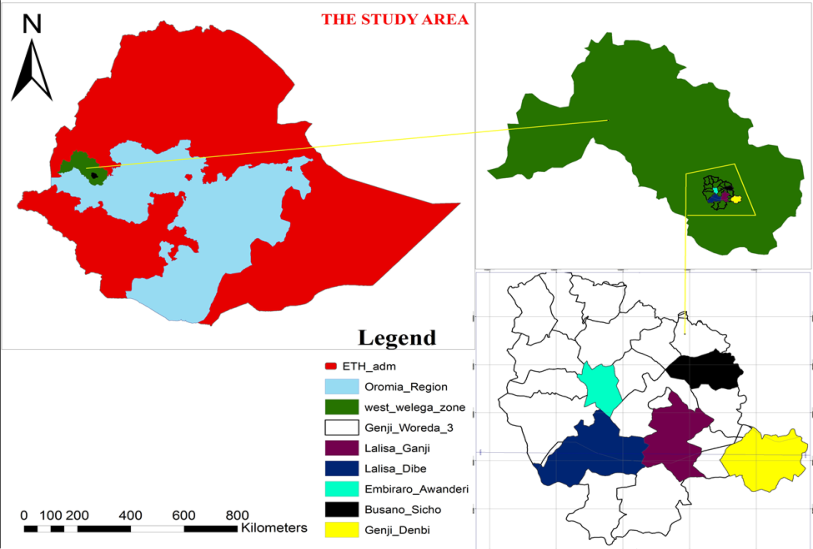 Figure 1
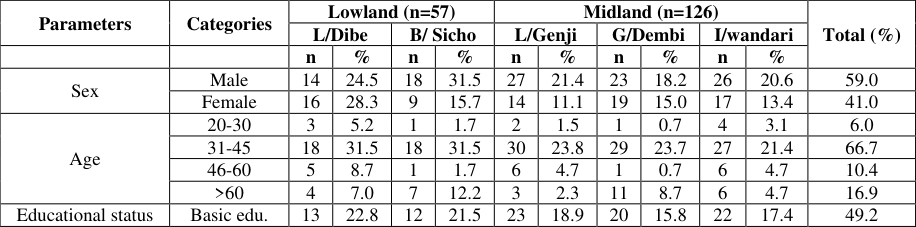 Table 1
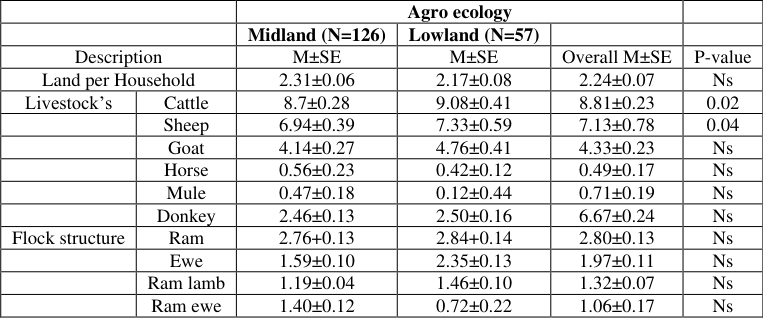 Table 2
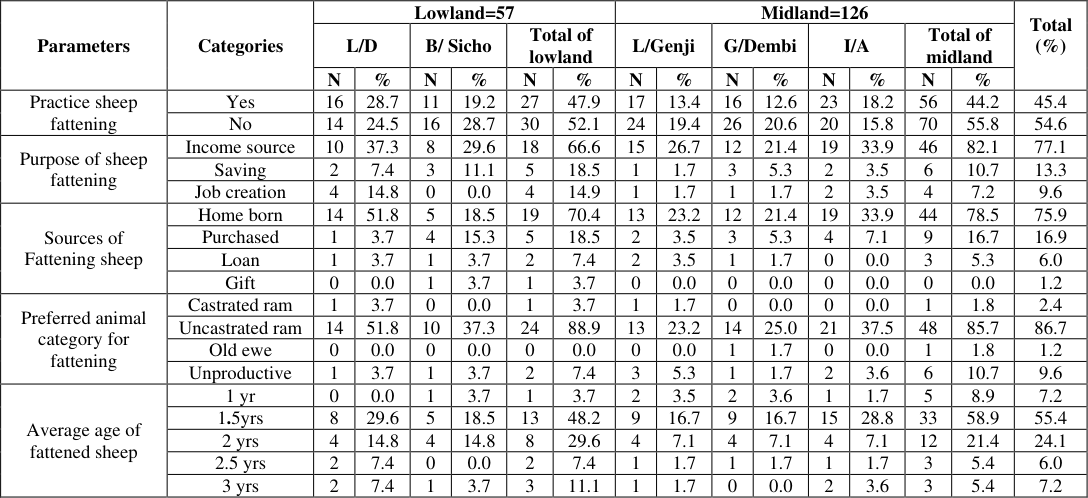 Table 3
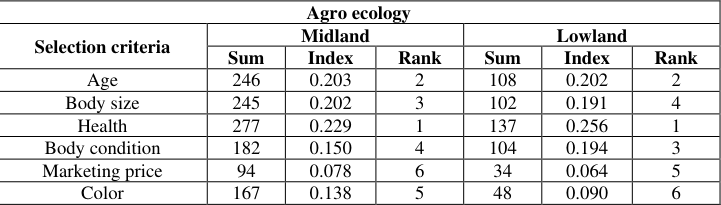 Table 4
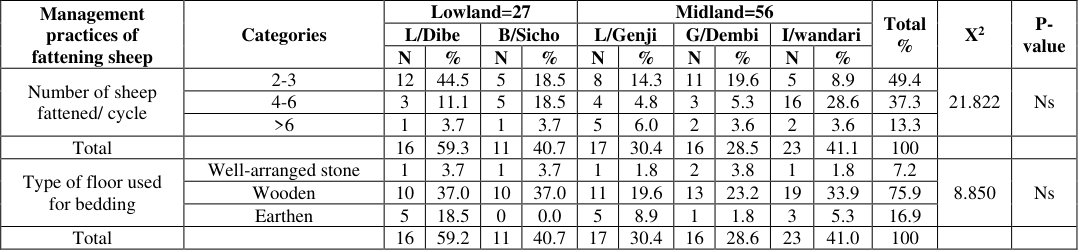 Table 5
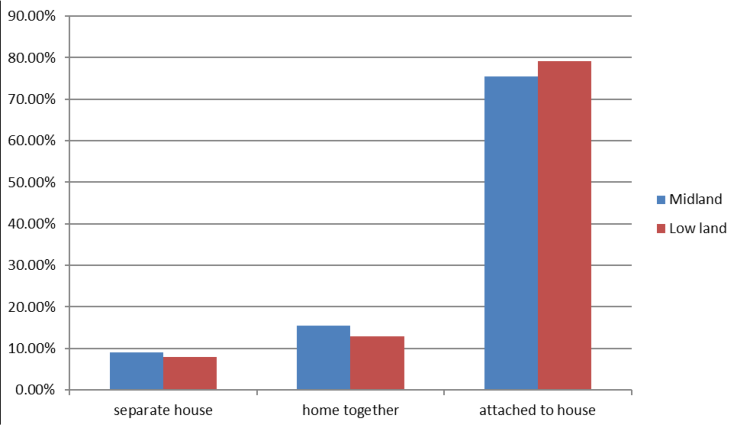 Figure 2
Introduction
In developing countries, including Ethiopia livestock production is mostly subsistence oriented and fulfills multiple functions [1] . The Ethiopian livestock population is estimated at 60.39 million heads of cattle, 31.32 million sheep, 32.74 million goats, 1.42 million camels, 2.01 million horses, 0.46 million mule, 8.85 million donkeys, and 56.53 million chickens [2] . In Ethiopia, livestock are source of food, family income, draft power and export earnings [3] . Ethiopia is ranked 1 st and 10 th in Africa and in the world respectively in livestock population [4] . Unfortunately, the contribution of the Ethiopian livestock to human nutrition, family income and export earnings is disproportionally very low. There has been a decline in per capita livestock product production and consumption in the country. The per capita consumption of meat was reported to be about 8kg per year which is mainly attributed to low productivity of the livestock subsector [5] . There are various factors that contribute for low productivity of the livestock which include socio economic and technical limitations like inadequate feed quality and quantity, poor feeding and health management [6,7] . The other contributing factors include low genetic potential, policy issues [8] , marketing and infrastructure that affect the livestock potentials [9] , institutional problems and problem of credit facilities and extension [10] . Among livestock, small ruminants particularly sheep play an important role in the economy of small scale farming communities, because of inherent risk involved in crop farming due to uncertainty of rainfall and occurrence of recurrent droughts [11] . The Ethiopian highland accounts for about 98 and 83% of the country's human and sheep population, respectively [12] . In-fact the large segment of the Ethiopian livestock are found in the highlands, characterized by mixed crop-livestock farming, high availability of crop residues and less risk of disease [2,13] Sheep have multipurpose function and contribute to the livelihood of a large number of small holder farmers [14] . In Ethiopia, Sheep production is the major source of food, cash income, saving, socio-cultural functions and manure (fertilizers) to the smallholder farmers [15] . A small number of NGOs, Donors and the Ethiopian government are involved in the implementation of small scale sheep fattening development projects in support of jobless and landless rural youth and vulnerable households. Donors and NGOs are mainly involved in training. The Ethiopian government is involved in the promotion of small scale sheep fattening (among others) in support of poverty alleviation and food security initiatives [14] . Thus, sheep fattening is found to be one of the most important strategy to create job and improve family income of the rural community. It is an effective means of job creation and poverty alleviation both in rural and urban areas, with the use of locally available feed resources and customized trainings [16,17] . Sheep fattening requires relatively low initial start-up capital [18] . It is common practice in different parts of the country, though the degree of fattening and resource base differs markedly. Fattening is generally profitable because the value per kilogram of live weight increases as both weight and condition increase [19] . Genji District of West Wollega Zone is not exception to this situation. This being the case major objective of this research is to assess and characterize small scale sheep fattening system practiced in Genji District of West Wollega Zone, Oromia, Ethiopia.
Materials and Method 2.1 Description of the Study Area and period
The study was carried out in Genji district of south west Wollega zone of Oromia regional state between the periods of December 2019 up to September 2020. It lies between 8 0 57, 30" and 90 7, 30"North latitude and 35 0
Sampling Technique
The study area was stratified into midland (altitude) (70%) and lowland (altitude) (30%) agro-ecologies, which ranges between 1420 and 2500 m.a.s.l. (GDLEPO, 2019-unpublished source). From the total 21 villages of the Districts, three and two Villages (total of five) were purposively selected from mid and low altitude respectively based on sheep production potential and accessibility. A total of 183 sheep owners (126 and 57) households (sheep producers) were randomly selected and interviewed from selected Villages of mid and low altitudes respectively. The minimum household sample size to consider for the study was determined using the following formula suggested by Thrusfield [20] .
Where n = sample size Z= standard normal deviation (1.96) for 95% CI P= is the estimated proportion of an attribute that is present in the population (P=0.138) q is 1-p i.e. (0.862) and e 2 is margin of error (0.05) 𝑛 0 = standard calculated sample population.
Data Collection Methods
A semi-structured and pretested questionnaire prepared in local language was used to collect data on sheep fattening practices. Secondary data were obtained from reports of the District Agricultural Development Office and other published and unpublished materials which used to augment the primary data. The collected data comprised of socio-economic characteristics of the respondents and sheep fattening practices.
Statistical Data Analysis
The collected data were coded and entered in to the computer Microsoft Excel spread sheet. Descriptive statistics were employed to describe the various variables including the socio economic status (Sex, age, marital status, religious and educational status) and sheep fattening practices. SPSS Version 20 was used in the analysis. Pearson Chi-square with absolute frequency and percentage was used for ranking of different levels within the group of variables. In all cases, the 95% of significance and confidence interval with 5% level of precision were used to declare the significant difference.
Results and Discussion
Results and Discussion
Socio-Economic Characteristics of the Households 3.1.1 Sex, Marital and Educational Status of the Respondents
The socio-economic characteristics of the sample respondents are shown in Table 1. The majority (91.3%) of the household heads involved in sheep production and fattening practices reported to have been married. This indicates that most of the respondents of this study were adults capable of guiding their families in activities essential to the mixed livestock and crop production system. This result is in agreement with that of [11] , who reported that 90.2% of households involved in sheep production and fattening activities across sub-sahara African countries were married. About 59% of the participating household members were males while 41% were females. The female household heads are either divorced or widowed. The results indicate that males are entitled to control most of the household's productive assets according to the societal customs and norms in the study area. The results of the current study was in agreement with that of [15] , who reported that the large proportion of male farmers is very crucial for transferring and adoption of technologies since men are mostly the decision makers in most African societies. On the contrary, 15.6% of female household heads was reported to have directly involved in sheep fattening activities in Harshin district of Somali Regional State [19] . About 49.2% of the households respondents involved in sheep production activities across all the surveyed agro-ecological areas reported to have attended basic education. About 31.1, 9.3 and 6.7% of the respondents completed primary, preparatory and secondary education, respectively. About 2.7% of the respondents were illiterate while 1% was reported to be either diploma or BSc holders (Table 1). The results generally indicated that significant number of the sample respondents involved in sheep production activities have basic educational background and able to read and write, which helps them to follow some instructions required to adopt agricultural technologies useful in the development of agricultural production and productivity. It is accepted that the education background of the households tend to have associated with agricultural productivity since educated farmers are better able to decode new production technology. Unlike the current result, [1] reported that the majority (67.4%) of the household heads in Metema were illiterate. Higher proportion of illiterate population is obviously could have negative impact on adoption and transfer of improved technologies to the communities. In contrary to the current study, [10] reported that 27.33% of the respondents neither write nor read in Chencha and Mirab Abaya Districts of Southern Ethiopia, indicating the imbalanced distribution of adult education across the country.
| Parameters | Categories | Lowland (n=57) | — | — | — | Midland (n=126) | — | — | — | — | — | Total (%) |
|---|---|---|---|---|---|---|---|---|---|---|---|---|
| L/Dibe | B/ Sicho | L/Genji | G/Dembi | I/wandari | ||||||||
| n | % | n | % | n | % | n | % | n | % | |||
| Sex | Male | 14 | 24.5 | 18 | 31.5 | 27 | 21.4 | 23 | 18.2 | 26 | 20.6 | 59.0 |
| Female | 16 | 28.3 | 9 | 15.7 | 14 | 11.1 | 19 | 15.0 | 17 | 13.4 | 41.0 | |
| Age | 20-30 | 3 | 5.2 | 1 | 1.7 | 2 | 1.5 | 1 | 0.7 | 4 | 3.1 | 6.0 |
| 31-45 | 18 | 31.5 | 18 | 31.5 | 30 | 23.8 | 29 | 23.7 | 27 | 21.4 | 66.7 | |
| 46-60 | 5 | 8.7 | 1 | 1.7 | 6 | 4.7 | 1 | 0.7 | 6 | 4.7 | 10.4 | |
| >60 | 4 | 7.0 | 7 | 12.2 | 3 | 2.3 | 11 | 8.7 | 6 | 4.7 | 16.9 | |
| Educational status | Basic edu. | 13 | 22.8 | 12 | 21.5 | 23 | 18.9 | 20 | 15.8 | 22 | 17.4 | 49.2 |
Table text extracted from the original PDF; superscript letters are shown inline. The original table image is below.
View original table image
Age and Religion of the Respondents
As depicted in Table 1, the majority (66.6%) of the sample respondents in the study areas reported to belong to the age group of 31-45 years for whom sheep fattening activities were considered as job opportunity in study area. Sheep fattening is an effective means of job creation and poverty alleviation both in rural and urban areas, with the use of locally available feed resources and customized trainings [16] . About 16.9% of the respondents were >60 years old who were also involved in sheep fattening activities. In agreement with the reports of Population communication (2014), the results of this study indicated that majority of the sample households belong to the active working age group of 15 to 64 years. Moreover, for older people, sheep keeping provide a coping strategy for retirement. In line with the results of the present study, [21] noted that the overall average age of the respondent household heads was 50 ±10.44 years, implying that the respondents were adults with a good experience in sheep farming. According to the results of the current study, about 10.4 and 6% of the households belong to the mean age group of 46-60 and 20-30 years respectively. The household heads in the age group of 41-60 years of age, do not want to go far from their family. Rather, they might prefer to look after and support their family with the available resources. In line with this study, [8] , reported that 33.3 and 30% of the household respondents of Hawassa belong to the age group of 41-50 and 51-60 years, respectively. About 87.7, 10.8 and 1.5% of the sample households in the current study were protestant Christians, Muslims and Orthodox Christians respectively, which do not affect sheep fattening activities. On the contrary [9] indicated that the majority of the respondents in Tigray were Orthodox Christians, and religion influences livestock consumption and marketing through festivities and fasting periods. This variation could be because of religious preference of societies. Average land holding per household in the study area was 2.24±0.07 ha (2.31±0.06 and 2.17±0.08 for the midland and lowland, respectively). There was no significant difference between the studied agro-ecologies (P>0.05) in mean landholding. There was significant difference (p<0.05) between the mid and lowlands in mean cattle and sheep holdings. Household in the lowlands own high number of livestock than those in the midland agro-ecology. The higher proportion of ram (2.80±0.13) across both mid and lowland agro-ecology clearly indicate the importance of sheep fattening i as means of household income and livelihood (Table 2).
| — | — | Agro ecology | — | — | — |
|---|---|---|---|---|---|
| Midland (N=126) | Lowland (N=57) | ||||
| Description | M±SE | M±SE | Overall M±SE | P-value | |
| Land per Household | 2.31±0.06 | 2.17±0.08 | 2.24±0.07 | Ns | |
| Livestock’s | Cattle | 8.7±0.28 | 9.08±0.41 | 8.81±0.23 | 0.02 |
| Sheep | 6.94±0.39 | 7.33±0.59 | 7.13±0.78 | 0.04 | |
| Goat | 4.14±0.27 | 4.76±0.41 | 4.33±0.23 | Ns | |
| Horse | 0.56±0.23 | 0.42±0.12 | 0.49±0.17 | Ns | |
| Mule | 0.47±0.18 | 0.12±0.44 | 0.71±0.19 | Ns | |
| Donkey | 2.46±0.13 | 2.50±0.16 | 6.67±0.24 | Ns | |
| Flock structure | Ram | 2.76+0.13 | 2.84+0.14 | 2.80±0.13 | Ns |
| Ewe | 1.59±0.10 | 2.35±0.13 | 1.97±0.11 | Ns | |
| Ram lamb | 1.19±0.04 | 1.46±0.10 | 1.32±0.07 | Ns | |
| Ram ewe | 1.40±0.12 | 0.72±0.22 | 1.06±0.17 | Ns |
Table text extracted from the original PDF; superscript letters are shown inline. The original table image is below.
View original table image
Sheep Fattening Practice in Genji District
Sheep Fattening Practice in Genji District
Fattening practices and breeds of sheep used for fattening
The overall practices of sheep fattening in the study were presented in Table 3. The results showed that about 45.4% of the sample respondents practice sheep fattening in the study area. This result agrees with that of [8] , who reported that in Fogera district about 44.3% of the households practiced sheep fattening. However, the current result is lower than that of [22] who reported that about 37.1% of respondents in urban and peri-urban areas of Debre-Berhan and Dessie areas practiced sheep fattening activities. About 44.2 and 47.9% of the sample households reported to have been involved in sheep fattening in the midland and lowland agro ecologies, respectively. About 18.2% of the midland household respondents involved in sheep fattening are resident of Imbiraro Awandari Villages, whereas; about 28.7% of the household respondents of the lowlands involved in sheep fattening are resident of Lelisa dibe. The reason for high sheep fattening practices in midland (Imbiraro Awandari) and lowland (Lelisa dibe) was the presence of Non-Governmental Organization (NGO) called Green land, which encourage and mobilize sheep production activities particularly fattening of home born lambs. The reasons for low proportion of the household respondents involved in sheep fattening practices in Midland (Genji dembi 12.6) and lowland (Busano Sicho 19.2%) was attributed to lack of awareness in sheep fattening activities. The results of the current study was in agreement with that of [7] , who indicated that small number of NGOs, Donor and the Ethiopian government are involved in the implementation of small scale poultry production and sheep fattening development projects in support of jobless and landless rural youth and vulnerable households. Local Horro breed of sheep was reported to be the breed of preference for fattening purpose. This is due to the fact that Horro breed is the most dominant and widely available sheep in the western part of the country. Among the indigenous sheep breeds, Horro sheep breed are reported to be large sized and superior to the other indigenous breeds of sheep in live body weight [23] . Horro sheep is a fat-tailed hairtype sheep with better growth potential compared with other indigenous breeds in Ethiopia [17] . In contrast to the results of the current study, [5] reported that farmers participating in rearing Washera, Farta and their crossbred have better preferences for Washera and Farta breeds.
| Parameters | Categories | Lowland=57 | — | — | — | — | — | Midland=126 | — | — | — | — | — | — | — | Total (%) |
|---|---|---|---|---|---|---|---|---|---|---|---|---|---|---|---|---|
| L/D | B/ Sicho | Total of lowland | L/Genji | G/Dembi | I/A | Total of midland | ||||||||||
| N | % | N | % | N | % | N | % | N | % | N | % | N | % | |||
| Practice sheep fattening | Yes | 16 | 28.7 | 11 | 19.2 | 27 | 47.9 | 17 | 13.4 | 16 | 12.6 | 23 | 18.2 | 56 | 44.2 | 45.4 |
| No | 14 | 24.5 | 16 | 28.7 | 30 | 52.1 | 24 | 19.4 | 26 | 20.6 | 20 | 15.8 | 70 | 55.8 | 54.6 | |
| Purpose of sheep fattening | Income source | 10 | 37.3 | 8 | 29.6 | 18 | 66.6 | 15 | 26.7 | 12 | 21.4 | 19 | 33.9 | 46 | 82.1 | 77.1 |
| Saving | 2 | 7.4 | 3 | 11.1 | 5 | 18.5 | 1 | 1.7 | 3 | 5.3 | 2 | 3.5 | 6 | 10.7 | 13.3 | |
| Job creation | 4 | 14.8 | 0 | 0.0 | 4 | 14.9 | 1 | 1.7 | 1 | 1.7 | 2 | 3.5 | 4 | 7.2 | 9.6 | |
| Sources of Fattening sheep | Home born | 14 | 51.8 | 5 | 18.5 | 19 | 70.4 | 13 | 23.2 | 12 | 21.4 | 19 | 33.9 | 44 | 78.5 | 75.9 |
| Purchased | 1 | 3.7 | 4 | 15.3 | 5 | 18.5 | 2 | 3.5 | 3 | 5.3 | 4 | 7.1 | 9 | 16.7 | 16.9 | |
| Loan | 1 | 3.7 | 1 | 3.7 | 2 | 7.4 | 2 | 3.5 | 1 | 1.7 | 0 | 0.0 | 3 | 5.3 | 6.0 | |
| Gift | 0 | 0.0 | 1 | 3.7 | 1 | 3.7 | 0 | 0.0 | 0 | 0.0 | 0 | 0.0 | 0 | 0.0 | 1.2 | |
| Preferred animal category for fattening | Castrated ram | 1 | 3.7 | 0 | 0.0 | 1 | 3.7 | 1 | 1.7 | 0 | 0.0 | 0 | 0.0 | 1 | 1.8 | 2.4 |
| Uncastrated ram | 14 | 51.8 | 10 | 37.3 | 24 | 88.9 | 13 | 23.2 | 14 | 25.0 | 21 | 37.5 | 48 | 85.7 | 86.7 | |
| Old ewe | 0 | 0.0 | 0 | 0.0 | 0 | 0.0 | 0 | 0.0 | 1 | 1.7 | 0 | 0.0 | 1 | 1.8 | 1.2 | |
| Unproductive | 1 | 3.7 | 1 | 3.7 | 2 | 7.4 | 3 | 5.3 | 1 | 1.7 | 2 | 3.6 | 6 | 10.7 | 9.6 | |
| Average age of fattened sheep | 1 yr | 0 | 0.0 | 1 | 3.7 | 1 | 3.7 | 2 | 3.5 | 2 | 3.6 | 1 | 1.7 | 5 | 8.9 | 7.2 |
| 1.5yrs | 8 | 29.6 | 5 | 18.5 | 13 | 48.2 | 9 | 16.7 | 9 | 16.7 | 15 | 28.8 | 33 | 58.9 | 55.4 | |
| 2 yrs | 4 | 14.8 | 4 | 14.8 | 8 | 29.6 | 4 | 7.1 | 4 | 7.1 | 4 | 7.1 | 12 | 21.4 | 24.1 | |
| 2.5 yrs | 2 | 7.4 | 0 | 0.0 | 2 | 7.4 | 1 | 1.7 | 1 | 1.7 | 1 | 1.7 | 3 | 5.4 | 6.0 | |
| 3 yrs | 2 | 7.4 | 1 | 3.7 | 3 | 11.1 | 1 | 1.7 | 0 | 0.0 | 2 | 3.6 | 3 | 5.4 | 7.2 |
Table text extracted from the original PDF; superscript letters are shown inline. The original table image is below.
View original table image
Purposes of sheep fattening
The results showed that about 82.1% of the sample households in the midland agro ecology and 66.6% households in lowland agro-ecology started sheep fattening for the purpose of generating family incomes (Table 3). These results were in agreement with that of [24,12] , who reported the same reason for starting sheep fattening in Ilu aba bora zone. The result also agrees with that of [1,24] , who reported that sheep fattening is initiated for the purpose of income generation in different parts of Ethiopia. About 10.7% and 18.5% of the households in the midland and lowland areas of the current study area reported to have started sheep fattening for saving purpose, respectively. The results of the current study was also in agreement to that of [21] , who reported that keeping livestock, especially sheep play a role as safety net that enables households to get quick income to settle urgent financial needs. As shown in Table 4, about 7.2 and 14.9% households in midland and lowlands respectively reported to have started sheep fattening for the purpose of creating job opportunity. These results were in agreement with that of [14] who indicated that sheep fattening is found to be one of the most important strategies to create job and improve the family income of the rural community. Fattening is generally profitable because the value per kilogram of live weight increases as both weight and condition increase [19]
| Agro ecology | — | — | — | — | — | — |
|---|---|---|---|---|---|---|
| Selection criteria | Midland | Lowland | ||||
| Sum | Index | Rank | Sum | Index | Rank | |
| Age | 246 | 0.203 | 2 | 108 | 0.202 | 2 |
| Body size | 245 | 0.202 | 3 | 102 | 0.191 | 4 |
| Health | 277 | 0.229 | 1 | 137 | 0.256 | 1 |
| Body condition | 182 | 0.150 | 4 | 104 | 0.194 | 3 |
| Marketing price | 94 | 0.078 | 6 | 34 | 0.064 | 5 |
| Color | 167 | 0.138 | 5 | 48 | 0.090 | 6 |
Table text extracted from the original PDF; superscript letters are shown inline. The original table image is below.
View original table image
Sources and type of sheep used for fattening
According to 75.9% of the responding households, the common source of sheep for fattening in the study area is home born rams. This shows the presence of sheep production potential in the study area especially in the midland. The sample households in the lowland areas also reported to keep home grown sheep for fattening purpose rather than buying from market. In agreement to the present finding, [25] in south western Ethiopia and [21] in Western Tigray reported that home born sheep are the major source of fattening. However, fatteners who do not participate in the sheep production, buy sheep from market when interested in starting fattening. Similar to the results of the current study, it was suggested that market is an important source of the flock in starting sheep fattening foundation stock [1] . About 3.7% of the household of lowland study area reported to have started fattening with the use of gift respectively. This result is in agreement with that of [26] , who indicated that gifts from different sources and inheritances from family were reported as important ways of building sheep flock for fattening. About 86.7% of the household respondents reported to have used uncastrated ram for fattening. About 9.6, 2.4 and 1.2% of the household respondents reported to have used unproductive, castrated ram and old female for fattening based on their customer preferences. In agreement with the results of the current study, [1,16] indicated that younger animals at finishing may have tender carcasses and greater market demand than fattened older animals. About 55.4, 24.1, 7.2 and 6% of the household respondents reported to have preference for fattening at an age of 1.5, 2.0, 3.0 and 2.5 years, respectively. In finishing fattened animals, the common experience of the fatteners was to fulfill the demand of the consumer. But the farmers have no knowledge and practice of measuring the actual weight of the fattened sheep and only depend on guessing or estimation. [5] , reported that similar age in which sheep preferred for fattening in Fogera district. In accordance with [27] indicated that an exaggerated age above 36 months could be regarded as fatigue meat by consumer in different agro ecological zones of Amhara region.
Selection criteria of sheep for fattening
Farmers' selection criteria for purchasing sheep for fattening in study area include health, age, purchase price, body size/frame, body condition and color (Table 4). Fatteners also use visual appraisal for selection of fattening sheep. They also consider body condition, skeletal frame, castration, breed, sex, weight and age of the animals for fattening [19] . Health condition was reported to be the first ranked selection criteria for fattening sheep in both mid and lowland agro ecologies of study area. Age was the second ranked selection criteria in mid and lowland areas. There is no practice of fattening castrated ram. Younger animals at finishing may have tender carcasses and greater market demand than fattened older animals. This needs to be determined through studies on consumer and market preferences in the Ethiopian context [1] . In contrast to results of the current study, in the urban areas of Debre-Berhan, the majority of the household respondents practice fattening of castrated sheep. In Dessie peri-urban areas, several household respondents fattened both castrated and intact sheep [22] . Body size, body condition, color and purchase price (in order of importance) are important selection criteria used in the midland areas. Body condition, Body size, purchase price and color ranked third, fourth, fifth and sixth in the lowlands. The results of the group discussions showed that pure black and pure white colors have less demand in the market across all the study sites. [27] reported similar criteria used for selecting sheep for fattening purpose in different agro ecologies of the Amhara region.
Number of sheep fattened per fattening cycle in Genji district
From the total sheep fatteners, 49.4% of the respondents reported to fatten 2-3 sheep per one cycle, whereas 37.3% 4-6 sheep per one cycle, and 13.3% reported to fatten >6 sheep per one cycle in study area. According to [8] , farmers on average fatten 3 sheep per fattening period in Fogera district. Due to major livestock production constraints like in adequate feed supply, lack of capital, land, disease, poor market infrastructure, lack of marketing support services and limited market information and etc., sheep fatteners in the study area could not participate in sheep fattening practice to their full potential [24] . There was no significant difference (P>0.05) in number of Fattened sheep across low and midland agro ecologies (Table 5)
| Management practices of fattening sheep | Categories | Lowland=27 | — | — | — | Midland=56 | — | — | — | — | — | Total % | X2 | P- value |
|---|---|---|---|---|---|---|---|---|---|---|---|---|---|---|
| L/Dibe | B/Sicho | L/Genji | G/Dembi | I/wandari | ||||||||||
| N | % | N | % | N | % | N | % | N | % | |||||
| Number of sheep fattened/ cycle | 2-3 | 12 | 44.5 | 5 | 18.5 | 8 | 14.3 | 11 | 19.6 | 5 | 8.9 | 49.4 | 21.822 | Ns |
| 4-6 | 3 | 11.1 | 5 | 18.5 | 4 | 4.8 | 3 | 5.3 | 16 | 28.6 | 37.3 | |||
| >6 | 1 | 3.7 | 1 | 3.7 | 5 | 6.0 | 2 | 3.6 | 2 | 3.6 | 13.3 | |||
| Total | 16 | 59.3 | 11 | 40.7 | 17 | 30.4 | 16 | 28.5 | 23 | 41.1 | 100 | |||
| Type of floor used for bedding | Well-arranged stone | 1 | 3.7 | 1 | 3.7 | 1 | 1.8 | 2 | 3.8 | 1 | 1.8 | 7.2 | 8.850 | Ns |
| Wooden | 10 | 37.0 | 10 | 37.0 | 11 | 19.6 | 13 | 23.2 | 19 | 33.9 | 75.9 | |||
| Earthen | 5 | 18.5 | 0 | 0.0 | 5 | 8.9 | 1 | 1.8 | 3 | 5.3 | 16.9 | |||
| Total | 16 | 59.2 | 11 | 40.7 | 17 | 30.4 | 16 | 28.6 | 23 | 41.0 | 100 |
Table text extracted from the original PDF; superscript letters are shown inline. The original table image is below.
View original table image
Types of housing for fattening sheep
The types of housing system used for fattening sheep in study area presented in Figure 1. According to the sample households in both agro-ecologies, the most frequently used housing system in the study area was a type of house constructed attached to the family dwelling. This finding is similar with that of [21,6,28] , who reported, farmers in urban areas of Ethiopia, use houses separated or attached to the family dwellings in accommodating fattening sheep. Some of interviewed households in the midland and lowland areas reported to house their sheep within the family dwelling together with human being and some construct separate house for their fattening sheep. However, respondents of the study area did not practice open yard housing without shade. [5] noted that good housing can determine productivity of fattening sheep by reducing stress, disease hazards and easing the management. The most commonly used type of floor for bedding material shown in Table 5 was wooden (75.9%) followed by earthen (without bedding material) (16.9%) and well-arranged stone for bedding (7.2%). In accordance with the finding of [29] who reported the dominant floor type of sheep during the dry and rainy seasons was both earthen and wooden type in Bure district.
Conclusion and Recommendations
Sheep fattening is important farming activities in the current study area (Genji). The district is known to have good population of sheep with the average flock number being 7 sheep per house hold. Significantly high number of sheep per household was identified in the mid agro-ecology than low land agro-ecology. In the current study it was identified that not all sheep owners are engaged in fattening sheep. Out of the 183 house hold that had sheep, only 45.4% were found to practice sheep fattening suggesting that the rest of the farmers may sell their sheep without fattening at any age or body condition. A range of management practices of sheep fattening by the small holder of the current study area were identified with some of them having scientific back ground. Extensive system, characterized by utilization of Horro sheep breeds on free grazing and seldom supplemented with the locally available feed types was the sole method of sheep fattening in the study area. Even if, this study area is known by sheep fattening practice, several management conditions such as housing and sources of water impede production and productivity not to gain as much as expected. Hence, such problems resolution may be very crucial in order to increase the productivity so as improve the livelihood of the small holder farmers of the study area. Therefore, based on the above conclusion, the following recommendations are forwarded: Sheep fatteners should be trained on some of their suboptimal management systems of the sheep. Since the number of sheep fattened is by far lower than sheep produced in the study area, government and other concerned bodies should provide training and awareness creation symposium to initiate sheep fattening practices for better productivity.
Figures and tables from the paper
References
30 in the original paper- Solomon G, Tegegne A, Gebremedhin B, Hoekstra D. Sheep and goat production and marketing systems in Ethiopia: Characteristics and strategies for improvement. IPMS Working Paper 23. Nairobi: ILRI 2010.
- CSA, Livestock and Livestock characteristics. Agricultural sample survey, 3 (Central statistical agency) Report, Addis Ababa, Ethiopia, 2013, 37-188.
- Yohannes D, Mengistu U, Tadesse Y, Solomon G. Sheep Production and Breeding Systems in North Western Lowlands of Amhara Region, Ethiopia: Implication for Conservation and Improvement of Gumz Sheep Breed. Open Journal of Animal Sciences 2017;7:179-197.
- Adisu M. Cattle Fattening, Constraints and Marketing System in North Western Ethiopia. World Vet. J 2016;6(2):59-65. Journal homepage: www.wvj.scienceline.com.
- Sebsibe A. Sheep and goat meat characteristics and quality. Sheep and Goat Production Handbook for Ethiopia. Ethiopian Sheep and Goats Productivity Improvement Program (ESGPIP), Addis Ababa, Ethiopia 2008, 323-328.
- Lijalem. Assessment of Beef Cattle fattening in selected districts of Hadiya Zone, Southern Ethiopia: Journal of Biology and Health care 2016;6(5):25-31.
- Solomon D. Comparative nutritive value of Atella and industrial brewers grains in chicken starter ration in Ethiopia. Livest. Res. Rural Dev. 2007;19(1):101-110.
- Gemeda D, Tibbo M, Aynalem H, Iniguez L, Okeyo AM, Rischkowsky B, et al. Participatory approaches to investigate breeding objectives of livestock keepers. Livestock Research for Rural Development 2010;22(4):56-62.
- Desta T, Yadav RK, Teferi A. Substitution of dried mulberry (Morus indica L.) leaf meal for concentrate mix on feed intake, digestibility, and body weight gain and carcass characteristics of Abergelle sheep. International Journal of Livestock Production 2017;8(4):48-55.
- Yenesew A, Solomon M, Azage T, Firew T. Assessment of sheep production system in Burie district, north western Ethiopia. Global journal of Agricultural research, European center for Research Training and Development UK 2013;1(2):29-47.
- Markos T. Livestock production constraints in a M2-2 sub-agro ecological zone with special reference to goat production opportunities and challenges of enhancing goat production in East Africa. Proceeding of a conference. Markel, R.C., Abebe, G. and Goetsch 2000.
- Tsedeke K. Production and Marketing of Sheep and Goats in Alaba, SNNPR. M.Sc. Thesis, Hawassa University, Hawassa, Ethiopia 2007, 174.
- Samuel MA, Jane W. Characterization of sheep fattening at small holder level in different agro-ecological zones of Amhara region, Ethiopia 2017.
- Shigdaf M, Zeleke M, Taye Asresu Y, Habtemariam A, Aynalem H. Traditional management system and farmers" perception on local sheep breeds (Washera and Farta) and their crosses in Amhara Region, Ethiopia. J Livestock Research for Rural Development 2012;24(4):22-28.
- Getachew M, Firew T, Yeshambel M. Sheep fattening practices in Fogera District, Amhara National Regional State, Ethiopia. Journal of Biology, Agri. and Health care 2017;7(15):33-39.
- Jaitner J, Sowe J, Secka-Njie E, Dempfle L. Ownership Pattern and Management Practices of Small Ruminants in the Gambia-Implications for a Breeding Program. Small Ruminant Research 2001;40:101-108.
- Edea Z. Characterization of Bonga and Horro indigenous sheep breeds of smallholders for designing community based breeding strategies in Ethiopia. MSc thesis, Haramaya University, Ethiopia 2008.
- Haile A, Dessie T, Rischkowsky B. Performance of indigenous sheep breeds managed under communitybased breeding programs in the highlands of Ethiopia: Preliminary results. Addis Ababa: ICARDA 2014.
- Ethiopian Sheep and Goat Productivity Improvement Program (ESGPIP) Export requirements for meat and live small ruminants. Technical bulletin 2011;47:11.
- Thrusfield M. Veterinary epidemiology. John Wiley & Sons 2018.
- Abraham H, Solomon G, Mengistu U. Begait goat production systems and breeding practices in Western Tigray, North Ethiopia. Open Journal of Animal Sciences 2017;7:523-521. https://doi.org/10.4236/ojas.2017.72016.
- Urgessa D, Duguma B, Demeke S, Tolamariam T. Sheep and Goat Production Systems in Ilu Abba Bora Zone of Oromia Regional State, Ethiopia: Feeding and Management Strategies. Global Veterinarian 2012;9(4):421-429.
- Fikru S, Gebeyew K. Sheep and Goat Production Systems in Degehabur Zone, Eastern Ethiopia: Challenge and Opportunities. JAdv Dairy Res 2015;3:134.
- Zelealem T, Anal AK, Gebrezgiher G. Assessment of the sheep production system of northern Ethiopia in relation to sustainable productivity and Sheep meat quality. Int. J. Adv. Biol. Res 2012;2(2):302-313.
- Yilkal T. Small Ruminant Production and Marketing: Constraints and Opportunities in Chencha and Mirab Abaya Districts, Southern Ethiopia Department of Animal Sciences, Arba Minch University, Ethiopia 2015
- Tesfaye G. Characterization of Menz and Afar indigenous sheep breeds of smallholders and pastoralists for designing community-based breeding strategies in Ethiopia. An Msc Thesis Presented to School of Graduate Studies, Haramaya University Ethiopia, and 2008, 75.
- Misra AK. Contingency planning for feeding and management of livestock during drought. In: K D Sharma and K S Ramasastri (Editors) Drought Management. Allied Publishers Pvt. Ltd., New Delhi 2005, 276-286.
- Yisehak K, Taye T, Aynalem H. Characteristics and Determinants of Livestock Production in Jimma Zone/Southwestern Ethiopia. Afri. J. Bas. & Ap.Sci. 2013;5(2):69-81.
- Yohannes D, Mengistu U, Tadesse Y, Solomon G. Sheep Production and Breeding Systems in North Western Lowlands of Amhara Region, Ethiopia: Implication for Conservation and Improvement of Gumz Sheep Breed. Open Journal of Animal Sciences 2017;7:179-197.
- Wude T. Sheep Production Systems in Urban and PeriUrban areas of Debre-Berhan and Dessie, Ethiopia, and Performance of Lambs Fed Different Combinations of Wheat Bran and Lentil Screening Dissertation Ref. No. 23 2017.
Cited by 4
From OpenAlex, OpenCitations and reference lists read by Scinovex
- Effect of Processed Coffee Husk on Feed Intake, Nutrient Digestibility, Body Weight Changes and Economic Feasibility of Bonga Sheep Fed on Natural Pasture Hay as a Basal Diet ↗
Lidya Marew, Fentahun Meheret, Bimrew Asmare · Veterinary Medicine and Science · 2024
BACKGROUND: Ethiopia is one of the world's coffee producers, generating about 192,000 metric tonnes of coffee husks annually as by-products. The material can be used for ruminant diets to improve the nutrient utilisation of animals. However, coffee husk has toxic compounds, which can be minimised through different processing methods. Though the above techniques can minimise the toxicity level of coffee…
❝ 5PDF - Breeding objectives, selection criteria and reproductive performance of indigenous sheep in west Wallaga zone, Oromia, Ethiopia ↗
Amanuel Bekuma, Tekalign Tesfaye Tadesse · Journal of Applied Animal Research · 2025
The study aimed to assess the breeding goals, selection criteria and reproductive performance of indigenous sheep in west Wallaga zone, Ethiopia. A qualitative survey approach through questionnaire administration was used to collect data. The analysis primarily involved descriptive statistics and chi-square tests. Based on index values, sheep were primarily produced for income generation, followed by meat production and saving, but…
❝ 3PDF - A hedonic pricing approach to valuing Washera ram crossbreeding for sustainable genetic improvement of Farta sheep in Ethiopia ↗
Abiye Shenkut Abebe · Discover Sustainability · 2026
This study employed a hedonic pricing model to determine whether Washera-Farta crossbreds offer an economic advantage compared to pure Farta sheep in the local markets of northwest Ethiopia. Data on buyer characteristics and sheep attributes were collected between 2022 and 2023 from 242 traded sheep in the Lay Gayint district. Sheep prices were log-transformed to ensure homoskedasticity of the error…
❝ 0PDF - Characterization of Washera sheep husbandry practices under smallholder production systems in north-west Ethiopia ↗
Mezgebu Getaneh, Aynalem Haile, Kefyalew Alemayehu, Tesfaye Getachew, Netsanet Beyero, Esubalew Adimasu et al. · Tropical Animal Health and Production · 2026
❝ 0