
Research article · 2023 · Full text
International Journal of Veterinary Sciences and Animal HusbandryAzolla: An alternative feed for sustainable livestock production
Volume 8(3S) · Pages 10–16 · DOI: 10.22271/veterinary.2023.v8.i3sa.595 ↗
Research areasBiological Control of Invasive Species
Abstract
Author-writtenThis review paper aims to analyse the possibility of Azolla as an alternative feed source for livestock and poultry production. The manuscript has been prepared by reviewing a plethora of available literatures related to this topic. The report of 20th livestock census-2019 states that, India holds around 20% of world’s livestock population, which is precisely 535.82 million. The population has increased by 4. 6% than previous livestock census-2012. Feed and fodder are the basis of existence of livestock and birds. The feed cost alone accounts around 70% of the total cost of livestock production. In a first changing world, the prices of animal feed i.e. both green fodder and concentrate are increasing day by day. Keeping this in mind, it is imperative to find an alternative feed source which will economise the cost of production and will be helpful towards a sustainable livestock and poultry production. Azolla is a fern that grows faster in fresh water in both temperate and tropical countries. It can be fed to various livestock and poultry birds without any deleterious effects. Various studies have reported that there was an overall increase of 15- 20% milk yield in cattle and buffalo upon feeding of 1.5-2 kg of Azolla in combination with daily ration. In case of meat animals and birds like pigs, rabbits, sheep, goats, ducks, quails, chickens etc., improved growth performances have been reported, indicating the possibility of using Azolla as a feed ingredient.
Summary
Source-checkedPlain-language reading of the full paper, prepared with AI and checked against the text. Each point links to the authors' own words.
Why it matters
- Feed costs represent approximately 70% of the total expenses involved in livestock production, making the search for cheaper alternatives economically critical. View evidence ↗
- India faces significant fodder shortages, with deficits of 44% in concentrate, 35.6% in green fodder, and 10.95% in dry crop residues. View evidence ↗
- Azolla is a suitable feed substitute because it is rich in proteins, vitamins, probiotics, biopolymers, and essential minerals such as iron, calcium, and phosphorus. View evidence ↗
The question
- The objective of this review is to analyze whether Azolla can serve as a viable alternative feed source for poultry and livestock production. View evidence ↗
What they did
- The authors conducted this study by reviewing a wide range of existing literature related to the use of Azolla in animal feed. View evidence ↗
What they found
- Feeding cattle and buffalo 1.5-2 kg of Azolla daily alongside their regular ration has been reported to increase milk yield by 15-20%. View evidence ↗
- In heifers, including dried Azolla at a 5% level in the diet increased average daily gain by 15.7% and feed conversion efficiency by 20%. View evidence ↗
- For Black Bengal kids, dried Azolla can replace up to 20% of the concentrate mixture; however, a 50% replacement level caused sickness and profuse diarrhea. View evidence ↗
- In pigs, the optimal replacement rates for soybean protein with Azolla are 10% during the growing phase and 20% during the finishing phase. View evidence ↗
- In Japanese quails, a 5% Azolla diet reduced feed cost per chick to 8.13, providing a 1.69% saving compared to the control group. View evidence ↗
- By the 14th week, Nirbhik poultry birds fed Azolla reached a body weight of 1810 ± 12.5 g, significantly higher than the 1270 ± 12.9 g achieved by non-Azolla fed birds. View evidence ↗
- In broiler chicks, increasing Azolla inclusion from 0% to 5% increased net profit per bird from Rs. 10.84 to Rs. 19.22. View evidence ↗
- Supplementing concentrate feed with 7.5% dried Azolla in Vencobb broiler chicks increased body weight by 2.6% (1.99 kg) compared to the control (1.93 kg). View evidence ↗
What it means
- The authors conclude that Azolla offers significant potential as an alternative feed to improve production performance and reduce costs, supporting sustainable livestock and poultry farming. View evidence ↗
- The authors recommend strategic initiatives, including training farmers and unemployed youth on the advantages of using Azolla as a protein feed. View evidence ↗
Visual summary
3 visualsIllustrations explain the paper; charts are replotted from the paper's own table values.
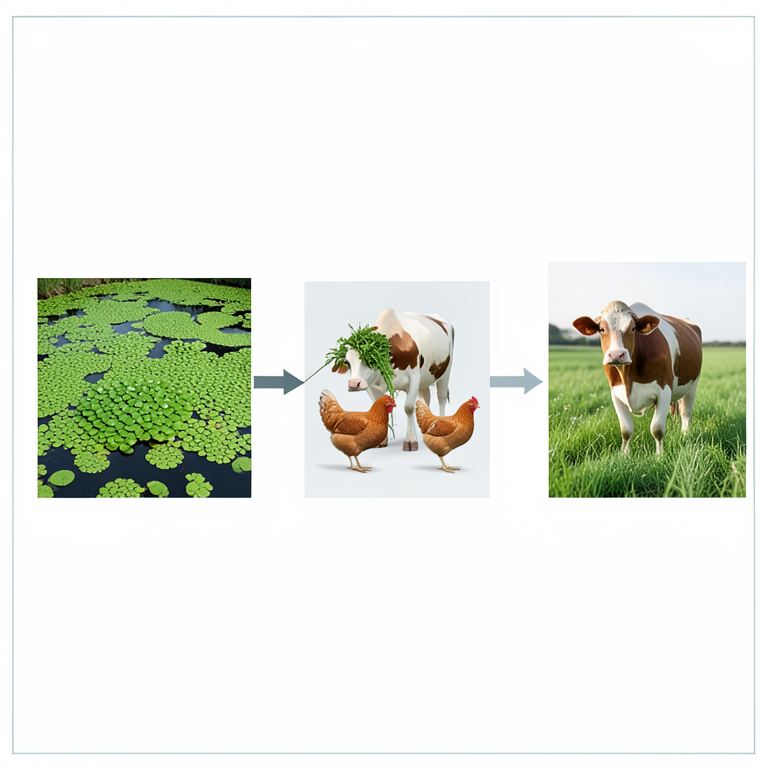
The Sustainable Feed Cycle
AI-generated conceptual illustration (Azolla aquatic fern, dairy cows, and broiler chickens). It explains the idea and does not show study data.
View source evidence ↗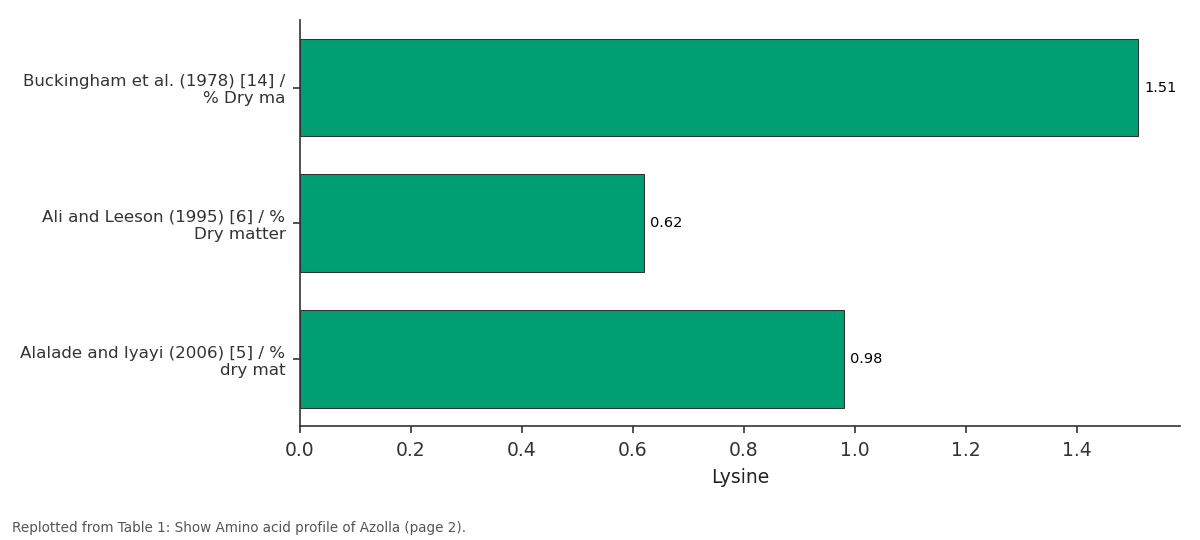
Lysine: Buckingham et al.... vs Ali and Leeson (1995)... vs Alalade and Iyayi...
Replotted from Table 1 (page 2) of the original paper. Every bar is the paper's own table value.
View source evidence ↗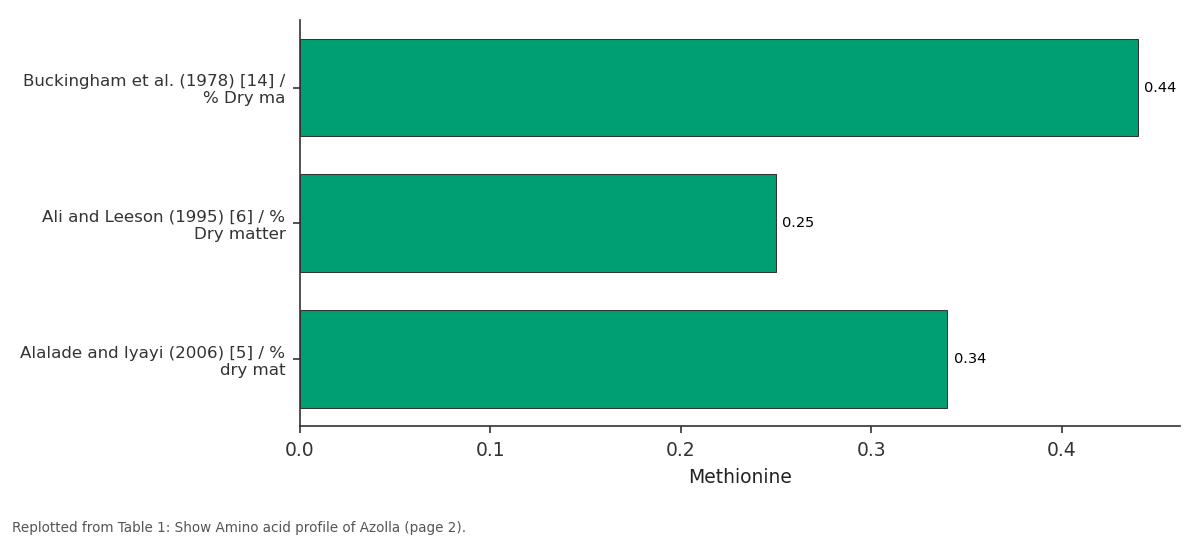
Methionine: Buckingham et al.... vs Ali and Leeson (1995)... vs Alalade and Iyayi...
Replotted from Table 1 (page 2) of the original paper. Every bar is the paper's own table value.
View source evidence ↗Figures & tables
From the original paper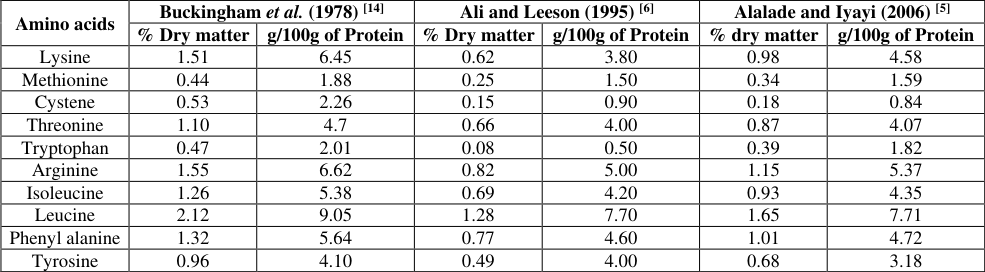 Table 1
Introduction
The fodder production in the country is not adequate to meet the dietary need of livestock. The forages offered are mostly of poor in quality, which are hindrance in better production of animals. According to the report of IGFRI Vision, 2050. India shows a net deficit of 44% concentrate, 35. 6% green fodder and 10.95% dry crop residues at the current situation [31] . In recent years, the cost of concentrate, dry crop residues and green fodder has also skyrocketed, which has forced the dairy farmers to find an alternative feed source for the livestock species. For sustainable dairy and poultry production, it is imperative to find an unconventional and cheaper source of feed to curtail the cost of production. Among various alternative protein feed for livestock and poultry; aquatic plants, which have traditionally been perceived as a nuisance, are increasingly being recognised as a cheap and harmless animal feed resource, the world over. Azolla, a freshwater fern is considered as one of the world's fastest-growing aquatic macrophytes (Collinson et al., 2010) [21] . Proteins, vitamins, probiotics, biopolymers and minerals like iron, calcium, magnesium, potassium, phosphorus, manganese etc. are abundantly present in Azolla which makes it a suitable feed substitute for livestock and poultry (Pillai et al., 2002) [49] . Azolla is assumed to be a potential alternative protein source that can be used as feed for animals for achieving sustainability, which is economically and environmentally viable (Kollah et al., 2016) [36] . Saunders and Fowler (1993) [62] . Revised the taxonomical position of Azolla in which it belonged to monotypic family "Azollaceae" and included two sections namely, Azolla and Rhizosperma. Five species of Azolla such as A. Filiculoides, A. Rubra, A. Mexicana, A. Caroliniana and A. Microphyla come under the section Azolla and section Rhizosperma including A. Nilotica and A. Pinnata.
Taxonomy, Morphology of Azolla
The two varieties of A. Pinnata were recognized as A. Pinnata var. pinnata, and A. Pinnata var. imbricata. Azolla was a dichotomously branched free-floating fern. The length of typical Indian Azolla sp. is 1.5 to 3.0 cm and breadth is 1 to 2 cm and was typically triangular in shape (Raja et al., 2012) [53] .
Cultivation of Azolla
Various researchers have worked on the cultivation of Azolla at different times. Pillai et al. (2005) [50] opined that, from a pit of 2 x 2 x 0.2 m, 500-600 g of fresh Azolla could be harvested daily after 10-15 days of inoculation of culture into the pit. Chander (2011) [17] reported that the plant (Azolla) could produce 9 tonnes of protein per hectare of pond per year. The maximum yield was about one kg of fresh Azolla (mean yield per day in a season) from a pond of 6 x 4 feet in size (Giridhar et al., 2012) [27] . Acharya et al. (2014) [2] found out that, pits of size 8ft × 5ft with depths of 10 inches when inoculated with pure culture of Azolla pinnata at the rate of 0.5 to 1 kg per pit, it was completely filled with Azolla biomass in about 10-15 days. To maintain the production level at the rate 1 kg/pit/day, 500g of cow dung along with 10g super-phosphate were added in the pit once in every four days. Cherryl et al. (2014) [19] inoculated fresh Azolla in pits of 5 m x 4m (20 m 2 ) with 0.3 m depth (1ft) and found that the pit was completely filled within 7 days from which Azolla was harvested every week. Several authors have also written about the importance of light, Ph, humidity, nitrogen (N) and phosphorous (P) for the growth of Azolla. Free-floating water of depth 5 to 12 cm is the best medium for Azolla (Cabangon et al., 2015) [15]. The growth of Azolla is rapid in the first two weeks and thereafter it tends to decrease (Watanabe et al., 1986) [74] . Among various factors, phosphorous is considered to be an important factor for the growth of Azolla and the importance has been widely documented in several literatures (K¨osesakal et al 2019; Immanuel et al, 2019; Sadeghi et al 2013) [37,32,59] . Azolla can grow without nitrogenous fertilizer if sufficient quantity of phosphorous is applied to water (Costa et al., 2009) [22] . So, it is inferred that a high concentration of phosphorous i.e. above 0.1 mg /kg is required for the growth of Azolla (Watanabe et al., 1986) [74] . Phosphorous deficiency can be indicated by reddish-brown colouration in the pond and that results in death of root (Adhikari et al., 2020) [3] . Intensity of light affects the growth of Azolla and the optimum light intensity is 20,000 lux, (Goala et al., 2021) [28] . Where light intensity below 1500 lux retards the growth of Azolla. (Costa et al., 2009) [22] . Besides light intensity, temperature also greatly influences the growth and nitrogenfixing ability of Azolla (Watanabe et al., 1983) [74] . The optimum temperature and relative humidity required for the growth of Azolla is 18 to 28 °C and 70-75% respectively (Kosesakal et al., 2019; Costa et al., 2009) [37,22] . Whereas, Indira et al. (2014) [33] reported that the optimum conditions for culturing of Azolla a: Maximum temperature 34 [30] . The suitable pH required for growth of Azolla is 4.5 to 7.5 (Moretti et al., 1988) [44] whereas the pH range can be varied between 3.5 to 10 provided all essential nutrients are adequate (Cary et al., 1992) [16] .
Nutritive value and Chemical composition of Azolla
Many researchers have found out the chemical composition of Azolla at different times and some of them have been given as below. Acharya et al. (2014) [2] [19] : DM -89.73%, Organic matter -75.73%, CP -14.7, CF -23.49%, EE -3.7%, total ash -24.26%, acid insoluble ash-7.94%, calcium -2.58%, phosphorus. -0.26%. Ahmed et al. (2016) [4] : CP -24.1%, CF -15.1%, EE -3.75%, Ash-16.8%, NFE -40.25%, phosphorus -0.47% and calcium -2.18% Anhita, et al. (2016) [7] : DM -4.7%, Organic Matter -82.66%, CP -22.48%, CF -14.7%, EE -4.5%, ash -17.34%, NFE -40.98%, and minerals in ppm was phosphorus -0.34, calcium-1.64, potassium -2.71, copper -9.1, manganese -2418, zinc -325, iron -1569, cobalt -8.11, chromium -5.06, boron -31, nickel -5.33, lead -8.1, cadmium -1.2. Sihag, et al. (2018) [66] : Azolla meal contains DM -22.93%, CP -11.63%, EE -2.8%, ash -15.59%, NFE -47.03%, NDF -40.47%, ADF -32.55% and% hemicellulose -7.92. Bhatt, et al. (2020) [12] : 9.95% DM, 79.70%OM, 26.50% CP, 3.90% EE, 44.28% NDF, 39.4% ADF and minerals profile was 2.41% potassium, 1.51% calcium, 2170 ppm manganese, 4.1 ppm copper, 230 ppm zinc, 1100 ppm iron, 7.1 ppm cobalt, 2.01 ppm chromium and 6.1 ppm nickel. El-Fadel et al. (2020) [26] : Azolla meal contains 85.08% DM, 72.86% OM, 18.58% CP, 32.17% CF, 3.35% EE, 27.14% ash and 18.76% NFE.
Amino acid profile of Azolla
The amino acid profile of Azolla as determined by Buckingham et al. (1978) [14] , Ali and Leeson (1995) [6] and Alalade and Iyayi (2006) [5] were as follows. [14] Ali and Leeson (1995) [6] Alalade and Iyayi (2006) [
Azolla is a feed ingredient in various livestock
Azolla is suitable to feed cattle, pigs, rabbits, chickens, ducks and fish etc due to its high protein and nutritional values (Van Hove, 1989) [73] .
Cattle and Buffalo
Indira et al. (2009) [33] experimented on twelve male buffalo calves by feeding them Azolla as a 50% replacement of GNC nitrogen of control diet. Higher average daily gain was recorded in experimental group. Kumar et al. (2012) [38] conducted a metabolism trial in which they fed sun-dried Azolla (Azolla pinnata) meal in the concentrate mixture of graded Murrah buffalo bulls (301.96 ± 6.98 kg) and concluded that Azolla meal could replace about 25 per cent of the total protein in the concentrate mixture without any deleterious effects. Gouri et al. (2012) [29] gave Azolla to dairy cows which replaced 15-20% dry matter in the ration and there was a 15-20% increase in the milk yield. Low lignin and high protein content of Azolla might be the cause for increase in milk yield. Cross-bred cattle showed an increase in daily milk yield, FCM by 11. 2% and 12.5% respectively when supplied with Azolla (2kg/day) (Chatterjee et al. 2013) [18] . Dried Azolla at a 5% level inclusion in the diet of heifers facilitated average daily gain (ADG) by 15.7% and improved feed conversion efficiency (FCE) by 20% (Roy, et al. 2016) [58] . Many researchers observed an increasing trend in milk production with supplementation of Azolla. Milk yield increased by 20.96% and 16.9% in cattle and buffalo respectively when they were supplied with 1.5-2 kg of Azolla per day (Mathur et al., 2013) [42] . The milk production in buffalo increased by 16.25% when fresh Azolla at 1.5 kg/ day was incorporated into their diet along with cottonseed cake (Meena et al., 2017) [43] . Rawat et al. (2015) [55] supplemented Azolla: Concentrate at a 1:1 ratio in the diets of crossbred cows and found out an increase in milk yield by 11.85%. So, Azolla can be used as feed supplement in the diet of dairy cows as an unconventional feed to increase milk production by 7-13%, (Kumar, et al. 2020) [39] .
Goat and Sheep
Various workers have also carried out their experiments to see effect of supplementation of Azolla on sheep and goats.
Tamang and Samanta (1993) [72] provided sun-dried Azolla in Black Bengal kids at 0, 10, 20 or 50% levels replacing concentrate mixture on an equal-weight basis. The group fed with 50% Azolla was discarded due to profuse diarrhoea and sickness. So, it was concluded that dried Azolla up to 20% of the concentrate mixture could be incorporated of diet of kids.
Regarding the optimal replacement of Azolla in the diet of Jalauni lambs, it was found that Azolla could replace 25% of mustard cake protein in the diet of particular species without any effects on nutrients digestibility and utilization (Das et al., 2017) [23] . To economize feeding of goats, sundried Azolla up to 15% can be included in the concentrated mixture of the diet without any adverse effects (Sihag, et al., 2017) [66] . Further, it was observed from another study that, the inclusion of Azolla meal at 10% level (from the required% of protein) in the concentrate mixture did not affect DM intake, ADG, and feed efficiency of Mecheri lambs (Sankar, et al., 2020) [61] .
Pigs
Becerra et al.( 1990) [11] conducted a trial on growing-fattening pigs where Azolla filiculoides was fed at 0, 15 or 30% levels which partially replaced soybean in the protein-based diet (200 g protein/animal/daily) with fresh sugar cane juice. Due to the increase in the amount of Azolla in the diet, the performance of pigs decreased in the growing phase but, they grew faster than the control group in the finishing phase as there was a strong tendency for compensatory growth. Duran (1994) [25] carried out an experiment in pigs on the replacement of soya bean protein by fresh Azolla at the rate of 0, 10, 20 or 30% in pigs. Overall weight gain and feed dry matter conversion was in the order of 10%>20%>0%>30% replacement rate of Azolla for soya bean. The optimum replacement rates of Azolla were found to be 10% in the growing phase and 20% in the finishing phase.
Rabbit
Retno Lukiwati, et al. (2008) [56] conducted an experiment on feeding 90% fresh Azolla to suckling kits, young rabbits and pregnant rabbits for 2 weeks on an average of 360-400g /head/day. Suckling kits showed 0% mortality and better growth with no occurrence of diarrhoea. Better performance along with no incidence of diarrhoea or hair fall was observed in young rabbits. Average daily gain and feed conversion ratio (FCR) of white New Zealand rabbits fed diets containing 0, 10, and 20% Azolla, as a replacement of the protein diet, was higher for 10% over 0 and 20% (Sireesha et al. 2017) [67] .
Azolla as a feed ingredient in Poultry Ducks
Lawas et al. (1998) [40] utilized fresh Azolla to evaluate the performance of laying Mallard ducks fed with a normal feeding allowance of 150 g commercial feed/head per day or 75 g of commercial feed + ad libitum feeding of Azolla/head per day and the result showed that Azolla when substituted 50 percent of commercial feeds on ad libitum system of feeding could provide enough nutrient. Samudera and Hidayatullah (2008) [60] conducted an experiment on male Alabio ducks to find out the effect of Azolla on skin colour, abdomen fat and carcass fat. The treatment levels of Azolla pinnata flour were 0 (A0); 7. [10] reported that 5% Azolla-fed group resulted in the highest profit per bird followed by the control group and opined that the higher profit was due to the higher body weight of the birds belonging to those groups. Sujatha et al. (2009) [70] carried out a trial for a period of 13 weeks in laying ducks of 20 weeks old with supplementation of Azolla @ 200 g/bird/day as 30% replacement of concentrate feed compared with control group. It was concluded that Azolla could be safely supplemented in the feed of laying ducks at the backyard level with a significant savings in feed cost. Sujatha et al. (2013) [71] opined that fresh Azolla could replace commercial feed up to a level of 30 percent with the savings in feed cost of Rs.1 per duck per day by supplementing fresh Azolla in the feed of backyard ducks at the rate of 200g per duck per day. Acharya et al. (2014) [2] conducted a study on White-Pekin broiler ducks and brought a conclusion that fresh Azolla at 5 or 10% level can be included in the diet of the same to reduce feed cost. Azolla-fed at 10% level resulted in a profit of around Rs. 10 per kg live weight sold, a fact which must be appreciated, by any standard, as a substantial economic gain.
Quail
Shamna, et al. (2013) [64] conducted an experiment for six weeks on day-old Japanese quails with four different levels of Azolla pinnata in the diet, viz., 0%, 2.5%, 5% and 7.5%. As far as economics was concerned, 5% supplementation of Azolla was more economical than the other groups and beyond this level there was depression in broiler characteristics. The 5% Azolla group in diet had lower feed cost per chick (8.13) over the chicks on normal diet resulting in higher savings (1.69%) over the control group. On the very next year, Shamna et al. (2014) [65] found significant (p≤0.05) depression in average feed conversion efficiency of the Japanese quail (Coturnix coturnix japonica) at 6 weeks of age in groups fed with 7.5% dried Azolla.
Chicken Layers
Alalade and Iyayi (2007) [5] conducted an experiment in 8week-old Nera brown pullets with incorporation of Azolla meal in their grower diet at 0, 5, 10 or 15% level for a period of 10 weeks. These results indicated that Azolla meal could be incorporated in diets of growing pullets up to 15% without jeopardizing health and subsequent laying performance. In contrast, Khatun and co-workers (2008) [35] in a 16 weeks study period found that feeding of dried Azolla at a level of 15% in the diet of commercial layers could not affect egg production performance of the laying hens. Namra et al.
(2010) [47] conducted an experiment to study the impact of feeding restricted diets supplemented with free fresh Azolla on performance and economic efficiency of Fayoumi growing chicks and it was concluded that fresh Azolla might be offered to the grower chicks with restricted diets, to obtain the best economical efficiency. Rai, et al. (2013) [52] conducted a study in semi-range system on dual-type Nirbhik and egg-type Shyama which are two different strains of poultry birds. On 14 th week of experiment, the Nirbhik birds that consumed Azolla pinnata as feed attained 1810 ± 12.5 g body weight compared to non-Azolla fed Nirbhik birds which achieved 1270±12.9 g in the same time. The Shyama birds fed on Azolla produced higher number of eggs (197.6 ± 3.2) in 72 weeks in comparison to 138.4 ± 3.1 eggs of non-Azolla-fed birds. Sujatha et al. (2013) [71] carried a feeding trail to know the production performances in Nicobari fowl. The control group was given commercial feed (basal diet) @ 120 g per chick per day, while the experimental group was given raw Azolla, @ 200 g per chick per day in separate feeder, in addition to 120 g of basal diet, from 45-60 weeks. Azolla supplementation ultimately led to a feed cost savings of 0.76 per egg per day over control in Nicobari fowl production. Boitai and colleagues (2018) [13] in their 8 weeks study on Vanaraja laying hens found that the addition of 10% Azolla meal in the diet of these birds did not affect egg quality indices like albumen, yolk, shell percentage and egg qualities like haugh unit score and shell thickness. However, there was no adverse effect on egg production.
Broilers
Several workers have given Azolla as a feed supplement in the diet of broilers to see the overall performance of the birds. Sittigaipong (1996) [68] concluded that Azolla pinnata had no adverse effect on the performance of broilers at the level of 2-8 percent in the diet and therefore, could be used in the broiler ration effectively. Parthasarathy et al. (2001) [48] opined that the incorporation of Azolla as a feed ingredient at 5% level in broiler ration could provide satisfactory economic return. Feed conversion ratio and dressing percentage were significantly higher (p<0.01) in broiler birds on diet with 5% Azolla meal (Basak et al., 2002) [10] . Namra et al. (2003, b) [46] studied on Arbor Acre broiler chicks to assess the efficiency of replacement of yellow corn and soya bean meal diet with dried Azolla at 0%, 2.5%, 5%, 7.5% or 10%, on the biochemical parameters and observed that there was no adverse effect on biochemical components of blood due to feeding of diet containing dried Azolla up to 10% level. Dhumal et al (2009) [24] fed Azolla meal at 0, 2.5 or 5% levels as partial replacement of soya bean meal in their diet to commercial Vencobb broiler chicks for 6 weeks, and found improved Ab titre values in 2.5% or 5% Azolla fed groups (293.33) as compared to the control group (266.67). Economics of production also increased when Azolla was used at 5% level. The net profit per bird for 0, 2.5 and 5% treatment groups were found to be Rs. 10.84, 15.64 and 19.22, respectively. There was also report regarding lower cholesterol content in serum and meat of broiler birds when they were fed with 4. 5% Azolla in the diet without any deleterious effect on production performance (Balaji et al., 2009; Balaji et al., 2010) [8,9] . A study was conducted by Prabina and Kumar (2010) [51] made a study in Vencobb broiler chicks to explore the potential of dried Azolla hybrid, "Rong-Ping " (A. Microphylla X A. Filiculoides) as a feed supplement in concentrate feed at 7.5 or 10% level of inclusion. Supplementation of the concentrate feed with dried Azolla at 7.5% resulted in 2.6% increase in body weight (1.99 kg) per head over control (1.93). The antibody tire value against Ranikette virus was higher in birds that were administered with dried Azolla at 10% with a mean value of 32 followed by 21 in the birds which took dried Azolla at 7.5%. So, improved antibody tire value demonstrates immune potentiating effect of Azolla as a feed supplement in the diet of poultry birds. Chichilichi et al. (2013) [20] studied the effect of Azolla on the growth and performance of commercial broiler chicken subjected to six dietary treatments (isocaloric and isonitrogenous) from day-old to six weeks. It was concluded that substitution of 5% dietary protein by Azolla resulted in favourable growth, feed efficiency and economics of production. In another study, when dietary fresh Azolla, as a protein substitute was given to vanaraja chicken, it was found that protein could be substituted by Azolla up to 15%, resulting in higher weight gain and feed efficiency without any deleterious effect. Feed cost of production was reduced leading to a substantial increase in profit margin also (Seth et al., 2013) [63] . Naghshi et al. (2014) [45] conducted a study in which they supplied a control diet of corn-soybean with no Azolla and diets containing 5, 10 and 15% of Azolla. The best feed conversion ratio was found to be diets containing 5% Azolla. Joysowal and co-workers (2018) [34] observed that incorporation of Azolla by replacing fish meal as a protein source at a level of 5-10% of the diet gave rise to increased body weight and higher net returns per bird. Mahanthesh and other researchers (2018) [41] found that inclusion of Azolla by 30% (w/w) along with 70% commercial feed helped to improve the FCR and the average body weight in broiler birds whereas, cost of production and mortality of birds were decreased in comparison to those birds which were grown with feeding commercial feed alone. In another experiment, Rana et al. (2020) [54] observed that 5% Azolla inclusion, though, did not significantly influence the proximate composition of broiler meat but, had significant (p≤0.05) effect on overall acceptability of cooked meat, breast meat yield and cooking yield. Abdelatty and co-workers (2020) [1] observed that inclusion of 5-10% Azolla meal in the diet of broilers did not affect the carcass characteristics i.e. the dressing percentage, weight of wing, breast and thigh. But, the Azolla supplement significantly improved the redness and juiciness of breast meat. Riaz and co-workers (2022) [57] observed an improved egg weight, egg production, performance index, egg shape index and feed conversion ratio in laying geese when offered with Azolla-based diets.
Conclusion and way forward
Aquatic plant, free-floating fern Azolla is a good source of protein as it contained almost all essential amino acids, minerals and appreciable quantities of vitamin A and vitamin B 12. In this article, significance of Azolla in livestock feeding has been demonstrated by many scientists across the globe indicating the possibility of using Azolla as a feed ingredient. Due to its high nutritional values and protein content, Azolla is a promising feed supplement for variety of animals and birds depending on its inclusion percentage in feed of different species. So, it can be inferred that Azolla has vast opportunity as an alternative feed for livestock and poultry to improve the production performance, reduce the cost of feed and ultimately will be helpful for sustainable livestock and poultry production. Accordingly, strategic initiatives could focus on, but not limited to: a) Training of farmers and unemployed youth regarding advantage of using Azolla as an alternative protein feed for livestock and birds. b) Testing and evaluating the effectiveness of different species of Azolla in field conditions in different agroclimatic zone in India. c) Growing Azolla in paddy fields and promoting integrated farming like Azolla-fish-duck farming. d) Establishing a project with different partners that can develop an effective model of promoting Azolla as an alternative feed for livestock and birds.
Figures and tables from the paper
| Amino acids | Buckingham et al. (1978) [14] | — | Ali and Leeson (1995) [6] | — | Alalade and Iyayi (2006) [5] | — |
|---|---|---|---|---|---|---|
| % Dry matter | g/100g of Protein | % Dry matter | g/100g of Protein | % dry matter | g/100g of Protein | |
| Lysine | 1.51 | 6.45 | 0.62 | 3.80 | 0.98 | 4.58 |
| Methionine | 0.44 | 1.88 | 0.25 | 1.50 | 0.34 | 1.59 |
| Cystene | 0.53 | 2.26 | 0.15 | 0.90 | 0.18 | 0.84 |
| Threonine | 1.10 | 4.7 | 0.66 | 4.00 | 0.87 | 4.07 |
| Tryptophan | 0.47 | 2.01 | 0.08 | 0.50 | 0.39 | 1.82 |
| Arginine | 1.55 | 6.62 | 0.82 | 5.00 | 1.15 | 5.37 |
| Isoleucine | 1.26 | 5.38 | 0.69 | 4.20 | 0.93 | 4.35 |
| Leucine | 2.12 | 9.05 | 1.28 | 7.70 | 1.65 | 7.71 |
| Phenyl alanine | 1.32 | 5.64 | 0.77 | 4.60 | 1.01 | 4.72 |
| Tyrosine | 0.96 | 4.10 | 0.49 | 4.00 | 0.68 | 3.18 |
Table text extracted from the original PDF; superscript letters are shown inline. The original table image is below.
View original table image
References
69 in the original paper- Abdelatty AM, Mandouh MI, Al-Mokaddem AK, Mansour HA, Khalil HMA, Elolimy AA, et al. Influence of level of inclusion of Azolla leaf meal on growth performance, meat quality and skeletal muscle p70S6 kinase an abundance in broiler chicken. Animal. 2020;14(11):2423-2432
- Acharya P, Mohanty GP, Pradhan CR, Mishra SK, Beura NC, Moharana B. Exploring the effect of inclusion of dietary fresh Azolla on the performance of white Pekin broiler ducks. Veterinary World. 2015;(8):1293-1299.
- Adhikari K, Bhandari S, Acharya AN. Overview of Azolla in rice production: A review, Rev. Food Agric. 2020;2(1):4-8. https://doi.org/10.26480/rfna.01.2021.04.08.
- Ahmed HA, Ganai AM, Beigh YA, et al. Performance of growing sheep on Azolla-based diets. Indian J Anim Res. 2016;(50):721-724.
- Alalade OA, Eustace A, Iyayi EA, Taiwo O, Alalade. The nutritive value of Azolla (Azolla pinnata) meal in diets for growing pullets and subsequent effect on laying performance. Journal of Poultry Science. 2007;(44):273277.
- Ali MA, Leeson S. The nutritive value of some indigenous Asian poultry feed ingredients. Animal Feed Science and Technology. 1995;(55):227-37.
- Anhita KC, Rajeshwari YB, Prabhu TM, et al. Effect of supplementary feeding of Azolla on growth performance of broiler rabbits. ARPN J Agric. Biol. Sci. 2016;(11):3036.
- Balaji K, Jalaludeen A, Churchil RR, Peethambaran PA, Senthilkumar S. Effect of dietary inclusion of Azolla (Azolla pinnata) on production performance of broiler chicken. Indian Journal of Poultry Science. 2009;44(2):195-198.
- Balaji K, Jalaludeen A, Kannan A. Effect of dietary Azolla on cholesterol content in broiler chicken. Indian Veterinary Journal. 2010;87(5):478-480.
- Basak B, Pramanik MAH, Rahman MH, Tarafdar SU, Roy BC. Azolla (Azolla pinnata) as a feed ingredient in broiler ration. International Journal of Poultry Science. 2002;(1):29-34.
- Becerra M, Murgueitio E, Reyes G, Preston TR. Azolla filiculoides as partial replacement for traditional protein supplements in diets for growing-fattening pigs based on sugar cane juice. Livestock Research for Rural Development. 1990;2(2):15-22.
- Bhatt N, Tyagi N, Chandra R et al. Growth performance and nutrient digestibility of Azolla pinnata feeding in Sahiwal calves (Bos indicus) by replacing protein content of concentrate with Azolla pinnata during winter season. Indian J Anim Res. 2020;1:6.
- Boitai S, Babu L, Panda AK, Mohapatra L, Sahoo B. Effect of dietary incorporation of Azolla meal on production performance and egg quality of Vanaraja laying hens. International Journal of Livestock Research. 2018;8(5):264-270.
- Buckingham KW, Ela SW, Morris JG, Goldman CR. Nutritive value of nitrogen-fixing aquatic fern Azolla filiculoides. J Agric. Food Chem. 1978;26:1230-1234.
- Cabangon RJ, Tuong TP, Castillo EG, Bao LX, Lu G, Wang G, et al. Ammonia volatilization losses from paddy fields under controlled irrigation with different drainage treatments, Soil Sci. Plant Nutr. 2015;2(4):329-342. https://doi.org/10.1155/2014/417605.
- Cary PR, Weerts PGJ. Growth and nutrient composition of Azolla pinnata R. Brown and Azolla filiculoides Lamarck as affected by water temperature, nitrogen and International Journal of Veterinary Sciences and Animal Husbandry https://www.veterinarypaper.com phosphorus supply, light intensity and pH, Aquat. Bot. 1992;43(2):163-180. https://doi.org/10.1016/0304-3770(92)90041-G.
- Chatterjee A, Sharma P, Ghosh MK, et al. Utilization of Azolla microphylla as feed supplement for crossbred cattle. Int. J Agric Food Sci. Technol. 2013;4:207-214.
- Cherryl DM, Prasad RMV, Jagadeeswararao S, Jayalaxmi P, Kumar DS. A study on the nutritive value of Azolla pinnata. Livestock Research International. 2014;2:13-15.
- Collinson M, Barke J, Burgh JV, Cittert JVK, Pearce M, Bujak J, et al. The Eocene Arctic Azolla phenomenon: species composition, temporal range and geographic extent. Geophysical Research Abstracts. 2010;12:6910-1.
- Costa ML, Santos MCR, Carrapiço F, Pereira AL. Azolla-Anabaena's behaviour in urban wastewater and artificial media -influence of combined nitrogen, Water Res. 2009;43(15):3743-3750. https://doi.org/10.1016/j.watres.2009.05.038.
- Das MM, Agarwal RK, Singh JB, et al. Nutrient intake and utilization in lambs fed Azolla microphylla meal as a partial replacement for mustard cake in concentrate mixture. Indian J Anim Nutr. 2017;34:45-49.
- Dhumal MV, Siddiqui MF, Siddiqui MBA, Avari PE. Performance of broilers fed on different levels of Azolla meal. Indian Journal of Poultry Science. 2009;44(1):6568.
- Duran AO. Raw palm oil as the energy source in pig fattening diets and Azolla filiculoides as a substitute for soya bean meal. Livestock Research for Rural Development. 1994;6:1. http://www.lrrd.org/lrrd6 /1/ocampo2.htm. Accessed on July 28, 2014.
- El-Fadel A, Hassanein HAM, El-Sanafawy HA. Effect of partial replacement of protein sun fower meal by Azolla meal as a source of protein on productive performance of growing lambs. J Anim Poult Prod. 2020;11:149-153.
- Giridhara K, Elangovan AV, Khandekar P, Sharangouda, Sampath KT. Cultivation and use of Azolla as nutritive feed supplement for livestock. Indian farming. 2012;62(2):20-22.
- Goala M, Yadav KK, Alam J, Adelodun BK, Choi S, et al. Phytoremediation of dairy wastewater using Azolla pinnata: Application of image processing technique for leaflet growth simulation, J Water Proc. Eng. 2021;42(h):102152, https://doi.org/10.1016/j.jwpe.2021.102152.
- Gouri MD, Sanganal JS, Gopinath CR, Kalibavi CM. Importance of Azolla as a sustainable feed for livestock and poultry: A review. Agricultural Reviews. 2012;33(2): 93-103.
- Hechler WD, Dawson JO. Factors affecting nitrogen fixation in Azolla caroliniana, Trans. Ill State Acad. Sci. 1995;88(3-4):97-107.
- IGFRI Vision 2050. Indian grassland and fodder research institute. IGFRI; p. 7-23.
- Indira D, Sarjan RK, Suresh J, Venugopal Naidu K, Ravi A. Optimum conditions for culturing of Azolla (Azolla pinnata). Int. J Adv. Res. Biol. Sci. 2014;1(2):87-89.
- Joysowal M, Aziz A, Mondal A, Singh SM. Boda SS, Chirwatkar B, et al. Effect of Azolla (Azolla pinnata) feed on the growth of broiler chicken. Journal of Entomology and Zoology Studies. 2018;6(3):391-393.
- Khatun MA, Mondal MAS, Yeasmin A. Effect of Azolla (Azolla pinnata) based diet on the performance and egg quality of laying hens. International Journal of Sustainable Agriculture and Technology. 2008;4(2):6-12.
- Kollah Bharati, Ashok Kumar Patra, Santosh Ranjan Mohanty. Aquatic microphylla Azolla: A perspective paradigm for sustainable agriculture, environment and global climate change. Environmental Science and Pollution Research. 2016;23:4358-4369.
- K¨osesakal T, Yildiz M. Growth performance and biochemical profile of Azolla pinnata and Azolla Carolinian grown under greenhouse conditions, Arch. Biol. Sci. 2019;71(3):475-482. https://doi.org/10.2298/ABS190131030K.
- Kumar D Srinivas, et al. Effect of Azolla (Azolla pinnata) based concentrate mixture on nutrient utilization in buffalo bulls. Indian Journal of animal research. 2012;46(3):268-271.
- Lawas MVP, Roxas DB, Lambio AL. Laying performance of Philippine Mallard ducks fed diets substituted with fresh Azolla. Recent developments in animal production -1998: proceedings of the Philippine Society of Animal Science 35 th Annual Convention; c1998. p. 220-225.
- Mahanthesh MT, Hebbar A, Prasad K, Barman D, Badariprasad P, Pradeepnag B, et al. Impact of Azolla (Azolla pinnata) as a feed ingredient in commercial broiler production. International Journal of Livestock Research. 2018;8(4):212-218.
- Mathur GN, Sharma R, Choudhary PC. Use of Azolla (Azolla pinnata) as cattle feed supplement. J Krishi Vigyan. 2013;2:73-75.
- Meena GS, Dhaka BL, Singh B, et al. Effect of Azolla as feed supplement on milk yield in buffaloes. Int J Curr Microbiol Appl Sci. 2017;6:3490-3494.
- Moretti A, Siniscalco Gigliano G. Influence of light and pH on growth and nitrogenase activity on temperategrown Azolla, Biol. Fertil. Soils. 1988;6(2):131-136. https://doi.org/10.1007/BF00257662.
- Naghshi H, Khojasteh S, Jafari M. Investigation the Effect of Different Levels of Azolla (Azolla pinnata) on Performance and Carcass Characteristics of Cobb Broiler Chicks. Int J Farm and Alli Sci. 2014;3(1):45-49.
- Namra MMM, Hataba NA, Abdel Wahed M. The productive performance of growing fayoumi chicks fed restricted diets supplemented with free fresh Azolla. Egypt. Poult. Sci. 2010;30(3):747-762.
- Parthasarathy R, Kadirvel R, Kathaperumal V. Studies on the economics of utilizing Azolla in broiler rations. Cheiron. 2001;30:24-26.
- Pillai PK, Premalatha S, Rajamony S. Azolla: A sustainable feed for livestock. Leisa India. 2002 Mar;21:3.
- Pillai PK, Premalatha S, Rajamony S. Azolla: A sustainable feed for livestock. Leisa Magazine. 2005 Sept;21:3.
- Prabina BJ, Kumar K. Dried Azolla as a nutritionally rich cost-effective and immuno-modulatory feed supplement for broilers. The Asian Journal of Animal Science. 2010;5(1):20-22.
- Rai RB, Dhama K, Chakraborty S, Damodaran T, Singh B, Ali H, et al. Evaluation of a new model of rural poultry production for self-employment, livelihood security and poverty alleviation (MODEL-1). Int. Journal of Current Research. 2013;5(08):2323-2326.
- Raja W, Rathaur P, John SA, Ramteke PW. Azolla: An aquatic pteridophyte with great potential. International Journal of Research in Biological Sciences. 2012;2(2):6872.
- Rana D, Katoch S, Mane BG, Rani D, Sankhyan V. Carcass characteristic and physico-chemical properties of broiler chicken meat supplemented with Azolla pinnata. Journal of Animal Research. 2020;7(6):1035-1041.
- Rawat N, Kumari K, Singh F, Gilhare VR. Effect of Azolla-supplemented feeding on milk production of cattle and production performance of broilers. Appl. Biol. Res. 2015;17:214-218.
- Retno-Lukiwati D, Ristiarso P, Wahyuni HI. Azolla microphylla as a protein source for rabbits. Mekarn Workshop 2008: Organic rabbit production from forages. (http://www.mekarn.org/prorab/luki.html).
- Riaz A, Khan MS, Saeed M, Kamboh AA, Khan RU, Imran S, Farid MU. Importance of Azolla plant in poultry production. World's Poultry Science Journal; c2022. DOI: 10.1080/00439339.2022.2054752.
- Roy D, Kumar V, Kumar M, et al. Effect of feeding Azolla pinnata on growth performance, feed intake, nutrient digestibility and blood biochemical of Hariana heifers fed on a roughage-based diet. Indian J Dairy Sci. 2016;69:190-196.
- Sadeghi R, Zarkami R, Sabetraftar K, Van Damme P. A review of some ecological factors affecting the growth of Azolla spp, Caspian J. Environ. Sci. 2013;11(1):65-76. http://research.guilan.ac.ir/cjes.
- Samudera R, Hidayatullah A. Skin Colour, Abdominal Fat, and Carcass Fat of Male Alabio Duck (Anas plathyrhincos Borneo) Fed Azolla Based Ration. Journal of Animal Production. 2008;10(3):164-167.
- Sankar V, Senthilkumar P, Sribalaji N, et al. Effect of feeding Azolla meal on growth performance of Mecheri sheep. Int. J Curr Microbiol App Sci. 2020;9:1945-1949.
- Saunders RMK, Fowler K. The supra-specific taxonomy and evolution of the fern genus Azolla (Azollaceae). P1. Syst. Evol. 1993;184:175-193.
- Shamna TP, Peethambaran PA, Jalaludeen A, Joseph L, Aslam MKM. Broiler characteristics of Japanese quails (Coturnix coturnix Japonica) at different levels of diet substitution with Azolla pinnata. Animal Science Reporter. 2013;7(2):75-80.
- Shamna TP, Peethambaran PA, Aslam MK, Muhammad Jalaudeen A. Feed efficiency of Japanese quail (Coturnix coturnix japonica) ration after including Azolla (Azolla pinnata). Bioinfolet. 2014;11:76-78.
- Sihag S, Sihag SZ, Kumar S, Singh N. Effect of feeding Azolla (Azolla pinnata) based total mixed ration on growth performance and nutrients utilization in goats. Forage Res. 2018;43:314-318.
- Sireesha A, Kalyana Chakravarthi M, Naveen Z, Naik BR, Tirupathi Reddy E, Ramesh Babu P. Carcass characteristics of New Zeala and white rabbits fed with graded levels of Azolla (Azolla pinnata) in the basal diet. Int. J Livest Res. 2017;7(9):2277-1964. https://doi.org/10.5455/ijlr.20170619042936
- Sittigaipong R. Influence of Azolla pinnata on growth performance and carcass quality in the broiler. King Mongkut's Agricultural Journal. 1996;14(1):12-20.
- Srinivas KD, Prasad RMV, Kishore KR, Rao RE. Effect of Azolla (Azolla Pinnata) based concentrate mixture on nutrient utilization in buffalo bulls. Indian Journal Animal Research. 2012;46:268-271.
- Sujatha T, Kundu A, Srivastava RC, Jeyakumar S, Kundu MS, Jaisundar, Singh AK. Azolla: A feed supplement for laying ducks at the backyard level in A & N Island. IV World Waterfowl Conference, 11-13, Thrissur, India. 2009 Nov.
- Sujatha T, Udhayakumari D, Kundu A, Jeyakumar S, Sundar J, Kundu MS. Utilization of raw Azolla as a natural feed additive for sustainable production in Nicobar fowl. Animal Science Reporte. 2013;7:146-152.
- Tamang, Y. and Samanta, G. Feeding value of Azolla (Azolla pinnata) an aquatic fern in Black Bengal goats. Indian Journal of Animal Sciences. 1993;63(2):188-191.
- Van Hove, C. Azolla and its multiple uses with emphasis on Africa. Food and Agriculture Organization, Rome. 1989;21:112-116.
- Watanabe I. Nitrogen fixation by non-legumes in tropical agriculture with special reference to wetland rice. Plant and Soil. 1986;90:343-357.
- Weerts PG, Weerts J. Growth and nutrient composition of Azolla pinnata R. Brown and Azolla filiculoides Lamarck as affected by water temperature, nitrogen and phosphorus supply, light intensity and pH, Aquat. Bot. 1992;43(2):163-180. https://doi.org/10.1016/0304-3770(92)90041-G.
Cited by 8
From OpenAlex, OpenCitations and reference lists read by Scinovex
- Azolla pinnata for livestock: a sustainable protein with economic promise ↗
Omnia Y. Abd-Elfadiel Hagag, M. El-Rayes, A. S. El-Hawy, Z.I. Nabil, Nahla S. El‐Shenawy · Tropical Animal Health and Production · 2025
The increasing demand for high-quality animal feed, particularly protein sources, presents a significant challenge in Egypt and other developing nations. Soybeans, the primary protein source in livestock production, have become less sustainable due to rising costs and global supply constraints. Consequently, the search for alternative protein sources has intensified, particularly for poultry and livestock feed. Among the promising alternatives, aquatic…
❝ 5PDF - Influence of Azolla filiculoides on Dairy Cow Milk Production and Improvements in Macro Nutrients and Milk Quality Indicators ↗
Shilpa P. Raikar, Sharadadevi Kallimani · International Journal of Scientific Research in Science and Technology · 2026
The dairy industry in India plays a pivotal role in rural development, employment, and nutritional security, making the quality of milk produced a key factor for both consumer health and economic viability. Enhancing milk quality, particularly in terms of fat, protein, and casein content, is essential for the production of high-value dairy products. Azolla filiculoides, a nutrient-rich and sustainable feed…
❝ 0PDF - Azolla as a functional feed ingredient: Growth, immunity, and economic impacts in Broiler chicken ↗
Mohammed Salih Obaid Al-Mansouri · Animal and Veterinary Journal · 2026
This comprehensive review synthesizes current knowledge on the use of Azolla as a functional feed ingredient in broiler nutrition. With growing global demand for cost-effective and sustainable poultry feed alternatives, Azolla emerges as a promising solution due to its symbiotic relationship with nitrogen-fixing cyanobacterium Anabaena azollae. Rich in protein, essential amino acids, vitamins, carotenoids, and minerals, Azolla offers both nutritional…
❝ 0PDF - Chemical risk assessment of fish fed with aquatic plants from wastewater phytoremediation using monte carlo simulation ↗
Thiago Oliveira de Souza, Eder Carlos Lopes Coimbra, Rafael Kopschitz Xavier Bastos, Alisson Carraro Borges · Discover Environment · 2026
Valorizing macrophyte biomass as animal feed represents a promising circular economy strategy, yet its safety remains uncertain. To address this, the present study explicitly evaluates the human health risks associated with consuming Nile Tilapia (Oreochromis niloticus) fed with Azolla spp. biomass cultivated during a 10-day phytoremediation period in swine wastewater rich in copper (Cu) and zinc (Zn). This study addresses…
❝ 0PDF - Azolla as a multifunctional aquatic biomass platform: a comprehensive review of wastewater remediation, livestock nutrition, bioenergy conversion and circular bioeconomy integration ↗
Daggupati Sridhar, Bharadwaj Kumar, S Sivanandam · Biomass Conversion and Biorefinery · 2026
❝ 0 - Azolla pinnata: Composition and Effect by Substitution of Cottonseed Cake on Growth Performance of Crossbred Piglets (Large White × Landrace) in Karusi, Burundi ↗
Nimbona Constantin, Iribagiza Albert, Dusabe Anitha, Ntunzwenimana Melance, Jean-Bosco Ntirandekura, Napoleon Munyaneza et al. · Open Journal of Animal Sciences · 2025
The main objective of this study was to assess the nutritional composition of Azolla pinnata and evaluate its effect on growth performance in piglets when used as a partial substitute for cottonseed cake under practical farm conditions in Karusi, Burundi. A total of 16 weaned crossbred piglets (Large White × Landrace), aged two months, and were randomly allocated into four…
❝ 0PDF - General Traits of Azolla (Azolla spp.) Plant: Evaluation as an Alternative Feed Material in Goose and Duck Breeding ↗
Yüksel AKIN · Erciyes Tarım ve Hayvan Bilimleri Dergisi · 2025
The Azolla plant has a structure that is rich in biomass source and protein content. In addition to proteins, it also contains vitamins, probiotics, biopolymers and minerals such as iron, calcium, magnesium, potassium, phosphorus and manganese in abundance. It is widely used as an alternative feedstuff in poultry nutrition and other animal husbandry activities. Studies have shown that poultry fed…
❝ 0PDF - Welfare of farm animals as an ethical component of the professional activity of a veterinarian ↗
L. H. Yevtukh, Світлана Василівна Гуральська, Т. Ф. Кот, В’ячеслав Васильович Захарін, Олег Вікентійович Пінський, В. Л. Шнайдер et al. · Науковий вісник Львівського національного університету ветеринарної медицини та біотехнологій імені С.З. Ґжицького · 2025
The paper examines the welfare of farm animals as an integral ethical component of the professional activity of veterinarians. The study analyzes the current challenges of intensive livestock production associated with the pursuit of maximum productivity, which increases the risks of health disorders, behavioral deviations, and chronic stress in animals. Based on the analysis of European Union regulatory acts, particularly…
❝ 0PDF