
Research article · 2023 · Full text
International Journal of Advanced Biochemistry ResearchPhysio-chemical properties of soil and status of VAM under different stands of Shorea robusta in tropical forest ecosystem in Bilaspur Chhattisgarh
Volume 7(2S) · Pages 25–28 · DOI: 10.33545/26174693.2023.v7.i2sa.186 ↗
Research areasForest ecology and management
Abstract
Author-writtenA study was conducted to estimate the nutrient status of soil under Sal Forest in Bilaspur Forest division of Chhattisgarh, India. Overall, the mean values of organic carbon, moisture content, VAM status and other content in soil including soil fertility status were recorded. Relatively, parameter was found higher in undisturbed stand of Sal species as compared to the disturbed area. Soil nutrient change the productivity of forests. Changes in soil act as indicator for monitoring forest plantation management and productivity. The t-test for paired means was also analysed and the result showed that all the soil properties and VAM spore in undisturbed and disturbed stand of Sal were significantly different.
Summary
Source-checkedPlain-language reading of the full paper, prepared with AI and checked against the text. Each point links to the authors' own words.
Why it matters
- Sal (Shorea robusta) is a highly valuable species with a wide distribution. View evidence ↗
- Plant litter is the primary source of soil organic matter, which influences soil pH, texture, nutrient availability, and water retention. View evidence ↗
- Vesicular Arbuscular Mycorrhizal (VAM) fungi form symbiotic relationships with 85% of terrestrial plants and help increase nutrient uptake by expanding the rhizosphere. View evidence ↗
The question
- The study aimed to compare the soil nutrient status between two different forest sites. View evidence ↗
What they did
- The research was conducted in a tropical deciduous forest in Chhattisgarh, India, at elevations between 262 and 721 meters. View evidence ↗
- The study area was divided into two categories: undisturbed forest sites and disturbed forest sites. View evidence ↗
- Descriptive statistics were calculated using Microsoft Excel 2010, and a t-test was used to determine significant differences between the two soil sample groups. View evidence ↗
What they found
- Undisturbed forests had a significantly higher mean moisture content (36.78%) compared to disturbed forests (32.7%). View evidence ↗
- Nitrate levels were significantly higher in undisturbed forests (125.58 Kg/hq) than in disturbed forests (109.83 Kg/hq). View evidence ↗
- Phosphorus levels were significantly higher in undisturbed forests (24.95 Kg/hq) compared to disturbed forests (17.40 Kg/hq). View evidence ↗
- Potassium levels were significantly higher in undisturbed forests (320.66 Kg/hq) than in disturbed forests (228.25 Kg/hq). View evidence ↗
- Calcium concentrations were significantly higher in undisturbed forests (336.5 ppm) than in disturbed forests (240.75 ppm). View evidence ↗
- VAM spore counts were significantly higher in undisturbed forests (mean 249.5%) compared to disturbed forests (mean 168.5%). View evidence ↗
- Iron levels were significantly higher in undisturbed forests (6.575 ppm) than in disturbed forests (5.285 ppm). View evidence ↗
What it means
- The authors conclude that undisturbed forest sites are significantly more enriched with nutrients and VAM than disturbed forest sites. View evidence ↗
Visual summary
2 visualsIllustrations explain the paper; charts are replotted from the paper's own table values.
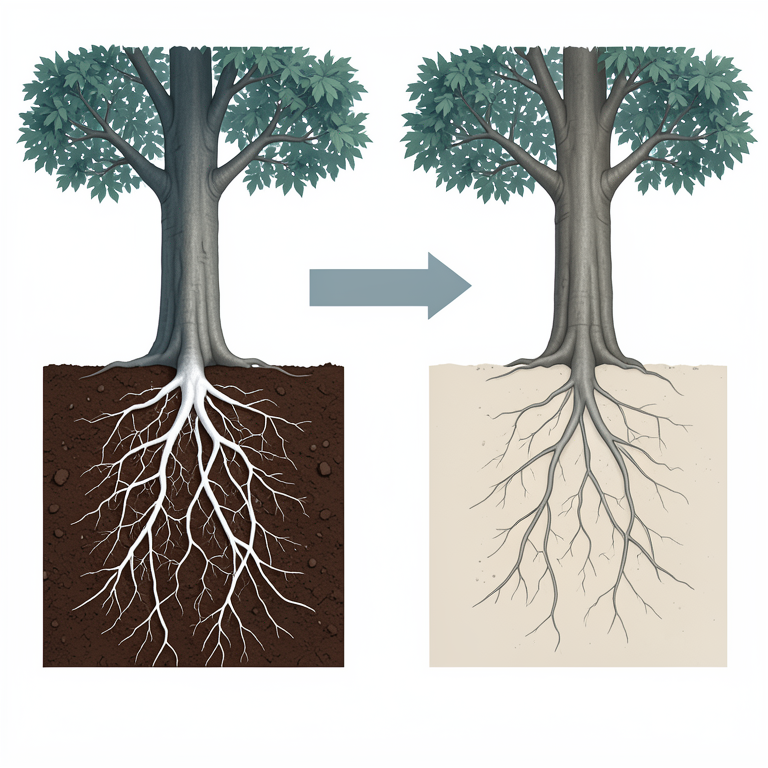
Comparison of Soil Health
AI-generated conceptual illustration (Shorea robusta trees and soil profiles). It explains the idea and does not show study data.
View source evidence ↗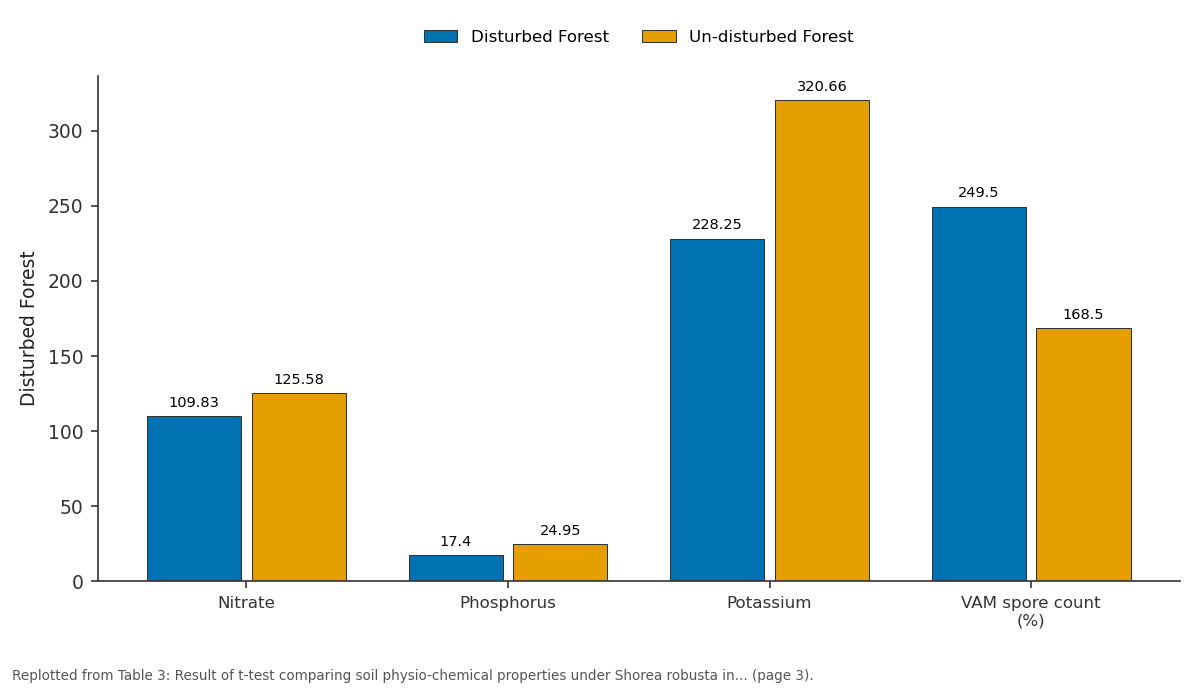
Disturbed Forest and Un-disturbed Forest: Nitrate vs Phosphorus vs Potassium vs VAM spore count (%)
Replotted from Table 3 (page 3) of the original paper. Every bar is the paper's own table value.
View source evidence ↗Figures & tables
From the original paper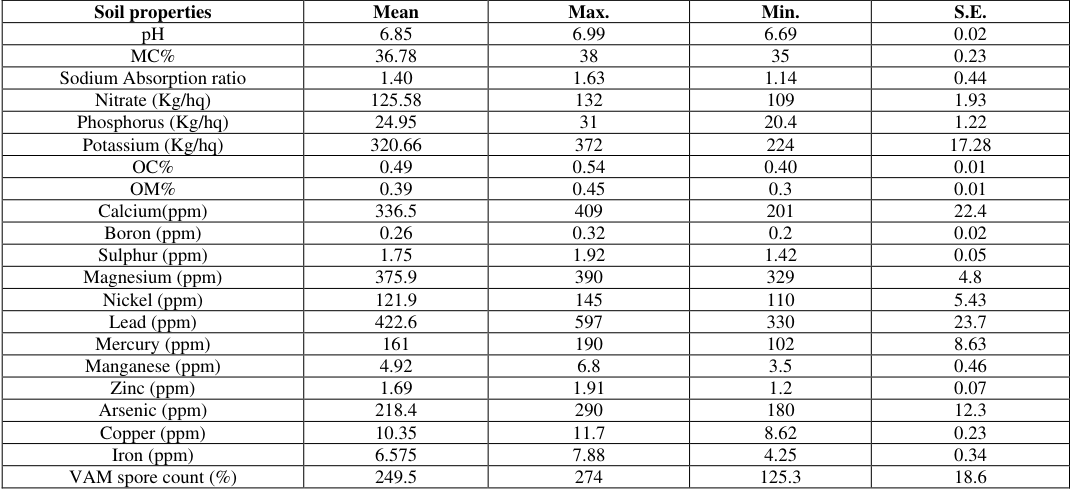 Table 1
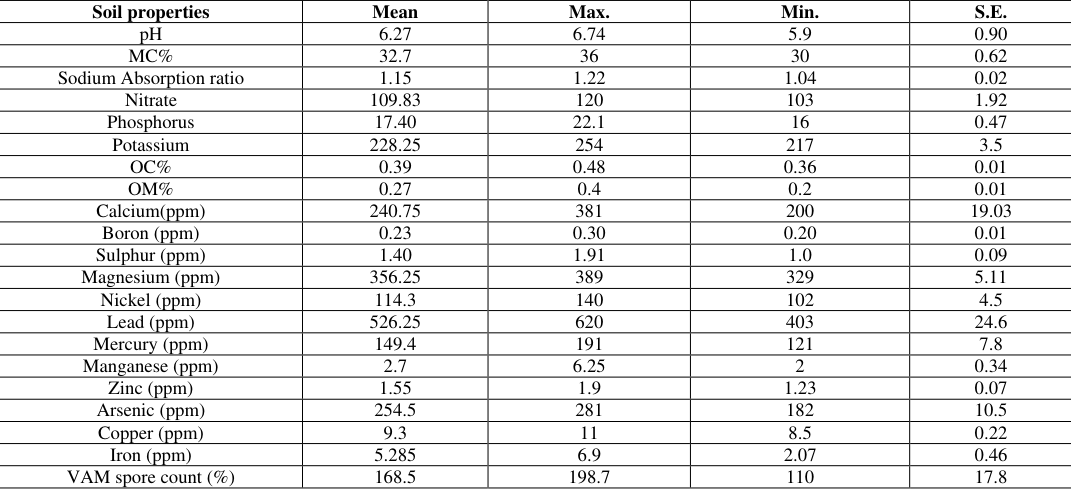 Table 2
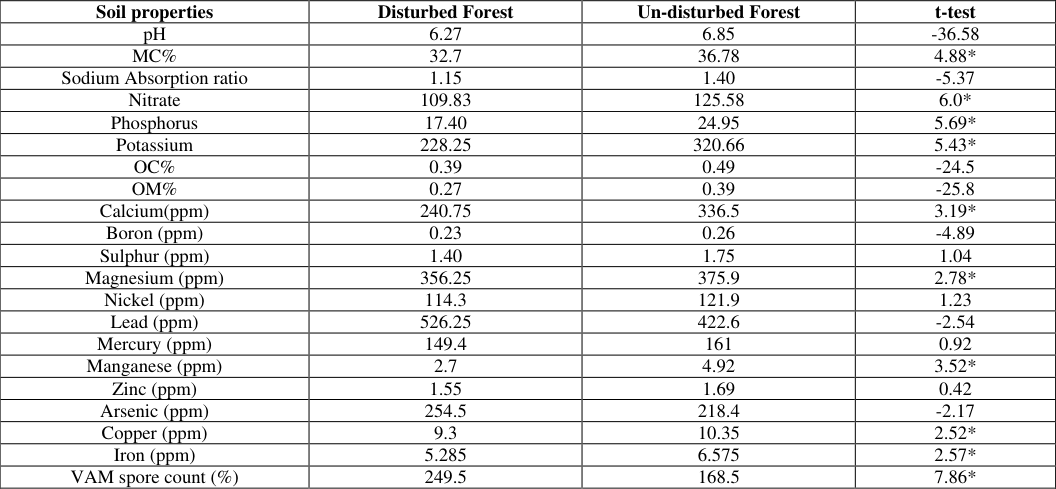 Table 3
Introduction
Sal (Shorea robusta Gaertn. F.) is the maximum vital species of monetary fee and could be very vast in its distribution. In tropical wooded area region with pretty weathered soil, natural rely performs an crucial role in functioning and sustainability. The more essential Sal woodland was discovered the in the Chhattisgarh department. Sal consequently occurs below the distinctly extensive range of climatic and geological and conditions ion. Some of the wooded area sorts have been differentiated with the aid of Champion and Seth. Plant litter are the main source of soil organic remember, which affects the physico-chemical traits of soil such as texture, water maintaining ability, pH and nutrient availability (Johnston, 1986) [20] . The nature of soil profile, pH and nutrient cycling among the soils and timber are the essential dimensions to website's website online quality. Soil natural be counted (SOM) is an crucial component in comparing control machine of the woodland soil fertility (Doran and Parkin, 1994) [21] . In tropical and subtropical regions, wherein soils are strongly weathered and contained variable charged mineral, interaction of SOM and this soil can result in increasing SOM protection from Microbial attack compared with that observed in less weathered temperate soils (Martin et al. 1982, Parfitt et al. 1997) [22,23] . Soil fertility is the potential of a soil to produce a big harvest.' So, it is clear that the concept of soil fertility is related to the physical, chemical and organic, climatic and anthropic characteristics of the web site. Vesicular Arbuscular Mycorrhizal (VAM) are widespread, forming symbiotic associations with 85% of all terrestrial plants (Kumar et al. 1999) [14] . They are known to increase the plant nutrients by increasing volume of rhizosphere. Through symbiosis VAM can also enhance plant establishment and survival in stressful condition. Moreover, it is reported to be essential in increasing plant succession disturbs forest area (Doerr et al., 1984, Grime et al. 1987) [11,12] . The objective of the study was to examine and compare the significance difference between the nutrient status of soil in two different forest sites.
Material and Methods
Site description: The observation turned into performed within the Sal stand of a natural forest place. The study place was situated between 22o24'-22o35' and 80o fifty-five'E longitude and elevation 262-721m mean above sea degree in a tropical deciduous forest of Chhattisgarh. The place is characterized by a massive tract of Sal Forest. The Soil is red lateritic to clay loam. Based at the repeated survey of the place it is in addition divided into undisturbed and disturbed forest sites.
Soil evaluation: field survey change into performed and soil sampling became accomplished each in disturbed and undisturbed websites of Bilaspur woodland department. Soil samples have been amassed in the polythene luggage in triplicates from exclusive soil depth as much as zero-30 cm depth from each sampling website. A random sampling layout has been used to obtain samples from the website. Soil samples were dried in shade, lightly floor in mortar and passed thru a 2 mm sieve. Well known method became followed in analysing the soil samples. The moisture content material of sparkling soil samples changed into decided after oven drying them at one hundred and five o C and expressed as percentage of weight of the soil samples. Soil pH was measured the use of a virtual pH meter. Organic carbon and soil natural rely (SOM) have been determined following the moist digestion approach of Walkley and Black (1934a) [24] . Overall nitrogen became decided by means of Kjeldhal digestion, distillation and titration processes as described with the aid of Jackson (1958) [25] and Bremner et al. (1982) [4] . Mineral content material that is manganese (Mn), Copper (Cu), Zinc (Zn) and Nickel (Ni) were decided according to the strategies of affiliation of respectable analytical chemists (AOAC, 2000) the usage of absorption spectrophotometer. The flame photometer become implemented for macro factors i.E. Calcium (Ca), Potassium (k) and sodium (Na) determined in step with technique defined with the aid of Pearson (1976) [26] . While spectrophotometric technique was used for determination of phosphorus (P) content material of the examined pattern the use of ammonium molybdate as mentioned in the association of legit analytical chemists (AOAC, 2000). Vesicular Arbuscular Mycorrhizal (VAM) spore populace (Gerdemann and Nicolson, 1963) [13] . Statistical analysis: The descriptive statistics of all the physio-chemical properties of soil was calculated by Microsoft office excel 2010 and to determine the significance between the two soil sample t-test was performed using statistical tools.
Result and Discussion
Woodland tree play a essential role in retaining and regenerating soil fertility trough the action of their roots and clutter (Kjoller and Struve, 1982). Within the tropics, the elimination of natural rely commonly from surface outcomes inside the depletion of soil fertility in some years (Pinho et al., 2012) [17] . The plant life of the look at place turned into dominated through Shorea robusta (Sal) and different essential related tree species like Pterocarpus marsupium, Syzgium cumini, Terminalia chebula and many others. Desk 3 result of t-test comprising soil homes beneath Shorea robusta in disturbed and un-disturbed wooded areas. The t-take a look at showed that the soil homes measured in disturbed and undisturbed forest websites have been sizeable (t=0.05) for nitrate, phosphorus, potassium, calcium, magnesium, manganese, copper, iron and VAM spore count at the same time as other suggests non-good sized differentiation. The measure of soil pH is an important parameter that allows in identity of chemical nature of the soil (Shalini et al., 2003) [2] as it measures hydrogen ion attention in the soil to signify its acidic and alkaline nature of the soil. The pH of the soil ranged 6.9 to six.69 in undisturbed woodland region whilst it ranged 6. Seventyone to five. Nine in disturbed wooded area. The most moisture content became found in undisturbed wooded area locations which was comparatively low in the disturbed woodland region. Nitrate inside the plant available shape of nitrogen that happens within the soil. Nitrogen is most usually the restricting nutrient for plant growth. Excess soil moisture content material is one of the crucial factors affecting nitrification in water logged soil and is having foremost contribution to various factors. Phosphorus is the second one most vital macronutrient to be had in organic device which constitutes more than 1% of the dry natural weight. Potassium is the also the most required factors by means of the flowers. The significance of organic count number in the soil is implied in definition of soil. It acknowledges fertility of the soil as nutrient popularity and also determinant of improved soil shape, moisture and standard nutrient popularity in soil. Calcium is the secondary nutrient that is vital for cell nutrition and it also benefits plant life to responds better in environmental stress. Sodium absorption ratio (SAR) is taken into consideration as a higher degree of sodium chance in irrigation as it's miles related to absorption of sodium via soil. The SAR values in all soil sampled analysed ranged from 1.04 t0 1.63 belonging to awesome category. Magnesium is critical for plant photosynthesis and it facilitates move phosphorus inside the plant. For root development zinc is considered as desirable element. The VAM spore remember ranged from 198.7 to one hundred ten in each woodland web sites and found better in undisturbed wooded area region. VAM don't forget to improve the soil nutrient fame and recovers the degraded land. Hence, the prevailing examination showed that the undisturbed forest website becomes tremendously enriched better with vitamins and VAM repute as compared to disturbed wooded area websites.
Figures and tables from the paper
| Soil properties | Mean | Max. | Min. | S.E. |
|---|---|---|---|---|
| pH | 6.85 | 6.99 | 6.69 | 0.02 |
| MC% | 36.78 | 38 | 35 | 0.23 |
| Sodium Absorption ratio | 1.40 | 1.63 | 1.14 | 0.44 |
| Nitrate (Kg/hq) | 125.58 | 132 | 109 | 1.93 |
| Phosphorus (Kg/hq) | 24.95 | 31 | 20.4 | 1.22 |
| Potassium (Kg/hq) | 320.66 | 372 | 224 | 17.28 |
| OC% | 0.49 | 0.54 | 0.40 | 0.01 |
| OM% | 0.39 | 0.45 | 0.3 | 0.01 |
| Calcium(ppm) | 336.5 | 409 | 201 | 22.4 |
| Boron (ppm) | 0.26 | 0.32 | 0.2 | 0.02 |
| Sulphur (ppm) | 1.75 | 1.92 | 1.42 | 0.05 |
| Magnesium (ppm) | 375.9 | 390 | 329 | 4.8 |
| Nickel (ppm) | 121.9 | 145 | 110 | 5.43 |
| Lead (ppm) | 422.6 | 597 | 330 | 23.7 |
| Mercury (ppm) | 161 | 190 | 102 | 8.63 |
| Manganese (ppm) | 4.92 | 6.8 | 3.5 | 0.46 |
| Zinc (ppm) | 1.69 | 1.91 | 1.2 | 0.07 |
| Arsenic (ppm) | 218.4 | 290 | 180 | 12.3 |
| Copper (ppm) | 10.35 | 11.7 | 8.62 | 0.23 |
| Iron (ppm) | 6.575 | 7.88 | 4.25 | 0.34 |
| VAM spore count (%) | 249.5 | 274 | 125.3 | 18.6 |
Table text extracted from the original PDF; superscript letters are shown inline. The original table image is below.
View original table image
| Soil properties | Mean | Max. | Min. | S.E. |
|---|---|---|---|---|
| pH | 6.27 | 6.74 | 5.9 | 0.90 |
| MC% | 32.7 | 36 | 30 | 0.62 |
| Sodium Absorption ratio | 1.15 | 1.22 | 1.04 | 0.02 |
| Nitrate | 109.83 | 120 | 103 | 1.92 |
| Phosphorus | 17.40 | 22.1 | 16 | 0.47 |
| Potassium | 228.25 | 254 | 217 | 3.5 |
| OC% | 0.39 | 0.48 | 0.36 | 0.01 |
| OM% | 0.27 | 0.4 | 0.2 | 0.01 |
| Calcium(ppm) | 240.75 | 381 | 200 | 19.03 |
| Boron (ppm) | 0.23 | 0.30 | 0.20 | 0.01 |
| Sulphur (ppm) | 1.40 | 1.91 | 1.0 | 0.09 |
| Magnesium (ppm) | 356.25 | 389 | 329 | 5.11 |
| Nickel (ppm) | 114.3 | 140 | 102 | 4.5 |
| Lead (ppm) | 526.25 | 620 | 403 | 24.6 |
| Mercury (ppm) | 149.4 | 191 | 121 | 7.8 |
| Manganese (ppm) | 2.7 | 6.25 | 2 | 0.34 |
| Zinc (ppm) | 1.55 | 1.9 | 1.23 | 0.07 |
| Arsenic (ppm) | 254.5 | 281 | 182 | 10.5 |
| Copper (ppm) | 9.3 | 11 | 8.5 | 0.22 |
| Iron (ppm) | 5.285 | 6.9 | 2.07 | 0.46 |
| VAM spore count (%) | 168.5 | 198.7 | 110 | 17.8 |
Table text extracted from the original PDF; superscript letters are shown inline. The original table image is below.
View original table image
| Soil properties | Disturbed Forest | Un-disturbed Forest | t-test |
|---|---|---|---|
| pH | 6.27 | 6.85 | -36.58 |
| MC% | 32.7 | 36.78 | 4.88* |
| Sodium Absorption ratio | 1.15 | 1.40 | -5.37 |
| Nitrate | 109.83 | 125.58 | 6.0* |
| Phosphorus | 17.40 | 24.95 | 5.69* |
| Potassium | 228.25 | 320.66 | 5.43* |
| OC% | 0.39 | 0.49 | -24.5 |
| OM% | 0.27 | 0.39 | -25.8 |
| Calcium(ppm) | 240.75 | 336.5 | 3.19* |
| Boron (ppm) | 0.23 | 0.26 | -4.89 |
| Sulphur (ppm) | 1.40 | 1.75 | 1.04 |
| Magnesium (ppm) | 356.25 | 375.9 | 2.78* |
| Nickel (ppm) | 114.3 | 121.9 | 1.23 |
| Lead (ppm) | 526.25 | 422.6 | -2.54 |
| Mercury (ppm) | 149.4 | 161 | 0.92 |
| Manganese (ppm) | 2.7 | 4.92 | 3.52* |
| Zinc (ppm) | 1.55 | 1.69 | 0.42 |
| Arsenic (ppm) | 254.5 | 218.4 | -2.17 |
| Copper (ppm) | 9.3 | 10.35 | 2.52* |
| Iron (ppm) | 5.285 | 6.575 | 2.57* |
| VAM spore count (%) | 249.5 | 168.5 | 7.86* |
Table text extracted from the original PDF; superscript letters are shown inline. The original table image is below.
View original table image
References
23 in the original paper- Adolfo CC, Klaudia OL, Jorge EB. Exploring the effect of changes in land use on soil quality on the estern slope of the Cofre de Perote Volcano (Mexico). Forest ecology and management. 2007 Sep 15;248(3):174-82.
- Awotoye OO, Ekanade O, Airouhudion OO. Degradation of the soil physicochemical properties resulting from continuous logging of Gmelina arborea and Tectona grandis plantations. African Journal of Agricultural Research. 2009 Nov 1;4(11):1317-24.
- Bajracharya RM, Sitaula BK, Sharma S, Jeng A. Soil quality in the Nepalese context-an analytical review. International Journal of Ecology and Environmental Sciences. 2007;33(2-3):143-58.
- Bremner JM. Nitrogen Urea. In: methods of Soil Analysis part 2(2 nd Ed.), 1982, 699-709.
- Binkley D. Mixtures of nitrogen_2-fixing and nonnitrogen_2-fixing tree species. The ecology of mixedspecies stands of trees. 1992, 92-123.
- Binkley DA, Giardina C. Why do tree species affect soils? The warp and woof of tree-soil interactions. Plant-induced soil changes: Processes and feedbacks. 1998, 89-106.
- Campbell BM, Frost P, King JA, Mawanza M, Mhlanga L. The influence of trees on soil fertility on two contrasting semi-arid soil types at Matopos, Zimbabwe. Agroforestry systems. 1994 Nov;28:159-72.
- Chaudhary P, Joshi N. Nutrient dynamics under different plantation in subtropical forest ecosystem. Rep Opinion. 2013;5(9):1-4.
- Doerr TB, Redente EF, Reeves FB. Effects of soil disturbance on plant succession and levels of Mycorrhizal fungi in a sagebrush grassland community. Journal Range Management. 1984;37:135-139.
- Gerdemann JW, Nicolson TH. Spores of mycorrhizal Endogone species extracted from soil by wet sieving and decanting. Trans. Brit. Mycol. Soc. 1963;46:235244.
- Kumar A, Nivedita, Upadhyay RS. VA-Mycorrhizas and vegetation of coal mine spoils, a review. Tropical Ecology. 1999;40:1-10
- Kulshreshtha S, Devenda HS, Dhindsa SS, Singh RV. Studies on causes and possible remedies of water and soil pollution in Sanganer town of Pink city. Indian Journal of Environmental Sciences. 2003;7(1):47-52.
- Pinho RC, Miller RP, Alfaia SS. Agroforestry and the Improvement of Soil Fertility: A View from Amazonia. Applied and Environmental Soil Science, 2012, 1-11.
- Ravikumar P, Somashekar RK. Evaluation of nutrient index using organic carbon, available P and available K concentrations as measure of soil fertility in Varahi River basin, India. Proceedings of the International Academy of ecology and Environmental Sciences. 2013;3(4):330-343.
- Singh K, Tripathi D. Different forms of potassium and their distribution in some representative soil groups in Himachal Pradesh. Journal of Potassium Research. 1993;9:196-205.
- Johnston WA, Dark VJ. Selective attention. Annual review of psychology. 1986 Feb;37(1):43-75.
- Doran JW, Parkin TB. Defining and assessing soil quality. Defining soil quality for a sustainable environment. 1994 May 1;35:1-21.
- Martin-Löf P. Constructive mathematics and computer programming. In Studies in Logic and the Foundations of Mathematics. 1982 Jan 1;104:153-175. Elsevier.
- Parfitt RL, Theng BK, Whitton JS, Shepherd TG. Effects of clay minerals and land use on organic matter pools. Geoderma. 1997 Jan 1;75(1-2):1-2.
- Walkley A, Black IA. An examination of the Degtjareff method for determining soil organic matter, and a proposed modification of the chromic acid titration method. Soil science. 1934 Jan 1;37(1):29-38.
- Jackson DN, Messick S. Content and style in personality assessment. Psychological bulletin. 1958 Jul;55(4):243.
- Pearson D. The chemical analysis of foods. Longman Group Ltd.; 1976.
- Shalini K, Subbanna GN, Chandrasekaran S, Shivashankar SA. Thin films of iron oxide by lowpressure MOCVD using a novel precursor: tris (t-butyl3-oxo-butanoato) iron (III). Thin Solid Films. 2003 Jan 22;424(1):56-60.