
Research article · 2023 · Full text
International Journal of Veterinary Sciences and Animal HusbandryAvian influenza from the point of animal husbandry, Data analysis for 2021-2022 from Bulgaria and Europe
Volume 8(4) · Pages 07–12 · DOI: 10.22271/veterinary.2023.v8.i4a.560 ↗
Research areasInfluenza Virus Research StudiesCOVID-19 Pandemic ImpactsAnimal Virus Infections Studies
Abstract
Author-writtenThe European food safety authority (EFSA) has designated the epidemic of highly pathogenic avian influenza (HPAI) from 2021-2022 as the most serious one on the territory of the continent. Official data states 37 affected European countries with 2 520 outbreaks in poultry production systems and the consequent extermination of 50 million birds. Risk assessment should concentrate on many variables that can affect measures for control of the infection; however, the stocking density of birds within the housing system is rarely mentioned or considered. It is the point of this article to pay attention to high stocking density in poultry facilities as a predisposing factor for disease spread. Not underestimating other conditions it tries to prove that welfare of birds has much to do with epidemiology. It also tries to follow some economic and veterinary issues (such as transfer to an increasing number of mammalian species) that are directly connected to viral behavior and may pose a significant risk for animal as well as human health.
Summary
Source-checkedPlain-language reading of the full paper, prepared with AI and checked against the text. Each point links to the authors' own words.
Why it matters
- The 2021-2022 highly pathogenic avian influenza (HPAI) epidemic is considered the most severe to hit the European continent. View evidence ↗
- While various factors are used for risk assessment in infection control, the stocking density of birds in housing systems is often overlooked. View evidence ↗
The question
- The paper aims to highlight how high stocking density in poultry facilities acts as a predisposing factor for the spread of avian influenza. View evidence ↗
What they did
- The analysis is based on official data from the European Food Safety Authority (EFSA) and the Bulgarian Food Safety Agency. View evidence ↗
- The study analyzes outbreak data across several time periods in 2022, including March-June, June-September, and September-December. View evidence ↗
What they found
- From March to June 2022, bird fattening facilities (33%) and foie gras farms for ducks and geese (31%) were the most affected housing types. View evidence ↗
- A mutation enabling H5N1 polymerase activity in mammals was identified in an October 2022 outbreak at a Spanish mink farm. View evidence ↗
- EFSA reported 20 human cases of Influenza A during 2022. View evidence ↗
What it means
- The author concludes that husbandry conditions lacking sufficient space cause group stress, which decreases immunity and increases the risk of disease outbreaks. View evidence ↗
- The author recommends reevaluating animal welfare as a key component of disease prevention strategies. View evidence ↗
- The author notes a lack of in-depth scientific reports detailing the actual economic situation in the poultry sector following the 2016-2019 and 2021-2022 waves. View evidence ↗
Visual summary
1 visualsIllustrations explain the paper; they do not show study data.
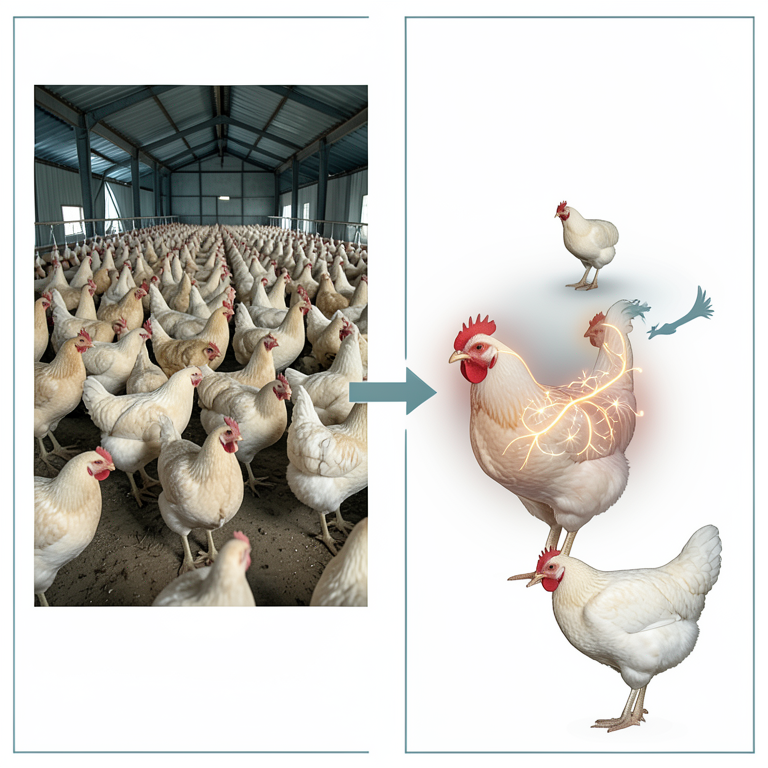
Impact of Stocking Density on Immunity
AI-generated conceptual illustration (broiler chickens in a poultry house). It explains the idea and does not show study data.
View source evidence ↗Figures & tables
From the original paper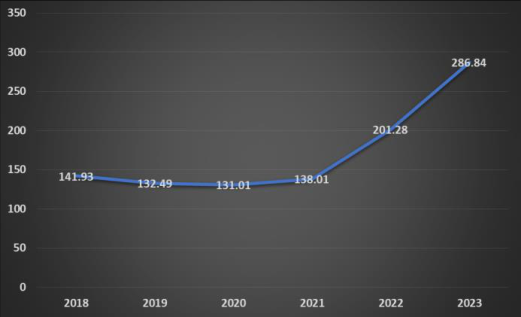 Figure 1
Introduction
Avian influenza, also known as "bird flu", presents a highly contagious viral disease primarily among domestic poultry and wild waterfowl. It can be classified as either Highly Pathogenic Avian Influenza (HPAI) or Low Pathogenic Avian Influenza (LPAI) according to the ability of the agent to cause disease or mortality in affected individuals (EFSA, 2023b) [8] .
Scope of the epidemic in Bulgaria and Europe
The European food safety authority (EFSA) has designated the epidemic of highly pathogenic avian influenza (HPAI) from 2021-2022 as the most serious one on the territory of the continent. Official data states 37 affected European countries with 2 520 outbreaks in poultry production systems and the consequent extermination of 50 million birds (EFSA et al., 2022c) [12] . During the period March-June 2022 a total of 750 new cases were reported with France occupying the first place with 509 poultry outbreaks or 6 553 957 birds, followed by Hungary (117 outbreaks or 2 981 592 birds) and Bulgaria (15 outbreaks or 708 876 birds) (EFSA et al., 2022a) [10] . For the period June-September 2022 г. another 56 cases were proved in poultry farms with the highest number on the territory of Germany (15), Holland (14) and Great Britain (10) (EFSA et al., 2022b) [11] . The next period September-December 2022 is again characterized by an increase with 398 recognized outbreaks distributed in decreasing order to Great Britain (115), France (98), Hungary (69), Germany (42), Italy (28), Holland (25). Bulgaria was also mentioned due to a single affected poultry farm (EFSA et al., 2022c) [12] . However, during the period December 2022 -March 2023 a decrease in the number of poultry cases was described. The peak of the infection was in January 2023 but the level was 1/3 lower when compared to data from January 2022. Most countries recognize as a main source of the viral agent indirect contact to wild birds or unspecified event (EFSA et al., 2023а) [7] . EFSA`s report for March -April 2023 outlines a tendency for avian influenza attenuation in Europe. It was marked that the predominant number of wild bird cases with HPAI were not identified as species and lacks sufficient information about the actual distribution of LPAI (EFSA et al., 2023b) [8] .
An interactive map on the EFSA site allows the visualization of HPAI outbreaks in Europe by date, species, avian influenza subtypes and country (EFSA, 2023c) [9] . A document from the Risk assessment center on food chain in Bulgaria reports 20 outbreaks of HPAI during the period January-October 2022 with 712 076 cases in domestic and 4 in wild birds. Data is represented as a table by species and type of production with ducks and mulards holding the first place with 302 199 affected birds followed by egg laying hens (297 482), broiler chicken (122 155), backyard chicken (40), wild birds (4) (Risk assessment center on food chain in Bulgaria, 2022). According to data from the Bulgarian Food Safety Agency provided after an official enquiry for public information outbreaks registered in the country for 2022 or as a total number during 2017-2022 encompass the following: Facilities for egg laying hens: [2] . The report of the same institution for 2022 outlines an increase in the number of egg laying hens and pullets by 7.2% or 7.139 million birds total while the number of poultry farms with 10 thousand or more birds from the same category remains constant (Bulgarian Ministry of Agriculture, 2023) [3] .
The housing technology was also described in EFSA`s reports. During the period March -June 2022 the most affected facilities were those for bird fattening irrespective of the species raised (33%). Approximately the same percentage encompasses farms for ducks and geese for foie gras (31%), especially in France and Hungary. Outbreaks in the broiler sector reach 13%, while those in egg laying hens account for 9%. Data is similar to the one published in the previous report for 2020-2021, however, there is a obvious increase in all housing methods, most prominent in farms for fattening, foie gras and parent flocks (chicken, ducks and geese) (EFSA et al., 2022a) [10] .
During the period June -September 2022 the epidemic spread to Northwest Europe which is probably connected to migration routes of wild birds. From a total of 56 outbreaks 33 were in commercial facilities, 3 in non-commercial farms and there was no information about the status of 20 farms by the time the sited report was published. However, the percentage is highest in the same groups: chicken and ducks for fattening, foie gras production, parent flocks and egg layers (EFSA et al., 2022b) [11] .
The next report for September -December 2022 announces the stamping out of 9.8 million birds as well as an increase in registered outbreaks by 6 times. From a total of 398 facilities 150 were commercial, 26 non-commercial. Data is lacking for 222 farms and there is distribution analysis by sectors in the issue (EFSA et al., 2022c) [12] . It is worth paying attention to statistics from France, Hungary and Bulgaria where some of the biggest farms for foie gras are situated. EFSA`s report for March -June 2022 shows that 31% of cases of HPAI were registered in such facilities. An article published on the pages of Euro Meat News on 08.01.2023 announces that France was forced to liquidate around 600 000 ducks in an attempt to limit the spread of avian influenza (Euro Meat News, 2023) [15] . During 2016-2019 there were 132 outbreaks of HPAI (H5N8) in Bulgaria and 16 were seen in wild birds while 116 in domestic ones. The most seriously affected sector was ducks for foie gras and the regions included Plovdiv, Haskovo, Stara Zagora and Dobrich (Stoimenov, 2022) [32] . From November 2008 to April 2012 there was an higher incidence of LPAI cases in farms for foie gras, which is a serious prerequisite for subclinical disease (Marinova-Petkova, 2016) [23] . By the time the infection is registered there is already an increased risk for spread to other poultry facilities. Ducks can be described as the "Troyan horse" of influenza type H5N1 (Stoimenov, 2022) [32] due to their ability to act as reservoirs of two or more influenza A viruses (Sharp, 1997) [31] without obvious clinical effect.
High population density as a risk factor for avian influenza spread
The main risk factors that account for the spread of avian influenza include: contact to wild birds, violated biosecurity measures, high density of poultry facilities, transmission from farm to farm directly by infected birds or equipment as well as by aerosol (Guinat, 2022) [19] . All EFSA reports stress on the need of long term strategies for prevention, especially in regions with high density of poultry farms. This factor is described as a leading one for the understanding of disease epidemiology and was mentioned by a number of authors (Globig et [18, 25, 26] . Most of the outbreaks to date were defined as primary due to contact with infected wild birds; however, there are cases of secondary spread among domestic as well as wild caged birds (EFSA et al., 2023a) [7] . Predisposing conditions that can explain the situation in Bulgaria include the movement of live domestic poultry, people and/or equipment between the facilities especially under high stocking density during the production cycle (Stoimenov, 2022) [32] . The close proximity of farms and the increased number of the duck population in the districts of Plovdiv, Haskovo, and Stara Zagora in Central Bulgaria present an important factor in maintaining the virus and expanding its genetic diversity (Stoimenov, 2022) [32] as well as a cause for local distribution to other farms (Napp et al., 2018) [26] .
Risk assessment should concentrate on many variables that can affect measures for control of the infection; however, the stocking density of birds within the housing system is rarely mentioned or considered. [33,27,38] , including among others the possibility of immune suppression (Zhang et al., 2022; Hofmann et al., 2021) [41,20] . Together these and other factors may predispose to increased mutation rate and reassortment of the pathogen which benefit the virulence (Moreno-Madriñan and Kontowicz, 2023) [24] and the means for spread of the infection (van Hoorebeke et al., 2010) [37] . The last EFSA report for March -April 2023 expresses the opinion that the currently lower case prevalence in Europe may be due to the decrease in population density of domestic birds for some member states such Western and Southwestern France for the foie gras duck sector or Northeast Italy for turkeys and egg laying hens (EFSA et al., 2023b) [8] .
Economic consequences from the epidemic of avian influenza
Analysis of the World Bank from 2006 points out that the spread of avian influenza in Europe may affect negatively the labor market and the expected loss of jobs can reach the cost of 5 million euro (Burns et al., 2006) [3] . Unfortunately, there are no in-depth scientific reports to describe the actual economic situation in the poultry sector after the waves of bird flu in 2016-2019 and 2021-2022. Recently, however, several media from different parts of the world have raised the question about the increase in egg prices:
The New York Times (2023): Can You Find Eggs Here or There? Can You Find Them Anywhere? An avian flu outbreak and increasing costs of fuel, feed and packaging have contributed to an egg supply shortage and high prices in some parts of the country.
The Wall Street Journal (2023)
Egg Prices Have Soared Over the Past Year. Here Is Why They Are So Expensive.
Avian-flu outbreak keeps supply of the grocery staple tight
There are about 350 million egg laying hens in the European Union that produce approximately 6.7 million tons of eggs per year. Data published by the European Commission for 2022 outlines the stable increase in prices per 100 kg of eggs in August (European Commission, 2023). An article on the site of the U.S. Department of Agriculture states that the increase of egg prices in 2022 [36] should be correlated to the epidemic of avian influenza (U.S. Department of Agriculture, 2022) [36] .
A popular daily newspaper from Bulgaria (called "Trud") follows the rise of the wholesale price for eggs size M that has reached 82% within one yearfrom 0.22 stotinki during 04-07.01.2022 to 0.40 stotinki during 03-06.01.2023 (Malcheva, 2023) [22] . This coincides with the official data from the National Statistical Institute of Bulgaria which is presented in the following figure: (National Statistical Institute of Bulgaria, 2023) [28] .
Agrostatistics form the Bulgarian Ministry of Agriculture for 2021 [1] shows that the production of eggs was decreased by 4.15% compared to 2020. The total number of eggs was 1.326 billion and 1.305 billion of these came from hen layers (Bulgarian Ministry of Agriculture, 2022) [2] . During the next reporting period (2022) the production of eggs has increased by 5.8% or 1.402 billion eggs, of which 1.387 billion were chicken eggs (Bulgarian Ministry of Agriculture, 2023).
Epidemiology of avian influenza in mammals
Another economically relevant as well as health problem is the spread of avian influenza not only to more wild bird species, but also to mammals. EFSA`s report for June -September 2022 describes several new cases of infected mammals in Europe: two red foxes (Vulpes vulpes) in Belgium and Norway and a harbour porpoise (Phocoena phocoena) in Sweden. Outbreaks of HPAI (H5N1) have been registered in mammals from North Americapredominantly in harbour seals (Phoca vitulina) and gray seals (Halichoerus grypus) (EFSA et al., 2022b) [11] .
Data from the report for September -December 2022 have become highly concerning. In October 2022 an outbreak of the infection was confirmed in a Spanish mink farm and the genetic analysis found a mutation that enables the polymerase activity of the virus (H5N1) in mammals. Meanwhile HPAI A (H5N1) virus was isolated from an Amur leopard (Panthera pardus orientalis) in USA (EFSA et al., 2022c) [12] . The event of mass mortality among South American sea lions (Otaria flavescens) was reported between December 2022 and March 2023 and the transmission of HPAI A (H5N1) from mammal to mammal was proposed (EFSA et al., 2023а) [7] . During March -April 2023 the infection continued to spread within the species; however, new susceptible species were also identified (EFSA et al., 2023b) [8] . The risk status of the virus has risen after the identification of infected dogs and cats with severe clinical signs that can act as a source for disease distribution to other mammals as well as humans (EFSA et al., 2023b) [8] .
The official opinion of WHOA (World Organization for Animal Health), published on 13.02.2023, indicates the possibility for viral adaptation of avian influenza type H5N1 to mammals, including humans, and other animal species. Furthermore, some mammals such as mink can act as reservoirs of infection and a source of new strains and subtypes of high pathogenic activity to animals and/or humans. It is emphasized that the risk can be increased due to the housing of excessive and undue number of birds in close contact that once again leads to the question about the stocking density as an important welfare indicator in poultry facilities (WHOA, 2023) [40] . The importance of Influenza A identification in a mink farm lays in the possibility of viral transmission not from bird to mammal but from mammal to mammal. The spread of SARS-Cov2 to mink farms in Europe during the Covid-19 pandemic presents an actual example for the serious consequences that can be expected from viruses that develop the ability to jump over the interspecies barrier. According to Fur Free Alliance COVID-19 outbreaks have affected more than 450 mink fur farms in Europe and North America since April 2020, resulting in the culling of over 20 million animals (Fur Free Alliance, 2022). The European Centre for Disease Prevention and Control (ECDC) has warned that "the continued transmission of SARS-CoV-2 in mink farms may eventually give rise to other variants of concern" that may compromise the efficacy of a vaccines (ECDC, 2020). Are we facing the same problem when talking about the unexpectedly wide spread of avian influenza to newer and newer domestic and wild species? Animal rights organizations worldwide have long ago given signals to the government and the society about the ethical issues in fur industry that are also connected to human as well as global health. The situation is similar in other production systems where group stress, high stocking densities, unhygienic conditions and lack of understanding about behavioral needs have led welfare to unfair level that threatens to destroy the biological balance between humans, animal populations and disease agents.
Potential risk for human health
Could bird flu in mink signal threat of a human pandemic? Asks Jeannette Cwienk from Deutsche Welle (Cwienk, 2023) [4] . EFSA has reported 20 [10][11][12] . According to the last statement of WHO from February 2023 the increase in human infections is probably due to the continuing circulation of the virus among birds (WHO, 2023) [39] .
It should be noted that the risk of human infection is significantly higher in individuals that work with live birds (domestic or wild), bird products or get in contact to contaminated materials (MacMahon, 2008) [21] . A technical report by the European Centre for Disease Prevention and Control states that workers in poultry facilities belong to Group 2: Theoretical risk -Precautions required (ECDC, 2006) [5] . However, the high stocking density of birds under intensive production systems pose a significant prerequisite for increased viral load during an outbreak and consequently a risk for infection.
According to the last EFSA report all fatal cases of Influenza A (H5N1) in humans were the result of a contact to sick or dead birds without using safety equipment (EFSA et al., 2023b) [8] . Viral transmission is air-born through exposure to saliva, mucous or feces and therefore many possibilities exist for infection as long as people working with birds rarely take protective measures.
Instead of conclusion
The current situation around avian influenza requires an indepth analysis of data and rethinking strategies for limiting the spread of the infection and the future outcome. It is of upmost importance to move attention to secondary variables as well that can lead to serious economic loss, for example, the relation between housing method and the level of morbidity within the poultry sector. Going back to statistics, poultry facilities that were affected from the epidemic during the last year were from the intensive production type (for Europe and Bulgaria), while cases from the free range and "back yard" husbandry were few or unknown. The fact does not underestimate the risk of transmission between wild birds and free living domestic ones, where special measures for prevention and control should be discussed. However, opposite to the high level of biosecurity in big poultry farms, the consequences were most striking in these systems. Husbandry conditions that do not allow enough space for movement and expression of natural behavior in birds lead to constant group stress (EFSA, 2023a) [7] , which is a predisposing factor for decreased immunity and potential risk of disease outbreaks. Last but not least, the high stocking density may act as a condition for viral reassortment and possible increase in its contagiousness. The struggle against avian influenza requires huge financial resources to keep biosecurity measure up to date for several years now as well as to cover the serious shortage in the poultry sector and all the resources needed for stamping out and incineration of animal products. Welfare questions that always remain behind in the agenda should now be reevaluated as long as these also belong to prevention. It is not coincidence that lowering the density of poultry farms in affected regions finally resulted in alleviation of the infective load.
The potential of Influenza A to cause the next pandemic is still in the sphere of prediction; however, there is sufficient data for the virus ability to cross the interspecies barrier and be transmitted between mammals as proven in the case of mink farms. The collaboration between different units, including governmental and nongovernmental organizations, presents the way to discover all risk factors for human and animal health and search for solutions to prevent the next world crisis. Measures should be expedient, but also sustainable and
Acknowledgement
follow the principles of One Health, where the right management of the environment plays a key role (Prata et al., 2022) [29] .
Figures and tables from the paper
References
38 in the original paper- Bulgarian Ministry of Agriculture. Poultry husbandry in Bulgaria during, 2021. [Министерство на земеделието (2022) Птицевъдството в България през 2021 година.] 2022. https://www.mzh.government.bg/media/filer_public/2022 /05/26/publication_401_poultry_2021.pdf
- Bulgarian Ministry of Agriculture. Poultry husbandry in Bulgaria during. 2022. [Министерство на земеделието (2023) Птицевъдството в България през 2022 година.] 2023. https://www.mzh.government.bg/media/filer_public/2023 /04/07/publication_422_poultry_2022.pdf
- Burns A, van der Mensbrugghe D, Timmer H. Evaluating the Economic Consequences of Avian Influenza. Global Development Finance. 2006. http://www.worldbank.org/gdf2006
- Cwienk. Could bird flu in mink signal threat of a human pandemic? Deutsche Welle. 2023. https://www.dw.com/en/scientists-concerned-spread-ofbird-flu-to-mink-signals-growing-threat-to-humans/a64605019
- European Centre for Disease Prevention and Control - ECDC. Who is at Risk of getting HPAI? Technical Report. 2006. https://www.ecdc.europa.eu/sites/default/files/media/en/p ublications/Publications/0605_TER_Avian_Influenza_W ho_is_at_Risk.pdf
- European Centre for Disease Prevention and Control - ECDC. Detection of new SARS-CoV-2 variants related to mink. ECDC: Stockholm. 2006.
- European Food Safety Authority -EFSA et al. Avian influenza overview March -June 2022. Scientific report. EFSA Journal. 2022a;20(8):7415. doi:10.2903/j.efsa.2022.7415
- European Food Safety Authority -EFSA et al. Avian influenza overview June -September 2022. Scientific report. EFSA Journal. 2022b;20(10):7597. doi:10.2903/j.efsa.2022.7597
- European Food Safety Authority -EFSA et al. Avian influenza overview September -December 2022. Scientific report. EFSA Journal. 2022c;21(1):7786. doi:10.2903/j.efsa.2023.7786
- European Food Safety Authority -EFSA et al. Avian influenza overview December 2022 -March2023. Scientific report. EFSA Journal. 2023a;21(3):7917. doi:10.2903/j.efsa.2023.7917
- European Food Safety Authority -EFSA et al. Avian influenza overview March -April 2023. Scientific report. EFSA Journal. 2023b;21(5):8039. doi: 10.2903/j.efsa.2023.8039
- Euro Meat News. 600,000 ducks to be culled in France. 2023. https://www.euromeatnews.com/Article600%2C000-ducks-to-be-culled-in-France/4401
- European Commission. EU Market Situation for Eggs. Committee for the Common Organization of the Agricultural Markets. 2023. https://agriculture.ec.europa.eu/farming/animalproducts/eggs_en
- Fur Free Alliance. COVID-19 on mink farms. 2022. https://www.furfreealliance.com/covid-19-on-minkfarms/
- Globig A, Staubach C, Sauter-Louis C, Dietze K, Homeier-Bachmann T, Probst C, et al. Highly Pathogenic Avian Influenza H5N8 Clade 2.3.4.4b in Germany in 2016/2017. Front Vet Sci. 2018 Jan 24;4:240. doi: 10.3389/fvets.2017.00240.
- Guinat C, Agüí CV, Vaughan TG, Scire J, Pohlmann А, Staubach C, King J, et al. Disentangling the role of poultry farms and wild birds in the spread of highly pathogenic avian influenza virus in Europe. Virus Evolution. 2022;8(2):c073. Doi:10.1093/ve/veac073
- Hofmann T, Schmucker S, Grashorn M., Stefanski V. Short-and long-term consequences of stocking density during rearing on the immune system and welfare of laying hens. Poultry Science. 2021;100(8):101243. doi: 10.1016/j.psj.2021.101243
- MacMahon KL, Delaney LJ, Kullman G, Gibbins JD, Decker J, Kiefer MJ. Protecting Poultry Workers from Exposure to Avian Influenza Viruses. Public Health Rep. 2008;123(3):316-322. doi: 10.1177/003335490812300311
- Malcheva N. The price of eggs double for a year. Trud. 2023; [Малчева Н. 2023. Цената на яйцата двойна за година. Труд.] https://trud.bg/%D1%86%D0%B5%D0%BD%D0%B0% D1%82%D0%B0-%D0%BD%D0%B0- %D1%8F%D0%B9%D1%86%D0%B0%D1%82%D0%
- Marinova-Petkova A, Georgiev G, Petkov T, Darnell D, Franks J, Kayali G, et al. Influenza surveillance on 'foie gras' duck farms in Bulgaria, 2008-2012. Influenza and Other Respiratory Viruses. 2016;10(2):98-108.
- Moreno-Madriñan MJ, Kontowicz E. Stocking Density and Homogeneity, Considerations on Pandemic Potential. Zoonotic Diseases. 2023;3(2):85-92. doi: 10.3390/zoonoticdis3020008
- Mulatti P, Fusaro A, Scolamacchia F, Zecchin B, Azzolini A, Zamperin G, et al. Integration of genetic and epidemiological data to infer H5N8 HPAI virus transmission dynamics during the 2016-2017 epidemic in Italy. Sci Rep. 2018 Dec 21;8(1):18037. doi: 10.1038/s41598-018-36892-1.
- Napp S, Majó N, Sánchez-Gónzalez R, Vergara-Alert J. Emergence and spread of highly pathogenic avian influenza A(H5N8) in Europe in 2016-2017. Transbound Emerg Dis. 2018;65(5):1217-1226. doi: 10.1111/tbed.12861.
- Nasr MAF, Alkhedaide AQ, Ramadan AAI, Hafez ASE, Hussein MA. Potential impact of stocking density on growth, carcass traits, indicators of biochemical and oxidative stress and meat quality of different broiler breeds. Poultry Science. 2021;100(11):101442. doi: 10.1016/j.psj.2021.101442
- National Statistical Institute of Bulgaria. Prices of agricultural products by years. 2023. [Национален статистически институт (2023) Цени на селскостопанската продукция по години.] Last visited 20.06.2023 https://www.nsi.bg/bg/content/843/%D1%86%D0%B5% D0%BD%D0%B8-%D0%BD%D0%B0- %D1%81%D0%B5%D0%BB%D1%81%D0%BA%D0 %BE%D1%81%D1%82%D0%BE%D0%BF%D0%B0% D0%BD%D1%81%D0%BA%D0%B0%D1%82%D0%B 0%D0%BF%D1%80%D0%BE%D0%B4%D1%83%D0 %BA%D1%86%D0%B8%D1%8F-%D0%BF%D0%BE- %D0%B3%D0%BE%D0%B4%D0%B8%D0%BD%D0 %B8
- Prata JC, Ribeiro AI, Rocha-Santos T. Chapter 1 -An introduction to the concept of One Health. One Health. Integrated Approach to 21st Century Challenges to Health. 2021. p. 1-31. Doi:10.1016/B978-0-12-8227947.00004-6
- Risk assessment center on food chain in Bulgaria. Distribution of highly pathogenic avian influenza in Europe and Bulgaria in 2022 and risk assessment for the epidemiological season 2022/2023. 2022. [Център за оценка на риска по хранителната верига -ЦОРХВ (2022) Разпространение на Високопатогенна инфлуенца А по птиците в Европа и България през 2022 г. и оценка на риска за епидемиологичния сезон 2022/2023 г.] https://corhv.government.bg/files/%D0%A1%D1%82%D 0%B0%D0%BD%D0%BE%D0%B2%D0%B8%D1%89 %D0%B0%20%D0%B8%20%D0%BE%D1%86%D0% B5%D0%BD%D0%BA%D0%B0%20%D0%BD%D0% B0%20%D1%80%D0%B8%D1%81%D0%BA%D0%B0 /02_%D0%97%D0%B4%D1%80%D0%B0%D0%B2% D0%B5%20%D0%BD%D0%B0%20%D0%B6%D0%B 8%D0%B2%D0%BE%D1%82%D0%BD%D0%B8%D1 %82%D0%B5%20%D0%B8%20%D1%85%D1%83%D 0%BC%D0%B0%D0%BD%D0%BD%D0%BE%20%D 0%BE%D1%82%D0%BD%D0%BE%D1%88%D0%B5 %D0%BD%D0%B8%D0%B5%20%D0%BA%D1%8A
- Sharp GB, Kawaoka Y, Jones DJ, Bean WJ, Pryor SP, Hinshaw V, et al. Coinfection of wild ducks by influenza A viruses: Distribution patterns and biological significance. Journal of Virology. 1997;71:6128-6135.
- Stoimenov GM. Highly pathogenic avian influenza in Bulgaria: A review. Bulg. J Vet. Med. 2022;25(4):517529.
- Sugiharto S. Dietary strategies to alleviate high-stockingdensity-induced stress in broiler chickens-a comprehensive review, Arch. Anim. Breed. 2022;65:2136. doi: 10.5194/aab-65-21-2022
- The New York Times. Can You Find Eggs Here or There? Can You Find Them Anywhere? 2023. https://www.nytimes.com/2023/01/12/us/egg-shortageus.html
- The Wall Street Journal. Egg Prices Have Soared Over the Past Year. Here Is Why They Are So Expensive.2023; https://www.wsj.com/articles/eggprices-shortage-avian-flu-11673629381
- U.S. Department of Agriculture. Avian influenza outbreaks reduced egg production, driving prices to record highs in 2022. 2022. https://www.ers.usda.gov/data-products/chartgallery/gallery/chart-detail/?chartId=105576
- Van Hoorebeke S, van Immerseel F, Haesebrouck F, Ducatelle R, Dewulf J. The influence of the housing system on Salmonella infections in laying hens: A review. Zoonoses and Public Health. 2010; doi: 10.1111/j.1863-2378.2010.01372.x
- Villagrá A, De la Torre J, Chacón G, Lainez M. Torres A, Manteca X. Stocking density and stress induction affect production and stress parameters in broiler chickens. Animal Welfare. 2009;18(2):189-197. doi:10.1017/S0962728600000336
- WHO. Human infection with avian influenza A(H5) viruses. Avian Influenza Weekly Update. 2023. Number 884.
- WHOA. Statement on avian influenza and mammals. 2023. https://www.woah.org/en/statement-on-avianinfluenza-and-mammals/
- Zhang R, Yu H, Wang Y, Bao J. PSXIII-5 Effects of Stocking Density on the Welfare and Immune Responses of Laying Hens Housed in Small Furnished Cages. Journal of Animal Science. 2022;100(3):204. doi: 10.1093/jas/skac247.371