
Research article · 2023 · Full text
International Journal of Statistics and Applied MathematicsEffect of slip velocity on double layered rough porous parabolic slider bearing
Volume 8(4S) · Pages 01–07 · DOI: 10.22271/maths.2023.v8.i4sa.1030 ↗
Research areasTribology and Lubrication EngineeringAdhesion, Friction, and Surface InteractionsGear and Bearing Dynamics Analysis
Abstract
Author-writtenThis study is analyze the influence of Ferrofluid based double layer porous rough parabolic slider bearing with the effect of slip velocity. The slip model of Beavers and Joseph is considered to evaluate slip effect. The modified Reynolds equation for the double-layered bearing system is solved to compute a dimensionless pressure profile, load bearing capacity and frictional force. The numerical results for bearing characteristics such as pressure, load bearing capacity and frictional force are plotted graphically to study the effect of double layered porous facing with effect of slip velocity. It is observed that the combined effect of double layered porous and adverse effect of negatively skewed roughness and negative variance improve the already increased load bearing capacity owing to magnetization.
Summary
Source-checkedPlain-language reading of the full paper, prepared with AI and checked against the text. Each point links to the authors' own words.
Why it matters
- Slider bearings are used in engineering systems to support transverse loads. View evidence ↗
- In agro-industrial sectors, the choice of bearing significantly impacts the power consumption, reliability, and lifespan of machinery by affecting friction, wear, and heat. View evidence ↗
- Surface roughness generally has an adverse effect on bearing systems because it retards the motion of the lubricant. View evidence ↗
The question
- The study aims to analyze how slip velocity influences a parabolic slider bearing that uses ferrofluid and a double-layered rough porous structure. View evidence ↗
What they did
- The researchers used the Beavers and Joseph slip model to evaluate the effects of slip velocity. View evidence ↗
- A modified Reynolds equation was solved to calculate the frictional force, load bearing capacity, and dimensionless pressure profile. View evidence ↗
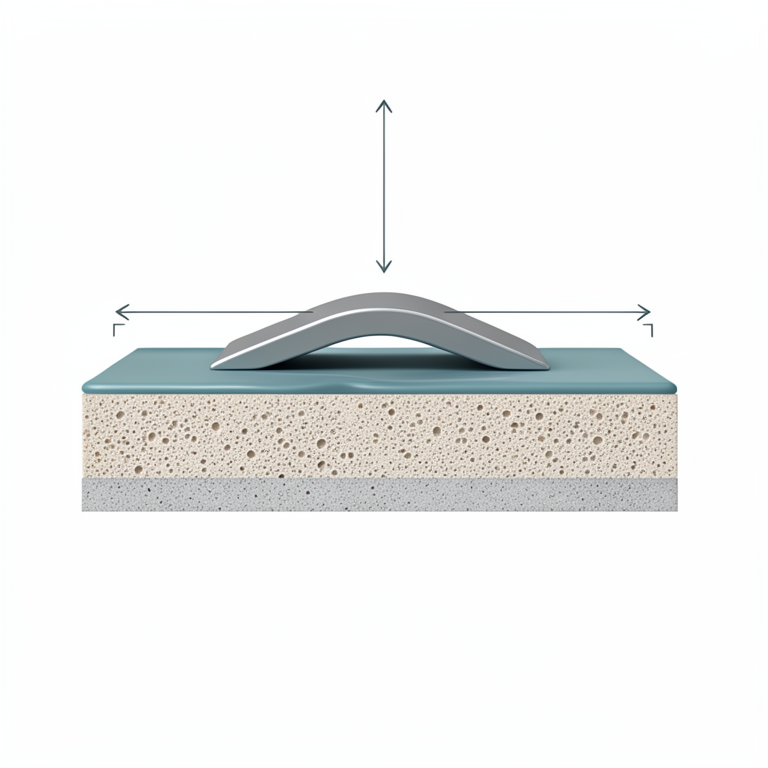
- The system consists of a parabolic slider moving at uniform velocity U over a stator with a porous matrix of uniform thickness H*. View evidence ↗
What they found
- Magnetization was found to increase the load bearing capacity of the bearing. View evidence ↗
- The load bearing capacity of the system decreases as slip velocity increases. View evidence ↗
- Standard deviation of surface roughness causes a sharp decrease in load bearing capacity. View evidence ↗
- Positive skewness reduces load bearing capacity, whereas negative skewness enhances it. View evidence ↗
- The slip parameter significantly reduces the amount of friction in the bearing. View evidence ↗
- Magnetization considerably reduces the friction within the bearing system. View evidence ↗
- Friction is reduced by the standard deviation of the surface roughness. View evidence ↗
What it means
- The authors conclude that using double-layered porous structures with different properties can lead to a superior bearing design. View evidence ↗
- The authors recommend that surface roughness must be considered during design, regardless of whether the magnetic field strength is optimized. View evidence ↗
Visual summary
1 visualsIllustrations explain the paper; they do not show study data.
Bearing System Configuration
AI-generated conceptual illustration (parabolic slider bearing with double-layered porous stator). It explains the idea and does not show study data.
View source evidence ↗Figures & tables
From the original paper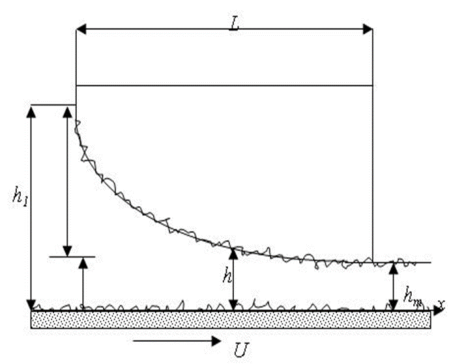 Figure 1
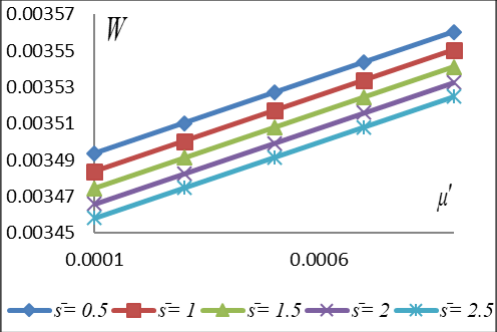 Figure 2
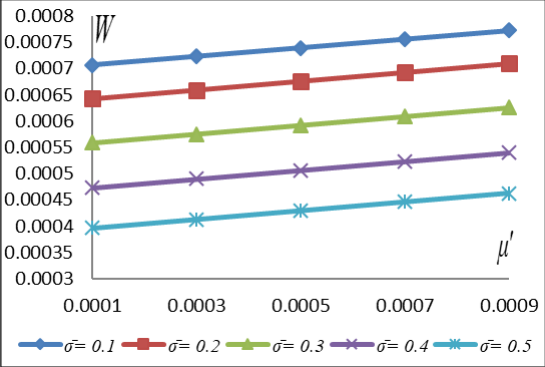 Figure 3
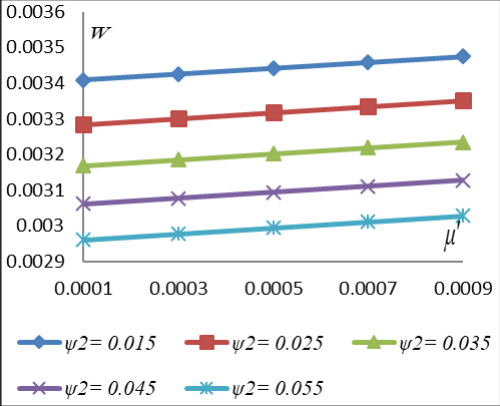 Figure 4
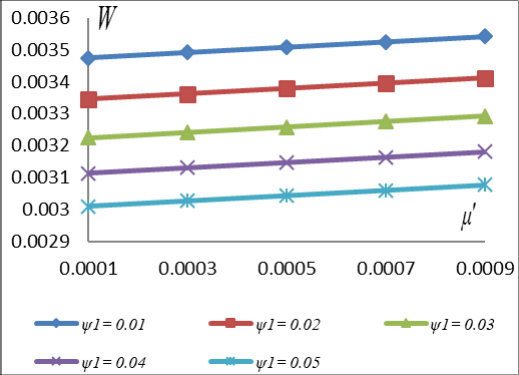 Figure 5
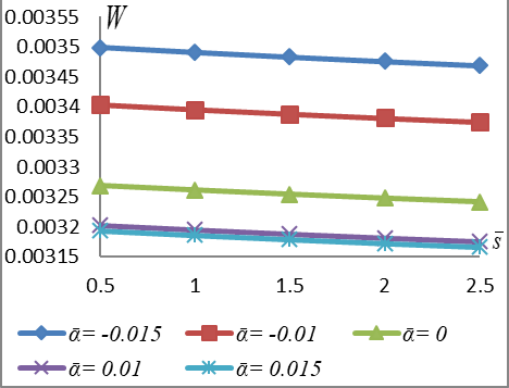 Figure 6
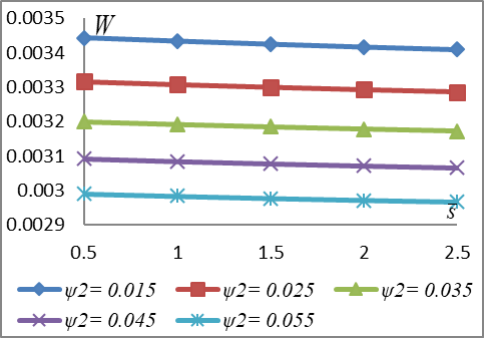 Figure 7
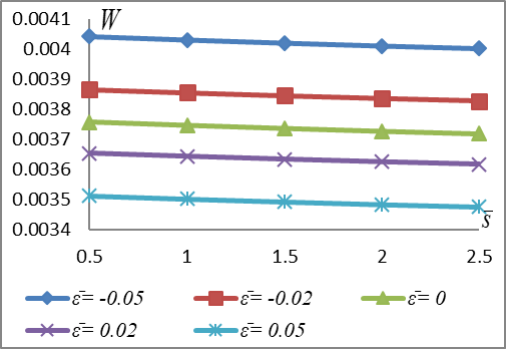 Figure 8
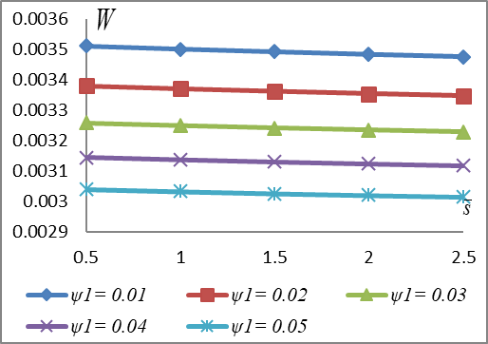 Figure 9
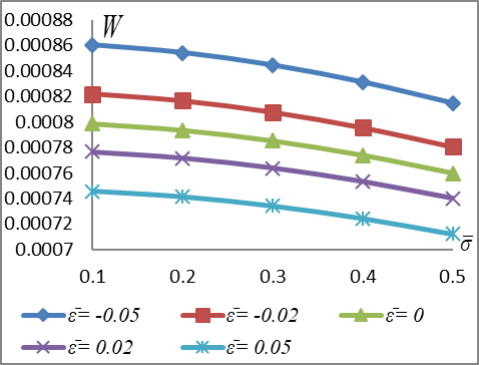 Figure 10
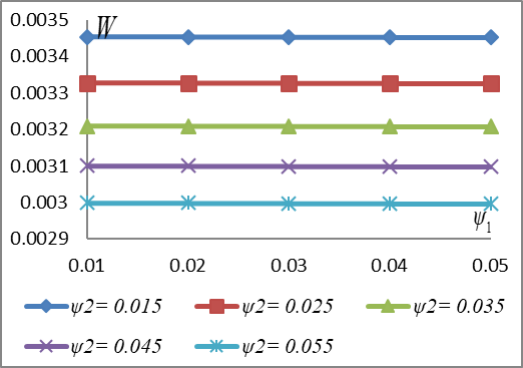 Figure 11
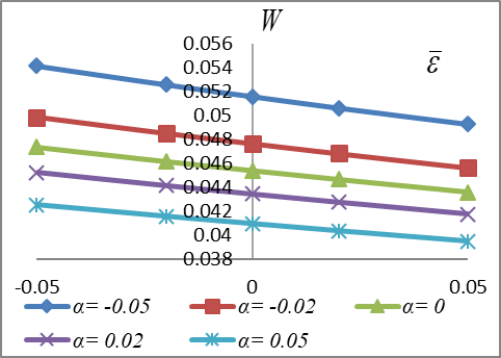 Figure 12
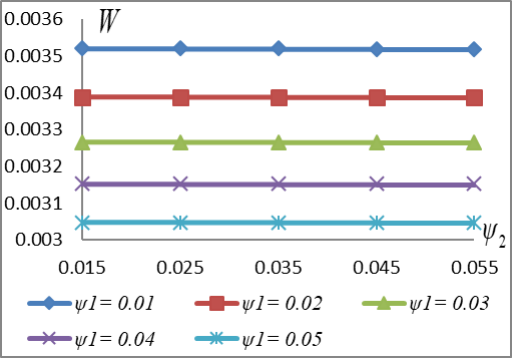 Figure 13
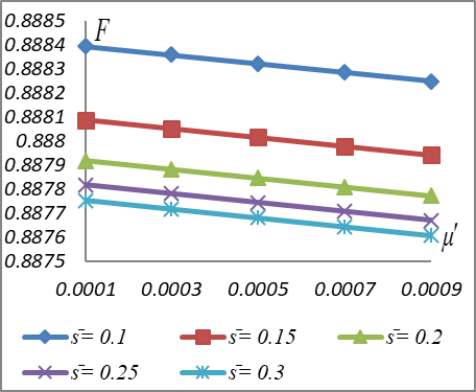 Figure 14
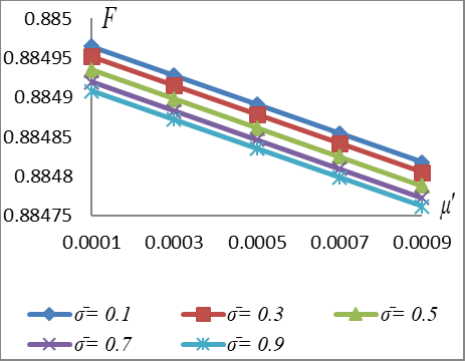 Figure 15
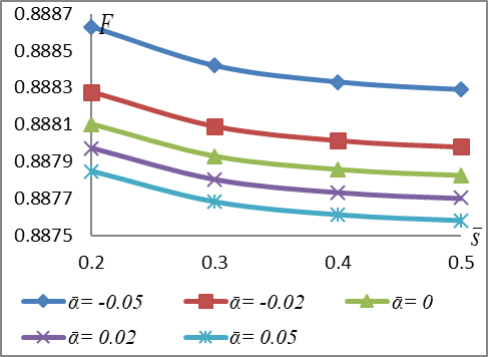 Figure 16
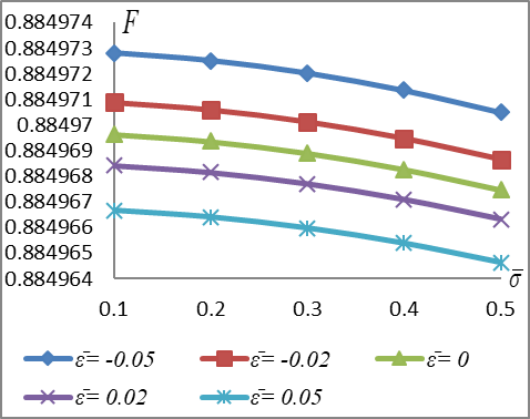 Figure 17
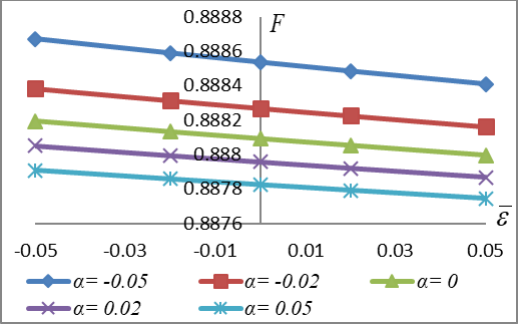 Figure 18
Introduction
Slider bearings are designed for supporting the transverse load in engineering systems. A variety of bearing are adopted by agro-industrial sectors (viz. hydrodynamic bearings, hydrostatic bearings, rolling element bearings etc.) having great influence on reliability, life and power consumption of agricultural machines, tools or equipment's dealing with friction, wear, heat generation & its dissipation. Bearing performance characteristics for various film shapes have been analyzed by a numerous author (Cameron, Pinkus and Sternlicht, Hamrock, Patel et al.) [4,16,10,30] . In order to improve the lubricating performance, applying the couple stress fluid model, many investigations concerning the fluid film lubrication have been conducted. From the studies of squeeze film performance characteristics in finite plates by Ramanaish [19] in partial journal bearings by Lin [12] , it was found that the use of couple stress fluids increased the load bearing capacity and lengthened the response time of squeeze film action. In a view of the discussions of journal bearings by various investigators (Mokhiamer et al. Lin, Patel et al.) [15,[11][12][13]31] and slider bearings by Ramanaish [18] and Lin et al. [14] , It has been concluded that the effects of couple stresses reduce the friction parameter and result in longer bearing life. Lin et al. [14] analyze the effects of couple stress on the steady state performance of wide parabolic shaped slider bearing in accordance with Stokes microcontinuum theory. Agrawal [1] discussed the performance of a plane inclined slider bearing with a ferrofluid lubricant and established that its performance was comparatively better than the corresponding bearing with a conventional lubricant. Patel and Deheri [24] analyzed the performance of a magnetic fluid based double layered rough porous slider bearing considering the combined porous structures of Kozeny -Carman and Irmay. The Kozeny -Carman model was found to perform better. It was established that the roughness of the bearing surfaces tends to retard the motion of the lubricant and hence affecting the bearing system adversely. From this point of view Christensen and Tonder [5,6,7] modified the approach of Tzeng and Saibel [20] to present a study on the effect of surface roughness on the performance of the bearing system. The following investigation made use of the modeling of surface roughness as given by Christensen and Tonder [5,6,7] . The performance of a transversely rough slider bearing with squeeze film by magnetic fluid was analyzed by Deheri et al. [8] by taking various shapes in to consideration. It was found that the magnetic fluid induced an increase in the load bearing capacity although, the effect of transverse surface roughness was found to be adverse in general. This squeeze film performance in the case of longitudinal roughness was relatively better as compared to transversely rough slider bearing for a porous squeeze film formed by a magnetic fluid as investigated by Deheri et al. [9] . Gururajan and J. Prakash [27] investigated that the surface roughness considerably influences the bearing performance and its direction depends on the roughness type. Lin et al. [28] evaluated that the mean squeeze-film characteristics are considerably affected by the roughness pattern and the height of roughness also proved that the effect of circumferential roughness provides a reduction in the mean bearing eccentricity ratio as compared to the smooth-bearing case. However, the squeeze-film bearing with longitudinal roughness structure results in a reversed trend. Srinivasan [21] investigated the load capacity and time height relationship for squeeze films between double layered porous plates, considering various geometries such as annular, circular, elliptic, rectangular etc. The comparison was made between conventional and double layered porous plates. The results showed that load capacity increases due to doubled layered porous plates. Verma [22] presented an investigation for a double layered porous journal bearing using short bearing approximations. The performance characteristics were found to be improved due to low permeability of the inner porous layer. Rao et al. [23] presented an analysis of journal bearing with double layered porous lubricant film using couple stress and Newtonian fluids. A double layered porous lubricant film configuration with a low permeability porous layer on top of a high permeability bearing adherent porous layer improved the bearing performance. Patel et al. [25] pointed out that the different types of material combinations could possibly turn out to be a suitable option for the ferrofluid based journal bearing system and enhance the life period of the bearing system. Patel et al. [26] established that proper conditions due to the positive effect of non-Newtonian ferrofluid help to recompense the poor effect of roughness. Naduvinamani et al. [29] found that the effect of permeability of the porous layer is to decrease the load bearing capacity as it gives an easy path for the lubricant to pass through. This adverse effect can be compensated by introducing double layered porous facing with different permeability. The presented results clearly found that the increase in load bearing capacity and decrease in co-efficient of friction for the double layered porous bearings as compared to that of single layered porous bearings.
Materials and Methods
The geometry and configuration of the bearing system is displayed in Figure 1, which consists of a stator lying along xaxis and having a porous matrix of uniform thickness H * backed by a solid wall, and a parabolic shaped slider moving with a uniform velocity U in x-direction.
where 1 h is the minimum value of h .
The applied magnetic field M is inclined and the inclination φ can be determined as in the case of Bhat [3] . Following Bhat [3] and Prajapati [18] , the magnitude of the magnetic field M is represented by
K being a quantity chosen to suit the dimensions of both sides and the strength of the magnetic field, such a magnetic field was used in [17,3] .
With the usual assumptions of hydromagnetic lubrication, assuming that the z-components of velocities of fluid in the film and porous regions are continuous at the surface z = 0, the Reynolds type equation is obtained as [12,13,2] .
k being the permeability of porous matrix. The use of equations ( 1), ( 2) and the dimensionless quantities
Since the pressure is negligible at the inlet and outlet of the bearing as compared to the inside pressure, one can resort to the boundary conditions
Solving equation ( 4) under the boundary conditions the expression for non-dimensional pressure distribution comes out to be
The load bearing capacity W of the bearing and friction force F on the slider can be expressed in dimensionless form as
Results and discussion
The variation of load bearing capacity with respect to the magnetization parameter μ presented in Figures 4567indicates that magnetization increases the load bearing capacity. Further, the effect of higher values of variance on the load bearing capacity is negligible with respect to the magnetization parameter. It is found that the rate of increase in load bearing capacity is relatively more in the case of a slip coefficient. The effect of slip parameter described in Figures 1819establishes that the friction gets reduced significantly due to the slip parameter and this decrease in friction is relatively less in the case of standard deviation.
Conclusion
It is observed that this type of bearing system dealing with combined effect of double layered different porous structures may provide a better bearing design. The use of magnetic fluid lubricant not only improves the performance of the bearing system but also results in longer bearing life period. This analysis confirms that the roles of variance and skewness are equally crucial from bearing design point of view.
Besides, this study establishes that the roughness should be accounted for while designing the bearing system even if, the magnetic field strength is suitably chosen.
Figures and tables from the paper
References
31 in the original paper- Agrawal VK. Magnetic fluid based porous inclined slider bearing, Wear, 1986;107:133-139.
- Andharia PI, Gupta JL, Deheri GM. Effect of longitudinal surface roughness on hydrodynamic lubrication of hyperbolic slider bearings, PROC. NAT. ACAD. SCI. India. 1998;68, Sec -A, III, p. 249-256.
- Bhat MV. Lubrication with a magnetic fluid, Team Spirit (India) Pvt. Ltd. 2003.
- Cameron A. The Principles of Lubrication, Longmans Green and Co. Ltd., London. 1966.
- Christensen H, Tonder KC. Tribology of rough surfaces: Stochastic models of hydrodynamic lubrication, SINTEF Report No. 10/69-18. 1969.
- Christensen H, Tonder KC. Tribology of rough surfaces: parametric study and comparison of lubrication, SINTEF Report No. 22/69-18. 1969.
- Christensen H, Tonder KC. The Hydrodynamic lubrication of rough bearing surfaces of finite width, ASME-ASLE lubrication conference, Paper No. 70. Lub7. 1970.
- Deheri GM, Andharia PI, Patel RM. Transversely rough slider bearings with squeeze film formed by a magnetic fluid, International Journal of Applied Mechanics and Engineering. 2005;10(1):53-76.
- Deheri GM, Andharia PI, Patel, RM. Longitudinally rough slider bearings with Squeeze film formed by a magnetic fluid, Industrial Lubrication and Tribology, 2004;56(3):177-187.
- Hamrock BJ. Fundamentals of Fluid Film Lubrication, McGraw-Hill, Inc., New York. 1994.
- Lin JR. Effects of Couple Stresses on the Lubrication of Finite Journal Bearing, Wear. 1997;206:171-178.
- Lin JR. Static Characteristics of Rotor Bearing System Lubricated with Couple Stress Fluids, Comput. Struct. 1997;62(1):175-184.
- Lin JR. Linear Stability Analysis of Rotor Bearing System: Couple Stress Fluid Model, Comput. Struct. 2001;79:801-809.
- Lin JR, Lu YM. Steady state performance of wide parabolic shaped slider bearings with a couple stresses fluid, Journal of Marine Science and Technology. 2004;12(4):239-246.
- Mokhiamer UM, Crosby WA, El-Gamal HA. A Study of a Journal Bearing Lubricated by Fluids with Couple Stress Considering the Elasticity of the Linear, Wear, 1999;224:191-201.
- Pinkus O, Sternlicht B. Theory of Hydrodynamic Lubrication, McGraw Hill, New York. 1961.
- Prajapati BL. On certain theoretical studies in hydrodynamics and electro magneto hydrodynamics lubrication, Dissertation, S. P. University, Vallabh Vidyanagar, Gujarat, India. 1995.
- Ramanaish G. Squeeze films between finite plates lubricated by fluids with couple stress, Wear. 1979;54:315-320.
- Ramanaish G. Slider bearings lubricated by fluids with couple stress, wear. 1979;52:27-36.
- Tzeng ST, Saibel E. Surface roughness effect on slider bearing lubrication, Trans. ASME, J. Lub. Tech. 1967;10:334-338.
- Srinivasan U. Load capacity and Time height Relations for squeeze films between double layered porous plates, Wear. 1977;43(2):211-225.
- Verma PDS. Double layered porous journal bearing, Mechanics of Materials. 1983;2(3):233-238.
- Rao TVLN, Rani AMA, Nagrajan T, Hashim FM. Analysis of journal bearing with Double layer porous lubricant film: Influence of surface porous layer configuration, Tribology Transactions. 2013;56(5):841847.
- Patel JR, Deheri GM. Performance of a Magnetic fluid based double layered rough porous slider bearing considering the combined porous structures, Acta Technica Corviniensis-bulletin of Engineering. 2014;7(4):115-125.
- Patel NS, Vakharia DP, Deheri GM, Patel HC. Experimental performance analysis of ferrofluid based hydrodynamic journal bearing with different combination of materials, Wear, 2017, 376-377,1877-1884.
- Patel HA, Patel MP, Patel HC, Deheri GM. Squeeze Film Performance in Parallel Rough Circular Disks Lubricated by Ferrofluid with Non-newtonian Couple Stress Effect, Proceedings of International Conference on Advances in Tribology and Engineering Systems. Lecture Notes in Mechanical Engineering. Springer, New Delhi. 2014, https://doi.org/10.1007/978-81-322-1656-8_9.
- Gururajan K, Prakash J. Surface roughness effects in infinitely long porous journal bearings." Journal of Tribology. 1999;121(1):139-147.
- Lin JR, Hsu CH, Lai C. Surface roughness effects on the oscillating squeeze-film behavior of long partial journal bearings, Computers & structures, 2002;80(3):297-303.
- Naduvinamani NB, Ganachari R. Double-layered porous Rayleigh step slider bearings lubricated with couple stress fluids, Indian Journal of Science and Technology. 2022;15(28):1389-1398.
- Patel ND, Patel JR, Deheri GM. Numerical modelling of Jenkins model based ferrofluid lubricated porous rough hyperbolic slider bearing with effect of slip velocity, International Journal of Mechanical and Production Engineering Research and Development. 2020;10(3):15839-15856.
- Patel ND, Patel JR, Deheri GM. Mathematical model of Shliomis model based ferrofluid lubricated rough porous convex pad slider bearing with effect of slip velocity, International Journal of Applied Mathematics& Statistical Sciences (IJAMSS). 2020;9(6):1-10.