
Research article · 2022 · Full text
International Journal of Research in AgronomyA critical analysis on performance of farm based agri-input entrepreneurs in central Telangana region
Volume 5(2) · Pages 109–112 · DOI: 10.33545/2618060x.2022.v5.i2b.119 ↗
Research areasAgricultural Economics and PracticesAgricultural risk and resilienceLivestock Management and Performance Improvement
Abstract
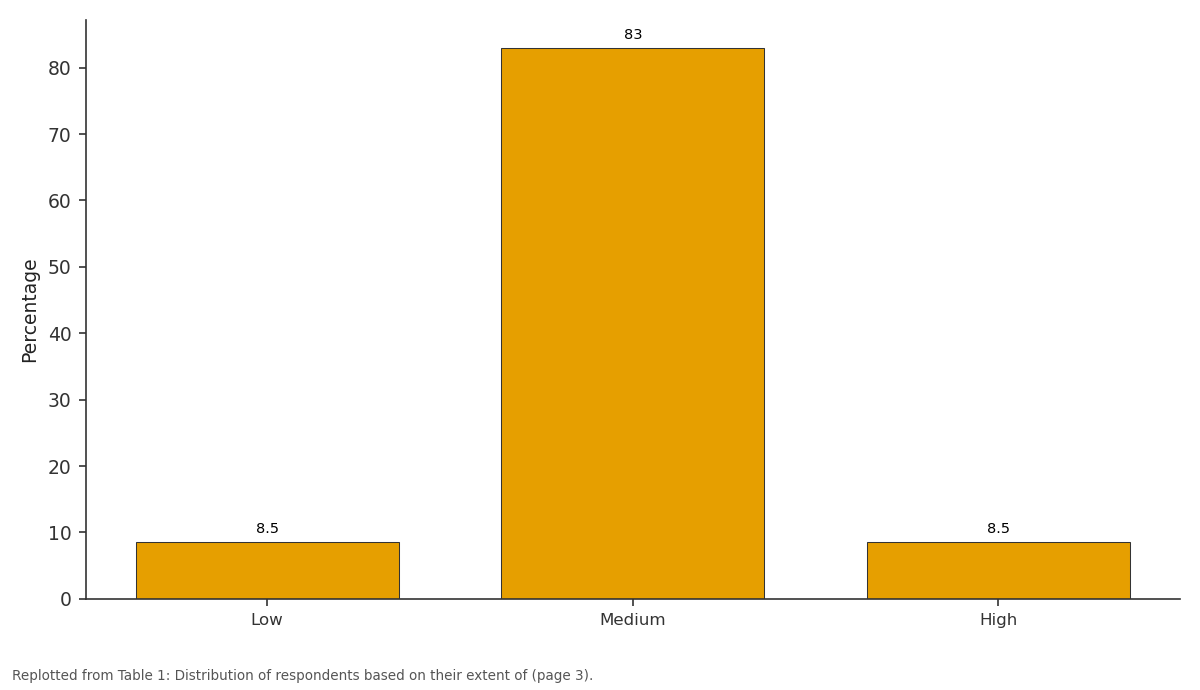
Author-writtenIn a situation when farmers’ suicide and distress sell still remain the key issues in India’s Agricultural scenario, we are dreaming of achieving a double income for the farming community. This gap in the income level of farmers can only be bridged by adopting newer income generating opportunities like establishing Farm based enterprises. Farm based enterprises are the vehicles for transforming rural India, these enterprises are maintained by the agripreneurs this is the people enthusiastically establishing units in agriculture, especially in rural areas. The main aim of my research is to know about the performance of farm based agri input entrepreneurs and their impact on rural people, especially on farmers of the area. The research investigation was conducted in the Central Telangana region of Sanga Reddy district it consists of three revenue divisions namely Zahirabad, Narayanakhed and Sanga Reddy. From each revenue division, nine blocks were selected purposively using a simple random sampling method thus making up a total of 27 blocks. From out of 27 Blocks each block 7-8 respondents were interviewed and collected data with the help of a specially designed interview schedule constituting a total of 200 farm based agri-input entrepreneurs. The main aim of the research is to know the profile of agri-input based Agripreneurs and their role performance in already established farm based agri-input enterprises. The exploratory research design was used for the study. Most of the agri-preneurs (i.e. 80.00 percent) perform only sales and very low percent (i.e. 20.00%) input dealers perform agro-advisory services that specifically for large and medium farmers. 83.00 percent of the respondents had medium level of extent of performance of farm-based enterprises, followed by an equal percentage (8.5%) of respondents who had low and high levels (8.5%) of role performance of farm-based agri-input enterprises respectively.
Summary
Source-checkedPlain-language reading of the full paper, prepared with AI and checked against the text. Each point links to the authors' own words.
Why it matters
- Indian agriculture faces critical challenges including farmer suicides and distress sales, creating a need to double the income of the farming community. View evidence ↗
- Establishing farm-based enterprises is viewed as a way to bridge the income gap for farmers by providing new income-generating opportunities. View evidence ↗
- Because farmers often lack knowledge on the correct use of agrochemicals, agri-input entrepreneurs are vital for providing quality supplies and proper pest and disease recommendations. View evidence ↗
The question
- The study aims to evaluate the performance of farm-based agri-input entrepreneurs and determine their impact on rural populations, particularly local farmers. View evidence ↗
What they did
- The research was conducted in the Sanga Reddy district of the Central Telangana region, covering the revenue divisions of Zahirabad, Narayanakhed, and Sanga Reddy. View evidence ↗
- The study sampled 200 farm-based agri-input entrepreneurs from 27 blocks (nine per revenue division) using purposive and simple random sampling. View evidence ↗
- The researchers used an exploratory and ex-post facto research design, meaning they analyzed events that had already occurred without manipulating independent variables. View evidence ↗
- Role performance was measured using a three-point scale where respondents were scored 2 for 'Fully satisfied', 1 for 'Partially satisfied', and 0 for 'Not satisfied'. View evidence ↗
What they found
- The majority of agri-preneurs (80.00%) focus solely on sales, while only 20.00% provide agro-advisory services, primarily to medium and large farmers. View evidence ↗
- Most respondents (83%) demonstrated a medium level of role performance, while low and high levels of performance were each reported by 8.5% of the sample. View evidence ↗
- Factors such as experience, training received, value orientation, and the ability to coordinate farming activities did not have a significant relationship with role performance. View evidence ↗
What it means
- The authors conclude there is an urgent need for government and national institute intervention to provide guidelines and training to agri-input entrepreneurs, as farmers depend heavily on them. View evidence ↗
- Improving the performance of these entrepreneurs to ensure quality input supply is seen as a key step toward improving farmers' living standards and achieving the government's goal of doubling farmer income. View evidence ↗
- Due to constraints in time and funds, the study was limited to a single district, meaning the findings may not be generalizable to other regions without further research. View evidence ↗
Visual summary
1 visualsIllustrations explain the paper; charts are replotted from the paper's own table values.
Percentage: Low vs Medium vs High
Replotted from Table 1 (page 3) of the original paper. Every bar is the paper's own table value.
View source evidence ↗Figures & tables
From the original paper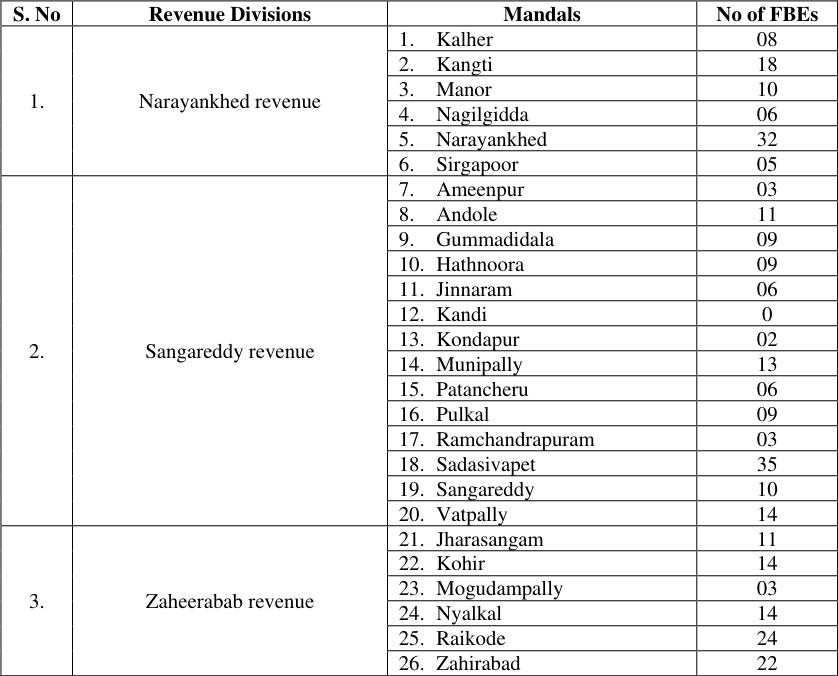 Table 1
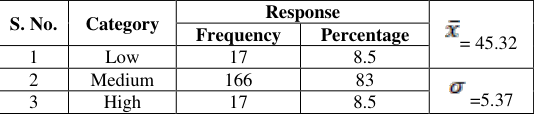 Table 1
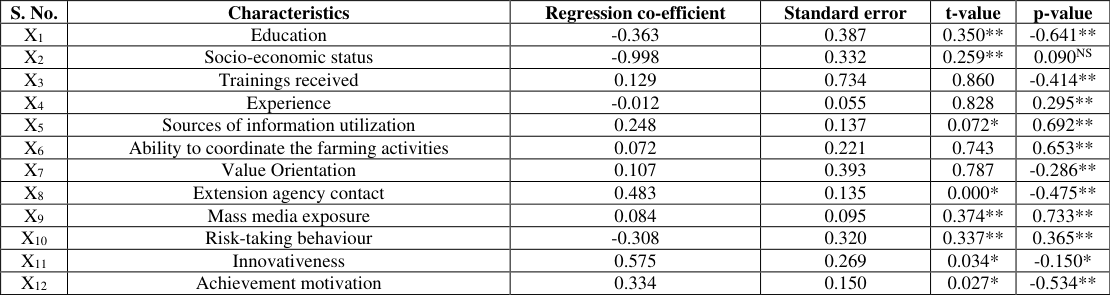 Table 2
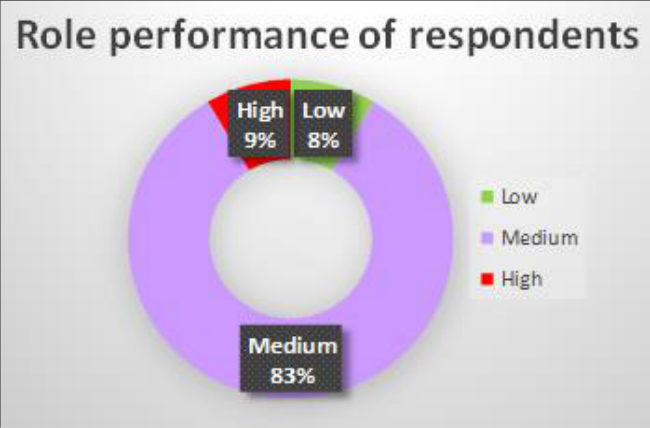 Figure 1
Introduction
A farm-based enterprise is one which produces the finished goods by using agricultural raw materials or producing required inputs for farm or producing economic agricultural produce or rendering services for the farm. Ex; Biofertilizers, Livestock, Agro-processing, Agri clinic etc. (Source: vikaspedia.in/agriculture/farm-based enterprises). India in order to remain a frontrunner needs to primarily focus on agricultural sector, the backbone of the economy. This specialization will develop Agri-preneurs with distinct traits and skills to explore opportunities galore in the field of agriculture. Among the various strategies to promote planned growth in this sector, focusing on promoting viable farm based agri-input enterprises will certainly help exploit its operational efficiency to handle. It is a long held view that innovation in the farming sector in India has progressed since the green revolution of the 1960s and 1970s, the drastic change in that period brought high yielding varieties of seeds along with major improvements in irrigation methods and soil nutrition etc. It is a common argument that farmers in India continue to follow the paradigm established by the green revolution even today despite the fact that natural and economic factors demand revolutionary changes in the agricultural sector once again. The farm based enterprises depend upon agriculture for raw materials. Farm based enterprises are the major market of agricultural commodities. Main farm-based enterprises in India are the sugar industry, the cotton textile industry, jute industry, food processing, paper industry and agricultural input industries or companies like seeds, fertilizers and pesticides employment opportunities in the rural areas of the country are increasing due to the establishment of more and more farm-based enterprises. Farm based enterprises play a significant role in agricultural development.
Increasing population growth in the country places pressure on agricultural production. The miss uses of agrochemicals, pesticides and over use of fertilizers increasing rapidly, and the harmful effects of pesticides are now established worldwide. Farmers are the direct users of pesticides and more like to get acute toxicity of pesticides. The chronic toxicity effect the whole population. Farmers were unaware of correct usage of such agrochemicals, they are guided by agri input dealers and retail outlets of agri inputs. Here the role performance of farm based agri-input enterprises and the agripreneurs is great important for quality supply of agricultural inputs and proper recommendations for the diseases and pests of the crops. Today the average age of the farmer increasing globally and encouraging new generation farmers' i.e. youth into farming, farm-based enterprises are crucial because the quality supply of agricultural inputs like seeds, fertilizers, pesticides etc. ensures the quality production and productivity of agricultural products. Farmers get reasonable cost of the farm-based product by interlinking of farm-based enterprise and farmers. Being an agrarian economy, it is the need of the hour for promoting farmbased enterprises and stabilizing Agripreneurship as one of the most emphasized sectors of governmental policies which are being seen as an answer to low production, unemployment, and poverty reduction in the agricultural sector.
Materials and Methods
The research investigation was conducted in Central Telangana region of Sanga Reddy district it consists of three revenue divisions namely Zahirabad, Narayanakhed and Sanga Reddy. From each revenue division, nine blocks were selected purposively using a simple random sampling method thus making up a total of 27 blocks. From out of 27 Blocks each block 7-8 respondents were interviewed and collected data with the help of a specially designed interview schedule it constitutes a total of 200 farm based agri-input entrepreneurs. The collected data were processed and tabulated manually. Using Simple frequency and percentage were calculated to analyze the data. Exploratory and Ex-Post Facto research design was adopted for the study as the event already occurred and the researcher has no opportunity to influence the independent variables. To place it in Kerlinger (1968) words, ex-post facto research is an orderly experimental enquiry wherein the researchers don't have direct control of impacting (independent) factors. Since their appearances have just happened or on the grounds that they are characteristically not manipulatable. The research investigation was conducted in Zahirabad, Narayanakhed and Sanga Reddy Revenue divisions purposively based on the highest number of agripreneurs, nine blocks were selected from each revenue division, thus making up a total of 27 blocks with the main objective is to study and finding out the role performance of Farm based agri-input entrepreneurs. Total sample size constituted to 200 Agripreneurs involved in agri input services drawn from three revenue divisions randomly as shown in Table 1.
| S. No. | Category | Response | — | = 45.32 |
|---|---|---|---|---|
| Frequency | Percentage | |||
| 1 | Low | 17 | 8.5 | |
| 2 | Medium | 166 | 83 | =5.37 |
| 3 | High | 17 | 8.5 |
Table text extracted from the original PDF; superscript letters are shown inline. The original table image is below.
View original table image
| S. No | Revenue Divisions | Mandals | No of FBEs |
|---|---|---|---|
| 1. | Narayankhed revenue | 1. Kalher | 08 |
| 2. Kangti | 18 | ||
| 3. Manor | 10 | ||
| 4. Nagilgidda | 06 | ||
| 5. Narayankhed | 32 | ||
| 6. Sirgapoor | 05 | ||
| 2. | Sangareddy revenue | 7. Ameenpur | 03 |
| 8. Andole | 11 | ||
| 9. Gummadidala | 09 | ||
| 10. Hathnoora | 09 | ||
| 11. Jinnaram | 06 | ||
| 12. Kandi | 0 | ||
| 13. Kondapur | 02 | ||
| 14. Munipally | 13 | ||
| 15. Patancheru | 06 | ||
| 16. Pulkal | 09 | ||
| 17. Ramchandrapuram | 03 | ||
| 18. Sadasivapet | 35 | ||
| 19. Sangareddy | 10 | ||
| 20. Vatpally | 14 | ||
| 3. | Zaheerabab revenue | 21. Jharasangam | 11 |
| 22. Kohir | 14 | ||
| 23. Mogudampally | 03 | ||
| 24. Nyalkal | 14 | ||
| 25. Raikode | 24 | ||
| 26. Zahirabad | 22 |
Table text extracted from the original PDF; superscript letters are shown inline. The original table image is below.
View original table image
Results and Discussion
The extent of performance of an agripreneur in the farm-based agri-input enterprise can be operationalized as the various role performed by the agripreneur in their enterprise. Based on the available literature, previous studies and opinion from the extension experts, the various role performed by the agripreneur were documented. The respondents were asked to provide their response against the roles under three-point continuum viz., 'Fully satisfied (FS)', 'Partially satisfied (PS)' and 'Not satisfied (NS)' with the scores 2, 1 and 0 respectively. Based on the total score obtained, the respondents were categorized into low, medium and high as mean and standard deviation as check. From Table .1, it can be evident that more than three-fourth of the respondents (83%) had medium level of role performance of farm-based agri-input enterprises, followed by an equal percentage (8.5%) of respondents who had low and high levels of role performance of farm-based enterprises respectively. It might be because of the reason that a high level of education, good extension agency contact, good information sources and better mass media exposure leads to a medium level of role performance in farm-based enterprises resulting in good advisory services. From Table 2. It revealed that the variables sources of information utilization, innovativeness, extension agency contact and achievement motivation had a positive and significant relationship with the role performance of the farm-based enterprise at a 1 percent level of significance. Subsequently, education, mass media exposure, risk-taking behavior and socioeconomic status had positive relationship with role performance at 5 percent level of significance. Consequently, trainings received, experience, ability to co-ordinate the farming activities, value orientation had no significant relationship with the role performance of the farm-based enterprises. It was due to the reason that, innovativeness and achievement motivation determines the role and distinguishes their performance among the other agripreneurs. From Table 2. in the light of role performance, the variables education, training received, value orientation, extension agency contact, innovativeness and achievement motivation were negatively correlated to the role performance of the respondents. Similarly, experience, sources of information utilization, ability to co-ordinate the farming activities, mass media exposure, risktaking behavior had a positive correlation with the role performance of the respondents. Further, socio-economic status was not related to the role performance of the respondents. It was due to the reason that experience, good sources of information, mass media exposure and risk-taking behaviour determine and improve the role of the respondents in their enterprise.
| S. No. | Characteristics | Regression co-efficient | Standard error | t-value | p-value |
|---|---|---|---|---|---|
| X1 | Education | -0.363 | 0.387 | 0.350** | -0.641** |
| X2 | Socio-economic status | -0.998 | 0.332 | 0.259** | 0.090NS |
| X3 | Trainings received | 0.129 | 0.734 | 0.860 | -0.414** |
| X4 | Experience | -0.012 | 0.055 | 0.828 | 0.295** |
| X5 | Sources of information utilization | 0.248 | 0.137 | 0.072* | 0.692** |
| X6 | Ability to coordinate the farming activities | 0.072 | 0.221 | 0.743 | 0.653** |
| X7 | Value Orientation | 0.107 | 0.393 | 0.787 | -0.286** |
| X8 | Extension agency contact | 0.483 | 0.135 | 0.000* | -0.475** |
| X9 | Mass media exposure | 0.084 | 0.095 | 0.374** | 0.733** |
| X10 | Risk-taking behaviour | -0.308 | 0.320 | 0.337** | 0.365** |
| X11 | Innovativeness | 0.575 | 0.269 | 0.034* | -0.150* |
| X12 | Achievement motivation | 0.334 | 0.150 | 0.027* | -0.534** |
Table text extracted from the original PDF; superscript letters are shown inline. The original table image is below.
View original table image
Conclusion
Farm-based enterprises not only empower farmers but are also involved in the social upliftment of rural areas thereby improving the standard of living, reducing unemployment and poverty alleviation, in another aspect, it becomes necessary to feed the growing population in India. In this study through possible efforts, I would conclude that the role performance of farm based agri-input entrepreneurs is as follows 83.00 percent of the respondents had medium level of extent of performance of farm-based enterprises, followed by an equal percentage (8.5%) of respondents had low and high level of role performance of farm-based enterprises respectively. The Independent variables such as sources of information utilization, innovativeness, extension agency contact and achievement motivation had a positive and significant relationships with the role performance of the farm-based enterprise at 1 percent level of significance. Subsequently, education, mass media exposure, risk-taking behaviour and socio-economic status had a positive relationship with role performance at 5 percent level of significance. Consequently, trainings received, experience, ability to coordinate the farming activities, value orientation had no significant relationship with the role performance of the farmbased enterprises. There is an urgent felt need to concentrate on the farm based agri input enterprises because the farmers completely depend upon the agri input dealer only with intervention of government and other national institutes to give proper guidelines and conducting training session to improve the performance of the farm based agri input entrepreneur's through them quality supply of farm inputs leads to quality production there by improving the standard of living of the farmers, the central government aim of achieving doubling income to the farmers will be possible.
Implications of the study
1. Creating awareness on the usage of insecticides, fungicides and fertilizers used through entrepreneurial programmes, trainings and awareness campaigns. 2. Increased level of education, good extension agency contacts and better exposure to mass media helps them to be aware of the new technologies and practices, 3. Support from family members and the government, innovativeness, self-identity, and need for additional family income motivate them to initiate their business. 4. Most of the respondents were unaware of the purpose and place of training since the participation of respondents in various extension programmes like exhibitions, awareness campaigns, training, etc. becomes necessary. 5. Most of the respondents were aware of the various legal procedures related to documents applying for licenses, seedrelated, fungicides, insecticides, pesticides and fertilizers used, market related. 6. Awareness level of various schemes and technologies seems to be increased through the efforts of Government promotional activities. 7. Most of the respondents had a medium level of role performance and they were aware of their role in their enterprise. 8. Socioeconomic status of respondents does not have any association with the factors that motivate them to start their enterprise or their extent of role performance. 9. Providing vocational training programmes, managerial and technical assistance, financial assistance, space and infrastructure facility, increased awareness about government schemes and institutional support, providing good education, and credible sources of information which in turn promote the farm-based enterprises. 10. Eliminating the middlemen, creating new market opportunities, regulating the price of inputs, and provision of bank loans with low-interest rates also motivated them to do their job efficiently and effectively.
Limitations of the study
Though all possible efforts were made to make the study objective and precise, certain limitations did remain. The present study, being part of the Master's programme, has the normal limitations of time, funds and other facilities commonly faced by single-student researchers. These limitations led to the purposive selection of only one district as the locale of the study. Generalizations made based on the findings of the study may not be directly applicable to other areas and need to be substantiated with other studies.
Figures and tables from the paper
References
9 in the original paper- Kumar S. Evaluating of training on backyard poultry: A case of entrepreneurship development among small and marginal farmers. Indian Journal of Extension Education. 2001;48(1&2):65-67.
- Lanosia LB, Baldos DP. Seed production, distribution and procurement of open pollinated corn varities in corn growing provinces of Philippines. Philippine Journal of Crop Science. 1992;17(2):67-74.
- Lawrence C, Ganguli D. Entrepreneurial behaviour of dairy farmers in Tamil Nadu. Indian Research Journal of Extension Education. 2012;12(1):66-70.
- Manage. Agricultural advisory services by certified agripreneurs: Manage initiative to strengthen private extension services. Agripreneur: A virtual experience sharing platform. 2016;8(1):1-4.
- Mandal BK, De D. Factors affecting sources of information utilization. Indian Journal of Extension Education. 2013;49(1&2):93-95.
- Mande JV, Darade NW. Training needs of farm input dealers for transfer of agriculture technology. Journal of Community Mobilization and Sustainable Development. 2011;6(2):141-144.
- Meti CB. Agricultural input dealers and their role in managing soil health. Environment & Ecology. 2013;31(1A):216-219.
- Aravinda Ch, Renuka S. Women entrepreneurs-An exploratory study. Public opinion survey. 2002;7(5):5-6.
- Argade S, Sarkar A, Mishra S. Gender based involvement of agro-input dealers in Extension activities in Maharastra state, India. International Journal of Agriculture Sciences. 2015;7(3):470-473.