
Research article · 2017 · Full text
International Journal of Advanced Biochemistry ResearchInflammatory markers in essential hypertension
Volume 1(1) · Pages 17–21 · DOI: 10.33545/26174693.2017.v1.i1a.6 ↗
Research areasHormonal Regulation and Hypertension
Abstract
Author-writtenObesity and weight gain are strong independent risk factor for HTN. It has been shown that, 60% of hypertensive are >20% overweight. Among population HTN prevalence is related to dietary NaCl intake and the age related increase of BP may be added by a high NaCl intake. The most important factors in the development of HTN at the population level are calorie excess (as manifest by obesity) high salt intake, low potassium and calcium intake, physical inactivity, heavy alcohol consumption and psychosocial stress. An increased in body weight from childhood to young adulthood is a major predictor of adult HTN.
Summary
Source-checkedPlain-language reading of the full paper, prepared with AI and checked against the text. Each point links to the authors' own words.
Why it matters
- Hypertension is currently a significant health issue in India. View evidence ↗
- Hypertension doubles the risk of various cardiovascular diseases, such as coronary heart disease, stroke, and renal failure. View evidence ↗
- High blood pressure is linked to chronic low-grade inflammation, which is thought to play a role in the development of hypertension. View evidence ↗
The question
- The paper examines the association between hypertension and five major inflammatory markers: hs-CRP, IL-6, IL-1β, TNF-α, and Angiotensin-II. View evidence ↗
What they did
- The author references epidemiological data showing hypertension prevalence in India is 25% in urban areas and 10% in rural areas. View evidence ↗
- The paper notes the diagnostic criterion for hypertension as an average of two or more blood pressure readings of 140/90 mmHg or more on two separate occasions. View evidence ↗
What they found
- Increased levels of high-sensitive C-reactive protein (hs-CRP) are associated with a higher risk of future cardiovascular events, including stroke and myocardial infarction. View evidence ↗
- Elevated hs-CRP levels can predict the future development of hypertension in people who currently have normal blood pressure. View evidence ↗
- Metabolic syndrome, which includes essential hypertension and obesity, is characterized as a systemic low-grade inflammatory condition with elevated levels of CRP, IL-6, and TNF-α. View evidence ↗
- Angiotensin II acts as a vasoconstrictor, causing blood vessels to narrow and increasing blood pressure. View evidence ↗
- Angiotensin II contributes to vascular remodeling in hypertension by influencing smooth muscle cell growth, migration, and inflammation. View evidence ↗
What it means
- The author concludes that chronic low-grade inflammation is an integral part of vascular disease and is likely involved in the development of hypertension. View evidence ↗
- The author recommends identifying inflammatory markers as new therapeutic targets and evaluating anti-inflammatory treatments to better combat cardiovascular disease and hypertension complications. View evidence ↗
Visual summary
1 visualsIllustrations explain the paper; they do not show study data.
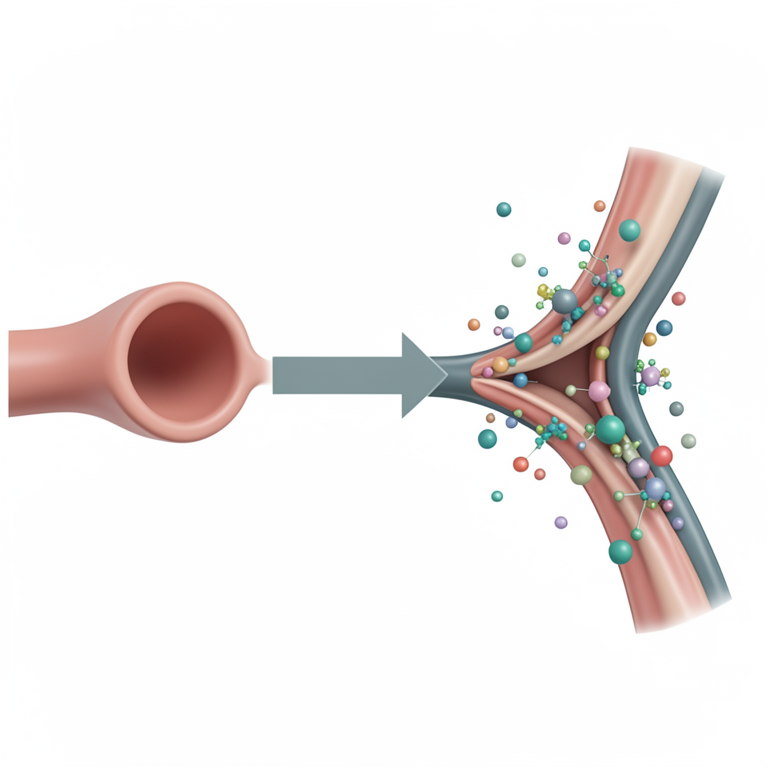
Inflammatory Markers and Hypertension
AI-generated conceptual illustration (human blood vessels and arterial walls). It explains the idea and does not show study data.
View source evidence ↗Introduction
HTN is a major health problem in developed as well as developing countries with a common end result of elevated blood pressure. EHT or prehypertension refers to the HBP with no identifiable cause [1] . HTN is the 3 rd leading killer in the world and is responsible for 1 in every 8 deaths. A pooling of epidemiological studies show that HTN is present in 25% of urban and 10% rural population in India [2] . In India is the leading non communicable disease risk and estimated to be attributable for nearly 10% of all deaths. The number of hypertensive individuals is anticipated to nearly double from 118 millions in 2000 to 213 millions by 2025 [3] . HTN is reported to be the 4 th contributor to premature death in developed countries and 7 th in developing countries [4] . India will be largest number of people with hypertension in the world, with the potential of becoming the "Hypertension capital of world." [5] . HTN is directly responsible for 57% of all stroke deaths and 24% of coronary heart disease deaths in India [6] . HTN prevalence is lower in the rural India population than urban; there is strong correlation between changing lifestyle factors and increase in HTN in India [7] . Epidemiological studies show that, 20-60% of EHT is inherited and the remaining is acquired or environmental [8] . The increase in systolic BP in men up to the age of 25 is greater than the increase in women. Acceleration of the rise BP in women then leads to a cross over in systolic BP between the age 45 & 60. Diastolic BP rises both in sexes until the end of the 6 th decade, when it begins to fall. The United states Joint National committee on Detection, Evaluation & Treatment of high B.P. recommended as a criterion for the diagnosis of HTN an average of two or more BP readings of 140/90 mmHg or more confirmed on two subsequent occasions. This has advantage of establishing that BP elevation requires to be stained for the diagnosis of EHT to be made. Nevertheless, using this criterion the prevalence of EHT is still very high [9] . HTN is one of the commonest ailments affecting our society. Although the exact burden in the Indian scenario is not known, several small studies point towards its being endemic specially in the urban population. The disease has a slow smoldering cause but high morbidity and mortality if not adequately controlled [10] . HTN is major health problem for the world population and strongest prognostic markers of CVD. HTN remains silent, being generally asymptomatic during its clinical course. As it is hidden beneath an out wordly asymptomatic appearance, the disease does immense harm to the body in the form of "Target Organ" damage; hence the WHO has named it the "Silent Killer". [11] HTN a life time condition and if left untreated leads to lethal complications [12] .
HTN and inflammatory markers
Inflammation have been identified as the underlying cause of atherosclerosis [13] and HTN as a risk factor for atherosclerotic disease [14] . Inflammation may also be implicated in the development of HTN either as primary or secondary event. HTN is one of the most important risk factor for CVD and has become an increasingly important contributor to the global health burden [15] . There are five major markers relevant to association with inflammation and HTN. These are high sensitive C-reactive protein (hs-CRP), Interleukin (IL-6), Interleukin (IL-1β), Tumor Necrosis factor alpha (TNF-α), Angiotensin-II (Ang-II). Acute phase proteins (APP) are a class of protein whose plasma conc. Increase (positive acute phase proteins) or decrease (negative acute phase proteins) in response to inflammation. This response is called the acute phase reaction. In response to injury local inflammation cells secrete a number of cytokines into the blood stream, which are IL-1β, IL-6, TNF-α [16] .
C-reactive protein
CRP is a plasma protein, present in trace amount (≤1mg/L) in healthy subjects. Whose conc. increases 100 fold in response to inflammation. CRP is named so for its ability precipitate the somatic C-polysaccharides of streptococcus pneumoniae [17] . CRP was originally discovered by Tillett and Fancis in 1930 as a substance in the serum of patients with acute inflammation that reacted with the C polysaccharide of Pneumococcus [18] . CRP is one of the hepatic acute phase reactants, in response to interleukin-6 (IL-6) and Interleukin (IL-1β) it is an excellent diagnostic marker. The relevance of elevated of inflammatory markers predicting CV risk, is gaining increasing recognition and CRP has been the most intensively investigated in clinical studies [17] . Chronic low grade inflammation as an integral part in the pathogenesis of vascular disease and inflammation may be implicated in the development of HTN. Several studies show that, increased numbers of pro-inflammatory markers such as high sensitive C-reactive protein (hs-CRP) in HTN. Furthermore elevated hs-CRP levels have also been predictive for the development of HTN in prehypertensive and normotensive patients. In HTN, inflammatory state is a specific position for new therapeutic target for future drug design. hs-CRP evolved as the most robust and reproducible marker of vascular inflammation and considered the prototypic downstream marker of inflammation. Elevated level of hs-CRP increase the risk of future CV events like stroke, peripheral vascular disease, sudden cardiac death, atrial fibrillation, plaque rupture and recurrent ischaemia and myocardial infarction [15] . In addition, elevated level of hs-CRP appears to be predictive for the development of future HTN in normotensive individuals and it may be suggest that, inflammation even precedes the subsequent development of HTN [19] . CRP production by hepatocytes is regulated by proinflammatory cytokines, such as IL-6, IL-1β & TNF-α and one inflammatory marker important for fully reflect the complexity of inflammation and its apparent association with HTN [20] . HTN usually associated with other components of the metabolic syndrome such as obesity, insulin resistance, dyslipidemia, hypercoagulation, increased inflammation and left ventricular hypertrophy. In this obesity, atherosclerosis, insulin resistance, hyperinsulinemia, hyperlipidemia, essential HTN, type 2 diabetes mellitus and coronary heart disease are components of the metabolic syndrome. These are associated with elevated plasma levels of CRP, IL-6 & THF-α which are marker of inflammation. It is seen that, the metabolic syndrome is a low grade, systemic, inflammatory condition. Hence, anti-inflammatory measures might be beneficial in preventing or halting the progression of the metabolic syndrome in high risk populations [21,22] . Low grade inflammation is involved in the development and pathophysiology of HTN. Essential HTN is characterized by increased peripheral vascular resisrance to blood flow, due to large part to vascular remolding. Vascular changes in HTN resulting abnormal function, inflammation. Inflammation is vascular wall plays a key role in the pathgenesis and progression of atherosclerosis, CVD and HTN [23] . TNF-α & IL-6 could be independent risk factors for HBP in apparently healthy subjects. [20] IL-6 & IL-1β as inflammatory markers, cytokines are peptides used by cells for intracellular communication and controlling the inner environment of the cells in which they operate, cytokine are produced by cell types that have important roles in the immune response and inflammation healing and systemic response to injury. The evolution of cytokines as molecules of major biological significance started a new era. The year 1980s are considered by many to be golden age of cytokine research because many individual cytokines were discovered. Cytokines are directly implicated in various pathophysiological conditions in humans and their increased production is responsible for their elevated levels in different body fluids and blood. Cytokines are involved in modulation mechanisms, with beneficial or harmful effects in a particular pathological event including the inflammatory process [24] .
IL-1β
Interleukin-1 was discovered by Gery in 1972. [25,26,27] He named it lymphocyte-activating factor (LAF) because it was a lymphocyte mitogen. It was not until 1985 that interleukin 1 was discovered to consist of two distinct proteins, now called interleukin 1α and interleukin 1β. [29] Interleukin 1β is a member of the interleukin 1 cytokine family. This cytokine is produced by activated macrocytes as a proprotein. IL-β also known as catabolin is a cytokine protein that in human is encoded by the IL-1β gene [28,29,30,31] . IL-1β precursor is cleaved by caspase 1 (IL-1β convertase) cytosolic thiol protease. Cleaves the product to form mature IL-1β [25,26,27] . This cytokine is an important mediator of the inflammatory response and is involved in a variety of cellular activities including cell proliferation, differentiation and apoptosis. The induction of cyclo-oxygenase-2 by this cytokine in the central nervous system is found to contribute to inflammatory pain hypersensitivity [32] . In the body, vascular inflammation may be involved in both the initiation and development of HTN [23] . Data supporting the association of IL-1β with HTN is derived from a few small studies. There is emerging data from several gene studies addressing weather polymorphisms in the IL-6 & IL-1β gene might predispose to HTN [33] .
Interleukin-6 (IL-6)
IL-6 is an interleukin that act both as proinflammatory and anti-inflammatory cytokine. IL-6 is a protein, molecular weight vary from 20-29 KDa, it is secreated by T cells and macrophages to stimulate immune response like during infection and after trauma, especially burns or other tissue damage leading to inflammation. [34] IL-6 is a 'myokine' a cytokine produced from muscle and it is elevated in response to muscle contraction [35] . During exercise, IL-6 is significantly increased in the circulation [36] . Also smooth muscle cells in the tunica media of many blood vessels produce IL-6 as a pro-inflammatory cytokine [37] . IL-6 is one of the most important acute phase response. IL-6 stimulates the synthesis of several acute phase proteins like CRP, TNF-α & IL-1β [38] .
Tumor Necrosis Factor-α (TNF-α)
TNF Cachexin or (cachectin formerly known as TNF or TNFα) is a member of both specific and nonspecific biological responses and an important link between immune and inflammatory reactions [24] . TNF is produced by activated macrophages, the primary role of TNF is the regulation of immune cells to induce sepsis (through IL-1 & IL-6 production) to induce cachexia induce inflammation [39] . Elevated plasma levels of TNF-α have been shown to predict future risk of atherosclerotic plaque rupture, [40] atherosclerosis has an inflammatory component that play an integral role in pathogenesis of cardiovascular events such as HTN [41] . There is also evidence to support the synthesis of TNF-α to adipose tissue [42] . This may contribute to both the maintenance of a chronic low grade inflammatory state in obese patients and to the associated comorbidites such as HTN [42,43,44] .
Angiotensin II (AngII)
Angiotensin a peptide hormone, cause blood vessels to constrict and increase BP. It is a part of rennin-angiotensin system, which is a major target for drugs that lower blood pressure (B.P.) AngII act as a vasoconstriction increased BP [45] .
Structural alternations of resistance arteries, a process known as remodeling. In HTN, AngII play an important role at the cellular level like vascular remodeling involves changes in vascular smooth muscle cell growth, cell migration and inflammation. So, AngII possesses several proinflammatory properties and vascular remodeling have inflammation in HTN [46,47,48,49] . Ang II may be responsible for the inflammatory changes and direct effects on cellular proliferation, apoptosis, development and progression of atherosclerosis as well as atherosclerotic plaque, AngII may play a pivotal role in the progression of inflammation in HTN [50] . HTN is a vascular disease leads to vascular damage associated with inflammation. In HTN AngII is one of the most important factor, increasing vascular permeability promote recruitment of inflammatory cells into tissues and contribute to inflammatory process [51] . Inflammation and HTN are closely inter-related.
Conclusion
Chronic low grade inflammation has an integral part in the pathogenesis of vascular disease. Inflammation may also be implicated in the development of HTN. Inflammatory mechanisms are important participants in the pathophysiology of HTN and CVD. The identification of useful markers of inflammation of new therapeutic targets to interfere with these mechanisms and the evaluation of the efficacy of anti-inflammatory treatments will allow progress in our ability to combat CVD and the complications of HTN.
References
47 in the original paper- Chobanian AV, Bakris GL et al. National heart, lung and Blood Institute Joint National Committee on prevention, Detection, Evaluation & Treatment of HBP; National HBP education Program Coordinating Committee. The Seventh report of the joint national committee on prevention, Detection, Evaluation & Treatment of HBP. The JNC & report. JAMA. 2003; 289:2560-72.
- Rita Sood, Sood AK. The JNC 7 Report on HTNCritical Analysis, The association of Physicians of India, Medicine Update. 2005; 15:151-156.
- Reddy KS, Shah B, Varghese C, Ramadoss A. Responding to the threat of chronic diseases in India. Lancet. 2005; 366:1744-9.
- Deepa R, Shanthirani CS, Pradeepa R, Mohan V. Is the 'rule of halves' in HTN still valid? Evidence from the Chennai Urban Population Study. J Assoc Physicians India. 2003; 51:153-7.
- Pradeepa R, Mohan VN. in developing countries, Indian j of Med Res. 2008; 128(6):688-90.
- Gupta R. Trends in HTN epidemiology of India, J of Human HTN. 2004; 18:73-78.
- Anand MP. Epidemiology of HTN, In: current Concepts in HTN, 1 st Edition, Sainani GS (Ed).ICP Mumbai, 1995, 4-13.
- Morris Brown J. Matching the right drug to the right potential in EHT, Heart. 2001; 86:113-120.
- Giuseppe Mancia, Guido Grssi. Management of EHT, British Med Bulletin. 2010; 94:189-199.
- Pramod Akat B, Tushar Bapat R et al. Comparasion of the Efficicacy and tolerability of telmisartan & enalapril in patients of mild to moderate EHT, Ind J Pharmacol. 2010; 42(3):153-156.
- Mcinnes GT, Semple PF. HTN: investigation, assessment & diagnosis. British medical bulletin. 1994; 50(2):443-459.
- Christopher Boos J, Gregory Lip YH. Is HTN an inflammatory process? Current Pharmaceutical Design. 2006; 12:1623-1635.
- Lippincott's illustrated reviews; immunology. Paperback: 384 pages. Publisher: Lippincott Williams & Wilkins, 2007, 1.
- Shafi Dar M, Pandith AA et al. hsCRP; A potential marker for HTN in kashmiri population, IJCB. 2010; 28(2):208-212.
- Tillet WS, Francis Jr T. Serological reactions in pneumonia with a nonprotein somatic fraction of pneumococcus. J EXP MED. 1930; 52:561-585.
- Saito M, Ishimitsu T, Minami J, Ono H, Ohrui M, Matsuoka H. Relation of plasma hsCRP to traditional CV risk factors, Atherosclerosis. 2003; 167:73-79.
- Bautista LE, Vera LM, Arenas IA, Amarra G. Independent association between inflammatory markers (CRP, IL-6 & TNF-alpha) anf EHT J Hum HTN. 2005; 19:149-154.
- Sesso HD, Buring JE, Rifai N, Blake GJ, Gaziano JM, Ridker PM. CRP and risk of developing HTN. JAMA. 2003; 290:945-2951.
- Bautista LE, Lopez Jaramillo P, Vera LM, Cases JP, Otero AP, Guaracao AI. Is CRP an independent risk factor for EHT? J HTN. 2001; 19:857-861.
- Carmine Savoia, Ernesto Schiffrin L. Inflammation in HTN, Curr Opin Nephrol Hypertens. 2006; 15:152-158.
- Manuel Santos Rosa, Anabela Mota Pinto, Cytokines. Tietz textbook of clinical chemistry & molecular Diagnostics, 4 th edition, editor-Carl A Burtis, 2006, 645-744.
- Gery Gershon RK, Waksman BH. Potententiation of the T-lymphocyte response to mitigensI The responding cell. J Exp Med. 1972; 136;(1):128-142.
- Gery Gershon RK, Waksman BH. "Potententiation of the T-lymphocyte response to mitigensII The celluiar source of potentiating mediators. J Exp Med. 1972; 136(1):143-155.
- Gery, Handschumacher RE. Title = potentiation of the T lymphocyte response to mitogen III. Properties of the mediators from adherent cells/author=Cellular immunology. 1974; 11(1-3):162-169.
- Auron PE, Webb AC, Rosenwasser LJ, Mucci SF, Rich A, Wolff SM et al. Nucleotide sequence of human monocyte interleukin 1 precursor cDNA. Proc Natl Acad Sci USA. 1984; 81(24):7907-11.
- March CJ, Mosley B, Larsen A, Cerretti DP, Braedt G, Price V et al. Cloning, sequence and expression of two distinct human IL-1 complementary DNAs. Nature. 1995; 315(6021):641-7.
- Clark BD, Collins KL, Gandy MS, Webb AC, Auron PE. Genomic sequence for human proIL-1 alpha gene.Nucleic acids Res. 1986; 14(20):7897-1914.
- Bensi G, Raugei G, Palla E, Carinci V, Tornese Buonamassa D, Melli M. Human IL-1 alpha gene Gene, 1987; 52(1):95-101.
- Lin RC, Morris BJ. Association analysis of polymorphism at the interleukin-1 locus in EHT. Am J Med Genet. 2002; 107:311-316.
- Van der Poll T, Keogh CV, Guirao X, Buurman WA, Kopf M, Lowry SF. IL-6 gene deficien t mice show impaired defense against pneumococcal pneumonia. J Infect Dis. 1997; 176(2):439-444.
- Febbraio MA, Pedersen BK. Contraction induced myokine production and release: is skeletal muscle and endocrine organ? Exerc Sport Sci Rev. 2005; 33(3):114-119.
- Petersen AM, Pedersen BK. The anti-inflammatory effect of exercise. J Appl Physiol. 2005; 98(4):11541162.
- Banks WA, Kastin AJ, Gutierrez EG. Penetration of IL6 across ttthe murine blood brain barrier, Neurosci. Letttt. 1994; 179(1-2):53-56.
- Tilg H, Dinarello CA, Mier JW. IL-6 & APPs: antiinflammatory and immunosuppressive mediators, Immunol Today. 1997; 18:428-432.
- Swardfager W, Lanctot K, Rothenburg L, Wong A, Cappell J, Herrmann N. A mata analysis of cytokines in Alzheimer disease. Biol Psychiatry. 2010; 68(10):930941.
- Abramson JL, Lewis C, Murrah NV, Anderson GT, Vaccarino V. Relation of CRP & TNF-alpha to ambulatory BP variability in health adults. Am J Cardiol. 2006; 1;98(5):649-652.
- Chae CU, Lee RT, Rifia N, Ridker PM. BP & inflammation in apparently healthy men. HTN. 2001; 38:399-403.
- Bullo M, Garcia-Lorda P, Megias I, Salas-Salvado J. Systematic inflammation, adipose tissue TNF & leptin expression, Obes Res. 2003; 11:525-531.
- Lee YH, Partley RE. The evolving role of inflammation in obesity and the metabolic syndrome. Curr Diab Rep. 2005; 5:70-75.
- Ferroni P, Basili S, Falco A, Davi G. inflammation, insulin resistance & obesity. Curr Atheroscler Res. 2004; 6:424-431.
- Basso N, Terragno NA. History about the discovery of Rennin-angiotensin system. HTN. 2001; 38(6):12461249.
- Cohn JN. ACE inhibition and vascular remodeling of resistance vessels: Vascular complication & cardiovascular implications, Heart Dis. 2000; 2:S2-6.
- Touyz RM, Tabet F, Schiffrin EL. Redox dependent signaling by angiotensin II & vascular remodeling in HTN. Clin Exp Pharmacol Physiol. 2003; 30:860-866.
- Touyz RM. Recent advances in intracellular signaling in HTN. Curr Opin Nephrol Hypertens. 2003; 12:165174.
- Hayoz D. Left ventricular hypertrophy and remodeling of resistance arteries: the role of activation of the rennin-angiotensinaldosterone system in Hypertension. J HTN. 2002; 20:1295-1306.
- Zhao Q, Ishibashi M, Hiasa K, Tan C, Takeshita A, Egashira K. Essential role of vascular endothelial growth factor in Ang II induced vascular inflammation and remodeling. HTN. 2004; 44:264-270.
- Touyz Rhian M. Molecular and cellular mechanisms in vascular injury in HTN: role of Ang II-editorial review, Current Opinion in Nephrology & HTN. 2005; 14(2):125-131.