
Research article · 2017 · Full text
International Journal of Advanced Biochemistry ResearchEffect of Anthocleista vogelii leaves on free radicals: Antioxidant studies
Volume 1(1) · Pages 38–42 · DOI: 10.33545/26174693.2017.v1.i1a.103 ↗
Research areasFree Radicals and AntioxidantsEssential Oils and Antimicrobial Activity
Abstract
Author-writtenIn traditional medicine, numerous diseases are treated using the leaves of Anthocleista vogelii. The total phenolic content and flavonoid content (antioxidants); and the effect of leaves extracts (ethanolic extract and fractions [n-hexane, dichloromethane and ethyl acetate]) of Anthocleista vogelii were determined in this study. The free radical scavenging property of the extracts were investigated using nitric oxide, hydrogen peroxide and 1, 1-Diphenyl-2-picrylhydrazyl assays. Spectrophotometric method was used for evaluating the antioxidant property of Anthocleista vogelii leaves. In this study, the results showed that Anthocleista vogelii leaves extracts exerted antioxidant and free radical scavenging activities. Total Phenol and flavonoid were present in the leaves extract. Ethyl acetate fraction exerted a more free radical scavenging effect more than other extracts of Anthocleista vogelii leaves. Ehtyl acetate fraction scavenged nitric oxide (68.19%), hydrogen peroxide (80.0%) and 1, 1-Diphenyl-2-picrylhydrazyl (92.02%). Ethyl acetate fraction also had the highest total antioxidant capacity (70.69 mg AAE/g), phenol (55.17 mg GAE/g) and flavonoid (60.23 mg QE/g) content than other extracts of Anthocleista vogelii leaves. The results from this study conclude that, Anthocleista vogelii leaves extracts (ethanolic extract and fractions [n-hexane, dichloromethane and ethyl acetate]) have antioxidant activities and ethyl acetate fraction exerted more antioxidant activity.
Summary
Source-checkedPlain-language reading of the full paper, prepared with AI and checked against the text. Each point links to the authors' own words.
Why it matters
- Excessive levels of free radicals can damage cells, potentially leading to diseases like cancer, diabetes, stroke, and atherosclerosis. View evidence ↗
- Antioxidants are beneficial because they neutralize the nitrogen and oxygen free radicals that contribute to diseases such as arthritis and cancer. View evidence ↗
- Anthocleista vogelii is a plant from the Loganiaceae family traditionally used to treat conditions such as stomach ache, fever, pile, and syphilis. View evidence ↗
The question
- The study aimed to determine the free radical scavenging and antioxidant activities of ethanolic extracts and fractions from the leaves of Anthocleista vogelii. View evidence ↗
What they did
- The resulting ethanolic extract was further separated into n-hexane, dichloromethane, and ethyl acetate fractions. View evidence ↗
- Free radical scavenging was measured using assays for 1,1-diphenyl-2-picrylhydrazyl (DPPH), nitric oxide, and hydrogen peroxide. View evidence ↗
- Statistical significance was determined using one-way ANOVA and Bonferroni t-test post hoc comparisons at a 95% confidence level (p < 0.05). View evidence ↗
What they found
- At a concentration of 500 µg, the ethyl acetate fraction scavenged 92.02% of DPPH, 80.00% of nitric oxide, and 68.19% of hydrogen peroxide. View evidence ↗
- The n-hexane fraction was the least effective at 500 µg, scavenging 61.17% of DPPH, 54.22% of nitric oxide, and 41.07% of hydrogen peroxide. View evidence ↗
- The ethyl acetate fraction showed the strongest scavenging effect among the extracts, evidenced by the lowest IC50 values: 210.00 µg/ml for DPPH, 217.82 µg/ml for nitric oxide, and 361.08 µg/ml for hydrogen peroxide. View evidence ↗
- The ethyl acetate fraction contained the highest levels of antioxidants, with 70.69 mg AAE/g total antioxidant capacity, 55.17 mg GAE/g phenol, and 60.23 mg QE/g flavonoid. View evidence ↗
- The standard drug, ascorbic acid at 100 µg, significantly outperformed all A. vogelii extracts, scavenging 98.32% of DPPH, 92.11% of nitric oxide, and 93.44% of hydrogen peroxide. View evidence ↗
What it means
- The authors conclude that the ethanolic extract and its fractions from A. vogelii leaves possess antioxidant properties and the ability to scavenge free radicals. View evidence ↗
- The authors suggest that further research on A. vogelii leaves could lead to the development of new medicines for treating free-radical-induced diseases. View evidence ↗
Visual summary
3 visualsIllustrations explain the paper; charts are replotted from the paper's own table values.
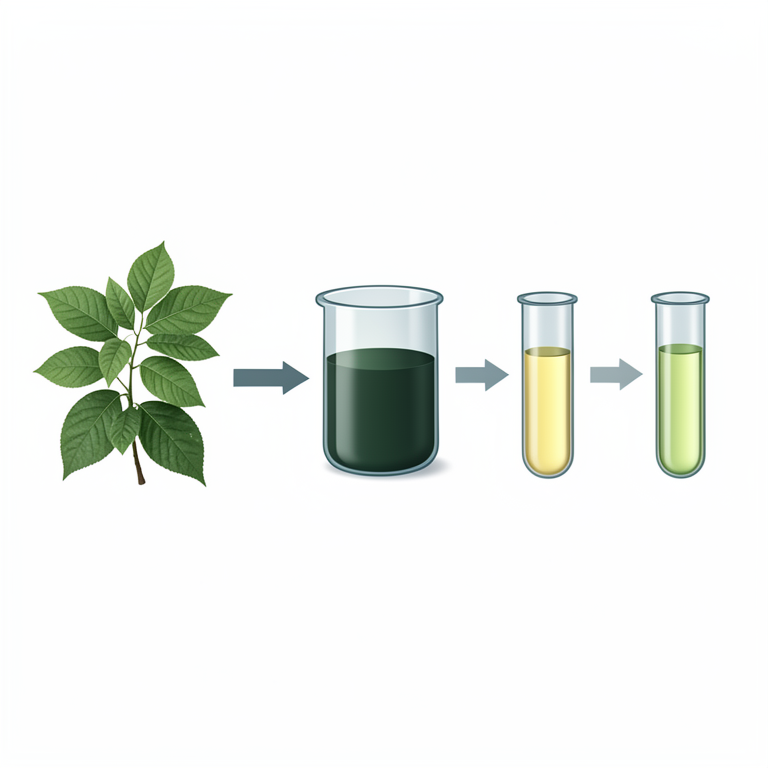
Extraction Process Flow
AI-generated conceptual illustration (Anthocleista vogelii leaves). It explains the idea and does not show study data.
View source evidence ↗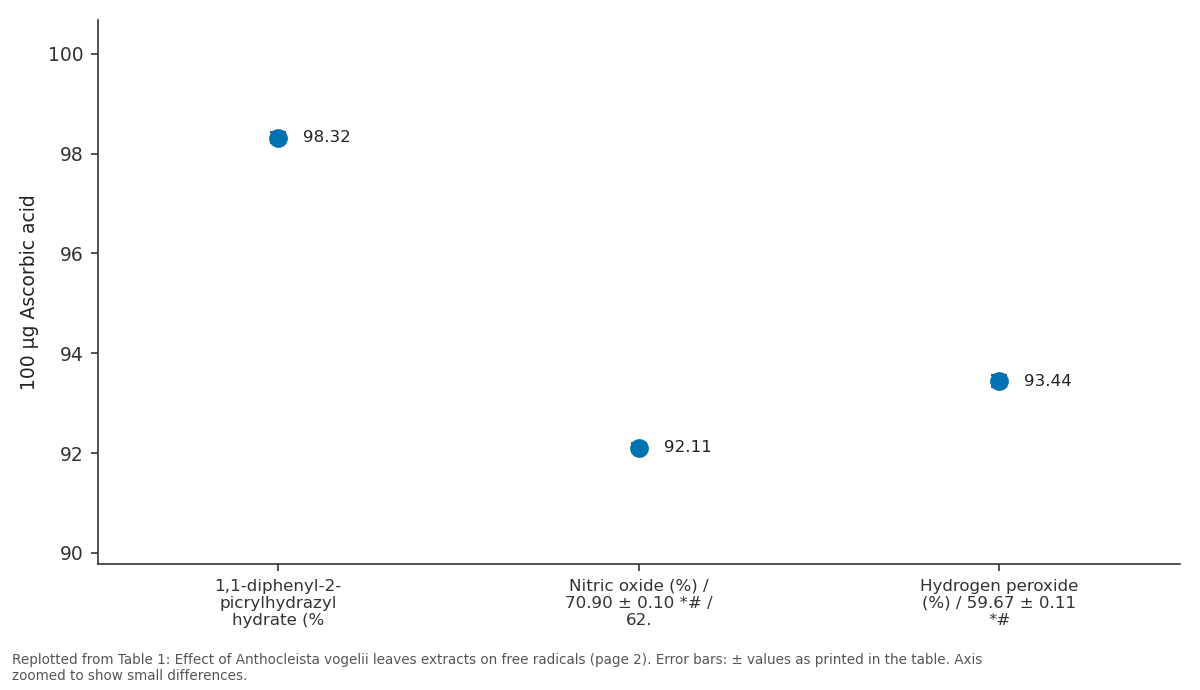
100 µg Ascorbic acid: 1,1-diphenyl-2-picrylhyd... vs Nitric oxide (%) /... vs Hydrogen peroxide (%) /...
Replotted from Table 1 (page 2) of the original paper. Every bar is the paper's own table value.
View source evidence ↗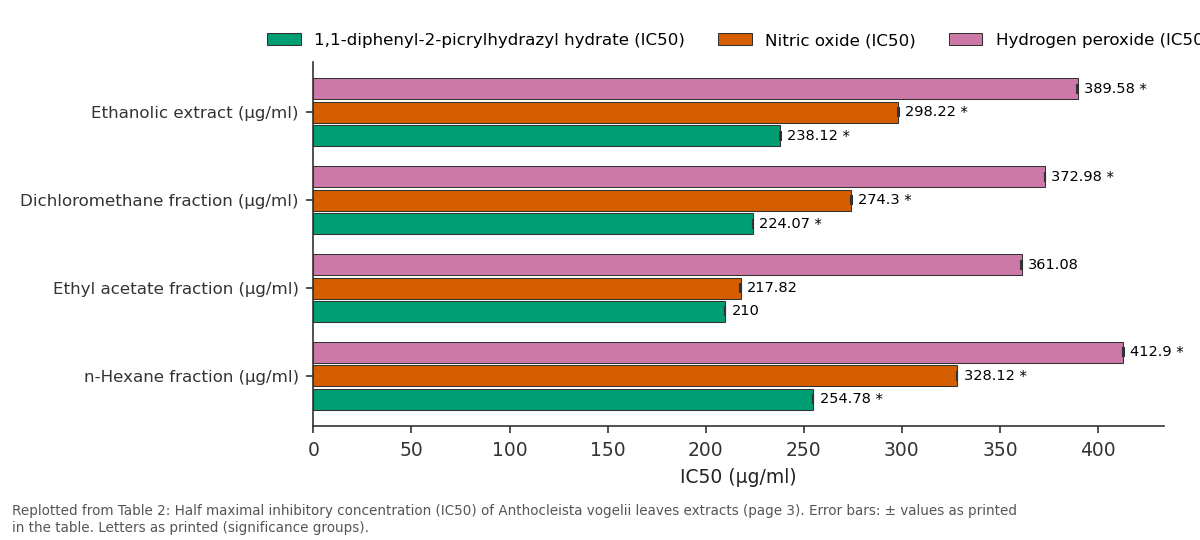
1,1-diphenyl-2-picrylhydrazyl hydrate (IC50) and Nitric oxide (IC50) and more: Ethanolic extract... vs Dichloromethane... vs Ethyl acetate fraction... vs n-Hexane fraction...
Replotted from Table 2 (page 3) of the original paper. Every bar is the paper's own table value.
View source evidence ↗Figures & tables
From the original paper Table 1
 Table 2
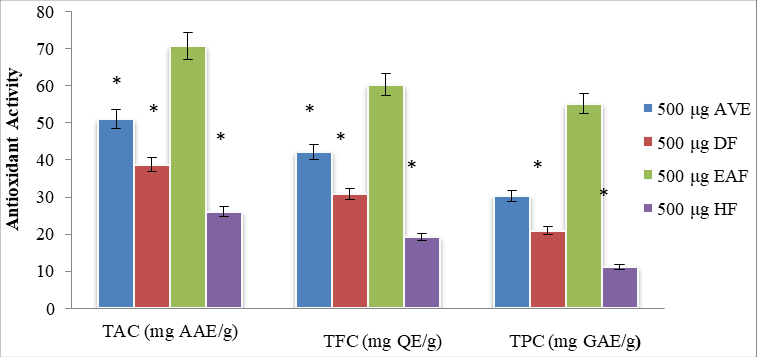 Figure 1
Introduction
Free radicals such as reactive nitrogen and oxygen species are produced during oxidative reactions in the body and they help in normal processes going on in body cells [1] . Free radicals at higher levels can damage cellular components and these may cause diseases such as stroke, cancer, atherosclerosis, aging and diabetes [2][3][4][5] . Diseases caused by free radicals may be treated with medicinal plants that have antioxidant and free radicals scavenging properties [6,7] . Antioxidants help in neutralizing free radicals (nitrogen and oxygen species) which are responsible for causing diseases such as cancer, arthritis and diabetes [8] . Recently, there is an increase in research on therapeutic effect of medicinal plants with antioxidant due to their free radical scavenging effect [9,10] . Anthocleista vogelii belonging to the family Loganiaceae is a plant used in ethno-medicine for the treatment of various diseases which includes fever, syphilis, pile and stomach ache [11,12] . Previous studies reported that Anthocleista vogelii root exerted antidiabetic effect in albino rats that were induced with diabetes using streptozocin and alloxan [13,14] . Previous studies also reported the presence of phenolic content and antioxidant property of Anthocleista vogelii root [11] . The antioxidant and free radical scavenging activities of Anthocleista vogelii leaves extracts (ethanolic extracts and fractions) were determined in this study.
in the oven for 7 days at 40 °C. A grinder was used to pulverize the dried plant sample before soaking the sample in 70% ethanol. After 72 hours, it was filtered using Whatman no. 1 filter paper and then a rotary evaporator was used to concentrate the sample into a solid paste. Thereafter, the solid paste was dried using a freeze dryer in order to obtain a dried ethanolic extract [15] . The dried ethanolic extract of the leaves of Anthocleista vogelii was fractionated using n-hexane, followed by dichloromethane and then ethyl acetate [15,16] . The fractions each were concentrated, dried, labeled and stored at 4 °C in a refrigerator before proceeding with the study.
Free Radical Scavenging Assays 1,1-diphenyl-2-picrylhydrazyl hydrate assay 1ml of 0.3 mM 1,1-diphenyl-2-picrylhydrazyl hydrate dissolved in methanol was added to increasing concentration of the plant samples (extract and fractions) and standard (ascorbic acid) each dissolved in methanol. It was then incubated for 30 minutes in the dark at room temperature and the absorbance was read at 517 nm [17,18] . The radical scavenging activity (%) was determined using Equation (i):
Where RB = Reagent Blank, S = Sample and SB = Sample Blank Nitric oxide assay 0.5 ml of Sodium nitroprusside (10 mM) dissolved in phosphate buffered saline (0.2 M and pH 7.4) was poured in 1.0 ml of increasing concentration of the plant samples each dissolved in methanol. The mixture was incubated at 25 o C for 3 hours and then Griess reagent (sulfanilamide [1%], naphthyl ethylenediamine dihydrochloride [0.1%] in phosphoric acid [2.5%]) at 1.5 ml was added. The absorbance was read at 546 nm [19,20] . The radical scavenging activity (%) was determined using Equation (i).
Hydrogen peroxide assay 0.6 ml of 43 mM hydrogen peroxide prepared in phosphate buffer (1.0 M and pH 7.4) was added to increasing concentration of the plant samples each dissolved in methanol. After 10 minutes, absorbance was measured at 230 nm after 10 min [7] . The radical scavenging activity (%) was determined using Equation (i).
Total antioxidant capacity assay 1.0 ml of the samples each were added to 1.0 ml of reagent solution (sulphuric acid [0.6 M], sodium phosphate [28 mM] and ammonium molybdate [4 mM]) in different test tubes and then incubated for 1 hour, 30 minutes at 95 O C in a water bath. The absorbance was read at 695 nm after cooling the mixture [7] . Total antioxidant capacity of the samples in mg standard (ascorbic acid) equivalent g -1 (mg AAE/g) of sample was determined using Equation (ii):
Where: TAC = Total antioxidant in mg standard, C = Concentration of standard established from calibration curve (mg/ml), V = Volume of the extract (ml) and M = Weight of the extract (g) Total phenolic content assay 0.2 ml of Folin's reagent was added to a mixture made up of 0.1 ml of sample (1 mg/ml) and 0.9 ml distilled water. Thereafter it was vortexed and after 5 minutes, 1.0 ml of 7% (w/v) Na2CO3 solution was added and then incubated for 90 minutes at room temperature. Absorbance was measured at 750 nm [21] . The total phenolic content of the extracts expressed as mg standard (gallic acid) equivalent g -1 (mg GAE/g) of extract was calculated using Equation (ii).
Total flavonoid content assay 0.4 ml of distilled water was added to 0.1 ml of sample (1 mg/ml) and then 0.1 ml of sodium nitrite (5%). 5 minutes later, 0.1 ml of aluminum chloride (10%) and 0.2 ml sodium hydroxide (1 M) was added to the mixture. Absorbance was read at 510 nm [21] . The total flavonoid contents expressed as mg standard (Quercetin) equivalents g -1 (mg QE/g) of plant extract was calculated using Equation (ii).
Statistical Analysis
One-way analysis of variance followed by Bonferroni t-test post hoc comparisons was used to determine the significant difference at 95% (p< 0.05) using version 3.01 of Primer. Graph plotted on excel was used in determining 50% inhibition concentration (IC50) of the samples.
Results
Results
Anthocleista vogelii leaves radical scavenging effect
Anthocleista vogelii leaf extracts at 500 µg exerted free radical scavenging activity (Table 1). 100 µg of the standard drug (ascorbic acid) significantly (P< 0.05) scavenged free radicals higher than A. vogelii leaf extracts (Table 1). Lower half maximal inhibitory concentration (IC50) of the ethyl acetate fraction significantly (P< 0.05) caused a higher significant (P< 0.05) radicals scavenging effect than other extracts of A. vogelii leaf (Table 1 andTable 2).
| Samples | 1,1-diphenyl-2-picrylhydrazyl hydrate (%) | Nitric oxide (%) | Hydrogen peroxide (%) |
|---|---|---|---|
| 500 µg AVE | 80.77 ± 0.13 *# | 70.90 ± 0.10 *# | 59.67 ± 0.11 *# |
| 500 µg Dichloromethane fraction | 70.82 ± 0.12 *# | 62.10 ± 0.06 *# | 50.04 ± 0.10 *# |
| 500 µg Ethyl acetate fraction | 92.02 ± 0.14 # | 80.00 ± 0.08 # | 68.19 ± 0.09# |
| 500 µg n-Hexane fraction | 61.17 ± 0.10*# | 54.22 ± 0.07 *# | 41.07 ± 0.10 *# |
| 100 µg Ascorbic acid | 98.32 ± 0.11 | 92.11± 0.09 | 93.44 ± 0.12 |
Table text extracted from the original PDF; superscript letters are shown inline. The original table image is below.
View original table image
Anthocleista vogelii leaves extracts antioxidant property
Anthocleista vogelii leaves extracts exerted potent antioxidant properties including total flavonoids and phenol content. The ethyl acetate extract fraction exerted a higher (significant at p< 0.05) antioxidant activity when compared to other extracts of A. vogelii leaves (Fig. 1).
Discussion
The leaves of Anthocleista vogelii leaves extracts (ethanolic extract and extract fractions [ethyl acetate fraction, dichloromethane fraction and n-hexane fraction]) scavenged free radicals (Table 1). The antioxidants; flavonoid and phenol were also present in A. vogelii leaves extracts as shown in Fig. 1. Lower half maximal inhibitory concentration (IC50) of ethyl acetate fraction of A. vogelii leaves ethanolic extract scavenged free radicals more than other extracts of A. vogelii leaves (Table 1 andTable 2). The phenol and flavonoid content of the ethyl acetate fraction of A. vogelii leaves ethanolic extract was also more than other extracts of A. vogelii leaves (Fig. 1). The results of these study is similar to earlier study that reported that the root of Anthocleista vogelii extracts (ethanolic extract and extract fractions [aqueous fraction, ethyl acetate fraction, dichloromethane fraction and n-hexane fraction]) scavenged free radicals and it had phenol and flavonoid [22] . Another study reported that Anthocleista vogelii leaves methanolic extract exerted antioxidant and free radical-scavenging activities [23] . Numerous research works have been done over the years to determine the biological activities of different solvent extracts of Anthocleista vogelii. These previous studies reported that Anthocleista vogelii exerted analgesic, antidiabetic [13,14] , anti-plasmodial [24] , antibacterial [25] and anti-fungal [26] effects. Earlier research works reported that some plants exert therapeutic properties which include analgesic [27] , anti-inflammatory [28] , anticancer [29,30] and antidiabetic [15,31] effect due to their antixodant activities. This study showed that Anthocleista vogelii leaves extracts (ethanolic extract and extract fractions [ethyl acetate fraction, dichloromethane fraction and n-hexane fraction]) scavenged free radicals; and antioxidants (phenol and flavonoid) were present (Table 1, Table 2 and Fig. 1). Thus, further studies on Anthocleista vogelii leaves may lead to the discovery of new medicines that can be used for the treatment of diseases caused by free radicals.
| Anthocleista vogelii leaves extracts | 1,1-diphenyl-2-picrylhydrazyl hydrate (IC50) | Nitric oxide (IC50) | Hydrogen peroxide (IC50) |
|---|---|---|---|
| Ethanolic extract (µg/ml) | 238.12 ± 0.10 * | 298.22 ± 0.24 * | 389.58 ± 0.17 * |
| Dichloromethane fraction (µg/ml) | 224.07 ± 0.08 * | 274.30 ± 0.20 * | 372.98 ± 0.11 * |
| Ethyl acetate fraction (µg/ml) | 210.00 ± 0.04 | 217.82 ± 0.21 | 361.08 ± 0.14 |
| n-Hexane fraction (µg/ml) | 254.78 ± 0.06 * | 328.12 ± 0.23 * | 412.90 ± 0.16 * |
Table text extracted from the original PDF; superscript letters are shown inline. The original table image is below.
View original table image
Conclusion
The results shows that Anthocleista vogelii leaves extracts (ethanolic extract and extract fractions [ethyl acetate fraction, dichloromethane fraction and n-hexane fraction]) have antioxidant properties which include free radicals scavenging effect.
Conflicts of interests:
No conflicts of interests exist.
References
31 in the original paper- Valko M, Leibfritz D, Moncol J, Cronin MTD, Mazur M, Telser J. Free radicals and antioxidants in normal physiological functions and human disease. Int. J. Biochem. Cell Biol. 2007;39:44-84. https://doi.org/10.1016/j.biocel.2006.07.001.
- Valko M, Izakovic M, Mazur M, Rhodes CJ, Telser J. Role of oxygen radicals in DNA damage and cancer International Journal of Advanced Biochemistry Research http://www.biochemjournal.com/ incidence. Mol. Cell. Biochem. 2004;266:37-56. https://doi.org/10.1023/b:mcbi.0000049134.69131.89
- Sas K, Robotka H, Toldi J, Vecsei L. Mitochondrial, metabolic disturbances, oxidative stress and kynurenine system, with focus on neurodegenerative disorders. J. Neurol. Sci. 2007;257:221-239. https://doi.org/0.1016/j.jns.2007.01.033.
- Hyun DH, Hernandez JO, Mattson MP, de Cabo R. The plasma membrane redox system in aging. Ageing Res. Rev. 2006;5:209-220. https://doi.org/10.1016/j.arr.2006.03.005.
- Kinnula VL, Crapo JD. Superoxide dismutases in malignant cells and human tumors. Free Radical Biol. Med. 2004;36:718-744. https://doi.org/10.1016/j.freeradbiomed.2003.12.010.
- Huang B, Ke H, He J, Ban X, Zeng H, Wang Y. Extracts of Halenia elliptica exhibit antioxidant properties in-vitro and in-vivo. Food Chem. Toxicol. 2011;49:185-190. https://doi.org/10.1016/j.fct.2010.10.015.
- Sasikumar V, Kalaisezhiyen P. Evaluation of free radical scavenging activity of various leaf extracts from Kedrostis foetidissima (Jacq.) Cogn. Biochem. Anal. Biochem. 2014; Vol. 3. https://doi.org/10.4172/21611009.1000150.
- Bouayed J, Bohn T. Exogenous Antioxidants-doubleedged swords in cellular redoc state: Health beneficial effects at physiologic doses versus deleterious effects at high doses. Oxidative Medicine and Cellular Longevity. 2010;3(4):228-237. https://doi.org/10.4161/oxim.3.4.12858.
- Md. Nur A, Nusrat JB, Rafiquzzaman M. Review on in vivo and in vitro methods evaluation of Anti-oxidant activity. Saudi Pharmaceutical Journal. 2013;21:143152. https://doi.org/10.1016/j.jsps.2012.05.002.
- Arouma OI. Methodological considerations for characterizing potential antioxidant actions of bioactive components in plant foods. Mutation Research. 2003;523(524):9-20. https://doi.org/10.1016/s00275107(02)00317-2.
- Igoli JO, Ogaji OG, Tor-Anyiin TA, Igoli NP. Traditional medicine practice amongst the Igede People of Nigeria. Part II. African Journal of Traditional Complementary and Alternative Medicines. 2005;2(2):134-152. https://doi.org/10.4314/ajtcam.v2i2.31112.
- Sunday RM, Ilesanmi OR. Obuotor EM. Antioxidant property and phenolic content of Anthocleista vogelii root ethanolic extract and fractions. British Biotechnology Journal. 2016;14(2):1-8. https://doi.org/10.9734/BBJ/2016/27016.
- Sunday RM, Ilesanmi OR, Obuotor EM. Anti-diabetic effect of Anthocleista vogelii ethanolic root extract in alloxan-induced diabetic rats. Research Journal of Medicinal Plant. 2016;10(1):79-88. https://doi.org/10.3923/rjmp.2016.79.88.
- Sunday RM, Ilesanmi OR, Obuotor EM, Ibeh AJ, Ayannuga OA. Anti-diabetic Effect of Anthocleista vogelii aqueous root extract in Streptozotocin-induced diabetic rats, Ife Journal of Science. 2015;17(3):755763.
- Sunday RM, Obuotor EM, Anil K. Antioxidant activities of Asparagus adscendens root ethanolic extract and fractions using in vitro models. Trends in Applied Sciences Research. 2019;14:199-204. https://doi.org/10.3923/tasr.2019.199.204.
- Jahan N, Parvin MS, Das N, Islam MS, Islam ME. Studies on the antioxidant activity of ethanol extract and its fractions from Pterygota alata leaves. J. Acute Med. 2014;4:103-108. https://doi.org/10.1016/j.jacme.2014.05.001.
- Blois MS. Anti-oxidant determinations by the use of a stable free radical. Nature. 1958;181:1999-1200. https://doi.org/10.1038/1811199a0.
- Brand-Williams W, Cuvelier ME, Beset CLWT. Use of free radical method to evaluate Anti-oxidant activity. Lebensmittel Wissenschaft und-Technologie/Food Science and Technology. 1995;28:25-30.
- Green LC, Wagner DA, Glogowski J, Skipper PL, Wishnok JS, Tannenbaum SR. Analysis of nitrate, nitrite and [15N] nitrate in biological fluids. Anal. Biochem. 1982;126:131-138. https://doi.org/10.1016/0003-2697(82)90118-x .
- Boora F, Chirisa E, Mukanganyama S. Evaluation of nitrite radical scavenging properties of selected Zimbabwean plant extracts and their phytoconstituents. J. Food Process. 2014. https://doi.org/10.1155/2014/918018.
- Arvind N, Nimisha S, Reetika P, Mamta FS. Determination of the total phenolic content of the stem bark of Bauhinia variegate Linn.: An approach to standardization. A Journal of Pharmacy Research. 2012;7(2):16-22. https://tphres.innovesen.co.in/wpcontent/uploads/2019/08/TPR070202-1.pdf.
- Sunday RM, Ilesanmi OR, Obuotor EM. Antioxidant property and phenolic content of Anthocleista vogelii root ethanolic extract and fractions. British Biotechnology Journal 2016,14(2):1-8. https://doi.org/10.9734/BBJ/2016/27016.
- Asagba SO, Apiamu A. Deciphering the Antioxidant and Free Radical-Scavenging Capacity of Anthocleista vogelii. Journal of Natural Sciences Research. 2019;9(12):67-79. https://doi.org/10.7176/JNSR.
- Okpok EO, Lebari BG, Samuel EU. Antimalarial effect of combined extracts of the leaf of Ficus exasperata and stem bark of Anthocleista vogelii on mice experimentally infected with plasmodium berghei (Nk 65). Research Journal of Medicinal Plant. 2014;8:99111. https://doi.org/10.3923/rjmp.2014.99.111.
- Musa DA, Nwodo FOC, Yusuf GO. A comparative study of the antibacterial activity of aqueous ethanol and chloroform extracts of some selected medicinal plants used in Igala land of Nigeria. Der Pharmacia Sinica. 2011;2(1):222-227.
- Tene M, Tane P, Kuiate JR, Connolly DJ. Anthocleistenolide, a new rearranged norsecoiridoid derivative from the stem bark of A. vogelii. Planta Medica. 2008;74(1):8083. https://doi.org/10.1055/s2007-993781.
- Sen S, Chakraborty R, Rekha B, Revathi D, Ayyanna SC, Hemalatha G, et al. Anti-inflammatory, analgesic and antioxidant activities of Pisonia culeta: Folk medicinal use to scientific approach. Pharm. Biol. 2013;51:426-432. https://doi.org/10.3109/13880209.2012.738331.
- Ibrahim B, Sowemimo A, van Rooyen A, Van de Venter M. Antiinflammatory, analgesic and antioxidant International Journal of Advanced Biochemistry Research http://www.biochemjournal.com/ activities of Cyathula prostrate (Linn.) Blume (Amaranthaceae). J. Ethnopharmacol. 2012;141:282289. https://doi.org/10.1016/j.jep.2012.02.032.
- Ghagane SC, Puranik SI, Kumbar VM, Nerli RB, Jalalpure SS, Hiremath MB et al. In vitro antioxidant and anticancer activity of Leea indica leaf extracts on human prostate cancer cell lines. Integrat. Med. Res. 2017;6:79-87. https://doi.org/10.1016/j.imr.2017.01.004.
- Turkez H, Tozlu OO, Lima TC, de Brito AEM, de Sousa DP. A comparative evaluation of the cytotoxic and antioxidant activity of Mentha crispa essential oil, its major constituent rotundifolone and analogues on human glioblastoma. Oxidat. Med. Cellul. Longevity 2018, Vol. 2018. https://doi.org/10.1155/2018/2083923.
- Rehman G, Hamayun M, Iqbal A, Islam SUI, Arshad S, Zaman K, et al. In vitro antidiabetic effects and antioxidant potential of Cassia nemophila pods. BioMed Res. Int. 2018, Vol. 2018. https://doi.org/10.1155/2018/1824790.