
Research article · 2017 · Full text
International Journal of Advanced Biochemistry ResearchProtoplast fusion technology and its application in genetic improvement of plants: A review
Volume 1(2) · Pages 45–52 · DOI: 10.33545/26174693.2017.v1.i2a.116 ↗
Research areasPlant tissue culture and regenerationTransgenic Plants and ApplicationsGenetically Modified Organisms Research
Abstract
Author-writtenProtoplasts are plant, fungi or bacteria cells devoid of cell wall either enzymatically, chemically or mechanically. It contains the plasma membrane and the entire content of the cytoplasm excluding the cell wall. Protoplast fusion technology involves the fusion of two isolated protoplast that are genetically different from the somatic cells and fused with the aid of some fusing agent to form a hybrid protoplasts.Protoplast technology is a promising technique that has been exploited by breeders to increase germplasm accessibility and also bring about improvement in different crop varieties. This article, aims at reviewing some biotechnology application of protoplast fusion technology for genetic improvement of plants, such as production of useful phyto-metabolites, introduction and establishment of disease resistance plants, nitrogen-fixing symbioses, production of herbicide resistant plants, insect pest control and plant-parasitic nematode control for the benefit of mankind. The use of protoplast fusion will go a long way to remove the fear of genetically modified crops (foods) in the mind of the common man and increase food production thereby overcoming the challenges of an ever-increasing world population and climatic change. Protoplast fusion is a useful technology in plant biotechnology not just for food production alone but for other products that are useful to humans.
Summary
Source-checkedPlain-language reading of the full paper, prepared with AI and checked against the text. Each point links to the authors' own words.
Why it matters
- Protoplasts are cells from plants, fungi, or bacteria that have had their cell walls removed through chemical, mechanical, or enzymatic means. View evidence ↗
- Protoplast fusion technology creates hybrid protoplasts by using a fusing agent to combine two genetically distinct isolated protoplasts. View evidence ↗
- This technology is a valuable tool for gene manipulation because it allows for the creation of interspecific or intergeneric hybrids, bypassing the barriers found in traditional breeding. View evidence ↗
The question
- The review aims to examine how protoplast fusion technology can be applied to genetically improve plants, specifically regarding disease resistance, herbicide resistance, pest and nematode control, nitrogen-fixing symbioses, and the production of phyto-metabolites. View evidence ↗
What they did
- To prepare protoplasts, lytic enzymes, including cellulases, pectinases, xylanases, proteases, or macerozymes, are used to degrade plant cell walls. View evidence ↗
- Chemofusion induces the fusion of protoplasts using chemical fusogens such as calcium ions (Ca2+), sodium nitrate, or polyethylene glycol (PEG). View evidence ↗
What they found
- Fusion of indigenous R. leguminosarum biovartrifolii strains increased nodulation by 1.9 to 5.7 times compared to the original parent strains. View evidence ↗
- Cybrid plants created via protoplast fusion showed resistance to atrazine up to 10 kg/ha, which exceeds the typical field application rate of 2-4 kg/ha. View evidence ↗
- Somatic hybrids created by fusing Solanum tuberosum with diploid species (S. pinnatisectum, S. cardiophyllum, and S. chacoense) exhibited higher resistance to late blight than S. tuberosum alone. View evidence ↗
- The hybrid strain AaF42, developed through protoplast fusion, reduced soybean cyst nematode egg density by 93.2% compared to the control. View evidence ↗
- Protoplast fusion in the microalgae C. vulgaris resulted in fusants that produced high masses of palmitic acid, aspartic acid, leucine, and glutamic acid. View evidence ↗
What it means
- The authors conclude that protoplast fusion is a viable alternative to traditional genetic modification, potentially reducing public fear of GMOs while still allowing for the introduction of new genes. View evidence ↗
- A primary limitation of this technology is that successful gene transfer depends on the ability to regenerate a mature plant from the resulting fusion product. View evidence ↗
Visual summary
1 visualsIllustrations explain the paper; they do not show study data.
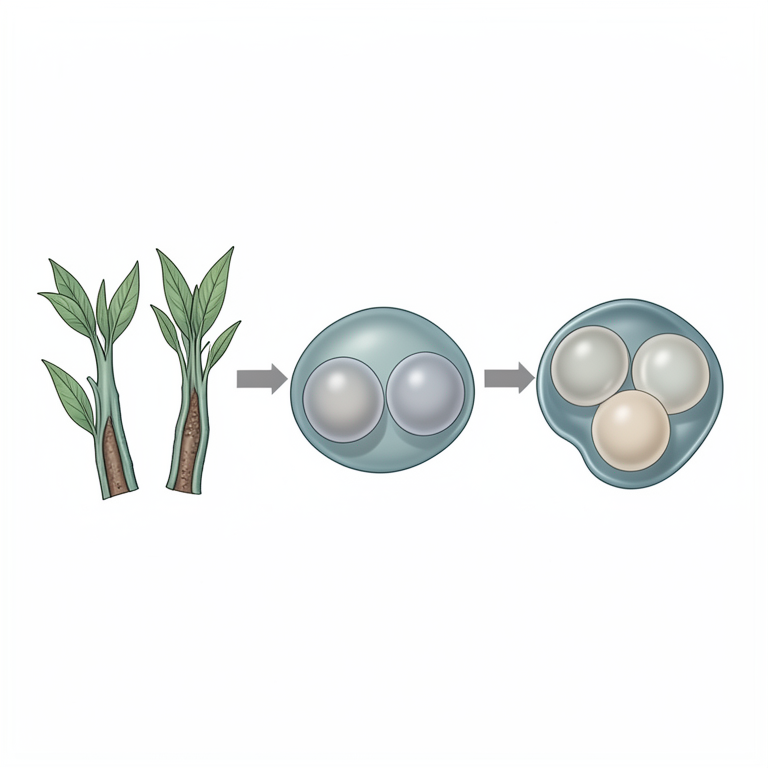
Protoplast Fusion Process
AI-generated conceptual illustration (tobacco plant cells). It explains the idea and does not show study data.
View source evidence ↗Introduction
Protoplasts are plant, fungi or bacteria cells devoid of cell wall either enzymatically, chemically or mechanically. It contains the plasma membrane and the entire content of the cytoplasm excluding the cell wall. In theory, protoplasts are assumed to exhibit totipotency, which means they possess the innate ability to differentiate and regenerate into various cells or tissues [1] . Protoplast fusion has become a very important technique in crop production with desired traits on crops which can be sold on a large scale. There has been an increased level of research using protoplast fusion due to public disapproval with genetically modified crops [2] . Protoplast technology involves the fusion of two isolated protoplast that are genetically different from the somatic cells and fused with the aid of some fusing agent to form a hybrid protoplasts. The resulting protoplast from the fusion process contains two fused parent nuclei with a heteroplastic cytoplasm. Protoplast fusion is a somewhat new approach to promote and produce genetic recombination in a wide range of bacteria and eukaryotic cells [3] . Intergeneric or interspecific hybrids can be produced by protoplast fusion and it has become an important gene manipulation tool as it removes the impediments to genetic transfer imposed by common breeding methods. Protoplast technology is a promising technique that has been exploited by breeders to increase germplasm accessibility and also bring about improvement in different crop varieties [4] . This technology has an immense potential to improve strains and for genetic analysis. It is quite useful for microbes used in industries [5] . Protoplast can be used as valuable experimental system in cells in analyzing genetic expression during in a short period of time [6,7] and macromolecules like proteins, DNA and RNA can be shuttled into protoplasts using various techniques such as microinjection and PEG calcium fusion electroporation [8] . Biotechnological technique which uses DNA analysis have shown significant advancement from the past year and it has been used continuously in characterizing somatic hybrids.
Simple sequence repeat (SSR), a biotechnological technique has been extensively utilized for somatic hybrids characterization analysis [9][10] . Reported the use of proteomics as better tool in regulation and inheritance rules in somatic hybridization [7] . Suggested the use of next generation sequencing which is cheaper and faster as a tool in genome screening and stability studies in somatic hybrid for scientist. High resolution melting analysis is another tool that can be used for screening and it is based on insertions, single nucleotide polymorphisms (SNPs) induce alteration or deletion of double stranded DNA dissociation behavior [11] . PCR-RFLP (restriction fragment length polymorphism) and Cyclase-associated proteins (CAPS) analysis has also been found as efficient and reliable tools in cytoplasmic genome characterization [7] . This article, aimed at reviewing biotechnology application of protoplast fusion technology for genetic improvement of plants, such as production of useful metabolites, introduction and establishment of disease resistance plants, nitrogen-fixing symbioses, production of herbicide resistant plants, insect pest control and plant-parasitic nematode control for the benefit of mankind.
Cell wall degrading enzymes
For fusion to occur, the cell walls of the organisms need to be degraded. To achieve this, lytic enzymes such as xylanases, pectinases, proteases and cellulases or macerozymes are employed for this process to degrade the plant cell walls. Lysozyme degrades the cell walls bacteria while glucanase and chitinase degrades the cell walls of fungi. Lysozyme and achromopeptidase possess the ability to degrade Streptomyces cell wall [12] .
Protoplast fusion Methods
Protoplast fusion can be categorized into two methods:
Spontaneous fusion
This is the fusion of the two protoplasts spontaneously during isolation. During the treatment of the protoplasts with enzymes, protoplasts from adjacent cells fuse via their plasmodesma to form protoplasts with multi-nucleus.
Induced fusion
This is the use of fusion-inducing chemicals or electric field to fuse free protoplasts isolated from different cells. The cell surface possesses a negative charge, and as a result of these negative charges around the surface or outside of the plasma membrane of isolated protoplast, they do not fuse with each other. The repulsive force on the protoplast causes them to repel each other as a result to their similar charges based on the laws of electrostatics. As a result, fusion inducing chemicals are needed to reduce the repulsive force of the isolated protoplast and thereby allowing them the fusion process to occur [13] . The fusion induction of isolated protoplast can be done in three ways;
Mechanical fusion
In this method, the isolated protoplasts are brought into close physical contact mechanically under a microscope with the aid of a perfusion micropipette or micromanipulator.
Chemofusion
In this process, chemicals called fusogens such as polyethylene glycol, sodium nitrate, calcium ions (Ca 2+ ) are used to induce protoplast fusion. These fusogens brings about the adhesion of the isolated protoplast leading to tight clumping and fusion of the protoplasts [14] . Chemofusion is usually non selective, non-specific, inexpensive and can cause massive fusion product, and could be cytotoxic with less fusion frequency.
Electrofusion
This is the use of mild electric stimulations to fuse protoplasts. In this method, the protoplasts are brought in close contact with two glass capillary microelectrode. An low strength electric field is supplied to the electrodes to generate a dielectrophoretic dipole within the protoplast suspension and this results into a chain rearrangement of the protoplasts. The subsequent use of strong electric fields (100 kvm -1 ) for some milliseconds leads to the electrical breakdown of the membranes and subsequently, fusion [12] . Electrofusion is easy to control and a high fusion frequency close to 100% gives reproducibility and less cytotoxicity.
Mechanism of protoplast fusion
When protoplasts from living organisms are brought into close proximity, and n electrostatic field applied across the membranes, it induces changes in the membrane electrostatic potential, resulting in the fusion of their protoplasts. After fusion, the membrane is stabilized and the surface potential reverts to their ground state. Some researchers believe that the fusogens cause distortion in the proteins and glycoproteins within the membranes when the protoplasts are closely adhered [13] . This promotes the fluidity of the membrane and creates regions for intermixing of the lipid molecules, allowing the adhesion of adjacent membranes leading to fusion. The phosphate groups on the membranes account for the negative charge of the protoplast. Calcium ion (Ca 2+ ) when added reduces the zeta potential of membrane resulting in protoplasmic fusion [15] . PEG acts as a molecular bridge linking the protoplasts while calcium ions link the negatively charged membrane surface and PEG. Elution of the PEG disrupts the surface potential, leading to increased intramembrane contact and fusion. Aside this, the dehydration of the membrane and its fluidity may be caused due to the affinity of PEG for water, thereby inducing fusion. For protoplast fusion to occur, the molecular distance between the protoplasts must be less than 10A. This makes the process a highly traumatic cellular event [12] .
Plant Genetic Improvement Applications Of Protoplast Fusion Technology 2.1 Plant Mutagenesis
Gene editing involves the direct alteration of specific DNA sequence. Some gene editing tools are Zinc Finger Nuclease (ZFN), Transcription Activation-Like Effector Nuclease (TALEN) and Clustered Regularly Interspaced Short Palindromic Repeats (CRISPR) which is associated with Protein 9 (CAS-9). CRISPR-CAS-9 is a suitable genome editing technique which requires just two components; single guide RNA (sgRNA) and Cas-9 protein [16,17] . Other endonucleases like Cpf1 can cause mutations apart from cas9 [18,19] . The genome editing components can be assembled and synthesized in-vitro forming a complex which can be delivered into protoplast and mutate the target gene [18,19] . In biotechnology, protoplast is usually used to determine the efficiency of and his can be generated into plants [21] . The regeneration of protoplast is a major challenge when using CRISPR mutagenesis most especially in monocot plants therefore there will be need for regeneration protocols with high efficiency which are unavailable [19,22] . CRISPR/Cas9 technology is a very useful tool in research and plant breeding which still a new technology at the infant stage [22] . Using the CRISPR-mediated mutagenesis, it is possible to remove the integrated transgenes from the genome through genetic segregation thereby reducing the fear of the public about genetically modified foods [23][24] . Reported the development of analyzing DNA protocol from individual mutant protoplasts and also proved that CRISPRbased mutagenesis of protoplasts is a useful technology for polyploid crops.
Production of Phyto-metbolites
The plant cell wall is rich with some useful metabolite such as pharmaceutics, hormones, enzymes, anticancer agents, functional proteins and antiviral proteins [25] . The accumulations of these metabolites are usually very low and this poses a major challenge because these metabolites are needed in large quantities. The use of protoplast fusion allows the production of large amount of these metabolites to be released into the culture medium and harnessed for their uses [26] . Immobilization matrixes alongside inhibitors are mostly used for efficient production of the phyto-metabolites and to avoid the regeneration of cell walls [27] . The protoplast of Catharanthus roseus isolated from callus culture has been used to study the extracellular production of enzymes (alpha-galactosidase and peroxidase) by entrapment in alginate gel. Enzymes production using protoplasts have been investigated through the efficient production of chitinase by Wasabia japonica protoplasts from callus culture entrapped in alginate gel as both elicitor and immobilization matrix [26] . Callus culture protoplasts of C. roseus immobilized in alginate gels rich in guluronic acid were used to study the production of secondary metabolite of indole alkaloids (Ajmalicine, and tryptamine catharanthine), which are synthesized via enzymatic steps [28] . The use of protoplast fusion to produce useful metabolites is advantageous because the by-products are released into the media and this increases the overall productivity thereby facilitating downstream processing whereby the secretion of useful products is limited by the cell wall. The downside is that protoplasts are very fragile and difficult for prolong production and also the active protoplasts cell walls regenerates easily [26] .
Nitrogen-Fixation Symbioses
Nitrogen which is a component of many biomolecules such as proteins, nucleic acid is very important for growth and development of plants. Most nitrogen exist in the atmosphere and the atmospheric nitrogen fixing ability through the nitrogenase enzyme system lies with some bacteria. In a symbiotic association between the plants and the bacteria, the bacteria provides the rich sources of nitrogen to the plants [29] . For the last few decades there have been research findings on bacteria of the genera Sinorhizobium, Mesorhizobium, Bradyrhizobium, and Rhizobium, Azorhizobium having nitrogen-fixing symbioses with legumes [30] . Leguminous plants characterization for nitrogen fixation is mainly dependent on their ability in developing nitrogen-fixing nodules through interaction with the symbiotic bacteria [31] . Early works on the genetics of nitrogen fixation was studied on Klebsiella pneumonia, a free-living nitrogen-fixing bacterium. The presence of 17 nil (nitrogen fixation) genes that encode nitrogen fixation in K. pneumonia is responsible for nitrogen fixation [32] . Intergeneric transfer of K. pneumoniae nil clusters to other non-nitrogen fixing bacteria and yeast though nitrogen fixation has only been observed in closely related species [33][34] . Reported the successful use of protoplast fusion to create novel actinomycete capable of atmospheric nitrogen fixation. Protoplasts of Streptomyces griseofuscus, which is a rapid-growing actinomycete and Frankia which is and a slow-growing actinomycete were both allowed to fuse and regenerate on media which does not have supply of nitrogen. The regenerated colonies were able to acquire the fast growing characteristics of the streptomyces and the ability on grow on a media lacking nitrogen from Frankia [35] . Also reported the use of four Frankia strains ACN1, EANlpec, Cpll and EulIc for the production and regeneration of protoplasts of the actinorhizal nitrogenfixing actinomycete where the protoplast was sandwiched within a layer of a nutrient-rich medium and a layer of agarose of low-melting-point. It was observed that the four strains regeneration varied widely and the maximum regeneration efficiency was only observed on two strains [36] . Also reported a key role of protoplast fusion in improving nodulation of Rhizobial species. The bacteria abilities to produce nodulation were observed on two weak strains (RtI1 and RtI2) and one efficient strain (RtA1) chosen for protoplast fusion and the numbers of nodules formed by the protoplast fusion strains were observed. The protoplast fusion of the indigenous R. leguminosarum biovartrifolii strains resulted in increased nodulation by 1.9to 5.7-fold when compared to the parent strains. This is an excellent result for agricultural practices in the formation in leguminous crops of nitrogen-fixing root nodules. The prospect of Green Nitrogen Revolution will be a great achievement in producing stable food crops that has substitute for mineral nitrogen fertilizer which can be achieve by using nitrogen-fixing fertilizers [37] .
Nutritional Content Improvement
The aquatic food chain of fauna aquaculture, microalgae denotes the major natural nutrition. Chlorella vulgaris is one example of the sources of aquatic nutrition [38] . It has been used extensively as nutritional supplements or aquaculture feeds [39] . Microalgae are regarded as one of the organism producing distinct range of bioactive chemical compounds, primarily pigments, proteins, vitamins, minerals, lipids and polysaccharides.
The main reasons for their consideration as important source of nutrition for diverse purposes are the high nutritional content of the microalgal species [40][41][42] . Reported the production of genetically improved strain of algae by somatic fusion and hybridization. Algae-algae protoplast fusion is regarded as a valuable technique to improve their nutrition. Somatic hybridization put up by this procedure has demonstrated strong efficacy in increasing nutrition and valuable metabolites production [38] . According to [38] , the use of protoplast fusion technique for microalgae Chlorella had been carried out to supplement. During the application of protoplast fusion technology on interspecific microalgae of C. vulgaris, the nutrition content of fusant was subjected for analysis by GC-MS methods on C. vulgaris powder from 100 L liquid cultivation of the fusant. The study resulted in fusant with high mass production glutamic acid, leucine, aspartic acid and palmitic acid.
Herbicide Resistant Plants
Protoplast fusion can be used to achieve the production of herbicide resistant plant. Several plant tolerant herbicides such as bromoxynil, atrazine, sulphonylureas, glyphosate and phosphinothricin have failed to achieve the targeted purpose. [43] . Many herbicides operate by inactivating some plant enzymes (target proteins) which are very important for functions such as the photosynthetic or other biosynthetic which are unique to plants [44][45] . Reported selection of transformed rice (Oryza sativa L. cv. Radon) using bar gene in combination with the herbicide Basta protoplasts for the production of herbicide-resistant rice plants. The expression of the bar gene in plants obtained from phosphinothricin resistant calli was confirmed by the presence of phosphinothricin acetyltransferase assays. Southern analysis confirmed the transmission of both the bar and gusA genes to progeny, where the progeny with the bar gene was found to be resistant to Basta. Thus Herbiace or Basta can be used as a postemergence on rice plants transformed with the bar gene [46] . also reported the use of Terbutryn-resistant plastids of the Nicotiana plumbaginifolia TBR2 mutant which was introduced into Nicotiana tabacum plants following X-irradiation of TBR2 protoplasts by protoplast fusion where the Cybrid plants was found to be resistant to high levels of atrazine (10 kg/ha). The level of atrazine resistance (to 7 kg/ha) is likely to be sufficiently enough to protect the crop under field conditions because atrazine is mostly applied at a rate of 2-4 kg/ha [47] . Confirmed that an important Indica rice cultivar cv. IR72 was transformed with the application of direct gene transfer. The transformed rice showed resistance to high dosage level of phosphinothricin.
Pest Control
For many years there has been a search for plants that can produce thrive in spite of insect pests. Advances in biotechnology have shown numerous insect-resistant plants development. There has been a continuous increase in the use of biotechnology as a tool in developing insect-resistant plants. The acceptability of protoplast fusion base insectresistant plants may be greater along with the increase in the understanding the processes [48][49] . Reported the use of protoplast fusion in overcoming sexual incompatibility between diploid cultivated potatoes and Solanum species. They developed a protoplast fusion system effective for production of new insect-resistant potatoes with the use of Mexican wild potato species as gene pools. They designed a procedure for the large scale isolation of high quality protoplasts from various insects (Colorado potato beetle) that carries high levels of resistance. Assessment of insect reactions showed that several of the clones and somatic hybrids derived from protoplasts showed a significant level of resistance to Colorado potato beetle than was found in Solanum tuberosum. This is the first study on the successful transfer of Colorado potato beetle resistance from a wild Mexican species into cultivated potato by protoplast fusion. Fungi which are found in the genus Lecanicillium are very vital insects pathogens and some of them have been developed as biopesticides for commercial purposes. Lecanicillium spp. uses both mechanical forces and hydrolytic enzymes to penetrate the integument of the insect directly and the fungal plant pathogen cell wall. The mycoparasitism of the plant pathogen is linked to the colonization of host plant tissues, triggering an induced systemic resistance [50] . Protoplast fusion was done with three strains of Lecanicillium spp. to isolate new strains with useful characteristics as insect control agents. The combination of three strains are; B-2 with Vertalec, B-2 with Mycotal and Vertalec with Mycotal, where new hybrid strains were gotten. Bacillus thuringiensis (Bt) is a ubiquitous gram-positive and spore forming bacterium that produces crystals during the stationary phase of its growth cycle [51] . The crystals are made up of proteins (encoded by cry or cyt genes) that have specific toxicity against several insects such as Diptera and Lepidoptera [52] . Protoplast fusion was done between B. thuringiensis UVresistant mutant 66/1a and B. sphaericus to get a new Bacillus strains with wider spectrum of action against many insects. The results showed that some cry genes were expressed which encodes insecticidal crystal proteins from B. thuringiensis and the binary toxin genes from B. sphaericus in all fusant strains. SDS-PAGE protein analysis showed the acquisition and expression of specific larvicidal proteins to both lepidopteran and dipteran species by some fusant strains. The fusant strain were found to have more efficient insecticidal effect against Culex pipiens and Spodoptera littoralis larvae, respectively [53] .
Development of Disease Resistant plants
Protoplast fusion is a powerful tool to transfer disease resistance genes from different plants [49] . The global loss of crops to various diseases has hampered the global food production. Disease resistance in breeding may come from either more from distantly or closely related species. Protoplast fusion is one of the techniques that is used to circumvent problems in introgression genes for resistance [49][50][51][52][53][54] . Reported the use of protoplast fusion to overcome sexual incompatibility between cultivated potatoes and diploid solanum. They develop a systematic protocol for the isolation of huge number of high quality protoplasts from variety of Mexican wild species of late blight (plant disease). Using the protocol, new somatic hybrids of a single Argentina wild species, two Mexican and cultivated potato clones and the successful somatic hybrids were from the cell fusion of Solanum tuberosum and the diploid species Solanum pinnatisectum, Solanum cardiophyllum and Solanum chacoense which showed higher level of resistance to both late blight than was found in S. tuberosum. Cybridizations and Somatic hybridizations in citrus produced rootstocks that is resistant to abiotic and biotech constraints which increased the yield and quality of the fruit [55] also in brown spot resistant scions [56][57] . Also reported the production of resistant raphano-brassica asymmetric and symmetric hybrids. This new development showed new resistance types along with multiple resistances which include turnip mosaic virus. The ability of mycoviruses in managing plant pathogenic fungi was first confirmed with Cryphonectria parasitica [49] . Hypoviruses have been successful as plant disease control agents due to their ability to reduce the virulence (to induce hypovirulence) of the target fungus. This is done as the hypoviruses are transmitted from hypovirulent strain to virulent fungal strain by hyphal fusion or anastomosis in vegetatively compatible strains, but they cannot be transmitted when applied by extracellular routes [58][59] . Reported the introduction of hypovirulent mycoviruses in fungi as an alternative to fungicides to contol plant diseases. Transmission between mycelia of hypovirulence-associated double-stranded RNA (dsRNA) viruses has become a challenge because it is prevented by the vegetative incompatible barrier that usually exists between different strains or species of filamentous fungi. They determine whether protoplast fusion could be used to transmit FgV1-DK21 virus, which is associated with hypovirulence on F. boothii to F. asiaticum, F. graminearum, F. oxysporum f. sp. lycopersici, and Cryphonectria parasitica. When the result was compared to virus-free strains, the FgV1-DK21 recipient strains had reduced growth rates, reduced virulence and altered pigmentation. The results showed that protoplast fusion can be used to introduce FgV1-DK21 dsRNA into C. parasitica and into other Fusarium species that FgV1-DK21 can be used as a hypovirulence factor and as a plant disease control agent [59] .
Nematoda Control
Nematodes are a class of organisms that infects plants leading to several disease conditions in plants. There are over 4000 species of plant parasitic nematode and destructions that is caused by plant nematodes has been projected at $US70 billion per year [60] . This constitutes a major hindrance to the attainment of global food security [61] . The control of nematodes have solely been on the use of nematicides, but due to the adverse impact of these chemicals on the environment, safer and eco-friendly control methods are needed [62] . One of the main constraints to vegetable farming worldwide are the Root-knot nematodes. Bacteria such as rhizospher have been used as an antagonistic to nematodes and they are eco-friendly. Chitinase production is a vital factor in the improvement of the nematicidal activity of this kind of microbes [62] . The nematicidal activity of Lysinibacillus sphaericus Amira strain and Bacillus amyloliquefaciens subsp. plantarum SA5 against root-knot nematodes, Meloidogyne incognita, using protoplast fusion technique was developed, and the fusants tested for chitinase and nematicidal activity using greenhouse experiments and bioassay. The selected fusants from the fusion of the bacterial strains were found to be effective in killing M. incognita J2 under laboratory conditions. The production of Chitinase from the fusant was higher under solid-state fermentation than submerged fermentation conditions. The result showed that fusant from L. sphaericus and B. amyloliquefaciens can be used as a good nematicide against root-knot nematode M. incognita [63] .
Verticillium lecanii is a fungus that is widely distributed in soils, and mostly isolated from insects. It has a broad host range such as plant-parasitic nematodes, insects and phytopathogenic fungi. The strains of V. lecanii were screened to check the relative potential of hybrid strains of V. lecanii against soybean cyst nematode with that of the parental strains in greenhouse pots and to determine the efficacious strains using protoplast fusion as biological control agents [64] . Three strains Vertalec®, B-2 and Mycotal® and their 162 hybrid strains were screened in greenhouse pot tests and some were found to reduce the density of soybean cyst nematode in the soil and damage on soybean plants. The nematode egg density was reduced by 93.2% when compared to the control by the hybrid strain AaF42. In addition, this strain reduced egg density and the cyst significantly when compared to the parental strains. A higher level of nematode control efficacy against soybean cyst nematode when compared to the parental strains was exhibited by the hybrid strains developed by protoplast fusion [65] .
Germplasm Diversification
Somatic hybridization by protoplast fusion brings about the fusion of the genomes of two different species with the transfer of one or more traits [66] . This also creates novel genotypes by the combination of protoplasmic genomes of different species or cultivars. Many inter-generic, intertribal, inter-specific, and even interfamilial plant hybrids have been generated through this approach involving grasses. This approach through protoplast fusion can be a relevant tool in the genetic improvement of grasses and plants [67] .
Discussion
Protoplast fusion is a major biotechnological tool used to produce new genetic hybrid and it differs from other scientific tools as it transfers mono and polygenic traits [68] . Protoplast fusion has successfully been used as a tool to produce useful metabolites, target site mutagenesis, improvement of food nutrition content, introduction and establishment of disease resistance plants, creating nitrogenfixing symbioses, production of herbicide resistant plants, insect pest control and plant parasitic nematode control through the application of plant biotechnology techniques. Genomic variation is of important interest in most plants for yield and quality improvement, disease resistance, cytoplasmic male sterility (CMS) transfer, Salt tolerance; rootstock improvement and seedless triploids are the most frequent goals of protoplast fusion [69][70] . Studied the microbead encapsulation of living plant protoplasts which is seen as an emerging tool for the manipulation of single plant cells [71] . Reported the interspecific T-DNA transfer through plant protoplast fusion [72] . Examined the protoplast fusion for production of triploids and tetraploids which is used for rootstock and scion breeding in citrus [66] . Described plant adenine base editor based on an evolved tRNA adenosine deaminase fused to the nickase CRISPR/Cas9 which enable A•T to G•C conversion in protoplasts and regeneration in rice and wheat plants. Many countries have the fears about the application of plant biotechnology but have also forgotten about the two major challenges of plant biotechnology which are; the continuous increase in population at geometric rate and the current climatic changes which are posing serious threat to the human population and the growth of our plants (crops). If the challenges of the plant biotechnology will be solved then the application of plant biotechnology has become very necessary. Since protoplast fusion allows the introduction of new genes into plants without genetically modified plants, which is the fear of common man then protoplast fusion, offers an option. Therefore protoplast fusion has become essential for plant (crops) improvement for the future. Successful gene transfer through protoplast fusion is dependent on the ability to regenerate from the fusion product a mature plant. Several factors which affect plant regeneration, such as the culture medium and method [73] , nature of protoplast [74] , protoplast density [75] , and external conditions have been reported. Parent plant selection is very important in creating new variation using hybridization techniques. This has necessitated further research on methods of selection in breeding populations than on selection of parents to create these populations. Somatic hybrids between remotely related species are more difficult to root and culture to mature plants outside in-vitro conditions [76] . Somatic hybrids from parents of a widely different genetic origin may have low viability and fertility [77] . The indispensable steps toward the creation of a somatic hybrid include efficient protoplast isolation, fusion, and regeneration of fusion products and it therefore demand an integrated approach of techniques [78,79] .
Conclusion
The use of protoplast fusion will go a long way to remove the fear of genetically modified crops (foods) in the mind of the common man. The fear of increase in population and climatic change has left us with no other option in feeding our population than the use of plant biotechnology. Protoplast fusion is a useful technology in plant biotechnology not just for food production alone but for other products that are useful to humans.
References
78 in the original paper- Johnson A, Veilleux R. Somatic hybridization and application in plant breeding. In: Janick J (ed) Plant Breeding Rev 20. John Wiley & Sons, New York, 2001, 167-225.
- Grosser J, Calovic M, Louzada E. Protoplast fusion technology-somatic hybridization and cybridization. In: Davey M, Anthony P (eds) Plant cell culture: Essential methods. John Wiley & Sons, New York, 2010, 175198.
- Bhojwani SS, Evans PK, Cocking EC. Protoplast technology in relation to crop plants: Progress and problems. Euphytica. 1977;26:343-360. https://doi.org/10.1007/BF00026995
- Hawkes JG. The potato: Evolution, biodiversity and genetic resources. Am. J Pot Res. 1990;67:733-735.
- Muralidhar R, Panda T. Fungal protoplast fusion -a revisit. Bioprocess Engineering. 2000;22:429-431. https://doi.org/10.1007/s004490050755
- Lung SC, Yanagisawa M, Chuong SDX. Protoplast isolation and transient gene expression in the single-cell C4 species, Bienertia sinuspersici. Plant Cell Rep. 2011;30(4):473-484.
- Eeckhaut T, Lakshmanan SP, Deryckere D, Bockstaele VE, Huylenbroeck VJ. Progress in plant protoplast research. Planta. 2013;238:991-1003.
- Masani MYA, Noll GA, Parveez GKA, Sambanthamurthi R, Prüfer D. Efficient transformation of oil palm protoplasts by PEG-mediated transfection and DNA microinjection. PLoS One, 2014, 9(5).
- Sarkar D, Tiwari J, Sharma S, Sharma PS, Gopal J, Singh B, et al. Production and characterization of somatic hybrids between Solanum tuberosum L. and S. pinnatisectum Dun. Plant Cell Tiss Org. 2011;107:427440.
- Gancle A, Grimplet J, Sauvage F, Ollitrault P, Brillouet J. Predominant expression of diploid mandarin leaf proteome in two citrus mandarin-derived somatic allotetraploid hybrids. J Agr. Food Chem. 2006;54:6212-6218.
- Deryckere D, De Keyser E, Eeckhaut T, Van Huylenbroeck J, Van Bockstaele E. High-resolution melting analysis as a rapid and highly sensitive method for Cichorium plasma type characterization. Plant Mol Biol Rep. 2013;31:731-740.
- Jogdand SN. Protoplast Technology, Gene Biotechnology, Himalaya Publishing house 3rd ed, 2001, 171-186.
- Narayanswamy S. Plant cells and tissue cultures. Plant Protoplast: Isolation, Culture and Fusion, TATA MCGraw Hill Publishing Company, New Delhi, India. Nazari, 1994, 391-469.
- Pasha FA, Cho SJ, Beg Y, et al. Quantum chemical QSAR study of flavones and their radical-scavenging activity. Med Chem Res. 2007;16:408-417. https://doi.org/10.1007/s00044-007-9060-5
- Peberdy JF. Protoplast fusion-a tool for genetic manipulation and breeding in microorganisms, Enzyme and Microbial Technology.1980;2(1):23-29.
- Feng ZY, Zhang BT, Ding WN, Liu XD, Yang DL, Wei PL, et al. Efficient genome editing in plants using a CRISPR/Cas system. Cell Res. 2013;23:1229-1232.
- Shan QW, Wang YP, Li J, Zhang Y, Chen KL, Liang Z, et al. Targeted genome modification of crop plants using a CRISPR-Cas system. Nat. Biotechnol. 2013;31:686-688.
- Kim H, Kim ST, Ryu J, Kang BC, Kim JS, Kim SG. CRISPR/Cpf1-mediated DNA-free plant genome editing. Nat. Commun. 2017;8:14406.
- Mahfouz MM. Genome editing: The efficient tool CRISPR-Cpf1. Nat. Plants. 2017;3:17028.
- Liang Z, Chen K, Li T, Zhang Y, Wang Y, Zhao Q, et al. Efficient DNA-free genome editing of bread wheat using CRISPR/Cas9 ribonucleoprotein complexes. Nat. Commun. 2017;8:14261.
- Woo JW, Kim J, Kwon SI, Corvalan C, Cho SW, Kim H, et al. DNA-free genome editing in plants with preassembled CRISPR-Cas9 ribonucleoproteins. Nat. Biotechnol. 2015;33:1162-1164.
- Zhang Y, Liang Z, Zong Y, Wang Y, Liu J, Chen K. Efficient and transgene-free genome editing in wheat through transient expression of CRISPR/Cas9 DNA or RNA. Nat. Commun. 2016;7:12617.
- Huang S, Weigel D, Beachy RN, Li J. A proposed regulatory framework for genome-edited crops. Nat. Genet. 2016;48,109-11.
- Lin C, Hsu C, Yang L, Lee L, Fu J, Cheng Q, et al., Application of protoplast technology to CRISPR/Cas9 mutagenesis: From single cell mutation detection to mutant plant regeneration. Plant Bio techn. J. 2018;16:1295-1310.
- Emmanuel DB, Gali AI, Peingurta AF, Afolabin SA. Callus Culture for the Production of Therapeutic Compounds. Amer. J of Plant Bio. 2019;4(4):76-84.
- Aoyagi H. Application of plant protoplasts for the production of useful metabolites. Biochemical Engineering Journal. 2011;56(1-2):1-8.
- Mera N, Aoyagi H, Di Cosmo F, Tanaka H. Production of cell wall accumulative enzymes using immobilized protoplasts of Catharanthus roseus in agarose gel. Biotech. Letters. 2003;25(20):1687-1693.
- Aoyagi H, Sakamoto Y, Asada M, Tanaka H. Indole alkaloids production by Catharanthus roseus protoplasts with artificial cell walls containing of guluronic acid rich alginate gel. Journal of fermentation and bioengineering. 1998;85(3);306-311.
- Kneip C, Lockhart P, VoB C, Maier U. Nitrogen fixation in eukaryotes -New models for symbiosis BMC evolutionary biology. 2007;7:55.
- Hakoyama T, Niimi K, Yamamoto T, Isobe S, Sato S, Nakamura Y, et al. The Integral Membrane Protein SEN1 is required for Symbiotic Nitrogen Fixation in Lotus japonicus Nodules. Plant Cell Physiol. 2012;53(1):225-236.
- Laporte P, Satiat-Jeunemaıˆtre B, Velasco I, Csorba T, Van de Velde W, Campalans A, et al. A novel RNAbinding peptide regulates the establishment of the Medicago truncatula-Sinorhizobium meliloti nitrogenfixing symbiosis. The Plant Journal. 2010;62:24-38.
- MacNeil T, MacNeil D, Roberts GP, Supaino MA, Brill NJ. Fine-structure mapping and complementation analysis of Nif (Nitrogen fixation) genes in Klebsiella pneumoniae. J Bacteriol. 1978;136:253-266.
- Zamir A, Mainn CV, Fink GR, Szalay AA. Stable chromosomal integration of the entire nitrogen fixation gene cluster from Klebsiellapneumoniae in yeast. Proc Natl Acad Sci USA. 1981;78:3496-3500.
- Prakash RK, Cummings B. Creation of novel nitrogenfixing actinomycetes by protoplast fusion of Frankia with streptomyces. Plant mol. bio. 1988;10(3):281-289.
- Louis ST, Ensign JC. Formation and regeneration of protoplasts of the actinorhizal nitrogen-fixing actinomycete frankia. Applied and Environmental Microbiology. 1987;53(1)53-56.
- Sabir MS J, El-Bestawy E. Enhancement of nodulation by some arid climate strains of Rhizobium leguminosarum biovartrifolii using protoplast fusion. World J Micro. Biotech. 2009;25:545-552.
- Dent D, Cocking E. Establishing symbiotic nitrogen fixation in cereals and other non-legume crops: The Greener Nitrogen Revolution. Agric & Food Secur. 2017;6:7.
- Kusumaningrum HP, Zainuri M. Detection of bacteria and fungi associated with Penaeus monodon post-larvae mortality. Procedia Environmental Sciences. 2015;23:329-337.
- Pulz O, Gross W. Valuable products from biotechnology of microalgae. Applied microb. And biotech. 2004;65(6):635-648.
- Adebiyi A, Bassey EE, Ayo R, Bello I, Habila J, Ishaku GA. Anti-mycobacterial, Antimicrobial and phytochemical evaluation of Pulicaria crispa and Scoparia dulcis plant extracts. J of Adv. in Medical and Pharm. Sci. 2016;7(4):1-11.
- Sukorno IF, Islam S, Kabir LA, de la Cruz VC, Zaman S, Gali AI. Phytochemicals are natural resources of food supplement for happier people. Horticult Int J. 2019;3(6):300-305.
- Lee YK, Tan HM. Interphylum protoplast fusion and genetic recombination of the algae Porphyridium cruentum and Dunaliella spp. Microbiology. 1988;134(3):635-641.
- Oxtoby E, Monica A. Hughes Breeding for herbicide resistance using molecular and cellular techniques. Euphytica. 1989;40:173-180.
- Botterman J, Leemans J. Engineering of Herbicide Resistance in Plants, Biotech and Genetic Engin. Reviews. 1988;6(1):321-340.
- Rathore SK, Chowdhury KV, Hodges KT. Use of bar as a selectable marker gene and for the production of herbicide resistant rice plants from protoplasts. Plant Mol. Bio. 1993;21:871-884.
- Menczel L, Polsby SL, Steinbaek EK, Maliga P. Fusion-mediated transfer of triazine-resistant chloroplasts: Characterization of Nicotiana tabacum cybrid plants. Mol. Gen. Genet. 1986;205:201-205.
- Datta KS, Datta KK, Soltanifar N, Donn G, Potrykus I. Herbicide-resistant Indica rice plants from IRRI breeding line IR72 after PEG-mediated transformation of protoplasts. Plant Mol. Bio. 1992;20:619-629.
- Jaiswal KD, Raju SVS, Kumar SG, Sharma RK, Singh KD, Vennela RP. Biotechnology in Plant Resistance to Insects. Indian Journal of Agriculture and Allied Sciences. 2018;4(1):1-18.
- Chen Q, Li HY, Shi YZ, Beasley D, Bizimungu B, Goettel MS. Development of an effective protoplast fusion system for production of new potatoes with disease and insect resistance using Mexican wild potato species as gene pools. Can. J. Plant Sci. 2008;88:611619.
- Goettel SM, Koike M, Kim JJ, Aiuchi D, Shinya R, Brodeur J. Potential of Lecanicillium spp. for management of insects, nematodes and plant diseases. J of Invertebrate. Path. 2008;98:256-261.
- Schnepf HE, Crickmore N, Van Rie J, Lereclus D, Baum J, Feitelson J, et al. Bacillus thuringiensis and its pesticidal crystal proteins. Microbiol. Mol. Biol. Rev.1998;62:775-806.
- Feitelson JS. The Bacillus thuringiensis family tree. In Advanced engineered pesticides. Edited by L. Kim. Marcel Dekker, Inc., New York, USA, 1993, 63-71.
- El-Kawokgy AMT, Hussein AH, Aly HAN, Mohamed HAS. Highly toxic and broadspectrum insecticidal local Bacillus strains engineered using protoplast fusion. Can. J Microbiol. 2015;61:1-10.
- Harms CT. Hybridization By Somatic Cell Fusion. In Plant Protoplasts, Fowke LC. And Constabel F. Eds. CRC. Press, Boca Raton, New York, 1985, 169.
- Dambier D, Benyahia H, Pensabene-Bellavia G, Kacar Y, Froelicher Y, Belfalah Z. Somatic hybridization for Citrus rootstock breeding: An effective tool to solve some important issues of the Mediterranean Citrus industry. Plant Cell Rep. 2011;30:883-900.
- Soriano L, Assis F, Camargo L, Cristofani-Yaly M, Rocha R, Andrade C. Regeneration and characterization of somatic hybrids combining sweet orange and mandarin/mandarin hybrid cultivars for citrus scion improvement. Plant Cell Tiss.Org. 2012;111:385-392.
- Xiao Z, Wan L, Han B. An interspecific somatic hybrid between Actinidia chinensis and Actinidia kolomikta and its chilling tolerance. Plant Cell Tiss Org. 2004;79:299-306.
- Shain L, Miller JB. Movement of cytoplasmic hypovirulence agents in chestnut blight cankers. Can J Bot. 1992;70:557-561.
- Lee K, Yu J, Son M, Lee Y, Kim K. Transmission of Fusarium Boothii Mycovirus via Protoplast Fusion Causes hypovirulence in other phytopathogenic Fungi. PLoS ONE. 2011;6(6)1-9.
- Decraemer W, Hunt DJ. Structure and classification. In: Plant Nematology (Perry, R.N. and Moens, M., eds. Wallingford, Oxfordshire: CAB International. 2006, 332.
- Nicol JM, Turner SJ, Coyne DL, den Nijs L, Hockland S, Maafi ZT. Current nematode threats to world agriculture. In: Genomics and Molecular Genetics of Plant-Nematode Interactions (Jones JT, Gheysen G. and Fenoll C., eds).Heidelberg: Springer, 2011, 21-44.
- Saharan BS, Nehra V. Plant growth promoting Rhizobacteria: A critical review. Life Sciences and Medicine Research: LSMR-21, 2011, 1-30.
- Abdel-Salam MS, Ameen HH, Soliman MG, Elkelany SU, Asar MA. Improving the nematicidal potential of Bacillus amyloliquefaciens and Lysinibacillus sphaericus against the root-knot nematode Meloidogyne incognita using protoplast fusion technique. Egyptian J of Bio. Pest Control. 2018;28:31.
- Meyer SLF, Huettel RN, Sayre RM. Isolation of fungi from Heterodera glycines and in vitro bioassays for their antagonism to eggs. Journal of Nematology. 1990;22:532-537.
- Shinya R, Watanabe A, Aiuchi D, Tani M, Kuramochi K, Kushida A, et al. Potential of Verticillium lecanii (Lecanicillium spp.) hybrid strains as biological control agents for soybean cyst nematode: Is protoplast fusion an effective tool for development of plant-parasitic nematode control agents? 2008;38(1):9-18.
- Liu YG, Chen SL, Li BF, Wang ZJ, Liu Z. Analysis of genetic variation in selected stocks of hatchery flounder, Paralichthys olivaceus, using AFLP markers. Biochemical systematics and ecology. 2005;33(10):993-1005.
- Xiang Y, Yuan Q, Vogt N, Looger LL, Jan LY, Jan YN. Light-avoidance-mediating photoreceptors tile the Drosophila larval body wall. Nature. 2010 Dec 16;468(7326):921-6. DOI: 10.1038/nature09576. Epub 2010 Nov 10. PMID: 21068723; PMCID: PMC3026603.
- Grosser J, Gmitter F. Applications of somatic hybridization and cybridization in crop improvement, with Citrus as a model. In Vitro Cell Dev Plant. 2005;41:220-225.
- Wang J, Jiang J, Wang Y. Protoplast fusion for crop improvement and breeding in China. Plant Cell Tiss Org. 2013;112:131-142.
- Matthew SG, Philip M. Lintilhac Microbead encapsulation of living plant protoplasts: A new tool for the handling of single plant cells. Appli. In Plant Sci. 2016;4(5):1500140.
- Miiller-Gensert E, Schieder O. Interspecific T-DNA transfer through plant protoplast fusion. Mol Gen Genet. 1987;208:235-241.
- Grosser JW, Gmitter GF Jr. Protoplast fusion for production of tetraploids and triploids: Applications for scion and rootstock breeding in citrus. Plant. Cell. Tiss. Organ. Cult. 2011;104:343-357.
- Sonntag S, Söhl G, Dobrowolski R, Zhang J, Theis M, Winterhager E, et al. Mouse lens connexin23 (Gje1) does not form functional gap junction channels but causes enhanced ATP release from HeLa cells. European journal of cell biology. 2009;88(2):65-77.
- Nassour M, Dorion N. Plant regeneration from protoplasts of micropropagated Pelargonium xhortorum 'Alain': effect of some environmental and medium factors on protoplast system efficiency. Plant science. 2002;163(1):169-176.
- Tu Y, Sun J, Liu Y, Ge X, Zhao Z, Yao X, et al. Production and characterization of intertribal somatic hybrids of Raphanus sativus and Brassica rapa with dye and medicinal plant Isatis tinctoria. Plant cell reports. 2008;27(5):873-883.
- Navratilova B. Protoplast cultures and protoplast fusion focused on Brassicacea review. Hort Sci (Prague). 2004;31(4):140-157.
- Duquenne B, Eeckhaut T, Werbrouck S, Van Huylenbroeck J. Effect of enzyme concentrations on protoplast isolation and protoplast culture of Spathiphyllum and Anthurium. Plant cell, tissue and organ culture. 2007;91(2):165-173.
- Pati PK, Sharma M, Ahuja PS. Rose protoplast isolation and culture and heterokaryon selection by immobilization in extra thin alginate film. Protoplasma. 2008;233(1-2):165-171.
Cited by 3
From OpenAlex, OpenCitations and reference lists read by Scinovex
- A comprehensive review on biotechnological approaches for improvement of medicinal plants: techniques for qualitative and quantitative production ↗
Jagriti Kamra, Pradyumn Saini, Om Prakash, Vivek Kumar, Rudramani Tiwari · 3 Biotech · 2025
❝ 3PDF - In vitro regeneration of microplants via protoplast fusion of two Cucumber cultivars (cucumis sativus L.) ↗
Shakil Rahman Shoagh, Abdur Rahim, A. T. K. Mim, Baishakhi Roy, Jakia Sultana, M. Nasiruddin · Plant Cell, Tissue and Organ Culture (PCTOC) · 2025
❝ 0 - An Efficient Protoplast Isolation Method Using Hypocotyl in Soybean ( Glycine max ) ↗
Jaehwan Kim, Yeong Yeop Jeong, Hyunwoo Park, Pil Joon Seo, Kyung Do Kim · Korean Journal of Breeding Science · 2025
❝ 0PDF