
Research article · 2019 · Full text
International Journal of Research in AgronomyAdoption level of improved rice production technologies among rural women rice producers in ayamelum local government area of Anambra State, Nigeria
Volume 2(2) · Pages 41–44 · DOI: 10.33545/2618060x.2019.v2.i2a.22 ↗
Research areasAgricultural Economics and PracticesAgricultural Innovations and Practices
Abstract
Author-writtenThe study analyzed the adoption level of improved rice production technologies among rural women rice farmers in Ayamelum Local Government Area of Anambra state, Nigeria. Multistage and simple random sampling techniques
Summary
Source-checkedPlain-language reading of the full paper, prepared with AI and checked against the text. Each point links to the authors' own words.
Why it matters
- Agriculture is a vital sector for developing nations, driving economic growth, industrialization, and reducing unemployment. View evidence ↗
- Nigeria's rice sector struggles to meet domestic demand partly because of declining productivity caused by the low adoption of improved production practices. View evidence ↗
The question
- The study aimed to assess how rural women rice producers in the Ayamelum Local Government Area of Anambra State, Nigeria, adopt improved rice production technologies. View evidence ↗
What they did
- The researchers used multistage and simple random sampling to select 50 rural women rice producers for the study. View evidence ↗
- Data were gathered via personal interviews using pre-tested questionnaires and analyzed using descriptive statistics, including mean scores, frequencies, and percentages. View evidence ↗
What they found
- The respondents had a mean age of 54.6 years, with the largest group (26%) aged between 49 and 58 years. View evidence ↗
- Most of the women producers had some education, with 56% having secondary education, 26% primary, and 10% tertiary. View evidence ↗
- A large majority (80%) of the women cultivated improved rice varieties, compared to 20% who used local varieties. View evidence ↗
- Personal savings were the primary funding source for 90% of the rural women rice producers. View evidence ↗
- Several technologies were highly adopted, led by fertilizer application (mean = 2.94) and land preparations (mean = 2.90). View evidence ↗
- Technologies such as irrigation systems (mean = 0.74) and combined harvesters (mean = 0.00) were not adopted by the producers. View evidence ↗
- The primary constraints to adoption included herdsmen attacks (mean = 2.72), poor irrigation technology (mean = 2.70), and lack of credit facilities (mean = 2.66). View evidence ↗
What it means
- The authors recommend that governments and NGOs create policies and grazing routes to stop herdsmen attacks, which would protect women producers and their crops. View evidence ↗
- The authors suggest that women join agricultural cooperatives to better access credit facilities and subsidized inputs. View evidence ↗
Visual summary
3 visualsIllustrations explain the paper; charts are replotted from the paper's own table values.
Technology Adoption Spectrum
AI-generated conceptual illustration (African rice plants (Oryza glaberrima) and farming equipment). It explains the idea and does not show study data.
View source evidence ↗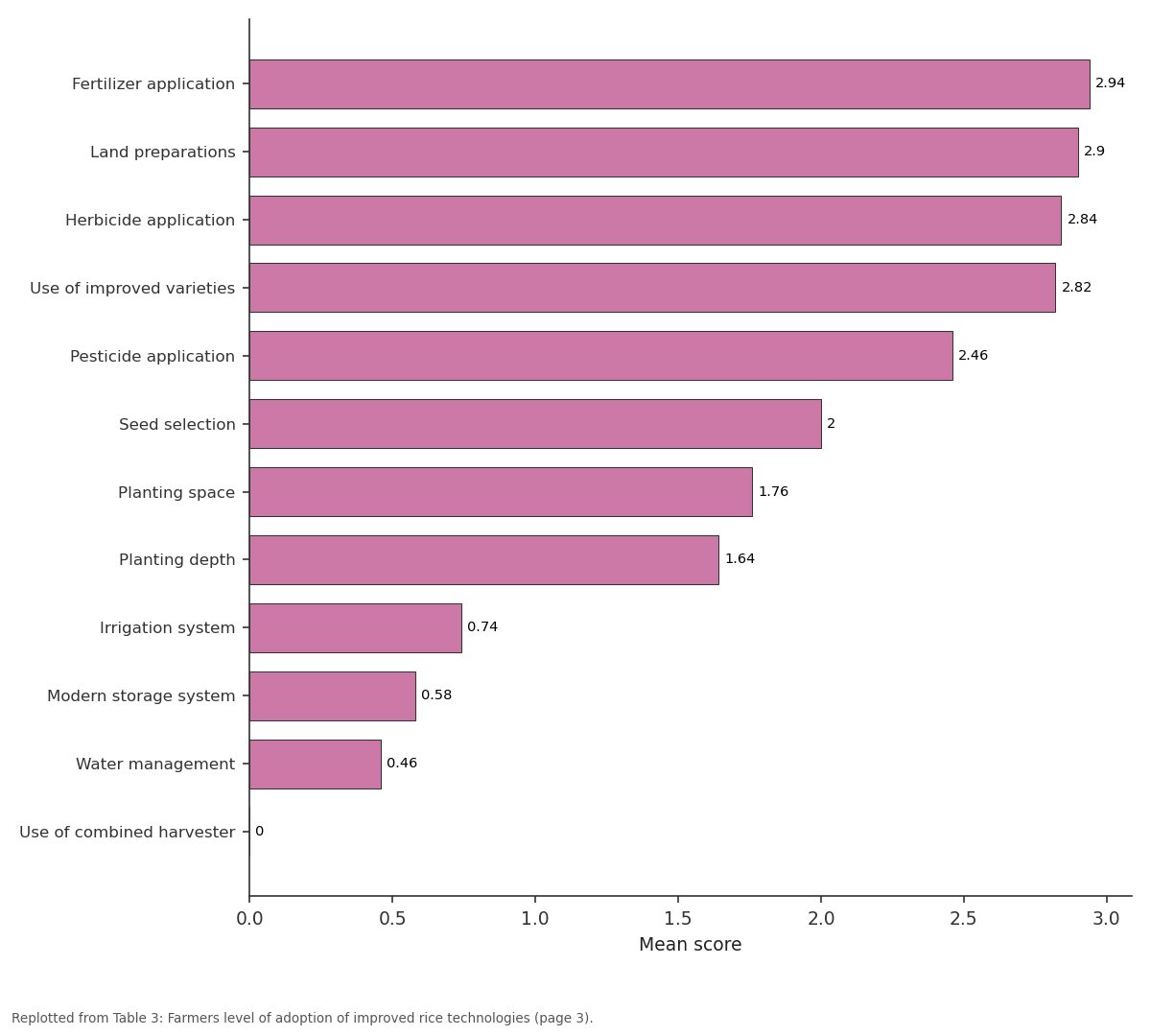
Mean score: Fertilizer application vs Land preparations vs Herbicide application vs Use of improved... vs Pesticide application
Replotted from Table 3 (page 3) of the original paper. Every bar is the paper's own table value.
View source evidence ↗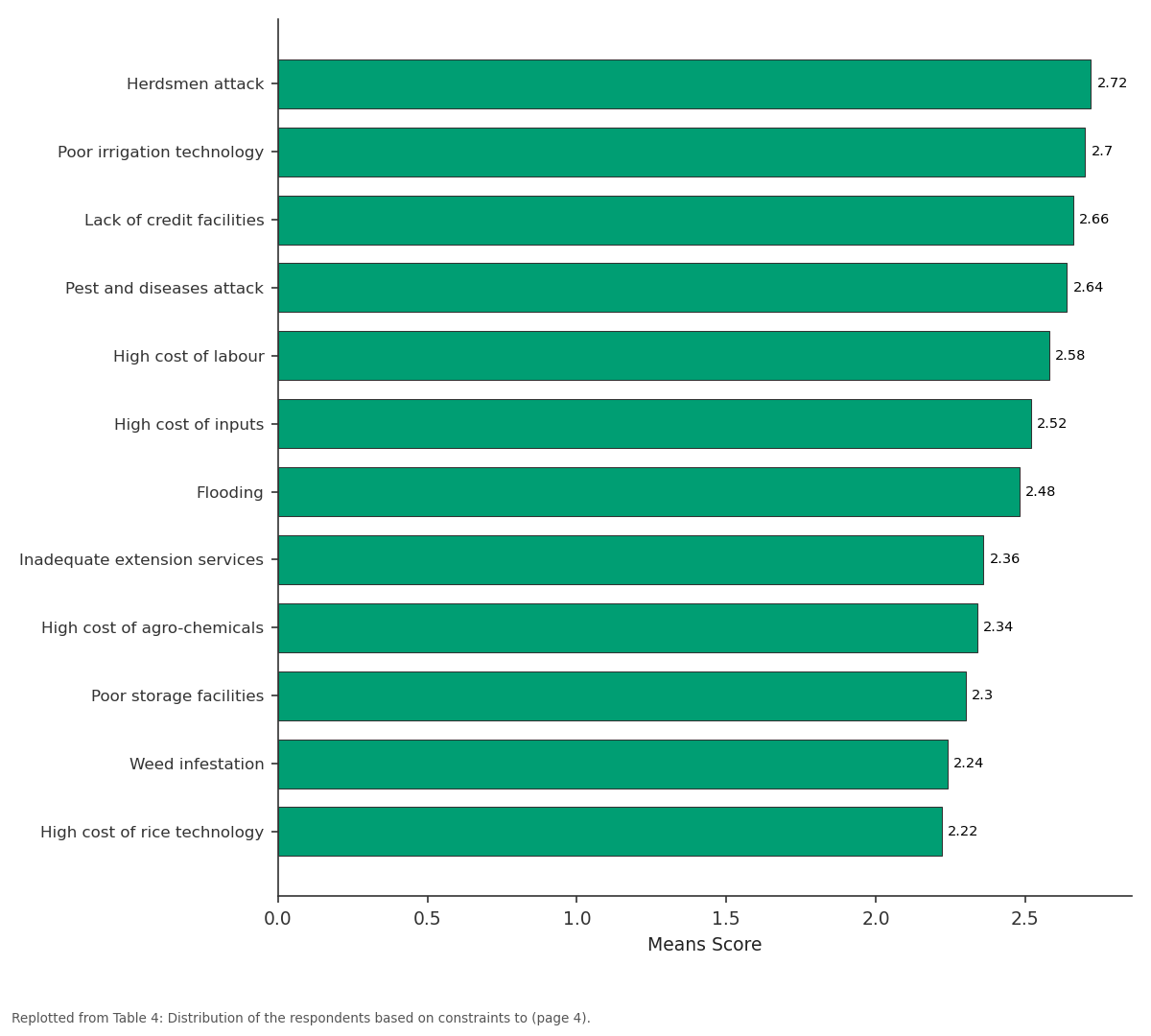
Means Score: Herdsmen attack vs Poor irrigation... vs Lack of credit... vs Pest and diseases attack vs High cost of labour
Replotted from Table 4 (page 4) of the original paper. Every bar is the paper's own table value.
View source evidence ↗Figures & tables
From the original paper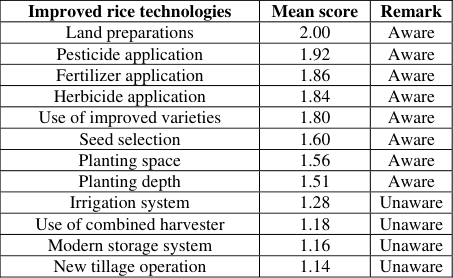 Table 2
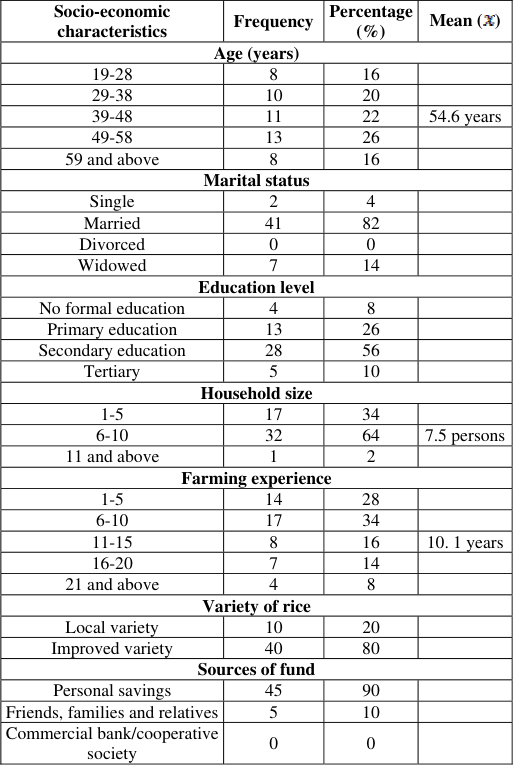 Table 1
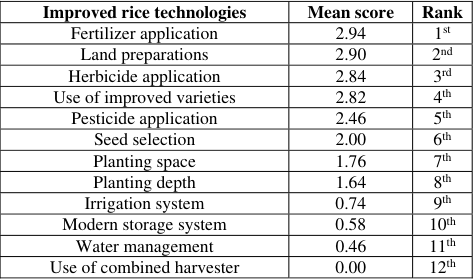 Table 3
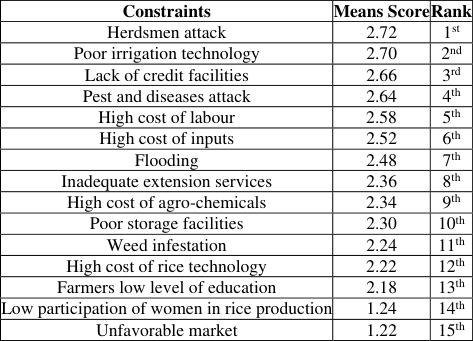 Table 4
Introduction
Agriculture is considered as a catalyst for the overall development of many nations. It is a critical sector that drives the economic development and industrialization of the developing nation, and has the capacity to reduce unemployment. Hence, its' development is essential for ensuring food security, income and employment generation, and for stimulating industrialization and overall economic development of the country [1] . A developing country such as Nigeria is blessed with lots of natural and human resources with large expanse of fertile land and friendly agricultural climate for agricultural activities and with different sectors such as solid minerals, tourism, sports and entertainment [2] . Nigeria's diverse climate from the tropical areas of the coast to the arid zone of the north; made it possible to produce virtually all agricultural products that can be grown in the tropical and semitropical areas of the world [3] . In an agrarian environment such as Nigeria, agriculture remains the chief support of the economy, employing about 65-70% of the labor force. Agricultural holdings are generally small and scattered; farming is often of the subsistence type, which is often characterized by simple tools usage and shifting cultivation [2] . These small scale farms produce about 80% of the total food as a result of the wide range of climate variations which allows it to produce a variety of food and cash crops. The staple food crops produced in Nigeria include cassava, yam, maize, cocoyam, cowpeas, beans, sweet potatoes, millet, plantains, bananas, rice, sorghum, and a variety of fruits and vegetables. Rice is the seed of the grass species Oryza sativa or Oryza glaberrima of the grass family Gramineae, a large monocotyledonous family of some 600 genera and around 10,000 species [4] . It is a staple food in Nigeria and it is grown in all the States of the Federation; although production varies from State to State. As a cereal grain, it is the most widely consumed; and as agricultural commodity, it is the third highest worldwide agricultural commodity produced after sugarcane and maize. Rice is a staple food in several African nations and constitutes a bigger portion of the diet on a regular basis [5] . Rice cultivation is the principal activity and source of income for millions of households around the globe [6] . It is cultivated virtually in all agro-ecological zones of the country, as it constitutes one major cereal crop produced by Nigeria farmers. In terms of comparative advantage [7] , noted that rice can be grown in flooded and non-flooded soils because it has both lowland and upland varieties that can adapt to different agro-climatic and soil conditions. However, aside a handful of nations that enjoy selfsufficiency in rice production, rice consumption surpass production and substantial amount of the crop are imported to sustain local demand. Hence, the need to step up rice production activities through the adoption of improve rice technologies. Adoption refers to the stage in which an innovation is selected for use by an individual or an organization. It is the integration of a new technology into existing practice and is usually proceeded by a period of trying and some degree of adaptation [8] . Technology adoption is essential since it is a means that allows people to participate in a rapidly changing world where technology has become critically important to their lives. Technology adoption consists of five steps [9] ; first, technology adoption requires awareness. At this step, the potential users get adequate information about the benefits of the technology. The second step is evaluation. At this level, the expected users assess the usefulness and usability of the technology, and the ease or difficulty of adopting. This is followed by acceptance or rejection of the users. At this stage, they decide to acquire and use the technology, or not. The fourth stage is learning. If they decide to use the technology, the users need to develop the skills and knowledge required to use the technology effectively. Finally, application or usage comes. Here the users show appropriate and effective use of the technology. The domestic production of rice is below the demand in Nigeria and rising per capita is now being complemented with huge imports [10] . Similarly, the production of rice in Nigeria is no longer the question but rather, how to meet the growing demand, reduce importation and be self-sufficient [11] . More so, [12] noted that the limited capacity of the Nigerian rice sector to meet the domestic demand has been attributed to several factors; notable among them is the declining productivity due to low adoption of improved production practices. Hence, the need to assess the level of adoption of improved rice production technologies among rural women rice producers in Ayamelum Local Government Area of Anambra State, Nigeria. The broad objective of the study is to assess the level of adoption of improved rice production technologies among rural women rice producers in Ayamelum Local Government Area of Anambra State, Nigeria. The specific objectives were to: i. Describe the socio-economic characteristics of the rural women rice producers. ii. Ascertain the awareness of improved rice production technologies available for adoption in the study area. iii. Determine the level of adoption of improved rice production technologies among the rural women. iv. Identify constraints to adoption of improved rice production technologies by the rice farmers.
Materials and methods
The study area is Ayamelum Local Government Area of Anambra State, Nigeria, which is located in Southeastern part of Nigeria with headquarter at Anaku. The towns that make up the local government are Omor, Umueje, Omasi, Igbakwu, Umumbo, Anaku, Umuerum, and Ifite Ogwari. It lies between longitude 6 0 36'E and 7 0 21'E and latitude 5 0 38'N and 6 0 47'N. Rice production is observably the predominant enterprise among most households in the area. Population for the study was delimited to all rural women rice farmers in the study area.
Multistage and simple random sampling techniques were used to select 50 respondents for the study. Stage I involved random selection of five communities (Omor, Umueje, Omasi Anaku, and Umumbo) out of the eight communities in existence in the study area. Stage II involved random selection of ten [10] rural women rice producers from each of the five communities selected. Data were collected through primary source using pretested questionnaire that was administered to the respondents through personal interview while descriptive statistics such the mean score, frequency and percentages were used to analyze the data collected.
Results and Discussion Socioeconomic Characteristics of the Respondents
The age distribution of the rural women rice producers (Table 1) indicated that 26% of the farmers were between the ages of 49 and 58 years, 22% between 39 and 48 years, 20% between the ages of 29 and 38 years, 16% fell within 19-28 years while another 16% fell between the ages of 59 and above with mean age value of 54.6 years. The result shows that the rural women in the study area were within their productive age and as such, they have the capacity to continue with rice production in the next 5-10 years come. The finding is in line with [13] , who indicated that the majority of the respondents were within age range of 41-50 years of age. More than half (82%) of the rural women rice producers in the study area were married, 14% were widows while 4% of them were single. The implication of this result is that majority of the rural women rice producers are into rice production because of their family responsibilities towards their children, and relatives at large. The result of the study further revealed that majority (56%) of the women rice producers had secondary education, 26% had primary school education while 10% had tertiary education.
| Socio-economic characteristics | Frequency | Percentage (%) | Mean ( ) |
|---|---|---|---|
| Age (years) | |||
| 19-28 | 8 | 16 | |
| 29-38 | 10 | 20 | |
| 39-48 | 11 | 22 | 54.6 years |
| 49-58 | 13 | 26 | |
| 59 and above | 8 | 16 | |
| Marital status | |||
| Single | 2 | 4 | |
| Married | 41 | 82 | |
| Divorced | 0 | 0 | |
| Widowed | 7 | 14 | |
| Education level | |||
| No formal education | 4 | 8 | |
| Primary education | 13 | 26 | |
| Secondary education | 28 | 56 | |
| Tertiary | 5 | 10 | |
| Household size | |||
| 1-5 | 17 | 34 | |
| 6-10 | 32 | 64 | 7.5 persons |
| 11 and above | 1 | 2 | |
| Farming experience | |||
| 1-5 | 14 | 28 | |
| 6-10 | 17 | 34 | |
| 11-15 | 8 | 16 | 10. 1 years |
| 16-20 | 7 | 14 | |
| 21 and above | 4 | 8 | |
| Variety of rice | |||
| Local variety | 10 | 20 | |
| Improved variety | 40 | 80 | |
| Sources of fund | |||
| Personal savings | 45 | 90 | |
| Friends, families and relatives | 5 | 10 | |
| Commercial bank/cooperative society | 0 | 0 |
Table text extracted from the original PDF; superscript letters are shown inline. The original table image is below.
View original table image
From the pooled result, 92% of the rural women rice producers went through one form of education or the other. The implication is that most of the women having attained certain level of education can read, write and digest any training given to them on adoption of improved rice technologies. Thus, education is expected to increase the learning capacity of the rural women in comprehending and adopting recommended improved rice production technologies and best agronomic practices. On the distribution of the farmers according to their household size, the result indicated that thirty-two (32) women accounting for 64% of the respondents had household size of between 6-10 persons, 34% had between 1-5 persons while the remaining 2% had between 11 and above persons. It is pertinent to note that in agriculture, household size of a farmer's family plays an indispensable role, especially in strenuous farming activity such as rice farming in terms of provision of workforce for farming activities; hence, large number of household size will bring about decrease in the cost of production. In order words, the larger the household size, the greater the volume and rate of farming activities that will be accomplished by the farmers' household.
Furthermore, the result shows that the mean years of farming was 10.1 years with many (34%) of the women rice producers falling between 6-10 years. This is an indication that the farmers have spent reasonable years in rice production. Hence, it is expected that such significant years of farming experience would reflect on their level of expertise and production yield. More so, the more experience the rice producers acquires, the more meticulous they become to take up risks relating to rice farming activities and adoption of improved rice production technologies. On the varieties of rice cultivated by the rural women rice producers, the result indicated that the majority (80%) cultivated improved rice varieties while only 20% cultivated the local varieties. Personal savings was the major source of fund identified by significant percentage (90%) of the rural women rice producers in the study area. The result of the analysis further revealed that only few (10%) of the respondents financed their rice production activities through credits obtained from their friends and relatives. This implies that more than half of the women financed their farming activities with their personal savings. The pooled result of the survey indicates that the farmers are aware of seven improved rice production technologies out of the twelve as listed in Table 2. The decision was based on a 2 point Likert-type scale with a mean cut of mark of 1.5.
| Improved rice technologies | Mean score | Remark |
|---|---|---|
| Land preparations | 2.00 | Aware |
| Pesticide application | 1.92 | Aware |
| Fertilizer application | 1.86 | Aware |
| Herbicide application | 1.84 | Aware |
| Use of improved varieties | 1.80 | Aware |
| Seed selection | 1.60 | Aware |
| Planting space | 1.56 | Aware |
| Planting depth | 1.51 | Aware |
| Irrigation system | 1.28 | Unaware |
| Use of combined harvester | 1.18 | Unaware |
| Modern storage system | 1.16 | Unaware |
| New tillage operation | 1.14 | Unaware |
Table text extracted from the original PDF; superscript letters are shown inline. The original table image is below.
View original table image
Adoption level of improved Rice Production Technologies
The result of the survey indicated that fertilizer application ( =2.94), land preparations ( =2.90), herbicide application ( =2.84), use of improved varieties ( =2.82), pesticide application ( =2.46), seed selection ( =2.00), planting space ( =1.76) and planting depth ( =1.64) were highly adopted by the rural women rice producers. Whereas, irrigation system ( =0.74), modern storage system ( =0.58), water management ( =0.46) and use of combined harvester ( =0.00) were not paid attention to, by the rural women rice producers. The result indicates that the rural women rice producers highly adopted most of the basic improved rice production technologies available in the study area. As such, the production yield of the women rice producers is expected to scale up if only they can fully adopt most of the existing improved rice production technologies in the area. The high adoption level as recorded in the study could be attributed to the compatibility of the improved rice production technologies to the rural women's community norms and educational level. More so, years of farming experience and trainings could be some of the probable reasons for the high adoption level in the study area. The finding of this study aligns with [14] who reported a relatively high level of adoption of land preparation practices among lowland rice farmers in Levun local government area of Niger state, Nigeria. ). However, the rural women rice producers objected low level of participation of women in rice production ( =1.24) and unfavorable market ( =1.22) as part of the major constraints. The finding is in agreement with [15] who highlighted poor irrigation technology, poor storage facilities, high cost of labour, high cost of inputs and inadequate extension services as major constraints to adopters.
Conclusion and Recommendation
Adoption of improved rice production technologies among the rural women rice producers in Ayamelum Local Government Area of Anambra State, Nigeria revealed that majority of the women rice producers were aware of the various improved rice production technologies in the area and has adopted most of them for their rice production activities. However, majority of the farmers indicated that they were constrained by several factors. Hence, if these constraining factors are taken care of, it will definitely bring about a boost in the women's production yield, capacity and income. Based on the findings of the study, there is an urgent need for the stakeholders, Local, State, Federal government and nongovernmental organizations to checkmate the activities of the herdsmen by creating achievable policies, laws and grazing routes. This will enable the vulnerable women rice producers to reduce crop damages. Regulatory bodies such as the National Emergency Management Agency (NEMA) should intensify efforts in tackling disaster related issues such as flooding through prior weather forecast and construction of concrete structures. In addition, the women should form, belong and participate actively in agricultural cooperatives in order solve the problem of credit facilities and benefit from subsidized inputs as offered by the cooperative groups.
Figures and tables from the paper
| Improved rice technologies | Mean score | Rank |
|---|---|---|
| Fertilizer application | 2.94 | 1st |
| Land preparations | 2.90 | 2nd |
| Herbicide application | 2.84 | 3rd |
| Use of improved varieties | 2.82 | 4th |
| Pesticide application | 2.46 | 5th |
| Seed selection | 2.00 | 6th |
| Planting space | 1.76 | 7th |
| Planting depth | 1.64 | 8th |
| Irrigation system | 0.74 | 9th |
| Modern storage system | 0.58 | 10th |
| Water management | 0.46 | 11th |
| Use of combined harvester | 0.00 | 12th |
Table text extracted from the original PDF; superscript letters are shown inline. The original table image is below.
View original table image
| Constraints | Means Score | Rank |
|---|---|---|
| Herdsmen attack | 2.72 | 1st |
| Poor irrigation technology | 2.70 | 2nd |
| Lack of credit facilities | 2.66 | 3rd |
| Pest and diseases attack | 2.64 | 4th |
| High cost of labour | 2.58 | 5th |
| High cost of inputs | 2.52 | 6th |
| Flooding | 2.48 | 7th |
| Inadequate extension services | 2.36 | 8th |
| High cost of agro-chemicals | 2.34 | 9th |
| Poor storage facilities | 2.30 | 10th |
| Weed infestation | 2.24 | 11th |
| High cost of rice technology | 2.22 | 12th |
| Farmers low level of education | 2.18 | 13th |
| Low participation of women in rice production | 1.24 | 14th |
| Unfavorable market | 1.22 | 15th |
Table text extracted from the original PDF; superscript letters are shown inline. The original table image is below.
View original table image
References
15 in the original paper- Ogbalubi LN, Wokocha CC Agricultural development generation: The Nigeria experience. Journal of Agriculture and Veterinary Science. 2013; 2(2):60-69.
- Yakubu M, Akanegbu B. Neglecting agriculture and its consequences to Nigeria economy: An analytical synthesis. European Journal of Research in Social Sciences. 2015; 3(3):18-27.
- Olayemi FF, Adegbola JA, Bamishaiye EI, Awagu EF. Assessment of post-harvest losses of some selected crops in eight Local Government Areas of Rivers State, Nigeria. Asian Journal of Rural Development. 2012; 2(1):1323.
- Ajala S, Gana A. Analysis of challenges facing rice processing in Nigeria. Journal of Food Processing. 2015; 20(15):1-6.
- Merem EC, Twumasi Y, Wesley J, Isokpehi P, Shenge M, Fageir S et al. Analyzing rice production issues in the Niger State Area of Nigeria's middle belt. Food and Public Health. 2017; 7(1):7-22. doi: 10.5923/j.fph.20170701.02.
- Shoaib AW, Luan J, Xiao S, Sanaullah N, Irfana NM, Qurat Ul AM et al. Economic Assessment of Rice Production in Sindh, Pakistan. American Journal of Environmental and Resource Economics. 2016; 1(1):37-42.
- Ajah J, Ajah FC. Socio-economic determinants of smallscale rice farmers' output in Abuja, Nigeria. Asian Journal of Rural Development. 2014; 4(1):16-24.
- Mwangi M, Kariuki S. Factors determining adoption of new agricultural technology by smallholder farmers in developing countries. Journal of Economics and Sustainable Development. 2015; 6(5):208-213.
- Weldegiorges ZK. Benefits, constraints and adoption of technologies introduced through the eco-farm project in Ethiopia. Unpublished Master's thesis, 2014.
- Onyeneke RU. Determinants of adoption of improved technologies in rice production in Imo State, Nigeria. African Journal of Agricultural Research. 2017; 12(11):888-896.
- Onumadu FN, Osahon EE. Socio-economic determinants of adoption of improved rice technology by farmers in Ayamelum Local Government Area of Anambra State, Nigeria. International Journal of Scientific and Technology Research. 2014; 3(1):308-314.
- Ume GN, Chukwu VA. Determinants of adoption of improved rice production technologies in Ebonyi State, Nigeria. Journal of Biology, Agriculture and Healthcare. 2015; 5(7):170-176.
- Mustapha SB, Undiandeye UC, Bakari S. Analysis of adoption of improved rice production technologies in Jeer Local Government Area of Borno State, Nigeria. International Journal of Development and Sustainability. 2012; 1(3):1112-1120.
- Ndagi AH, Kolo IN, Yabagi AA, Garba Y. Adoption of production technologies by lowland rice farmers in Levun Local Government Area of Niger State, Nigeria. International Journal of Agricultural Extension. 2016; 4(1):49-56.
- Ibrahim AA. Adoption decision on rice production technologies by farming households under Borno State Agricultural Development Programme, Nigeria. International Journal of Research in Agriculture and Food Sciences. 2014; 2(3):26-31.
Cited by 1
From OpenAlex, OpenCitations and reference lists read by Scinovex
- Extent of adoption of paddy cultivation technologies of ANGRAU among farmers in Guntur District of Andhra Pradesh
A Manoj, V Visalakshmi, G Sivanarayana · International Journal of Agriculture Extension and Social Development · 2026
Adoption of improved technologies is the only way to minimize the cost of cultivation. The present study was formulated to investigate the extent of adoption of ANGRAU Technologies among the farmers in Guntur district. A total of 120 farmers were selected randomly for the present investigation. Finding revealed that majority of the farmers were marginal (43.33%) having middle age (51.67%) with primary school education (36.67%) doing farming as an occupation (86.67%), having less than 1 lakh of annual income (47.50%), friends are the source of information (42.50%), had no social participation (