
Research article · 2019 · Full text
International Journal of Advanced Biochemistry ResearchEvaluation of the potential of ethanol leaf extract of Persea americana in the treatment of on carbon tetrachloride (CCL4) induced renal damage
Volume 3(2) · Pages 34–38 · DOI: 10.33545/26174693.2019.v3.i2a.102 ↗
Research areasDrug-Induced Hepatotoxicity and Protection
Abstract
Author-writtenThe aim of this study was to evaluate the potential of ethanol leaf extract of Persea americana as a treatment option for renal damage. Freshly harvested leaves of P. Americana were processed into fine powder. 500 g of powdered plant sample was soaked in 70% ethanol for 72 hr and afterwards, sieved and concentrated. Twenty five adult male wistar rats were divided into five groups of five rats each. Group 1 was the normal control and was fed normal rat chow and water only. Group II was the negative control and was induced renal damage without treatment. Group III-V were induced renal damage and treated with 100, 300, 500 mg/kg b.w of extract orally respectively. Animals were sacrificed, after which blood sample was collected and kidney tissue harvested and analysed using standard procedures. The serum urea and creatinine levels of rats administered CCL4 only was significantly (P< 0.05) higher than that reported for their treated counterparts. However, there was no significant (P> 0.05) difference in the urea and creatinine levels of rats treated with different doses of extract compared to their normal control counterpart. There was a significant (P
Summary
Source-checkedPlain-language reading of the full paper, prepared with AI and checked against the text. Each point links to the authors' own words.
Why it matters
- The kidneys are highly susceptible to damage from toxic substances due to their high blood flow, metabolic activity, and the way they concentrate toxins. View evidence ↗
- Kidney disease affects approximately 10% of the global population and is linked to cardiovascular disease, kidney failure, and premature death. View evidence ↗
- Common treatments like dialysis and transplantation have significant drawbacks, including immune suppression and the risk of graft rejection. View evidence ↗
The question
- The study aimed to determine if an ethanol extract from the leaves of Persea americana (avocado) could effectively treat renal damage. View evidence ↗
What they did
- The experiment used adult male Wistar rats weighing between 130 and 200 g. View evidence ↗
- Renal damage was induced by administering 1 mL/kg of carbon tetrachloride (CCL4) in olive oil intraperitoneally. View evidence ↗
- Twenty-five rats were split into five groups: a normal control, a negative control (CCL4 only), and three treatment groups receiving 100, 300, or 500 mg/kg of the extract. View evidence ↗
- The leaf extract was administered to the treatment groups for a period of 21 days. View evidence ↗
- Serum urea and creatinine levels were measured using a diagnostic kit following the manufacturer's guidelines. View evidence ↗
What they found
- Rats with induced renal damage that received no treatment had significantly higher serum urea levels compared to those treated with the extract. View evidence ↗
- There was no significant difference in serum urea levels between the different doses of the extract used. View evidence ↗
- Serum creatinine levels in rats treated with the extract did not differ significantly from each other or from the normal control group. View evidence ↗
- Treated rats showed a significant increase in body weight, similar to the normal control group. View evidence ↗
- The untreated group (Group II) experienced irreversible weight loss, which the authors attribute to reduced food intake caused by a decline in the glomerular filtration rate. View evidence ↗
What it means
- The authors conclude that the ethanol leaf extract of Persea americana can reduce renal damage and is a viable candidate for developing kidney disease therapies. View evidence ↗
Figures & tables
From the original paper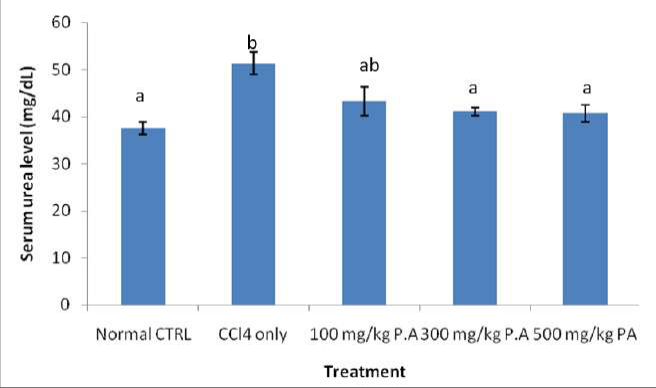 Figure 1
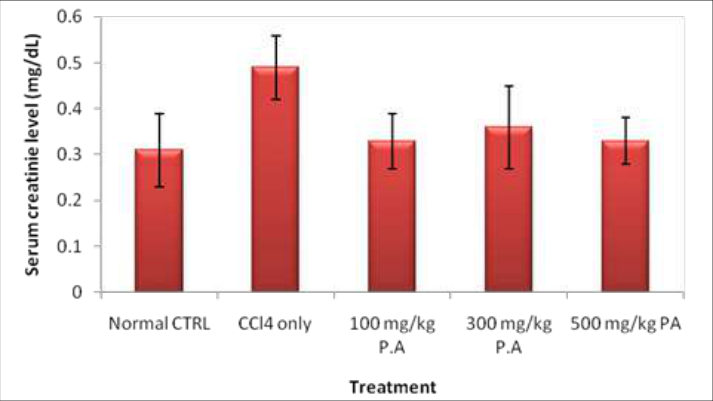 Figure 2
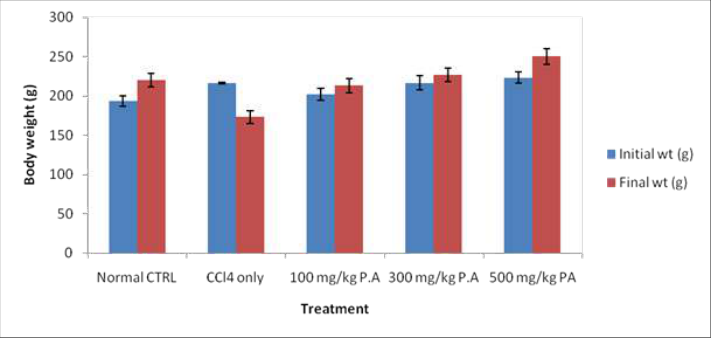 Figure 3
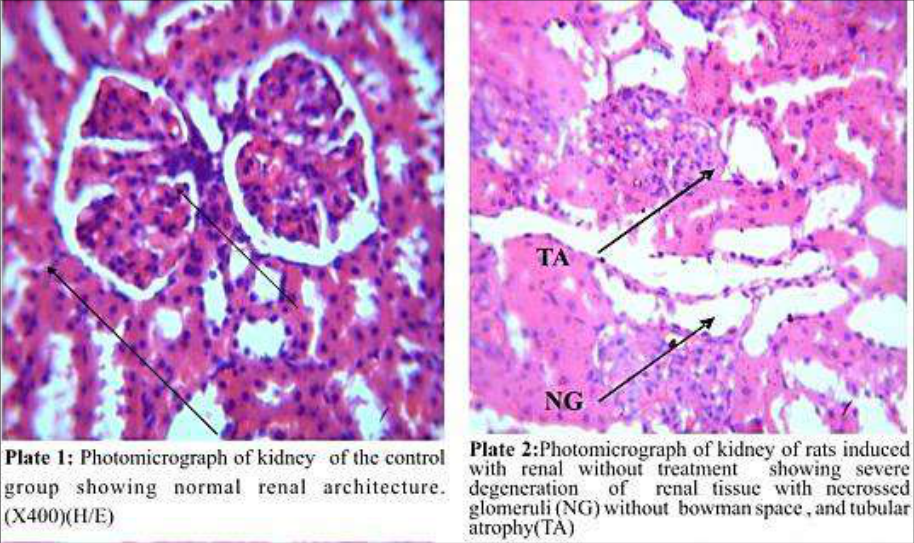 Figure 3
Introduction
Air and water pollutions are largely implicated in human exposure to harmful substances. The susceptibility of the kidney to damage resulting from toxic substances is high owing to its large surface area, high blood flow, high metabolic activities and active re-absorption and concentrations of toxins. It is worthy to note that diverse forms of kidney injuries are associated with toxic substances. Kidney Disease is a globally acknowledged public health problem which is directly linked to kidney failure, cardiovascular disease and ultimately premature death [1] . An estimated 10% of the world's populations are victims of this problem [2] . Dialysis and kidney transplantation which are the most commonly subscribed treatment options are implicated in pitfalls such as immunological rejection of kidney graft, immune suppression and its attendant consequences [3] . Plants and herbs have been a veritable source of food and folk medicine for mankind since prehistoric times. The pharmaceutical industries have also relied extensively on plants to develop synthetic drugs [4] . Over 70% of the world's populations rely on plant based therapies to meet their health needs. They are considered affordable, readily available and safe for human consumption [5] . Persea americana, a smallish evergreen tree with a grey trunk is a member of the Lauracea family. It is native to Central America [6] . In Nigeria, it is commonly known as avocado pear [7] . Various parts of P. americana such as such as the root, bark, fruit, seed and leaf are employed in the treatment of diseases ravaging mankind in many tropical and subtropical countries [8] . Some of the diseases which had been treated with the aforementioned plant include diarrhea, dysentery and toothache etc. [9] Despite the fact that the outcome of previous studies had established the usefulness of different parts of Persea americana in the management of different health conditions, there is paucity of data on its potency in the treatment of kidney diseases. Hence, the imperativeness of this study is determined.
Material and Methodology Collection and Processing of Plant Material
Mature green leaves of Persea americana which were harvested from a family compound in Uli, Ihiala Local Government Area of Anambra State were subsequently identified and authenticated at the herbarium unit of the Department of Botany, Nnamdi Azikiwe University Awka Anambra State. The leaves were thoroughly washed with clean water and afterwards dried at room temperature. The dried leaves were subsequently ground and sieved to fine powder.
Animals
Adult male wistar rats weighing 130-200 g were housed in plastic cages in the Animal House of the Department of Human Physiology, College of Health Sciences Anambra State University and were fed rat chow and water ad libitium. They were acclimatized for two weeks before experiment.
Extraction of Plant Material
Exactly 200 g of the powdered leaf sample was soaked in 500 mL of 70% ethanol in an airtight conical flask for 72 hr and stirred intermittently at room temperature. This was followed by the filtration first through a double layered muslin cloth and then filtered through Whatman No. 1 filter paper, the residue was evaporated to dryness with the aid of the rotary evaporator under reduced pressure at 40-50°C to obtain extract [10] .
Median Lethal dose 50% (LD50)
Three groups of three rats per group were used in the experiment to determine the LD 50 of extract. The various groups were separately administered with 10, 100 and 1000 mg/kg of extract orally. The rats were observed for 24 hr for effects of toxicity. In the absence of mortality in any of the groups, another three groups of one rat each were each administered with 1600, 2900 and 5000 mg/kg of extract separately. The animals were observed for 48 hr for signs of toxicity [11] .
Induction of Renal Damage
Animals were administered with 1 mL/kg body weight CCL 4 (Sigma Aldrich, USA) intraperitoneally in 30% v/v olive oil for induction of renal damage [12] .
Experimental Design
Group I: was fed with rat chow and water adlibitum.
Group II: was administered with CCL4 only without treatment.
Group III: was administered with CCL4 before 100 mg/kg of P.amaericana leaf extract Group IV: was administered with CCL4 before 300 mg/kg of p. amaericana leaf extract.
Group V: was administered with CCL4 before 500mg/kg of p. amaericana leaf extract.
Administration of leaf extract lasted for 21 days after which the animals were euthanized by administering 2 µg/kg medetomidine. Blood sample was subsequently collected via cardiac puncture and centrifuged at 4 °C, 500×g for 15 min to obtain serum. The kidney of each animal was excised, washed with ice-cold water to get rid of debris before being stored in 10% formalin (Sigma Aldrich, USA) for histopathological evaluation Burki et al. [13] .
Determination of Serum Creatinine and Urea
Diagnostic kit (AMP Krenngasse 12, 1810 Graz, Australia) was used in the analysis of serum creatinine and urea with the aid of the manufacturer's guidelines.
Histopathological Study
Harvested kidney sample was fixed and dehydrated in alcohol (90%). The kidney tissue was further processed as described by Burki et al. [13] . Results
Discussion
Countries of the world rely on plant based therapies to treat diverse human ailments. In developing countries, over 80% of the population depends on medicinal plant preparations to meet their health needs [14] . Figure 1 shows the serum urea level of rats with experimentally induced renal damage treated with ethanol leaf extract of Persea americana. The serum urea level of rats administered CCL 4 without treatment was significantly (P< 0.05) higher than that reported for its treated counterparts. However, there was no significant (P> 0.05) difference in the urea level of rats treated with different doses of extract. Figure 2 shows the serum creatinine level of rats with experimentally induced renal damage treated with ethanol leaf extract of Persea americana indicating a non significant (P> 0.05) difference in the serum creatinine level of rats treated with different doses of extract likewise the control. However, the serum creatinine level of rats administered with CCL 4 was significantly (P> 0.05) higher than that reported for their treated counterpart. The ameliorative effect of the extract on the damaged kidney could be attributed to the presence of the phytochemicals reportedly present in the leaf. This result is consistent with the finding of Folorunsho et al. [15] which established that ethanol leaf extract of Persea americana attenuated renal damage associated with streptozotocin induced diabetic rats. Figure 3 shows the body weight of rats with experimentally induced renal damage treated with ethanol leaf extract of P. americana indicating a significant (P< 0.05) body weight increase among treated groups same as was observed on their control counterpart. However, a contrary observation was made on Group II which was induced renal damage without treatment. The irreversible weight loss observed on Group II could be attributed to a declination of the glomerular filtration rate in chronic kidney disease which is associated with a significant reduction in food intake and consequently weight loss [16] .
Conclusions
In conclusion, ethanol leaf extract of Persea americana has the potential to ameliorate renal damage and could be considered a viable candidate for the development of a potent therapy for the treatment of kidney disease.
References
16 in the original paper- Levey AS, Atkins R, Coresh J, et al. Chronic kidney disease as a global public health problem: approaches and initiatives -a position statement from Kidney Disease Improving Global Outcomes. Kidney Int. 2007;72(3):247-259.
- Sands JM, Verlanders JW. Anatomy and Physiology of the Kidney. In: Toxicology of the Kidney 3 rd ed (Tarloff JB, Lash, LH eds). CRC Press, Boca Raton, FL, 2005, 3-56.
- Tapsell LC, Hemphill I, Cobiac L, et al. Health benefits of herbs and spices: the past, the present, the future. Med J Aust. 2006;185(4):S4-24.
- Asadbeigi M, Mohammadi T, Rafieian-Kopaei M, Saki K, Bahmani M, Delfan B. Traditional effects of medicinal plants in the treatment of respiratory diseases and disorders: An ethnobotanical study in the Urmia. Asian Pac. J. Trop. Med. 2014;7:S364-8.
- Shruti SR, Padma T. A Review on Persea americana Mill. (Avocado) -Its Fruit and oil. Nt J Pharm Tech Res. 2015;8(6):72-77.
- Omodamiro OD, Jimoh MA, Ewa IC. Hepatoprotective and haemopoeitic activity of ethanol extract of Persea americana seed in paracetamol induced toxicity in wistar albino rat. IJPPR. 2016;5(3):149-165.
- Owolabi MA, Jaja SI, Coker HA. Vasorelaxant action of aqueous extract of the leaves of Persea americana on isolated thoracic rat aorta. Fitoterapia. 2005;76:567573.
- Pamplora GD, Roger MD. Encyclopaedia of Medicinal Plants, 1999, 719-720.
- Jeffery GH, Basset J, Mundan J, Denny R. Vogel's Textbook of Quantitative Chemical Analysis. (Addison Westerly Longmann Ltd, England).1989;5:801.
- Lorke D. A new approach to practical acute toxicity testing. Arch. Toxicol. 1983;54(4):275-287.
- Jan S, Khan MR. Protective effects of Monotheca buxifolia fruit on renal toxicity induced by CCl 4 in rats. BMC Complement Alternative Medicine. 2016;16(1):115.
- Burki S, Burki ZG, Ahmed I, Jahan N, Owais F, Tahir N. GC/MS assisted phytochemical analysis of Ajuga parviflora leaves extract along with antihepatotoxic effect against anti-tubercular drug induced liver toxicity in rat. Pak J Pharm Sci. 2020;33:325-31.
- Rouhi-Boroujeni H, Gharipour M, Mohammadizadeh F, Ahmadi S, Rafieian-kopaei M. Systematic review on safety and drug interaction of herbal therapy in hyperlipidemia: a guide for internist. Acta Biomedica. 2015;86(2):130-136.
- Folorunsho P, Olayinka A, Onifade F, Olawale DW, Olaniyi SO, Mariam OS. Ethanol extracts of Terminalia catappa leaves and Persea americana seed attenuate renal damage associated with Streptozotocin-induced diabetic rats. Afr. J. Pharm. Pharmacol. 2002;16(4):5358.
- Chazot C. Why are chronic kidney disease patients anorexic and what can be done about it? Semin Nephrol.2009;29(1):15-23.
- Jan S, Khan MR. Protective effects of Monotheca buxifolia fruit on renal toxicity induced by CCl 4 in rats. BMC Complement Alternative Medicine. 2016;16(1):115.