
Research article · 2020 · Full text
International Journal of Agriculture Extension and Social DevelopmentMagnitude of effect of rural banditry on IFAD-CASP participating crop producers in Zamfara state, Nigeria
Volume 3(2) · Pages 85–90 · DOI: 10.33545/26180723.2020.v3.i2b.135 ↗
Research areasCOVID-19 Pandemic Impacts
Abstract
Author-writtenThe researched analyzed the extent/ magnitude of effects of rural banditry on IFAD-CASP participating crop producers in Zamfara state, Nigeria. Interview schedule and focused group discussion (FGD) were used to collect data from 360 respondents that were selected for the study. A multi stage and simple random sampling technique was used in selecting the respondents. Descriptive statistical tools (mean, percentages, frequency distribution and ranking) were used for data analysis. The results of the study reveals that majority of the respondents were married with an average household size of 8 persons and income level of less than N 20,000 /month. Most of the respondents (50%) indicate that the conflict is very severe resulting to great economic, physical and social effects on the respondents. Majority (70%) of the respondents’ perceived western agricultural zone of the study location as intense conflict area. The results of ranking of effect of rural banditry on IFAD-CASP in the study area, indicates poor participation, increased rural poverty, poor supervision of programme, poor economic growth and poor information dissemination were ranked 1st, 2nd, 3rd, and 4th respectively. Based on the finding of the study, it could be concluded that rural banditry poses poor economic growth, increased rural poverty, poor participation, and poor programme implementation and induces fear and uncertainty. The study therefore, recommend that urgent recruitment of adequate security personnel to patrol the porous borders, prompt enrollment of the vulnerable into government social investment programmes, organize training/seminars for peace building purpose.
Summary
Source-checkedPlain-language reading of the full paper, prepared with AI and checked against the text. Each point links to the authors' own words.
Why it matters
- Rural banditry in Zamfara state has caused significant loss of life and property, as well as increasing the number of orphans and widows. View evidence ↗
- The conflict has led to psychological trauma and environmental destruction, which negatively impact food security and agricultural production. View evidence ↗
- The IFAD-CASP was introduced by the federal government to fight poverty and hunger through climate change adaptation and agribusiness support. View evidence ↗
The question
- The study aimed to analyze the magnitude of the effects that rural banditry has on crop producers participating in the IFAD-CASP in Zamfara state. View evidence ↗
What they did
- Data were collected from 360 respondents using structured interview schedules and focused group discussions. View evidence ↗
- The researchers used a multi-stage sampling technique, starting with a list of Community Development Associations (CDAs) from the IFAD-CASP office. View evidence ↗
- The analysis was performed using descriptive statistics, including frequencies, percentages, means, and ranking. View evidence ↗
What they found
- The majority of participants were married (77.8%) and had a monthly income of less than 20,000 Naira (55.3%). View evidence ↗
- Half of the respondents (50%) perceived the rural banditry in the study area as being very severe. View evidence ↗
- Among physical effects, assault and abduction were ranked first in terms of magnitude, with 66.1% of respondents reporting severe effects. View evidence ↗
- Crop yield was the second highest ranked effect overall, with 90% of respondents reporting a severe impact. View evidence ↗
- Fear was ranked as the third most significant effect, with 86.1% of participants reporting it as severe. View evidence ↗
- The most significant effects of banditry on the IFAD-CASP program were poor participation (1st), increased rural poverty (2nd), poor program supervision (3rd), and poor information dissemination (4th). View evidence ↗
What it means
- The authors concluded that rural banditry has had a significant negative impact on crop producers participating in the IFAD-CASP in Zamfara state. View evidence ↗
Visual summary
1 visualsIllustrations explain the paper; they do not show study data.
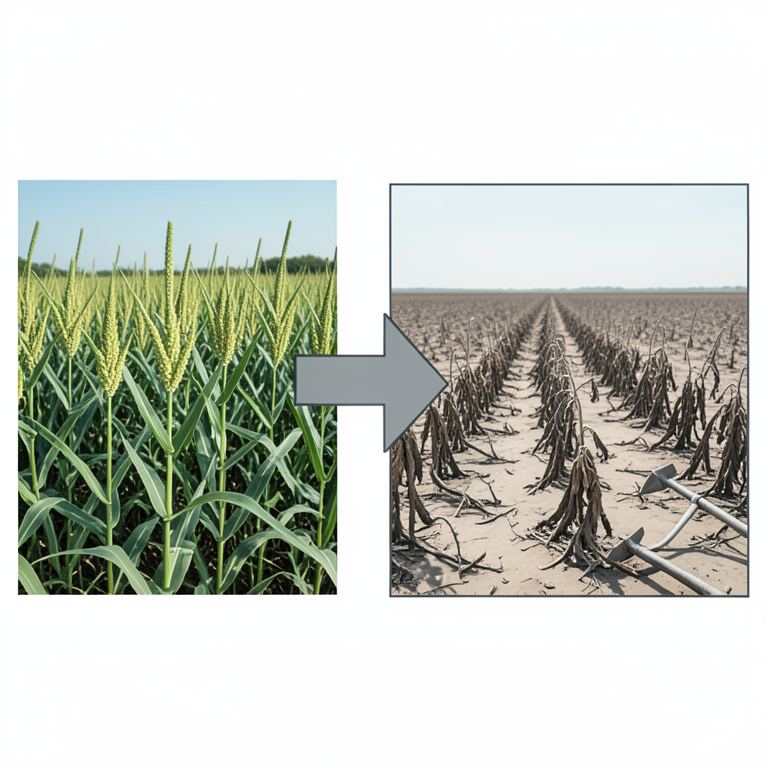
Program Disruption Flow
AI-generated conceptual illustration (sorghum and millet crops in rural Nigerian farmland). It explains the idea and does not show study data.
View source evidence ↗Figures & tables
From the original paper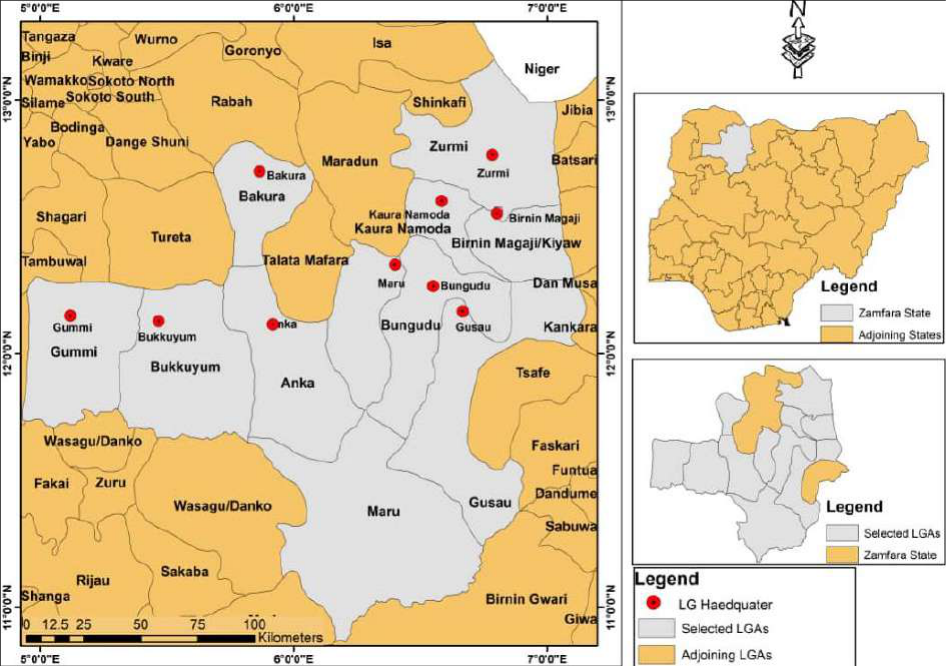 Figure 1
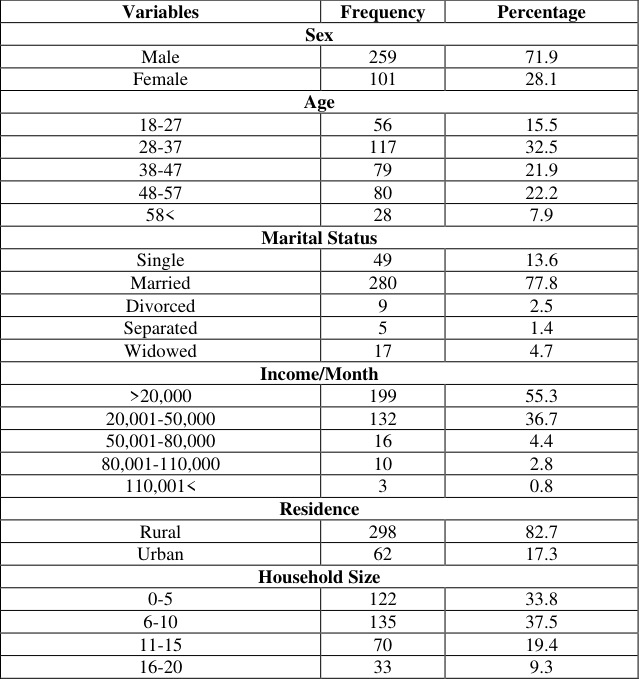 Table 1
 Table 2
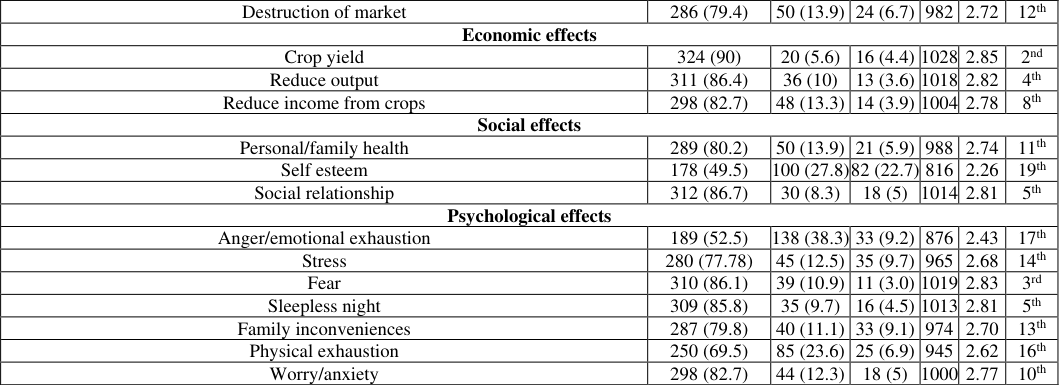 Table 3
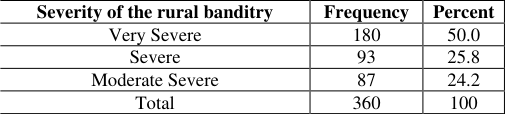 Table 3
Introduction
Rural banditry has become a widespread social phenomenon that is fast ravaging several societies of the world. In most cases rural banditry is usually the decision of individual centrally organized parties geared to engage in open armed clashes in disputes about power over government and territory and such conflicts are caused by several factors (Mustapha, 2019) [16] . Among the factor include is insincerity on the part of one or the parties that were involved, is the disappointment from either of the parties that were involved, is internal disagreement (Musa, 2016) [15] , is inability to address the root cause of a long-standing conflict, is the proliferation of weapons and arms, that causes armed conflict, according to Murtala (2018) [14] is the ethnic factor. According to Mueller (2000) [13] rural banditry can only be made possible when weapons are made available to fight, thereby inflicting injuries and sometime death of individuals. Similarly mischievous individuals take advantage of it to cause disturbance in order to achieve their interest (Mueller, 2000) [13] . According to Babatunde (2016) [2] , rural banditry is fast becoming popular in developing countries than in developed ones. It is also fast becoming an integral part of the activities in most developing nations like Nigeria. Earlier researchers (Magnus, 2018) [11] have shown that the aftermath of armed conflicts in society has been consistently negative, for instance, it increases the rate of poverty, resulting to an increase in the number of internal displacement of several persons, causes outbreak of diseases, reduce food security and stunt impediment in economic growth. Just like other developing nations, Nigeria has in the last five decades, experienced various forms of armed conflict, most notably after independence (1960). It has occurred in almost all the six geopolitical zones of the country. Even though the incidences do not cut across every state in each geographical zones, yet almost all the states has suffered from its negative consequences either directly or indirectly (Mueller, 2000) [13] . Thus, the consequences of rural banditry on the Nigerian society are negative and endless because besides affecting almost all the states of the federation it also affected virtually every other area in the state where it occurred. For instance, in Zamfara, it has led to massive loss of lives and properties and caused disease and disabilities. It has also increased the numbers of widows, widowers and orphans. It has raised up the rate of depression, trauma, mental retardation, suicide and environmental destruction with dire consequences for agricultural production and food shortages (Ladan, 2016) [10] . The conflict has accounted for the severe food crisis and insecurity in several parts of Zamfara state. Similarly, several agricultural lands have equally been destroyed. It has also accounted for environmental changes, degradation of agricultural soil, erosion of the genetic base of agricultural biodiversity, water scarcity, poor governance, growing demand and changes in consumption patterns, uncontrolled deforestation, export-oriented agricultural development policies and political malfunctions (Kuna and Ibrahim, 2015) [9] . In a bid to cushion the effects of hardship posed by conflict in the rural areas of Zamfara State, the state government introduced various programmes such as amnesty. This programme is aimed at relegating the effects of rural banditry on the people of Zamfara State. It was observed that similar strategy was adopted at the Niger Delta by the Federal Government of Nigeria through the amnesty programme when the military force failed to deter the militants and bring normalcy to the region (John, 2018) [8] where people have been forced to device coping strategies to ensure that they survive. Before the occurrence of rural banditry in Zamfara state, the federal government introduced International Fund for Agricultural Development-Climate Change Adaptation and Agribusiness Support Programme as a strategy to efficiently combat hunger and poverty, in seven northern Nigerian States Kebbi, Sokoto, Zamfara, Katsina, Jigawa, Yobe and Borno (Fatile and Adejunwo, (2011) [6] . In these States, women and farmers with small farm holdings were the most vulnerable group of people because they suffer from hunger and poverty. Since the incessant rural banditry began in Zamfara State, the socio-economic status of these people has become extremely low apparently caused by decreased participation in rural development programmes which by implication pose a threat to the IFAD -CASP. Statistics have shown that more than 80% of the people living in Zamfara State engage in various forms of agricultural activities ranging from crop production of millet, guinea corn, maize, rice, groundnut, cotton, tobacco and beans to livestock and fish farming. The climate exhibits a definite mark of wet and dry seasons. Tropical continental air mass predominates during the dry season while harmattan last from December to February and wet season June to mid-October. Rainfall distribution varies from 675 mm to 1000 mm with an average annual temperature of between 26 and 30 degree centigrade.
Methodology Description of the Study Area
Methodology Description of the Study Area
Source: Department of Geography UDUS
Source: Department of Geography UDUS
Sampling Techniques and Sample Size
The population of the study comprises of participating crop producers of IFAD-CASP in Zamfara State, North West Nigeria. The State is divided into three agricultural zones namely: Northern Zone (Birnin Magaji, Kaura Namoda, Shinkafi and Zurmi LGAs), Central Zone (Bungudu, Gusau, Maru and Tsafe LGAs), and Western Zone (Anka, Bakura, Bukkuyum, Gumi, Maradun and Talata Mafara LGAs). A comprehensive list of CDAs was obtained from IFAD-CASP office in Gusau, then the selection of sample for the study was done using multi-stage sampling technique. At the first stage, from each of the three agricultural zones, three LGAs were purposively selected to obtain a total of nine (9) LGAs. At the second stage, twelve (12) CDAs were selected from each of the LGA selected to obtain a total of thirty six (36) CDAs. At the third and final stage, ten (10) respondents were selected using simple random sampling from each of the selected CDA to obtain a total of three hundred and sixty (360) respondents.
Method of Data Collection
The researcher engaged the services of research assistants. The researcher used both focused group discussion and structured questionnaires for data collection. The researchers made use of research assistants. Both the researchers and the research assistant administered the structured questionnaires directly to the respondents and immediately retrieved them upon completion. While secondary information was obtained through journal, books, magazines, internet, past thesis, Online Library, encyclopedias and research proceedings etc.
Method of Data Analysis
After the data collection process, the researcher reviewed, sorted and labeled the instruments before the commencement of the analysis. This was done using the variables in line with the research instruments. Data were analyzed using descriptive statistics such frequencies percentages, mean and ranking.
Results
Results
Discussion
Table 1 shows the socioeconomic characteristics of IFAD-CASP Participating Crop Producers from the findings, Majority 71.9% of the participating crop producers of IFAD-CASP were male due to their active involvement in outdoor activities such as farming and animal rearing. While female participates mostly in indoor farming activities such as small animal rearing, processing, threshing and packaging of farm produce this is so because Islam is the predominant religion and has put some restrictions on women to interact freely outside the matrimonial homes and getting responses from such category is sometimes impracticable. These discrepancies are believed to have been influenced by the nature of the study theme-rural banditry which is highly practiced by the male counterparts (Dimelu, 2017) [4] . Again, some women felt this is not their area of interest because they hardly participate. Even though they are also directly affected by these harmful acts as they are mostly the victims of rape abduction and other forms of sexual abuses (Dimelu, 2017) [4] . The age of IFAD-CASP participating crop producers has effect on the level of activities. It determines the level of participation in the programme and it is an important measure of farm productivity. The age grouping can be divided into say the active group and dependent age group. Table 1 shows that about (32.5%) of the IFAD-CASP participating crop producers were between the age ranges of 28-37years which is the active age range. At this age, the respondents are expected to be virile and able to do a lot of farm work if given proper incentives. According to Bello, (2019) [3] majority of the respondents were within their youthful ages of active involvement in rural occupations which are mostly farming and rearing of domestic animals and invariably became more affected by the problem of cattle rustling as they are usually the target. This agrees with the findings of Babatunde, (2016) [2] who posited that youth perform most active farm operation and majority of the youth are between the ages brackets of 18-35years. This was an expected indicator based on the fact that the youths have been highlighted as the main players in the rural banditry activities. This agrees with the findings of Atala and Hassan, (2012) [1] who opined that Majority (52.2%) of the farmers were below the mean age indicating that the farmers were still in their active and productive years. Consequently, they may respond violently to conflict issues or become very aggressive to herdsmen due to youthful exuberance. Also, the results show the dominance of male in farming probably because men are more energetic and capable of involving in tedious production activities associated with farming than women. It is believed that married couples are likely to participate more in IFAD-CASP than single parent families due to labour supply in farming activities and access to productive resources in agriculture (Dimelu, 2017) [4] . The research findings show that, majority of the IFAD-CASP participating crop producers are married having (77.8%), single having (13.6%), widowed (4.7%) and divorced (2.5%). This implies that most of the participating crop producers have some responsibilities; therefore marital status is an important factor to be considered in any programme of change to be introduced to the study area since family decision will be required in any activity to be embarked upon Kuna and Ibrahim, (2015) [9] . Zamfara State Climate Change Adaptation and Agribusiness Support Programme Officer (IFADCASP), said that the Programme was aimed to providing access to improved seeds and technologies that has helped farmers increase production as well as their income. According to the State Programme Officer raising the income of farmers through the provision of improved seeds and farming practices, which the farmers adopt has recorded high yields. "The programme has helped many farmers by increasing their yields and enhancing the farmers' income". However, this research finding was in disagreement with the above statement due to rising issue of rural banditry and rural www.extensionjournal.com banditry in the study area. Majority (53.3%) of the IFADCASP participating crop producers in the study area has an income of <N20,000. This implies that participating crop producers suffer more loss such as reduction in output and income from crop as a result of the destruction of crops and indiscriminate bush burning by rural bandits. The findings of John, (2018) [8] shows that majority of the farmers suffer more losses from farmer-pastoralist conflicts, especially economic losses such as reduction in output (20.0%), loss of properties (28.3%), and scarcity of food (23.3%) were regarded as severe economic losses experienced by farmers. A larger percentage (46.7%) of the farmers indicated loss of properties as a major economic loss encountered as a result of conflict. It is necessary to establish the residence of the participating crop producers, in such a way to find out the location of the participating crop producers either urban or rural dwellers. Majority of IFAD-CASP participating crop producers (83%) are rural dwellers in the study area which are more affected by the issue of rural banditry and rural banditry while (17%) are urban dwellers. According to Dimelu (2017) [4] in his studies on Livelihood issues in herdsmen-farmers' conflict among farming communities in Kogi State, find out that (22%) of the farming family lives in urban area. This could negatively affect the farmers' perception of conflict situation and subsequently their behavior and altitude to conflict. This might be one of the reasons why farmerherders' conflict has remained unabated and a regular phenomenon in Zamfara state. This is in agreement with finding of this research which revealed 83% of IFAD-CASP participating crop producers are rural dwellers Relatively the larger the family size of the IFAD-CASP participating crop producers may mean more people to cater for and more labour force will be available to work on the farm and help with other farming activities. The result in Table 1 shows that majority (33.8%) IFAD-CASP participating crop producers have a household size of 0-5, followed by (37.5%) of the participating crop producers have household sizes of 6-10 people. This implies that most of the IFAD-CASP participating crop producers have a larger household size which may have resulted from the need for family labour which may increase household productivity and larger household size may consequently result to more dependent family members. The result in table 2 reveals the Distribution of IFAD-CASP participating crop producers according to the magnitude effect of rural banditry in the study area. All the physical variable were reported to have a mean greater than 2.0, these shows the physical effect of rural banditry affect IFAD-CASP participating crop producers. All the economic variables reported were greatly affected by the conflict with a mean of 2.8, these economic variables affects IFAD-CASP participating crop producers. The psychological effects of rural banditry with mean of 2.0 greatly affect IFAD-CASP participating crop producers. This agree with Magnus (2008) [11] revealed varying degrees of psychological, physical and socio economic dimensions to be consequences of conflict among conflicting parties. The findings of the study explains the extent of the consequence of conflict on IFAD-CASP participating crop producers on their livelihoods. The physical effect of conflict is mostly felt among the rural inhabitants. Also all the economic variables affect the IFAD-CASP participating crop producers as a result of armed conflict. The psychological trauma which include fear, stress, sleepless night, worry and anxiety have greatly affected the IFAD-CASP participating crop producers, so also displacement, and migration, wanton destruction of infrastructure and above all disruption of developmental programme of IFAD-CASP as the case may be. The result in table 3 shows the extent to which conflict affected the participating crop producers of the programme significant proportion (50%) are of the view that rural banditry is very severe in the study area while 25.8% said the occurrence of rural banditry is severe while few participating crop producers 24.2% are of the view that rural banditry occur moderately severe in the city centers of the study area. Thus, the result further reveals that rural banditry is being experience in virtually all community in the study area. This finding is in tandem with Ladan, (2016) [10] who reports several attacks are carried out by bandits against settlement of herders/farmer thereby killing, stealing of cattle and farm produce. According to Murtala (2018) [14] , farmers who could not sleep at night as a result of fear or anxiety would definitely experience weakness and would not have enough energy for action, thus leading to ineffectiveness and low productivity. The finding of (Musa, 2016) [15] shows that (57%) of the respondents consider the effects of conflict on availability of extension services as severe. About (29%) and (33%) have affirmed that there is mild effect of rural banditry on adoption of improved technology and continued use of adopted technology. The fact that the responses of the sampled respondents are low especially from the pastoralists suggesting that less impact of extension services are felt in the study area. This is agrees with the response of one of the respondents during the focus group discussion that "The days of substantive agricultural extension activities are during the time of Oyo North Agricultural Development Project (ONADEP) which spanned from 1982 to 1989 but it is now no longer effective. Regardless of the effectiveness of extension service delivery, any improved technology adopted won't take nomads a single day to scatter. However, continuous resource-based conflicts between farmers and herdsmen continue to undermine the impact of agricultural extension service delivery in Nigeria.
| Severity of the rural banditry | Frequency | Percent |
|---|---|---|
| Very Severe | 180 | 50.0 |
| Severe | 93 | 25.8 |
| Moderate Severe | 87 | 24.2 |
| Total | 360 | 100 |
Table text extracted from the original PDF; superscript letters are shown inline. The original table image is below.
View original table image
| Destruction of market | 286 (79.4) | 50 (13.9) | 24 (6.7) | 982 | 2.72 | 12th |
|---|---|---|---|---|---|---|
| Economic effects | ||||||
| Crop yield | 324 (90) | 20 (5.6) | 16 (4.4) | 1028 | 2.85 | 2nd |
| Reduce output | 311 (86.4) | 36 (10) | 13 (3.6) | 1018 | 2.82 | 4th |
| Reduce income from crops | 298 (82.7) | 48 (13.3) | 14 (3.9) | 1004 | 2.78 | 8th |
| Social effects | ||||||
| Personal/family health | 289 (80.2) | 50 (13.9) | 21 (5.9) | 988 | 2.74 | 11th |
| Self esteem | 178 (49.5) | 100 (27.8) | 82 (22.7) | 816 | 2.26 | 19th |
| Social relationship | 312 (86.7) | 30 (8.3) | 18 (5) | 1014 | 2.81 | 5th |
| Psychological effects | ||||||
| Anger/emotional exhaustion | 189 (52.5) | 138 (38.3) | 33 (9.2) | 876 | 2.43 | 17th |
| Stress | 280 (77.78) | 45 (12.5) | 35 (9.7) | 965 | 2.68 | 14th |
| Fear | 310 (86.1) | 39 (10.9) | 11 (3.0) | 1019 | 2.83 | 3rd |
| Sleepless night | 309 (85.8) | 35 (9.7) | 16 (4.5) | 1013 | 2.81 | 5th |
| Family inconveniences | 287 (79.8) | 40 (11.1) | 33 (9.1) | 974 | 2.70 | 13th |
| Physical exhaustion | 250 (69.5) | 85 (23.6) | 25 (6.9) | 945 | 2.62 | 16th |
| Worry/anxiety | 298 (82.7) | 44 (12.3) | 18 (5) | 1000 | 2.77 | 10th |
Table text extracted from the original PDF; superscript letters are shown inline. The original table image is below.
View original table image
| Effect of rural banditry on IFAD-CASP Participating Crop Producers. | Severe | Moderate | Mild | Sum | Mean | Ranks |
|---|---|---|---|---|---|---|
| Physical effects | Freq (%) | Freq (%) | Freq (%) | |||
| Farm destruction | 198 (55) | 88 (24.4) | 74 (20.6) | 844 | 2.34 | 18th |
| Injury | 308 (85.6) | 35 (9.7) | 17 (4.7) | 1011 | 2.80 | 7th |
| Death | 250 (69.5) | 88 (24.4) | 22 (6.1) | 948 | 2.63 | 15th |
| Assault /Abduction | 238 (66.1) | 104 (28.9) | 18 (5) | 1140 | 3.16 | 1st |
| Rape | 296 (82.2) | 49 (13.6) | 15 (4.2) | 1001 | 2.78 | 8th |
Table text extracted from the original PDF; superscript letters are shown inline. The original table image is below.
View original table image
| Variables | Frequency | Percentage |
|---|---|---|
| Sex | ||
| Male | 259 | 71.9 |
| Female | 101 | 28.1 |
| Age | ||
| 18-27 | 56 | 15.5 |
| 28-37 | 117 | 32.5 |
| 38-47 | 79 | 21.9 |
| 48-57 | 80 | 22.2 |
| 58< | 28 | 7.9 |
| Marital Status | ||
| Single | 49 | 13.6 |
| Married | 280 | 77.8 |
| Divorced | 9 | 2.5 |
| Separated | 5 | 1.4 |
| Widowed | 17 | 4.7 |
| Income/Month | ||
| >20,000 | 199 | 55.3 |
| 20,001-50,000 | 132 | 36.7 |
| 50,001-80,000 | 16 | 4.4 |
| 80,001-110,000 | 10 | 2.8 |
| 110,001< | 3 | 0.8 |
| Residence | ||
| Rural | 298 | 82.7 |
| Urban | 62 | 17.3 |
| Household Size | ||
| 0-5 | 122 | 33.8 |
| 6-10 | 135 | 37.5 |
| 11-15 | 70 | 19.4 |
| 16-20 | 33 | 9.3 |
Table text extracted from the original PDF; superscript letters are shown inline. The original table image is below.
View original table image
Conclusion/ Recommendations
Based on the summary finding of this study, the research established that majority of IFAD-CASP participating crop producers were male, married with a mean age of 33 years and an average income of less than N 20,000/ month. The factors influencing the participation of IFAD-CASP participating crop producers in the programme appears positive and statistically significant. This implies that a probability increase in the independent variables (conflict, insecurity, fear, location and experience in conflict) would led to decrease in dependent variable (participation). Further established was widespread poverty, proliferation of small arms and weapons competition for gold mines and dispute over farm land account for causes of rural banditry in the study area, resulting to economic, social and physical decline in livelihood of the crop producers. These conflict engagements have drastically affected the activity of IFADwww.extensionjournal.com CASP in carrying out its mandate to the respondents in the study area. In addition, IFAD-CASP participating crop producers were perceived to derive less benefit from the programme. The research therefore concluded that rural banditry has significantly affected IFAD-CASP participating crop producers in Zamfara state Nigeria. The following recommendation were proffered with a view to make IFAD-CASP viable instrument for the implementation of Agriculture, rural poverty and development.
Figures and tables from the paper
References
15 in the original paper- Atala TK, Hassan MB. Adopted Village Concept and Vision 20: 2020. Paper presented at the North West Zonal REFILS Workshop, held at the Institute for Agricultural Research, Ahmadu Bello University, Zaria, 23-24 Feb. 2012.
- Babatunde O. Differential Poverty Reduction Impact of Small-Scale Irrigated Development between its Beneficiaries and Non-beneficiaries in Nigeria. Technical Report on the Agro polis Award, 2016.
- Bello A. "Herdsmen and Farmers conflicts in NorthEastern Nigeria: Causes, Repercussions and Resolutions." University Farm Research, Yobe State University, Damaturu, Nigeria. Academic Journal of Interdisciplinary studies Rome: MCSERCEMASSapienza, University of Rome. 2017;2(5):129.
- Dimelu MU. Livelihood issues in herdsmen-farmers' conflict among farming communities in Kogi State, Nigeria African Journal of Agricultural Research. 2017;12(24):2105-2115
- Domenici K, Littlejohn SW. Mediation: Empowerment in Conflict Management (2nd Ed.). Long grove, IL: Waveland Press, 2001.
- Fatile JO, Adejuwon KD. Conflict and Conflict Management in Tertiary, 2011.
- John PO. Herdsmen/Farmers Conflict and Its Effects on Socio-Economic Development in Nigeria Journal of Peace, Security, and Development. 2018;4(1):143158. ISSN: 2360-9435
- Kuna MJ, Ibrahim J. Eds. Rural Banditry and Conflicts in Northern Nigeria (Abuja: Center for Democracy and Development, 2015, 11.
- Ladan U. Evaluating Informal Entrepreneurship in Nigeria: A Study of Zamfara State (Doctoral dissertation, University of Sheffield), 2016.
- Magnus TO. Blood and soil Resource scarcity and internal rural banditry revisited. Journal of Peace Research. 2008;45(6):801-818.
- Mohammed KA. The Socio-economic Repercussions of Cattle Rustling in Gusau Local Government Zamfara State, Nigeria. Master of Arts (Sociology) Dissertation. Lovely Professional University, Punjab, 2017.
- Mueller J. The banality of "ethnic war".International Security. 2000;25(1):42-70.
- Murtala AR. Vigilante Groups and Rural Banditry in Zamfara State: Excesses and Contradictions. International Journal of Humanities and Social Science Invention. 2018;7(6):6573
- Musa A. Oral Interview at Shinkafi 62 years, Member of the Vigilante Group, 2016,
- Mustapha UN. Armed Banditry and Internal Security in Zamfara State International Journal of Scientific & Engineering Research. 2019;10(8):1219 ISSN 22295518 IJSER http://www.ijser.org.