
Research article · 2021 · Full text
International Journal of Research in AgronomyNanotechnology as one of the possible solutions to the problem of civilization or threat to humanity
Volume 4(1) · Pages 101–104 · DOI: 10.33545/2618060x.2021.v4.i1a.127 ↗
Research areasNanotechnology research and applications
Abstract
Author-writtenNanomaterial’s and nanotechnologies are used in almost all areas of agriculture: crop production, animal husbandry, poultry farming, fish farming, veterinary medicine, processing industry, agricultural machinery production, etc. The purpose of this article was to review the literature on the use of nanotechnology in agriculture, the risks and safety of using nanotechnology. The current generation of the world of 7.8 billion is expected to reach 8.6 billion in 2030, 9.8 billion in 2050 and 11.2 billion in 2100. This means that food security will require new systems for the production of food, water and energy. On the other hand, producing more food requires natural resources, land consumption, water supply. Thus, in the very near future, scientific research will be asked to present new paradigms and practices to solve highly complex and varied problems. Can the world's agricultural systems cope with global climate change! Nanotechnology is a fast-growing field that can advance agriculture and food processing with new tools that promise to sustainably increase food production and protect crops from pests. In recent years, nanotechnology has become one of the most important and exciting areas of knowledge at the forefront of physics, chemistry, biology, and engineering. It gives high hopes for quick breakthroughs and new directions in technical development in many areas of activity. Nanotechnology is a powerful technique that can be used to design and reassemble nature on an atomic and molecular scale. Nanotech is working to realize the ancient scientific vision of recreating the atom by manipulating matter on an atomic scale so that it is transformed into a range of new materials, devices, living organisms and technical systems.
Summary
Source-checkedPlain-language reading of the full paper, prepared with AI and checked against the text. Each point links to the authors' own words.
Why it matters
- Global population is projected to grow from 7.8 billion to 11.2 billion by the year 2100, creating significant pressure on food security. View evidence ↗
- Increasing food production to meet population demands requires more land, water, and natural resources. View evidence ↗
- Nanotechnology is viewed as a rapidly evolving field that could provide sustainable tools to increase food production and protect crops. View evidence ↗
The question
- The authors aim to review existing literature regarding the application of nanotechnology in agriculture and the associated safety and risks. View evidence ↗
What they did
- The study is a literature review focusing on agricultural applications and the safety profile of nanomaterials. View evidence ↗
What they found
- Nanoparticles differ from larger particles because they are governed by the laws of quantum mechanics rather than classical physical laws. View evidence ↗
- Due to their scale, nanoparticles can exhibit chemical and physical properties, including toxicity and reactivity, that differ significantly from the bulk material. View evidence ↗
- In space exploration, nanotechnology can reduce device mass (creating satellites up to 20 kilograms), which extends mission duration and allows for more research equipment. View evidence ↗
- Research on carbon nanotubes in rats showed that a high dose of 5 mg/kg resulted in a 15% mortality rate within 24 hours due to respiratory obstruction. View evidence ↗
- Nano pesticides may reduce overall pollution by requiring lower application volumes, but they risk contaminating water and soil by increasing pollutant transport and toxicity. View evidence ↗
- The EU Parliament has required the labeling of food products containing nanomaterials since December 2014. View evidence ↗
- The authors identify the potential creation of biological or neuroparalytic nano-weapons as a significant danger. View evidence ↗
What it means
- The authors conclude that nanotechnology and nanobiotechnology, combined with IT, will drive a scientific and technological revolution in agriculture in the coming century. View evidence ↗
- The authors recommend that the agricultural sector utilize nanotechnology tools to benefit humanity. View evidence ↗
- The authors state that current knowledge is insufficient to objectively assess the pros and cons of using nano pesticides. View evidence ↗
- A current limitation is the lack of developed analytical methods to measure nanomaterial concentrations in soil and water. View evidence ↗
Visual summary
1 visualsIllustrations explain the paper; they do not show study data.
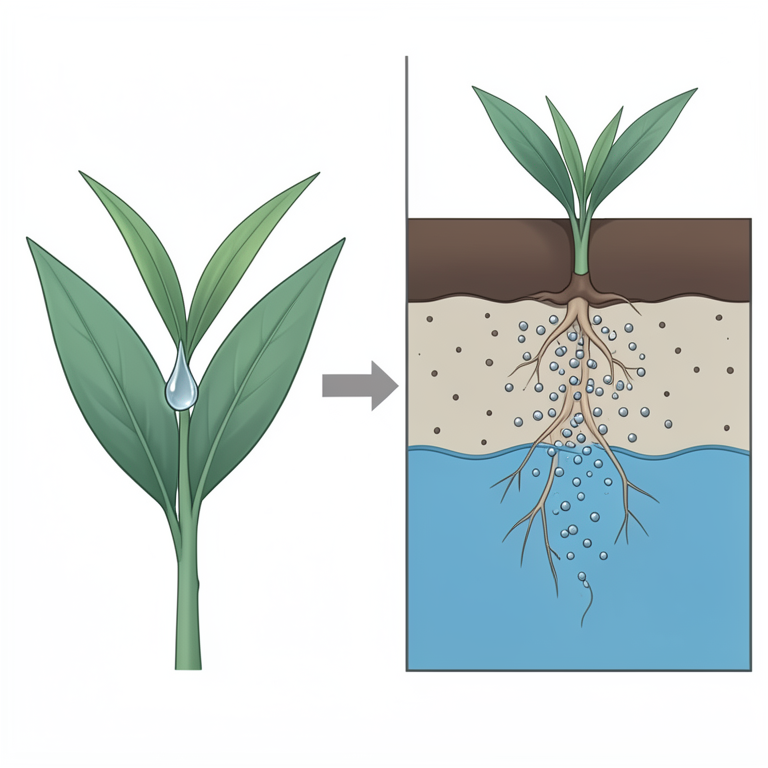
The Dual Nature of Nano Pesticides
AI-generated conceptual illustration (crop plants in soil and groundwater). It explains the idea and does not show study data.
View source evidence ↗Introduction
Nanomaterials and nanotechnologies are used in almost all areas of agriculture: crop production, animal husbandry, poultry farming, fish farming, veterinary medicine, processing industry, agricultural machinery production, etc. The purpose of this article was to review the literature on the application of nanotechnology in agriculture, the risks and safety of using nanotechnology. The current generation of the world of 7.8 billion is expected to reach 8.6 billion in 2030, 9.8 billion in 2050 and 11.2 billion in 2100 [1] . This means that food security will require new systems to produce food, water and energy. On the other hand, producing more food requires natural resources, land consumption, water supply [2,3] . Thus, in the very near future, scientific research will be asked to present new paradigms and practices to solve highly complex and varied problems. Will the world's agricultural systems cope with global climate change? Nanotechnology is a fast-growing field that can advance agriculture and food processing with new tools that promise to sustainably increase food production and protect crops from pests. It is necessary to determine what expectations are combined with some uncertainty regarding the fate of nanomaterials in the aerosphere [4] . In recent years, nanotechnology has become one of the most important and exciting areas of knowledge at the forefront of physics, chemistry, biology, engineering sciences. It gives high hopes for quick breakthroughs and new directions in technical development in many areas of activity. Nanotechnology is a powerful technique that can be used to design and reassemble nature on an atomic and molecular scale. Nanotech is working to realize the ancient scientific vision of recreating the atom by manipulating matter on an atomic scale to transform it into a range of new materials, devices, living organisms and technical systems [5] .
Nanotechnology and nanosciences are concerned with the study of phenomena and materials, as well as the handling of structures, devices, and systems at the nanoscale, i.e. down to the order of 100 nanometers. To illustrate this measurement, let us compare: DNA has a diameter of ⁓2.5 nm, a protein molecule -5 nm, an erythrocyte -7000 nm, a human hair -80,000 nm, a blood cell size -7500 nm. Nanoparticles obey not the same physical laws as larger particles, but the laws of quantum mechanics. The physical and chemical properties of a nanoparticle, such as color, solubility, strength, chemical reactivity and toxicity, can therefore be very different from those of larger particles prepared from the same material. The modified properties allow them to be used for a variety of new, profitable products and applications [31] . Artificially created nanoparticles can already be found in literally hundreds of products on supermarket shelves -from clear sunscreens to lightweight diffractive cosmetics, moisturizers that penetrate deeper into the skin, dirt-repelling fabrics, coatings, permanent paints in furniture varnishes and some food products [7] . Industry analysts and proponents predict that nanotechnology will completely transform our writing from the atomic level upwards. Some authors [8][9][10][11][12][13] indicate that thanks to nanotechnology we will be able to create the products of tomorrow by changing the shape of molecules and atoms. The food will be equipped with intelligent protective packaging that can independently determine if the food is spoiled or contaminated. Products of the future will be tailored in color, taste or nutritional value to the wishes or health needs of each individual consumer. The agricultural sector is facing various global challenges such as climate change, environmental challenges, urbanization, and sustainable resource use and pesticide and fertilizer accumulations. Research into new nanobioindustrial products will aim to improve plant and livestock breeding, improve the efficiency of water, pesticide and plant fertilizer use, reduce pollution and make agriculture more sustainable. In [14] , the application of nanotechnology in space, medicine, agriculture and industry, in electronics, art, etc. is described. In August 2009, the President of the Republic of Azerbaijan Ilham Aliyev signed a decree on a state program to establish and develop the space industry in Azerbaijan. Therefore, the study and application of nanotechnology in space is of particular importance to us. Today space is not exotic and its exploration is not only a matter of prestige, first of all, it is a matter of national security and the competitiveness of our state. Nanomaterials will give us the opportunity to seriously talk about manned flights to various planets of the solar system, the exploration of the lunar surface, etc. Scientists believe that [14][15][16][17] , among other things, the creation of new technologies in the field of optics, communication systems, methods of transmitting and receiving information should be attributed to the key problems of microminiaturising satellites. We are talking about nanotechnology and nanomaterials in two orders of magnitude to reduce the weight and dimensions of devices introduced into space. Reducing the mass of space technology solves many problems: it prolongs the time spent by the apparatus in space, allows itself more than any useful equipment for research. (By the way, it is possible to create satellites and Nano devices up to 20 kilograms) [18][19][20] . Thus, of the main aspects and applications of nanotechnology, which have enormous social, financial and political significance, it is worth highlighting the following [21,22] . Creation of new agricultural products and fertilizers, as well as methods of genetic modification of plants and animals;
Development of simple and cheap methods of water purification and desalination; Creation of artificial materials for diagnostics of processes in living cells, production of biocompatible implants; Production of new pharmaceuticals based on a combination of biological and synthetic substances; Creation of miniature and highly efficient computers and sensors; Obtaining nanostructured catalysts for use in low-energy and environmentally friendly industries; Creation of highly efficient solar energy conversion systems; Creation of small in weight spacecraft and systems for their launch, creation of miniature automatic space systems; Obtaining very light and very strong materials with desired properties, allowing the creation of new devices and vehicles.
Hazards associated with nanomaterials
In the late 1990s, nanotechnology became more interesting to the public in the media [23] . Newspaper articles pointed to the serious consequences of new technologies -genetic engineering, nanotechnology, and robotics -and were demanded, avoided and evaded from development due to uncertainty and limited knowledge about the progress of technical developments and the far-reaching potential of nanotechnology [24] . Roger Kasperson, director of the Stockholm Institute of the Environment, viewed the nanotechnology debate as paralleling the early atomic age [25] . In May and August 2011, several nanotechnology scientists at the National Polytechnic Institute and the Institute of Higher Education in Monterrey were victims of attacks that resulted in human injury. The protesters expressed fear that nanoparticles could multiply in an uncontrolled way and destroy life on earth [25, 26] .
Plants are more vulnerable to toxic nanoparticles if their parents were grown in contaminated soil, according to a new study in Nanolimpast [27] . Scientists warn that they have found the facts about the risks to agriculture associated with the use of nanotechnology and the impact of nanomaterials on plants, in particular food crops, are not sufficient and it is time to rethink them [28] . Agricultural nights are one of the endpoints for nanoparticles. Nanoparticles are transported into the night through irrigation and fertilization from treatment facilities.
Because of this, crops may be exposed to increased exposure to nanoparticles in the soil in which they grow. We need to investigate the effect of nanoparticles on plant growth at this time. "Any technology has both risks and benefits in cases where the benefits can be enormous, the risks must be carefully studied. More research is needed on the effects of nanoparticles. "(By Dr. Jason S. White). The toxicity of carbon nanotubes carried out in mice gave negative results [29] . The authors show that different doses of nanotubes implanted into the lungs of rats showed that 15 % of experimental animals that received a very high dose (5 mg/kg) died within the first 24 hours after complete obstruction of the upper respiratory tract. All of the surviving rats developed granulomas in the lungs, like the mice, but without the usual inflammation. In any case, these studies are clear evidence of the careful handling of nanoparticles.
There is no doubt that nanotechnology offers a wide range of opportunities to progress and improve our living environment. However, the use of such technologies is not without risk to people and the environment, some of the dangers have already been well studied, since nanoscale particles occur naturally, for example, in forest fires or volcanic eruptions, or cause silicosis in occupational diseases (dust lungs) in the roller coaster industry. Toxicologists who founded a new discipline in the field of nanotechnology, Nano toxicology, also call for caution when using this technology, as indicated in [29] . Scientists talk not only about the possible benefits of using nanotechnology, but also about the possible risks. After all, nanoparticles easily penetrate the skin, respiratory tract, gastrointestinal tract, interact with each other, thus acquiring unknown properties. Therefore, the transition from microtechnology to nanotechnology requires special fundamental research. According to one of the experts, chemist Kristen Kupinovaki (USA), "it would be advisable to limit the effects of these nanoparticles, despite the fact that there is currently no information about their threat to human health". The health and safety rule must be adapted accordingly, if people are involved in nanotechnology, this is not enough to comply with the toxicity or non-toxicity of raw materials If we are dealing with particles, we must put on special breathing masks, for example, with appropriate filters with light pores. It is not for nothing that ecologists repeatedly turn to the example of asbestos, the thin fibers of which have long been considered completely harmless. The idea of nano-assemblers that use their ability to assemble any desired product from atoms and then turn our environment into "gray goo" may be unrealistic. On the contrary, the production of nanoparticles has already become a reality. It is not yet clear what effects they might cause in nature or in humans. In recent years, Nano pesticides have been very actively developed in agro-industrial laboratories, and this problem has not become public knowledge [30] . There are currently no Nano pesticides on the market. But this will change in the near future will inevitably lead to new risks and new benefits for the environment and healthy people. On the one hand, Nano pesticides can prevent environmental pollution because, in general, fewer pesticides need to be applied. However, Nano pesticides, on the other hand, can contaminate nights and bodies of water in new ways by improving the transport of pollutants, extending their lifespan and increasing toxicity. Risk research is still in its infancy and lags far behind the rapid development of Nano products. Since December 2014, there has been a requirement for food labelling, which was adopted with the EU Parliament and concerns the use of nanomaterials [30] . According to the Food Information Ordinance, all products containing nanomaterials must be clearly labelled from now on. However, in many other products, such as cleaning products, building materials or clothing, nanomaterials can be used without the knowledge of the consumer. So, such promising nanomaterials simultaneously carry serious direct and indirect dangers that can arise by accident, by mistake, or as a result of deliberate actions. The dangers associated with nanotechnology can be attributed to the following [21] : Danger to the health of personnel employed in new production processes. Environmental problems associated with the large-scale production of Nano composite materials, which are very difficult to recycle. Breaking the sharp contradictions in the field of definitions of prab and intellectual property. Obvious risks and dangers of genetic manipulation of plants, animals and people.
Dangers associated with new methods and materials of implantation. Dangers associated with the possibility of covert collection of information and covert operations. Dangers of creating Nano weapons, agents of biological or neuroparalytic type. Dangers of violation of individual rights and the right to privacy through surveillance or even covert interference with the functioning of the human body.
Conclusion
1. Nanotechnology research and agricultural applications are subject to certain constraints on ethics and fairness -like all human action. 2. The current state of knowledge does not allow an objective assessment of the advantages and disadvantages that may arise as a result of the use of Nano pesticides. 3. Assessing the prospects for the use of nanomaterials in agriculture, it should be noted the need to study their behaviour in soil (mobility, stability) and impact on soil microorganisms. 4. Analytical methods suitable for measuring the concentration of nanomaterials in water and soil have not been developed. 5. International principles for the definition of "Nano risk" are still at an early stage of development. 6. Scientists are actively studying nanomaterials for living organisms, however, there are not so many studies related to plants. 7. The future century is the century of nanotechnology, including Nano biotechnology, which together with information technologies in the near future will serve as the foundation for a new scientific and technological revolution in agriculture. 8. The agricultural sector must harness the powerful tools of nanotechnology for the benefit of humanity. 9. Developed technologies in agricultural production allow: Improve production safety and product quality; Reduce the costs of growing plants; Improve the quality of the seed; Reduce morbidity and increase resistance to pests; Increase the productivity of plants; Get environmentally friendly (safe) products.
Summary
Nanotechnology -As one of the possible solutions to the problem of civilization or a threat to humanity BH Aliev 1 , NF Kazymov 1 , ZH Aliev 2 , Kh. S Akhmedova 1 , GM Feyzullaeva 1 , GA Galandarov 1 , LM Ismailova 1 , Nanomaterials and nanotechnologies are used in almost all areas of agriculture: crop production, animal husbandry, poultry farming, fish farming, veterinary medicine, processing industry, agricultural machinery production, etc. The current generation of the world of 7.8 billion is expected to reach 8.6 billion in 2030, 9.8 billion in 2050 and 11.2 billion in 2100. This means that food security will require new systems for the production of food, water and energy. On the other hand, producing more food requires natural resources, land consumption, water supply. Thus, in the very near future, scientific research will be asked to present new paradigms and practices to solve highly complex and varied problems. Will the world's agricultural systems cope with global climate change? Nanotechnology is a fast-growing field that can advance agriculture and food processing with new tools that promise to sustainably increase food production and protect crops from pests. In recent years, nanotechnology has become one of the most important and exciting areas of knowledge at the forefront of physics, chemistry, biology, and engineering. It gives high hopes for quick breakthroughs and new directions in technical development in many areas of activity. Nanotechnology is a powerful technique that can be used to design and reassemble nature on an atomic and molecular scale. Nanotech is working to realize the ancient scientific vision of recreating the atom by manipulating matter on an atomic scale so that it is transformed into a range of new materials, devices, living organisms and technical systems nanotechnology, nanomaterials, nanoparticles, Nano industrial products, pesticides, fertilizers, soil.
References
13 in the original paper- United Nations. Department of economic and social affairs, population division, and world population prospects: The 2017 Revision, key findings and advance tables. Working Paper No. ESA/P/WP/248. Ed. New York: United Nations; c2017.
- Glenn JC, Florescu E. Millennium project team. 2015-2016 state of the future. Journal of Socialomics. 2016;5(3):1-6. DOI: 10.4172 / 2167-0358. 1000168
- Grierson CS, Barnes SR, Chase MW, Clarke M, Grierson D, Edwards Kj, et al. One hundred important diestions facing plant science research. New Phytologist. 2011 Oct;192(1):6-12. DOI: 10.1111 / j.1469-8137. 2011.03859
- Khandait VN, Tiple AV, Dhenge SA. Assessment of relationship between personal and socio-economic characteristics with adoption of backyard poultry rearing practices in Bhandara district of Maharashtra. Int. J Agric. Extension Social Dev. 2020;3(1):58-62.
- Ms. Poulomi Roy, Professor Mohua Banerjee. Professor Sharmistha Banerjee. Initiatives in surplus F & V Management: Inclusive and entrepreneurial pathways. Int. J Agric. Extension Social Dev. 2020;3(1):30-39.
- SA Kholyavin. Product labeling made with the use of nanotechnology. Food industry. 2008;13:66-68.
- Online available at: (Accessed 23 April 2003) www.atosr.af.mil/pages/BAA2003A.htm 23. Branshen von a biff Industry, Handwek, Handel Dienstleistungen, Gesundheitswesen Nanotechnology 26.02.2020.
- Gerkuzter dentshsprachiger Nachdrack von "why the future does not need us" warum die Zukuntt ins nichtbracht 23. http://www.km21.org/23rd-century/billjoy-0600.htm Jn: Frankfurter Allgemeine Zeytung. 6 June 2000
- Geraardo Herrerg Corral: Stan up against the antitechnology terrorist. JN: Nature. 2011;476:373.
- Nanoimpast January 2017, pages-101-108. JMAST of TiO2 nanopartinply on lead uptake and bioaccumulation in rice (Oryza, Lativa 2) Fci Coi, Xinyi Wu, Haiynr Zhang, Menj Znang
- Hettige Discussion in Nanotechnology / Telepolis. Andrea Hajka-Lobell 11.02.2004
- Harald F Krug. Nano sicherheitstorshungsing wirautdem ruchtigen weg? Jn: Andewante Cheme. 2014, 126, S.1250212518, DOI: 10.1002 / ange.201403367 (open Access)
- A Nanotech Revolution in Agriculture and the Food Industry, P. Jones Information Systems for Biotechnology; c2006. DOI: 10.1177 / 0270467604263119.2004. pp. 34-39.
Cited by 1
From OpenAlex, OpenCitations and reference lists read by Scinovex
- Nanotechnology for fungal pathogen control in crops: innovations, public health impacts, and disease prevention ↗
Matthew Chidozie Ogwu, Sylvester Chibueze Izah · Frontiers in Fungal Biology · 2025
Fungal pathogens continue to devastate global agriculture, causing significant crop losses, compromising food security, and posing emerging threats to public health. This paper critically examines the revolutionary role of nanotechnology-driven innovations in combating fungal diseases in crops, offering an integrative framework that bridges plant health, environmental sustainability, and human well-being. We synthesize recent advancements in agricultural nanomaterials, including silver, zinc…
❝ 25PDF