
Research article · 2021 · Full text
International Journal of Agriculture Extension and Social DevelopmentPineapple research and development in Ethiopia a review
Volume 4(1) · Pages 134–138 · DOI: 10.33545/26180723.2021.v4.i1b.143 ↗
Research areasPineapple and bromelain studiesBanana Cultivation and ResearchPlant tissue culture and regeneration
Abstract
Author-writtenPineapple ranked third in production of tropical fruit after banana and citrus. It is a tropical fruit widely cultivated in world which can be consumed fresh or processed into various food products. The pineapple sector has enormous technological potential in both local and international trade. In this review, the status of pineapple production in Ethiopia, agro ecological adaptation areas, genetic improvement, agronomic practice such as propagation, fertilization, mulching, irrigation, planting density, earthing up and maturation and harvesting of pineapple have been discussed. Breeding pineapple is time consuming because of hetrozygosity, self-incompatibility and need to improve two or more traits at same time. During 2008 to date, in pineapple breeding program about two improved pineapple varieties were released with various desirable characteristics for the low and mid altitude areas of Jimma, Agaro, Metu, Haru, Mugi and Tepi areas of south western and southern Ethiopia. However, pineapple breeding in Ethiopia is still in its infant stage. Because the use of biotechnology in agricultural development is limited, the reviewer recommended that future pineapple improvement through advanced breeding technology should be considered.
Summary
Source-checkedPlain-language reading of the full paper, prepared with AI and checked against the text. Each point links to the authors' own words.
Why it matters
- Pineapple is a globally cultivated tropical fruit, ranking third in production behind banana and citrus, and is used for both fresh consumption and processed food products. View evidence ↗
- The fruit is nutritionally valuable, providing vitamins A, B, and C, minerals like calcium and potassium, fiber, and the enzyme bromelin. View evidence ↗
- Beyond the fruit, pineapple leaves provide high-quality fiber used in the paper industry and for manufacturing ropes, fishing nets, and luxury clothing. View evidence ↗
The question
- The review aims to discuss the status of pineapple production in Ethiopia, including its agro-ecological adaptation, genetic improvement, and various agronomic practices. View evidence ↗
What they did
- The authors conducted a review of existing literature and data regarding pineapple research and development within Ethiopia. View evidence ↗
What they found
- Pineapple production in Ethiopia is primarily small-scale farming in the South and Southwestern regions, with an average yield of 45 tons/ha, which is lower than the global average of 67.5 t/ha. View evidence ↗
- Production levels varied significantly, with over 8,400 tons produced in 2012, while the 2016/17 season saw an estimated 1,275.83 tons from approximately 645.19 hectares. View evidence ↗
- Two varieties, Tafache (MD2) and Smooth Cayenne, have been registered in Ethiopia and grow well in low and mid-altitude areas (1000-1750 m A.S.L.) of the south and southwest. View evidence ↗
- Economic analysis indicates that applying 281 kg N/ha yielded the highest net benefit of 61,600.0 ETB/ha, while 134.8 kg P2O5/ha provided a net benefit of 12,320 ETB/ha. View evidence ↗
- Research on mulching materials found that black polythene and coffee husk mulch were most effective at inhibiting weed growth and achieving the highest yields. View evidence ↗
- Increasing planting density up to 55,500 plants/ha (30 cm x 40 cm x 80 cm) is recommended to improve yield per hectare without compromising fruit quality. View evidence ↗
What it means
- The authors conclude that Ethiopia has immense potential for pineapple production and recommend intensive R&D in mechanization, agronomy, variety development, pest management, and post-harvest handling. View evidence ↗
- The author notes that the use of biotechnology in Ethiopian agricultural development is limited and suggests that advanced breeding technology be used for future improvements. View evidence ↗
Visual summary
1 visualsIllustrations explain the paper; they do not show study data.
Ethiopian Pineapple Production Gap
AI-generated conceptual illustration (pineapple plants in Ethiopia). It explains the idea and does not show study data.
View source evidence ↗Figures & tables
From the original paper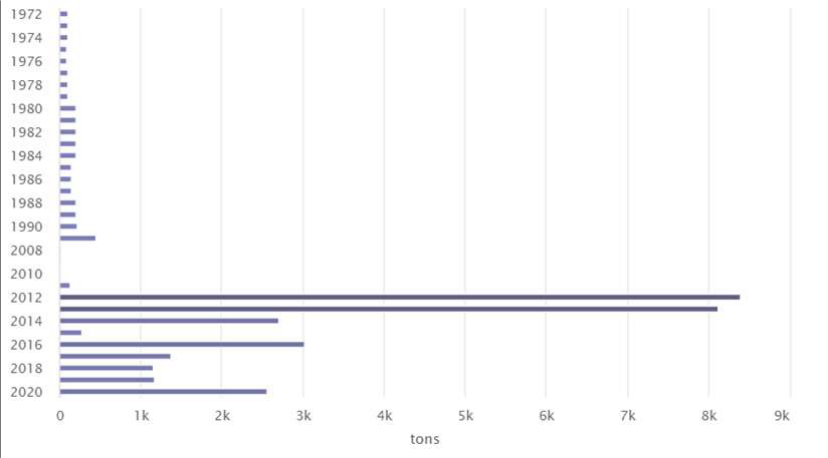 Figure 1
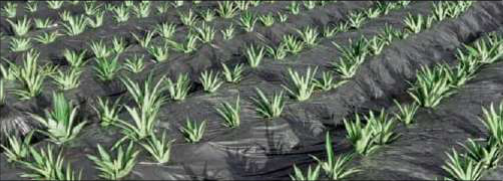 Figure 2
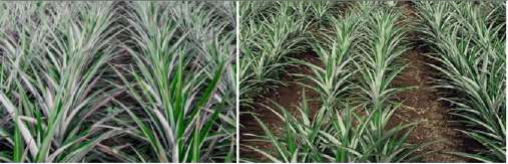 Figure 3
Introduction
Pineapple (Ananas comosus (L) Merr.) is an important tropical fruit in the world. Mature fruit contains sugar, a protein digesting enzyme bromelin, citric acid, vitamin A and Vitamin B (Joy, 2010) [20] . It can be used as supplementary nutritional fruit for good health with an excellent source of vitamins and minerals and considerable calcium, potassium, fiber and vitamin C. Pineapple is the third most important tropical fruit in the world after banana and citrus (Hemalatha and Anbuselvi, 2013; Rohrbach et al., 2003) [35,11] . Besides, wastes from processing of pineapple fruit are now further processed into sugar, wines, vinegar, animal feed during the dry season. The leaves of pineapple have high quality fiber, manufacture of luxury clothing, making rope, fishing nets and pulp in the paper industry. The suitability of pineapple as food stores on ships and medical ingredients greatly facilitated their distribution throughout the world (Spronello et al., 2004; Sun, 2011) [17] . The five leading pineapple producing countries are Costa Rica, Philippines, Brazil, Thailand and Indonesia (FAO STAT, 2018) [16] . These countries produce the fruit primarily for fresh fruit markets and the processing industry.
Origin and distribution of Pineapple
The Pineapple is originated in Brazil and Paraguay in the Amazon basin where the fruit was first domesticated (Collins, 1949) [9] . Worldwide production started by 15 th century. Pineapple was distributed in Europe and the tropical regions of the world. The most spread variety is Smooth Cayenne (Cayena lisa), which was first introduced in Europe from French Guyana (Medina and Garcia, 2005) [25] . Pineapple production is concentrated in the tropical regions of the world. It is grown in over 82 countries with over 2.1 million acres under the fruit (Ndungu, 2014) [27] . The smooth Cayenne cultivar is extensively cultivated in many tropical countries like Hawaii, Philippines, Australia, South Africa, Puerto Rico, Kenya, Mexico, Cuba and Formosa (Azevedo et al., 2007) [37] . Other important producers include India, Nigeria, Kenya, Indonesia, México and Costa Rica and these countries provide most of the remaining fruit available (50%) (Medina and Garcia, 2005) [25] . There exists several hundred varieties, but the most widely grown are Smooth Cayenne, Queen and in the past decade introduced variety called MD2 which commands 80% of the global trade in pineapples (Ndungu, 2014) [27] .
Pineapple production in Ethiopia
In Ethiopia, the major pineapple production sites are located in the southern and southwestern part of the country owned by private farmers and state farm. The farmers produce in small-scale on fragments of lands, whereas the state farm of Coffee Plantation Development Enterprise produces pineapple var. smooth cayenne along with their coffee and/or maize plantation (Edossa, 1998) [12] . Pineapple production in Ethiopia during 2012 constituted more than 8400 tons (Figure 1). During 2016/17 cropping season, the total area under pineapple plantations is about 645.19 hectares of land and the production estimated to be 1275.83 tons (MoALR, 2017) [26] . Currently, pineapple successfully grows in South and Southwestern parts of Ethiopia as small scale farming and the average yield of the crop is low about 45 tons/ha (Wondifraw et al., 2006) [34] as compared to global average fruit yield of 67.5 t/ha (FAO, 2000) [14] . This low yield is partly due to: low fertility status of the soil, resulting from depletion by proceeding crops, lack of improved pineapple technologies for diverse environmental www.extensionjournal.com conditions, longer maturity, poor marketing system, presence of diseases and insect pests, and lack of improved post-harvest handling technologies are a few to mention (Tewodros et al., 2014) [33] .
Agro-Ecological Adaptation
Pineapple grows in warm and humid climate. It grows well in tropical and subtropical climate ranging from mild costal climate up to an altitude of about 1000 meters provided the area is free from frost (Malezieux et al., 2003) [13] . When the pineapple is grown at high altitude smaller fruits with elevated tartness are produced and the pulp is less attractive in color and flavor (Purseglove, 1968) [30] . The optimal growth temperature lies between 20 to 30 o C and more specifically at 23-24 o C (Neild and Boshell, 1976) [36] . When ambient temperature drops between 10 to 16 °C, fruit growth is constrained. Plants may stand sub-freezing temperatures for very short periods. Conversely, with exposure to temperatures well 30 °C heat damage may occur due to increased respiration rate and metabolism and impaired nutrient absorption (Bartolomew and Kandzimann, 1987) [5] . During periods of intense sunlight and high temperature above about 35 °C, the fruit is susceptible to sunburn damage. Good fruit quality is attributed to growing sites having a combination of relatively cool night temperatures, sunny days and day temperatures ranging from 21 to 29.5 °C •but not exceeding 32 °C. It can be grown in areas that have a relatively high atmospheric humidity and an average rainfall of 760-1,000 mm (Hossain, 2016) [18] . The best soils for pineapple production are well drained non-compacted loams, sandy loams and clay loams with no heavy clay or rock within one meter of the surface. A soil pH in the range of 4.5-5.6 is optimal for pineapple production. Slopes between 2-6% are best for pineapple growing. Below this range, it may be hard to achieve adequate drainage (Bartolomew and Kandzimann, 1987) [5] . Acidic soil rich in organic matter and potassium is desirable to pineapple cultivation. The flavor and quality of fruit grown on light soils is considered to be superior. The plant is particularly sensitive to waterlogged soil conditions. On the hills it can be grown successfully provided the soil depth is at least 45 to 60 cm (Hossain, 2016) [18] .
Genetic improvement
There are around 30 varieties of A. comosus var. comosus that are commercially produced. However, the popular commercial varieties of pineapple are; Pernambuco, Queen Victoria, Giant kew, Mauritius, Smooth Cayenne and Red Spanish. The international pineapple industry is dominated by cv. 'Smooth Cayenne', which is used mostly for processing, and which has been the backbone of the industry for more than a century (Chan et al., 2003) [8] . Highly specialized systems of production and processing have been developed almost exclusively for this cultivar (Chan et al., 2003) [8] , but these have since been adapted for cultivar 'MD-2', a complex hybrid bred in Hawai'i, which was officially released in 1996, and which is now the world's principal fresh fruit for export cultivar (Bartholomew et al., 2012) [3] . Cultivar 'Pérola' (considered to be drought tolerant) is important in parts of South America, including Brazil, where it is grown on 80% of the planted area (Matos and Reinhardt, 2009) [24] . These three cultivars, together with 'Queen' (a cultivar that produces small fruit), include 90% of pineapples grown in the world. Cultivars often have local names as well as their generic names (Chan et al., 2003; Coppens d'Eeckenbrugge and Leal, 2003) [8] . Currently in Ethiopoia two varieties of pineapple Tafache (MD2) and Smooth cayenne released/registered by Jimma agriculture research center. Thus varieties grows well in low and mid altitude (1000-1750 m A.S.L.) areas of Jimma, Agaro, Metu, Haru, Mugi and Tepi areas of south western and southern Ethiopia (MoALR, 2017) [26] .
Agronomic practice
Pineapple production in Ethiopia is small in scale and laborintensive. Only a few pineapple growers in Ethiopia manage large scale pineapple production. Planting density of Tafache is about 44,444 plants per ha, depending on the fruit size demanded by different markets. The average yield of pineapple is 84 tone ha -1 on research field and 63.4 tone www.extensionjournal.com ha -1 on farmers' field (MoALR, 2017) [26] .
Propagation
Pineapple is propagated asexually from crowns, slips and sucker plant parts. Suckers arising in the axils of the leaves on the main stem forms root and can be used for propagation. Even the crown of leaves above the fruit and parts of the stem itself can be used. Another method of propagation is by slips, which are the suckers, arising immediately below the fruit. Suckers and slips should be preferred for planting as they come to bearing earlier than the crown and larger fruits. Plant tissue culture technique is applied for mass production of clonal pineapple within a shorter period compared to conventional propagation. Before planting, suckers are sorted out into larger, medium and small to avoid competition between plants of different sizes. Too large suckers or slips should not be used for planting. Suckers weighing 400-500 g or slips of 350-450 g are considered suitable as planting material. Prior to planting curing of slips and suckers for 8-10 days in shade is necessary as fresh suckers planted in moist soil begin to decay. Before planting some of the lower leaves are removed from the sucker to facilitate the formation and entry of roots into the soil. After removing scaly leaves, planting material should be treated with Monocrotophos (0.15%) and Carbendazim (0.1%) solution to protect against mealy bugs and heart rot, respectively (Hossain, 2016) [18] . Tissue culture has been successfully applied to pineapple. It has the potential to produce millions of plantlets per year. In vitro micro propagation of pineapple plantlets has many advantages over conventional methods of vegetative propagation. For instance, this technique allows an efficient and rapid increase of selected elite pineapple varieties. Many authors have reported successful production of pineapple via micro propagation system during the last few years (Ayelign et al., 2013; Firooozabady and Gutterson, 2003; Be and Debergh, 2006; Danso et al., 2008) [1,15,6,10] .
Fertilization
Pineapple has high requirements for nitrogen (N), potassium (K), and iron (Fe), while relatively low requirements for phosphorus (P) and calcium (Ca). Potassium is usually applied to the soil before planting and later as side dressing. Other nutrients sometimes including K are applied as foliar sprays or through the drip irrigation system, or by both methods, during the growth cycle. Phosphorous and Ca are usually banded in the plant line during bed preparation. Less fertilizer is required during the first five months after planting but requirements increase sharply afterward and peak at two to four months before floral initiation (Hossain, 2016) [18] . According to Tewodros et al., (2018) [32] , for high yield and good quality of Pineapple fruits, nitrogen should not be applied beyond 108 kg N ha -1 rate. Apply treatments beyond 108 kg N ha 1 , the TSS content declined by 1.95%. The economic analysis also revealed that the highest net benefit of 61,600.0 Ethiopian Birr/ha (ETB/ha) with marginal rate of return of 237.0% was obtained by the application of 281 kg N ha -1 . Likewise, the net benefit of 12,320 ETB/ha with marginal rate of return of 507.0% were obtained by the application of 134.8 kg P2O5 ha -1 . The application of 281 kg N ha -1 and 134.8 kg P2O5 ha -1 had significantly increased the fruit yield of pineapple. The economic analysis reveals that further application of NP fertilizer is not economical. Thus, application of 281 kg N ha -1 and 134.8 kg P2O5 kg ha -1 is economical and recommended for pineapple production under Jimma and its vicinity of Southwest Ethiopia (Tewodros et al., 2018) [32] .
Mulching
Mulching is an important practice in pineapple production.
Based on the research conducted on different mulching materials by Neim et al., (2021) black polythene (Fig 2 ) and coffee husk mulch inhibited weed growth in best manner and highest pineapple yield was obtained. Additionally, a film mulching can modify the microclimate, reduce water evaporation from soil and maintain the soil humidity (Bartholomew et al., 2003) [13] . It can also efficiently inhibit the growth of weeds, promote the plants growth and increase the yield and quality of crops (Joy, 2014) [37] . Film mulching could also increase some physiological properties, such as contents of chlorophyll, soluble sugar, and protein of pineapple leaves and roots (Liu et al., 2008) [23] .
Irrigation
In general, pineapple requires a minimum monthly rainfall of 50-100 mm. If the annual rainfall is less than 500 mm, irrigation is essential (Carr, 2012) [7] . Pineapple plants are drought tolerant, therefore, the schedule for irrigation at the time of planting and thereafter should be intermittent. The growth of pineapple plant is retarded due to seasonal drought and water shortage. Available water for irrigation is recommended in drier areas and is useful in planting, and at 8-12 weeks before harvesting. Pineapples are sensitive to saline water (Bartolomew and Kadzimann, 1987) [5] .
Planting density
The recommended pineapple planting density in Ethiopia 44444 plants per hectare (Fig. 3) a double-row system taking into account distances between plants, rows and ridges 30cm, 60cm and 90cm, respectively (Jarc, 2017) [19] . An adequate sowing density depends, among other factors, on the type of crop, product target, level of mechanization, use of irrigation, or precipitation (Malezieux et al., 2003) [13] . Importantly, high sowing densities of up to 70000 plants per hectare ensure a higher tonnage per unit area; conversely, lower densities generally allow larger fruits with higher market prices (Malezieux et al., 2003; Genefol et al., 2016) [13,29] . In addition, plant spacing in pineapple cultivation can influence plant growth, fruit development, and performance as a result of competition for nutrient, www.extensionjournal.com water, and light sources. Nuri et al. (2021) [21] results of their study show that increasing plantation densities (up to 55500 plants ha -1 ) did not have significant effects on the weight (-crown) or diameter of pineapple fruits. The TSS contents and pH values of the harvested fruits varied due to the interaction of the cultivars and the sowing density, but in general, the fruits met the standards required for the market. Based on the results, it is recommended that farmers in the area increase their planting densities up to 55500 plants ha -1 (30 cm x 40 cm x 80 cm), since it improves the yield of fruits ha -1 but without affecting the quality of the harvested fruit (Nuri et al., 2021) [21] .
Earthing up
Earthing up is a very important operation in pineapple cultivation and involves pushing soil to the base of the plant from the periphery or into the trench from the ridge, where trench planting is common. Due to its shallow root system and weak stem pineapple plants are prone to lodging (Joy, 2014) [37] . Earthing up gives better anchorage to the plants and should be done after each application of fertilizers and also after weeding, hoeing and harvesting of crops. This becomes more important in ratoon crops (Hossain, 2016) [18] .
Maturation and harvesting
Pineapple plants that are vegetative propagated will bear fruit in 15-22 months (Kerns et al., 1936) [22] . More than three months are necessary from flowering to fruit maturity in pineapple. Fruits for canning are acceptable at a more advanced stage. Over-ripe fruits are highly perishable. Therefore, for optimum fruit sweetness, pineapple fruit should be harvested when 1/3 to 2/3 or more of the peel color has turned from green to yellow. Harvesting of fruits can be manual or semi-mechanized.
Conclusions
Ethiopia has an immense potential for production of pineapple in small scale as well as in large scale. However, pineapple is only cultivated on a small quantity of land in Ethiopia, and the production is low. The pineapple cultivation areas range from 162 to 906 hectare with a total production 137 tons to 8400 ton within this decade. South and South western parts of Ethiopia are the main pineapple cultivation areas. The yield is low and the industrial competitive potential is in adequate in comparison to other major producing countries in the world due to a lack of cultivation technologies and low attention given to research. Furthermore intensive research and development focusing on pineapples should be implemented in a variety of fields such as mechanization, agronomy, variety development, disease and pest management, and post-harvest handling and management. New discoveries are required to extend the niche and market for pineapple food based and waste processing goods. Because it is accessible all year, it has enormous economic value potential.
References
24 in the original paper- Ayelign Mengesha, Biruk Ayenew, Tewodros Tadesse. Acclimatization of in Vitro Propagated Pineapple (Ananas comosus (L.), var. Smooth cayenne) Plantlets to ex Vitro Condition in Ethiopia American Journal of Plant Sciences; c2013. p. 317-323. http://dx.doi.org/10.4236/ajps.2013.42042
- Azevedo PVD, Souza CBD, Silva BBD, VPRD Silva. Water requirements of pineapple crop grown in a tropical environment, Brazil. Agr Water Manage. 2007;88:201-208.
- Bartholomew DP, Hawkins RA, Lopez JA. Hawaii pineapple: the rise and fall of an industry. Hort Science. 2012;47(10):1390-1398.
- Be LV, Debergh PC. Potential low-cost micropropagation of pineapple (Ananas comosus). South Africa Journal Botany. 2006;72:191-194.
- Carr MKV. The water relations and irrigation requirements of pineapple (Ananas comosus var. comosus): A Review. Expl Agric. Cambridge University Press; 2012. p. 1-14.
- Collins JL. History, taxonomy and culture of the pineapple. Economic Botany. 1949;3(4):335.
- Danso KE, Ayeh KO, Oduro V, Amiteye S, Amoatey HM. Effect of 6 benzylaminopurine and naphthalene acetic acid on in vitro production of MD2 pineapple planting materials Ghana. World Applied Sciences Journal. 2008;3(4):614-619.
- Firoozabady E, Gutterson N. Cost effective in vitro propagation methods for pineapple. Plant Cell. Rep. 2003;21:844-850.
- Hossain MF. World pineapple production: an Overview. African Journal of food, agriculture, nutritional and development; 2016;16(4):11443-56. DOI: 10.18697/ajfand.76.15620
- Jimma Agriculture Research Center (JARC). Research Progress Report for the Period 2016/17. Girma Hailemichael, Yalemtsehay Debebe, Elias Gebremariam and Kifle Belachew (eds.), EIAR/JARC, Jimma; c2017. p. 298.
- Juan C Neri, Jegnes Benjamin Melendez Mori, Nuri Carito Vilca Valque, Eyner Huaman Huaman, Roicer Collazos Silva, Manuel Oliva. Effect of planting density on the agronomic performance and fruit quality of three pineapple cultivars (Ananas comosus L. merr.). International Journal of Agronomy; c2021. p. 9. https://doi.org/10.1155/2021/5559564
- Kerns KR, Collins JL, H Kim. Developmental studies of the pineapple Ananas comosus (L.) Merr. The New Phytologist. 1936;35:305-317.
- Liu CH, Liu Y, Yi GJ, Zhong Y, Jiang B. Effects of plastic film mulching on several physiological indexes of pineapple plants. Chinese J Trop. Crops. 2008;29(5):546-550.
- Matos AP, Reinhardt DH. Pineapple in Brazil: characteristics, research and perspectives. Acta Hortic. 2009;822(25-36). http://dx.doi.org/10.17660/ ActaHortic.822.1.
- MoALR. Plant variety release, protection and seed quality control directorate. Crop variety register. 2009 Jun;20:372. Addis Ababa, Ethiopia; c2017.
- Neim Seman, Tewodros Mulualem, Getachew Etana, Tadesse Eshetu. Effect of different mulches on pineapple (Ananas comosus (L.) Merr) yield and quality traits in Southwest Ethiopia. J Genet. Environ. Resour. Conserv. 2021;9(1):1-6.
- Genefol O, Brahima C, Edson Lezi B. Effects of planting bed and density on the yield of pineapple (Ananas comosus L. Var., MD2) grown in short rainy season in southern cˆote d'Ivoire, Asian Journal of Agricultural Research. 2016;11(1)18-25.
- Purseglove JW. Tropical crops: Monocotyledons, John Wiley & Sons. New York. 1968;1:334.
- Spironello A, Quaggio JA, Teixeira LAJ, Furlani PR, Sigrist JMM. Pineapple yield and quality affected by NPK fertilization in a tropical soil. Rev Baraos Jabt. 2004;26:155-159.
- Tewodros M, Mesfn S, Getachew W, Ashenaf A, Neim S. Effect of Inorganic N and P Fertilizers on Fruit Yield and Yield Components of Pineapple (Annanas comosus MERR L. Var. Smooth cayanne) at Jimma, Southwest Ethiopia. Agrotechnology. 2018;7:178. DOI: 10.4172/2168-9881.1000178
- Hemalatha R, Anbuselvi S. Physicohemical constituents of pineapple pulp and waste. Journal of Chemical and Pharmaceutical Research. 2013;5(2):2402.
- Neild RE, Boshell F. An agroclimatic procedure and survey of the pineapple production potential of Colombia. Agricultural Meteorology. 1976 Aug 1;17(2):81-92.
- Jetz W, Thomas GH, Joy JB, Redding DW, Hartmann K, Mooers AO. Global distribution and conservation of evolutionary distinctness in birds. Current biology. 2014 May 5;24(9):919-30.
- Azevedo R. Understanding the complex nature of selfregulatory processes in learning with computer-based learning environments: An introduction. Metacognition and Learning. 2007 Dec;2(2):57-65.