
Research article · 2021 · Full text
International Journal of Horticulture and Food ScienceReview on major constraints during off seasonal tomato production in Nepal (Lycopersicon esculentum)
Volume 3(2) · Pages 57–61 · DOI: 10.33545/26631067.2021.v3.i2a.103 ↗
Research areasAgricultural Economics and Practices
Abstract
Author-writtenTomato (Lycopersicon esculentum) most produced and marketed fruit in the world has high market potentiality in Nepal too because of its versatility in use as salad, vegetable, pickle raw material forr processing industry and high nutrient factors with huge health benefits. In recent decades off season tomato have good demand and price at both national and international level market which is attracting great number of farmers for offseason tomato farming. Exploitation of geographical variation along with integration of modern technology, equipment’s and inputs have made offseason farming more effective and productive. Along with its huge advantages, farmers have to face many problems too. Although offseason tomato production is profitable and often practised by farmers it carries lots of challenges and constraints like high loss due to market fluctuation, unfavorable government policies, climatic factors, unavailability of quality inputs, inconvenience in transportation etc. Since the optimum production requires a certain range of temperature and weather, farmers have to control microclimate around the plant for off seasonal production which requires more attention and cost. High disease and pest infestation is a major discouraging factor for farmers as it devastates the whole farm within very short period of time. Unavailability of growing land, labour, quality inputs like hybrid seeds, fertilizers, pesticides etc. during the required season are also major limiting agents. Requirement of high initial investment, unnecessary market fluctuation, inconvenience in transportation and unavailability of post-harvest infrastructure are the main components playing role to discourage growers and decrease tomato production ultimately breaking the backbone of Nepalese economy.
Summary
Source-checkedPlain-language reading of the full paper, prepared with AI and checked against the text. Each point links to the authors' own words.
Why it matters
- Tomatoes are the most produced and marketed fruit globally and have high potential in Nepal due to their nutritional value and versatility in food use. View evidence ↗
- Off-season tomato farming is increasingly attractive to farmers because of strong demand and pricing in both national and international markets. View evidence ↗
- Despite being profitable, off-season production faces significant hurdles, including market instability, poor government policy, and logistical issues. View evidence ↗
The question
- The objective of this review is to identify and analyze the major constraints affecting off-season tomato production in Nepal. View evidence ↗
What they did
- The authors conducted a review of existing research and data to synthesize the challenges faced by off-season tomato growers. View evidence ↗
What they found
- Plastic house cultivation is significantly more profitable than open field farming, yielding 2.3 times more profit, approximately $700 (80,000) per ropani. View evidence ↗
- Off-season tomatoes can command prices more than double those of seasonal products, as seen in 2016-2017 where prices reached Rs.85 in July compared to Rs.35 in January. View evidence ↗
- Middlemen capture a larger share of the profit than farmers; for example, in 2015/16, farm gate prices were Rs.20.25 while retail prices reached Rs.42. View evidence ↗
- The primary diseases affecting off-season tomatoes are late blight (64%) and viral complexes (36%). View evidence ↗
- The most significant pests are nematodes (32%), whiteflies (28%), and leaf miners (20%). View evidence ↗
- Labor wages are the dominant production cost, accounting for 65% of total expenses. View evidence ↗
- Production costs are higher for tunnel farming (Rs.20.17/kg) compared to open field farming (Rs.13.75/kg). View evidence ↗
- Tomato cultivation is labor-intensive, requiring an additional 205 labor days per hectare per season. View evidence ↗
What it means
- The authors conclude that disease and pest infestations in tunnel houses are the primary constraints, followed by high costs, poor quality inputs, and labor shortages. View evidence ↗
- The authors suggest that combining biotechnological advances, skilled labor, modern machinery, and government support can increase profit margins and farmer interest. View evidence ↗
Visual summary
1 visualsIllustrations explain the paper; they do not show study data.
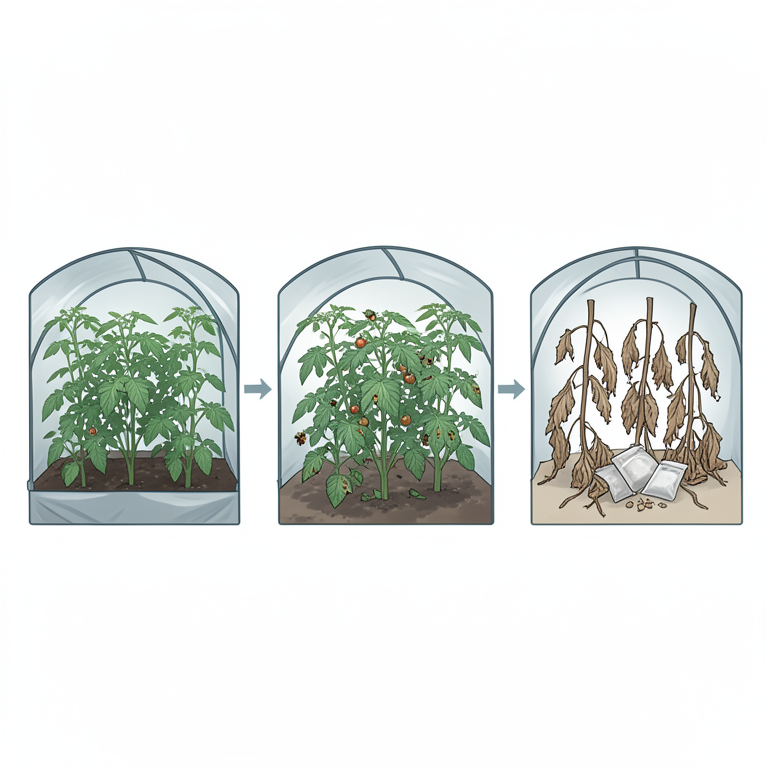
Hierarchy of Constraints
AI-generated conceptual illustration (tomato plants in plastic tunnel houses). It explains the idea and does not show study data.
View source evidence ↗Introduction
Tomato (Lycopersicon esculentum) belonging to the Solanaceae family was originated from South America and Central America. Tomato plants typically grow 1-3 meter tall with weak stem system and it is extensively cultivated throughout the world for its edible berry fruits. The fruits are almost spherical to oval and elongate to pear shaped. The dominant colour is red but is also orange, pink, green, burgundy, purple, streaked land striped and black for cases. Among with these colours, tomatoes come with a range of flavours. There's a tomato for every taste. There are at least two cells of small seeds surrounded by jelly pulp for each fruit. The fruits are smooth and shiny in normal condition. Tomato is eaten raw in salads, served as cooked vegetables, ingredients for various prepared dishes and pickled. Additionally, large percentage of tomato produced worldwide is used for processing products including canned tomatoes, tomato juice, ketchup, paste, sundried tomatoes or dehydrated pulp. Plants in traditional healing in order to preserve this knowledge. Furthermore, most ethnobotanical studies are focused on professional traditional practitioners and ignore the knowledge of ordinary people in the locality.
Botanical Classification
Botanical Classification
Nutritional Status
Tomato is known as super food because it is dense in nutrients and is a great source of vitamin C, potassium (K), folate, vitamin K and also contains high level of zinc metal. Plant compound lycopene found in tomato reduces the risk of cancer in human (Giovanucci, 1999). It also acts as antioxidant in our body and including tomato in the diet can help protect against cancer, maintain healthy blood pressure and reduce blood glucose, improves vision and boost digestive health. Tomato is also known as poor man's apple in Nepal as a medium sized tomato produce almost 28% of reference daily intake of vitamin C. Water content of tomatoes is around 95% and remaining 5% consists mainly of carbohydrates and fibre. Tomato has great contribution in agricultural production as it holds fourth position in terms of production quantity and fifth position in terms of acreage (Pokhrel, A. 2021) [6] . Tomato is one of the major commercial horticultural crops grown in Nepal (Ghimire et al. 2001) which shares third ranking in terms of total cultivated area and productivity (MOALD, 2020). According to PMAMP (2016) tomatoes cover third position both in terms of production and acreage. There are around 15,000 known varieties of tomato in total and almost 7,500 varieties grown for various purposes (FAOSTAT Databases 2012) [13] and the number of many hybrids are emerging rapidly year by year as a result of biotechnological advancements. Average national consumption of tomato in Nepal is found 11.97 kg per person per year (N.P., Ghimire and M, Kandel 2017). The national or daily consumption of tomatoes increased from 881.5mt in 2012 to 932.6mt in 2016 in Nepal. Global tomato revenue amount $190.4 billion in 2018 rising by 6.5% against the previous year (Globe news line 2021) & (Dublin, 2020) [12] . Tomato is the most produced fruit in the world with total annual production around 188 million metric tons followed by banana (116 million metric tons) and watermelons (103.97 million metric tons). 25 to 30 percent of annual production is intended for the processing industries. Annual productivity of tomato has by 300% since last few decades (Costa and Heuvelink, 2007) [11] and its still increasing with increasing rate in recent years due to application of loss minimizing technologies and quality inputs with integrated nutrient and pest management techniques. China accounts nearly 33% of global production followed by India and United States. Around 20,000 hectare land is used for tomato cultivation in Nepal and the total annual production was 2,32,897 metric tons with productivity around 14 metric tons (MOALD, 2014) and the productivity has increased to 18 tons/hectare in 2020 with the cultivated area of 22,566 hectare according to the data provided by MOALD (2020). Terai accounts for highest production with 1,437,921 metric tons followed by hills with 1,261,041 metric tons. In case of Nepal, 39 percent of total production (1.1million metric tons) is used for household consumption and 61 percent (1.71 million metric tons) is for sale (PACT, 2012). A study conducted by central bureau of statistic (2010) indicates that 57% of tomato produced is consumed by producers and only 43% inters into the market chain in Nepal.
Growing Environment
Tomato requires more than eight hours of continuous sunlight every day and three to four months of warm, clear, fairly dry weather boosts tomato production. Consistent night temperature should be 55°F to 75°F to set fruit. Ay above 85°F, fruit will not colour properly and quit growing when temperature goes above 95°F. pH should be slightly acidic (6.2-6.8) for optimum production. Excess nitrogen can result in plant with lush, vigorous foliage but little fruit production. 75°F is optimum temperature for its germination. Medium textured fertile and well-drained sandy loam or loamy soil is found best for tomato cultivation. Tomatoes can be grown in any months in Nepal maintaining such climatic conditions or by utilizing different agro-ecological weathers at different times in different place. It is generally grown in winter in terai (November-March) and in spring/ summer (May-September) in hills which fetches good price in terai as off seasonal products. Sowing and harvesting time of tomato in different geographic region of Nepal; Newsletter, 2000). Plastic tunnel production is increasing though it requires higher investment as it gives higher profit due to higher quality product and fetches higher prices compared to open field cultivation. Open field cultivation during autumn/winter and cultivation in the plastic tunnel during summer/rainy season is very common in Nepal (MOAD 2018). Tomato cultivation using plastic tunnels is increased due to its higher productivity and income compared to traditional crop production (AEC 2006) [2] .
Advantages 1. High Productivity
Tomato growers can earn profit 80,000($700) from plastic house/ropani which is 2.3 times more compared to open field (Budathoki, 2004) and the margin has increased and still increasing because of the integration of loss reduction techniques and modern machineries along with application of quality inputs. Off season growers (Plastic house farmers) can earn more than $350 to $500 from a plot of land measuring only 100 meter square in very short period of time (A, Pokhrel. 2021) [6] . The quality of fruit produced under tunnel is also more liked by consumers. With the ideal level of inputs and management practices, open field cultivation can produce 100-200 metric tons/hectare while greenhouse cultivation can yield up to 500metric tons per hectare (Ghimire, N.P. & Kandel, M. 2017). Rainy season tomato cultivation in hills enables farmers to catch off seasonal market price as the cultivation of tomato in terai region is limited due to heavy rainfall, flood and high temperature (Pokhrel, A. 2021) [6] . Productivity of tomato in greenhouse is found higher than in an open field.
High market price
Tomato produced in off season (from mid-June to November) in the hills (400m-1800m) fetches higher market price ranging from Rs.20 to Rs.35 per kg in domestic and external market (Budhathoki, et al. 2004) and the price ratio is increasing these days due to higher demand. 2014). The price of off seasonal tomato in 2020 was more than rs.100/kg but the price was around rs30/kg for seasonal products (Kalimati vegetable market). These details indicates that the tomato produced in off season tends to get more price than the tomatoes produced in their normal growing season.
Constraints 1. Market Fluctuation
The main constraint for off seasonal tomato production is market fluctuation. According to Kaini and Singh (2005), It is not enough just to produce vegetables but it must be produced effectively and marketed successfully. A good marketing system will help farmers get better prices and increase the supply of low-cost products for consumers (Shrestha, 2008). Marketing of tomato is complex specially because of its perishability and seasonality (Gandhi & Numboodiri, 2004) [14] . The most disturbing factor of offseason tomato cultivation is the weak marketing chain of tomato which cause high fluctuation in price with very low farm gate price of tomato compared to the investment (Pokhrel, A. 2021) [6] .
Climatic constraints
Another disturbing factor for off seasonal tomato cultivation is detrimental climatic conditions. Major problems during rainy season are flooding, high temperature and occurrence of diseases & pests (Villoreal, R.L. 1979). Maximum day and minimum night temperature above 32°C and 27°C respectively are known to limit fruit set due to an impaired physiological process in flower and fruit setting and or due to abscission (Bhattrai & Subedi, 1996) [7] Increased temperature in summer season and fog with prolonged low temperature during winter season affects cultivation but the tunnel farming controls microclimate surrounding the crops and reduces the impact of the temperature fluctuation up to some extent (Pokhrel, A. 2021) [6] . The intense precipitation and high relative humidity is also destructive to tomato plants as the proliferation of leaf disease is higher during the period of humid conditions (Kalibbala, 2011 , 2004). Cold temperatures also slows down the metabolic activities which reduces growth and development promptness (Angima, S. 2009) [5] . Low light intensity and lower temperature is major problem in during spring and winter production (C.S.M van. Tonder & N.J.J Combrink, 2003) [10]
Disease and Pest Infestation
Many disease and pest attacks tomato plants. The infestation rate is more in an open field than in controlled conditions every year new diseases are seen in the farm may be due to the imported seeds. Main reason of failure of off-season tomato production in rainy season is due to fungal diseases and bacterial wilt. Productivity has decreased in recent years as a result of bacterial wilt, late blight and viral diseases (NARC, 2004) but the infestation is being controlled with the help of agrochemicals these years. Some farmers practice open field tomato production with the heavy input of fungicides to control late blight disease despite of low yield (ADP, 2008) [9] . The practice of spraying fungicides has been increased which is eco non-friendly and create serious health hazards to the human beings (T.R, Chapagain., Bhim, B. Khatri). Late blight (64%) and viral complex (36%) are two main diseases detrimental to off seasonal tomato according to A. Kafle and L.K, Shrestha (2017), tomato major pest includes nematode (32%) followed by white fly (28%), leaf minor (20%), tomato fruit borer (12%) and fruit fly (8%). Root knot nematode, wilt, leaf blight, white fly, aphids, fruit flies and tomato fruit borer are the major insect/pests that attacks on off seasonal tomato (Budathoki, 2006 and Regmi, 2005) [8] .
High Cost of Production
Off seasonal tomato production requires high investment compared to normal season production as it requires more disease/pest control, controlled climate (plastic tunnels) etc. The major cost of production is plastic house construction, wages, quality seeds, fertilizers, pesticides and irrigation facility. Wages is recorded to be the highest cost component that comprised of 65% of total cost followed by land rent, management cost & interests (22%), manure & fertilizers (11%), seed (1%) and pesticides (1%) (N.P., Ghimire & M. Kandel, 2017). Substantial amount is required for off season production. Producers are unable to borrow from formal sources as financial institutions need collateral against loan which most of the farmers can't afford (Netra, B.B., Dinesh, B. and Maniratna, A. 2015/16). Green house cultivation has high production cost due to high cost of plastic house building (Kotler and Armstrong 2003) but the cost of fertilizer and pesticides is lower in plastic house farming. Cost of producing a kg of tomato in an open field cost Rs.13.75 and Rs.20.17 in plastic tunnel (A, Pokhrel. 2021) [6] . The high cost of production also discourages off seasonal growers.
Lack of Research and Planning
We can expect the returns according to the investments in research and planning. In case of Nepal, adequate research has not been done in the field of off seasonal tomato cultivation and agriculture extension system is also very poor so that real farmers are not getting required knowledge and skills which is acting as a disturbing factor for off seasonal tomato production.
Unfavorable government policies
Unlike other countries, Nepalese government is not supporting off seasonal tomato cultivation practices. Proper training, suitable amount of subsidy and insurance, provision of quality inputs, low interest loan etc. is not being given by government and if given also, these facilities are not in the reach of real farmers. Some fake farmers take these facilities and nothing will be left for real farmers.
Conclusion
From the above review it is concluded that, offseason tomato cultivation have several constraints. Despite of it good marketing potential and high value at lean season this business is struggling to provide optimum return to the farmer. Among all, incidence of disease and pest inside tunnel house was major constraints limiting the production process followed by high cost & low quality input, shortage of labour, and lack of adequate technologies. Market influence due to neighbouring country was also a prominent challenge resulting in unstable market, low pricing and poor distribution of Nepalese local tomatoes. Lack of proper research & planning along with unfavorable government policies is also being disturbing factor to the off seasonal cultivation. Along with the biotechnological advancements, increased in skilled manpower, application of modern mechanisms and governmental support, growers are getting high margin and are being more interested in off seasonal tomato production in recent years.
Recommendation
Based on the different researches done in the field of off seasonal tomato cultivation, farmers should follow following recommendations to increase the productivity.
1. Growers should study the existing weather and existing climate of the site where he is planning to produce off seasonal tomato and decide wisely which variety should be grown. 2. Marketing channel, price fluctuation, demand and supply situation should be properly studied. 3. Pre and post harvested facilities, irrigation and transportation facilities should be studied and. 4. Soil test should be done prior to the growing and required amount of macro and micro elements should be added. 5. Growers should consult with the authorities about the facilities like subsidy, low interest loan, insurance, training etc. provided by government and other organizations. 6. Forward contracts with the sellers should be done. 7. Bond between farmers should be strong enough to defend the domination of middleman in market. 8. Growers should focus on selling the products directly to the consumers without the involvement of middlemen.
References
2 in the original paper- Bhattrai SP, Subedi PP. Heat and bacterial wilt tolerant tomato varietal cultivation during 1992/1993 to 1994/1995 season. LARC working paper no.96/56. Lumle agricultural research centre kaski, Nepal; c1996.
- van Tonder CSM, Combrink NJJ. The effect of plant growth regulators on the production of our season tomatoes. South African journal of plant and soil. 2003;20:(4)165-168.
Cited by 4
From OpenAlex, OpenCitations and reference lists read by Scinovex
- Evaluation of sustainable biorational pesticides for managing Helicoverpa armigera (Lepidoptera: Noctuidae) on tomato in Nepal ↗
Dipak Khanal, Utkal Sapkota, Gresha Suwal, Pushpa Pandey · Discover Agriculture · 2025
Abstract Helicoverpa armigera (Hübner) [Lepidoptera: Noctuidae] is a highly polyphagous pest leading to a substantial yield loss of tomato crop globally, including in Nepal. The increasing use of harmful pesticides to control this pest has resulted in severe environmental impacts and human health hazards. To evaluate alternative solutions, an experiment was conducted in Rupandehi District, Nepal assessing the efficacy of…
❝ 2PDF - Farmers’ awareness and occurrence of Meloidogyne species in tomato production in central Nepal ↗
Jenish Nakarmi, Khan Bahadur, Florian M. W. Grundler · bioRxiv (Cold Spring Harbor Laboratory) · 2025
Abstract Tomato ( Solanum lycopersicum ) is one of the most economically important vegetables in the world. Root-knot nematodes (RKN) form a complex of species that can cause severe losses in tomatoes. Since symptoms and damage depend on the particular nematode species, accurate species identification is critical for implementing potential control measures. Detailed surveys of plant parasitic nematodes in Nepal…
❝ 0PDF - Profitability and resource-use efficiency of tomato production in Lalitpur District, Nepal ↗
Avishek Giri, Aavash Shrestha, Nischal Kafle, Rijwan Sai · Indonesian Journal of Agricultural Research · 2025
Tomato (Solanum lycopersicum L.) is one of the most commercially important and widely cultivated vegetable crops in the mid-hills of Nepal. Protected cultivation methods like polyhouses and rain shelters offer promising opportunities for improving yield and income, particularly during the off-season. However, limited empirical evidence exists on the economic viability and resource use efficiency of such practices at the local…
❝ 0PDF - PRODUCTION AND MARKETING ECONOMICS OF OFF-SEASON TOMATO IN KASKI DISTRICT, NEPAL ↗
Kusum Thapa, Binod Kafle, Bhuwan Bohara, Mangal Shahi, Kamal Regmi · Food and Agribusiness Management · 2024
Tomato cultivation is one of the most profitable and offers farmers a viable opportunity to enhance their socio-economic status. A study was conducted in order to access production economics of tomato, different factors affecting economic viability using linear regression and find out the price spread, producers share in tomato marketing. The data was collected from 50 farmers involved in tomato…
❝ 0PDF