
Research article · 2021 · Full text
International Journal of Agriculture Extension and Social DevelopmentLockdown effects on agriculture and biodiversity
Volume 4(2) · Pages 140–142 · DOI: 10.33545/26180723.2021.v4.i2b.144 ↗
Research areasCOVID-19 Pandemic ImpactsCOVID-19 impact on air quality
Abstract
Author-writtenAlthough COVID-19 pandemic pose a serious threat to mankind and staggered the economic activities, but on the other hand it is considered as "Blessing in Disguise" where pollution is reducing and nature seems to be busy in reclaiming its space in the absence of constant flurry of human activities. This positive impact to environment seems to be short, but have great positive impact on biodiversity so government rather than all human beings learn to reduce the pollution in the long run for the sustainable development. Most of the Indian farmer’s depends upon informal labour for harvesting and other agricultural sector but lockdown and other social distancing measures hugely disruptive the labors. The present review deals with the effects of lockdown on agriculture and society biodiversity.
Summary
Source-checkedPlain-language reading of the full paper, prepared with AI and checked against the text. Each point links to the authors' own words.
Why it matters
- The COVID-19 pandemic led to a global halt in industrial and transport activities, which resulted in a reduction of air pollution and greenhouse gas emissions. View evidence ↗
- Air pollution is a critical health issue, with WHO estimating 3 million annual deaths and 80% of urban residents exposed to unsafe air quality. View evidence ↗
- Biodiversity conservation and the protection of plant-animal interactions are essential for maintaining ecosystem balance. View evidence ↗
The question
- The objective of this review is to examine how lockdown measures affected agriculture and biodiversity. View evidence ↗
What they did
- The study is conducted as a review of the effects of lockdown on agriculture and biodiversity. View evidence ↗
What they found
- Nitrogen dioxide (NO2) levels in Asian and European cities and industrial areas were up to 40% lower in late January and early February 2020 compared to the same period in the previous year. View evidence ↗
- In some UK cities, NO2 levels dropped by as much as 60% compared to 2019 levels two weeks after the March 23 lockdown announcement. View evidence ↗
- The agriculture sector was severely impacted by halted transportation and restricted movement, which stagnated harvests and disrupted the supply chain to markets (mandis). View evidence ↗
- The migration of workers back to their native homes caused significant issues because these laborers are essential for harvesting and post-harvest handling. View evidence ↗
- Lockdown measures led to an increase in the appearance of birds, including vultures, and an abundance of insect pollinators on plants and crops. View evidence ↗
- The COVID-19 lockdown minimized human-driven (anthropogenic) activities, including the over-exploitation of natural resources. View evidence ↗
What it means
- The authors conclude that while the environmental benefits of the lockdown were short-term, governments should use this as a lesson to reduce pollution for long-term sustainable development. View evidence ↗
- The author concludes that the lockdown had a dual effect: negative impacts on the economy, education, and agriculture, but positive impacts on the environment, climate, and biodiversity. View evidence ↗
- The author notes that the environmental improvements resulting from the pandemic shutdown are not a sustainable approach because they represent only a short-term change. View evidence ↗
Visual summary
1 visualsIllustrations explain the paper; they do not show study data.
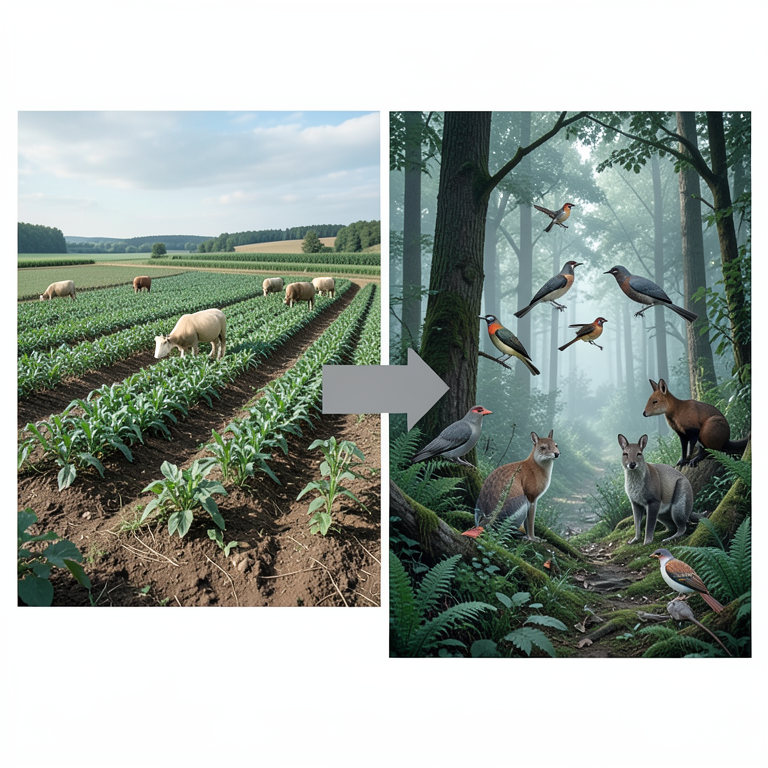
Study overview
AI-generated conceptual illustration (farmland and wild forest ecosystems). It explains the idea and does not show study data.
View source evidence ↗Introduction
Currently, corona virus disease 2019 (COVID-19) poses a significant threat to global health within the first two months of the outbreak, the epidemic spread rapidly around the country and the world. The Corona virus is an enveloped positive-sense RNA virus, which is characterized by clublike spikes projecting from its surface of S-glycoprotein. Although corona virus is commonly associated with acute respiratory infections in humans, its ability to infect multiple host species and a variety of diseases makes it a complex pathogen. The frequent interactions of wild animals with humans market hemi common source of genetic infections. The COVID-19 pandemic has caused industrial activity to shutdown, business closed, transport slashed, flights cancelled and other activities throughout the world came to halt, this result slashing of greenhouse gases emission and air pollution around the world. The positive outcome of this terrible COVID-19 lockdown is the clean air we breathe with low carbon content in future. It has given a severe impact on global and national economies irrespective of the level of virus impact on the people of individual nations. The novel corona virus has no border, no religion and spread beyond caste and creed. It is highly contagious in nature and easily unpredictable. World was never prepared for this kind of pandemic, where we are in a race of developing a vaccine against its spread (Kumari and Shukla, 2020) [1] . Environmental changes have had enormous impacts on biodiversity patterns in the past and will remain one of the major drivers of biodiversity patterns in the future (Prakash and Srivastava, 2019) [6] . An impact on the environment due to the present shut down to break the spread-chain of COVID-19 pandemic is not the sustainable approach because it is short term change. However, in the short-term, these reductions are useful in pollution affecting cardio-pulmonary health in general (Mandal and Singh, 2020) [5] . According to the estimate of World Health Organization (WHO) that 3 million people died each year from ailments caused by air pollution and approximately 80%. of the people living in urban areas are exposed to air quality that is not safe for human health, and even the situation is worse in developing and underdeveloped countries, where 98% of cities fails to meet WHO standards of air quality. The level of nitrogen dioxide (NO 2 ) as one the major air pollutant during late January and early February 2020 over cities and industrial area in Asia and Europe were lower as much as 40% as compared to same previous period as shown by European Space Agency's Sentinel5-Psatellite. Two weeks after the nationwide lockdown was announced in March 23 in UK,NO 2 level in some cities fell as much as 60% compared to the same period in 2019 (Philip et al., 2020) [2] . NASA shows that NO 2 over New York and major metropolitan areas in north eastern USA was 30% lower in March2020, compared to monthly average from 2015 to 2019, similarly nitrogen dioxide level in some cities of UK fall as much as 60 / compared to same period in 2019. Therefore, the major source of NO 2 is traffic pollution. NO 2 is highly harmful to human health as is shown by studies and short term and long-term exposure to NO 2 can increase mortality rate.
Lockdown and Agriculture
Due to Lockdown all the activities and all walks of life in the world as well as in India were affected. Therefore, protecting the lives of the people from the disease as well as frontline health responders have been the priority of nation. The agriculture sector face the severe hit, because of halted transportation, movement of people, which stagnates the harvest, and further during the peak harvest, the produce could not reach mandis, thus disrupting the supply chain. Beside the unavailability of migrant laborers, intercepting the harvest and post-harvest operation. Thus, the pandemic has given rise to several challenges in procurement operations as well. The impact of this pandemic on agriculture is complex and varied across the diverse segments that form the agricultural value chain. Even among the defended segments, its impact varies widely www.extensionjournal.com among different region. This impact will reverberate across large economy and will linger longer than a few months. Period of lockdown is the peak of Rabi season in India and crops like Wheat, grains, Lentil, mustard etc. are at harvestable stage. This was also the time when the farm harvests enrich market yards for assured procurement operation by designated government agencies. Moreover, any sever disruptions to the supply of perishable fruits and vegetables, dairy products, fishes etc. have mobilized to meet the increasing demand from a bulging middle class as well as urban and rural consumers, may create irreparable damage to all sectors in the supply chain. The migration of workers to their native places has also triggered panic buttons; as they are crucial for both harvesting operation and post-harvest handlings of produce in storage and marketing centers. The COVID-19 is a massive disaster in both the ways health-wise as well as economy-wise. Negative and large effects of COVID-19 will pull the economy several years back and government needs total measures for this in an aggressive way. Government will have to consider present as well as future policies for dealing this situation. It is going to hamper agriculture, business and economy. During this period of lockdown essential items such as vegetables, fruits etc. available to the comers both in urban and rural areas are the most critical challenge for the government machinery, Maintenance and smooth functioning of supply chain with adequate safety measures for the people involved is of paramount importance. To keep the public distribution system (PDS) alive to the last delivery agents both by rail and road has to been sured by respective government agencies, and distribution of commodities to vulnerable population, while maintaining prescribed guidelines and protocol, especially of social distancing must be effectively implemented / monitored. As the rabi harvesting season coincides with the ongoing lockdown, farmers ask the government to ensure un interrupted harvesting of the crops as well as smooth procurement operations and ensuring availability of laborers for critical farm operations, their safety and welfare must be prioritized by the government system. Besides this poultry, dairy, fish etc. has also been affected during the lockdown period due to the shortage of work force and halt of transport.
Lockdown and Biodiversity
In order to maintain the balance of ecosystem, interaction between the plants and animals, conservation and protection of our biodiversity are necessary. The ecological balance is necessary for wide spread biodiversity (Verma, 2017a) [9] human survival (Verma, 2018a) [10] . And over all sustainable development (Verma, 2019) [11] . There is need of biodiversity conservation (Verma, 2015) [7] . And the biodiversity has different levels (Verma, 2016) [8] . The genetic diversity acts as a buffer for biodiversity (Verma, 2017b) [9] . The biodiversity loss has ecological impact (Kumar Ajay et al., 2017) [4] . Nature always favors and promotes the diversity and coexistence among all the organisms by providing suitable environment to all. Human is highly evolved product of evolution hence tried always to control the environment and its own society in order to get conducive ambience. But due to over exploitation of natural resources, increased anthropogenic activities and human centric environmental approach, we are facing global warming and COVID-19 like unprecedented threats. Such global threats are compelling the academicians, policy makers and other stakeholders to introspect their visions and actions. Due to lockdown, a large number of birds including vultures are clearly started to appear. Insect pollinators have appeared in abundance on crops and other plants. All these are good indication for ecological balance and biodiversity. Almost total lockdown due to COVID-19 outbreak has minimized the anthropogenic activities including over exploitation of natural resources. The major human population is bound to live in their homes, automatically prevented to cause various types of pollution. The surrounding environment is reflecting clean and green. We all are observing a clean environment where almost all animals including birds etc. have stated to flourish. Almost all humans are feeling healthy without any major clinical problems.
Conclusion
Although COVID-19 pandemic pose a serious threat to mankind and staggered the economic activities, but on the other hand it is considered as "Blessing in Disguise "where pollution is reducing and nature seems to be busy in reclaiming its space in the absence of constant flurry of human activities. This positive impact on environment seems to be short, but government rather than all human beings learnt reduce the pollution in the long run for the sustainable development. The anthropogenic activities have already been reduced due to lockdown that have been proved good both for agriculture and biodiversity. The anthropogenic activities and unsustainable agriculture infect have multiple effects (Verma, 2017c) [9] and disturb the ecological balance (Verma, 2018b) [10] The imposition of nationwide lockdown due to COVID-19, no doubt has negative impact on economy, education, agriculture and society in general But it has positive impact on environment, climate and biodiversity. Due to lockdown, a large number of birds and fishes started to appear in the environment due to reduction in air and water pollution. All these are good indication for ecological balance and biodiversity. This positive impact on environment seems to be short, but government rather than all human beings learn to reduce the pollution in the long run for the sustainable development. Its impact on agriculture is complex and varied across diverse segments that form agricultural value chains faced a severe hit, because of lack of transportation facilities during lockdown and stagnation in the harvest as the products could not reach mandis. This resulted in disruption of supply chain. Moreover, the unavailability of migrant Laboure's, intercepting the harvest and post-harvest operation. Thus, the pandemic has given rise to several challenges in procurement operation as well. This effect will reverberate across the large economy and will have longer impact.
References
10 in the original paper- Kumari T, Shukla V. COVID-19: Towards confronting an unprecedented pandemic. International Journal of Biological Innovations. 2020;2(1):1-10. Doi:https://doi.org/10.46505/IJBI.2020.2107
- Faustini A, Rapp R, Forastiere F. Nitrogen dioxide and mortality: review and meta-analysis of long-term studies. European Respiratory Journal. 2014;44(3):74453.
- Kumar Ajay, Verma AK. Bio diversity loss and its Ecological impact in India. International Journal on Biological Sciences.2017;8(2):156-160.
- Mandal AC, Singh OP. Climate Change and Practices of Farmers' to maintain rice yield: A case study. International Journal of Biological Innovations. 2020; 2(1):42-51. Doi:https://doi.org/10.46505/IJBI.2020.2101
- Prakash S, Srivastava S. Impact of Climate change on Bio diversity: An Overview. International Journal of Biological Innovations. 2019;1(2):60-65. Doi:https://doi.org/10.46505/IJBI.2019.1205.
- Verma AK. Values and Need of Biodiversity Conservation. Bioherald: An International Journal of Bio diversity and Environment.2015;5(1-2):77-79.
- Verma AK. Biodiversity: Its Different Levels and Values. International Journal on Environmental Sciences. 2016;7(2):143-145.
- Verma AK. Genetic Diversity as Buffer in Biodiversity. Indian Journal of Biology. 2017;4(1):61-63.
- Verma S, McMurray JJ. SGLT2 inhibitors and mechanisms of cardiovascular benefit: a state-of-the-art review. Diabetologia. 2018 Oct;61(10):2108-17.
- Verma S, Mazer CD, Yan AT, Mason T, Garg V, Teoh H, Zuo F, Quan A, Farkouh ME, Fitchett DH, Goodman SG. Effect of empagliflozin on left ventricular mass in patients with type 2 diabetes mellitus and coronary artery disease: the EMPAHEART CardioLink-6 randomized clinical trial. Circulation. 2019 Nov 19;140(21):1693-702. Doi:http://dx.doi.org/10.21088/ijb.2394.1391.4117.9