
Research article · 2022 · Full text
International Journal of Horticulture and Food ScienceEffectiveness of new chemicals in the management of the amount of apple red mite (Panonychus ulmi Koch)
Volume 4(1) · Pages 116–119 · DOI: 10.33545/26631067.2022.v4.i1b.101 ↗
Research areasAgriculture and Biological Studies
Abstract
Author-writtenThe article provides information on the harm and control methods of apple red mite (Panonychus ulmi Koch) in apple orchards. Apple red mite (Panonychus ulmi Koch) is the most dangerous pest of seed orchards and other crops of other European countries. This pest can destroy more than half of the crop yield in some fields. In normal years, spiders are said to destroy 6-10% of the gross crop, and in some years even 14%. Apple red mite (Panonychus ulmi Koch) is the most dangerous and harmful in terms of mites. It is the main pest of melons, technical plants, and horticulture, ornamental trees. More than 150 species of spiders in the world are listed as the main pests of crops.Materials and methods:New chemical Envidor em. k against apple red mite (Panonychus ulmi Koch) in seed orchards. To determine the biological effects of the drug (0.5 l/ha), research was conducted on 25 (twenty-five) hectares of Fuji apple orchards located on the territory of Zevar farm in Sariosiya district in the Surkhandarya region. Agrotoxicological experiments were carried out by the method of K.A. Gar, Sh. T. Khojaev. The calculation of biological efficacy in field and laboratory experiments was determined according to the W.S. Abbot formula, which takes into account the control option. Research results. According to research, the new Envidor em. k. (0.5 l/ha) was the highest on the 3days of our observations in the variant in which the drug was used, i.e., the biological efficacy was 89.2%. Conclusion:Envidor em. k. high biological efficiency can be achieved by applying the drug at the rate of consumption per hectare (0.5 l/ha). The fight against apple red mite (Panonychus ulmi Koch) can be obtained the expected result by timely agro-technical measures in late autumn and early spring, the use of low-toxic chemicals for the environment, and beneficial insects during the growing season.
Summary
Source-checkedPlain-language reading of the full paper, prepared with AI and checked against the text. Each point links to the authors' own words.
Why it matters
- The apple red mite (Panonychus ulmi Koch) is identified as the most dangerous pest for seed orchards and various other crops in European countries. View evidence ↗
- These mites typically destroy 6-10% of the gross crop in normal years, with losses reaching 14% in some years. View evidence ↗
- The pests cause damage by sucking the sap from leaves, young twigs, growth points, and young fruits. View evidence ↗
The question
- The study aimed to determine the biological effects of the chemical Envidor em. k applied at 0.5 l/ha against apple red mites in Fuji apple orchards. View evidence ↗
What they did
- The research was conducted on 25 hectares of Fuji apple orchards at the Zevar farm in the Sariosiya district of the Surkhandarya region. View evidence ↗
- The chemical tested was Envidor em. k, which contains the active substance spirodiclofen, applied at a rate of 0.5 l/ha. View evidence ↗
- A standard drug, Error 1.8% em. k (containing abamectin) applied at 0.4 l/ha, was used for comparison. View evidence ↗
- Biological efficacy was calculated using the W.S. Abbott formula, incorporating a control group. View evidence ↗
What they found
- Envidor em. k (0.5 l/ha) reached its peak biological efficacy of 89.2% on the 3rd day after administration. View evidence ↗
- The efficacy of Envidor em. k decreased over time, falling to 82.8% on day 7, 74.1% on day 14, and 69.0% on day 21. View evidence ↗
- The comparison drug, Error 1.8% em. k (0.4 l/ha), showed lower efficacy than Envidor, starting at 86.4% on day 3 and decreasing to 68.6% by day 21. View evidence ↗
- The pest population began to increase again after the 21st day of the study. View evidence ↗
- The researchers observed that the chemical treatment had a low effect on the eggs and nymphs of the apple red mite. View evidence ↗
What it means
- The authors conclude that high biological efficiency against apple red mites is achievable using Envidor em. k at a rate of 0.5 l/ha. View evidence ↗
- The authors recommend a combined approach including timely agro-technical measures in late autumn and early spring, the use of low-toxic chemicals, and the promotion of beneficial insects. View evidence ↗
Visual summary
1 visualsIllustrations explain the paper; they do not show study data.
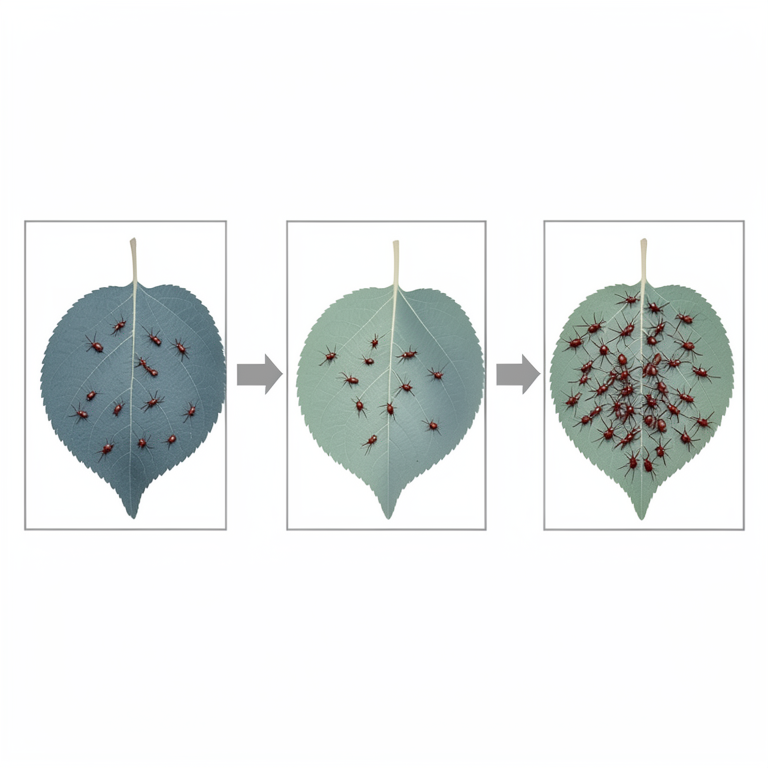
Efficacy Decay Over Time
AI-generated conceptual illustration (apple red mite (Panonychus ulmi) on apple leaves). It explains the idea and does not show study data.
View source evidence ↗Figures & tables
From the original paper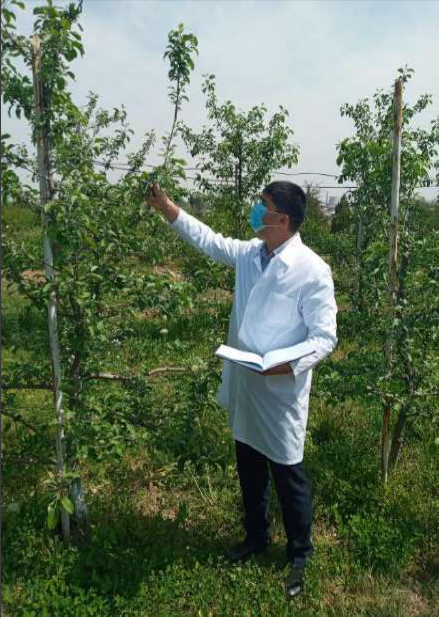 Figure 1
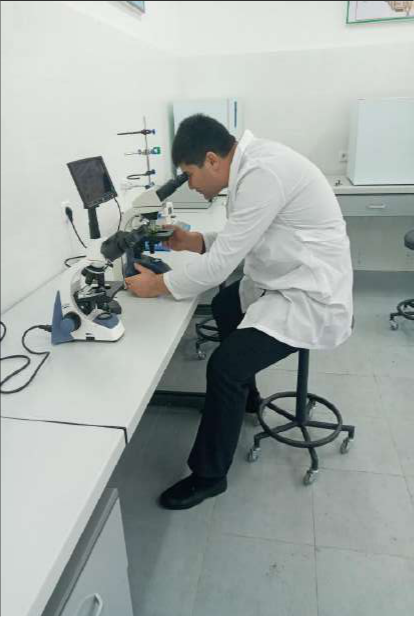 Figure 1
 Table 1
Introduction
Of the total 269.5 thousand hectares of orchards in the country, 118,000 hectares or 44% are apple orchards. Over the past 3 years, $ 750 million has been invested in horticulture. Demand for new intensive gardens is also growing [1] . Along with the expansion of seed orchards, pest infestation remains a major problem. In orchards, several types of mites cause damage. They belong mainly to two families, the first being the four-legged mites (Tetranychidae) and the two-legged mites (Eriophyidae). These mites can be seen in the field under a special magnifying glass, in the laboratory under a microscope [2] . Several species of mites have been found to cause significant damage in seed orchards, mainly with high levels of damage. These are the gray fruit mite (Bryobia redikorzevi Rech), the hawthorn mite (Tetranychus viennensis Zacher), the apple red canal (Panonychus ulmi Koch), the common spider mite (Tetranychus urticae Koch), and other gall-forming mites. Spider mites mainly develop and multiply under cobwebs [3] . Although several species of plant mites damage apple orchards and other crops, the most dangerous of them is the apple red mite (Panonychus ulmi Koch). The apple red mite is a plant-eating creature belonging to the class Arachnida, the family Acariforms [4] . Apple red mite (Panonychus ulmi Koch) is the most dangerous pest of seed orchards and other crops of other European countries. This pest can destroy more than half of the crop yield in some fields. In normal years, the spider kills 6-10% of the gross crop, and in some years even 14% [5,6] . In seed orchards, many species of mites, such as garden spider mite, pear mite, apple red mite, cause serious damage. Mites damage leaves, annual young twigs, growth points, and young cave fruits by sucking [7] . Damaged fruits are stained and the quality decreases. The twigs, on the other hand, lag in development and are less resistant to winter and frost.
Apple red mite (Panonychus ulmi Koch) is the most dangerous and harmful in terms of mites. It is the main pest of melons, technical plants, and horticulture, ornamental trees. More than 150 species of spiders have been reported as the main pests of crops around the world [8,9] . According to other scientists, the apple red mite (Panonychus ulmi Koch) is found in almost all agricultural areas of the world, and phytophagous mites are more plantrelated than all other mites [10] . Spiders were found to infect 1,200 species of cultivated and other plants, and 150 of these plants were found to be at high economic risk [11,12] .
Materials and Methods
New chemical Envidor em. k against apple red mite (Panonychus ulmi Koch) in apple orchards. To determine the biological effects of the drug (0.5 l/ha), research was conducted on 25 (twenty-five) hectares of Fuji apple orchards located on the territory of the farm "Zevar" Sariosiya district of Surkhandarya region. According to him, to test chemicals envidor em. k. (0.5 l/ha) of the active substance (spiridiclofen).
As a standard for this drug, Error received 1.8% em. k. (0.4 l/ha) of the active substance (abamectin). Because both of these drugs are recommended for mites in other crops. They researched to determine their biological efficacy by mutual comparison. The research is carried out using widely used methods and techniques for the detection of agricultural pests. Entomological calculations and observations were performed using G.Ya. Bey Beyenko, L.A. Kopaneva detectors; K. The results of the study showed that after administration of the Envidor em. k drug (0.5 l/ha), the biological efficacy increased by 82% by day 14 [11] .
Experiments have been carried out in Polish apple orchards to control apple red mites (Panonychus ulmi Koch). The Envidor em. k drug was applied to the consumption of apple trees before flowering (03-0.4 l/ha). Experiments have shown that when Envidor em. k is used in the fight against apple red mite (Panonychus ulmi Koch), the duration of action is 2-6 weeks [13] . Envidor em. k drug (spirodiclofen), one of the acaricides with a new method of action, was applied to the eggs of apple red mites (Panonychus ulmi Koch) in 2004-2008. The experiments were conducted on apple orchards in Serbia, according to which the biological efficiency was 89-86% [14] . Endor drug apple red mites (Panonychus ulmi Koch) has a strong effect on the biosynthetic properties of lipids, used in apple orchards during the ovarian, larval, and nymph periods, the laying of eggs by female mites. This drug can achieve the expected results when applied to apple orchards during flowering and fruit development [15,16] . Apple red mites (Panonychus ulmi Koch) can be applied to the eggs envision in the consumption brain (03-0.4 l/ha) at a temperature of 5 ºC to 25 ºC. According to our research, in apple orchards, the apple red mite (Panonychus ulmi Koch) is infested with eggs, larvae, and nymphs by Envidor em. k. (0.5 l/ha) was used. As a benchmark for this drug, Error used 1.8% em. k. (0.4 l/ha) was obtained. Control observations were analyzed from 3 days of use of the drugs obtained for the experiment. Before processing, Envidor em. k. (0.5 l/ha) in the variant in which the drug was used, an average of 6.8 units per leaf, Error 1.8% em. k. (In the variant applied to 0.4 l/ha, it was 7.2 units. 1) In our variant using the following template, Error has a 1.8% em. k. (0.4 l/ha) was highest on the next 3 days of treatment, i.e., the biological efficiency was 86.4%, while on the 7th day the biological efficiency was 79.8%. By the 14th day of our observations, the biological efficiency was 72.1%, while on the 21st it was 68.6%. In this variant, too, the biological efficacy index was found to decrease after 21 days. It was observed that the chemical effect on the eggs and nymphs of the pest was low.
Conclusions
According to the results of the study, timely control of apple red mite (Panonychus ulmi Koch) in orchards is an important factor in their control, taking into account its bioecology and survival, using effective mites. Envidor em. k. high biological efficiency can be achieved by applying the drug at the rate of consumption per hectare (0.5 l/ha). In the fight against apple red mite (Panonychus ulmi Koch) in apple orchards can be maintained crop in late autumn and early spring by timely agro-technical measures, the use of low-toxic chemicals for the environment, and beneficial insects during the growing season.
Figures and tables from the paper
| Options | Consumpti on rate l/ha | Number of pests per leaf, pcs | — | — | — | — | Biological efficiency,%, by days | — | — | — |
|---|---|---|---|---|---|---|---|---|---|---|
| Pre-processing number | The number after processing, pcs | |||||||||
| 3 | 7 | 14 | 21 | 3 | 7 | 14 | 21 | |||
| Envidor em. k. | 0,5 | 6,8 | 0,9 | 1,6 | 2,7 | 3,4 | 89,2 | 82,8 | 74,1 | 69,0 |
| Errou 1.8% em. k | 0,4 | 7,2 | 1,2 | 2,0 | 3,1 | 3,7 | 86,4 | 79,8 | 72,1 | 68,6 |
| Control | - | 8,3 | 10,2 | 11,4 | 12,8 | 13,6 | - | - | - | - |
Table text extracted from the original PDF; superscript letters are shown inline. The original table image is below.
View original table image
References
12 in the original paper- Kimsanboyev H, Ergashev S, RO'lmasboyeva BS. Entomology; 2006.
- Xo`jaev Shomil Tursunovich. Fundamentals of entomology, crop protection and agrotoxicology; 2014.
- Harris AL, Ullah R, Fountain MT. The evaluation of extraction techniques for Tetranychus Exp. Appl. Acarol. 2017;72:367-77.
- Balykina EB, Rybareva TS, Yagodinskaya LP. Population of tetranychidae mites on apple trees and methods of restraining the number of resistant races in Crimea E3S Web of Conferences; 2021.
- Petrović A, Ivanović I, Manojlović A, Banjac B, Malenčić Đ, Marinković D, Bursić V. Factors and mechanisms of acaricide resistance in European red mite (Panonychus ulmi Koch) Biljn. Lek. 2021;49:62644.
- Yorulmaz Salman S, Keskin C. Contact toxicity of pine, laurel and juniper essential oils to spirodiclofenresistant and -susceptible Tetranychus urticae Koch, 1836 (Acari: Tetranychidae) populations Turkiye Entomoloji Derg. 2019;43:97-105.
- Gräff C, Johann L, Souza C, Ferla N. Patogenicidade de Isaria fumosorosea sobre o ácaro vermelho europeu em laboratório. Biotemas. 2017;3073-8.
- Marcic D, Ogurlic I, Prijovic M, Peric P. Effectiveness of azadirachtin (NeemAzal-T/S) in controlling pear psylla (Cacopsylla pyri) and European red mite (Panonychus ulmi) Pestic. i fitomedicina. 2009;24:12331.
- Kramer T, Nauen R. Monitoring of spirodiclofen susceptibility in field populations of European red mites, Panonychus ulmi (Koch) (Acari: Tetranychidae), and the cross-resistance pattern of a laboratory-selected strain Pest Manag. Sci, 2011.
- Badieinia F, Khajehali J, Nauen R, Dermauw W, Van Leeuwen T. Metabolic mechanisms of resistance to spirodiclofen and spiromesifen in Iranian populations of Panonychus ulmi Crop Prot; 2020.
- Khamis M, Khalil S. Article History Comparative toxicity study of different acaricides in laboratory preluding for field efficacy assessment against Tetranychus urticae (Acari: Tetranychidae) J Plant Prot. Res. Int. 2019;2:576-85.
- Auger P, Bonafos R, Guichou S, Kreiter S. Resistance to fenazaquin and tebufenpyrad in Panonychus ulmi Koch (Acari: Tetranychidae) populations from South of France apple orchards Crop Prot. 2003;22:1039-44.