
Research article · 2022 · Full text
International Journal of Research in AgronomyIntercropping of cereal with legume Crops
Volume 5(1) · Pages 26–31 · DOI: 10.33545/2618060x.2022.v5.i1a.94 ↗
Research areasAgronomic Practices and Intercropping SystemsAgroforestry and silvopastoral systemsRabbits: Nutrition, Reproduction, Health
Abstract
Author-writtenThe technique of farming two or more crops in the same field at the same time is known as intercropping. It has been practiced for decades. It provides a number of benefits, including more efficient and effective resource utilization, less soil erosion, increased yield output on a limited cultivated field, risk reduction for smallholder farmers, and higher income per unit of work during times of labor scarcity. Intercropping legumes with cereals, in general, allows for more energy-efficient and continuous agriculture. However, as the world's population grows, a lack of arable land is a major developmental limitation in many rising countries' capacity to meet their basic food and nutritional demands. The most popular types of intercropping used to overcome poorly farmed terrain are mixed intercropping, row intercropping, and strip intercropping. Intercropping is influenced by a variety of factors, including the choice of compatible species, the timing of establishment/planting, knowledge of the physiology of the species to be cultivated at the same time, their growth habits, plant population density, canopy and root architecture, and water and nutrient usage. Various competition indices in cereal-legume intercropping have been used to measure crop yield and efficiency per unit area of land. Only a few of these are the Land Equivalent Ratio, Area Time Equivalent Ratio, Aggressivity, Relative Crowding Coefficient, Competitive Ratio, and Actual Yield Loss. A well-managed cereal-legume intercropping system has been found to have beneficial impacts on resource utilization and combined production of low-input crops in the past. The most useful strategy for sustainable agriculture and food security is to address the cereal-legume intercropping system to all farmers in developing countries.
Summary
Source-checkedPlain-language reading of the full paper, prepared with AI and checked against the text. Each point links to the authors' own words.
Why it matters
- Growing global populations and a shortage of arable land limit the ability of many developing countries to meet basic food and nutritional needs. View evidence ↗
- Monocropping is associated with several drawbacks, including increased reliance on artificial fertilizers, loss of soil fertility, and a higher spread of pests and diseases. View evidence ↗
- Intercropping cereals with legumes is generally considered a more energy-efficient approach to continuous agriculture. View evidence ↗
The question
- The author initiated this review to examine cereal-legume intercropping because it is a critical production method for subsistence farmers. View evidence ↗
What they did
- The review categorizes intercropping into four main systems: mixed (no set row design), row (crops in rows), strip (crops in strips on slopes), and relay (crops overlap for part of their cycles). View evidence ↗
- The Land Equivalent Ratio (LER) is identified as the primary index used to compare the biological efficiency and yield of intercropping versus monocropping. View evidence ↗
What they found
- In a two-year study of maize-soybean intercropping, LER values of 1.22 and 1.10 indicated that intercropping was more productive than monocropping. View evidence ↗
- Maize-bean intercropping showed higher land use efficiency than solo planting, with LER values ranging from 1.15 to 1.42. View evidence ↗
- Bean-maize intercropping reduced weed biomass by 50-66% when beans were sown at 222,000 plants/ha (33% of the maize density of 37,000 plants/ha). View evidence ↗
- Planting soybeans following maize and natural fallow resulted in a 46% increase in maize grain output. View evidence ↗
- Intercropping can increase light interception by 30-40%, leading to more efficient sunlight utilization. View evidence ↗
- Legumes can fix atmospheric nitrogen, meaning they do not compete with cereals for nitrogen fertilizer in the soil. View evidence ↗
- While beneficial, intercropping may accelerate the depletion of soil nutrients, particularly phosphorus, due to higher removal rates during harvest. View evidence ↗
What it means
- The author concludes that intercropping should be widely adopted in developing nations to ensure food security, nutrition, and agricultural sustainability. View evidence ↗
Visual summary
1 visualsIllustrations explain the paper; they do not show study data.
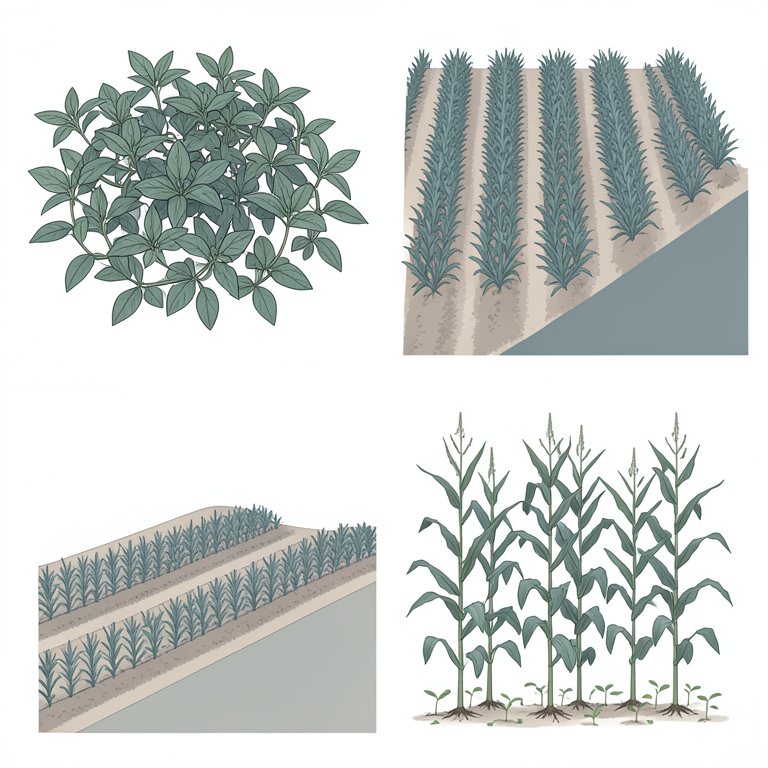
Types of Intercropping Layouts
AI-generated conceptual illustration (maize and soybean plants). It explains the idea and does not show study data.
View source evidence ↗Figures & tables
From the original paper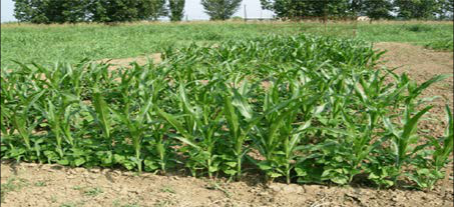 Figure 1
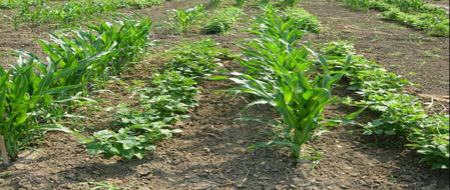 Figure 2
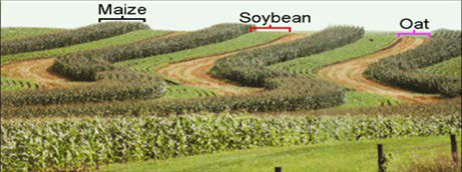 Figure 3
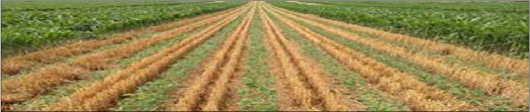 Figure 4
Introduction
Intercropping is a low-input farming strategy that involves cultivating two or more crops in the same farmed area at the same time to improve resource efficiency and cropping system flexibility. It's also an old and popular planting approach that tries to match crop preferences with growing resources and manpower available. Smallholder farmers in Asia, Africa, and Latin America have long used intercropping, and it is gaining popularity due to its ability to produce high yields with minimum inputs and its ability to save space (Yu et [50,25,23] . Pigeonpea has been shown to have the greatest potential for intercropping with cereals in Eastern and South Africa due to its drought-tolerance features, and it plays a significant role in family nutrition, output, and revenue. Pigeonpea thrives in hard, drought-prone circumstances, unlike most legumes, and is commonly intercropped with sorghum, maize, millet, and other cereal crops. The Konso people, who live in an arid pastoral area of south-central Ethiopia, have intercropped traditional pigeonpea with ratooned sorghum (Westphal, E. 1974) [45] . Monocropping has a number of disadvantages such as increasing artificial fertilizer use, soil fertility loss, increases the spread of diseases and insects. When compared to intercropping. It increases output across a limited area of cultivated land, minimizes soil erosion due to fast soil cover in intercropping conditions, lowers risk for smallholder farmers, and provides more money per unit of effort in labor shortages (Anil L, Phipps RH, 1998.). Intercropping legumes and grains is a popular technique in many parts of the world, and it can serve as a model for farmers with limited resources who want to maintain output and food security. Consider the following aspects while intercropping: compatible species, planting timing, understanding the physiology of the species to be intercropped with, their growth habits, canopy and root architecture, and water and fertilizer consumption. Intercropping has a higher biotic efficiency than monocropping due to the larger soil mass explored. In previous decades, this advanced agricultural approach was successful in achieving agriculture's goal (Ofori, 1987) [30] .
Several studies on cereal-legume intercropping systems have been undertaken (Dereje et al., 2016; Tenaw et al [12,40,19,17,38,5,2,39,13] . High population growth and a scarcity of cultivated land are major developmental issues in many emerging countries, making it difficult to meet their food and nutritional needs. Weeds, drought, and nutrient mining are also major factors in low agricultural output in underdeveloped nations, in addition to inadequate soil fertility and limited access to resources for small-scale farmers. Intercropping is more productive than Ethiopia's traditional cereal-based cropping methods. As a result, the intercropping system is critical for increasing crop production, enhancing soil fertility, reducing weed computation, increasing profit, and lowering crop failure risk. Farmers, on the other hand, cultivate their land without using soil and water conservation measures for lengthy periods of time, resulting in extremely deteriorated soil. Farmers are also hesitant to use man-made fertilizers due to their expensive cost and lack of information, resulting in low crop yields in a given amount of land. To address these issues, it is critical to do and disseminate research on soil and water conservation, as well as fertilizer application, particularly to increase productivity. They also use an intercropping strategy to help sustain agriculture by improving soil fertility in the country. Intercropping is an important part of subsistence farmer crop production methods, hence a review on cereal-legume intercropping was initiated.
History of intercropping
Intercropping is a long-standing tradition, probably dating back to the beginning of civilized agriculture. However, there is no precise date for when the first intercropped field appeared, but historians (Anders et al., 1996) [7] claim that intercropping existed early in the genesis of agriculture. Furthermore, despite the difficulties in pinpointing the exact dates when intercropping in the form of mixed garden plots initially appeared, it has been proved that they were common during Paleolithic times (Plucknett and Smith 1986) [32] . The transition from informal to formal mixed garden plots did not happen overnight; it was a long process that began in Paleolithic times. In many places of the world, intercropping methods have long been established (Francis 1986) [15] . Intercropping is crucial in the tropics, and it is still commonly used. In terms of crops and systems, there is a lot of natural genetic variation in these areas (Anders et al., 1996) [7] . Farmers' use of intercropping falls as the temperature and rainfall drop (Harris 1976) [20] . This trend is attributable to a drop in the number of plant species that have been adapted to tough growing conditions, as well as farmers' preference for species that have a better chance of producing something even if the season is terrible. Intercropping began to wane in many industrialized countries as a result of mechanization and specialization of new commercial and production commodities with the introduction of sophisticated agriculture. Individual commodities were studied as independent components of the agricultural system, with a focus on crop species and cultivars. The most effective way for raising agricultural output was thought to be specialization. With a single commodity, this could have worked.
Main Types of Intercropping
The technique of planting two or more crops on the same piece of land at the same time is known as intercropping. Intercropping uses temporal and spatial crop intensification to meet the needs of farmers and the growing environment (Eskandari et al., 2009) [14] . Furthermore, while intercropping, the component species planted throughout the crop season compete for available resources. The following are three types of intercropping systems that are commonly accepted in different nations (Ofori et al., 1987) [30] .
Mixed Intercropping
Mixed intercropping is when two or more crops are planted together without a set row design. On occasion, it's also referred to as mixed cropping (Von Cossel et al., 2019) [44] . Grass-legume intercropping is the best example of mixed intercropping in a pasture-based cropping system (Gulwa et al., 2017) [18] . In locations with limited land resources, mixed intercropping is primarily employed to meet food and forage demands (Undie et al., 2012) [40] .
Source: Downloaded from Google
Source: Downloaded from Google
Row Intercropping
Row intercropping is a type of intercropping in which one or more crops are planted in rows and intercrops are cultivated simultaneously in a row or without a row. Row intercropping is a common technique for increasing resource efficiency and productivity (Varma, 2017) [42] .
Source: Downloaded from Google
Source: Downloaded from Google
Relay intercropping
Relay intercropping is the practice of growing two or more crops at the same time for a portion of each crop's cultivating time. The following crop is sown after the preceding crop has completed a significant portion of its life cycle and has reached reproductive stage or approaching maturity. When there is a paucity of time and soil moisture, relay cropping is the best option (Balde et al., 2011) [8/] . Before the previous crop is harvested, the second crop is planted, and both crops remain in the field for a period of time. Sequential cropping, on the other hand, yields fewer seeds than conventional planting, requiring more seeds of the successive crop to maintain a productive stand.
Source: Downloaded from Google
Source: Downloaded from Google
Major aspect to be considered in cereal-legume intercropping system
In order to develop an intercropping system, many elements must be considered both before and during the growing period (Seran and Brintha, 2010) [35] . Crop population density, light interception, crop variety, and nutrients, for example, all influence the potential of a cereal-legume intercropping system to produce nitrogen. Regardless, the plant's location, light, growth habit, water, and fertilizer use all influence compactable crop selection (Brintha and Seran, 2009) [35] .
Competition indices in intercropping
The following indicators were used to determine the degree of competition between different intercropped crops. The Land Equivalent Ratio (LER) is the most well-known technique for comparing biological efficiency and yield per unit area of land in comparison to monocropping systems; when the LER is more than 1.0, it signifies that intercropping yielded more than growing alone Allen and Obura (1983) [6] , for example, evaluated 1.22 and 1.10 LERs for maize-soybean intercropping over two years and concluded that intercropping outperformed monocropping. According to Abera et al., the LER values varied from 1.15 to 1.42, indicating that maize-bean intercropping had higher productivity and land use efficiency in terms of crop output per unit area than solo planting (2005). In most situations, intercropping exceeded lone cropping, with Land Equivalent Ratios (LERs) often exceeding one (Osman et al., 2011) [31] . The Area Time Equivalent Ratio (ATER) is a second competition indices approach that provides a more precise assessment of the yield benefit of intercropping with monocropping in terms of time consumed by component crops in intercropping systems. It can be calculated using the formula (ATER) = LER x Dc / Dt, where LER is the crop's land equivalent ratio, Dc is the crop's time, and Dt is the overall system's time. The third method is aggressivity (A), which is used to assess the competitive relationship between two crops in a mixed cropping system (Willey, 1979) [46] . The relative crowding coefficient (K), which is a measure of one species' relative dominance over another in a mixture, is the fourth approach (Banik et al., 2006) [10] . Because it is based on yield per plant, the actual yield loss (AYL) index gives more exact information on competition between and within component crops, as well as the performance of each species in the intercropping system, than the other methodologies (Banik et al., 2000) [9] .
Intercropping system and its benefit
Intercropping is a practice of growing two or more crops on the same piece of land at the same time to promote agricultural sustainability. Among Ethiopia's poor farmers, it's a regular practice. Maize-beans, sorghum-cowpea, millet-groundnuts, maize-cowpea, maize-soybean, maize-pigeonpea, maizegroundnuts, and rice-pulses are all common intercropping crop combinations. The features of an intercropping system vary depending on the soil, crop species, climate, economic position, and preferences of local farmers. Intercropping systems, which largely intercrop cereal and legume crops that enhance soil fertility and sustainability, reduce pests, diseases, and weeds and promote soil-physical conditions by receiving more radiation and making better use of available water and nutrients (Sanginga and Woomer, 2009) [32] . Intercropping, rather than monocultures, provides year-round ground cover, preventing soil desiccation and erosion. Farmers can boost water use efficiency, protect soil fertility, and prevent soil erosion by planting multiple crops on the same piece of land at the same time, which are the main problems with mono-cropping. Intercropping legumes and cereals improves legume nitrogen fixation while also providing residual nutrients to the soil (Sarkar et al., 1995) [34] . The cropping system's effective use of critical resources is governed by the inherent efficiency of the individual crops that make up the system, as well as the complementary influence of the crops.
Effect of Intercropping on Cereal Crops
In semi-arid regions of the world, intercropping legumes and grains are common. In tropical agriculture, legume-cereal intercropping is the most well-known intercropping approach, and it can reduce the amount of nutrients absorbed from the soil as compared to monocropping (Synadon and Harris, 1979) [36] . Legumes will fix nitrogen from the environment in the absence of nitrogen fertilizer and will not compete with cereals for nitrogen fertilizer (Gyamfi et al., 2007) [4] . When compared to monocropping, intercropping legumes and cereals boosts productivity and soil fertility. Smallholder farmers are increasingly intercropping grains and legumes due to the legume's ability to minimize soil erosion and reduce soil fertility.
Effect of intercropping on light interception and radiation use efficiency
The most valuable factor for crop growth and development was light, which varied from other growth factors in that it is only available in the present and hence must be taken straight away, whereas other resources are frequently pools waiting to be used by plants (Willey, 1979) [46] . Plant population density and row organization are thought to affect light transmission through the canopy (Jaya et al., 2001) [21] . They also discovered that planting maize with a N-S orientation at an average density of 7.1 plant m-2 lowered canopy maximum temperatures by 1.2 °C at 40 cm above ground. Reduced irradiance was linked to a 70 percent drop in temperature; the drop in temperature, in particular, was highly sensitive to row orientation and plant density, and in some circumstances resulted in an increase in temperature. With an irradiance of above 300 Wm-2 at mid-day approximately 5 weeks after planting, a plant density of 7 plants m-2 at N-S orientation was found to be promising for cauliflower-maize intercropping in arid lowland situations (Jaya et al., 2001) [21] . This must be synchronized with cauliflower development, as early growth of cauliflowers necessitates higher irradiances to maintain enough glucose supply. Light interception and light use efficiency are terms that can help you understand how cropping systems, particularly intercrops, obtain and use resources. Increased production could result from increased sunlight/solar radiation interception, increased light use efficiency, or a combination of the two (Willey, 1990) [48] . When two crop species are mixed and cultivated together rather than separately, light interception improves on a regular basis, either as a result of a longer time of soil covered (temporal advantage) or a more comprehensive soil cover (spatial advantage) (Keating and Carberry, 1993) [22] . Because the total crop population density of intercrops is higher, they can capture more light, especially early in the growing season. Intercrops with non-synchronous canopy development patterns and variable maturation times can have more leaf area during the growing season and produce more fruit. Intercrops, according to Carandang (1980), increase light interception by 30-40%, allowing for more efficient use of sunlight. The overall system's light interception is detected by the geometry of the crop and the layout of the vegetation. By requiring the earlier crops to be put between properly broader rows of the taller once, intercropping between large and tiny canopy crops optimizes light interception (Seran and Brintha, 2010) [35] . Two characteristics that influence yield in proportion to occurrence radiation in an intercropping system are the total amount of light intercepted and the efficiency with which intercepted light is converted to dry matter (Keating and Carberry 1993) [22] . The amount of radiation intercepted in maize-bean intercropping was larger than in a single crop, according to Tsubo, Walker, and Mukhala (2001).
Effect of intercropping on nutrient use efficiency
Despite the challenges of determining helpful or competitive effects, nutrient utilisation in intercropping systems has gotten a lot of attention (Morris and Garrity 1993a) [27] . Due to variances in nutrient uptake techniques among crop species and between individual nutrients, quantifying competitive implications is difficult. More nutrient use can be seen in intercropping systems, both spatially and temporally. Spatial nutrient uptake can be maximized by increasing root mass when crops in an intercropping system have extremely high nutrient needs at various periods, whereas temporal nutrient uptake can be found when crops in an intercropping system have extremely high nutrient demands at different times (Anders et al., 1996) [7] . Cereal-legume intercropping systems exhibit distinct rooting and nutrient uptake forms than monocrops, indicating that more effective use of available nutrients and increased N-uptake in the intercrop may be found (Fujita and Ofosu-Budu, 1996) [16] . Because all roots have the same direction and depth below the surface when just one species is growing, they tend to compete with one another (Seran and Brintha, 2010) [35] . Certain research from outside of Sub-Saharan Africa has demonstrated the relative efficiency of intercrops over monocrops. Maize and cowpea intercropping is beneficial on nitrogen-deficient soils, according to Vesterager, Neilsen, and Hogh-Jensen (2008) [43] , and maize-cowpea intercropping increases nitrogen, phosphorus, and potassium content when compared to monocrops of maize, according to Dahmardeh, Ghanbari, Syahsan, and Ramrodi (2010) [13] . Intercropping may speed soil nutrient depletion, notably for phosphorus, as a result of more effective soil nutrient usage and higher removal through harvested crops, in addition to the favorable effects on cereal crops (Mucheru-Muna et al., 2010) [28] . Chalka and Nepalia (2006) [11] , on the other hand, discovered that intercropping maize with soybean reduced NPK depletion while increasing N uptake. In order to reduce the use of foreign inputs, recent projects in Africa to improve soil fertility have included the use of legumes as an intercrop and/or in rotation (Sanginga and Woomer, 2009) [33] .
Effect of intercropping on weed management
Weeds compete for agricultural growth and development resources, reducing crop output quantity and quality. Furthermore, weeds promote the spread of disease and insect pests, both of which can reduce agricultural productivity. To reduce the impact of weeds, farmers have used a range of strategies. Two of the most frequent ways for suppressing or controlling weeds are herbicide spray and hand weeding. Herbicide treatment, on the other hand, has negative consequences for environmental resources such as soil, water, and beneficial insects, as well as increasing production costs and fostering herbicide resistance. As a result, research has demonstrated the value of agronomic options for weed control, such as intercropping, in reducing the negative effects of weeds as well as the side effects of herbicide treatments. Conventional intercropping systems are one of the possibilities for weed suppression or control as compared to solo crops (Ananthi, 2017) [37] . In actuality, weed growth is reliant on all component crops' competitive abilities, which in intercropping is highly reliant on the competitive abilities of the crops community and their respective plant densities (Willey et al., 1980) [47] . For example, because of the legume soil cover, which created an inappropriate environment, the most frequent type of weed, striga infestation, has been considerably reduced (Musambasi et al., 2002; Mashingaidze, A.B., 2004) [39,26] . According to Chalka MK and V Nepalia (2006) [11] . Bean-maize intercropping reduced weed biomass by 50-66 percent when sown at a density of 222,000 plants ha-1 for beans, which is 33 percent of the maize density (37,000 plants ha -1 ).
Residual effects of cereal-legume cropping system
Decomposing roots and falling leaves give nitrogen and other nutrients to the following crop once the intercrop is harvested. The residual influence of the pulse crop on the next crop is highest when the remaining pulse crop is left on the field and tilled under after harvest. When a substantial amount of nitrogen is left in the grain harvest, however, the land loses more nitrogen than the pulse crop can replace. The intercropped legume may store nitrogen in the soil that will not be useful until after the planting season, so increasing soil fertility and the value of a subsequent crop (Ofori and Stern 1987; Ledgard and Giller, 1995) [29,30] . Maize grain output, for example, was 46 percent higher when soybeans were planted following maize and natural fallow. According to Herridge (1990), maximizing the total amount of nitrogen in the legume crop, the proportion of nitrogen derived from N2 fixation, the proportion of legume N mineralized, and the efficiency with which this mineral N is utilized is required to increase the contribution of legume nitrogen to a subsequent crop. Unfortunately, it is not always possible to optimize these values.
Summary and Conclusion
Intercropping is a popular agricultural method that involves growing two or more crop species in the same cultivated area at the same time. Cereal-legume intercropping is an old and frequent practice in developing nations, and it might be one of the most important factors in ensuring sustainable agriculture and food security for resource-constrained farmers. In developing countries, major intercropping systems such as mixed, row, strip, and relay intercropping are used. The developing world's key hurdles in meeting their food and nutritional needs include high population growth and shortage of land resources. In addition, low agricultural output in developing countries is caused by declining soil fertility, limited access to resources for impoverished farmers, weeds, drought, and nutrient mining. Cereal-legume intercropping has a number of advantages, including improved resource efficiency, reduced soil erosion, increased soil fertility, weed and pest control, increased yield production on limited cultivated land, risk reduction for poor farmers, and higher income per unit of labor during times of labor scarcity. The choice of suitable crop species, planting/establishment time, knowing the physiology of the crop species, their growth habit, canopy and root architecture, plant population density, and water and nutrient usage efficiency are the primary elements that influence intercropping. Crop productivity and efficiency per unit area of land have been measured using a variety of competitive indicators. Land Equivalent Ratio, Area Time Equivalent Ratio, Aggressively, Relative crowding coefficient, Competitive ratio, and Actual yield loss are the most frequent competitive index approaches. Generally intercropping should be widely used in developing nations to provide agricultural sustainability, food security, and nutrition.
Figures and tables from the paper
References
42 in the original paper- Abera T, Feyissa D, Yusuf H. Effects of inorganic and organic fertilizers on grain yield of maize-climbing bean intercropping and soil fertility in western Oromiya, Ethiopia. Tropentag 2005 Stuttgart-Hohenheim, October 11-13, 2005. Conference on International Agricultural Research for Development; c2005.
- Addisu Getahun, Seltene Abady. Effect of Maize (Zea mays. L) on Bean (Phaseolus vulgaris L.) Yield and its Components in Maize-Bean Intercropping. International Journal of Science and Research (IJSR). 2016;5(2):126-133.
- Addo-Quaye AA, Darkwa AA, Ocloo GK. Yield and productivity of component crops in a maize-soybean intercropping system as affected by time of planting and spatial arrangement. Journal of Agricultural and Biological Science. 2011;6(9):50-57.
- Adu-Gyamfi JJ, Myaka FA, Sakala WD, Odgaard R, Vesterager JM, Hogh-Jensen H. Biological nitrogen fixation and nitrogen and phosphorus budgets in farmer-managed intercrops of maize-pigeonpea in semi-arid Southern and Eastern Africa. Plant Soil. 2007;295:127-136.
- Alemayehu D, Shumi D, Afeta T. Effect of Variety and Time of Intercropping of Common Bean (Phaseolus vulgaris L.) With Maize (Zea mays L.) on Yield Components and Yields of Associated Crops and Productivity of the System at Mid-Land of Guji, Southern Ethiopia. Advances in Crop Science and Technology. 2018;6(1):1-9. DOI: 10.4172/2329-8863.1000324
- Allen JR, Obura RK. Yield of corn and soybean in intercropping soybeans. Agronomy Journal. 1983;75(3):1005-1009.
- Balde AB, Scope LE, Affholder F, Corbeels M, DaSilva FAM, Xavier JHV, et al. Agronomic performance of notillage relay intercropping with maize under smallholder conditions in Central Brazil. Field Crop Research. 2011;124(2):240-251. [Cross Ref]
- Banik P, Sasmal T, Ghosal PK, Bagchi DK. Evaluation of Mustard (Brassica compestris var. Toria) and legume intercropping under 1:1 and 2:1 row-replacement series systems. Journal of Agronomy and Crop Science. 2000;185:9-14.
- Banik P, Midya A, Sarkar BK, Ghose SS. Wheat and chickpea intercropping systems in an additive series experiment: Advantages and weed smothering. European Journal of Agronomy. 2006;24(4):325-332.
- Chalka MK, Nepalia V. Nutrient uptake appraisal of maize intercropped with legumes and associated weeds under the influenced of weed control. Indian Journal of Agricultural Research. 2006;40(2):86-91.
- Dereje G, Adisu T, Mengesha M, Bogale T. The Influence of Intercropping Sorghum with Legumes for Management and Control of Striga in Sorghum at Assosa Zone, Benshangul Gumuz Region, Western Ethiopia, East Africa. Advances in Crop Science and Technology. 2016;4(5):1-5. DOI: 10.4172/2329-8863.1000238.
- Dahmardeh M, Ghanbari A, Syahsar BA, Ramrodi M. The role of intercropping maize (Zea mays L.) and cowpea (Vigna unguiculata L.) on yield and soil chemical properties. African Journal of Agricultural Research. 2010;5(8):631-636. Available online at http://www.academic journals.org/AJAR. ISSN 1991-637X © 2010 Academic Journals.
- Eskandari H, Ghanbari A, Javanmard A. Intercropping of cereals and legumes for forage production. Notulae Scientia Biologicae. 2009;1(1):07-13. [Cross Ref]
- Fujita K, Ofosu-Budu KG. Significance of Intercropping in Cropping Systems. 1996;3:19-40.
- Gebremichael A, Bekele B, Tadesse B. Evaluation of the effect of sorghum-legume intercropping and its residual effect on yield of sorghum in yekiworeda, Sheka Zone, Ethiopia. International Journal of Agricultural Research, Innovation and Technology. 2019;9(2):62-66. DOI: 10.3329/ijarit.v9i2.45412.
- Gulwa U, Mgujulwa N, Beyene ST. Effect of Grass-legume Intercropping on Dry Matter Yield and Nutritive Value of Pastures in the Eastern Cape Province, South Africa. Universal Journal of Agricultural Research. 2017;5(6):355362.
- Keating B, Carberry P. Resource capture and use in intercropping: Solar radiation. Field Crops Research. 1993;34(3-4):273-301.
- Li CJ, Hoffland E, Kuyper TW, Yu Y, Zhang C, Li H, et al. Syndromes of production in intercropping impact yield gains. Nature Plants. 2020;6(6):653-660. https://doi.org/10.1038/s41477-020-0680-9
- Li CJ, Hoffland E, Kuyper TW, Yu Y, Li H, Zhang C, et al. Yield gain, complementarity and competitive dominance in intercropping in China: A meta-analysis of drivers of yield gain using additive partitioning. European Journal of Agronomy. 2020b;113:01-11. https://doi.org/10.1016/j.eja.2019.125987
- Martin-Guay M, Paquette A, Dupras J, Rivest D. The new green revolution: Sustainable intensification of agriculture by intercropping. Sci Total Environ. 2018;615:767-772.
- Moris RA, Garrity D1. Resource capture and utilization in intercropping: non-nitrogen nutrients. Field Crops Research. 1993 Sep 1;34(3-4):319-34.
- Mucheru-Muna M, Pypers P, Mugendi D, Kung'u J, Mugwe J, Merckx R, et al. Staggered maize-legume intercrop arrangement robustly increases crop yields and economic returns in the highlands of Central Kenya. Field Crops Research. 2010;115:132-139.
- Musambasi D, Chivinge OA, Mariga IK. Intercropping Maize with Grain Legumes for Striga Control in Zimbabwe. African Crop Science Journal. 2002;10(2):163-171.
- Ofori F, Stern WR. Cereal-legume intercropping systems. Advances in Agronomy. 1987;40:41-90.
- Osman AN, Raebild A, Christiansen JL, Bayala J. Performance of cowpea (Vigna unguiculata) and Pearl Millet (Pennisetum glaucum) Intercropped under Parkia. 2011;6(4):882-891.
- Sarkar RK, Shit D, Chakraborthy A. Yield and economics of pigeonpea based intercropping system on rainfed upland of Chotanagpur Plateau. Indian Journal of Agronomy. 1995;40:30-34.
- Seran TH, Brintha I. Review on maize based intercropping. Journal of Agronomy. 2010;9(3):135-145.
- Synadon RW, Harris PM. Interactions below ground the use of nutrients and water. Proceedings of the International Work Shop on Intercropping (IWSI'79), ICRISAT, India. 1979. p. 181-201.
- Ananthi T, Mohamed Amanullah M, Abdel Rahman Mohammad Said Al-Tawaha. A Review on Maize-Legume Intercropping For Enhancing The Productivity And Soil Fertility For Sustainable Agriculture In India. Advances in Environmental Biology. 2017;11(5):49-63.
- Tamiru Hirpa, Heluf Gebrekidan, Kindie Tesfaye, Asfaw Hailemariam. Production efficiency of maize-based cropping system as affected by intercropping date of companion legume crops. Ethiopian Journal of Biological Sciences. 2013;12(1):51-65.
- Tana T, Mulatu E. Evaluation of sorghum, maize and common bean cropping system in east Hararghe, Eastern Ethiopia. Ethiopian Journal of Agricultural Science. 2000;17(2):33-46.
- Tenaw Workayehu, Legesse Hidoto, Gobeze Loha. Grain Yield and Economic Benefit of Intercropping Barley and Faba Bean in the Highlands of Southern Ethiopia. East African Journal of Sciences. 2016;10(2):103-110.
- Undie UL, Uwah DF, Attoe E. Effect of intercropping and crop arrangement on yield and productivity of late season maize/soybean mixtures in the humid environment of south southern Nigeria. Journal of Agricultural Science. 2012;4(4):37-50. [Cross Ref]
- Varma D, Meena RS, Kumar S. Response of mungbean to fertility and lime levels under soil acidity in an alley cropping system in Vindhyan region, Indian International Journal of Chemical Studies. 2017;5(4):1558-1560.
- Vesterager JM, Nielsen NE, Høgh-Jensen H. Effect of cropping history and phosphorous source on yield and nitrogen fixation in sole and intercropped cowpea-maize systems. Nutrient Cycling in Agroecosystems. 2008;80:6173.
- Von Cossel M, Wagner M, Lask J, Magenau E, Bauerle A, Von Cossel V, et al. Prospects of Bioenergy Cropping Systems for A More Social-Ecologically Sound Bio economy. Agronomy. 2019;9(10):1-32. [Cross Ref]
- Willey RW. Intercropping-its importance and research needs. Part 1: Competition and yield advantages. Field Crop Research. 1979;32:1-10.
- Willey RW, Rao MR, Natarajan M. Traditional cropping systems with pigeonpea and their improvement. In Proceedings of the International Workshop on Pigeon peas, Patancheru, 1980;1:11-25.
- Willey RW. Resource use in intercropping systems. Journal of Agriculture and Water Management. 1990;17(1-3):215231.
- Yang F, Wang XC, Liao DP, Lu FZ, Gao RC, Liu WG, et al. Yield response to different planting geometries in maizesoybean relay strip intercropping systems. Agronomy Journal. 2015;107:296-304. [Cross Ref]
- Yu Y, Stomph TJ, Makowski D, Van der Werf W. Temporal niche differentiation increases the land equivalent ratio of annual intercrops: A meta-analysis. Field Crops Res. 2015;184:133-144.
- Hailu Gebru. A Review on the Comparative Advantages of Intercropping to Mono-Cropping System. Journal of Biology, Agriculture and Healthcare. 2015;5(9):1-3.
Cited by 11
From OpenAlex, OpenCitations and reference lists read by Scinovex
- Production systems and contributions of grain legumes to soil health and sustainable agriculture: A review ↗
Oliver Otieno Okumu, Hillary M. O. Otieno, Gidraf Onduru Okeyo · Archives of Agriculture and Environmental Science · 2023
Sustainable development of agriculture is essential, and there is unanimity that diversification of the cropping systems could support sustainable production. Grain legumes are essential in farming systems in terms of food and nutrition security and income generation. Under legume-based cropping systems, these crops are a potential remedy to pest and disease issues, low nutrient supply, biodiversity protection, and food and…
❝ 12PDF - The Role of Grain Legumes in Enhancing Soil Health and Promoting Sustainable Agricultural Practices: A Review ↗
Kallem Kalyan, Deshraj Gurjar, Bijendra Kumar, Tammineni Varun Kumar · Journal of Experimental Agriculture International · 2024
It is commonly acknowledged that sustainable agricultural practices are essential, and that diversifying cropping systems is crucial to reaching this objective. Legumes made of grains are essential to farming systems because they provide benefits for both income creation and the security of food and nutrition. Legume-based cropping systems can help with a variety of agricultural issues, such as controlling pests…
❝ 9PDF - Alleviating summer heat stress in cowpea-baby corn intercropping with stress-reducing chemicals and fertility variations ↗
Anju Bijarnia, Anju Bijarnia, Jagdish P. Tetarwal, ANIL KUMAR GUPTA, Arjun Lal Bijarnia, Arjun Lal Bijarnia et al. · Scientific Reports · 2024
Abstract Over the past century, the average surface temperature and recurrent heatwaves have been steadily rising, especially during the summer season, which is affecting the yield potential of most food crops. Hence, diversification in cropping systems with suitable fertilizer management is an urgent need to ensure high yield potential during the summer season. Since intercropping has emerged as an important…
❝ 6PDF - Agronomic performance and profitability of maize and cowpea intercropping as affected by increased rows of cowpea in Ethiopia ↗
Ehtemariam Teklemariam, Tarekegn Yoseph, Tewodros Ayalew · Crop Forage & Turfgrass Management · 2025
Abstract This study assessed the effects of row arrangement and cropping systems on maize (Zea mays L.) agronomy and profitability in a maize–cowpea (Vigna unguiculata L.) intercropping system under field conditions in Ethiopia. A factorial combination of two cowpea varieties, TVU and White Wonder Trailing (WWT), a three‐row arrangement (1 maize [M]: 1 cowpea [C], 1 M: 2C, and 1…
❝ 2 - Clarifying interactions between genotype and environment and management in chickpea by focusing on plant and soil attributes ↗
Hamid Hassaneian Khoshro, Hamid Hatami Maleki · Scientific Reports · 2025
The advancement of conservation agriculture (CA) as an efficacious methodology for sustainable production is contingent upon the introduction of suitable and adapted new cultivars for CA conditions. The objective of this study was to investigate the interaction effect of tillage × genotype and its consequences for the performance of chickpea genotypes under three distinct tillage systems during three cropping seasons…
❝ 1PDF - Topographic Wetness Index as a Factor of the Toxic Metals’ Accumulation by the Alkaline Sorption Barrier and the Choice of Revegetation Strategy in the Subarctic ↗
Marina V. Slukovskaya, Yury A. Dvornikov, Tatiana K. Ivanova, Ekaterina Kopeina, Anna Petrova, Широкая Анна Александровна et al. · Soil Systems · 2025
Creation of alkaline bulk layers from mining waste is economically viable way to prevent the migration of toxic metals down the soil profile and revegetate heavy polluted soils over large areas. We have conducted perennial experiments on the revegetation of industrial barren located near the operating nonferrous smelter in humid subarctic climate. A vermiculite–lizardite material from closed phlogopite mining, containing…
❝ 1PDF - Evaluations of Grass Pea Relay Inter-Cropping with Wheat on Vertisol in Eastern Amhara Region, Ethiopia ↗
Tilahun Taye, Wudu Abiye, Muluken Lebay · Journal of Tropical Crop Science · 2024
Grass peas have been cultivated in Ethiopia for a long time; they are drought-tolerant and unaffected by excessive rainfall. This study evaluated the effectiveness of grass pea relay intercropping with wheat for better production and its effect on soil moisture and fertility improvement in the Jama district, northeastern Amhara, Ethiopia. The location is mainly dominated by vertisol, a black-to-gray clay…
❝ 1PDF - Associative effects of co-ensiling fodder oats and alfalfa on the physical properties, invitro ruminal fermentation kinetics, nutritive value, and methane production ↗
Daniel Wana, Metekia Tamiru, Berhanu Tassew, Jane Ambuku Wamatu · SSRN Electronic Journal · 2026
❝ 0PDF - Interactions of Tillage and Fertilizers Drive Soil Organic Carbon Changes and Co 2 Emissions in Sandy Soils ↗
Wiyao Banakinaou, Tadao Aoda · Communications in Soil Science and Plant Analysis · 2026
Intensive agricultural practices have accelerated soil degradation and greenhouse gas emissions, threatening global food security and climate stability. This study evaluated the interactive effects of tillage systems (reduced tillage (RT) vs. conventional tillage (CT)) and fertilizers (chemical fertilizer (+C), organic fertilizer (+O), and organic mulch (+M)) on soil organic carbon (SOC), soil water content (SWC), and carbon dioxide emissions (CO2)…
❝ 0 - Effects of Fertilizer and Intercropping with Bambara Groundnut on the Growth and Yield of Maize in the Tatale Sanguli District of the Northern Region, Ghana. ↗
Mercy Marilyn Akpalu, Gilles Amudzi · Jordan Journal of Agricultural Sciences · 2026
The experiment was conducted to study the effects of inorganic fertilizer application and intercropping with Bambara groundnut on the growth and yield of maize. The experiment was laid out in a Randomized Complete Block Design (RCBD) with three replications. Seeds were planted in rows on a flat field at a spacing of 25 × 75 cm. Each plot measured 6…
❝ 0PDF - Effect of intercropping and sowing methods on yield and yield components of sorghum (Sorghum bicolor var. Abu Sabeen) ↗
Abdelnasser Awad Abdalla, Ibrahim Musa Osman · International Journal of Agriculture Environment and Food Sciences · 2026
This study was carried out over two consecutive seasons (2020/2021 and 2021/2022) at the Faculty of Agriculture, Nile Valley University, Dar Mali, River Nile State, Sudan. The study aimed to evaluate the effects of intercropping and sowing techniques on vegetative growth, yield components, and seed yield of sorghum (Sorghum bicolour var. Abu Sabeen). The experiment tested different intercropping treatments-sole sorghum,…
❝ 0PDF