
Research article · 2022 · Full text
International Journal of Agriculture Extension and Social DevelopmentThe role of the Sierra Leone government in combating rape offences regarding the sexual offenses act of 2012
Volume 5(1) · Pages 103–117 · DOI: 10.33545/26180723.2022.v5.i1b.130 ↗
Research areasInternational Human Rights and Reproductive LawGender, Security, and ConflictSex work and related issues
Abstract
Author-writtenSexual violence against women is subtle, blatant, profoundly impacts development, and is deeply embedded in the cultures. This study investigated the role of the Sierra Leone Government in combating rape and other sexual offences with the Sexual Offence Acts 2012. The specific objectives- 1) identify the drivers of rape; 2) assess the effect of rape on women and girls; 3) identify Government’s strategies for combating rape and other sexual offences in Sierra Leone regarding the Sexual Offence Act of 2012; identify the strength and weaknesses of the four essential elements related to supporting female rape victims. The study adopted a descriptive survey design. The study covered Bo, Freetown, Kenema, and Makeni Cities. The population consisted of all sexual assault victims in the four cities and a sample of 120 sexually-raped victims. A panel of specialists determined the instrument's validity and reliability, calculated using Cronbach's alpha coefficient at 0.75. Data collection started on July 14, 2021, and ended on August 29, 2021. Researchers used Questionnaires, in-depth interviews, informant interviews, focus group discussions (FGDs), and direct observations for data collection using KoBo Collect v.1.14.0a software. Triangulation prevented the introduction of extraneous variables. The results showed that 15% of rape was associated with peer group influence, while 69.2% and 65.8% rated unwanted pregnancy and babies and Phistula disease as high. Recommended were: 1. Increase awareness creation to reduce sexual assaults among women and girls. 2. The government trains psycho-counselling specialists to reduce diseases and other sexual violence effects-trauma among women and girls. 3. The Government increased the number of magistrates handling rape cases per chiefdom and closely monitored the police.
Summary
Source-checkedPlain-language reading of the full paper, prepared with AI and checked against the text. Each point links to the authors' own words.
Why it matters
- Sexual violence against women is a deeply embedded cultural issue that significantly hinders development. View evidence ↗
- Sexual violence against women is reported to be common and highly prevalent within Sierra Leone. View evidence ↗
- The Sexual Offences Act of 2012 criminalizes rape, indecent assault, and harassment, explicitly denying marriage as a defense and allowing for a maximum 15-year sentence. View evidence ↗
The question
- The study aims to investigate the Sierra Leone government's role in combating rape using the Sexual Offences Act of 2012 and other laws, identifying strengths and weaknesses to suggest improvements. View evidence ↗
What they did
- The research was conducted across four cities in Sierra Leone: Bo, Freetown, Kenema, and Makeni. View evidence ↗
- The study used a target population of 120 sexual assault victims, with 40 participants from each of the four selected cities. View evidence ↗
- Data collection involved a mix of questionnaires, in-depth interviews, informant interviews, focus group discussions, and direct observations. View evidence ↗
What they found
- Drunkenness was identified by 18% of respondents as a factor responsible for men perpetrating rape and other sexual offenses. View evidence ↗
- A high percentage of respondents rated the impact of unwanted pregnancy (69.2%) and fistula disease (65.8%) on rape victims as very high. View evidence ↗
- Migration from the community (64.2%) and dropping out of school (60.0%) were also rated as having a very high impact on victims. View evidence ↗
- Contracting NGOs and human rights organizations was rated as very effective by 15.9% of respondents, while imprisonment (11.0%) and the use of the 2012 Act (10.4%) were also rated as very effective. View evidence ↗
- A weakness in the legal system is that 25.9% of respondents believe police are not properly trained to handle sexual assault issues. View evidence ↗
- Approximately 25.4% of respondents reported that police accept bribes to delay the investigation process. View evidence ↗
- Support service centers are perceived as inaccessible, with 36.0% of respondents noting they are located only in cities. View evidence ↗
- Hypothesis testing indicated a statistically significant connection between drunkenness among men and rape assaults (p = 0.035). View evidence ↗
What it means
- The authors recommend increasing awareness creation focused on drivers like drunkenness and peer influence to reduce sexual assaults. View evidence ↗
- The authors recommend that the government provide trained psycho-counselling specialists to help victims manage trauma and health effects. View evidence ↗
- To improve the legal process, the authors recommend increasing the number of magistrates to at least one per chiefdom. View evidence ↗
- The authors note that available data on rape in Sierra Leone likely grossy under-represents the actual extent of the problem. View evidence ↗
Visual summary
2 visualsIllustrations explain the paper; charts are replotted from the paper's own table values.
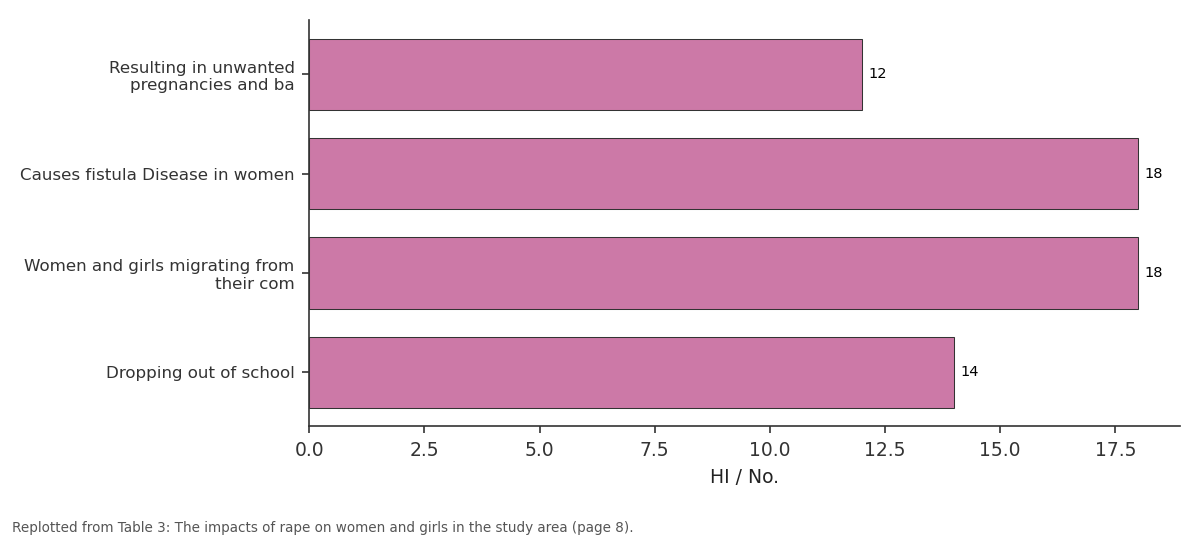
HI / No.: Resulting in unwanted... vs Causes fistula Disease... vs Women and girls... vs Dropping out of school
Replotted from Table 3 (page 8) of the original paper. Every bar is the paper's own table value.
View source evidence ↗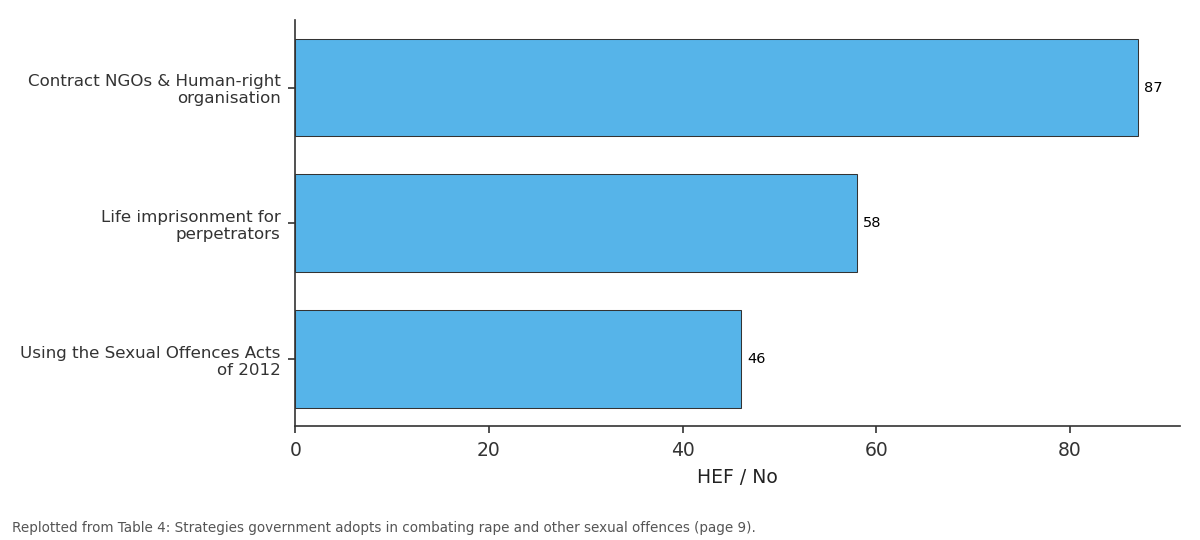
HEF / No: Contract NGOs &... vs Life imprisonment for... vs Using the Sexual...
Replotted from Table 4 (page 9) of the original paper. Every bar is the paper's own table value.
View source evidence ↗Figures & tables
From the original paper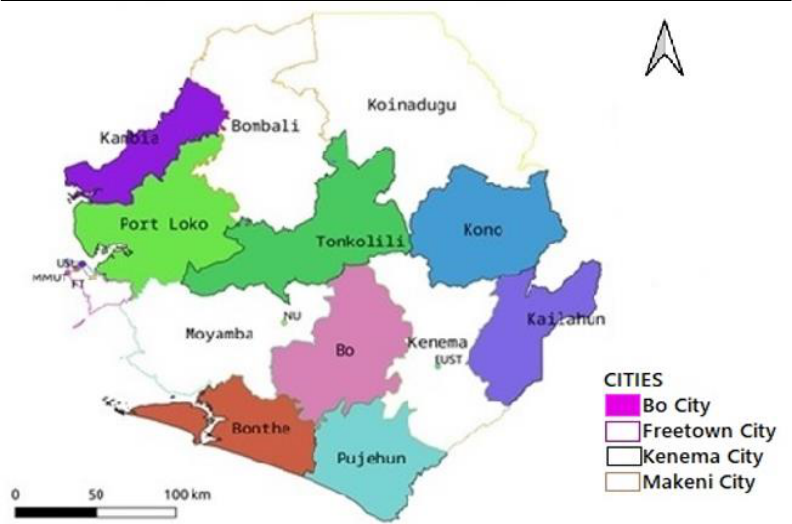 Figure 1
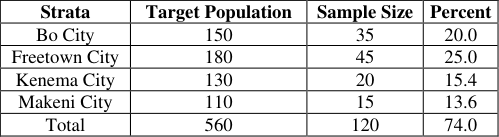 Table 1
 Table 2
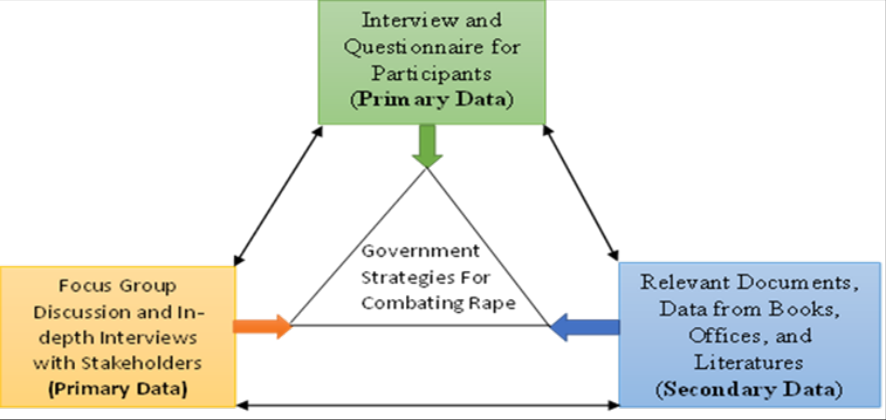 Figure 2
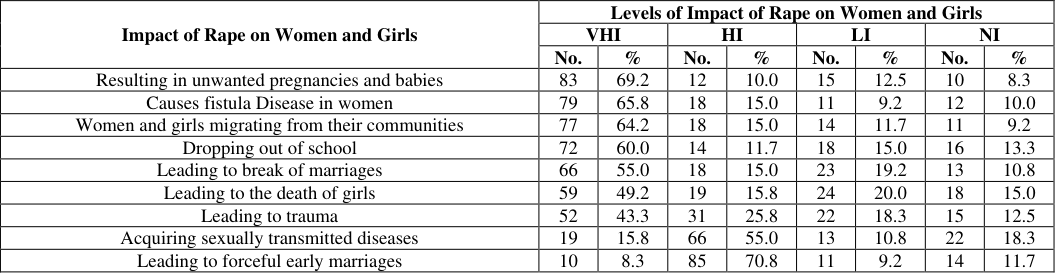 Table 3
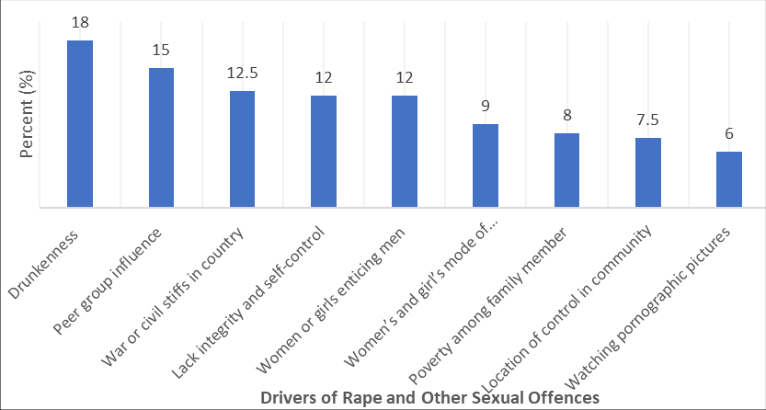 Figure 3
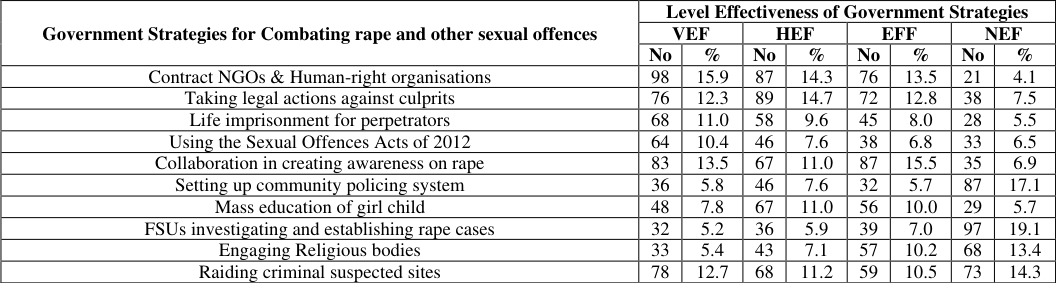 Table 4
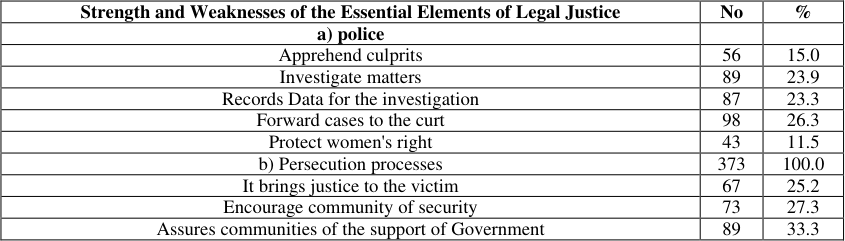 Table 5
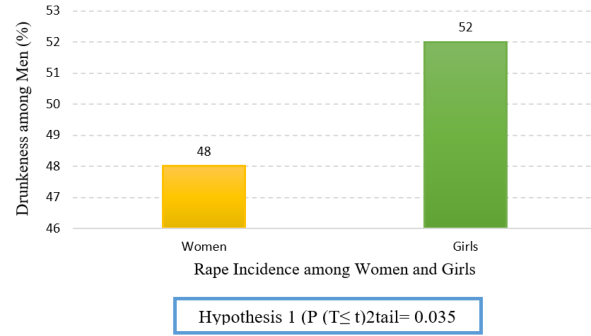 Figure 3
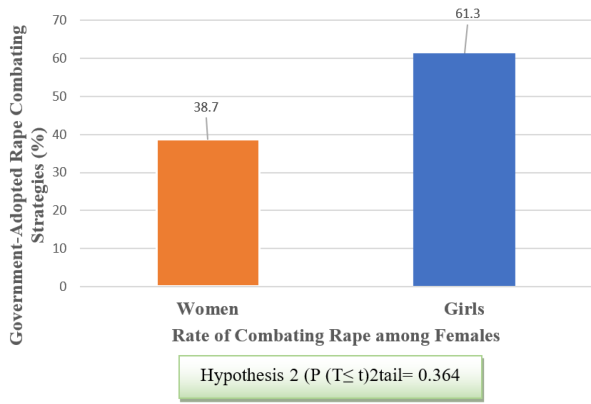 Figure 5
Introduction
Women of all ages and social classes, races, religions, and nationalities experience sexual violence worldwide (Peltola, 2018) [38] . According to Manjari (2016) [36] , men overwhelmingly perpetrate sexual violence against women, and it is one of the gravest human rights violations today in the world (Avalos, 2017) [6] . Sexual violence against women forms is subtle and blatant, and its impact on development is profound. According to Cowley (2019) [14] , times, places, circumstances, and realities influence sexual violence; and it is associated with many deleterious physical effects for survivors. In addition, it is deeply embedded in cultures worldwide that it is almost invisible. Furthermore, it leads to gynaecological problems, increased risk for STIs, HIV, unintended pregnancy, and physical injuries from the assault. Sexual violence survivors' mental health outcomes are adversely affected; those who experience sexual violence are at a greater risk for exhibiting post-traumatic stress disorder, depression, suicidal tendencies, anxiety, insomnia, and substance abuse. Sexual violence seriously violates the fundamental rights and freedom of victims thus, subjecting them to different kinds of risks and vulnerabilities. Sexual violence occurs in many forms, including but not limited to forced sex, sexual slavery, forced abortion, and sexual harassment (WHO, 2013) [37] . Men perpetrate sexual violence against women. Male perpetrators of sexual violence against women can vary from friends intimate partners to strangers. Rape is also a gendered violation that differentiates and disadvantages women based on their biological sex and perceived gender identity. It is a widespread and deeply rooted phenomenon that does not discriminate nationality, ethnicity, sexuality, age, class, and ability/disability. The World Health Organization (2013) [37] has described men's violence against women as "a worldwide disease" impacting every country, from low-to middle-and high-income countries. Rashida Manjoo (2016) [40] states that rape and other sexual assaults not only serve as crime and violation of individual victims but also as "obstruction to full citizenship and substantive equality." In most countries, the risk of rape and other sexual offences is much higher: according to the World Bank, one in three www.extensionjournal.com women worldwide are victims of gender-based violence (Cohen, 2013) [13] . The political instability in the African counties and most other developing countries, where human rights are not recognised, because rapists to take advantage of women are girls (Fitzpatrick, 2016) [41] . Rape affects an entire village and community as a whole, and the effects a victim feels often include shame and guilt, physical and psychological ailments. Victims are often shunned from their communities or marked as unclean and unlikely to be married, further isolating the victim. They cast out married women of their marital homes because the parents fear the shame (Person, 2015) [24] . The victim is affected, but also his/her the political background of the victim's family. In some cases, rape aims to maim or kill one person and control, crippling the entire socio-political process. Fitzpatrick (2016) [41] opined that rape is a direct attack against the personal identity and cultural integrity". The effects of rape might be devastating on a community, as it is "an attack on the culture and safety of the community. Furthermore, it is a terror that disrupts essential women's movement around their communities to farms. Rape can break apart that community. In rural settings, women are often the communities, preventing children from walking to schools on foot. Mostly, the mothers are responsible for the cultural education of younger generations and the providers for their families' cultural and religious life (Sorguc, 2014) [28] . When these caretakers are raped and targeted with sexual violence, this renders the victims damaged and leaves the entire community vulnerable and at risk of collapse. Women and their communal ties are often essential for the survival of that community, and rape, femicide, and sexual violence perpetrated against them constitute a ferocious form of ethnic cleansing (Abdullah, 2010) [1] . Therefore, rape purposefully destroys a community, tearing it apart at the seams, deliberately eliminating culture, and denying individual and communal rights to exist (Jones, 2016) [23] . Additionally, rape traumatises the victim and can sustain severe psychological and physical symptoms that cause fear of re-entering impede their ability to re-enter society (Elghossain et al., 2019) [17] . Sexual violence against women is more prevalent in Sub-Saharan Africa (Alesina et al., 2016; WHO, 2013, 2017) [4,37] ; we analyse data from the latest demographic and health surveys for some African countries on domestic violence. Alesina and colleagues (2016) [4] reported that 29% of women aged 15 years and above were more likely to experience sexual or physical violence. The same study found that 46% of women reported that wife-beating was widespread and acceptable. Similar to other African countries, in Sierra Leone, research showed that sexual violence against women is common and highly prevalent (Adu-Gyamfi, 2014; Tenkorang et al., 2013) [3,31] . In Sierra Leone, rape has been a form of sexual violence committed against women and girls (Rabin, 2011) [26] . This problem limits the ability of women to contribute to society and development. According to UNDP (2010) [32] , all Sierra Leonean women suffered violence in their lifetime. Rape and other sexual offences have increased over the last two cades than ever before (Foglesong, 2012) [18] . Sexual violence, as in the Sexual Offences Act (2012) [42] , includes rape and sexual assault. While the Act defines these crimes, they are often understood differently within communities. Legal definitions that are presumed do not always carry the weight. In marriage or partnership, rape is not a crime; and does not need wives' consent because husbands viewed wives as their properties, though the Sexual Offences Act stipulates that marriage is not a rape defence. In the rural communities of some parts of Sierra |Leone, rape rarely occurs among adults (Vincent, 2012) [36] . 'Rape' in most rural Sierra Leone communities refers only to the girl child sexual assault of a young girl by an older man despite statutes defining it in a significantly more expansive sense. It suggests that a wide range of sexual violence technically criminalized in legislation is not necessarily considered criminal within Sierra Leone society. According to the Sierra Leone Household Survey (2019) report, sexual violence occurs at significantly higher levels among girls than it does among women. The Rainbo Centres report also indicated that since 2003, 99% of clients attending sexual assault referral clinics have been between the ages of 6 and 20 (Swaine, 2012) [30] . However, researchers and practitioners working on violence against women in Sierra Leone suspect that rather than violence decreasing substantially among girls, sexual violence crimes against adult women are not reported as frequently as girls (IRC, 2012; Vincent, 2012) [22,36] . Sexual violence against schoolgirls is a problem, with numerous reports of teachers taking advantage of female students, often resulting in early pregnancy and girls dropping out of school. There is a prevalence of sexual violence relating to the abuse of power by teachers or as 'transactional sex' by girls to pass exams or get out of paying school fees. In Sierra Leone, there is now a National Policy on the Advancement of Women and the National Gender Mainstreaming. This policy's violence against women recognised specific responses within the 2008 Poverty Reduction Strategy. The National Action Plan was developed in 2008 to implement UN Security Council Resolutions 1325 and 1820. Furthermore, the National Committee on Gender-based Violence (the NAC GBV), set up in 2009, brings together Government, donors, local and international NGOs working on VAW. Alongside these policies, Sierra Leone has also developed progressive legislation to deal with violence against women. Three 'Gender Acts' were introduced in 2007 (on domestic violence, customary marriage registration, and estates devolution). The Domestic Violence Act 'situates domestic violence as a criminal act in and of itself and uses a broad definition of domestic abuse which includes physical and sexual abuses, economic abuses, verbal, emotion and psychological abuse' (Swaine, 2012) [30] . The Registration of Customary Marriage Act raises the legal marriageable age and requires customary marriages to be registered. The Devolution of Estates Act aims to address issues of women's inheritance by allowing men and women to inherit equally and abolishing customary practices whereby widows were often required to marry a member of their deceased husband's family. The Sexual Offences 2012 Acts complemented by the Sexual Offences Act, which criminalises rape (with marriage explicitly denied as a defence), indecent assault, and harassment and imposes a maximum 15-year sentence for cases of rape. The Act stipulates that sexual-offences victims get free medical treatment and a medical report (necessary for prosecution). The (female) chief justice has www.extensionjournal.com also taken a tough stance on sexual offences in the wake of the new Act, revoking bail for all persons accused of sexual offences at the beginning of the first High Court session of 2012. These policy and legislative changes are essential in criminalising VAW, building tremendous respect for women's rights, and demonstrating how seriously the Government takes issues of women's security, owing in no small part to ongoing advocacy by women's organisations and activists (UN Women, 2011) [34] . Enforcement of legislation remains deeply problematic, owing to poor law knowledge, cultural resistance, capacity constraints, limited state enforcement penetration, and institutional hybridity prevalence (IRC, 2012; Swaine, 2012) [22,30] . During the civil conflict in Sierra Leone, gender-specific violence was widespread. Rape, sexual slavery, and forced marriages were commonplace during the conflict. At that time, President Bio said, "the depravity of sexual violence in Sierra Leone is obscene, criminal and objectionable". However, there has been widespread sexual violence against women and girls over the last two decades in Sierra Leone from that time onwards. In 2018 and 2019 alone, there were reports of rape cases of 3,137 and 3,695 sexual violence, respectively (Rainbow Initiative, 2020) [43] . In the rural and urban Sierra Leone communities, children of less than five and six years old have been raped. A well-known, recent example that shocked the world and generated protests about women's rights in Sierra Leone was the brutal rape of a five-year-old girl, Khadija, in Freetown, which resulted in her death. There have been instances where 5-year-old girls like Khadija Saccoh and many other girls have died from rape. The alarming level of rape caused the President, Julius Maada Bio, to declare an emergency over rape and sexual offences on February 19, 2019. This action aimed to stop the silent epidemic of thousands of children and young girls suffering in Sierra Leone, one of the world's poorest countries. The president called that rape is a natural catastrophe, and every Sierra Leonean must play a part in fighting against this malaise and other forms of violence against women. As a result, Sierra Leone passed the Amended Sexual Offences Act of 2012 indicates culprits spend up to 15 years. So, last year, 2020, a 56-year-old man who raped a six-year-old girl was sentenced to a year in prison. Despite significant progress in legislation and policies, rape remains resistant to legal, political, and social interventions. Therefore, the main reason for this study is to investigate the role of the Government in combating rape and other sexual offences in Sierra Leone with the sexual offences Act of 2012 and other relevant legislation. There are many more good things in the sexual offence act 2012 that aimed at protecting women and girls against rape, and other sexual offences, all of which, if effectively and sincerely implemented, will eradicate rape in Sierra Leone. One needs to ask: why is rape crime still on the increase in Sierra Leone? What strategies is the Government adopting using the sexual offences Act to combat rape and other sexual offences? How effective are the sexual offences Act of 2012 and other relevant legislation in combating rape and other sexual offences in the country? What are the Government's challenges in implementing the sexual offences act of 2012 and other relevant legislation combating rape and other sexual offences in the country? Moreover, what is the relationship between the effective implementation of the sexual offences' Act of 2012 and other relevant legislation and the effective combating of rape among girls in Sierra Leone? In Sierra Leone, women hardly have access to justice. Police stations and, to some extent, local courts are not geographically accessible in most rural communities in Sierra Leone, making it very difficult for women to seek redress through these channels (GoSL, 2017; Rosveare et al., 2012) [19] . FSUs set up in the country deal specifically with crimes involving women and children. Nevertheless, there are 44 across the entire country, 14 in the Western Area. In many communities, FSUs are simply not available. In such situations, women report to police stations, but this too is hindered because of the distances. Women pay to travel to the station or FSU to report a crime. In addition to the limited coverage of FSUs, even where these exist within a community, most of the officers who staff them are poorly trained, lack confidentiality, or are inadequately resourced to provide a reliable service (Vincent (2012) [36] . It is very costly to travel to some parts of the rural areas in Sierra Leone. Most women cannot afford to pay these transport fares, especially when they have to leave their children and house or farm workers to travel all day long to places where they ought to get justice. In addition to the high travel cost, the fees, fines, and bribes involved in reporting to the justice providers also make justice less affordable (Yount et al., 2014) [38] . For instance, police are renowned for continuing to require bribes to get a case moving (even if this is just to fill resource gapslike paying for petrol for the police to visit a crime scene or to investigate; or paying for a paper to type up a crime report). If the police charge a crime to court, the formal justice system leads to additional costs (Vincent, 2012) [36] . The women travel to magistrate-courts (located only in district capitals) and potentially pay the costs of a lawyer. The Legal Aid Act 2012 technically means every citizen has access to free legal representation. However, there are few qualified legal professionals to ensure this happens in practice). Often, under-qualified police prosecutors represent women, given the absence of state prosecutors, while the male defendant hires a defence lawyer and is thus more likely to escape conviction. In addition, cases of sexual violence in Sierra Leone require a medical report before charging to court. The Sexual Offences Act (2012) [42] states that medical services should be free. However, it does not appear always to be adhered to, and few medical facilities can issue the reports, again meaning that women often have to travel to obtain one. Indeed, many interviewees reported that there is just one pathologist in the country who certifies cases of rape based in Freetown. Similarly, the justice provided by chiefs and local courts involves fees and fines, which have in the past often been disproportionate. Nevertheless, this is addressed in theory by the new Local Courts Act, which prohibits chiefs from issuing fines and sets strict limits for the local courts). Given that women in Sierra Leone are usually from low socioeconomic backgrounds (in 2017, 75% of women lived on less than $0.50 per day), affordability is a major obstacle in accessing justice (Barnes, 2020) [9] . Furthermore, untimeliness in the justice system creates accessibility issues for women. In the formal justice system, magistrate-courts regularly adjourn cases, and it can take up to two years for a case for an initial hearing. Adjournments www.extensionjournal.com are common because of weak capacity, so judges are overburdened with caseloads (Castillejo, 2019) [11] . Currently, not every magistrate court in Sierra Leone has a resident magistrate, meaning some magistrates must cover multiple courts and travel between them. Cases must, therefore, wait until the magistrate is in town before the hearing. Given the backlog of cases to be dealt with on the magistrate's arrival, many people travel to court (with their witnesses) only to have their case adjourned and rescheduled. It is not uncommon to adjourn a case several times before its final hearing. Most times, a complainant travelled to the magistrate court with the required witnesses on each occasion, given the costs of travel and lost earnings while away from work. On the other hand, the magistrate dismisses a case if the complainant is not in court. Language also creates an accessibility challenge for women. The formal justice system operates in the official language, English, but this is spoken predominantly by the educated elite, based in Freetown and other major towns. Most women in Sierra Leone are less likely to be educated than men and are thus the least likely to speak English. There can also be linguistic obstacles in reporting to the police. The police frequently move throughout the country (despite a policy to ensure they remain in each post for two to three years). The police do not necessarily speak the local language, thus, placing them at a linguistic remove from the population they are to the police (Jones, 2016) [23] . Connected to this is the issue of the broader cultural resonance of justice systems. Many women are unfamiliar with the formal legal system and its processes, and reporting through these mechanisms can be an intimidating experience. The traditional legal system is renowned for being overly formalised, with court proceedings operating in 'legalese', which does not help in creating a comfortable environment for women reporting violence against them (Vincent, 2012) [36] . There is also a social stigma surrounding women who report to the formal legal system, hindering their access to justice. First of all, a legally registered case brings to public knowledge that a woman has suffered some violence. The stigma attached to being raped or otherwise assaulted can victimise the woman (Boateng, 2015) [8] . Second, rape can stigmatise a woman as a wrong family or community member by reporting a family member, a neighbour, or a respected or senior person within the community. In these cases, women are likely to be pressured to resolve the matter through traditional mediation rather than the formal legal system (Bobonis et al., 2013) [10] . There is no empirical evidence on sexual offences in Sierra Leone (Swaine, 2012; IRC, 2012; Rosveare et al., 2012) [22,30] . There is no statistical evidence on the role of the Government of Sierra Leone in combating rape and other sexual offences regarding the Sexual Offence of 2012 Acts, hence, the thrust of this study. The law-enforcement agencies, the police, and the judiciary can play an essential role in controlling crime against women, particularly rape. The process involves various stages such as investigation, prosecution, trial, and judicial decision. The victim needs facilitating at all these stages. Never-ending problems have to a scenario where the complainant forcefully compromises with the victim outside the court secretly due to social pressure, thereby frustrating the whole purpose of the law. The legal problem with the way rape had been defined and recognised in the courts is that many rapes allegations are undecided from the statutory legal perspective (Alhammadi, 2016) [5] . The Sierra Leone Police has made remarkable progress in handling violence against women issues especially in Standard Operating Procedures and other tools for investigation of sexual and domestic violence cases; training of 450 police personnel from general duty and Family Support Unit on procedures and processes for the analysis of sexual and domestic violence; case management guidelines developed for investigation and prosecution of gender-based violence cases and outreach programmes to educate communities on laws relating to sexual and domestic violence laws; in 2008 SLP set the twin policies (Gender mainstreaming and Sexual Exploitation and Harassment); establishment of gender Directorate within the SLP which is headed by an Assistant Inspector-General of Police; key player in the establishment of Women in Security Sector Sierra Leone (WISS-SL) comprising of Police, Military, National Fire Force, Prisons Services and other private security entities and the establishment of local police partnership boards in communities among others (SLG, 2020). However, in most cases, the defenders are the perpetrators of rapes in Sierra Leone. The low rate of reporting of rapes makes it challenging to conduct research, especially when investigating the role of the Government in combating the situation (Avalos, 2017) [6] . The Governments of Sierra Leone have ratified relevant different international treaties. One of such treaties is the Convention on the Elimination of all Forms of Discrimination against Women (CEDAW). There is also; likewise, donors must invest/continue to support in addressing this issue since low-and middle-income countries often lack resources to combat violence against women (CARE-International, 2019) effectively. It is good to prevent globally of violence against women within the workplace is a good 'investment' and reflects a commitment to social and legal responsibility in addressing employees' issues. Rape is increasing in Sierra Leone with less action against the perpetrators. However, the punishment prescribed for rape is a minimum of 5years imprisonment, which can extend to life imprisonment or a fine of Le.5,000,000. The Sexual Offences Act 2012 and the Domestic Violence 2007 have stated that sexual and domestic violence victims shall receive a free medical examination, treatment, and certificate, yet to actualise for vulnerable women and girls. There are few police officers in some remote areas to handle violence against women issues since these are criminal matters. Currently, the country lacks, to a great extent, safe homes for victims/survivors of sexual and domestic violence, much as the Government has built two and working on the modalities to get them operationalised. Most data on rape crime in Sierra Leone is a gross underrepresentation of the true extent of the real problem. In addition, the sensitiveness and intimate rape influence the reporting of the crime and the amount of information available to the police for a case. Finally, Sierra Leone has ratified CEDAW, "the Women's Bill of rights". However, the slow implementation of CEDAW and the gender justice laws has resulted in the under-reporting of violence. VAWG, particularly sexual violence, remains a significant challenge. Also, though some reports are accurate, most do not include the experiences of young people under the age of 16 years. No information is available, and this lack of data means the true extent of rape may not be known. In addition, fewer than five percent of the women victims of rape or attempted rapes report it to the police. However, two-thirds of the victims tell a friend or relatives, supporting the notion that the entire community must be informed and trained to deal with sexual violence. The under-reporting of acquaintance rapes prevents victims from receiving adequate help, leaving many offenders unaccountable for their behaviour. Often, the authorities are unaware of the extent of the problem or prevalence of acquaintance rape in their communities (Alhammadi, 2016) [5] . The study aims to investigate the rule of the Government of Sierra Leone in combating rape and other sexual offence with the sexual offences Act of 2012 and other relevant legislation, for the strengths and weaknesses of the Acts to make suggestions for improvement. To achieve this aim, the researchers adopted the following objectives: (1) identify the drivers of rape among women girls in the study area; (2) assess the effect of rape on women and girls in the study area; (3) identify the Government strategies for combating rape and other sexual offences in Sierra Leone regarding the Sexual Offence Act of 2012; and (4) identify the strength and weaknesses of the four essential elements related to supporting female rape victims: policing; prosecution and courts; facilities; and victim support services. The researchers also tested two hypotheses. 1a. H 1: There is a relationship between the levels of effectiveness of the Sexual Offence Act of 2012 and combating rape crime in Sierra Leone. (b). H 0 : No relationship exists between the level of effectiveness of the Sexual Offence Act of 2012 and combating rape crime in Sierra Leon. 2a. H 2 : The government strategies for combating rape statistically influence the rate of rape crime in Sierra Leone, H 0: The government strategies for combating rape do not influence the rate of rape in Sierra Leone. The study showed clearly how much the Sierra Leone government lacks amidst the many elements and infrastructure systems to combat rape against women, encourage sexual crime victims to report crimes, and ensure post-crime psychological support. It also helped restructure law enforcement organisations such as courts, prosecutors, police, health services, and social support institutions. It will also help decision-makers encourage applied academic research and put its findings to reality in the practical world.
Methodology Research Design
The study adopted a descriptive survey, a qualitative research design, mainly because of its exploratory nature. While survey research oversimplifies findings, facilitates hypotheses, and relies on deductive reasoning, qualitative research is primarily descriptive and interpretive. A qualitative design enables the researcher to obtain in-depth information about respondents' experiences and viewpoints on an issue (Bernard, Wutich, and Ryan, 2016; Creswell, 2014) [7,15] . The qualitative design prioritises intersubjective interaction between the unknown and the known to construct social realities in a specific socio-cultural and political context. The descriptive design considers the researcher's self-awareness and reflection and respondents' meanings, opinions, and experiences about a phenomenon. According to Creswell (2014) [15] , a qualitative research design allows exploring relationships.
Description of the Study Area
The researcher conducted the study in Bo, Freetown, Kenema, and Makeni in Sierra Leone. The four cities, located in four regions, also act as the regional headquarter towns. Freetown is the capital city and houses the supreme court of Sierra Leone and the line ministries that cover rape issues in the country, while Bo is the second-largest and the headquarter town of the southern region of the country. Kenema and Makeni are, respectively, the eastern and northern region capitals. All four cities are highly overcrowded with diverse socioeconomic and ethnic backgrounds and multifaceted populations.
Research Population, Sampling Technique and Procedure, and Sample Size Research population
This study comprises all sexual-assault victims in Bo, Freetown, Kenema, and Makeni Cities. The research population size was 120.
Target Population
The study's target population consisted of 120 sexual-assault victims, 40 from each of the four cities-Bo, Freetown, Kenema, and Makeni, respectively. This target population is appropriate for the study because they represent four out of five regions of Sierra Leone. Second, they are in an evenly distributed portion of the country, and this target population is accessible. The sample size selected was composed of 74.0% of the target population.
Sampling Technique
Using the formula by Krejcie and Morgan (1970) [59] , S = X 2 NP (1 -P) ÷d 2 (N -1) + X 2 P (1 -P) ………..... eqn. 1 S = required sample size X 2 = table value of chi-squared at the desired confidence level (3.841) N= number of population size P= to the population proportion (assumed to be .50 since this would provide the maximum sample size). D = the degree of accuracy expressed as a proportion (.05).
Sampling Procedure
The research adopted purposive and propulsive sampling techniques to select 120 rape victims from the selected study area. Purposive because only those women whose rape cases were already in the police, hospitals, or rainbow centres participated in the study. The researcher selected 30 women for interviews from each study city -Bo, Freetown, Kenema, and Makeni. The research also consulted records from the police stations, especially the family support units (FSUs), the hospitals, and rainbow centres. The number of hospitals, police stations, and rainbow centres in these cities determines the interviewees' proportion, making a total sample size of 120.
Total Sample Size = B s + F s + K s + M s Where: B s = Sample from Bo City, F s = Sample from Freetown City K s = Sample from Kenema City M s = Sample from Makeni City
Research instruments
The research adopted two sets of questionnaires ( Researcher the purpose of the study and respondents about its meaning and intimated that their involvement was voluntary; they should withdraw at any point during the interview if they so wish. Ethical Considerations: Social science research activities adhere to minimal ethical guidelines and acceptable www.extensionjournal.com behaviours. These guidelines include the principles of (1) voluntary participation, (2) informed consent, (3) risk of harm, (4) confidentiality, and (5) anonymity. How using incentives compensated for their time is also a matter of consideration. Before the fieldwork, the researcher visited the four cities several times to get first-hand information on the city's sexual violence within the study area. During the visits, the researcher met and held meetings with the mayors, the community leaders, and other stakeholders.
Data Collection
The researcher collected data using different techniques and tools such as questionnaires, in-depth interviews, and informant interviews: Focus Group Discussions (FGDs), and direct observations. The researcher conducted a two-day training for research assistants before going to the fieldwork. Administration of the questionnaire using KoBoCollect v.1.14.0a software. The fieldwork started on July 14, 2021, and ended on August 29, 2021. During the data collection phase, the respondents decided on the venues for their interviews. The researcher interviewed most participants either at their homes or in any place of their choice. Most of the participants indicated a preference for the talks in their homes.
Focus Group Discussions (FGDs): Focus group discussions-guides checklist supplemented the information obtained through the questionnaires. The researcher conducted one focus group discussion in Bo, Freetown, Kenema, and Makeni Cities, ranging from six to ten members.
Triangulation:
The researcher adopted multiple methods of gathering qualitative data in this research. Data collected through questionnaires crosschecked the information from NGOs, various Ministries, rape victims, and legal practitioners in the selected cities. The focus group discussions and in-depth interviews validate the data from offices, police stations, and rainbow centres. These were to see if the data collected were accurate. Triangulation prevented the introduction of extraneous variables and increased the study's validity.
Source: From the researcher's initiative, 2021.
Methods of Data Analysis
The research reported various descriptive indicators such as frequency distributions, averages, percentages, and crosstabulations -these reports were from the field survey data collected to draw appropriate inferences. Furthermore, appropriate statistical tests such as the T-test and P-values evaluated the statistical significance of the mean difference between the savings and non-savings members' values. The data analysis started with verification (clean-up process that involved correcting wrongly spelt names of villages, towns, terms of savings groups, incorrectly allocated responses, operation types, and GPS coordinates). Quantitative and qualitative data collected using questionnaires were analysed using the Statistical Package for Social Sciences (SPSS) version 25. A logit model was used to identify and analyse the factors of the government strategies.
The Drivers of Rape among Women and Girls in the Study Area
Causes of sexual violence are essential in understanding the roots of rape perpetration among women. As a result, the research investigated the drivers of rape and other sexual offences among women and girls in the study area, and the results are presented in Figure 1below. The statistics revealed that 18% of the respondents' ascertained that drunkenness is responsible for men perpetuating rape and other sexual offences in their communities. The result shows that 15%, 12, 5%, and 12%, of the respondents are associated rape with peer group influence, war or civil strife, lack of integrity and selfcontrol, and women's immoral dressing that entices menonly 6% of respondents associated rape with watching pornography (See Figure 1 and Appendix 2.
The Impacts of Rape on Women and Girls in the Study Area
The study investigated the impact of rape and other sexual offences on women and girls, and the results are presented in Table 1. Table 1 shows that 69.2% and 65.8% of the respondents rated the impact of unwanted pregnancy and babies and fistula disease, respectively, on rape victims, as very high. The statistics also showed that 64.2% and 60.0% of the respondents rated women migration from their community and dropping out of school resulting from rape assault as very high impact. Also, 55% of the respondents rated the effect of breaking marriages and the death of women and girls resulting from rape assault as high. Only 8.3% of the respondents rated forceful early marriage as having a high impact on the women and girls in the study area (see Table 1).
| Strata | Target Population | Sample Size | Percent |
|---|---|---|---|
| Bo City | 150 | 35 | 20.0 |
| Freetown City | 180 | 45 | 25.0 |
| Kenema City | 130 | 20 | 15.4 |
| Makeni City | 110 | 15 | 13.6 |
| Total | 560 | 120 | 74.0 |
Table text extracted from the original PDF; superscript letters are shown inline. The original table image is below.
View original table image
The Strategies Government Adopts in Combating Rape and Other Sexual Offences
The strategies used in combating crime affect the rate adopted for achieving education the crime. Hence, the strategies government adopts in combating rates in the study area was investigated, and the results are presented in Table 3 below. The results indicated that 15.9%, 11.0%, and 10.4% of the respondents rated the contracting NGOs and human rights organisations, imprisonment for the perpetrators, and using the sexual offences Acts of 2012 strategies used in combating rape and other sexual offences as very effective. Furthermore, 14.7% and 11.0% of the respondents evaluated three different methods the Government uses to combat rape -taking legal actions against culprits, using collaboration to create awareness on rape, and mass girl child education as highly effective. Similarly, 15.5% of the respondents assessed using collaboration in creating awareness on rape as effective. However, 19.1% and 17.1% of the participants appraised using FSU policies to investigate and establish rape cases. Furthermore, setting up community policing is not practical. At the same time, 14.3%, and 13.4% of the respondents, respectively, valued raiding criminals from their bases and engaging religious bodies in combating rape is not effective (see
| Impact of Rape on Women and Girls | Levels of Impact of Rape on Women and Girls | — | — | — | — | — | — | — |
|---|---|---|---|---|---|---|---|---|
| VHI | HI | LI | NI | |||||
| No. | % | No. | % | No. | % | No. | % | |
| Resulting in unwanted pregnancies and babies | 83 | 69.2 | 12 | 10.0 | 15 | 12.5 | 10 | 8.3 |
| Causes fistula Disease in women | 79 | 65.8 | 18 | 15.0 | 11 | 9.2 | 12 | 10.0 |
| Women and girls migrating from their communities | 77 | 64.2 | 18 | 15.0 | 14 | 11.7 | 11 | 9.2 |
| Dropping out of school | 72 | 60.0 | 14 | 11.7 | 18 | 15.0 | 16 | 13.3 |
| Leading to break of marriages | 66 | 55.0 | 18 | 15.0 | 23 | 19.2 | 13 | 10.8 |
| Leading to the death of girls | 59 | 49.2 | 19 | 15.8 | 24 | 20.0 | 18 | 15.0 |
| Leading to trauma | 52 | 43.3 | 31 | 25.8 | 22 | 18.3 | 15 | 12.5 |
| Acquiring sexually transmitted diseases | 19 | 15.8 | 66 | 55.0 | 13 | 10.8 | 22 | 18.3 |
| Leading to forceful early marriages | 10 | 8.3 | 85 | 70.8 | 11 | 9.2 | 14 | 11.7 |
Table text extracted from the original PDF; superscript letters are shown inline. The original table image is below.
View original table image
Strengths and Weakness of the Four Essential Elements of Legal Justice: Police, Persecution Curt Facilities, Support Services
Strengths, weaknesses, opportunities, and threats analyses reveal areas of any activity holding the operation back or other sites that the agency is not aware of to exploit to make a more significant impact. Therefore, the strength and weaknesses of the four elements of the legal justice system in the study area were investigated, and the results are presented in Table 3 above.
Strength of the four elements of the legal justice systems of the study area
This section reveals what the respondents perceive as the advantage sides of the four elements of the legal justice systems-the police, persecution processes, court facilities, and the support services in the study area.
Police: Table 3 revealed that the police forward cases to courts for hearing (26.3%), investigate the matter (23.9%), and take statements from both the accused and complainant for further investigation (23.3%). Only 11.5% of the respondents said police protect women's rights (see Table 3).
Persecution processes:
The statistics indicated that 33.3%, 27.3%, and 25.2% of participants said the persecution processes strengthen government support, security, and justice to communities, respectively (see Table 3).
Court Facilities:
The results showed that 43.4% and 38.5% of the respondents, respectively, said court facilities protect victims from further humiliation and denormalise the rape victims.
Support Services:
The data revealed that the interviewees said the support services providers Counsell traumatised persons (30.3%), provide protective shelters (24.2%), and educate and protect women and girls rape victims (23.2%).
Weakness of the four elements of legal justices
This section reveals what the respondents perceive as the disadvantage sides of the four elements of the legal justice systems-the police, persecution processes, court facilities, and the support services in the study area.
Police:
The results show that the police are not well-trained to deal with sexual assault issues (25.9%) properly, rape assault victims are dissatisfied with the police's methods of handling rape cases (25.6%). That police accept brides to delay the investigations process (25.4%).
Persecution processes:
The data also revealed that the magistrates could not handle all the rape cases (26.1%), the pace of case hearing discourages victims from reporting rape cases (25.8%), and victims pay for the services provided by lawyers (24.4%).
Court facilities:
The results indicated that recognised laboratory techniques test for evidence (28.0%), while 25.6% of the interviewees said the snail-pace court procedure does not provide traumatised rape victims. Only 24.6% of the respondents said the court facilities do not encourage rape victims.
Support Service providers:
The results showed that all the support service providing centres are located in the cities (36.0), while they do not provide fair treatment for victims (33.0%).
Strengths of the Four Essential Elements of Legal Justice system
Strengths of the Four Essential Elements of Legal Justice system
Hypothesis Testing
The study tested only two hypotheses, and the results as plotted below:
Theory one: Theory one stated a relationship between drunkenness among men and the rape incidence against women and girls in Sierra Leone. The significance level set at a p-value equal to or less than 0.05 (p ≤ 0.05), implying that 2-tailed T-values less than or equal to 0.05 (T ≤ 0.05) indicated the relationship in the tested variables are significant. For hypothesis 1, p<0.05 (Fig. 3), the assumption was rejected as valid, implying a considerable relationship. The p-value 0.035 < 0.05 means a substantial connection between drunkenness among men and rape assault against women and girls, and hypothesis 1, therefore, was rejected. Hypothesis 2: Hypothesis two stated that no significant difference existed between government-adopted strategies for combating rape and the levels of rape incidence n the study area. The test gave a p-value higher than 0.05 (p> 0.05)see Fig. 4. The result suggested a significant difference between the two respondents, and hypothesis 2 was accepted. The p-value is 0.364 > 0.05, which means that difference in the rated government-adopted strategies for combating rape and the incident of rape among women and girls in the study area is significant. Therefore, the researcher accepted hypothesis two. www.extensionjournal.com
Discussion of the findings
This section thoroughly discusses the results under the following the drivers and girls, the impact of rate on women and girls, the government strategies for combating rape of rape among women, and the strength and weaknesses of the four essential elements of the legal system for supporting female rape victims.
Drivers of Rape among Women and Girls
The statistics revealed that 18% of the respondents' ascertained that drunkenness is responsible for men perpetuating rape and other sexual offences in their communities. The study results are similar to Loya's (2014) [44] findings that in America, on average, at least 50% of college students' sexual assaults are associated with alcohol use. According to Burt, Sweeten, and Simons (2014) [45] , 74% and 55% of sexual violence perpetrators and victims of rape in her nationally representative sample had been drinking alcohol. Alcohol impairs victims and perpetrators. Ethanol negatively influences the brain structures responsible for sexual and violent behaviour. Alcohol consumption increases aggression, sexual desire and emotional instability in some people. A victim under alcohol influence cannot consciously give consent to sexual activities. Indeed, excessive alcohol consumption among college students contributes to unintentional injury risk, fatalities, and sexual assault.
The study results showed that 15%, 12, 5%, and 12% of participants said rape is associated with peer group influence. The results agree with Espelage, Basile, and Hamburger's (2012) [50] and Miller et al.'s (2013) [51] findings, which stated that sexual violence/harassment occurs extensively in these younger populations. The study is in line with Haddad's (2011) [52] results that Sexual violence targets women. So civil war or civil strife has led to sexual violence against women and girls. Sexual violence has been a strategic weapon of war for at least as long as historians document conflicts. Among many populations, rape is the most underreported of all violent crimes, even during peacetime (Wadsworth and Records, 2013) [53] . Many rapes remain unreported due to the victims' lack of understanding of what constitutes sexual assault legally.
Integrity is what keeps one focused, especially in a Godly way.
The result is also in agreement with Gottfredson and Hirschi (2019) [54] . They asserted that youth who fail to develop self-control are more likely to commit crimes and criminally equivalent non-criminal acts, such as smoking, skipping school, suffering accidents, and early death. The cause of all behaviours and outcomes, then, is the manifestation of our lack of self-control. Several studies suggest that men and women interpret certain kinds of women's clothing to indicate a desire for sex. One study found that "both girls and boys reported that when a woman wore a see-through blouse, low-cut top, tight jeans, or did not wear a bra or she was possibly indicating a desire for sex." In general, there appears to be agreement that "certain types of clothing are sexy, sexually alluring, or sexually provocative"-mainly clothing that reveals the shape of a woman's body and sexual body parts, such as her breasts. The result also showed 6% of the respondents associating rape with watching pornography. These results also agree with Brown, Amoroso, and Ware's (2010) [55] findings that pornography has increased sex crimes, attitude common in urban communities and reputed conservative ones.
During the focus group discussion, Rainbow centre in Makeni City, Kadiatu, a social worker, and Isatu, a rape victim, said, "most rape assaults in the community are associated with either drug, drunkenness or peer influences. Nevertheless, generally, sexually assaults reported from the rural communities are due to poverty and lack of education among the girls."
The Impacts of Rape on Women and Girls in the Study Area The study's findings showed that 69.2% and 65.8% of the respondents rated the levels of impact of unwanted pregnancy and babies and fistula disease, respectively, on rape victims, as very high. The result aligns with Burt (2020) [56] that a range of physical injuries and health consequences are associated with sexual assault. Victims sustain direct damages from the assault, which later complications, or psychological impact. Nevertheless, not all women sexually assaulted experience physical injuries or medical problems. However, poverty and low-income status directly link to sexual violence and sex trafficking. They conceptually link to vulnerability for abuse. Aranda-Fernandez (2020) [57] also stated that most migrants who used the Central Mediterranean Route reported being victims of violence during their transit in Libya. www.extensionjournal.com
The study results also revealed that 64.2% and 60.0% of the respondents' rated women migration from their community and dropping out of school resulting from rape assault as very high impact. The results also indicated that 55% of the respondents rated the effect of breaking marriages and the death of women and girls resulting from rape assault as high. The findings further showed that 8.3% of the respondents rated forceful early marriage as high. This result agrees with the findings of Morgan (2021) [58] that most women migrated from their homes to other areas of the country because of the shame of sexual assaults they experienced from the community members.
In a focus group discussion in Kenema City, Madame Nyio said, "Most of them you see around are a result of unwanted pregnancy. Some of the children were born to the combatants during the war. For some of them, their mothers left migrated from this community long ago because they feared provisions. Madan Aminata also said, "most of the sexually transmitted diseases in this part of the city resulted from rapes or violent sex. Several girls died from sexual assaults when the rebels entered the city. There was no place for reporting".
The Strategies Government Adopts in Combating Rape and Other Sexual Offences
The results indicated that 15.9%, 11.0%, and 10.4% of the respondents rated the contracting NGOs and human rights organisations imprisonment for the perpetrators; and using the sexual offences Acts of 2012 strategies used in combating rape and other sexual offences as very effective.
The result agrees with Khammam and Meen (2018) [60] that NGOs provide the victim's family with necessary services. For example, legal aid support to poor, destitute women, financial support to survivors, counselling services to the survivors, immediate shelter and medical facilities to the survivor women, and other emerging initiatives. In most parts of Sierra Leone, most people rate NGOs as organisations that can deliver. Human rights NGOs play a vital role between individuals and the Government in conveying ideas and concepts. They play a significant role in monitoring, support, legal actions, and education (El-Haybi, 2018) [49] .
The study results showed that 14.7%, 11.0% of the respondents evaluated three other strategies the Government uses to combat rape -taking legal actions against culprits, collaborating to create awareness on rape, and mass girl child education as highly effective. The reports support the findings of Sharff-Peterson and Schroeder (2017) [61] that NGOs have been working with the legislative and executive authorities to initiate laws that protect women from domestic violence in addition to working toward the implementation of the existing laws. However, regulations regarding domestic violence link to the poor enforcement of laws. Law enforcement plays a vital role in establishing the trust of abused women and is not to be blamed for initiating the violence. The results revealed that 15.5% of the respondents assessed using collaborative awareness creation on rape as effective. The finding is in line with Kuate and Biondo's (2018) [62] study that collaboration with committees plays a crucial role in mobilising and sensitising communities to prevent sexual exploitation and abuse. Volunteers who also work voluntarily play a vital role in the community because the population feels more comfortable reporting any violation committed. The findings of the result further stated that 19.1% and 17.1% of the participants appraised using family support unit policies to investigate and establish rape cases, and setting up community policing was not effective. The child, social services work with the family, police arrest the offender, and magistrates prosecute the case. Effective community intervention involves forming a child protection team that includes medicine, criminal justice, social work, and education professionals who understand and appreciate the other team members' different roles, responsibilities, strengths, and weaknesses but cooperate and coordinate their efforts. Such is lacking in Sierra Leone. No wonder a substantial number of people said the activities are not practical, including even the raiding of raiding criminals from their bases, and engaging religious bodies in combating rape are not effective.
Strengths of the four elements of the legal justice systems of the study area
The section throws light on the success stories and the failures of the legal systems.
Strengths of the four elements of the legal justice systems Police:
The results revealed that the police forward cases to courts for hearing (26.3%), investigate the matter (23.9%), and take statements from both the accused and complainant for further investigation (23.3%). Only 11.5% of the respondents said police protect women's rights. The report is in line with the findings of UN Women (2011) [34] that police should be required to make information available to survivors. Reports aid survivors in pursuing protection orders, civil remedies, immigration petitions, insurance benefits, and compensation claims. In several ways, police are the essential agents in sexual-assault cases. The police officer is typically the victim's first contact with the criminal justice system (Holms and Burges, 2021) [63] . Police are the only officials who participate in cases from initial report to final deposition. Furthermore, the police provide the pool of arrestees from which the persecutor selects.
Persecution processes:
The results showed that 33.3%, 27.3%, and 25.2% of participants said the persecution processes strengthen government support, security, and justice to communities. The findings are very similar to the results from Inzlicht Legault (2014) [48] . The prosecutor plays a crucial role in the criminal justice system. They decide whom to charge, what charge to file, who offered a plea bargain, and the type of bargain offered.
"Court Facilities:
The results showed that 43.4% and 38.5% of the respondents, respectively, said court facilities protect victims from further humiliation and denormalise the rape victims. The report agrees with Seelinger, Silverburg, and Mejia's (2011) [64] report that these developments have by no means ensured that all crimes relating to sexual violence would be prosecuted effectively in national courts.
Support Services:
The data revealed that the interviewees said the support services providers Counsell traumatised persons (30.3%), provide protective shelters (24.2%), and educate and protect women and girls rape victims (23.2%).
In a focus group discussion in Freetown, Madam Bernadette said, "Please, I want the Government to understand that Freetown is all Sierra Leone. Let the Government locate FSUs and service-providing centres in every chiefdom in the entire country so that victims can easily access them".
Weakness of the four elements of legal justices
This section reveals what the respondents perceive as the www.extensionjournal.com disadvantage sides of the four elements of the legal justice systems-the police, persecution processes, court facilities, and the support services in the study area.
Police:
The results show that the police are not well-trained to deal with sexual assault issues (25.9%) properly, rape assault victims are dissatisfied with the police's methods of handling rape cases (25.6%). That police accept brides to delay the investigations process (25.4%). The findings support Tharp et al. (2012) [46] that police discriminate between victims based on extralegal attributes. Police delay cases in situations where they discriminate against sexualassault victims. Such behaviour discourages victims from reporting rape cases to the police. Therefore, the responsibility for arrest and charging makes police influential agents in the official processing of sexual-assault claims. No wonder the respondents were dissatisfied with their operations.
Persecution processes:
The data also revealed that the magistrates could not handle all the rape cases (26.1%), the pace of case hearing discourages victims from reporting rape cases (25.8%) and that victims pay for the services provided by lawyers (24.4%). The findings support the reports of Rinehart et al. (2014) [47] that in sexual assault cases, the victim's character, behaviour, and credibility may play a vital role in charging decisions. Thus, prosecutors' assessments of convertibility and their charging decisions rest on predictions regarding how the victim's background, character, and behaviour may be interpreted and evaluated by other decision-makers and potential jurors. Such methods of persecuting do not give confidence to the victims. No wonder the respondents mentioned that persecuting process does not protect victims.
Court facilities:
The results indicated that recognised laboratory techniques test for evidence (28.0%), while 25.6% of the interviewees said the snail-pace court procedure does not provide traumatised rape victims. Only 24.6% of the respondents said the court facilities do not encourage rape victims.
Support Service providers:
The results showed that all the support service providing centres are located in the cities (36.0), while they do not provide fair treatment for victims (33.0%). The findings do not align with the UN (2019) workshop report that a victim-centred approach requires interventions that enhance protection by adequately assessing and addressing the risks of harm experienced differently by women, men, girls, and boys. The gendersensitive process entails ensuring that laws and policies on sexual violence and related protection regimes for victims are comprehensive non-discriminatory. Other measures ensure female and male victims receive adequate support and protection; (Victim informed individual). The workshop focused specifically on the elements of security required for the victims of sexual violence, in both the short and long term.
Protection services in prosecution processes must be neutral and, in particular, must be independent of prosecutorial authorities.
In Bo, Madan Jatu commented, "the Government's effort to reduce rape and other sexual offences in the country brought peace to this part of the country. The only message I have for the is that the Government increase the number of rainbow centres and police presence in other parts of the country for easy access".
Conclusions and Recommendations The Causing Factors of Rape among Women and Girls
Various factors responsible for sexual assaults among women and girls identified in the study are dangerous and deadly. These factors have caused trauma in surviving victims and caused migration, while others live in hopeless situations outside their homes.
The impact of rape on women and girls
From the discussion and summary of the findings, in conclusion, sexual-assault victims in the study area suffered from different physical, mental, and spiritual trauma. Most of the victims died, some migrated, and others are in humanitarian support centres in the cities far away from their homes. They receive trauma healing counselling, education for changing the mindset, and further development. Some of these victims, in the future, serve as ambassadors for change.
The government strategies for combatting rape of rape among women
The Government uses different methods to combat rape and other sexual offences among women and girls in the study area. In some situations, the Government hired NGOs and other humanitarian groups to reduce rape and other sexual crimes. Participants claimed that most of the Government's strategies in combating rape in the study area are adequate.
The strength and weaknesses of the four essential elements of the legal system for supporting female rape victims It concluded that legal processes have some strengths that make the system unique and helpful in combating rape and other sexual offences. Despite these, the court should work on few odds in the design-the police require training in handling the sexual assault matter; their activities monitored for the successful operations of the court.
Recommendations
1. The study showed that the most common cause of rape in the country is drunkenness, peer influences, watching pornography pictures or films, and code of dressing among women and girls. The research suggests that awareness creation be done in light of these factors to reduce sexual assaults among women and girls. 2. The study revealed that sexual assault victims had suffered different traumatic disorders, including physical, mental, and psychological disorders. It is, therefore, recommended that the Government puts aside trained specialists in psycho-counselling to reduce trauma from diseases and other effects from sexual violence among women and girls. 3. The study showed that most government strategies for combating rape were very effective. Nevertheless, there were a few areas are still faulty. The magistrate's slowness in handling rape cases, the police behaviour towards victims, and the way the court treated unfair treatments discouraged rape victims. Therefore, the Government increases the number of magistrates handling rape cases, allowing at least one magistrate per chiefdom. In addition, the police should be specially trained to handle rape-assault instances well. 4. The study revealed that the four essential elements www.extensionjournal.com exhibited some weaknesses. Therefore, the Government should conduct special training for the police to handle rape cases perfectly. The Government must also closely monitor the police as the report also indicated that they take bribes to dismiss rape cases. (2) The prosecution processes are also prolonged. The Government should increase the number of case hearings per month to reduce the trauma among the victims. (3) The court lacks certain facilities for effectively giving justice to victims. Therefore, the Government should provide facilities that protect rape victims from the retardation of the rapists. (4) Though the support service providers are greatly helping the rape victims, they also lack some facilities for proving rape cases in court. Therefore, the support centres should endeavour to have forensic laboratories to help rape victims in courts to produce shreds of evidence.
Figures and tables from the paper
| S/N | Variables | Notoems | To levels |
|---|---|---|---|
| 1 | Strategies Government adopts | 12 | 0.835 |
| 2 | Levels of Effectiveness of sexual offence Acts | 11 | 0.846 |
| 3 | Strengths and weaknesses of the sexual offences Acts | 9 | 0.779 |
| 4 | Relationship between strategies adopted and the rate of combating rape | 8 | 0.755 |
Table text extracted from the original PDF; superscript letters are shown inline. The original table image is below.
View original table image
| Government Strategies for Combating rape and other sexual offences | Level Effectiveness of Government Strategies | — | — | — | — | — | — | — |
|---|---|---|---|---|---|---|---|---|
| VEF | HEF | EFF | NEF | |||||
| No | % | No | % | No | % | No | % | |
| Contract NGOs & Human-right organisations | 98 | 15.9 | 87 | 14.3 | 76 | 13.5 | 21 | 4.1 |
| Taking legal actions against culprits | 76 | 12.3 | 89 | 14.7 | 72 | 12.8 | 38 | 7.5 |
| Life imprisonment for perpetrators | 68 | 11.0 | 58 | 9.6 | 45 | 8.0 | 28 | 5.5 |
| Using the Sexual Offences Acts of 2012 | 64 | 10.4 | 46 | 7.6 | 38 | 6.8 | 33 | 6.5 |
| Collaboration in creating awareness on rape | 83 | 13.5 | 67 | 11.0 | 87 | 15.5 | 35 | 6.9 |
| Setting up community policing system | 36 | 5.8 | 46 | 7.6 | 32 | 5.7 | 87 | 17.1 |
| Mass education of girl child | 48 | 7.8 | 67 | 11.0 | 56 | 10.0 | 29 | 5.7 |
| FSUs investigating and establishing rape cases | 32 | 5.2 | 36 | 5.9 | 39 | 7.0 | 97 | 19.1 |
| Engaging Religious bodies | 33 | 5.4 | 43 | 7.1 | 57 | 10.2 | 68 | 13.4 |
| Raiding criminal suspected sites | 78 | 12.7 | 68 | 11.2 | 59 | 10.5 | 73 | 14.3 |
Table text extracted from the original PDF; superscript letters are shown inline. The original table image is below.
View original table image
| Strength and Weaknesses of the Essential Elements of Legal Justice | No | % |
|---|---|---|
| a) police | ||
| Apprehend culprits | 56 | 15.0 |
| Investigate matters | 89 | 23.9 |
| Records Data for the investigation | 87 | 23.3 |
| Forward cases to the curt | 98 | 26.3 |
| Protect women's right | 43 | 11.5 |
| b) Persecution processes | 373 | 100.0 |
| It brings justice to the victim | 67 | 25.2 |
| Encourage community of security | 73 | 27.3 |
| Assures communities of the support of Government | 89 | 33.3 |
Table text extracted from the original PDF; superscript letters are shown inline. The original table image is below.
View original table image
References
42 in the original paper- Abdullah A. Reputation concerns hold back women from reporting rape. Available online; c2010. hpttp://www.khaleejtimes.com/DisplayArticle.asp?xfile =data/theuae/2010/January/theuaeJanuary235.xml§ ion=theuae&col. [Accessed April 27, 2011].
- Adjei SB. Masculinity and spousal violence: Discursive accounts of husbands who abuse their wives in Ghana. Journal of Family Violence. 2016;31(4):411-422.
- Adu-Gyamfi E. Challenges undermining domestic violence victims' access to justice in Mampong municipality of Ghana. JL Polly and Globalization. 2014;27:75.
- Elfeky HY, Fayed MS, Alhammadi MS, Soliman SA, El Boghdadi DM. Three-dimensional skeletal, dentoalveolar and temporomandibular joint changes produced by Twin Block functional appliance. Journal of Orofacial Orthopedics/Fortschritte der Kieferorthopadie. 2018;79(4):245-258.
- Avalos LR. Policing rape complainants: when reporting rape becomes a crime. Journal of Gender, Race, and Justice. 2017;3:459.
- Boateng FD. Victims of sexual assaults: The experiences of Ghanaian women. International review of victimology. 2015;21(3):343-360.
- Bobonis GJ, González-Brenes M, Castro R. Public transfers and domestic violence: The roles of private information and spousal control. American Economic Journal: Economic Policy. 2013;5(1):179-205.
- Cohen D. Explaining Rape during Civil War: CrossNational Evidence (1980-2009). American Political Science Review. 2013;107(03):461-477.
- Cowley C. Complicity and Rape. Journal of Criminal Law. 2019;83(1):30.
- Elghossain T, Bott S, Akik C, Ghattas H, Obermeyer CM. Review article: Prevalence of Key Forms of Violence Against Adolescents in the Arab Region: A Systematic Review. Journal of Adolescent Health. 2019;64(1):8-19.
- GoSL (Government of Sierra Leone). Justice Sector Reform Strategy and Investment Plan 2008-2010. Freetown: GoSL; c2007.
- Harrison K, Gill AK. Breaking down Barriers: Recommendations for Improving Sexual Abuse Reporting Rates in British South Asian Communities. British Journal of Criminology. 2018;(2):273.
- Jones O. Not all men commit abuse against women. But all must condemn it, The Guardian, September 8, 2016, (Online); c2016. Available: https://www.theguardian.com/commentisfree/2016/sep/ 08/men-abusewomen-condemn-male-violencemasculine. Accessed: 09/09/16.
- Person Katarzyna. Sexual Violence during the Holocaust-the Case of Forced Prostitution in the Warsaw Ghetto. Shofar. 2015;33(2):103-121.
- Rabin Roni Caryn. Nearly 1 in 5 Women in US Survey Report Sexual Assault. New York Times; c2011 Dec 14. https://www.nytimes.com/2011/12/15/health/nearly1-in-5-women-in-ussurveyreportsexual205assault.html?mtrref=www.googl e.com&gwh=FFE7FD02338C3E47C671E1AD3241C3 35&gwt=pay.
- Tenkorang EY, Owusu AY, Yeboah EH, et al. Factors influencing domestic and marital violence against women in Ghana. Journal of Family Violence. 2013;28(8):771-781.
- UNDP (UN Development Programme. Sierra Leone: Sexual violence Remains Unpunished; c2010. http://content.undp.org/go/newsroom/2010/february/sie www.extensionjournal.com rra-leonesexual-violence-carrying-on-with-impunity.en
- United Nations. 'Declaration on the Elimination of Violence against Women', Proclaimed by the General Assembly Resolution 48/104 on December 20, 1993. (Online); c2017. Available: http://www.ohchr.org/EN/ProfessionalInterest/Pages/Vi olenceAgainstWomen.aspx, Accessed: 14/04/17
- UN Women. In Pursuit of Justice: 2011-2012 Progress of the World's Women'. New York: UN Women; c2011.
- UNDP (UN Development Programme). Sierra Leone: Sexual violence Remains Unpunished; c2010 February 10. http://content.undp.org/go/newsroom/2010/february/sie rra-leonesexual-violence-carrying-on-with-impunity.en
- World Health Organization. Violence against Women: a global health problem of epidemic proportions, (Online); c2013. Available: http://www.who.int/mediacentre/news/releases/2013/vi olence_against_women_20130620/en/, Accessed: 24/04/17.
- Yount KM, VanderEnde K, Zureick-Brown S, Minh TH, Schuler SR, Anh HT. Measuring attitudes about women's recourse after exposure to intimate partner violence: The ATT-RECOURSE scale. Journal of Interpersonal Violence. 2014;29(9):1579-1605.
- Peltola MJ, Yrttiaho S, Leppänen JM. Infants' attention bias to faces as an early marker of social development. Developmental science. 2018;21(6):e12687.
- Alhussien M, Manjari P, Sheikh AA, Seman SM, Reddi S, Mohanty AK, et al. Immunological attributes of blood and milk neutrophils isolated from crossbred cows during different physiological conditions. Czech Journal of Animal Science. 2016;61(5):223-31.
- Manjoo R. Special guest contribution: Violence against women as a barrier to the realisation of human rights and the effective exercise of citizenship. Feminist Review. 2016;112(1):11-26.
- Fitzpatrick S, Pawson H, Bramley G, Wilcox S, Watts B, Wood J. The homelessness monitor: England 2016. London: Crisis; c2016.
- Zhang P, Ma L, Fan F, Zeng Z, Peng C, Loya PE, et al. Fracture toughness of graphene. Nature communications. 2014;29;5(1):3782.
- Simons DJ. The value of direct replication. Perspectives on psychological science. 2014 Jan;9(1):76-80.
- Sideleva O, Suratt BT, Black KE, Tharp WG, Pratley RE, Forgione P, et al. Obesity and asthma: an inflammatory disease of adipose tissue not the airway. American journal of respiratory and critical care medicine. 2012;186(7):598-605.
- Castrodale V, Rinehart S, Ikuta L. The golden hour. Advances in Neonatal Care. 2014;14(1):9-14.
- Inzlicht M, Legault L, Teper R. Exploring the mechanisms of self-control improvement. Current Directions in Psychological Science. 2014;23(4):302307.
- Saw J, Poulter R, Fung A, Wood D, Hamburger J, Buller CE. Spontaneous coronary artery dissection in patients with fibromuscular dysplasia: a case series. Circulation: Cardiovascular Interventions. 2012;5(1):134-137.
- Matsa DA, Miller AR. A female style in corporate leadership? Evidence from quotas. American Economic Journal: Applied Economics. 2013;5(3):136-169.
- Haddad R, O'Neill A, Rabinowits G, Tishler R, Khuri F, Adkins D, et al. Induction chemotherapy followed by concurrent chemoradiotherapy (sequential chemoradiotherapy) versus concurrent chemoradiotherapy alone in locally advanced head and neck cancer (PARADIGM): a randomised phase 3 trial. The lancet oncology. 2013;14(3):257-264.
- Wadsworth P, Records K. A review of the health effects of sexual assault on African American women and adolescents. Journal of Obstetric, Gynecologic & Neonatal Nursing. 2013;42(3):249-273.
- Ware S. Writing women's lives: One historian's perspective. Journal of Interdisciplinary History. 2010;40(3):413-435.
- Burt JB, Helmer M, Shinn M, Anticevic A, Murray JD. Generative modeling of brain maps with spatial autocorrelation. NeuroImage. 2020;220(2):117038.
- Reques L, Aranda-Fernandez E, Rolland C, Grippon A, Fallet N, Reboul C, et al. Episodes of violence suffered by migrants transiting through Libya: a cross-sectional study in Médecins du Monde's reception and healthcare centre in Seine-Saint-Denis, France. Conflict and health. 2020;14(12):1-6.
- Stephenson E, Reynolds G, Botting RA, Calero-Nieto FJ, Morgan MD, Tuong ZK, et al. Single-cell multiomics analysis of the immune response in COVID-19. Nature medicine. 2021;27(5):904-916.
- Krejcie RV, Morgan DW. Determining sample size for research activities. Educational and psychological measurement. 1970;30(3):607-10.
- Tagne Kuate AC, Lalancette RA, Bannenberg T, Jäkle F. Diferrocenylmercury-Bridged Diphosphine: A Chiral, Ambiphilic, and Redox-Active Bidentate Ligand. Angewandte Chemie International Edition. 2018;57(22):6552-6557.
- Perry BI, Burgess S, Jones HJ, Zammit S, Upthegrove R, Mason AM, et al. The potential shared role of inflammation in insulin resistance and schizophrenia: A bidirectional two-sample mendelian randomization study. PLoS Medicine. 2021;18(3):e1003455.