
Research article · 2022 · Full text
International Journal of Agriculture Extension and Social DevelopmentReasons for the collapse of irrigation schemes in South Africa: A case of Saringwa irrigation scheme in Mpumalanga province, South Africa
Volume 5(1) · Pages 41–47 · DOI: 10.33545/26180723.2022.v5.i1a.122 ↗
Research areasLand Rights and Reforms
Abstract
Author-writtenThe key purpose of introducing smallholder irrigation schemes in the rural areas of South Africa was to increase food production, improve and sustain livelihoods of rural communities. The Saringwa Citrus Estate in Mpumalanga Province was chosen for the study. The main objective of the present study was to identify reasons for the collapse of irrigation schemes. The data was collected through interviews with farmers. The study reveals that irrigation scheme farms are collapsing due to various issues being; high transaction costs (100%), poor communication with key stakeholders (90%), poor-quality produce (80%), lack of title to land (75%), low farming skills (60%) and lack of business plans amongst youth participating in this farming sector. The collapse also contributes to poverty, food insecurity and unemployment due to lack of stable production and income realised from sales. Policies that promote revitalization of irrigation scheme farming that promote production of high-quality produce are recommended for combating the collapse of this farming sector.
Summary
Source-checkedPlain-language reading of the full paper, prepared with AI and checked against the text. Each point links to the authors' own words.
Why it matters
- Smallholder irrigation schemes were established in rural South Africa to boost food production and sustain the livelihoods of local communities. View evidence ↗
- The South African government views the revitalization of these schemes as a strategy to alleviate poverty, improve food security, and contribute to a goal of creating 11 million jobs by 2030. View evidence ↗
- Despite their potential, many smallholder irrigation schemes in South Africa have collapsed or seen reduced efficiency since 1994. View evidence ↗
The question
- The primary goal of this research was to identify the specific reasons why irrigation schemes, specifically the Saringwa Citrus Estate, have collapsed. View evidence ↗
What they did
- The study focused on the Saringwa Citrus Estate located in the Mpumalanga Province of South Africa. View evidence ↗
- Researchers gathered data by conducting interviews with the farmers of the scheme. View evidence ↗
- A SWOT (strengths, weaknesses, opportunities, and threats) analysis was used to evaluate the farmers' resources against their competitive environment. View evidence ↗
- The data collected from the farmers was analyzed using SPSS software. View evidence ↗
What they found
- The collapse of the farms is attributed to several factors: 100% reported high transaction costs, 90% cited poor communication with stakeholders, 80% noted poor-quality produce, 75% lacked land titles, and 60% had low farming skills. View evidence ↗
- A significant weakness identified was produce quality, with 80% of farmers producing poor-quality goods compared to only 10% producing good quality. View evidence ↗
- Poor communication with key stakeholders was reported by 90% of participants as a factor that negatively impacted the quality of their produce. View evidence ↗
- Every farmer interviewed (100%) reported experiencing high costs for inputs. View evidence ↗
- Despite the collapse, 90% of farmers identified an opportunity in the fact that their markets were not yet saturated. View evidence ↗
- A major threat to the farms is market access, with 90% of farmers reporting low access to markets. View evidence ↗
- Youth farmers (aged 18-35) were found to lack business plans, indicating they often farm without clear objectives compared to older farmers. View evidence ↗
- The 'Permission to Occupy' land ownership arrangement contributed to the collapse by making farmers risk-averse and less likely to invest in fixed assets. View evidence ↗
What it means
- The authors recommend policies that revitalize irrigation schemes by specifically promoting the production of high-quality produce to stop the sector's collapse. View evidence ↗
- The authors strongly suggest that the relationship between the government and farmers must be restored and strengthened to provide better support. View evidence ↗
Visual summary
2 visualsIllustrations explain the paper; charts are replotted from the paper's own table values.
Factors Contributing to Irrigation Scheme Collapse
AI-generated conceptual illustration (A small-scale vegetable irrigation scheme in Mpumalanga, South Africa). It explains the idea and does not show study data.
View source evidence ↗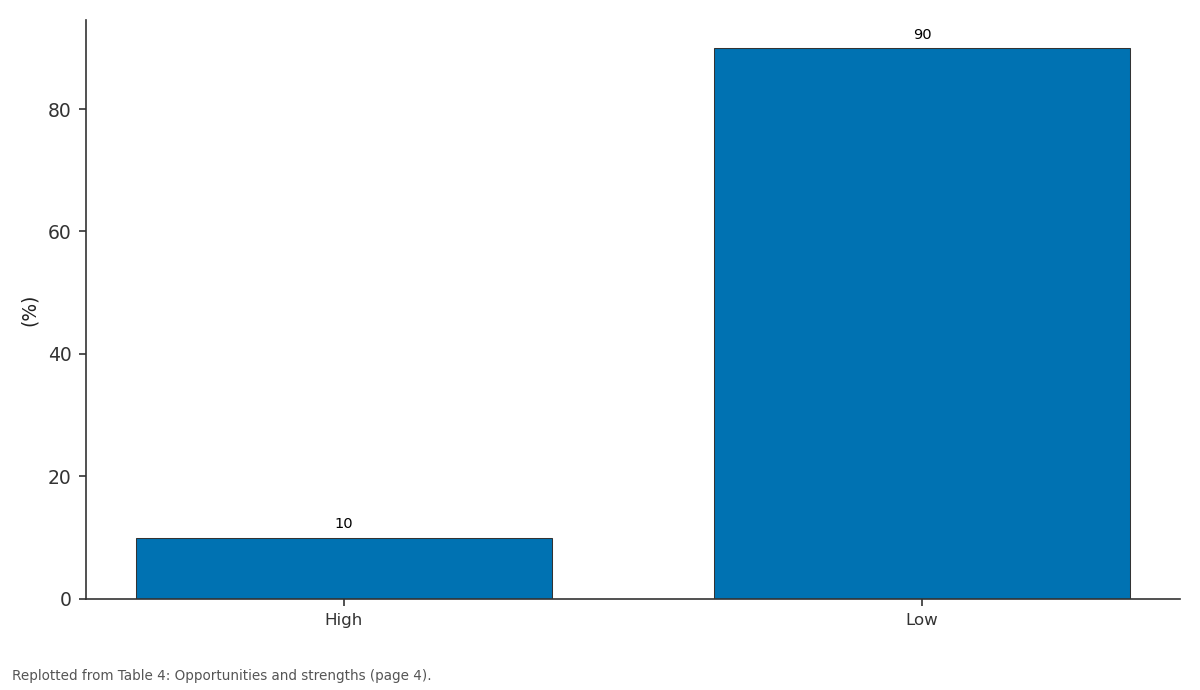
(%): High vs Low
Replotted from Table 4 (page 4) of the original paper. Every bar is the paper's own table value.
View source evidence ↗Figures & tables
From the original paper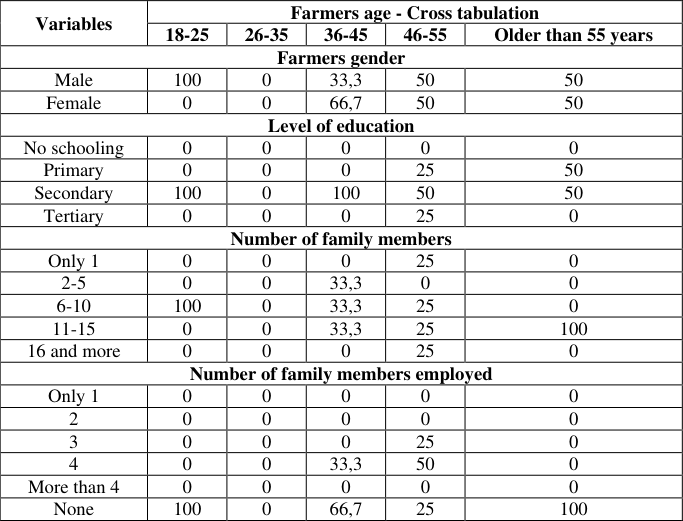 Table 1
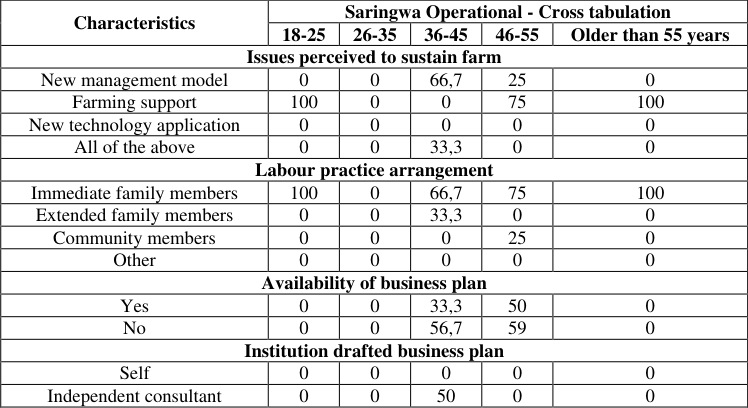 Table 2
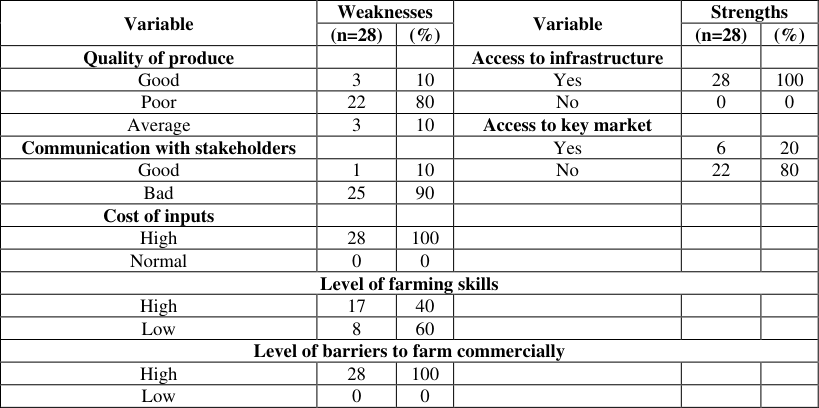 Table 3
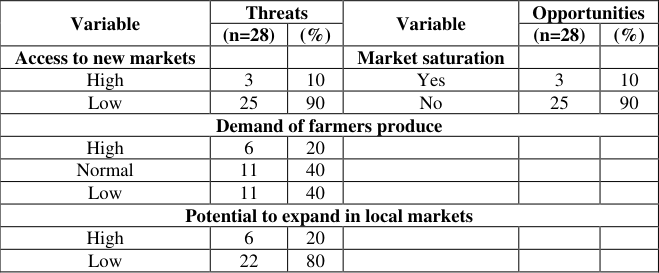 Table 4
Text
www.extensionjournal.com these smallholder irrigation farmers were engaged in dryland farming that according to Ncube (2018) [20] has risks of low unreliable rainfall. They range from about 30 ha to about 400 ha in overall area. Since 1994, after these schemes were categorized as part of land reform projects, their performance has been bleak and dismal (Umhlaba, 2010) [26] . Evaluation of challenges and opportunities for revitalising smallholder irrigation schemes in South Africa by Fanadzo and Ncube (2018) [20] indicate that many of the schemes have performed unsustainably. The farmers and extension officers have the low skill levels that have ignited the need to invest more resources in training. However, active farmers at New Forest Irrigation Scheme in Mpumalanga Province illustrate that there is much potential at the scheme for increased levels of production. The farmers can make 'profits' from subsistence crops, while cash crops can sometimes expose them to higher financial risks due to high input costs (Ncube 2018) [20] . Remoteness, which reduces access to markets, results in farmers focusing more on producing for own consumption (Van Averbeke, 2012) [28] . The conclusion of the performance of smallholder irrigation schemes has been that the contribution of these schemes to social and economic development of rural communities has been far below expectations (Machete et al., 2004; Tlou et al., 2006; Fanadzo et al., 2009) [19,25,12] .
The Saringwa Citrus Estate 3.1 Background
In 1980s the Gazankulu Development Cooperation (GDC) established Saringwa Primary Cooperative as part of smallholder irrigation scheme. The extent of the land was 300 hectares with 132 hectares of mangos and 48 hectares citrus. The irrigation was available for 260 hectares. The farmers were farming with minimal resources and support. However, in 1986 the Agricultural and Rural Development Cooperation (ARDC) partnered with farmers and allocated 10 hectares of land per household (PHI-Bushbuckridge Development Plan, 2016) [24] . Although, farmers were land owners, they worked as labourers at the estate, and received a monthly salary and profit share from the ARDC amounting to about R80, 000 per year. Farmers were able to sustain their families (Business Trust & DPLG, 2007) [4] . Post 1994, the land became state land managed by Hoxani Tribal Authority and in about few years the ARDC withdrew its involvement in Saringwa. The Hoxani Tribal Authority granted 28 farmers permission to use the land. The farmers are represented by seven committee members.
Funding for the project
According to University of Pretoria (UP) (2015), the initial funding for the project was secured from the then GDC. Each farmer was provided with a loan facility of about R95 000 00 which also served as the revolving credit facility. In terms of the loan agreements, the allowances were to be off-set as part of the loan repayment. A cession over the crop was signed to secure the loan, with the farmers receiving income from sales after the loan deductions. Moreover, between 2007 and 2009, the Department of Agriculture invested some R4m plus in irrigation infrastructure and mechanisation as well as rebuilding of a perimeter fence. The farmers are currently struggling to obtain additional funding to buy inputs (PHI-Bushbuckridge Development Plan, 2016) [24] .
Current developments
Most of the infrastructure is stolen and vandalised, the irrigation system stopped functioning as it is no longer maintained, and production came to a standstill. With the estate quickly falling into disrepair, conflict arose among the farmers of the estate. Some left their land, while others continued to live there. The citrus trees on the land are drying up, because of this, most farmers collected them and sold them as firewood. The children of most farmers have since moved to urban areas in search of jobs to improve their livelihoods. The primary source of income for majority of farmers is a welfare grant and little money that they receive monthly from their children who works in urban areas. Farmers also survive by selling mangos to producers of acthar, or fruit to local informal vendors. There is no financial support to farmers, although Department of Agriculture, Rural Development and Land Administration (DARDLA) have tried to assist farmers with agricultural equipment's few years ago. Buildings are old and needs attention, roads are accessible and in good condition, fences are almost gone due to vandalism, electricity need to be reconnected and all citrus trees require replanting (BLM, 2010) [3] . The farmers are relying on tractors provided by the Buyela eMasimini programme. However, the hiring of tractors is very expensive (UP, 2015). Thus it is echoed that farmers are not able to create jobs, improve food security and alleviate poverty mainly due to lack of sustainable financial support. The support that government has provided was too little and farmers believe that they can be able to contribute to improved food security, poverty alleviation and increased employment if they are assisted with water pumping costs, labour costs, and loan facilities to buy enough chemicals for spraying their orchards to ensure good quality crops (UP, 2015).
Methodology and Materials 4.1 Study Area
The study was conducted in Bushbuckridge Local Municipality, a municipality within Ehlanzeni District of Mpumalanga Province in South Africa. Bushbuckridge is mostly a rural area, dominated by subsistence and smallholder farming activities. Most farmers are engaging on smallholding irrigation scheme. Thus, inefficient and lack of understanding of issues affecting these farmers means that considerable income potential and economic growth remains latent.
Sampling Technique and Analytical Tools
Farmers were interviewed based on their knowledge of issues around the Saringwa. Data gathering provided a descriptive basis of the farmer's characteristics, household composition, and the overall farming operations. SWOT analyses was performed to acquire information that could be helpful in matching the farmer's resources and capabilities to the competitive environment in which they operate. The collected data was captured and manipulated using Statistical Package for Social Sciences (SPSS).
Results and Discussion
Results and Discussion
Farmers demographics by age cross-tabulations www.extensionjournal.com
Results of farmers demographics by age cross-tabulations are presented in Table 1. The results show that majority (66,7%) of farmers were female between the ages 36-45 years old, while the female between the ages 18-25 years were a minority (0%). In terms of education, secondary was the predominant (50%) highest education amongst farmers aged between 46-55 and those older than 55 years compared to no schooling. About 25% of farmers had more than 16 family members alike (25%) farmers who had only one member. Although number of family members was not statistically significant, the majority of farmers aged between 36-45 had many (66,7%) family members unemployed. Family dominated by unemployed members is at high risk of experiencing extremely high inputs costs and thus, farmers from such families may experience difficulties in supplementing operational costs thus failing to afford farm business administration costs.
| Variables | Farmers age - Cross tabulation | — | — | — | — |
|---|---|---|---|---|---|
| 18-25 | 26-35 | 36-45 | 46-55 | Older than 55 years | |
| Farmers gender | |||||
| Male | 100 | 0 | 33,3 | 50 | 50 |
| Female | 0 | 0 | 66,7 | 50 | 50 |
| Level of education | |||||
| No schooling | 0 | 0 | 0 | 0 | 0 |
| Primary | 0 | 0 | 0 | 25 | 50 |
| Secondary | 100 | 0 | 100 | 50 | 50 |
| Tertiary | 0 | 0 | 0 | 25 | 0 |
| Number of family members | |||||
| Only 1 | 0 | 0 | 0 | 25 | 0 |
| 2-5 | 0 | 0 | 33,3 | 0 | 0 |
| 6-10 | 100 | 0 | 33,3 | 25 | 0 |
| 11-15 | 0 | 0 | 33,3 | 25 | 100 |
| 16 and more | 0 | 0 | 0 | 25 | 0 |
| Number of family members employed | |||||
| Only 1 | 0 | 0 | 0 | 0 | 0 |
| 2 | 0 | 0 | 0 | 0 | 0 |
| 3 | 0 | 0 | 0 | 25 | 0 |
| 4 | 0 | 0 | 33,3 | 50 | 0 |
| More than 4 | 0 | 0 | 0 | 0 | 0 |
| None | 100 | 0 | 66,7 | 25 | 100 |
Table text extracted from the original PDF; superscript letters are shown inline. The original table image is below.
View original table image
Saringwa operational by age cross-tabulations
Table 2 show that in Saringwa, majority of farmers perceived farming support (75%) as a key issue that can sustain their farm whilst a new management model was minority (25%). While majority of farmers employs immediate family members (75%), only few employs community members. Lack of business planning was typical amongst farmers aged 36-45 and 46-55 (56,7% and 59%, respectively). However, many farmers did not have business plans, the majority of farmers who had business plans, they were prepared by government (50%) while 50% had plans prepared by independent consultants. While few farmers had business plans prepared government and independent consultants, all farmers were not part of the business planning process (100%). In terms of land ownership were farming is taking place, 75% of farmers aged 46-55 years owned land in Tribal Authority arrangement, and only the lowest percent of 25% owned the land in Title Deed.
| Characteristics | Saringwa Operational - Cross tabulation | — | — | — | — |
|---|---|---|---|---|---|
| 18-25 | 26-35 | 36-45 | 46-55 | Older than 55 years | |
| Issues perceived to sustain farm | |||||
| New management model | 0 | 0 | 66,7 | 25 | 0 |
| Farming support | 100 | 0 | 0 | 75 | 100 |
| New technology application | 0 | 0 | 0 | 0 | 0 |
| All of the above | 0 | 0 | 33,3 | 0 | 0 |
| Labour practice arrangement | |||||
| Immediate family members | 100 | 0 | 66,7 | 75 | 100 |
| Extended family members | 0 | 0 | 33,3 | 0 | 0 |
| Community members | 0 | 0 | 0 | 25 | 0 |
| Other | 0 | 0 | 0 | 0 | 0 |
| Availability of business plan | |||||
| Yes | 0 | 0 | 33,3 | 50 | 0 |
| No | 0 | 0 | 56,7 | 59 | 0 |
| Institution drafted business plan | |||||
| Self | 0 | 0 | 0 | 0 | 0 |
| Independent consultant | 0 | 0 | 50 | 0 | 0 |
Table text extracted from the original PDF; superscript letters are shown inline. The original table image is below.
View original table image
Strengths and weaknesses
The results in Table 3 show farmers strengths and weaknesses. Regarding farmers weaknesses, the majority produced poor quality produce (80%) while those producing good quality were the minority (10%). Bad communication with stakeholders negatively affected product quality (90%). However, all the farmers (100%) experienced high input costs. Although, 60% of farmers had low farming skills comparing to (40%) with high level of farming skills. In terms of strengths to give farmers advantage over competitors, all farmers (100%) had access to necessary infrastructure. However, 22 out of 28 farmers (80%) had access to key markets whilst only 6 out of 28 farmers had no access (20%). Farmers with too many weaknesses and few strengths may be at risk of failing to achieve objectives and handling opportunities and threats.
| Variable | Weaknesses | — | Variable | Strengths | — |
|---|---|---|---|---|---|
| (n=28) | (%) | (n=28) | (%) | ||
| Quality of produce | Access to infrastructure | ||||
| Good | 3 | 10 | Yes | 28 | 100 |
| Poor | 22 | 80 | No | 0 | 0 |
| Average | 3 | 10 | Access to key market | ||
| Communication with stakeholders | Yes | 6 | 20 | ||
| Good | 1 | 10 | No | 22 | 80 |
| Bad | 25 | 90 | |||
| Cost of inputs | |||||
| High | 28 | 100 | |||
| Normal | 0 | 0 | |||
| Level of farming skills | |||||
| High | 17 | 40 | |||
| Low | 8 | 60 | |||
| Level of barriers to farm commercially | |||||
| High | 28 | 100 | |||
| Low | 0 | 0 |
Table text extracted from the original PDF; superscript letters are shown inline. The original table image is below.
View original table image
Opportunities and threats
The results of opportunities and threats are presented in Table 4. Results on threats shows that majority of farmers had low access to markets (90%) compared to the lowest percent of 10% who had access. Very few (20%) farmers produce was in high demand compared to average (40%) and low demand (40%) respectively. Potential to expand in local markets was low in many farmers (80%) and high in very few (20%). Level of competition from new entrants was high (100%), whilst the cost of irrigation water was also high to all farmers (100%). Likewise, the level of barriers to engage on commercial level was high to all farmers (100%).
| Variable | Threats | — | Variable | Opportunities | — |
|---|---|---|---|---|---|
| (n=28) | (%) | (n=28) | (%) | ||
| Access to new markets | Market saturation | ||||
| High | 3 | 10 | Yes | 3 | 10 |
| Low | 25 | 90 | No | 25 | 90 |
| Demand of farmers produce | |||||
| High | 6 | 20 | |||
| Normal | 11 | 40 | |||
| Low | 11 | 40 | |||
| Potential to expand in local markets | |||||
| High | 6 | 20 | |||
| Low | 22 | 80 |
Table text extracted from the original PDF; superscript letters are shown inline. The original table image is below.
View original table image
Considering opportunities, markets were not saturated for many farmers (90%) while farmers who had their markets saturated constituted (10%) of all the farmers. Too many threats and few opportunities could inhibit farm's performance.
Discussions
Weaknesses and threats influenced the collapse of irrigation scheme farms. Weaknesses and threats inhibit farmers from achieving their objectives and thus, slackens farm's performance. According to Woods (2013), weaknesses make farmers to fail to handle opportunities and threats especially within the competitive context. Furthermore, poor quality produce contributed to failure in this study. This result could also imply that farmers who produces poor quality produce had poor management skills that could not improve the quality of the produce, such as the weaknesses and threats and other external factors and as a result hampered the performance of the farms. Business Trust & DPLG (2007) [4] noted that famers who had never picked up essential skills and knowledge on irrigation scheme farming had little chances of being sustainable in this farming sector. Thus, skills and knowledge play a crucial role in influencing farmers' strengths (Ncube, 2017) [21] . Farmers with low farming skills and high transaction costs were more likely at risk of producing lower quality produce and fail to access formal markets. The quality of the produce determines type of market farmers could access and sustain their farm business (Khapayi & Celliers, 2016) [17] . DAFF (2012b) [6] also noted similar observation in their study. Hlongwane et al., (2012) [15] found that quality of produce had a significant and positive contribution on the collapse of a farm business. Thus, government should provide input subsidy to irrigation scheme farmers to enable them to produce more high-quality produce and access lucrative markets.
Communication with key stakeholders had an influence on farmers. Poor communication with key stakeholders contributed to the collapse of irrigation schemes farms in the area. This could be explained by the fact that there is a very weak support services existing at the irrigation schemes. Fanadzo (2012) [12] attested to this. Poor communication lead to limited involvement of stakeholders and lack of sufficient support on the part of stakeholders. This result is in line with a study by Ncube (2017) [21] on institutional support systems for small-scale farmers at New Forest Irrigation Scheme, which established constraints and opportunities related to the collapse on irrigation scheme farms. It is highly recommended that relationship between farmers and government be restored and strengthened. Lack of business plans amongst youth (18-35 years old) suggests that young (youth) farmers were more likely farming without a clear direction or objectives as compared to those older than 36 to 55 years. This is expected as older farmers are likely to have a greater number of years in farming than youth due to youth's late involvement in farming (Loki et al., 2020) [18] . This result corresponds with the findings of who found a correlation of farmer's age on the collapse of farms in the Eastern Cape. Thus, age is an important determinant of the collapse on irrigation scheme farms. Hence, policies that promote irrigation scheme farming should include youth's for equitable participation in irrigation scheme farming as farming provide farmers with an opportunity to improve their livelihoods through produce sales.
Influence of education was positive on the viability of farms. This implies that literate farmers were more likely to prevent their farms from collapsing compared to illiterate farmers. Educated farmers are more concerned about learning more and expanding their farm business than their counterparts. More so, informed decision making is relevant for farm operational decision making, henceforth, the positive influence on preventing farm business from collapse. Odunze et al., (2015) [23] found a similar result in a study on factors that affect the viability of farms among maize and soya farmers in Zimbabwe. Policies that promote the irrigation scheme farming should help farmers to access education and training so as to increase their knowledge and skills level and thus thwart their farms from collapsing. The type of land ownership (Permission to Occupy) on the reasons of the collapse implies that farmers were more likely to be risk averse than risk takers and were more likely not to immensely invest in fixed assets compared to their counterparts. Permission to Occupy land -specific characteristics such as lack of security and uncertainty on land holding that affect investment for farm development could have contributed to the collapse. The high number of farmers farming on Tribal land shows that farmers in the area were likely much more willing to engage in farming business. On the other hand, irrigation scheme farming in Mpumalanga is diminishing under the Permission to Occupy arrangements (PHI-Bushbuckridge Development Plan, 2016; Van Averbeke, 2011) [24,29] , thus their collapse. However, in contrast to this, Jibowo and Mncina (2019) [16] found that provision of fertile land had positive influence on farms viability in the Maguga Dam resettlement scheme in Hhohho Region of Eswatini. Therefore, type of land ownership is an important determinant in the collapse of irrigation scheme farms (Andrew et al., 2003) [1] . Understanding land ownership characteristics is therefore important to design targeted policies for the viability of irrigation scheme farms so as to improve farmers livelihoods.
Conclusions
Irrigation scheme farms are collapsing due to more weaknesses and threats. This contribute to poverty as a result of lack of stable production and income realised from sales. Collapse of irrigation schemes is a thorny issue in South Africa and has potential to contribute to food insecurity and unemployment. Hence, this study looked at the reasons causing the collapse of irrigation scheme farms.
References
4 in the original paper- UP (University of Pretoria). Impact evaluation of Comprehensive Agricultural Support Programme. From its inception in 2024 to February 2013); c2012.
- Van Averbeke W. Performance of smallholder irrigation schemes in the Vhembe District of South Africa. Problems, perspectives and challenges of agricultural water management. 2012;21:413-438.
- Van Averbeke W, Denison J, Mnkeni PNS. Smallholder irrigation schemes in South Africa: A review of knowledge generated by the Water Research Commission. Water SA. 2011;37(5):797-808.
- Zantsi S, Bester B. Farming households' livelihood strategies in Ndabakazi Villages, Eastern Cape: What are the implications to extension services? South African Journal of Agricultural Extension. 2019;47(4):120-134.