
Research article · 2022 · Full text
International Journal of Horticulture and Food ScienceAdoption of improved haricot bean production packages by smallholder farmers: The case of Humbo Woreda, Wolaita zone, Southern Ethiopia
Volume 4(2) · Pages 30–38 · DOI: 10.33545/26631067.2022.v4.i2a.96 ↗
Research areasAgricultural Innovations and PracticesAgriculture and Rural Development Research
Abstract
Author-writtenThis study was conducted in Wolaita zone, Humbo Woreda, SNNP regional state. The general objective of the study was to assess farmers’ responses towards adoption of improved haricot bean production packages in smallholder farmers. Multi-stage sampling, purposive and simple random sampling procedure were followed to select the woreda, kebeles and the households for the study. The data were collected from 120 randomly selected sample households from three selected kebeles using probability proportional to size sampling techniques. The semi-Structured interview schedule was developed, pre-tested and used for gathering the important data for the study from the sampled households. Focus group discussion and key informant interviews were also conducted to generate qualitative data. In addition, secondary data were collected from relevant sources such as agricultural and rural development offices. Descriptive statistics and inferential statistics were used to describe the nature of data and examine the significance of the relationship between dependent variable and independent variable. Additionally, ordered logit model was used to determine the relative influence of independent variables on the dependent variable. The result of descriptive statistics revealed that out of the total sample respondents 66% were adopters and 45% of them were non-adopters. In this study the adoption index was calculated to differentiate low, medium and high adopter category as improved haricot bean varieties, seeding rate and fertilizer rate. The results of the study indicated that sex, education, participation in social organization, access to credit, contact with extension agent, Farm size, tropical livestock unit, participation in extension events, distance to market center were found to have positive and significant influence on adoption of improved haricot bean production packages. While non-farm activity, farming experience, age, and family size of the households not significantly related to the adoption of improved haricot bean production packages. The general findings of the study emphasized the importance of institutional support in the areas of extension, research and training concerning the production of improved haricot bean. Hence, agricultural policy and development interventions should be given attention to the enhancement of such institutional support to farmers so as to achieve wider adoption of the variety, increased productivity and earnings to smallholder farmers.
Summary
Source-checkedPlain-language reading of the full paper, prepared with AI and checked against the text. Each point links to the authors' own words.
Why it matters
- Agriculture is the primary economic driver in Ethiopia, providing the majority of employment and foreign exchange earnings. View evidence ↗
- Pulses are the second most critical crop group in Ethiopia, supporting food and income for over 10 million households. View evidence ↗
- There is a significant gap between the national average yield of haricot beans (0.5 to 0.8 tone ha–1) and the potential yields achieved at research sites (2.5-3 tones ha-1) using improved varieties. View evidence ↗
The question
- The study aimed to evaluate how smallholder farmers respond to and adopt improved haricot bean production packages. View evidence ↗
What they did
- Researchers collected data from 120 randomly selected households across three kebeles using probability proportional to size sampling. View evidence ↗
- Data collection involved semi-structured interviews, focus group discussions, and key informant interviews to gather both quantitative and qualitative information. View evidence ↗
- An ordered logit model was employed to analyze the factors influencing the intensity and decision of adoption for the production packages. View evidence ↗
What they found
- Among the 120 sampled respondents, 55% adopted the improved haricot bean production packages, while 45% did not. View evidence ↗
- Male-headed households were 3.092 times more likely to adopt improved production practices than female-headed households. View evidence ↗
- Education had a strong positive effect, where each additional year of schooling increased the odds of adoption by a factor of 9.794. View evidence ↗
- Access to credit significantly increased the likelihood of adoption by a factor of 5.0. View evidence ↗
- Frequent contact with extension agents increased the odds of adopting the production packages by 2.869. View evidence ↗
- Participation in social organizations increased the odds of adopting the technology by 5.384. View evidence ↗
- Factors such as age, family size, farming experience, and non-farm activities did not have a significant relationship with the adoption of the production packages. View evidence ↗
What it means
- The authors conclude that institutional support in research, training, and extension is critical for increasing the adoption of improved haricot bean production. View evidence ↗
- The authors recommend that government and non-governmental organizations increase awareness and participation for women to expand technology adoption. View evidence ↗
- The authors suggest that further research is needed to continue improving haricot bean productivity in the study area. View evidence ↗
Visual summary
2 visualsIllustrations explain the paper; charts are replotted from the paper's own table values.
Drivers of Technology Adoption
AI-generated conceptual illustration (haricot bean plants). It explains the idea and does not show study data.
View source evidence ↗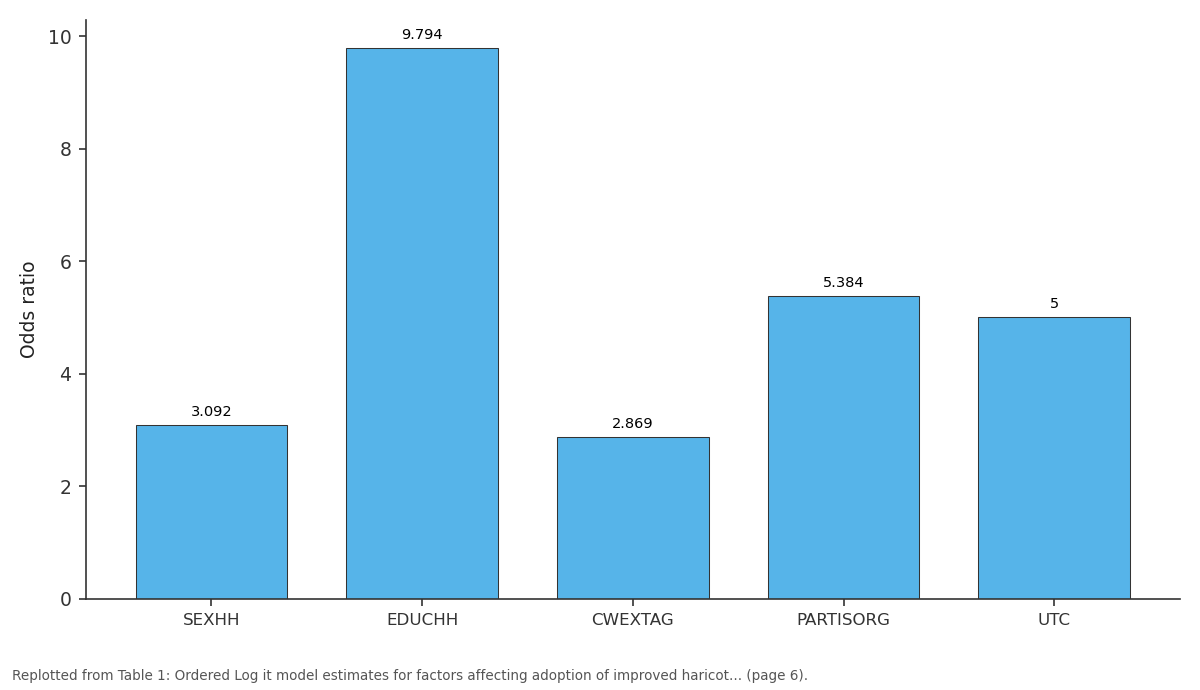
Odds ratio: SEXHH vs EDUCHH vs CWEXTAG vs PARTISORG vs UTC
Replotted from Table 1 (page 6) of the original paper. Every bar is the paper's own table value.
View source evidence ↗Figures & tables
From the original paper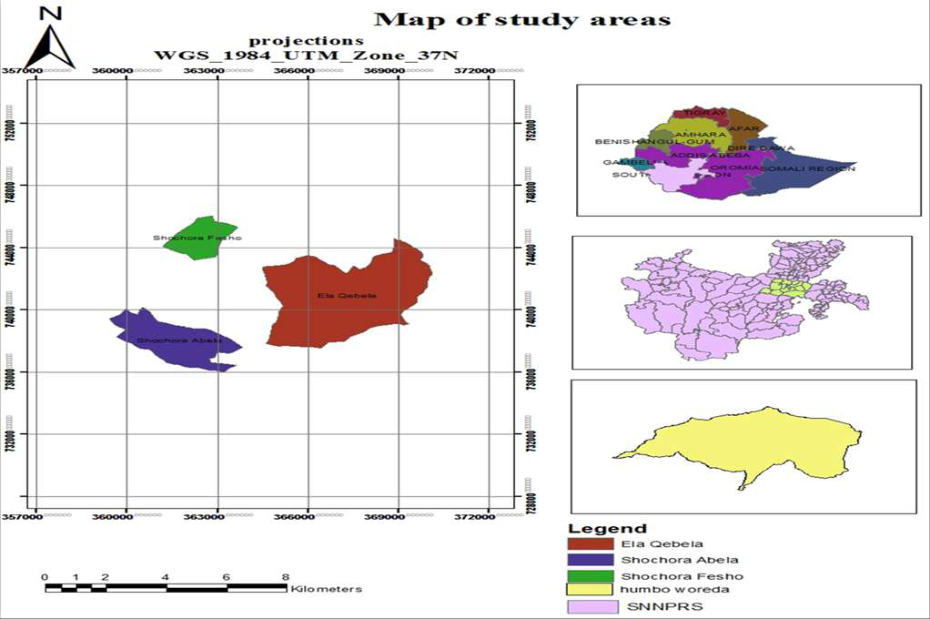 Figure 1
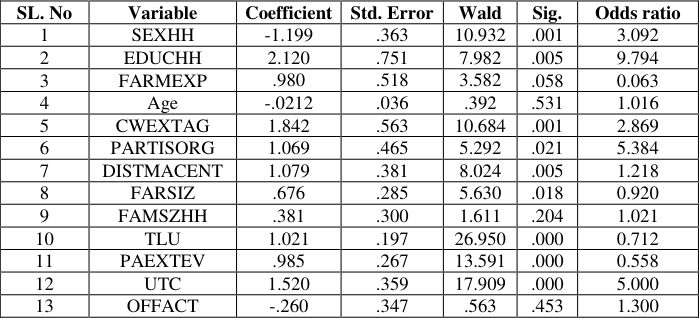 Table 1
Introduction
Agriculture is still the backbone of the Ethiopian economy as it contributes 43% of GDP, creates more than 80% of employment opportunities and generates over 83% of foreign exchange earnings of the country (UNDP, 2014) [30] . Generally, it is the primary means of livelihood for the community. Agricultural production is dominated by smallholder households which produce more than 90% of agricultural output and cultivate more than 90% of the total cropped land. Smallholders drive their income either in cash or through own-consumption from agricultural production. According to the national accounts, the agricultural sector consists of crop, livestock, fishery and forestry sub-sectors. Crop production is the dominant sub-sector within agriculture, accounting for more than 60% of the agricultural GDP followed by livestock which contributes more than 20% of the agricultural GDP Mulat et al., (2004) [25] . As stated by MoARD (2010) [24] increasing productivity in smallholder agriculture is the Government's top priority. This recognizes that: (i) Smallholder agriculture is the most important sub-sector of Ethiopia's economy; (ii) There remains a high prevalence of poverty among smallholder farming communities; (iii) There is a large potential to improve crop and livestock productivity using proven, and sustainable technologies.
Ethiopia is known as the homeland of several crop plants. It is ranked 13th among pulse producing countries in the world (FAO, 2015) [13] . The country produced about 1.3 million tons in 2014 (CSA, 2015) [36] . Pulses play crucial economic, and food and nutrition security roles in Ethiopia. Recently, the production and supply of pulses, increased due to increased demand in both local and international markets, thus enhancing smallholders' income (Chilot et al. 2010) [8] .
Pulses are strategically important to Ethiopia as they are the second most important group of crops, after cereals, and together they provide food and income to more than 10 million households (ITC and FDRE, 2019) [19] . The overall acreage of production is over 1.5 million hectares and overall output is almost 3 million tons. Pulses are the third most important group of commodities export, after coffee and sesame, there by contributing significantly to the country's foreign currency requirements. Ethiopia ranks among the top ten countries in the world for pulse exports with an estimated value of USD 248 million and volume of 338,974 tons in 2016 (ITC and FDRE, 2019) [19] . According to EPPA, (2010) [37] Reported Haricot bean is a principal food crop particularly in Southern and Eastern part of Ethiopia, where it is widely intercropped with maize and sorghum, respectively, to supplement farmers' income. The two major haricot bean producing regions are Oromiya and Southern Nations, Nationalities and People's Region (SNNPR), which produce 70 and 60 thousand tons per year, respectively, and these two regions make up 85% of the total production (CSA, 2005) [38] . Average national production is approximately 150 thousand tons per annum. The level of production in 2005 was approximately 175 thousand tones with a domestic market value of USD 30 million (Ferris and Kaganzi, 2008) [15] . Even though haricot bean is largely grown in Ethiopia, the national average yield of haricot beans is low ranging from 0.5 to 0.8 tone ha-1, which is far below the corresponding yield recorded at research sites (2.5-3 tones ha -1 ) using improved varieties (EPPA, 2010) [37] . The low national mean yield observed for haricot bean could be attributed to various constraints related to low adoption of improved agricultural technologies, drought, and lack of improved varieties, disease, and environmental degradation (Legese et al., 2006) [20] . Study found that Chang (2015) [7] new technologies play an important role in increasing agricultural production and farmers' incomes as well as promoting development of modern agriculture. Nevertheless, the diffusion of new agricultural technologies is slow in developing countries (Duflo et al., 2011) [10] . The reason for this is often believed to be risk aversion among farmers (Bradford, 2015) [3] . Many studies have found that farmers in developing countries are generally risk averse (Liu, 2013) [22] . In this context, low adoption of new technologies due to high risk aversion could hinder agricultural sector development. Key constraints to agricultural productivity in Ethiopia include low availability of improved or hybrid seed, lack of seed multiplication capacity, low profitability and efficiency of fertilizer use due to the lack of complimentary improved practices and seed, and lack of irrigation and water constraints. In addition, lack of transport infrastructure and market access decreases the profitability of adopting improved practices (Kate & Leigh, 2010) [31] .
As study conducted by CSA (2019/20) to provide data on cropped area and production of crops within the private peasant holdings for Meher Season of the specified year, general wolita zone pulse crop production area in hectares is 29,736.06 and from the pulse crops haricot bean production shares 22,855.19 production areas in hectares. According to Elias S, (2010) [11] the five major crops in order of importance are maize, sorghum, haricot bean, sweet potato and teff. Maize by far is the major crop in terms of the area coverage and is the staple crop of the area, regarding the gross volume of production however, sweet potato comes first.
Even though, in the study woreda some improved haricot bean varieties have been distributed to farm households via different extension organizations such as Zonal agriculture and natural resource and NGOs, the factors affecting adoption of improved haricot bean varieties and extent of adoption of improved haricot bean production packages are not yet assessed in the study area (WAZANR, 2020) [32] . Consequently, very few studies have been done on pulse crops especially on common bean (Besufekad, 2018) [2] . Therefore, to fill these gaps this study was proposed to find out extent of adoption and factors affecting adoption of improved haricot bean production packages in the study area.
The overall objective of this study is to assess farmers' responses towards adoption of improved haricot bean production packages by smallholder farmers in the study area with the following specific objectives To assess the extent of adoption of improved haricot bean production packages by farmers. To identify factors affecting adoption of improved haricot bean production packages by farmers.
Research methodology Description of the study area
The study was conducted in Humbo woreda, based on haricot bean potential, consultation with the district office of agriculture and natural resource.
Sampling Techniques and procedure
For this study multi stage sampling, both purposive and probability sampling techniques were used to select the required sampling unit from the total population under the study. The selection of study area based on the area under haricot bean cultivation and relative access to past extension support provided by Zonal Agriculture and Natural resource, Concen worldwide NGO and other institutions involved in distribution of improved haricot bean production technology (WAZANR 2020) [32] . In the first stage, 3 administrative Keble was selected out of 18 administrative Keble found in the study woreda based on activities of improved haricot bean production.
In the second stage, out of the listed kebels, those having more improved haricot bean production, three kebeles were purposively selected to restrict the number of respondents for effective management and analysis. In third stage the sample size was determined. Finally, the respondents were selected simple randomly. The sample size was determined by using simplified formula of Yamane, 1967 formula which is a simplified formula N = N/1+N (e) 2 Where, N = number of respondent E 2 = maximum margin of error
Data types, sources and method of data collection
Qualitative and Quantitative data type was utilized foe this study. The data were collected from households by conducting formal survey using Semi-structured interview.
The data was collected according to work plan. However, before the actual data collection several preparatory activities were carried out. First, one day training was given for enumerators on the research question, how each question in the interview schedule is linked with the research questions and other related issues. Second, the interview schedule was pre-tested on fifteen randomly selected farm households before conducting the formal survey. The data was collected by eight enumerators who was selected from the woreda office of the agriculture field staff on the basis of their experience, education level (minimum of Diploma graduate) properly know the subject matter, speak the language of the area and know the culture of the people with close supervision of the researcher. In order to ensure the reliability and validity of the collected data different methods such as observation, focus group discussion, and interview with randomly selected farmers and key informants were employed. Primary and secondary sources was used this study. The primary data that were collected for quantitative research includes: household characteristics (age, education, farming experience, family size etc.), farming characteristics (farm size and slope of land) and perception on improved haricot bean production packages, labor availability, agricultural extension and credit. Secondary data such as description about the study area location, topography, climate, population, agricultural production, improved haricot bean variety and institutional support were collected from relevant sources like books, internet, related journals and annual report of zone and woreda agricultural office, published and CSA documents.
Methods of data analysis
The statistical analysis employed for quantitative data was descriptive statistic like percentage, mean, standard deviation average and frequency. In addition, inferential statistic like chi-square test and F-test was used in this study for testing the significance of the variables and also the econometric analysis was employed.
The ordered log it model was used to assess the intensity of adoption of improved haricot bean production packages and factors affecting adoption of improved haricot bean production packages. The qualitative data was analysed, described and interpreted through case analysis, concepts and opinions. According to Greene (2008) [39] and Liao (1994) [21] the logistic distribution is specified as follows:
y* = is unobserved and thus can be thought of as the underlying tendency of an observed phenomenon. ε = we assume it follows a certain symmetric distribution with zero mean such as normal or logistic distribution. What we do observe is
Where y is observed in j number of ordered categories, μs is threshold parameters separating the adjacent categories to be estimated with βs.
The general form for the probability that the observed y falls into category j and the μs and the βs are to be estimated with an ordinal logit model is
Where L (.) represents cumulative logistic distribution. Ordered logit mode was used & treated against potential variable that are assumed to determine farmers' behaviour on the promotion of improved haricot bean technologies. All analysis was done after the coded responses to the questions entered in to the computer and the final analysis was done using the SPSS programs 20 version.
Definition of variables and hypothesis
Dependent variable: Adoption of improved haricot bean production packages.
Independent (explanatory) variables
Are variables that are expected to influence the dependent variables?
Farmer's age
It is measured in number of years and it is a continuous variable. It was hypothesized that younger farmers have more probability of adopting improved haricot bean technologies. Age was found to positively influence on adoption of improved cassava varieties in Edo State, Nigeria (Omonona et al. 2005) [33] . In contrast, the study conducted in Dugda Bora District by Taha (2007) [27] revealed that age of the household head was negatively influenced adoption and intensity of adoption of improved onion production packages.
Sex of house hold
It is a state of being male or female and it is a dummy variable. Sex of a house hold head is one of the determinants of technology adoption. Tesfaye (2006) [34] found that male headed household has better access to information than female headed household because they have freedom of mobility and participation in different meetings. Male headed household was hypothesized positive and significant relationship with adoption of haricot bean production packages.
Education
It is measured in number of grades attended in school years and it is discrete variable. Level of education was assumed to increase farmers' ability to obtain, process, and use information relevant to the adoption of improved haricot bean production packages. Education enhances farmers' ability to perceive, interpret and make the right decision to adopt or not new technologies (Almaz, 2008) [1] .
Family size
It is number of individuals who reside in the respondent's household and it is continuous variable. Large family size was assumed as an indicator of labor availability in the family. Hailu (2008) [17] reported that farm size exerts a positive influence on adoption of improved technologies. It measured in hectares. It was hypothesized positive and significant relationship with adoption of haricot bean production technologies.
Farm size
Is a total area of land a household cultivates measured in hectare and this is continuous variable. It influences households' decision to adopt or to reject new technologies. Hence, large farm size was hypothesized positive and significant relationship with adoption and intensity of adoption.
Slope of the land
It refers to the slope of the plot as perceived by the farmers and grouped in to flat, gentle slope, moderate slope and steep slope and it is categorical variable. Therefore, More Slopy was hypothesized negatively to adopt improved haricot bean production
Farming experience
It is measured by the number of years. Experience was expected to improve farmers' skill at production of haricot bean.
Labor force
It is measured in terms of man day equivalent (conversion factor) and it is continuous variable. Labor force in a family means, the household may not need to hire more additional Labor and the money saved due to use of own Labor force could be used for purchasing other crop production inputs. It was hypothesized positive relationship with adoption and intensity of adoption of haricot bean production.
Livestock
Is the farmers' important source of income, food and draft power for crop cultivation in Ethiopian agriculture? This is a continuous variable refers to the total number of livestock owned by the sample households and was measured in TLU. Hence, a household with large livestock holding can have good access for more draft. Livestock production is most important, both in levels and shares, for the middle and upper income categories, reflecting Barrett and McPeak's (2005) [35] finding of a strong positive relationship between household per capita daily income and herd size.
Utilization to credit
Farmers' to credit in terms of the availability of formal credit sources and possibility of getting credit and it was measured by access to credit and dummy variable. Access to credit is one way of improving farmers' access to new production technology. Farmers without cash and no access to credit was find it very difficult to attain and adopt new technologies (Mulugeta, 2000) [25] . It was expected that access to credit increase the probability of adopting improved haricot bean technologies
Participation in extension events
The variable was measured by counting the number of times that a respondent has participated in extension activities and it is a continuous variable. It refers to farmers' access to information on agricultural technologies through extension events such as participation in training, workshop, and field day/visit and on-farm demonstration arranged by extension organizations. Empirical results revealed that extension contact has an influence on farm households' adoption of new technology (Hailu, 2008) [17] .
Distance from Market
It is measured in Kilometres. From farmers house to the input and output market was negatively related to the adoption of improved haricot bean varieties.
Non-farm income
The rural people have multiple livelihood strategies. It is a dummy variable. Additional income earned outside the farm increases the farmers' financial capacity and increases the probability of investing on new technologies (Habtemariam, 2004) [16] . Hence it was expected that the participation in non-farm income generating activities is positively associated with household's adoption in improved haricot bean production packages.
Perception
Improved haricot bean variety technology adoption was measured by licker scale. Perception of improved haricot bean variety technology was expected positively associated with adoption decision.
Contacts with extension agents
The variable was measured by frequency of that the extension agents visit the farmer. It indicates to the contact of the respondents with the extension agents and it is a categorical variable. This variable represents extension service as an important source of information, knowledge and advice to smallholder farmers. Farmers more visited by extension agents were expected to positively influence adoption of improved Crop technology.
Results and Discussion Descriptive Results of the Study
From total of 120 sample respondents 55% were adopter and 45% of the households were non-adopter of improved haricot bean production packages In this finding, improved haricot bean production packages includes improved variety, seeding rate, sowing date, fertilizer and chemical application. Before analysing the factors affecting adoption of improved haricot bean production, it is important to assess the extent of the adoption for each farm household. To measure adoption of multiple practices (package), there are two options among this, adoption index: measures the extent of adoption with some specified period of time or adoption quotient: measures the degree or extent of use with reference to the optimum possible without taking time in to consideration. In this study, the first option was employed. Adoption index score was calculated by adding up the adoption of each practice and dividing it by number of adopted practices of each respondent. The adoption index of each practice was also calculated by taking area under improved haricot bean Variety divided by total area under haricot bean, actual seeding rate divided by recommended seeding rate, actual fertilizer application divided by recommended one and this all divided results were sum up and again divided in to three practices based on the adoption index formula. The final adoption indexes of sample adopter households were divided into three categories namely low, medium and high. The non-adopter group was given a score of 0 and kept as separate category to investigate the factors affecting adoption of improved haricot bean production technology. The mean adoption index scores of non-adopters, low, medium and high adopters groups are 0.00, 0.30, 0.55and 0.93 correspondingly. Out of 120 sample respondents 55% were adopter and 45% of the households were non-adopter of improved haricot bean production packages.
Results of the Econometric Model
Before the estimating of the model parameters, it is important to look into the problem of multicollinearity or association among different selected explanatory variables. For this case, the VIF were used to test the association between continuous explanatory variables. To avoid multicollinearity, problem it is relatively essential to overlook the variable with the VIF value exceeds 10 (this will happen if R exceeds 0.90 i.e. highly correlated).
Interpretation of model results
The variables expected to affect adoption of improved haricot bean production packages in diverse situations were entered in to ordinal logistic regression model. Within 13 variables entered in the model, nine (9) of them were found to affect rate of adoption of improved haricot bean production practices significantly different probability levels. These are: sex of the respondents (Sex) educational level of respondents (EDULEVEL), participation in social organization (PARTISORG), contact with extension agent (CWEXTAG) and distance from market center (DISTMACENT), Tropical Livestock Unit (TLU). Participation in extension event (PAEXTEV), utilization of credit (UTC) and farm size (FARSIZ) was found to be significant. Sex of the household head (SEX): This variable was found to influence adoption of improved haricot bean production packages negatively and significantly at 0.01% significant level, ratifying the hypothesis. The negative sign indicates that female-headed households were less likely to adopt haricot bean production technology than male-headed household heads. The odds ratio of 3.092 for sex implies that male head households adopt improved haricot bean production practices by 3.092 than female head household.
The likely reason might be that male headed households have better access to information, agricultural inputs and resource owns than females.
Education level (EDUCHH)
Education is a vital variable to determine adoption of improved haricot bean technology. Farmers attended in school have a better chance to adopt improved haricot bean technology than non-educated farmers. The result from model output ratified the positive and significant relation between adoption of improved haricot bean production and education at 1%. The odds ratio of 9.794 for education implies that a one year increase in education level increases the odds ratio in favour of adoption of improved haricot bean production practices by 9.794. This was the same with the hypothesis in the study that stated, as education level of the respondent increase, the ability to obtain information, knowledge and exposure to new technologies increase.
Tropical Livestock Unit (TLU)
The analysis of model result also illustrates that the number of tropical livestock unit magnified positively and meaningfully the probability of adoption of improved haricot bean technology at 1% significant level. This finding reveals that the farm households with greater number of tropical livestock units are further likely to adopt improved haricot bean technology than those who own small number of TLU. The positive link between adoption and number of TLU indicated that herd size creates better chance to earn more revenue from livestock production. The revenue produced from livestock helps farmers to invest in improved haricot bean production. Additional things thought constant, the odds ratio 0.712 for number of TLU indicates that, as the number of livestock units increases by one TLU, the odds ratio in favour of adopting improved haricot bean production practices increases by a factor of 0.712.
Participation in extension events (PAEXTEV)
Participation in agricultural extension events are the other methods over which farmers get information about improved crop production technologies. These events include agricultural extension arrangements such as training and field visits. In this study, attendance of farmers in these extension events was considered as one collective variable. Result of the finding indicated participation in extension events was positively and significantly related to adoption of improved haricot bean production packages at 1% significance level. The odds ratio of 0.558 for participation in extension events shows that the frequency of farmers' participation in extension events increases the odds ratio in favour of adoption of improved haricot bean production packages by 0.558. The result is revealed that emphasis has to be given to farmers' training and participation in field visit to improve adoption of improved haricot bean production.
Distance from market centre (DISTMACENT)
Markets are communication centres both for producers, consumers and traders (Hailu, 2008) [17] . In this study, distance from market center of the farmers affected the extent of adoption of haricot bean production technology positively and significantly at 5% level of significance. This denotes that farmers whose residing was located far off from their market center, the probability of adopting haricot bean production was less as compared to the farmers who had their market center at a close proximity from their farm land.
The odds ratio 1.218 implies that the odds of a farmer, who were near their market center adopted improved haricot bean technology by 1.218 folds than the odds farmers that had market center far from farm land. This indicated that farmers had market center far from production area failed to adopt improved haricot bean production with less crop production because of the far distances market center. The focus group discussion result held with key informants also explained the distance of the market center affects adoption because haricot bean production needs market demand.
Contact with Extension agent (CWEXTAG)
Agricultural Extension is thought to have a direct effect on the adoption performance of farmers. While there is contact with extension agent, the more is the possibilities of farmers being influenced to adopt agricultural innovations. The community level development agent is one of the most important sources of information on agricultural innovations to farmers, particularly those who are earlier adopters. Later adopters, conversely, tend to rely more for information on relatives, friends, and neighbours who have previously tried out the innovation and adopted certain agricultural technologies. The result of this study shows most farmer had contact with the extension agent and most of farmers are adopters in different adoption category. In this study, Contact with Extension agent has positive and significance influence on the adoption of haricot bean production packages at 1% significant probability level. Keeping the influence of other variables constant, the odds ratio clearly shows the farmer who is frequently contact with extension agent was adopted improved haricot bean production packages by 2.869. This result suggests that farmers contact with extension agent will have given more chance to adopt improved haricot bean production package which helps the farming community to adopt new technology. So the current rural development and agricultural extension office should recruit different agricultural development workers.
Farm size
Land is possibly the only most important resource, as it is a base for any economic activity particularly in rural and agricultural sector. Farm size influences households' decision to adopt or to reject new technologies. Therefore, land holding was hypothesized to have positive and significant relationship with adoption and intensity of adoption. The model output also revealed that there was a positive and significant association between adoption of improved haricot bean production and farm size at 1% probability level. The odds ratio indicates, the farmers who have better farm size were adopt improved haricot bean technology package by 0.920 than the farmers who less farm size.
Utilization of credit (UTC)
The ordered logit model shows utilization of credit had significant effect on the adoption of improved haricot bean production technology at 1% significance level on the decision to adopt haricot bean production packages in the study area as hypothesized. The odds Ratio implies that as farmers being user of credit, the likelihood of adopting production packages increases by a factor of 5.0 while other predictors (variables) in the model are held constant.
Conclusion and Recommendations
The result of the study revealed that farmers' decision to adopt improved haricot bean production practice is influenced by multiple factors such as demographic, institutional, Socio-economic factors, and psychological factors. Haricot bean contribution to households' nutrition, income and food security is very high. Nevertheless of its contribution, yet, the emphasis given nationally to the sector is relatively low compared to other food crops. As a result of this, institutional support provided to this sector, such as credit service, research and extension was not to the expected level. These factors together with several household personal, demographic and socio-economic factors affected the adoption of improved haricot bean production technologies and consequently production and productivity of the sector. Based on the main findings of the study, the following recommendations were drawn. The study revealed that education status of household head positively and significantly affects farmers' decision to adopt haricot bean production technology. As a result, more educated household heads are in the better position to adopt the new technology. Consequently, the regional and zonal Government sector and private sector involved in education should enhance the educational status of the farmers through adult education. Adoption and differences in the extent of adoption of improved haricot bean production among the households were found to be influenced by different factors from these, sex difference is one of the principal factors. As a result, female-headed households are less adopter of improved haricot bean production packages than male headed households. This might be due to lack of access to information sources. Hence, boost the participation of women and awareness creation should be done both by governmental and non-governmental organizations about the multipurpose of improved haricot bean production to expand the technology more effectively. Farmers produce improved variety not only for subsistence but also for market. So it is crucial to search for variety that has high demand on market (preferable size by market demand) and also better in its quality, having high germination percentage and good color. So, Agriculture extension and communication, the research center engaged in the seed development should give emphases to the demand of farmers. Farmers in the study area also described the delay of distribution of fertilizer. Therefore, regulatory quality of inputs is again important for crop productivity development. Ministry of Agriculture extension office and research institutions need to give adequate emphasis to the research on development of improved haricot bean seed production, dissemination and providing scaling up programs cooperation with district Agricultural Development office. Farmers were found to face marketing constraints which significantly limit their benefit from haricot bean adoption. Thus, considerably emphasis of zonal and woreda government has to be given to the improvement of market and marketing system particularly through cooperative unions. The government should improve rural social organization which can play an important role in the process of adoption decision. The rural social organization should also target the farmers' need and should access them with the necessary information about the organization. The government should also improve the output market environment at least by constructing roads to markets where farmers can sell their products, so they will have the incentive to adopt the new varieties and be more productive. Participation in extension events was among the important variable that positively influenced the adoption of improved haricot bean production. This indicates that extension coverage should be widened by establishing additional development centers and empowering them. Therefore, to sustain the positive contribution of the extension service to the adoption of improved haricot bean production practices, strengthening extension services is necessary. In addition, attention also should be given to the research and extension linkages, and frequent training must be organized for development agents and supervisors about existing and newly developed improved technologies and new methods of agricultural practices. Improved haricot bean production involves the use of different packages which require Improved seed, seed rate and Fertilizer application. So the zonal government should eradicate the challenges related to fertilizer and other production practices. Result of this study also designated that there was significant difference in adoption and level of adoption among farmers land characteristics. Improved haricot bean production needs soil fertility. So, zonal and woreda agricultural office souled give more emphases to soil and water conservation structures to prevent soil erosion. Zonal Agricultural sector experts should be given more attention to support and supervision for Development Agent-farmers' contact. Variation in level of adoption among households was found to be influenced by number of livestock owned by household head. As a result of this, less number of livestock owner farmers could not adopt improved haricot bean production package. Therefore, zonal and woreda livestock office should make effort to improve the existing livestock in the study area through improved livestock management.
Based on the results of this study further researches can be executed in the future in order to improve haricot bean productivity in the study area.
Acknowledgement
AcknowledgementI would like thanks to Wolaita Sodo Agricultural College for financial support during this study.
Figures and tables from the paper
| SL. No | Variable | Coefficient | Std. Error | Wald | Sig. | Odds ratio |
|---|---|---|---|---|---|---|
| 1 | SEXHH | -1.199 | .363 | 10.932 | .001 | 3.092 |
| 2 | EDUCHH | 2.120 | .751 | 7.982 | .005 | 9.794 |
| 3 | FARMEXP | .980 | .518 | 3.582 | .058 | 0.063 |
| 4 | Age | -.0212 | .036 | .392 | .531 | 1.016 |
| 5 | CWEXTAG | 1.842 | .563 | 10.684 | .001 | 2.869 |
| 6 | PARTISORG | 1.069 | .465 | 5.292 | .021 | 5.384 |
| 7 | DISTMACENT | 1.079 | .381 | 8.024 | .005 | 1.218 |
| 8 | FARSIZ | .676 | .285 | 5.630 | .018 | 0.920 |
| 9 | FAMSZHH | .381 | .300 | 1.611 | .204 | 1.021 |
| 10 | TLU | 1.021 | .197 | 26.950 | .000 | 0.712 |
| 11 | PAEXTEV | .985 | .267 | 13.591 | .000 | 0.558 |
| 12 | UTC | 1.520 | .359 | 17.909 | .000 | 5.000 |
| 13 | OFFACT | -.260 | .347 | .563 | .453 | 1.300 |
Table text extracted from the original PDF; superscript letters are shown inline. The original table image is below.
View original table image
References
20 in the original paper- Bradford L. Risk, learning and technology adoption. Agricultural Economics. 2015 Jan;46(1):11-24.
- Central Statistical Agency. (2019/20). Area and Production of Major Crops: Agricultural Sample Survey. (Private Peasant Holdings, Meher Season). Volume I. Addis Ababa; c2020 April.
- Central Statistical Agency (CSA-2014), Agricultural Sample Survey 2013/2014 Area and Production of Major Crops, Statistical Bulletin, Addis Ababa. On All Pulses Strategy; c2012 May.
- Chang Tsai. The adoption of new technology by the farmers in Taiwan. Applied Economics, 2015 Aug 2;47(36):3817-3824.
- CSA (Central Statistical Authority). Agricultural sample survey, Area and production of temporary crops, private holdings for the 2004/05. Meher season; c2005.
- Duflo Esther, Kremer Michael Robinson Jonathan. Nudging Farmers to Use Fertilizer: Theory and Experimental Evidence from Kenya. American Economic Review. 2011 Oct;101(6):2350-2390.
- FAO. Analysis of price incentives for haricot beans in Ethiopia for the time period; c2005-2012.
- Hailu Beyene. Adoption of improved teff and wheat production in crop livestock mixed system in northern and western shewa zones of Ethiopia Ph.D. Thesis University of Pretoria, Johnston J, Dandiro J, 1997. Econometrics Methods, fourth Edition, New York: McGraw Hill Companies, Inc.; c2008.
- ITC and FDRE. National Pulses Strategy Value Chain Roadmap for Production and Trade of Pulses from Ethiopia 2019-2024. ITC, rue de Montbrillant, 1202
- Liu Elaine M. Time to change what to sow: Risk Preferences and technology adoption decisions of cotton farmers in China. The Review of Economics and Statistics. 2013 Oct 1;95(4):1386-1403.
- MoARD. Ethiopia's Agricultural Sector Policy and Investment Framework (PIF) 2010-2020, 15 Sept 2010.
- Wolaita zone agriculture and natural resource. Input package distribution unit, 2020.
- Bradbury-Jones, Caroline, Denise Coleman, Helen Davies, Kate Ellison, Colette Leigh. "Raised emotions: A critique of the Peshkin approach to reflection. Nurse Education Today. 2010;30(6):568-572.
- Wanzar C, Gerlach R, Will U. Interventionen bei Pankreaspseudozysten, Abszessen und infizierten Nekrosen. Behandlungsalgorithmus an einem großen monozentrischen Patientengut. Zeitschrift für Gastroenterologie. 2007 Aug;45(08):284.
- Tesfaye K, Walker S, Tsubo M. Radiation interception and radiation use efficiency of three grain legumes under water deficit conditions in a semi-arid environment. European Journal of Agronomy. 2006 Jul 1;25(1):60-70.
- Barrett CB, Lee DR, McPeak JG. Institutional arrangements for rural poverty reduction and resource conservation. World Development. 2005 Feb 1;33(2):193-7.
- Chaunsali P, Mondal P. Influence of calcium sulfoaluminate (CSA) cement content on expansion and hydration behavior of various ordinary portland cement-CSA blends. Journal of the American Ceramic Society. 2015 Aug;98(8):2617-24.
- Fleckenstein J, Kramer S, Offenbächer M, Schober G, Plischke H, Siebeck M, et al. Etoricoxib-preemptive and postoperative analgesia (EPPA) in patients with laparotomy or thoracotomy-design and protocols Trials. 2010 Dec;11(1):1-8.
- Gamain B, Trimnell AR, Scheidig C, Scherf A, Miller LH, Smith JD. Identification of multiple chondroitin sulfate A (CSA)-Binding domains in the var2CSA gene transcribed in CSA-Binding parasites. The Journal of infectious diseases. 2005 Mar 15;191(6):1010-3.
- Greene WH. The econometric approach to efficiency analysis. The measurement of productive efficiency and productivity growth. 2008 Feb 4;1(1):92-250.
Cited by 1
From OpenAlex, OpenCitations and reference lists read by Scinovex
- Automatic Quality Assessment of Red Haricot Beans Using Deep Learning ↗
Melkamu Workneh Bishaw, Senayt Molla Ejigu, Sefineh Getachew Tiruneh, Adis Abebaw Dessalegn · Cureus Journal of Computer Science. · 2025
Red haricot bean, also called Boleqe and Red Kidney bean, is one of the most important legume crops in the world. In Ethiopia, it became one of the most exported legume crops in 2020. Due to its many advantages in daily life, ensuring its quality is essential for both producers and consumers. Therefore, we developed an automatic red haricot bean…
❝ 0PDF
Social participation
Membership in community organization assumes that farmers who have some position in rural kebeles and different cooperatives are more likely to be aware of new practices (Habtemariam, 2004) [16] . It was, hence, hypothesized that farmers who participated in some social organization as member more possible to adopt haricot bean technology. The variable was measured by assigning a score of 0 if a farmer did not participate, 1 if a farmer is participated.