
Research article · 2022 · Full text
International Journal of Horticulture and Food ScienceAssessment of enset (Enseteventricosum) (Welw) Cheesman) processing and it’s postharvest: Constraints in post-harvest handling and farmer’s preferences
Volume 4(2) · Pages 101–105 · DOI: 10.33545/26631067.2022.v4.i2b.112 ↗
Research areasBanana Cultivation and ResearchChromosomal and Genetic Variations
Abstract
Author-writtenEnset, grown worldwide despite purposive production and consumption, is only in Ethiopia where it supports as staple and co-staple food for about 20% of Ethiopia people mostly in south and southwestern parts. The study aimed on enset processing and post-harvest techniques in enset producing areas covering Jimma and Keffa zones and Yem special districts which has participated about 128 farmers. In the area, participants portrayed before harvesting matured enset identified using different criteria such as pseudostem size, leaf and leaf sheath color change, year counting from the start of transplanting to harvesting, flowering and expose of corm stated by majority of respondents (43.75%). Additionally, all respondents (100%) responded the traditional enset harvesting/processing method is tiresome and cumbersome. The processed enset is stored for fermentation either in pit lined with leaf and leaf sheath (87.20%) or above ground in wrapped leaf and leaf sheath (12.80%) depending on harvesting season. The respondents also added traditional fermentation enhancer to hasten fermentation and shorten time of fermentation. From the study, the critical problem identified for this indigenous crop upon which people depended was the non-modified processing technique which is time consuming, tiresome why new generation neglecting enset production despite its multi-merit calling for multidisciplinary and integration research to find consistent solution.
Summary
Source-checkedPlain-language reading of the full paper, prepared with AI and checked against the text. Each point links to the authors' own words.
Why it matters
- Enset is a critical staple and co-staple food supporting over 20% of the population in southern and southwestern Ethiopia. View evidence ↗
- The plant is highly versatile, providing food, animal feed, fiber, and environmental benefits like soil protection and micro-climate moderation. View evidence ↗
- Traditional processing methods are outdated and lack scientific support, which limits the crop's wider use in industry and medicine. View evidence ↗
What they did
- The assessment took place from mid-October to January 2018 across five districts in the Jimma and Kafa zones and the Yem special district. View evidence ↗
- The study involved approximately 120 to 128 farmers selected from the target districts. View evidence ↗
- Data collection utilized participatory tools, including household interviews, direct observations, field visits, and group discussions. View evidence ↗
- The researchers used SPSS version 16 to perform descriptive statistical analysis, including frequencies, percentages, and means. View evidence ↗
What they found
- The most common way to determine maturity (43.75% of respondents) is a combination of pseudostem size, color changes in leaves/sheaths, year counting, flowering, and corm exposure. View evidence ↗
- Every respondent (100%) characterized the traditional harvesting and processing methods as cumbersome and tiresome. View evidence ↗
- Most processed enset is stored in leaf-lined pits (87.20%), while a smaller portion is stored above ground in wrapped leaves (12.80%). View evidence ↗
- A majority of farmers (56%) harvest enset during the rainy season, which often coincides with periods of food shortage. View evidence ↗
- The most common fermentation period for kocho in the pit is 15 to 30 days, as reported by 73.44% of respondents. View evidence ↗
- Most respondents (75.78%) reported no storage problems provided that the pit and covering were handled correctly. View evidence ↗
- Pigs were identified as the primary cause of reduced kocho quality and quantity by 21.09% of respondents. View evidence ↗
What it means
- The authors conclude that government and NGO intervention is essential to modernize traditional processing through mechanization. View evidence ↗
- The authors state that the effect of fermentation starters on shortening processing time and improving quality requires further scientific investigation. View evidence ↗
Visual summary
2 visualsIllustrations explain the paper; charts are replotted from the paper's own table values.
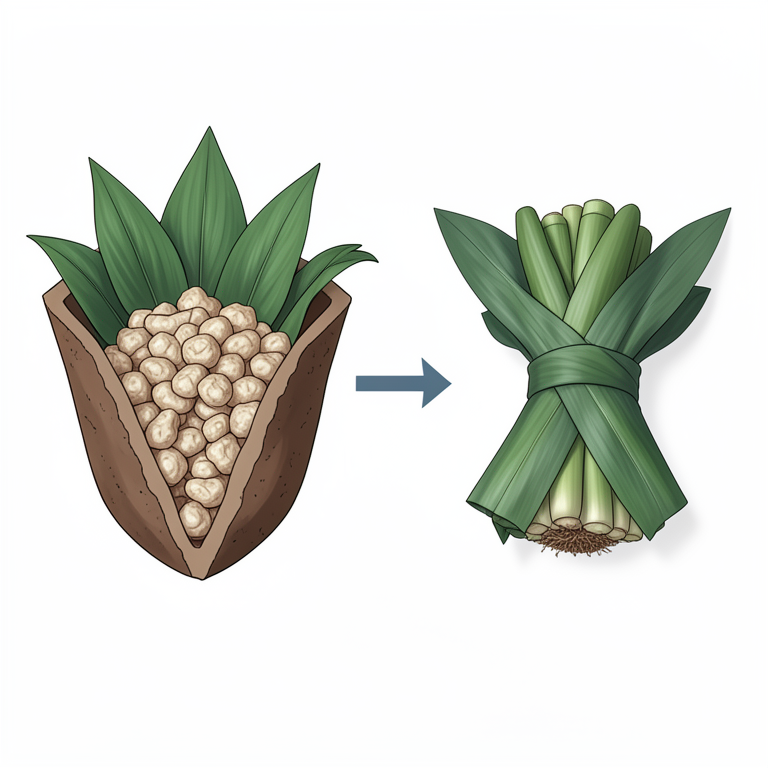
Enset Storage Methods
AI-generated conceptual illustration (Enset (Ensetventricosum) fermented pulp). It explains the idea and does not show study data.
View source evidence ↗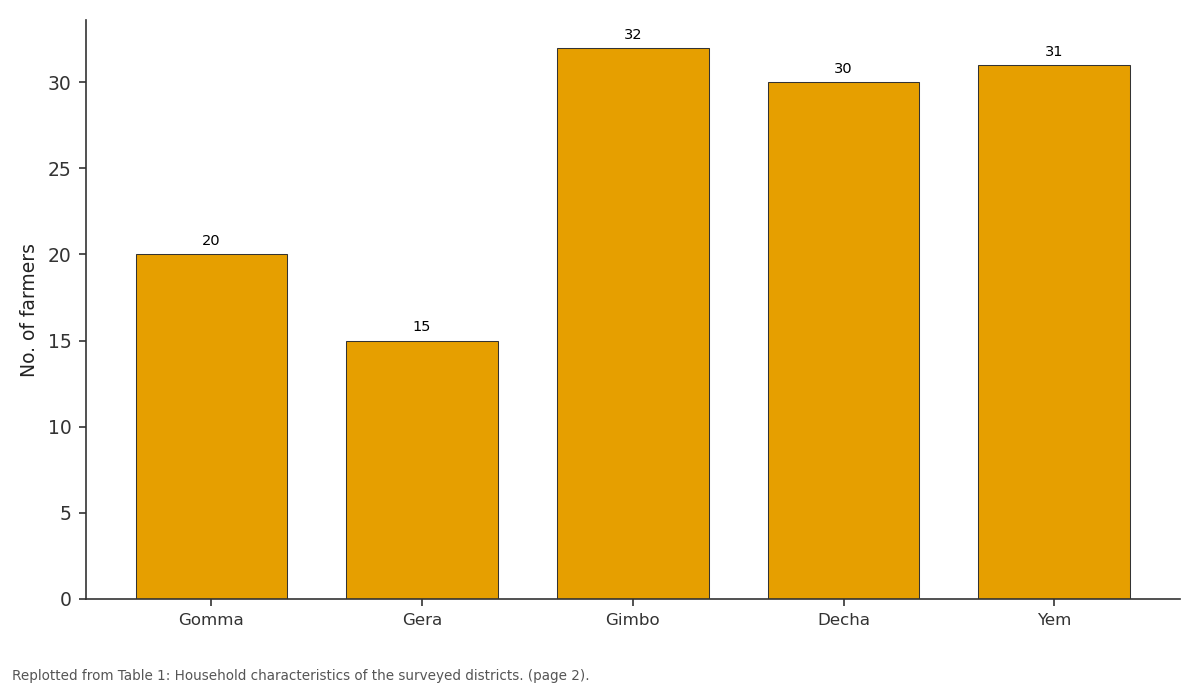
No. of farmers: Gomma vs Gera vs Gimbo vs Decha vs Yem
Replotted from Table 1 (page 2) of the original paper. Every bar is the paper's own table value.
View source evidence ↗Figures & tables
From the original paper Table 1
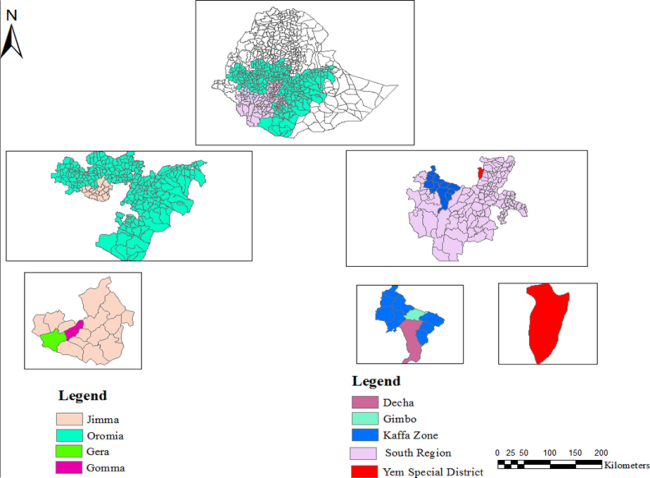 Figure 1
 Table 2
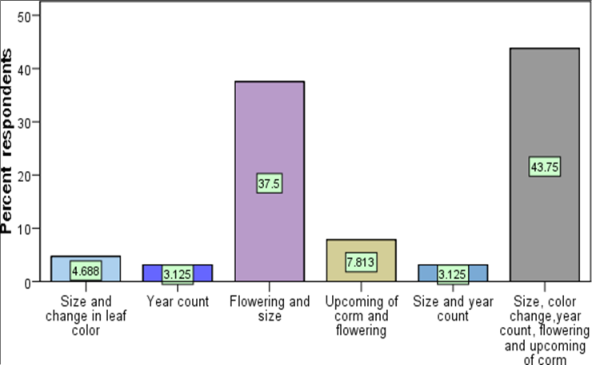 Figure 2
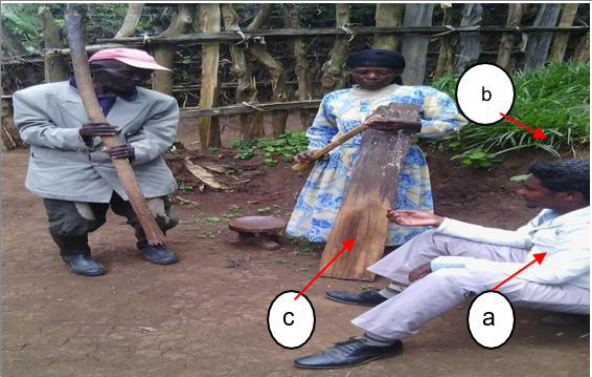 Figure 3
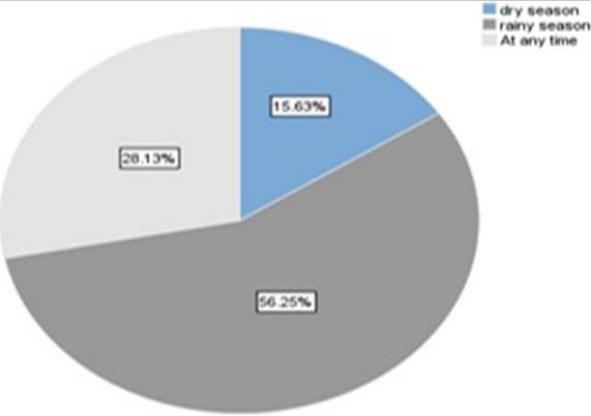 Figure 4
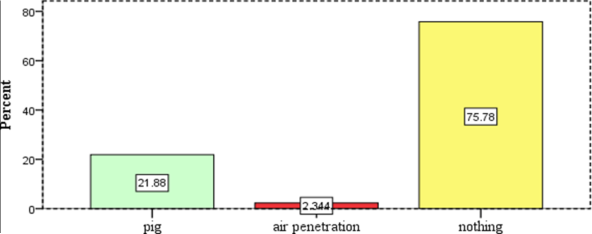 Figure 5
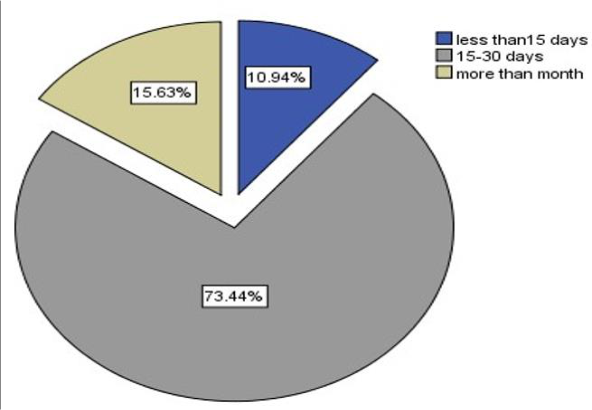 Figure 6
Introduction
Enset (E. ventricosum (Welw) is one of the most important crops grown in East, and horn of, Africa. The crop is important for food and nutritional securities, income source, combined with its socio-cultural importance and make it one of the most important food and livelihood security crops in Ethiopia (Hunduma and Ashenafi, 2011) [4] . The plant is also known by its versatility and resilience habit to combat harsh environmental conditions where other plants cannot exist. Enset supports more than 20% of Ethiopian people, predominantly societies found in South and Southwestern part (Semman et al., 2017) [6] . All plant parts are valuable as a source of food, feed, fiber, soil fertility protection and even moderating micro-climate of the area. Besides, its production is firmly related with culture, social expression and economic status of the community (Kefelegn et al., 2014) [5] . The crop has existed several hundred years ago in south and southwestern part mainly in Sidama, Dawro, Kefa, Sheka, Yem, Gedio, Gurage and in the rest of the zones; and contributed to food and nutritional security (Dejene and Yemataw, 2018) [1] . Furthermore, the crop is also used as a source of fuel wood, construction materials, containers and as shade effect for intercropping. The major products derived from enset are kocho (processed and fermented enset product), Bulla (sediment obtained from the squeezed scraped and pulverized leaf sheath and corm), amicho (that is, cooked corm, the below ground plant part). These products are made through traditional processing methods (selection of matured enset plant, preparation of fermentation pit and by clearer processing spot, decortications of the above ground plant parts by using traditional tools and finally pulverization process); and it varies from one region to another (Hunduma and Ashenafi, 2011) [4] . All of these processes are old techniques and not supported by scientific research to get quality products. In this regard, little effort so far has been done to improve the traditional enset processing materials and methods in Ethiopia, which hinders the wider utilization (such as food, industry and medicine) of the crop. Further, the methods hardly fully cover the whole yields, and the products are not assessed for quality as currently obtained from enset. Thus, comprehensive assessment of enset processing methods and materials with quality products is required to boost enset production in the country. Cognizant of these facts, the present study was designed to assess the conventional enset harvesting practices, post-harvest handling and its drawbacks in major enset growing areas of southwest Ethiopia and to collect information for future scientific intervention.
Materials and Methods Description of study areas
A total of five districts from two zones (Jimma and Kafa) and one special district (Yem) was assessed for this study from mid of October to January 2018 (Figure 1). These areas were selected for study based on strong tradition in cultivating and domesticating various enset clones with wide genetic base (Neim et al., 2019) [7] , high production potential and long history on production and management system of enset with farmers' traditional knowledge. From each district (that is, Gomma and Gera of Jimma zone Oromia, Decha and Gimbo Kaffa zone South Nation Nationality Regional State (SNNRS) and Yem special districts) an average of 30 farmers, 15 to 20 enset producers, 5 key informants and five DAs were sampled from different social groups for individual interviews, and group and key informants' discussions. The key informants were selected in order to conduct in-depth interviews and discussion sessions. They were selected from household heads of both sexes and different age groups based on their availability, willingness and practical knowledge about enset in the areas. The local administrators and agricultural extension workers helped during identifying the names of the focus groups. Field visits (home gardens, cultivated fields) were conducted to observe some of the species under cultivation. The household characteristics of the surveyed districts are presented in Table 1.
| District | No. of farmers | Religion | — | — | Sex | — | Mean age of farmers | Mean family size | Mean farm size(ha) |
|---|---|---|---|---|---|---|---|---|---|
| Ortho | Mus | Prot | Male | Female | |||||
| Gomma | 20.0 | 2.0 | 18.0 | - | 18.0 | 2.0 | 40.08 | 5.00 | 1.63 |
| Gera | 15.0 | 0.0 | 13.0 | 2.0 | 14.0 | 1.0 | 45.83 | 4.19 | 0.86 |
| Gimbo | 32.0 | 9.0 | 22.0 | 4.0 | 25.0 | 7.0 | 47.46 | 6.08 | 1.00 |
| Decha | 30.0 | 10.0 | 3.0 | 17.0 | 27.0 | 3.0 | 51.67 | 6.80 | 1.50 |
| Yem | 31.0 | 19.0 | 7.0 | 5.0 | 23.0 | 8.0 | 52.35 | 6.90 | 0.80 |
Table text extracted from the original PDF; superscript letters are shown inline. The original table image is below.
View original table image
Sampling methods and data collection
For this study, purposive and stratified random sampling methods were followed to describe the sampling units. Two zones and one special district were selected purposively and the district was stratified first based on elevation and agroecology to obtain an appropriate ecological range of enset; and kebeles were selected and judged as main enset growing areas. The present study was conducted in 25 Kebeles belonging to five administrative districts from Jimma, Kafa and Yem zones and special district from April mid of October to January, 2018. Five Kebeles were selected from each district based on consultation with district agricultural experts on the basis of enset growing potential and agroecological variation (Table 1). To undertake an exhaustive enset postharvest inventory, a total of 120 households were selected using a sample size determination method revised by Glen (2003) [3] . The representative households were selected from each district based on the farmers' owning larger farm size of enset and their growing diversified species by consulting Kebele leaders and key informants that are knowledgeable about the crop.
Data were collected from different sites through the application of participatory research appraisal tools and techniques, such as individual household interviews, direct observation, and field visits, group discussion and key informant interviews using a well-prepared questionnaire and checklists. On average twenty four individuals were randomly selected from each district for individual interviews with the help of local translators. Besides, about 15 to 20 enset producers of different social groups were identified and assembled with the help of key informants involved in the study to facilitate the group meetings and data collection. Through discussions, detailed information of the agronomic practices, gender, maturity time, postharvest handling and culinary characteristics that existed were identified and documented.
Data analysis
The collected data were analyzed through descriptive statistics (frequencies, percentages, means, etc.) to generate summaries and tables at different (Kebeles and districts) level using SPSS (1996) version 16 (Statistical Packages for Social Sciences).
Results and Discussion
Results and Discussion
Maturity determination, harvesting and post-harvest problems
The result showed that enset harvest age maturity varied from person to person. Accordingly, a majority of the respondents (43.75%) of the study area responded that they determined enset maturity for harvesting based on pseudostem size, leaf and leaf sheath color change, year counting from the start of transplanting to harvesting, flowering, and sprouting or exposure of the corm. About 37.5% respondents used flowering and size of the plant to begin the harvest or to decide maturity of their enset (Figure 2). Fewer respondents, about 3.125%, stated counting years, and size of the plant or pseudostem size, were used as maturity determination criteria. Different enset clones have different maturity periods (Figure 2). Based on these scenarios, farmers classified enset as male and female in which the female enset have smaller size, early flowering up to 3 years, which means early mature types; whereas the male enset have opposite characters. That is why the majority of other attributes are considered by farmers besides size and year count. This result was in line with the reports of Hunduma and Ashenafi (2011) [4] ; Semman et al. (2017) [6] who stated mature enset was identified by locallyestablished maturity signs, such as size of central shoot, appearance of inflorescence and exposure of the corm (Figure 2). Concerning about enset harvesting, all sampled respondents used traditional enset harvesting methods (Table 2). This traditional harvest process has its own steps, such as identifying mature enset, preparing pit and lining with leaf and leaf sheath, removing external leaf sheath, decorticating and pulverizing of the inner leaf sheath using traditional processing (harvesting) tools called Mato, Maro and Mukatupho (Figure 3). This was in parity with the report of Hunduma and Ashenafi, (2011) [4] , except naming the materials differ based on local language. As far as harvesting season is concerned, the majority of farmers (56%) in the study area harvested their enset during the rainy season, which means at a time of food shortage and directly related to a time given for fermentation of processed kocho. In this strategy, about 73.44% of farmers in study areas wait for 15-30 days for fermentation from the time of harvesting to consumption. They stated that the time for keeping fermented kocho in the hole and harvesting season depend on the economic status of the household. The surveyed community stated that farmers who have sufficient food sources harvest their enset at any season of the year and store for more than a month. The more stored in the hole the kocho quality become (Figure 4). There were a few storage problems mentioned during the survey work, which affect quality and quantity of kocho in the pit. Of these problems, 21.09% of respondents said that pigs were the main factor that reduced kocho quality and quantity; whereas, 2.34% of farmers underlined improper pit lining and covering the piled kocho, which allowed air penetration thereby leading to development of worm growth, which deteriorates kocho quality. But a majority of respondents (75.78%) stated there were no storage problems if the pit and kocho covering was properly done (Figure 5). They reported that aeration causes blackening of kocho, development of a repugnant smell, and worm development, thus consequently losing quality.
| Method of harvesting technique | — | — |
|---|---|---|
| (i) Traditional Harvested enset/ kocho/ storage places | 124 | 100 |
| (ii) In hole lined with leaf and leaf sheath | 109 | 87.20 |
| (iii) Above ground prepared from wrapped leaf and leaf sheath | 16 | 12.80 |
Table text extracted from the original PDF; superscript letters are shown inline. The original table image is below.
View original table image
Enset processing and its storage
In the study community, there were two harvested enset storage techniques in the study districts. About 109 (87.20%) of respondents stored the harvested enset in pit/hole lined with leaf and leaf sheath; and 16 (12.80%) of respondents used above ground storage prepared from wrapped leaf and leaf sheath (Table 2). The former method was mostly applied during dry season or around the pit curved trench for drainage is prepared to prevent flood penetration to the pit. According to respondents, this method was preferred for long period storage. But the later storage method was preferred during rainy season which can overcome moderate flood damage but easily destroyed by other external environment like animals and not appropriate for long storage period. Based on storage methods, altitude of the area (temperature of the area), accession used and economic status of farmers, waiting of fermentation period (storing period) from the time of processing to consumption varied. Thus, 73.44% of respondents kept their kocho in the pit for 15-30 days (Figure 6). The rest 15.63% and 10.94% of surveyed farmers allow fermentation period for more than a month and less than 15 days, respectively (Figure 6). This result agrees with the findings of Fikadu et al. (2016) [2] . Women in the surveyed area reported that a traditional starter culture (fermentation enhancer) was used to hasten fermentation and to shorten the time taken from harvesting to consumption as well as quality improvement. However, this contradicts the results of Fikadu et al. (2016) [2] who indicated a fermentation starter was not being used in Gamo Gofa and that the time from harvesting to the first consumption took more than a month.
Conclusion and Recommendations
Most producers harvest their enset using traditional methods when there is a shortage of other cereal crops, and store it either in the pit or above ground using prepared storage composed of wrapped leaf and leaf sheath depending on season and duration of storage. Additionally, due to long term experiences, the farmers identify matured enset and harvest at its proper maturity period. Using traditional harvesting equipment and cultural harvesting methods; they harvest, process and use kocho products which is heavy work and cumbersome. Generally, there were no scientifically modified harvesting and storage methods of enset in the study area; and intervention of government and non-governmental organization is paramount in modifying traditional processing through mechanization. Additionally, the role of addition of fermentation starter or fermentation enhancer on shortening of fermentation period and increasing kocho quality requires scientific investigation.
Acknowledgement
AcknowledgementThe authors appreciate Ethiopian Institute of Agricultural Research for financial support. Additionally, great thanks extended to surveyed farmers, districts agricultural offices, respective experts and development agents for their collaboration work.
References
4 in the original paper- Hunduma T, Ashenafi M. Traditional enset (Ensete ventricosum) processing Technique in South parts of West Shewa Zone, Ethiopia. Journal of Agriculture and Development. 2011;2(1):37-57.
- Kefelegn H, Tilahun BB, Girma F. Indigenous Management of Enset Root Mealybug (Cataenococcus Ensete) Williams and Matile -Ferrero (Homoptera: Pseudococcidae) in Gedeo Zone, Ethiopia. International Journal of Life Sciences. 2014 3(4):131-136.
- Semman N, Garedew W, Mulualem T. On-Farm Based Enset Diversity Study and its Agronomic Practices in Sheka Zone Sw Ethiopia. World Journal of Biology and Medical Science. 2017;4(4):39-54.
- Neim L, Smith BW. EUV mask polarization effects. In International Conference on Extreme Ultraviolet Lithography. SPIE. 2019 Sep 26;11147:84-94.
Cited by 5
From OpenAlex, OpenCitations and reference lists read by Scinovex
- Good farm practices and improved processing technology of enset for sustainable hunger solution in Ethiopia ↗
Gezahagn Kudama, Tadesse Tolera, Lemane Gebeyehu · Journal of Innovation and Entrepreneurship · 2022
Abstract Given the multi-benefits, enset cultivation has been continuously underutilized in Ethiopia. We assess best practices, processing technologies, environmental maintenance, multi-benefits of enset and its potency in hunger reduction in Ethiopia by reviewing evidence on good farm practices, improved technologies, sustainability, hunger reduction, inputs cost, and yields advantage of enset. The review results identify those best practices that optimize enset…
❝ 22PDF - Nutritional and functional properties of Enset–based foods: A review of its potential in combating hidden hunger ↗
Markos Makiso Urugo, Daniel Manore, Abinet Terefe, Fitsum Endale, Yohannes Yirga, Befikaduwa Zekarias et al. · Applied Food Research · 2026
❝ 0PDF - Post-harvest processing of Enset (Ensete ventricosum): Implications for phytochemical retention ↗
Gebremedhin D Woldesenbet · Journal of Phytopharmacology and Phytomedicine · 2025
Enset (Ensete ventricosum), a staple crop for millions in Ethiopia, plays a significant role in food security, primarily in the southern and southwestern regions. The post-harvest processing of enset, which includes various stages such as fermentation and storage, significantly influences the retention of its phytochemicals. This review examines the impact of different processing techniques on the phytochemical content of enset,…
❝ 0PDF - Biochemical changes in enset (Ensete ventricosum) during post-harvest handling ↗
Jiwook Choi · International Journal of Foreign Trade and International Business · 2025
Enset (Ensete ventricosum), a staple crop in Ethiopia, holds significant cultural, economic, and nutritional importance in the highland regions of the country. Traditionally, enset is consumed as a local food source through various products such as kocho (fermented corm), bulla (starch extract), and amicho (boiled corm). However, despite its crucial role in local food security, enset has not yet realized…
❝ 0PDF - The role of farmer preferences in overcoming post-harvest constraints of enset (Ensete ventricosum) ↗
Laura Wilson, Robert L. Brown · South Asian Journal of Agricultural Sciences · 2023
Enset (Ensete ventricosum), commonly known as the "false banana," is a vital crop for food security in Ethiopia.Despite its significance, enset faces numerous post-harvest constraints that impact its productivity and quality.This review examines the role of farmer preferences in addressing these constraints.By synthesizing existing literature, the study explores how farmer choices influence postharvest handling practices, identifies key challenges, and highlights