
Research article · 2022 · Full text
International Journal of Research in AgronomySnail farming (Heliciculture): Benefits, economic viability, challenges and prospects
Volume 5(2) · Pages 09–11 · DOI: 10.33545/2618060x.2022.v5.i2a.102 ↗
Research areasAquaculture Nutrition and GrowthMarine Bivalve and Aquaculture StudiesMollusks and Parasites Studies
Abstract
Author-writtenThe article upholds snail farming as activities that aim to grow industrial species of snails with the aim of deriving products for direct human consumption or for further processing. While the global agricultural systems are prompted to produce more food to feed the growing population, scientists and policy makers have often focused on plant and higher animals such as livestock. However, discussions involving livestock have been solely tied to cattle, poultry, pigs and shoats while stamping out small animals like snails, shrimps and insects, and their contribution to food security. Although the introduction and acceptance of snails in some world traditional cultures have been remarkably good, its introduction and prevalence in most global dish varieties is relatively low. Snails are a reliable and nutritious food source whose rearing is less strenuous, easy to start on reliance on available food sources. The mucus secretion from snails has medicinal purposes. Key challenges to snail farming are safety concerns and socio-cultural barriers towards adoption and acceptance. Snail farming is an economically viable venture with global demand for the commodity increasing as well as intensified research from pharmaceutical and cosmetic industry. While the future for snail farming seems bright, there is need for more research and development, global regulation and information sharing on the venture.
Summary
Source-checkedPlain-language reading of the full paper, prepared with AI and checked against the text. Each point links to the authors' own words.
Why it matters
- Global food production efforts have traditionally prioritized plants and larger livestock, often overlooking the potential of smaller animals to contribute to food security. View evidence ↗
- Snail farming is presented as a viable alternative food source because it is relatively easy to start and less demanding than traditional livestock rearing. View evidence ↗
- Beyond food, snails are valuable for their mucus secretions, which have applications in medicine. View evidence ↗
The question
- The paper aims to evaluate snail farming (heliciculture) as a means of producing industrial snail species for human consumption and further processing. View evidence ↗
What they did
- Snail rearing systems can be categorized as intensive or semi-intensive, utilizing indoor, open-air, or garden farm settings. View evidence ↗
- To optimize growth, it is recommended to harvest snails before they reach 24 months of age. View evidence ↗
What they found
- Snail meat is highly nutritious, containing 12-16% protein and 50 mg/Kg of iron, while remaining low in fat and cholesterol. View evidence ↗
- In the cosmetic industry, snail mucus is utilized for its ability to treat wrinkles, pigmentation, and black spots. View evidence ↗
- Compared to traditional livestock, snail farming requires lower technical, capital, and financial investments. View evidence ↗
- Snail consumption showed significant growth in 2018, increasing by 42% to reach 300 tonnes. View evidence ↗
- The annual global market for snail sales is estimated at $117 million. View evidence ↗
- In 2020, the leading global snail exporters were Morocco ($10.48M), Lithuania ($5.78M), and Ukraine ($1.90M). View evidence ↗
- A significant safety challenge is the risk of angiostrongylus infection resulting from the consumption of raw or undercooked snails. View evidence ↗
- Socio-cultural barriers exist, such as among Hausa-speaking people in Nigeria, where eating snails is considered a taboo. View evidence ↗
What it means
- The authors conclude that intensive research and development are essential to create a blueprint for optimizing the snail farming industry. View evidence ↗
- The authors recommend capacity building for farmers through subsidies and extension expertise to improve production. View evidence ↗
- The industry is currently limited by a lack of extensive research, insufficient legislative regulation, and low industrial production capacity. View evidence ↗
Visual summary
1 visualsIllustrations explain the paper; they do not show study data.
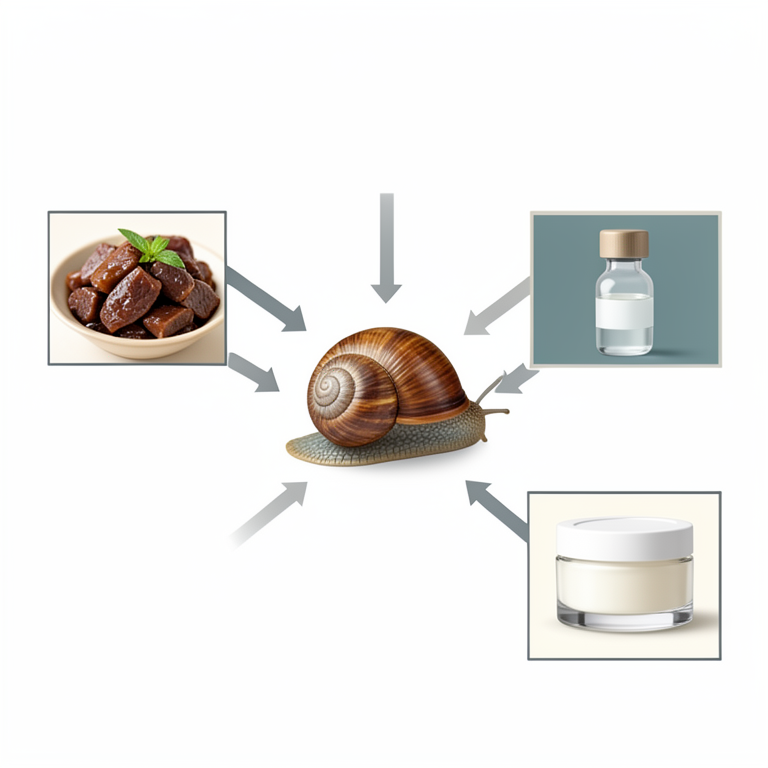
Multipurpose Utility of Snail Farming
AI-generated conceptual illustration (Giant African land snails (Achatina achatina)). It explains the idea and does not show study data.
View source evidence ↗Figures & tables
From the original paper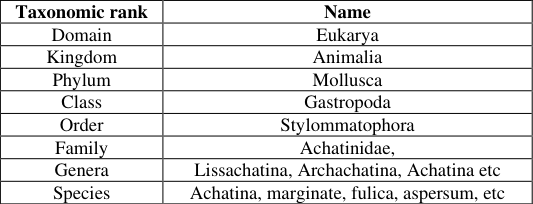 Table 1
Introduction
There is no known date when man started consuming snails, but consumption of snail meat transcends back in prehistoric times (Lubell, 2004) [9] . Snails are invertebrate animals that belong to a group called molluscs. Other members are squids, mussels, cuttlefish and slugs. Snails are reared as source of food, for their medicinal properties as well as for their aesthetic value. Meat, caviar and snail secretion are the main products of snail farming. Climate, feeding, hygiene and other edaphic (soil) factors are key to successful snail faming. Snails can be reared in indoor farms, open air farms or garden farms in intensive or semi-intensive system. Snails are vegetarians, but will not consume hairy vegetable/leaves or those that produce toxins such as physic nut (Jathropa curcas). Young snails feed on tender plant material and consume twice as much as their mature counterparts due to differences in surface area to volume ratios. As snails age, they feed on humus, dead leaves and rotten fruits. The size and age at which snails are harvested depends on the breeding objectives. However, it is recommended that snails be harvested before attaining 24 months because after this milestone, growth gradually retards. Snails are commonly reared (for domestic or commercial) in Europe, North America and parts of West Africa. [3] . A snail is 80% water, 2.4% fat and 15% protein. They are also good sources for vitamins A, K, E and B12. Feshwater snails have been used as a food source for countries such as Thailand, Taiwan, Mexico, and the Philippines. African land snails are key protein sources in West African countries such as Ghana, Ivory Coast and Nigeria. Snails are also used for medicinal value in production of lectin, slime, allantonin, collagen and elastin (Cilia & Fratini, 2018) [16] . In West Africa, the bluish secretion that is collected from the shell is used in folk medicine in infant development. It is also believed that the meat is ideal in curation of asthma and ulcers. It was also believed to contain aphrodisiac properties and would be recommended for dignitaries in the evening in imperial Rome. Agbogidi et al., (2008) [2] noted that snail meat forms important part of meal in West Africa, especially in the forest belts. Key bioactive compounds for pharmaceutical and cosmetic industries is harvested from snails. Such compounds can be used in the manufacture of less toxic formulations with less post effects. Key ethnomedicinal uses of snails (and or its extracts) is used in wound healing, smooth soothing, reliever of stomach cramps, inflammation, small pox and chronic bronchitis (Dhiman & Pant, 2021) [5] . Snail mucus secretion is used in the cosmetic industry to remove pigmentation, wrinkles and black spots (Liu, Sood & Steinweg, 2017) [8] .
Economic viability
In West African countries snail meat has a huge demand. In Ivory Coast, 7.9 million kg are eaten per year, while in the neighboring Ghana the demand outweighs supply. Snail rearing is an environment-friendly venture that can be carried out in the backyard because the shelled gastropods' exudates or droppings does not produce offensive smell. Snail farming is relatively inexpensive venture in terms of technical, capital and financial inputs as compared to those of livestock types. Snails are vegetarians and therefore have a wide range of food sources from the environment such as maize shaft residues, grains, banana peels, and succulent domestic vegetable wastes such as pawpaw, cabbage, pineapples, cherry, lettuce, and cassava (Okafor, 2001) [11] . Agbogidi, Okonta & Ezeana, (2008) [2] noted that snails are known to adapt in a wide range of environments, and can be reared in urban areas without interfering with people's peace because they need relatively small-scale. Snail farming is also very feed efficient venture, meaning that they are cheap to rear at domestic and commercial level with high returns on low input. Ghosh, Jung & Meyer-Rochow, (2016) [7] noted that food conversion efficiency of Achatina fulica was relatively higher than that of conventional livestock.
Challenges
Social and cultural restrictions are a key impediment to extensive adoption of snail farming. For instance, while religious beliefs may bind people against this delicacy, most people may turn to be generally molluscophobic. In Nigeria, for most Hausa speaking people, eating snails is considered a taboo because they believe snails come from a ghostly existence (dodo) (Agbogidi, Okonta & Ezeana, 2008) [2] . The venture may not warrant a quick return on capital invested especially for small-scale farmers due to the relative slow growth rate of the animals. In addition, the consumable meat makes up a maximum of 40% of the snail's total live weight. Safety concerns on the consumption of snails is also a key challenge. For instance, cases of angiostrongylus infection have been proved to occur due to ingestion of raw por undercooked snail (Lv et al., 2009) [10] . Wan & Weng, (2004) [14] noted that eosinophilic meningitis is characteristic to not only to people who eat raw snail meat but also playing with snails as pet. Zubar & Yu, (2021) [15] added that lack of extensive research and development, legislative regulation, and low industrial production capacity are key challenges to snail farming.
Prospects
Snail farming is attracting a lot of attention and in coming years, the industry is poised to have evolved massively. With the dynamics of pharmaceutical and cosmetic industries more research to unearth more bioactive compounds will be directed into the industry. The business has good returns, owing to the fact that the commercialization of the venture is on the rise. For instance, there is a thriving international trade of snails in Europe and North America. Consumption of snails rose by 42% to 300 tonnes in 2018, which is attracting investors. The global market of snail sales is estimated to be $ 117 M aannually (Escargot World, N.D).
In France, there is 5 million kg annual requirement and more than 60% of it is imported. In Italy, annual consumption stands at 306 million snails. In West Africa, snails have always been a key ingredient to the people's diet. In Ivory Coast, for instance, an estimated 7.9 million kg is consumed yearly (Onuigbo, 2015) [12] . According to Tridge (2020) [13] , top three exporters of snails globally in 2020 were Morocco with an export value of $ 10.48 M, Lithuania, ($ 5.78 M) and Ukraine ($ 1.90 M). In 2020, France was the top snail importer with an import value of $ 15.2 M, while Morocco was the main producer with a 16.3K MT worth of production volume.
Conclusions and policy implications
Snail farming is attracting entrepreneurs globally. Snails are reared for their nutritious, aesthetic and medicinal values. To optimize production and development of the industry, intensive research and development is necessary to set the blue print for this venture. There is need for: Capacity building to the smallscale and large-scale farmer to optimize production, including provision of subsidies and necessary extension expertise; sustainable commercialization of the industry; building processing infrastructure; infrastructural and organizational planning at national and international level and introduction of heliciculture to the mainstream school education system.
Figures and tables from the paper
| Taxonomic rank | Name |
|---|---|
| Domain | Eukarya |
| Kingdom | Animalia |
| Phylum | Mollusca |
| Class | Gastropoda |
| Order | Stylommatophora |
| Family | Achatinidae, |
| Genera | Lissachatina, Archachatina, Achatina etc |
| Species | Achatina, marginate, fulica, aspersum, etc |
Table text extracted from the original PDF; superscript letters are shown inline. The original table image is below.
View original table image
References
11 in the original paper- Agbogidi OM, Okonta BC. Reducing poverty through snail farming in Nigeria. Agriculture and Biology Journal of North America. 2011;2(1):169-172.
- Agbogidi OM, Okonta BC, Ezeana EL. Effects of two edible fruits on the growth performance of African giant land snail (Archachatina marginata Swainson). Journal of Agricultural and Biological Science. 2008;3(3):26-29.
- Gangbé L, Dessouassi E, Houndonougbo PK, Brahim AA, Djimènou D, Agadjihouedé H, et al. Trophic regime of the giant freshwater shrimp Macrobrachium vollenhoveni (Herklots, 1857) in the lower Oueme valley in Southern Benin. Int. J Biol. Sci. 2022;4(1):37-45. DOI: 10.33545/26649926.2022.v4.i1a.52
- Dhiman V, Pant D. Human health and snails. Journal of Immunoassay and Immunochemistry. 2021;42(3):211-235.
- Escargot World. (N.D). Snail Farming on the Rise in the USA in 2020. Retrieved from: https://escargotworld.com/snail-farming-on-the-rise-in-the-usa-2020/
- Ghosh S, Jung C, Meyer-Rochow VB. Snail farming: An Indian perspective of a potential tool for food security. Annals of Aquaculture and Research. 2016;3(3):1-6.
- Liu L, Sood A, Steinweg S. Snails and skin care: An uncovered combination. JAMA dermatology. 2017;153(7):650-650.
- Lv S, Zhang Y, Liu HX, Hu L, Yang K, Steinmann P, et al. Invasive snails and an emerging infectious disease: Results from the first national survey on Angiostrongylus cantonensis in China. PLoS neglected tropical diseases. 2009;3(2):1-8.
- Wan KS, Weng WC. Eosinophilic meningitis in a child raising snails as pets. Acta Tropica. 2004;90(1):51-53.
- Zubar I, Yu O. Prospects of Heliciculture Development as an Innovative Industry of Agriculture in Ukraine. The Scientific Heritage. 2021;60(3):18-27.
- Cilia G, Fratini F. Antimicrobial properties of terrestrial snail and slug mucus. Journal of Complementary and Integrative Medicine 2018;15(3):1-10.
Cited by 6
From OpenAlex, OpenCitations and reference lists read by Scinovex
- Evidence for large land snail cooking and consumption at Border Cave c. 170–70 ka ago. Implications for the evolution of human diet and social behaviour ↗
Marine Wojcieszak, Lucinda Backwell, Francesco d’Errico, Lyn Wadley · Quaternary Science Reviews · 2023
❝ 11PDF - Nutritional potential of the giant African land snail (Achatina fulica) as a sustainable protein source for food and feed ↗
Chet Raj Pathak, Himal Luitel, Wang Tshiring Pakhrin, Linggawastu Syahrulawal, Gita Pandey Sadaula, Dhaka Ram Bhandari et al. · Journal of Agriculture and Food Research · 2025
Snails offer a rich combination of historical significance, nutritional value, and gastronomic diversity. Studies evaluating the nutritional characteristics of snails commonly available in Nepal are limited. This study hypothesized that the giant African snail ( Achatina fulica ) can be an alternative nutrient source for future food and feed applications. Snail samples were collected from nine sites in the Chitwan…
❝ 3PDF - Harvest, Export, Economic, and Legal Status of Land and Sea Snails in Türkiye ↗
Muzaffer Mustafa Harlıoğlu, Deniz Anıl Odabaşı, Konul Ahmadova, Zahra Batool · Journal of Shellfish Research · 2024
Türkiye (Turkey) includes distinct environmental conditions, including several types of temperate zones and abundant natural resources, and is a significant hub for the production, export, and regulatory issues of land and sea snails. Studies on species identification have shown that there are over 700 species of snails representing 36 families in Türkiye. The family Helicidae includes Eobania vermiculata, Cornu aspersum,…
❝ 1PDF - Snail farming features in southern Benin ↗
Hilaire Sorébou Sanni Worogo, Massourou Tidjani, Alassan Assani Séidou, Hiram Babio, C.D.A. Alabi, Myriam Koudjoue et al. · Scientific African · 2026
Snail farming is emerging as an alternative activity for greater economic resilience for some producers across West Africa. This study aimed to characterize snail farming practices and their constraints within production units established in the municipality of Abomey-Calavi. Ninety (90) snail farmers distributed across 10 districts were surveyed. After applying multiple correspondence analysis (MCA) to the data, results revealed the…
❝ 0PDF - Mechanisms for Enhancing Snail Farming Among Farmers for Employment Generation and Poverty Reduction in Ebonyi State ↗
Benjamin Onwe Egbe, Kingsley Eze, Kelvin Onwe, James Otene, Ukamaka Maryann John · British Journal of Education · 2025
Unemployment and poverty are very common twin socio-economic problem in Ebonyi State, inspite of the employment opportunities in snail rearing. Thus, this study was carried out to identify mechanisms for enhancing snail farming for employment generation and poverty reduction in the state. The study adopted survey research design through questionnaire to elicit information from 144 respondents. Data gathered through questionnaire…
❝ 0PDF - Health benefits of snail farming in Imo state, Nigeria: a life science and biomedical approach ↗
Kelechi Henry Anyiam, Fidelis Okwudili NWOSU, Innocent Uche Ojoko NWAIWU, Fausat Ajoke KADIRI, C. O. Obi-Nwandikom, Maryann Nnenna OSUJI et al. · Journal of Life Science and Biomedicine · 2025
Snail farming links food production, life sciences, and biomedicine, offering not only economic benefits but also vital health advantages. This study investigated the health benefits of snails, described the socioeconomic characteristics of snail farmers, compared the price elasticity of demand for snails with other animal proteins, and identified the key factors influencing profitability in snail farming within the study area.…
❝ 0PDF