
Research article · 2017 · Full text
International Journal of Advanced Biochemistry ResearchEvaluation of the appetite suppressing potential of aqueous extract of Cymbopogon citratus (Lemon grass) leaf using rat model
Volume 1(2) · Pages 04–07 · DOI: 10.33545/26174693.2017.v1.i2a.95 ↗
Research areasPharmacology and Obesity TreatmentDietary Effects on HealthNatural Antidiabetic Agents Studies
Abstract
Author-writtenDue to the increasing prevalence of obesity among children, adolescents and adults, it has been said to be a global health concern. Energy imbalance between calories consumption and expenditure has been identified as the major cause of obesity. Thus, the aim of this work was to evaluate the appetite suppressing potential of aqueous leaf extract of lemon grass (Cymbopogon citratus) in wistar rats. Freshly harvested leaf of C. citratus was dried at room temperature and afterwards processed into fine powder. 500 g of powdered plant sample was soaked in 3 L of distilled water for 24 hr and afterwards sieved and concentrated to dryness. The extract was reconstituted in distilled water to give the required doses of 150, 300, 600 mg/kg bw. Twenty adult male wistar rats were divided into four groups of five rats per group. Group I was the normal control and was only fed with normal rat feed and water. Groups II-IV were orally administered with 150, 300 and 600 mg/kg bw respectively. The result shows that the quantity of food consumed by the control group significantly (P
Summary
Source-checkedPlain-language reading of the full paper, prepared with AI and checked against the text. Each point links to the authors' own words.
Why it matters
- Obesity is considered a global health concern due to its increasing prevalence across children, adolescents, and adults. View evidence ↗
- The primary cause of obesity is identified as an energy imbalance between the consumption and expenditure of calories. View evidence ↗
The question
- The study aimed to evaluate whether an aqueous leaf extract of lemon grass (Cymbopogon citratus) could suppress appetite in wistar rats. View evidence ↗
What they did
- The extract was prepared by soaking 500 g of powdered lemon grass leaves in 3 L of distilled water for 24 hours, then filtering and concentrating it at 50°C for 3 days. View evidence ↗
- The experiment used adult male wistar rats with weights ranging from 130 to 180 g. View evidence ↗
- Twenty rats were split into four groups of five: a control group (Group I) and three treatment groups receiving 150, 300, and 600 mg/kg of the extract (Groups II-IV). View evidence ↗
- Feed and water intake were measured weekly, and body weight changes were recorded at the start and after 21 days of treatment. View evidence ↗
What they found
- The control group showed a significant (P<0.05) increase in food consumption over the treatment periods. View evidence ↗
- In contrast, rats in groups II-IV showed a significant (P<0.05) decrease in food consumption that was dose-dependent over the treatment periods. View evidence ↗
- While water intake significantly (P<0.05) increased in the control group, the treated groups showed the opposite effect. View evidence ↗
- Treated rats experienced a significant (P<0.05) reduction in body weight over the treatment periods compared to the control. View evidence ↗
What it means
- The authors conclude that C. citratus has the potential to suppress feed intake and reduce body weight, making it a promising candidate for obesity management research. View evidence ↗
Visual summary
1 visualsIllustrations explain the paper; they do not show study data.
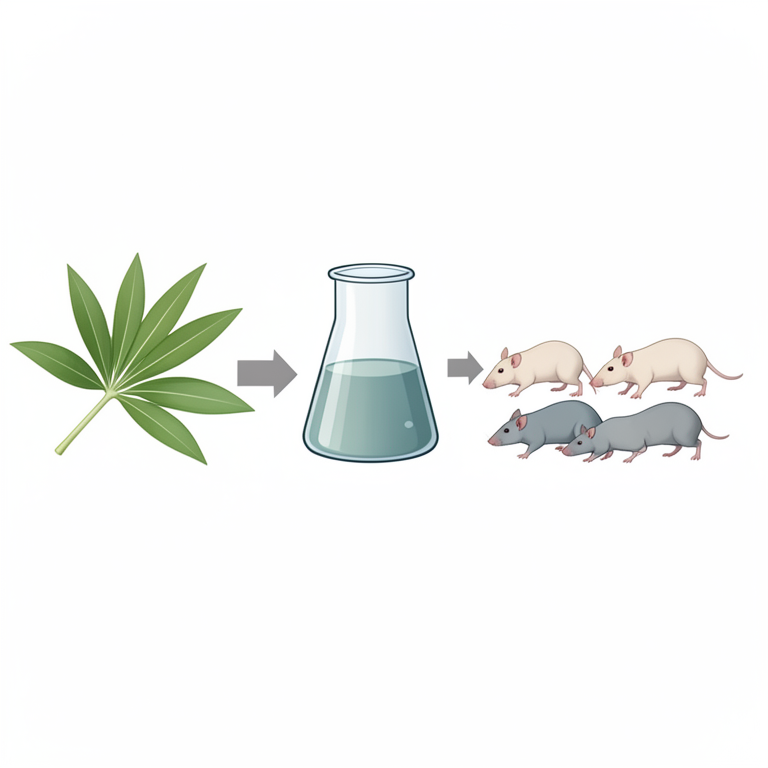
Experimental Workflow
AI-generated conceptual illustration (Wistar rats and Cymbopogon citratus (lemon grass) leaves). It explains the idea and does not show study data.
View source evidence ↗Figures & tables
From the original paper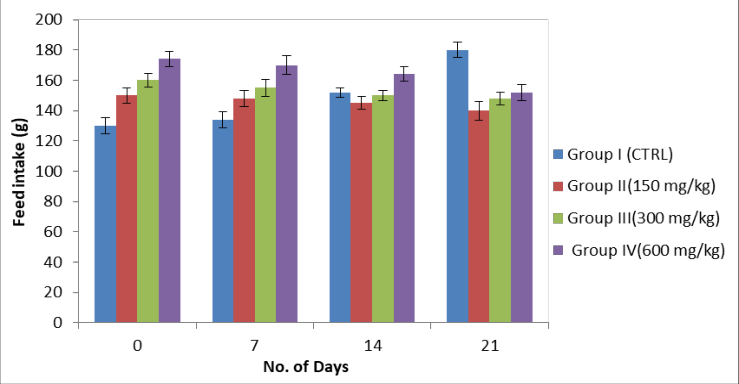 Figure 1
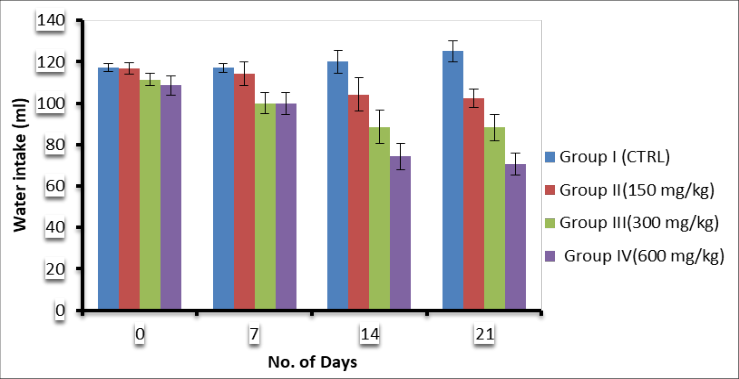 Figure 2
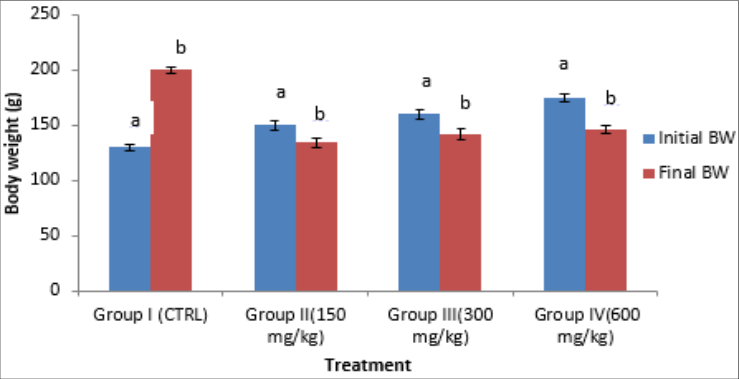 Figure 3
Introduction
Due to the increasing prevalence of obesity among children, adolescents and adults, the condition is considered a global health concern [1] . Obesity is strongly associated with conditions such as type-2 diabetes, ischemic heart disease, stroke and cancer [2] and it is increasing globally [3] . Energy imbalance between calories consumption and expenditure has been identified as the major cause of obesity [4] . Diverse treatment approaches abound for obesity and include fundamentally intake of calorie restricted diet as well as exercise [5] others include the use of drugs which although may offer short-term benefits are associated with weight gain when withdrawn, side effect from medication and potential for drug abuse [6] . Nowadays, owing to the multiple therapies recommended for weight control, people are eager to employ methods that are cost effective and devoid of side effects [7] . Scientific reports have shown that certain traditional herbal preparations wield the potential to effectively reduce appetite and consequently reduced food consumption and weight loss [5] . Cymbopogon citratus commonly known as lemon grass is an aromatic perennial tall grass with rhizomes and densely tufted fibrous root. It has a short underground stems with ringed segments, coarse, green slightly leathery leaves in dense clusters [8] . It is widely cultivated in tropical and subtropical countries [9] . Lemon grass occupies an important position in the folk medicine of different regions of the world evident by the fact that it has been used effectively to treat of diverse arrays of human disease such as digestive disorders, fevers, menstrual disorder, rheumatism and other joint pains [10] .
International Journal of Advanced Biochemistry Research
Due to limited scientific data on the medical claims of lemon grass [10] , it is imperative to deepen research effort to expand the dearth of data available on the medicinal potentials of C. citratus.
Materials and Methods Collection and Processing of Plant Material
Leaves of Cymbopogon citratus was harvested locally and subsequently identified and authenticated at the herbarium unit of the Department of Forestry Michael Okpara University of Agriculture, Umudike Abia State.
Preparation of Plant Extract
The leaves of C. citratus were thoroughly washed with clean tap water to get rid of sand and debris. The leaves were dried at room temperature. The dried leaves were subsequently ground and sieved to fine powder with the aid of a mechanical homogenizer. 500 g of the sample was subsequently soaked in 3 L of distilled water for 24 hr and afterwards filtered using a clean sieve and was concentrated to dryness in a water bath for 3 days at 50 o C. The extract was reconstituted in distilled water to give the required doses of 150, 300, 6000 mg/kg body weight used in this study.
Animals
Adult male wistar rats weighing 130-180 g were housed in metal cages in the Animal House of the Department of Human Physiology, Abia State University, Uturu.
Median Lethal dose 50% (LD50)
Three groups of rats were separately administered with 10, 100 and 1000 mg/kg of extract orally and afterwards observed for 24 hr for signs of toxicity. Being that mortality was not observed in any of the groups, another three groups of one rat each was each administered with 1600, 2900 and 5000 mg/kg of extract separately. The animals were observed for 48 hrs for signs of toxicity [11] .
Animal Grouping
Twenty adult wistar rats were divided into four groups of five rats Group I: Was fed with rat feed and water ad libitum.
Statistical Analysis
All data were expressed as mean ± standard deviation. Oneway analysis of variance (ANOVA) and Duncan test was carried out to test any significant differences between their means. P≤05 were considered statistically significant.
Discussion
The indispensability of C citratus (lemon grass) in folk medicine of different regions of the world in the treatment of diverse arrays of human disease such as digestive disorders, fevers, menstrual disorder, rheumatism and other joint pains is established [10] . Figure 1 shows the feed intake of rats administered with varying doses aqueous extract of lemon grass indicating that the quantity of food consumed by the control group significantly (P<0.05) increased across treatment periods. However, the amount of food consumed by group II-IV significantly (P<0.05) decreased in a dose dependent manner over treatment periods. Figure 2 shows the water intake of rats administered with different doses of aqueous extract of lemon grass showing that the quantity of water consumed by the control group significantly (P<0.05) increase over treatment periods. However, a contrary observation was made on the treated groups. Figure 3 shows the weight change of rats administered with varying doses of lemon grass indicating a significant (P<0.05) reduction in the weight of treated rats over treatment periods. The result is consistent with the finding of Savas et al. [11] which reported a significant (P<0.05) decrease in the body weight of quails fed diet supplemented with 3% lemon grass at the 7 th , 21 st and 35 th day of feed consumption compared to the control. In conclusion, it can be deduced from this study that wields the potential to suppress feed intake hence body weight and thus constitutes an ideal candidate in research effort to effectively manage obesity.
References
12 in the original paper- World Health Organisation. Obesity and overweight fact sheets, 2020. Available from: https://www.who.int/news-room/factsheets/detail/obesity-and-over weight.
- Hardeman W, Griffin S, Johnston M, Kinmonth AL, Wareham NJ. Interventions to prevent weight gain: a systematic review of psychological models and behaviour change methods. Int J Obes Relat Metab Disord. 2000;24:131-143.
- World Health Organisation. Obesity: preventing and managing the global epidemic. Report of a WHO consultation on obesity. Geneva: World Health Organisation, 1997.
- Verma RK, Paraidathathu T. Herbal medicines used in the traditional Indian medicinal system as a therapeutic treatment option for overweight and obesity management: A review. Int J Pharm Pharm Sci. 2014;6:40-47.
- Chandrasekaran CV, Vijayalakshmi MA, Prakash K, Bansal VS, Meenakshi J, Amit A. Review Article: Herbal Approach for Obesity Management. AJPS. 2012;3:1003-1014.
- Abdollahi M, Afshar-Imani B. A review on obesity and weight loss measures. Middle East Pharmacy. 2003;11:6-10.
- Liu JP, Yang M, Du XM. Herbal medicines for viral myocarditis. Cochrane Database Syst Rev, 2004, CD003711.
- Carlin E, Contar J. Silva-Filho DP. Pharmacology of lemon grass (Cymbopogon citratus Stapf) 1 Effects of teas prepared from leaves on laboratory animals. J Ethnophamacology. 1986;17(1):37-64.
- Figueirinha A, Paranhos A, Perez-Alonso JJ, SantosBuelga C, Batista MT. Cymbopogon citratus leaves. Characterisation of flavonoids by HPLC-PDA-ESI/MS and an approach to their potential as a source of bioactive polyphenols. Fd. Chem. 2008;110:718-728.
- Lorke D. A new approach to practical acute toxicity testing. Arch Toxicol. 1983;54(4):275-287.
- Simon JE, Chadwick AF, Cracker LE. The scientific literature on selected herbs and medicinal plants of the temperate zone. Arch. Int. Med. 1984;148:36-39.
- Savaş S, Yusuf K, Berrin KG, Eray AMK, Şeyda Ö, Saadet T. The Effect of dietary supplementation of Lemon Grass (Cymbopogon citratus) on performance, carcass quality, and marketing of quail (Coturnix Coturnix japonica). Scientific Works. Series C. Veterinary Medicine. 2016;62(1):98-103.
Cited by 2
From OpenAlex, OpenCitations and reference lists read by Scinovex
- Cymbopogon schoenanthus (L) extract ameliorates high fat diet-induced obesity and dyslipidemia via reducing expression of lipogenic and thermogenic proteins ↗
Asmaa Elebishehy, Mohamed Morsi M. Ahmed, Badr Abdullah Aldahmash, Mostafa Abd El-Gaber Mohamed, Aya A. Shetaia, Shaden A.M. Khalifa et al. · Fitoterapia · 2024
❝ 7 - Combination Effect of Slow Interval Training and Lemongrass Ethanol Extract (Cymbopogon citratus) on Body Weight and Fat Mass in Male Wistar Rats (Rattus norvegicus Sp) Obesity Model ↗
Sulyaprilawati Battri Siahaan, Yetty Machrina, Tri Widyawati, Rusdiana Rusdiana, Maya Savira · Journal of Biomedicine and Translational Research · 2025
Background: Obesity, a global health crisis affecting over 890 million adults, requiring effective and safe management strategies. Lifestyle-based interventions, such as physical exercise and herbal supplementation, provide promising non-invasive alternatives. Slow Interval Training (SIT) improves fat metabolism with low injury risk, while lemongrass (Cymbopogon citratus) contains bioactive compounds with anti-obesity potential.Objective: This study investigates the combined effects of SIT and…
❝ 0PDF