
Research article · 2021 · Full text
International Journal of Research in AgronomyThe status, challenges, and prospects of agricultural production and productivity in Ethiopia: A review
Volume 4(2) · Pages 108–114 · DOI: 10.33545/2618060x.2021.v4.i2a.132 ↗
Research areasRangeland Management and Livestock EcologyLand Rights and Reforms
Abstract
Author-writtenEthiopia is heavily dependent on its agricultural sector, which has suffered from recurrent droughts. Rapid population growth, change of arable land to urban expansion, climate change, unemployment, waterlogging in wetland areas, salinity in arid and semi-arid, acidity in high rainfall areas, and depletion of natural resources are causing food shortages. Productivity performance in the agriculture sector is critical to improvement in overall economic well-being. Therefore, this article focused to reviewing the country’s current production and productivity of agricultural challenges and opportunities. In addition to that, the status of the agricultural production of the country were reviewed. The seminar mainly concentrated on land degradation and deforestation, land fragmentation, the shortage of farmland, climate change, unevenly distributed construction and urbanization, lack of integration among stakeholders, political instabilities, and its prospects. Ethiopia has great opportunities, such as commercial farming investments in cereals, cotton, fruit, vegetables, and ornamental plants. The country has also many opportunities in the areas of livestock production. However, Ethiopia’s current fruit, vegetable, and livestock production for export are very limited.
Summary
Source-checkedPlain-language reading of the full paper, prepared with AI and checked against the text. Each point links to the authors' own words.
Why it matters
- Agriculture is the primary economic driver for Ethiopia, contributing 41.4% of the GDP and employing 80% of the workforce. View evidence ↗
- The sector is dominated by smallholder farmers, who are responsible for over 95% of the nation's agricultural output. View evidence ↗
- Ethiopian agriculture is currently characterized by low productivity and a reliance on traditional farming methods. View evidence ↗
The question
- The objective of this review is to examine the current status, the challenges faced, and the future prospects of agricultural production and productivity in Ethiopia. View evidence ↗
What they did
- The authors conducted a review of existing literature to identify the challenges and opportunities affecting the country's agricultural productivity. View evidence ↗
What they found
- Maize yields in smallholder farms are significantly below potential, averaging 2.6 t ha-1 compared to a potential yield of 7.8 t ha-1. View evidence ↗
- Approximately 40% of Ethiopia's agricultural land is affected by land degradation, which reduces overall productivity. View evidence ↗
- Land distribution is highly skewed, with 38% of households having access to less than 0.5 hectares of land. View evidence ↗
- Mechanization is extremely low, with only 0.7% of land preparation and less than 0.8% of crop threshing being mechanized. View evidence ↗
- About 95% of food production in Ethiopia relies on rainfall, indicating a major opportunity for investment in irrigation. View evidence ↗
What it means
- The authors conclude that overcoming agricultural obstacles requires a coordinated effort from governments and NGOs to commercialize agriculture through better infrastructure and incentives. View evidence ↗
- The authors recommend that the government implement institutional reforms to promote private investment and the adoption of innovative technologies. View evidence ↗
Visual summary
1 visualsIllustrations explain the paper; they do not show study data.
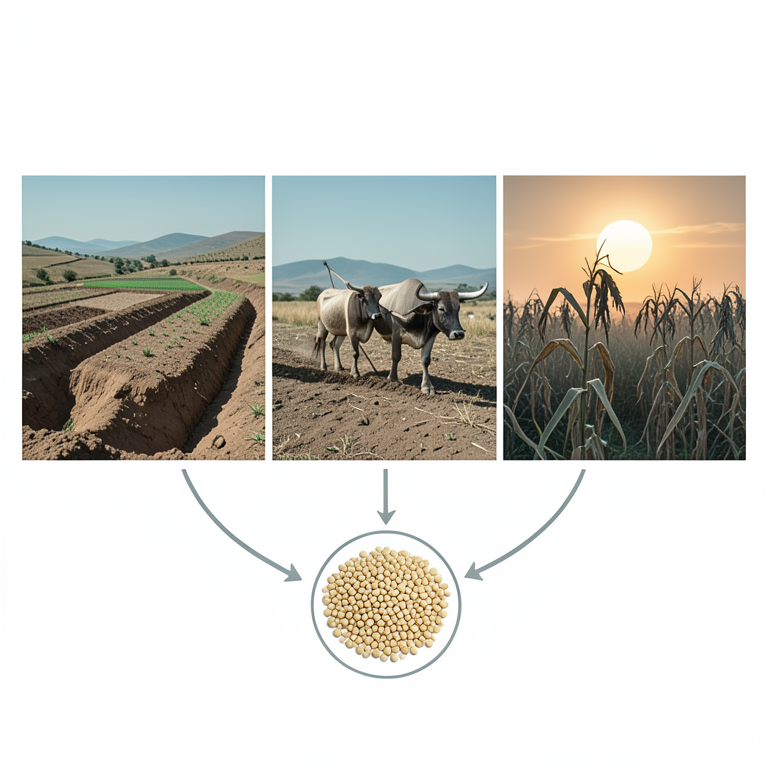
Interconnected Challenges of Ethiopian Agriculture
AI-generated conceptual illustration (Ethiopian highland agricultural landscapes with teff and maize crops). It explains the idea and does not show study data.
View source evidence ↗Figures & tables
From the original paper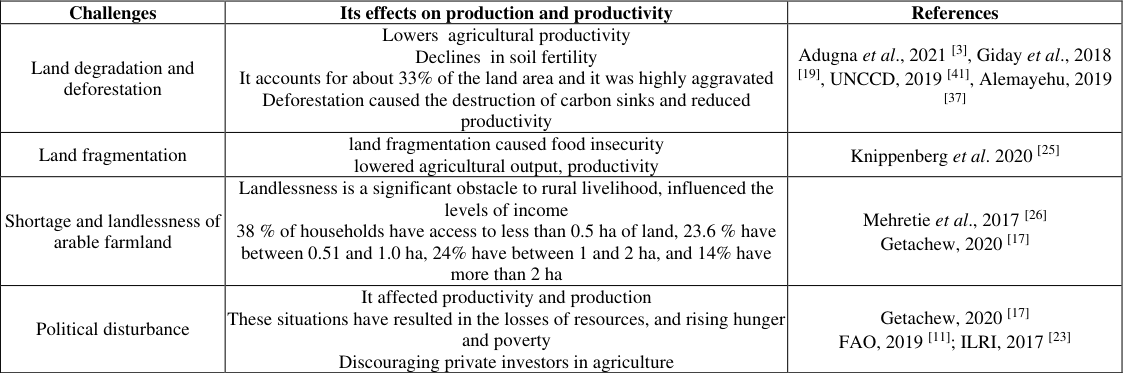 Table 1
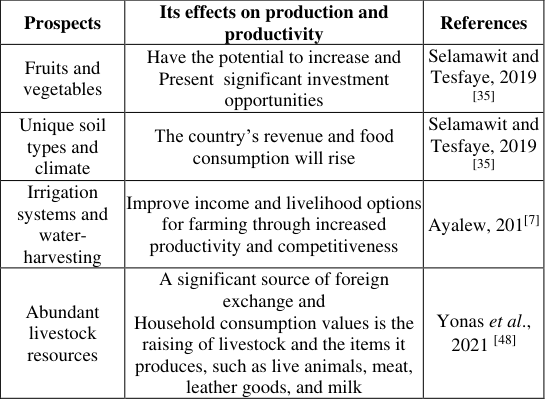 Table 2
Introduction
Agricultural activity is dominated by smallholder farmers who produce more than 95% of the country's agricultural output (Gebeyanesh et al., 2021) [15] . Agriculture, which accounts for 41.4% of Ethiopia's GDP and 80% of total employment, is the country's economic backbone. Productivity performance in the agriculture sector is critical to improvement in overall economic well-being. The current Ethiopian agriculture is best characterized by traditional farming methods and low production and productivity (Gebissa, 2021) [16] . Providing Ethiopians with food security will be very difficult in the upcoming decades. This is a result of the population's rapid growth, change of arable land to urban expansion, climate change, depletion of natural resources, inflation of basic needs, unemployment, political unrest, and civil turmoil (Tadesse and Alemayehu, 2019; USAID, 2018) [37,43] . In Ethiopia, both the price and demand for food have rushed more recently than before. The variation in food prices occurs during a short time, during a season, and over several years. The wholesale price unit of maize grain in the Ethiopian capital city of Addis Ababa alone increased from 1,469 to 5,013 in Ethiopian Birr (ETB) per ton from 2005 to 2012, and the price has tripled in the past five years. The average food price increased from 7.4 to 15.8 percent between 2014 and 2019 (http://knoema.com/atlas). Ethiopia's government has been forced to purchase food at a very high cost due to a lack of food self-sufficiency and the inefficiency of economic growth. High-input and resource-intensive farming practices in Ethiopia are responsible for the loss of vital microorganisms, extensive deforestation and soil nutrient depletion have a negative impact on agricultural outputs (FAO, 2017) [13] . Ethiopians have primarily engaged in mixed agriculture. Due to religion and cultural preferences, they have primarily relied on cultivating the land and herding mammals and birds for a long period throughout history (Getachew, 2020) [17] . However, the agricultural sector has shown remarkable resilience over many centuries though it is now progressively failing (Plecher, 2009) [32] . The country is known for the regular food shortage that occurred due to droughts, sudden outbreaks of natural disasters, pests, lack of rainfall, and shortage of technological advancement in the past periods. Therefore, enhancing the application of extension services in agronomic techniques, afforestation, protection of livestock and crop plants, access to financial support, and time-based markets can enhance the community's standard of living (UNCTAD, 2017) [42] . Moreover, the farmers' use of conventional farming methods and equipment combined with the rapidly growing population forced them to expand farmland into the sensitive ecological system, endangering their own way of life by causing environmental desertification. Ethiopia's agriculture heavily relies on oxen plow and rain-fed by neglecting other alternative technologies since the time of the Neolithic era (Getachew, 2020) [17] . However, the government attempted to displace the private sector's leadership by ignoring mechanization possibilities and rural finance and credit facilities. The problems related to basic infrastructures like roads, hydroelectric generation plants, irrigation tools, and other farm equipment availability in the country and the limitation of foreign currencies for importation limited the attraction of the agricultural sector to private investors (Ibid). In addition, political instability, economic, and social crisis in the Middle East countries have their own negative impacts on agricultural production (Abdullah and Zecca, 2017) [1] . As stated by Getachew (2020) [17] , the practice of mechanized agriculture in Ethiopia is estimated at 0.7% for land preparation while it is less than 0.8% for crops thresher machines. These still indicated very little transformation in the utilization of technologies in production. However, traditional agriculture is inefficient to feed these populations unless further modifications are implemented in the policy of the country. Generally, Ethiopian agriculture productions are challenged by complex production constraints of abiotic and biotic factors. In short, unemployment, waterlogging in wetland areas, salinity in arid and semi-arid areas, and acidity in high rainfall areas, pests, and erratic rainfall distribution are common problems. The effects of the aforementioned issues differ across the country and from location to location. For instance, According to Merga and Ahmed (2019) [29] waterlogging is a major issue in the Vertisols of the highlands whereas salinity is in lowland areas of the country. Moreover, the authors mentioned that in locations with high rainfall, the technical input such as synthetic organic fertilizers has irregularly made the soil more acidic. Therefore, this seminar identified the challenges and prospects of Ethiopian agriculture. Specifically, the seminar aims to review the status, challenges, and prospects of agricultural production and productivity in Ethiopia.
Review of Literature Status of Agricultural Production System in Ethiopia
Ethiopia is mostly a pastoral and agricultural country. Ethiopian life is so dominated by agriculture that little can be accomplished until it is aggressively targeted. Ethiopia is a country of peasants with subsistence farming. Despite recent government efforts, there is tremendous physical potential for dramatically enhanced agriculture, but there are still significant growth barriers. Ethiopia's two main agricultural systems are pastoralism in the lowlands and mixed agriculture in the highlands, which integrates the production of both crops and livestock. Multiple subsystems are included in mixed agriculture (Seife, 2022) [34] . Approximately 50% of Ethiopia's GDP and more than 80% of its exports are derived from the country's agricultural sector, which is its economic backbone (Stellmacher, and Kelboro, 2019) [36] . The majority of Ethiopia's agriculture is smallholder farming and it produces about 95% (Gebeyanesh et al., 2021) [15] of the country's major crops including cereals, pulses, oilseeds, vegetables, root crops, fruits, and cash crops (Aweke, 2017) [6] . These farms do, however, experience a number of obstacles that reduce crop productivity. Major obstacles include inadequate policies and guidelines, severe land degradation, low income, and poor financial support, as well as poor soil fertility, high reliance on rainfall, low availability, and poor quality of seeds and fertilizers (Gezie, 2019) [18] . According to Van Loon et al. (2018) [45] , crop yields in smallholder farms are much lower (less than 50%) than those attained in experimental farms and research stations. They are also significantly lower (less than 10%) than their potential yields. With an average yield of 2.6 t ha -1 compared to the 7.8 t ha -1 potential yield found in on-farm trials, the difference is particularly striking for maize. Food security is impacted by the low crop yields because a significant amount of grain must be imported (Temesgen et al., 2017) [38] . For instance, in the past, due to insufficient domestic production, 30 to 50 percent of the wheat consumed domestically was imported. Ethiopia has a large livestock resource with about 60 million heads of cattle and about 61 million sheep and goats (Yonas et al., 2019) [49] . The animals belong to various production systems ranging from pastoral to mixed crop-livestock systems with different levels of intensification (Wondwosen et al., 2020; Yonas et al., 2019) [49] . About 75% of livestock is intense in the highlands of Ethiopia. The animals are essential in mixed smallholder farming systems because they help farmers diversify their sources of income, provide manure as a source of fertilizer, increase the amount of animal traction available, and protect crops from harsh weather patterns (Yonas et al., 2021; Wuletaw and Kindu, 2018) [48,47] . However, animal husbandry competes with crop farming for scarce resources due to a lack of grazing land and high feed costs (Yonas et al., 2021; Mengistu, 2018) [48,28] . Overgrazing exposes agricultural fields to erosion and structural degradation, and high livestock populations may lower the quality of the soils (Giday et al., 2018) [19] . It is crucial to comprehend the tradeoffs between the number of animals, the size of the farmland, and sustainable land productivity (Yonas et al., 2021) [48] .
Challenges of Agricultural Production and Productivity in Ethiopia Land degradation and deforestation
In Ethiopia, land degradation already affects around 40% of the country's agricultural land, which lowers agricultural productivity (Adugna et al., 2021) [3] . For the past three decades, Ethiopia's heavily populated highlands in particular have seen declines in soil fertility (Giday et al., 2018) [19] . The eroded soil resulted in infertile soil, low moisture-holding capacity, declines the levels of arable land availability, and a low amount of yield per hectare to be produced. Previously most of the existing literature on Ethiopian agricultural development has focused on resource degradation as the root cause of constraints to sustainable production and productivity (Headey et al., 2014) [20] . Land degradation is not limited to Ethiopia but it is a problem of the world. Globally, the total degraded land area was estimated from a range of fewer than one billion hectares to over six billion hectares with the variation of its spatial distribution. It accounts for about 33% of the land area and it was highly aggravated in the Middle East countries of the world (FAO, 2017) [13] it was the highest in dryland areas of the world regions. Universally, about 3.2 billion people are affected by land degradation. Entire, it expenses more than 18-20 USD trillion USD annually (UNCCD, 2019) [41] . It also affects the natural ecosystem, soil organic carbon, and soil health. According to Dubovyk (2017) [10] , weak institutional and policy frameworks further may fail to enforce proper land administration and use. The excessive use of organic fertilizers, mono-cropping, deforestation, and soil erosion due to poor soil management practices such as over-cultivation of soils or overgrazing. Besides, soil and water pollution, poor waste management, climate change, and decreases in the natural ability of the land to recover economic activities are also contributing factors to soil degradation that leads to the reduction of the biological productivity of land (UNCCD, 2019) [41] . FAO (2017) [13] finds out that land degradation constraints caused a lowering of the likelihood of using reduced tillage and the value of crop yield per hectare. At the same time, the net farm income per hectare is not responsive to the rising constraints. In general, land degradation is an impediment to realizing food security in reducing hunger. Moreover, deforestation influences agriculture through natural disturbance, including biodiversity loss, damaged habitat, drought, adverse soil erosion, degradation of wasteland, extinction of life, and displacement of populations (Alemayehu, 2019) [37] . Deforestation caused the destruction of carbon sinks and reduced agricultural productivity in a brutal circle. In addition to this, the author also suggested that it influences negatively natural resources, economy, and biodiversity, and adds to the already established poverty. It accelerates soil erosion, flooding, and drought. It reduces yield, flora, fauna, and soil productivity and affects the hydrological balances negatively.
Land fragmentation
According to Knippenberg et al. (2020) [25] in Ethiopia land fragmentation resulted in food insecurity and increased the amount of time spent moving from one parcel to another lowered agricultural output, and reduced productivity. It is also difficult to implement mechanized farms, inefficient to work on it to secure the family's demand because the small farm size cultivated is yielded lower. Therefore, farm size affects agricultural sustainability in the economy, social aspects, and environmental performance of agricultural production, for instance, increasing farm size has a positive impact on farmer's net profit, economic benefits, technical and labor efficiency with mean coefficients of 0.005, 0.02, and 2.25 in China, respectively (Ren et al., 2019) [33] . The authors also indicated that an increase in farm size is also associated with a decrease in fertilizer and pesticide use per hectare, showing clear benefits for environmental protection. Fragmentation of farmland affects the smallholder communities highly to produce in a sustainable manner following an inadequate policy that was used to respond to the available endogenous technological changes and population growth (Headey et al., 2014) [20] . In Ethiopia, the farmland is highly fragmented in the central northern parts than in other parts. Smallholder farmers are undercapitalized, reliant on traditional practices, and forced to live in consistently poor conditions. They were unable to tolerate the yearly chances of crop failure or animal mortality because of this. Many people are currently obliged to rely on social payments and are dependent on imported cereals (Getachew, 2020) [17] .
Shortage and landlessness of arable farmland in the highlands
Arable land refers to land where its soil and climatic conditions are suitable for growing crops and rearing animals. It is settled with a low population density and is not protected by any land rights régime. Nevertheless, arable land is an indispensable resource for Ethiopians to secure food self-sufficiency. In developing nations like Ethiopia, increasing production and productivity is anticipated to help feed the people in the near future. This could be accomplished by making substantial adjustments to government policies about the use of resources for sustainable development (FAO, 2017) [13] . In Ethiopia, landlessness is a significant obstacle to rural livelihood. Inequality in distribution among the householders further complicates the situation (Mehretie et al., 2017; (Getachew, 2020) [17,26] . This influenced the levels of income, opportunities, and ownership of assets. Low yields were caused by a poor farming system, such as mono-cropping, which degraded the soil and depleted its nutrients (Merga and Ahmed, 2019) [29] . However, there is a critical lack of comprehensive research on the extent of landlessness, its effects, and coping mechanisms in the country (Fekadu, 2018) [14] . According to official data on land ownership size in Ethiopia's Regional States, 38 % of households have access to less than 0.5 hectares of land, 23.6 % have between 0.51 and 1.0 hectares, 24% have between 1 and 2 hectares, and 14% have more than 2 hectares (Getachew, 2020) [17] . These numbers, rather than indicating landlessness or overriding it, are the sizes of landholdings. This necessitates governmental adjustments aimed at lowering the population's dependence on direct agriculture. The continued decline of farmland poses difficult obstacles for mechanized farming and securing long-term capital investment (Ibid). The coping mechanism so far is sharecropping. Sharecropping contracts could minimize the land demand by over 95% temporarily, but could not secure the family's food demand since it is limited over time. Therefore, liberalizing the land market by lifting the land contract restrictions can enhance the exchange of land among rural households (Mehretie et al., 2017) [26] . In Ethiopia, landless farmers are generally more in danger now than they were under the earlier feudal systems. This happens because the government police are ineffective on this side and the land rent becomes unavailable. As a result, it is anticipated that the Ethiopian government would create a new development strategy that will benefit all farmers in terms of exploiting arable farmland for the sustained usage of the present and future generations.
Political disturbance
It is virtually incredible that policymakers, scholars, and practitioners of the most advanced technologies failed to anticipate the problems of food security and agricultural development before they extended in Ethiopia (Getachew, 2020) [17] . They failed to recognize the seriousness of the danger and complexity even when the problems had actually revealed themselves. Ethiopia is the country where political unrest occurred for a long period of time that affected agricultural productivity and production in the past and at present. These situations have resulted in the losses of resources, and the rising tide of hunger and poverty. The political unrest was manifested in repeated demonstrations that led to the loss of both public and private resources, including shops, materials, other farm equipment, mechanized farm equipment, shelters, floriculture, personal homes, and tools of the researcher's institute and campaigns. This represents a true crisis of visions that could result in a complete lack of comprehension and an unwillingness to work devotedly in the wake of the unrest and harassment, which is especially discouraging (FAO, 2019; ILRI, 2017) [11,23] .
Climate change
Ethiopia is a climate change-prone country. The most notable climate factor in the nation is rainfall. It fluctuates across the country's agro ecological areas (highland, midland, and lowland) from season to season and year to year (Ashenafi et al., 2020) [5] . In every season, its distributions across the nation are wildly uneven (Kew et al., 2017) [24] . The variation of climate change in Ethiopia is not limited to rainfall but includes temperatures, relative humidity, wind, and others. The lowlands are vulnerable to increased temperatures and prolonged droughts, while the highlands suffered from more intense and irregular rainfall. This aggravated soil erosion, low agricultural output, and food insecurity in the country (Mo FAN, 2018) [30] . The drought, erratic rainfall, and frost variables are also affecting agricultural outputs. It reduces crop yield, nutrition, groundwater, soil organic matter, soil quality, soil health, incomes (Melese, 2019; Tufa, 2019) [27,40] , and vegetation coverage (Tenaw and Habte, 2017) [39] , and caused socioeconomic problems in Ethiopia. The reduced precipitation and rise in temperature could influence agricultural practices and their results widely (Ashenafi et al., 2020) [5] . The mean minimum and maximum annual temperature change varied from less than 15°C (in the highlands) to above 25°C (in the lowlands) in Ethiopia (Kew et al., 2017) [24] . They reported that in the past four decades the annual temperature increased by 0.37°C per decade. This report also indicated that much of the temperature increment happened in the dry and hotspots of the country. The rise in the average temperature exhibited a spatial and temporal variation over the country. A higher rise in temperature was noted in drier areas of the northeast and southeast parts of Ethiopia (Abebe and Arega, 2020) [2] . Based on this evidence by 2050, the Ethiopian temperature will be increased by 1.7-2.1°C than the present (Befikadu et al., 2019) [8] . As stated by Ashenafi et al. (2020) [5] , rainfall and temperature fluctuation have a significant impact on rural lives generally and food security specifically. Variations and swings in temperature and rainfall jeopardize, among other things, the agricultural sector's productivity and put rural communities in danger. Therefore, there is a need for increased focus on strategies for adaptation and mitigation. The negative effects of climate change are not uniform. Additionally, reducing climate change unpredictability aids in stabilizing the income of farmers during dry spells and periods of low production, which benefits the most disadvantaged members of society. According to Melese (2019) [27] , the most crucial strategies include the use of improved crop varieties, agroforestry, crop diversification, soil conservation, off-farm irrigation practices, and modifying the timing of planting. Smallholder farmers are required to use these methods. They increase production, productivity, and aid in the preservation of natural resources. Collaboration with agroforestry, climate-smart agriculture, and conservation agriculture could help Ethiopia's economy recover significantly from recent economic declines. It serves as a foundation for eliminating extreme poverty, reducing disparities in income, opportunities, and asset ownership across regions, including land, and enhancing resilience to protracted crises, natural disasters, and armed conflicts by encouraging inclusive and equitable development throughout the nation. The root causes of rising greenhouse gas emissions, extensive deforestation, extinctions of plant and animal species, and land degradation (FAO, 2016) [12] , as well as violations of human rights, conflicts of interest, lack of access to food and healthcare, and destruction of social protection systems, are increasing food demands through intense competition on the planet's natural resources. In Ethiopia, households that are landless and smallscale farmers are especially at risk from climate change. Following climate change, the small-scale, and landless farmers migrate to the urban to seek other employment opportunities, especially male members of rural households, which is leading, in turn, to the feminization of farming in many parts of the world (FAO, 2017) [13] .
Unevenly distributed constructions and urbanizations
Different government authorities and individuals for construction of the house, schools, and roads grab the fertile arable land in rural, sub-town, towns, sub-cities, and cities of Ethiopia. These are reducing the farmland and increasing displacement of the farming community. Lose of such fertile productive arable farmlands created food demand gaps in Ethiopia. A rural community settlement has another negative impact on the utilization of farmlands for mechanization. More than 80% of the population lives in rural areas where farming (i.e. crop production and animal rearing) took place (USAID, 2018) [43] . However, currently, the building of houses, industries, urban establishments, and other infrastructures are undertaken on a larger scale. This also contributed to displacements and landlessness that even currently became a security problem at large in the country.
Table 1: Summary of major findings of challenges of agricultural production and productivity
Table 1: Summary of major findings of challenges of agricultural production and productivity
Challenges
Challenges
Its effects on production and productivity References
Its effects on production and productivity References
Land degradation and deforestation
Lowers agricultural productivity Declines in soil fertility It accounts for about 33% of the land area and it was highly aggravated Deforestation caused the destruction of carbon sinks and reduced productivity Adugna et al., 2021 [3] , Giday et al., 2018 [19] , UNCCD, 2019 [41] , Alemayehu, 2019
Land fragmentation land fragmentation caused food insecurity lowered agricultural output, productivity Knippenberg et al. 2020 [25] Shortage and landlessness of arable farmland
Landlessness is a significant obstacle to rural livelihood, influenced the levels of income 38 % of households have access to less than 0.5 ha of land, 23.6 % have between 0.51 and 1.0 ha, 24% have between 1 and 2 ha, and 14% have more than 2 ha Mehretie et al., 2017 [26] Getachew, 2020 [17] Political disturbance
It affected productivity and production These situations have resulted in the losses of resources, and rising hunger and poverty Discouraging private investors in agriculture Getachew, 2020 [17] FAO, 2019 [11] ; ILRI, 2017 [23]
Climate change
The lowlands are vulnerable to increased temperatures and prolonged droughts, The highlands suffered from more intense and irregular rainfall, this worse soil erosion, low output, and food insecurity in the country Reduced precipitation and rise in temperature could reduce crop yield, groundwater
Mo FAN, 2018 [30] Melese, 2019 [27] ; Tufa, 2019 [40] , Tenaw and Habte, 2017 [39] , Ashenafi et al., 2020 [5]
Unevenly distributed constructions & urbanizations
Reducing the farmland and increasing displacement of the farming community Created food demand gaps
Prospects of Agricultural Production and Productivity in Ethiopia
Ethiopia has great opportunities, such as commercial farming investments in wheat and soybeans, cotton, fruit, vegetables, ornamental plants, and beef; a large labor force; water resources; and proximity to the Middle East and other African countries to ship products quickly, despite the fact that agrarian activities face numerous challenges (Gebissa, 2021) [16] . Ethiopia has embarked on a ten-year economic development plan (2021-2030) where agriculture is one the top of priority sectors. The agriculture sector is projected to grow at 6.2% per annum over the next ten years. Ethiopia's development plan has laid out enhancing agricultural production as one of the major strategic pillars. The ten-year plan also calls for creating a green economy that is climate resilient. Ethiopia is aiming to increase development efforts in this regard to combat land degradation and reduce pollution, reduce Green House Gas (GHG) emissions, increase forest protection and development, increase the production of renewable electricity for both domestic and export use, and concentrate on modern and energy-saving technologies (http://trade.gov/country-commercial-guides/ethiopia-agricultural-sector). The country's unique soil types and climate enable it to grow a wide range of horticulture crops for both domestic use and export (Selamawit and Tesfaye, 2019) [35] . The country's revenue and food consumption will rise because of growing such activities. Additionally, several of Ethiopia's cash crops, including coffee, oilseeds, legumes, fruits, vegetables, honey, cut flowers, tea, and spices, have the potential to increase and present significant investment opportunities. To earn foreign currency, the majority of these crops are exported. In order to add value and increase export prices, the government plans to collaborate with the private sector in the future to build processing capacity for some of these commodities, such as fruits and vegetables. Ethiopia is known as the water tower of East Africa. The country is endowed with ample water resources in central, western, and southwestern parts, except for dry parts of the northeastern and eastern parts which may even be supplied from the water-rich areas of the country. The amount of river-based water in Ethiopia could be 124.4 billion cubic meters and it has plenty of groundwater (Ayalew, 2018) [7] . In some parts, the utilization of water resources is hindered because of the undulating topography of the country. According to FAO (2016) [12] , there are several factors contributing to Ethiopia's underutilization of resources in general and water resources in particular, with a lack of technology and money being just two of them. This report also stated that between 2015 and 2020, the Ethiopian government planned to develop small-scale irrigation to 1.7 million hectares. This analysis suggested that Ethiopia's irrigation system is relatively new and ineffective to produce at its full capacity. The GOE is reinforcing its focus on improving the nation's irrigation systems and water-harvesting procedures in order to combat the prolonged drought. When you take into account the fact that around 95% of Ethiopia's food production is rain-fed, there is a significant amount of room for investment. Ethiopia is nearly entirely dependent on rainfall because there are no water harvesting technologies used there (Ayalew, 2018) [7] . It is anticipated that demand for pumps, drilling equipment, and water supply and drainage systems will increase. Ethiopia has a diverse population and a wealth of genetic resources for animals. A significant source of foreign exchange and household consumption values is the raising of livestock and the items it produces, such as live animals, meat, leather goods, and milk (Yonas et al., 2021) [48] . Additionally, developing an investment strategy that promotes the production of hybrid sheep, goats, cattle, and poultry is necessary. The most effective way to decrease water losses and increase the efficiency of water consumption in the soil-plant system is to improve irrigation technology, such as water harvesting technology. Utilizing better drought-tolerant crop varieties will help you conserve water. To increase the soil's fertility and water-holding capacity, crop residue should be left on farmland, and organic matter should be added (Gebeyanesh et al., 2021) [15] . Ethiopian agriculture must be improved by conserving water resources, using ecosystem-based practices including conservation agriculture, using environmentally safe agricultural inputs, maintaining healthy soil, and making better use of genetic resources and nutrient management.
Prospects Its effects on production and productivity References
Prospects Its effects on production and productivity References
Fruits and vegetables
Have the potential to increase and Present significant investment opportunities Selamawit and Tesfaye, 2019 [35] Unique soil types and climate
The country's revenue and food consumption will rise Selamawit and Tesfaye, 2019 [35] Irrigation systems and waterharvesting Improve income and livelihood options for farming through increased productivity and competitiveness Ayalew, 201 [7] Abundant livestock resources A significant source of foreign exchange and Household consumption values is the raising of livestock and the items it produces, such as live animals, meat, leather goods, and milk Yonas et al., 2021 [48]
Conclusion and Recommendations
Low production and productivity, together with traditional farming practices, best describe Ethiopian agriculture. It is heavily reliant on the agricultural sector, which has been challenged by extreme output variations and ongoing droughts.
In the upcoming decades, it will be very challenging to ensure the food security of Ethiopians. This is due to a number of factors, including the population's rapid growth, the conversion of agricultural land to urban development, climate change, the depletion of natural resources, and the inflation of necessities, unemployment, political and social unrest. Other issues with Ethiopian agriculture include pests, uneven rainfall distribution, underutilized land, waterlogging in wetland areas, salinity in arid and semi-arid areas, and acidity in high rainfall areas. Ethiopia's agriculture has a promising upcoming because of the incredible diversity of its climate. It is the water towers of East Africa that can be utilized for irrigation agriculture and more crucially hydroelectric electricity for East African countries in an attempt to address the problem associated with global warming. The government's key aim is to raise smallholder agriculture productivity. This acknowledges that smallholder agriculture is the most significant subsector of Ethiopia's economy and that smallholder-farming communities continue to have a high prevalence of poverty. Along with the aforementioned, there is a significant opportunity to increase crop and livestock output utilizing attempted cost-effective and environmentally friendly technology.
To overcome those obstacles, governments, non-governmental organizations, and other international organizations must dedicate themselves more fully to guaranteeing the needs of the general public and motivating the population to commercialize agriculture by enhancing infrastructure, offering incentives, and exporting agricultural products. Moreover, the Ethiopian government should play a role in institutional reforms and declarations that largely focus on investment in agricultural infrastructure, promoting private agricultural sector investors, and the adoption of innovative agricultural technologies. In the future, it is suggested that the other options be categorized into micro-or macro-associations for the various jobs that will be based on market-oriented support for landless householders through the provision of credit facilities to increase their income and consumption levels to decrease food insecurity regardless of their gender, race, and academic standing. These actions will minimize the demand for agricultural products, political unrest, migration, and deterioration of the currently available arable land. So, in order to address and resolve these complex issues, a variety of stakeholders, including farmers, agricultural organizations, political authorities, development practitioners, researchers, technology innovators, investors, and entrepreneurs, should work in coordination and collaboration. Therefore, rectifications of the agricultural policies across the country that support the young generation might be important to increase production and productivity. These activities may include the provision of social services to accommodate the new generation.
Figures and tables from the paper
References
24 in the original paper- Abebe A, Arega Bazezew. Spatiotemporal variability and trends of rainfall and temperature in the Northeastern Highlands of Ethiopia. Modeling Earth Systems and Environment. 2020;6(1):285-300.
- Adugna Eneyew, Drabik D, Dries L, Heijman W. Large-scale land investments, household displacement, and the effect on land degradation in semiarid agro-pastoral areas of Ethiopia. Land Degradation & Development. 2021;32(2):777-791.
- Alemayehu Oljirra. The causes, consequences, and remedies of deforestation in Ethiopia. Journal of Degraded and Mining Lands Management. 2019;6(3):1747-1754.
- Ayalew DW. Theoretical and empirical review of Ethiopian water resource potentials, challenges and future development opportunities. International Journal of Waste Resources. 2018.p. 8-4.
- Dubovyk O. The role of Remote Sensing in land degradation assessments: Opportunities & challenges. European Journal of Remote Sensing. 2017;50(1):601-613.
- Gebeyanesh Z, Debela F, Kim DG, Eichler-Löbermann B. Challenges of smallholder farming in Ethiopia and opportunities by adopting climate-smart agriculture. 2021;11(3):192.
- Gebissa Yigezu W. The challenges and prospects of Ethiopian agriculture. Cogent Food and Agriculture. 2021;7(1):1923619, DOI: 10.1080/23311932.2021.1923619
- Gezie M. Farmer's response to climate change and variability in Ethiopia: A review. Cogent Food and Agriculture. 2019;5(1):1613770.
- Headey D, Dereje M, Taffesse AS. Land constraints and agricultural intensification in Ethiopia: A village-level analysis of high-potential areas. Food Policy. 2014;48:129141.
- https://knoema.com/atlas/Ethiopia/Inflationrate/https://www .macrotrends.net/countries/ETH/ethiopia/inflation-rate-cpi. Ethiopia Average consumer prices inflation rate (Accessed Date 6 August 2022).
- ILRI (International Livestock Research Institute). (2017). Ethiopia livestock sector analysis. https://cgspace.cgiar.org/bitstream/handle/10568/92057/LS A_Ethiopia.pdf?sequence.
- Kew S, Philip S, van Oldenborgh GJ, Otto F, Haustein K, King A, et al. Challenges and possibilities for attribution studies in developing countries: Ethiopian drought of 2015. In EGU, General Assembly Conference Abstracts. 2017.p .16869.
- Knippenberg E, Jolliffe D, Hoddinott J. Land fragmentation and food insecurity in Ethiopia. American Jou of Agricultural Economics. 2020;102(5):1557-1577.
- Mehretie Belay, Abegaz A, Bewket W. Livelihood options of landless households and land contracts in northwest Ethiopia. Environment, Development, and Sustainability. 2017;19(1):141-164.
- Melese G. Farmer's response to climate change and variability in Ethiopia: A review. Cogent Food and Agriculture. 2019;5(1):1613770.
- Mengistu H. Competitive uses of crop residues are challenging soil fertility management in Ethiopia. Int. J Curr. Res. 2018;10:65139-65144.
- Merga B, Ahmed A. A review on agricultural problems and their management in Ethiopia. Turkish Journal of Agriculture Food Science and Technology. 2019;7(8):11891202.
- Mo FAN (Ministry of Foreign Affairs of the Netherlands). (2018). Climate change profile
- Ethiopia. https://reliefweb.int/sites/reliefweb.int/files/resour ces/Ethiopia.Reliefweb (Accessed Date 01August 2022).
- Paul M, Gĩthĩnji WA. Small farms, smaller plots: land size, fragmentation, and productivity in Ethiopia. The Journal of Peasant Studies. 2018;45(4):757-775.
- Plecher H. Ethiopia: Share of economic sectors in the gross domestic product (GDP) from 2009 to 2019. https://www.Plecher.com/statistics/455149/share-ofeconomic-sectors-in-the-gdp-in-ethiopia/
- Ren C, Liu S, Van Grinstein H, Reis S, Jin S, Liu H, et al. Impact of farm size on agricultural sustainability. Jour of Cleaner Production. 2019;220:357-367.
- Seife Ayele. the resurgence of agricultural mechanization in Ethiopia: rhetoric or real commitment? The Journal of Peasant Studies. 2022;49(1):137-157.
- Selamawit Ketema, Tesfaye Tadesse. Horticultural crops research and development in Ethiopia: Review on status. Journal of Biology, Agriculture and Healthcare. 2019;9(13):1-14.
Cited by 5
From OpenAlex, OpenCitations and reference lists read by Scinovex
- Farmers’ perceptions of Terminalia brownii management in agroforestry Parklands and its impact on soil physicochemical properties in the South Ari District, Southern Ethiopia ↗
Mitiku Ayele Handiso, Bruk Lemma, Zebene Asfaw, Tobias Bromm, Beyene Teklu Mellisse, Bruno Glaser · Agroforestry Systems · 2025
Abstract Smallholder farmers in the South Ari District of southern Ethiopia retain natural forest remnants of Terminalia brownii trees in their crop fields. However, little is known about their perceptions of its management in crop fields and its impacts on soil properties. Therefore, we investigated farmers’ perceptions and the impacts of scattered Terminalia brownii trees on soil physicochemical properties. For…
❝ 4PDF - Statistical analysis of the return period and probability distribution of annual maximum rainfall in southern Ethiopia ↗
Addisu Getahun, U. Jaya Prakash Raju, Getnet Yirga Alemu · Journal of Water and Climate Change · 2026
ABSTRACT Estimating the return period of extreme rainfall is crucial for understanding hydroclimatic hazards and supporting infrastructure design, agricultural planning, and flood risk management. This study evaluates return periods and identifies best-fit probability distributions for annual maximum rainfall (AMR) in southern Ethiopia, a region with limited prior research. Twenty-five years (1987–2011) of rainfall data from four meteorological stations – Addis…
❝ 1PDF - Optimization of Crop Land Allocation under Large Scale Mechanized Farm Using Linear Programming: The Case of Lole State Farm ↗
Bilisuma Edea, Girma Moges Ketsela, Habtamu Assega Alemayehu · Turkish Journal of Agricultural Engineering Research · 2025
Agriculture sector plays a crucial role in the Ethiopian economy, providing income, employment, and revenue generating, but the production and productivity are poor. Hence, resource optimization is essential for increasing efficiency and productivity. Good farm management is not only about increasing the amount of farm inputs; it also needs enhanced resource inputs managements. This study was conducted at Lole State…
❝ 1PDF - Geospatial analysis of land suitability for Teff (Eragrostis tef) cultivation in the Debena watershed, Western Ethiopia ↗
Mitiku Badasa Moisa, Mengistu Muleta Gurmessa, Shankar Karuppannan, Indale Niguse Dejene, Zenebe Reta Roba, Kiros Tsegay Deribew et al. · GeoJournal · 2026
❝ 0 - Modeling soil erosion severity and prioritization of erosion-prone areas in Takacha watershed, Southern Ethiopia ↗
Mesfin Mengistu Mekuria, Kanenus Fufa Dararo, Firdissa Sadeta Tiye, Almaz Deche, Teshome Yirgu Bayu, Siraj Mammo · Discover Environment · 2026
Soil erosion is a major form of land degradation with serious environmental and socioeconomic impacts, particularly on agricultural sustainability. Thus, soil erosion risk assessment is crucial to inform policymakers and support effective mitigation measures. This study assessed soil erosion by using primary and secondary data with Revised Universal Soil Loss Equation (RUSLE) integrated with Geographic Information Systems (GIS). Primary data…
❝ 0PDF