
Research article · 2021 · Full text
International Journal of Research in AgronomyComprehensive study of the biological and phytochemical characteristics of calotropis gigantea (Linn.)
Volume 4(2) · Pages 123–126 · DOI: 10.33545/2618060x.2021.v4.i2a.138 ↗
Research areasPhytochemistry and Bioactive CompoundsPhytochemicals and Medicinal PlantsPhytochemistry and Biological Activities
Abstract
Author-writtenThe well-known medicinal herb Calotropis gigantea Linn, often known as milk weed, has long been employed in the Siddha, Unani, and Ayurvedic medical systems. It is indigenous to Malaysia, China, and India. And it is spread practically everywhere in the world. All parts of the plant have been utilised medicinally, and they are a key component in many Unani formulas used to treat a range of conditions. It is described as having anti-flatulence, anthelmintic, appetizer, astringent, tonic, expectorant, emetic, diaphoretic, anti-inflammatory, sedative, wound healer, antidote, and digestive properties in classical Unani literature. It is also used to treat asthma, stomach aches, cholera, amenorrhea, and toothaches.Phytochemical components include giganteol, calotropeol, and others. β -amaryl, giganteol, isogiganteol, etc. The Calotropis gigantean recognised for its antioxidant, antibacterial, antiviral, and anti-asthmatic properties Hepatoprotective, anti-inflammatory, anti-diarrheal, and wound healing likewise hypoglycemic actions. The articles that were published in this document 2004 to 2016 were examined. Popular scientific search engines viz. Google Scholar, Science Direct, PubMed, and Medline were utilised to locating literature online. Every cited study included in peer-reviewed publications Included were journals with indexes. Texts from the classical canon and There were manuscripts referring.
Summary
Source-checkedPlain-language reading of the full paper, prepared with AI and checked against the text. Each point links to the authors' own words.
Why it matters
- Calotropis gigantea, commonly known as milk weed, is a medicinal herb used extensively in traditional Ayurvedic, Unani, and Siddha medical systems. View evidence ↗
- Classical Unani literature attributes a wide range of therapeutic properties to the plant, including anti-inflammatory, sedative, and wound-healing effects. View evidence ↗
- The plant contains various phytochemical components, such as giganteol, calotropeol, and isogiganteol. View evidence ↗
The question
- The authors aimed to fill a gap in existing reviews by detailing the plant's description in the Unani system and reviewing 25 pharmacological studies published between 2004 and 2016. View evidence ↗
What they did
- The review was conducted by searching peer-reviewed journals via PubMed, Science Direct, Google Scholar, and Medline, as well as consulting classical manuscripts. View evidence ↗
- The plant is morphologically described as an upright shrub 1-5 meters tall with roots approximately 90 cm long and 2.5-10 cm in diameter. View evidence ↗
What they found
- In rat models of asthma, doses of 200 and 400 mg/kg of C. gigantea significantly inhibited the count of leukocytes, eosinophils, neutrophils, and lymphocytes in bronchoalveolar lavage fluid. View evidence ↗
- Leaf extracts completely inhibited the hatchability of Helicoverpa armigera eggs, while floral extracts inhibited it by 90%. View evidence ↗
- In hepatotoxicity models, methanolic extracts significantly reduced SGOT levels, and both chloroform and methanolic extracts significantly reduced SGPT levels. View evidence ↗
- Methanol extracts of the root bark showed the highest insecticidal activity against Tribolium castaneum, as evidenced by the lowest LD50 values. View evidence ↗
- The plant's anti-inflammatory activity, measured by albumin denaturation inhibition, was comparable to that of Ibuprofen (85.71%). View evidence ↗
- Leaf and flower extracts significantly decreased blood glucose levels in streptozotocin-induced diabetic mice. View evidence ↗
- Alcohol-based flower extracts showed analgesic action in mice, inhibiting writhing by 20.97% at 250 mg/kg and 43.0% at 500 mg/kg. View evidence ↗
- Oral administration of methanolic extract at 200 and 400 mg/kg neutralized the fatal effects of Vipera russelli venom (2LD50 and 3LD50) in mice. View evidence ↗
- Excessive oral dosage can cause nausea, vomiting, and diarrhea, while long-term high doses may lead to headaches, burning urination, and gut weakness. View evidence ↗
What it means
- The authors conclude that the findings support the use of C. gigantea in traditional medicine and provide a basis for further pharmacological research. View evidence ↗
Visual summary
1 visualsIllustrations explain the paper; they do not show study data.
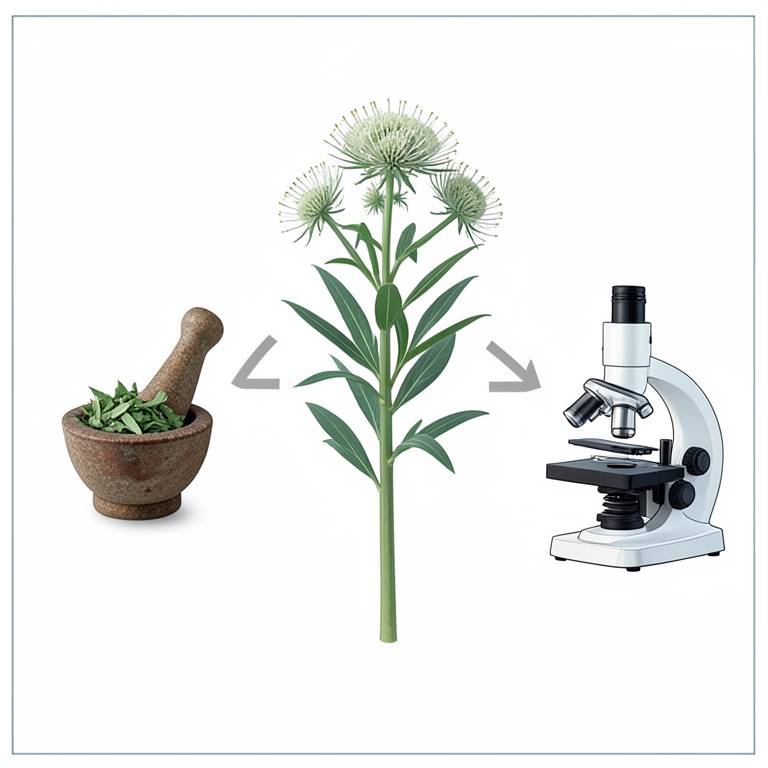
Traditional and Scientific Integration
AI-generated conceptual illustration (Calotropis gigantea (giant milkweed) plant). It explains the idea and does not show study data.
View source evidence ↗Introduction
The giant calotropis Linn is a member of the Asclepiadaceae family, which has more than 280 members. About 2,000 species and genera. The two prevalent and closely related species are Calotropis gigantea (Linn) R.Br. and Calotropis procera (Ait) R.Br. The well-known medicinal herb Calotropis gigantea, also known as Mader, has long been used in the Unani, Ayurvedic, and Siddha systems of medicine. The name of the drug Calotropis gigantea Linn varies depending on the language. It is known as "Ashur" in Arabic, "Gigantic" or "Swallow wort" or "Milkweed" in English, Ak or "Ark" or "Madar" in Hindi, "Arkagida" in Kannada, "Bukam" or "Dinesam" in Malayalam, and "Akanda" or "Lalakara" in Marathi. Calotropis gigantea has received numerous reviews too far. But none of them go into detail about how plants are described by the Unani and their medicinal benefits. 25 different Calotropis gigantea pharmacological research that were published in the last 12 years were considered in this review (2004)(2005)(2006)(2007)(2008)(2009)(2010)(2011)(2012)(2013)(2014)(2015)(2016). We have attempted to assemble recent studies and current trends about the phytochemistry and pharmacology of Calotropis gigantea in the area of contemporary phytomedicine from various regions of the world in this review.
Geographical Distribution
It is found practically everywhere in the world and is a native of Malaysia, China, and India. Mostly in lower Bengal, Himalya, Punjab, Assam, Madras, and south India in India. Typical in wastelands, climbing to approximately road edges, railroad embankments From Punjab to Assam in the Himalayas, 1,000 metres. Macroscopic features Calotropis gigantea is a 1-5 m tall, upright shrub with many branches. The roots are about 90 cm in length and 2.5-10 cm in diameter, are cylindrical, tortuous, and frequently branching, outwardly yellowish grey while within ceramic white. Short, curving, and only occasionally quilled, root bark is 2-5 mm thick and 3-5 cm wide with a distinct mucilaginous, bitter flavour Simple, opposite decussate, sub sessile, extipulate leaves have oblong to widely obovate blades that measure 5 to 30 by 2.5 to 15.5 millimetres. Flowers are complete, gamopetalous, actinomorphic, bracteate, bisexual, pentamerous, hypogynous, and pedunculate. Calyx has five sepals and a lobe that are only loosely joined at the base. Fruit is obliquely ovoid to subglobose in shape, fleshy, simple, and inflated. About 6 mm by 5 mm, flat, compressed, and covered in silky white pappus.
Microscopic features
The root's transverse cut reveals cork as the outermost layer, which is structured regularly with 15 to 20 layers of rectangular cells with no intercellular space. The cortical region's cells are made up of a large number of starch grains. These cells were made up of parenchyma tic cells with erratic shapes, laticiferous tubes, and calcium oxalate rosette. A transverse section through the midrib of a leaf reveals an upper and lower single-layered epidermis that is outwardly covered by a thick, striated cuticle, as well as a few epidermal cells that have been stretched out to create uniseriate, 2-3 celled trichomes on both surfaces of the leaf. Most of the xylem is made up of vessels and tracheid.
Description of plant in unani system of medicine
Calotropis gigantea is described by Dioscorides (78 AD) in his illustrious book "Kitabul-Hashaish." It is a thorny tree with large leaves, and where the blooms and stem are located, it exudes "sukr," or milk, which can also be obtained from other areas of the plant. The leaves are tender, and the timber is delicate and brittle. Milk is used to clean leather in several parts of the world. There are three different types of Madar, the first of which is described in "Makhzan-al-Advia" as being enormous with white flowers, large leaves, and a lot of milky fluid. It grows close to human settlements and towns. The second type is smaller with fewer leaves, and the flowers are white on the outside and lilac on the inside. The third plant is even smaller and has a faint yellowish green colour blossom.
Pharmacological actions and therapeutic uses in unani system of medicine utilises in Unani medical system Numerous pharmacological actions of the root of Calotropis gigantea have been reported in Unani literature, including Qabiz (astringent), Muqawwi (tonic), Qate wa Mukhrije Balgham (expectorant), Moarrique (diaphoretic), Qatile deedan (anthelmintic), Muhallil (antiinflammatory), Musakkin (sedative), Mundamile qurooh (wound healer (Digestive). Based on these effects, milk weed is used medically for a number of conditions. According to Najmul Ghani (1902 AD), when combined with equal parts of black pepper and ginger water, root bark is particularly useful in treating diarrhoea, dysentery, and cholera. An epileptic attack can be helped by combining root bark and goat milk.
Pharmacological studies Antiasthmatic activity
When ova albumin (OVA) was used to produce asthma, Calotropis gigantea demonstrated anti-asthmatic action. OVA was used to challenge and sensitise rats. Calotropis gigantea was tested at doses of 100, 200, and 400 mg/kg, p.o. on various bodily cells, enzymes, and histopathological alterations. Inhibition of eosinophils, neutrophils, lymphocytes, and total leukocyte counts in bronchoalveolar lavage fluid by Calotropis gigantea at 200 and 400 mg/kg was significant (p 0.05). These findings imply that a plant's anti-inflammatory, antilipoxygenase, and antioxidant properties may make it a promising therapeutic medication for the treatment of asthma.
Ovicidal activity
Calotropis giganteus various parts, including the leaves, stem, flower, roots, and entire plant, were evaluated for their ability to kill Helicoverpa armigera when diluted to 2, 4, 6, 8, and 10% concentrations. The hatchability of eggs was completely inhibited by leaf extract, then 90% by floral extract. Additionally, it was revealed that the proportion of egg hatchability inhibition increased with dosage, and that earlystage eggs (those that were between 24 and 48 hours old) were extremely vulnerable at all concentrations. These findings suggest that the milkweed plant has ovicidal properties and may be used to treat Helicoverpa armigera.
Hair growing activity
The purpose of this study was to investigate the effects of Calotropis gigantea with Hibiscus Rosa sinensis (HRSF) and polyherbal formulation (HCF) in combination with both plants on the commencement and promotion of hair growth in albino rats. The findings and observations from the study were contrasted with Minoxidil. Calotropis gigantea showed some promise for hair growth, however it was less than other treatments.
Vasodilatation activity
The purpose of this study was to investigate the effects of Calotropis gigantea with Hibiscus rosa sinensis (HRSF) and polyherbal formulation (HCF) in combination with both plants on the commencement and promotion of hair growth in albino rats. The findings and observations from the study were contrasted with Minoxidil. Calotropis gigantea showed some promise for hair growth, however it was less than other treatments.
Hepatoprotective activity
Calotropis gigantea leaf extracts were tested for their ability to protect the liver using acetaminophen-induced hepatotoxicity models in a variety of solvents, including petroleum ether, acetone, chloroform, and methanol. Methanolic extract and Silymarin significantly reduced SGOT levels, but chloroform and methanolic extract significantly reduced SGPT levels. Significant hepatoprotective action was discovered in the methanolic and chloroform extract of the leaves. However, several liver enzymes in acetone and petroleum ether extracts either indicated no change or a very modest change.
Insecticidal activity
The methanol extract of the root bark of Calotropis gigantea and its chloroform and petroleum ether soluble fractions were tested against several stages of larvae and adults of Tribolium castaneum for residual film toxicity, fumigant toxicity, and repellent effect. Methanol extract and its chloroform and petroleum ether fractions displayed insecticidal activity in residual film toxicity tests. In tests against a variety of larval and adult insects, methanol extract displayed the lowest LD50 values, indicating the highest toxicity or insecticidal activity. Methanol extract was the most toxic to T. castaneum, followed by the petroleum ether fraction and the chloroform fraction. There was no evidence of test sample fumigant toxicity. Tribolium castaneum was mildly to moderately repelled by methanol extracts, as well as by its chloroform and petroleum ether soluble fractions, in the treated filter paper repellency test.
Antioxidant activity
By using the 2, 2-diphenyl-1-picrylhydrazyl and fluorescence recovery after photo bleaching methods, the in vitro antioxidant activity of Calotropis gigantea root extract was examined. Due to the high content of various phytochemicals, extract in both methods has higher antioxidant activity when compared to standard ascorbic acid.
Anti-inflammatory activity
The albumin denaturation technique was used to demonstrate Calotropis gigantea's anti-inflammatory activity. The Percentage inhibition of denaturation produced by test drug was comparable with that produced by Ibuprofen (85.71%) which indicates that test drug possesses significant antiinflammatory activit
Hypoglycemic activity
In streptozotocin-induced diabetic rats, the hypoglycaemic effect of chloroform extracts of Calotropis gigantea leaf and flower 10, 20, and 50 mg/kg was assessed and compared with glibenclamide. The serum glucose levels in healthy rats were successfully lowered by the leaf and flower extracts. Treatment with test medication led to an improvement in oral glucose tolerance as well. Following the administration of leaf and flower extracts to streptozotocin-induced diabetic mice, blood glucose levels significantly decreased.
Analgesic activity
The alcohol-based extract of Calotropis flowers Oral administration of gigantea WA and research into its chemical and thermal simulations of analgesic action in mice. An inhibition of 20.97% and 43.0% in the number of writhes was observed in the acetic acid-induced writhing test. was noticed at the 250 and 500 mg/kg dosages, respectively. The paw licking step of the hot plate method Time was dragged out. The analgesic result was noticed. 30 minutes after the dose was administered, it reached its peak after 90 minutes.
Antivenom activity
The Calotropis gigantea methanolic extract was assessed for its ability to effectively counteract various the deadly, necrotizing, edematous, and hemorrhagic effects of the venom (Vipera russelli) activity. Administering extract orally at 200 and 400 mg/kg successfully offset the fatal effect. Of venom 2LD50 and 3LD50 in mice (in vivo) (neutralisation). In vitro experiments with plant extract effectively neutralised at 100, 200, and 400 mg/kg Venom 2LD50 and 3LD50. Effective restraint necrosis and haemorrhage were induced by also noticed 200 and 400 mg/kg dosages, the anti-inflammatory activity of plant extract was notable. Methanolic extract's anti-edema effects Studying the effects of viper venom at 60, 120, Minutes 180 and 240.
Toxicity
If used orally in excess of the recommended dosage, nausea, vomiting, and diarrhoea occur. Long-term higher dosages result in headache and burning urination along with weakening the gut. It can harm the liver and lungs and cause abortion in expectant women.
Conclusion
Calotropis gigantea Linn's numerous components. Plants, specifically their roots, bark, leaves, flowers, and milk, are used in traditional medicine to treat a variety of diseases of they are people. The goal of the current review is to compile morphological descriptions, ethnopharmacological reports, all pharmacological research done on the plant, as well as its phytochemistry and therapeutic purposes mentioned in the Unani system of medicine. These results support the usefulness of plants in conventional medicine and offer a foundation for further research into the pharmacological and therapeutic possibilities of the strategy.
References
35 in the original paper- Singh U, Wadhwani AM, Johri BM. Dictionary of Economic Plants of India. New Delhi: Indian council of Agricultural Research. 1996:38-39.
- Chatterjee A, Pakrashi SC. The Treatise on Indian Medicinal Plants. V-IV. New Delhi: National Institute of Science Communication and Information Resources. 2003: 128-129.
- Misra MK, Mohanty MK, Das PK. Studies on the method - ethnobotany of Calotropis gigantea and C. procera. Ancient science of life. 1993;Xiii(1 & 2):40-56.
- R. Br. (Alarka or Mandara) Root. International Journal of Ayurvedic Medicine. 2016;7(1):44-48.
- Ibne Sina. Al Qanoon Fil Tib Book II. New Delhi: Jamia Hamdard. 1998:42(49):51-75,81-417.
- Zakai I. Encyclopedia of Unani Mufrida. V-1. New Delhi: Aijaz Publishing House; 2000.p.14-15.
- Asolkar LV, Kakkar KK, Chakre OJ. Glossary of Indian Medicinal Plants with active Principles (Second supplement). Part-1. New Delhi: (A-K), (1965-1981) National Institute of Science Communication and Information Resources (CSIR); c2005.p.157.
- Medicinal Plants in Folklores of Bihar and Orissa. CCRUM, Ministry of Health & Family Welfare, Govt of India. Department of Indian system of Medicine and Homeopathy; 2001.p. 119-120.
- Gupta J, Ali M. Faculty of Pharmacy. Jamia Hamdard, P.O. Hamdard Nagar. New Delhi. 2000;62(1);29-32.
- Rastogi Ram. P. Compendium of Indian Medicinal Plants. V-III. Lucknow: Central Drug Research Institute & National Institute of Science Communication; 2001.p.118.
- Habib MR, Karim MR. Effect of anhydrosophoradiol-3acetate of Calotropis gigantea (Linn.) flower as antitumoric agent against Ehrlich's ascites carcinoma in mice. Pharmacological Reports. 2013;65:761-767
- Nalwaya N, Pokharna G, Deb L, Jain NK. Wound healing activity of latex of Calotropis gigantea. International Journal of Pharmacy and Pharmaceutical Sciences. 2009 July-Sep; 1(1):176-181. http://gyti.techpedia.in/project-detail/effectoflatex-from-calotropis-gigantea-on/237.
- Bulani V, Biyani K, Kale R, Joshi U, Charhate K, Kumar D, Pagore R. Inhibitory effect of Calotropis gigantea extract on Ovalbumin-induced airway inflammation and arachidonic acid induced inflammation in a murine model of asthma. Int J Cur Bio Med Sci. 2011;1(2):19-25.
- Prabhu S, Priyadharshini P, Veerave R. Effect of aqueous extracts of different plant parts of milkweed plant (Calotropis gigantea R. Br.) against ovicidal activity on Helicoverpa armigera (Hubner). International Journal of Advanced Life Sciences. 2012 Feb-April;2:39-44.
- Pathan AK, Pathan MK, Garud N, Garud A. Effect of some novel medicinal plants and polyherbal formulation on stress induced alopecia. Pharmacology online. 2012;3:150-157.
- Bharathi R, Thomas A, Thomas A, Krishnan S, Ravi TK. Anti-bacterial activity of leaf extracts of Calotropis gigantea Linn. against certain gram negative and gram positive bacteria. Int. J. Chem. Sci. 2011;9(2):919-923.
- Kumar G, Karthik L, Rao KV. Antibacterial activity of aqueous extract of Calotropis gigantea leaves -an in vitro study. International Journal of Pharmaceutical Sciences Review and Research. 2010 September-October. 4(2):141144.
- Seniya C, Trivedia SS, Verma SK. Antibacterial efficacy and phytochemical analysis of organic solvent extracts of Calotropis gigantean. Chem. Pharm. Res. 2011;3(6):330336.
- Hossain SF, Islam MS, Parvin S, Shams T, Kadir MF, Islam SMA, et al., Antimicrobial screening and brine shrimp lethality bioassay of Calotropis gigantea (Fam: Asclepiadaceae). J. Nat. Prod. Plant Resour. 2012;2(1):4959.
- Kumar G, Karthik L, Rao KVB. Antimicrobial activity of latex of Calotropis gigantea against pathogenic microorganisms-an in vitro study. Pharmacology online. 2010;3:155-163.
- Elakkiya LP, and Prasanna G. Study on phytochemical screening and in vitro antioxidant activity of Calotropis gigantea. IJPRIF. 2012;4(4):1428-1431.
- Jagtap VA, Usman MRM, Salunkhe PS, Gagrani MB. Antiinflammatory activity of Calotropis gigantea Linn. leaves extract on In vitro models. IJCPR. 2010;1(2):1-5.
- Ravi RG, Harikesh D, Chandrasekhar TR, Pramod YG, Angad PM. Cytotoxic activity of ethanolic root extract of Calotropis gigantea Linn. Int. J. Drug Dev. & Res. Oct-Dec 2011;3(4):101-108.
- Sheelaa B, Hussain SM, Kumar PS, Kalaichelvam VK, Venkatachalam VK. Vasodilatation Effect of Latex from Calotropis gigantea in Green Frog Rana hexadactyla. Asian Journal of Medical Sciences. 2010;2(1):22-24
- Usmani S, Kushwaha P. Hepatoprotective activity of extracts of leaves of Calotropis gigantea. Asian Journal of Pharmaceutical and Clinical Research. 2010; 3(3):195-196.
- Alam MA, Habib MR, Nikkon F, Khalequzzaman M, Karim MR. Insecticidal activity of root bark of Calotropis gigantea L. against Tribolium castaneum (Herbst). World Journal of Zoology. 2009;4(2):90-95.
- Khan IN, Sarker MMI, Ajrin M. Sedative and anxiolytic effect of ethanolic extract of Calotropis gigantean (Asclepiadaceae) leaves. Asian Pac J Trop Biomed. 2014;4: S400-S404.
- Rathod NR, Chitme HR, Irchhaiya R, Chandra R. Hypoglycemic effect of Calotropis gigantea Linn. leaves and flowers in streptozotocin-induced diabetic rats. Oman Medical Journal. 2011;26(2):104-108.
- Pathak AK, Argal A. Analgesic activity of Calotropis gigantea flower. Fitoterapia 2007 Jan; c78(1):40-42.
- Chitme HR. Chandra R, Kaushik S. Studies on antidiarrhoeal activity of Calotropis gigantea R.BR. in experimental animals. J Pharma Pharmaceutical sci. 2004; 7(1):70-75.
- Ali R, Amin KMY, Ahmad G, Wadud A, Jahan N. Efficacy of post Beekhe Madar (Calotropis gigantea) root bark in experimentally induced diarrhoea. Hippocratic journal of Unani medicine. July September. 2010;5(3):1-8.
- Ali R, Jahan N, Amin KMY. Anti diarrhoeal activity of Calotropis gigantean root bark in experimental animals. Journal of research in Unani medicine. 2012;1(1):1-5.
- Chacko N, Ibrahim M, Shetty P, Shastry CS. Evaluation of antivenom activity of Calotropis gigantea plant extract against Vipera russelli snake venom. IJPSR. 2012;3(7): 2272-2279.
- Argal A, Sachan R. Anthelmintic activity of Calotropis gigantea roots. Journal of Pharmacy Research. 2009;2(6): 1085-1086.
- Parhira S, Yang ZF, Zhu GY, Chen QL, Zhou BX, et al. In vitro anti-influenza virus activities of a new lignan glycoside from the latex of Calotropis gigantea. PLOS ONE. 2014;9(8):1-13.
Cited by 1
From OpenAlex, OpenCitations and reference lists read by Scinovex
- Cryopreservation Protocol for the Pollinia of Calotropis gigantea (L.) W.T.Aiton ↗
P. Harshid, T. V. Bincy, P. E. Rajasekharan, N. S. Pradeep · Springer protocols handbooks/Springer protocols · 2025
❝ 0