
Research article · 2021 · Full text
International Journal of Research in AgronomyWild life/wild animals in Ethiopia: Types, challenges and conservation
Volume 4(2) · Pages 154–160 · DOI: 10.33545/2618060x.2021.v4.i2a.143 ↗
Research areasRangeland Management and Livestock EcologyConservation, Biodiversity, and Resource ManagementAfrican history and culture analysis
Abstract
Author-writtenEthiopia is a country with a wide range of biological species, primarily huge mammals. The main priority for maintaining animal resources is protected areas, which also help a country's economy grow. A great variety of biological species, particularly enormous mammals, can be found in Ethiopia. Protected areas should be given top priority for protecting wildlife resources because they also boost a nation's economy. They do, however, struggle to meet the needs of both people and animals. Even though most communities believe they are protected, even when places and species benefited from conservation initiatives, the lack of incentives made locals less inclined to support them. Maintaining protected areas is crucial to biodiversity conservation because it makes it impossible to sustainably utilize animals for development. Therefore, mitigating and preventive strategies for conservation measures are needed in order to manage wildlife in a sustainable way.
Summary
Source-checkedPlain-language reading of the full paper, prepared with AI and checked against the text. Each point links to the authors' own words.
Why it matters
- Ethiopia is recognized as one of the top 25 biodiversity hotspots globally, containing two of the world's 34 specific biodiversity hotspots. View evidence ↗
- The country's diverse wildlife supports the national economy through nature-based tourism and aids in the protection of future conservation areas. View evidence ↗
- Conserving biodiversity in Ethiopia is essential for sustainable development, climate change adaptation, and the maintenance of critical ecosystem services. View evidence ↗
The question
- The study aims to categorize the types of wildlife in Ethiopia and identify the specific challenges that hinder the conservation and management of its national parks. View evidence ↗
What they did
- The authors conducted a review of existing literature and data to synthesize findings on wildlife types and conservation threats. View evidence ↗
What they found
- Ethiopia's vertebrate fauna includes 320 mammal species (39 endemic), 918 bird species (19 endemic), 240 reptile species (16 endemic), 71 amphibian species (30 endemic), and 172 fish species (38 endemic). View evidence ↗
- A significant challenge is the lack of community ownership, as local populations are often excluded from the planning and management decisions of the parks. View evidence ↗
- Low awareness among local populations regarding the environmental, biological, and economic benefits of national parks hinders conservation efforts. View evidence ↗
- Rapid population growth leads to the expansion of human settlements into environmentally sensitive areas within national parks, increasing pressure on resources. View evidence ↗
- Native species are threatened by approximately 35 invasive weed species, such as Prosopis juliflora and Lantana camara. View evidence ↗
- Climate change, fueled by deforestation and unsustainable land use, is one of the most severe direct threats to the country's biodiversity. View evidence ↗
- High levels of poverty drive biodiversity degradation because local populations depend heavily on natural resources for their survival. View evidence ↗
What it means
- The authors recommend strengthening community-based conservation, increasing awareness across sectors, and maintaining the enforcement of conservation regulations. View evidence ↗
- The authors suggest that higher education institutions collaborate with government and NGOs to establish conservation education centers to improve community knowledge. View evidence ↗
Visual summary
2 visualsIllustrations explain the paper; charts are replotted from the paper's own table values.
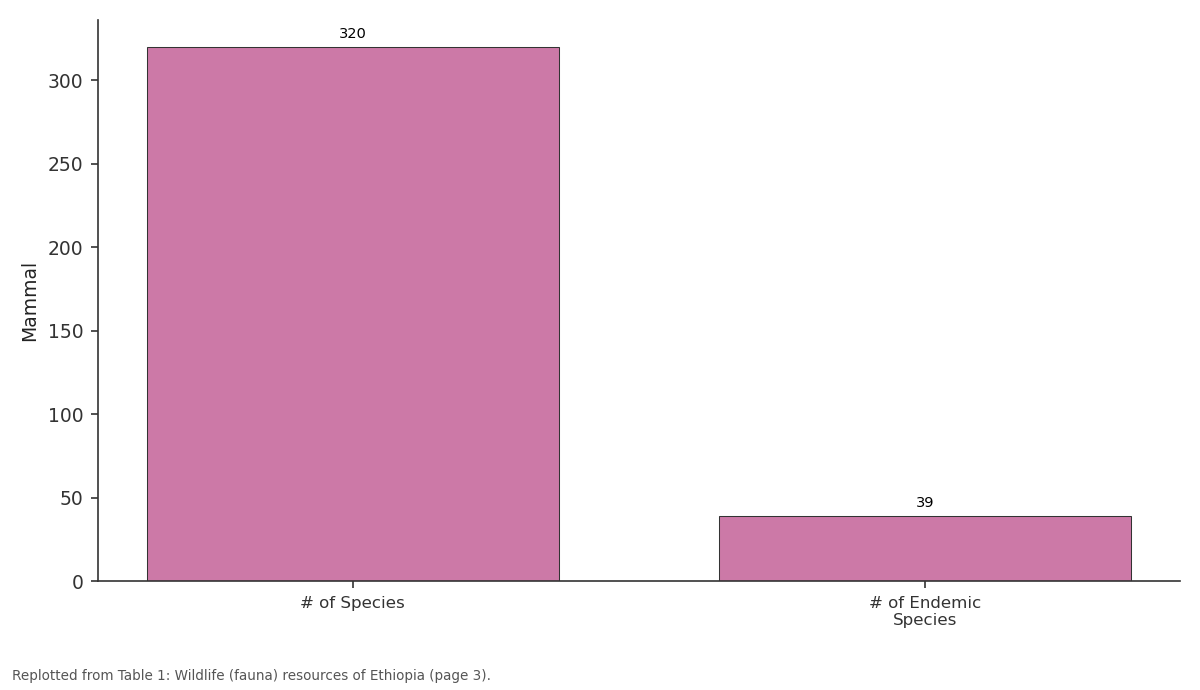
Mammal: # of Species vs # of Endemic Species
Replotted from Table 1 (page 3) of the original paper. Every bar is the paper's own table value.
View source evidence ↗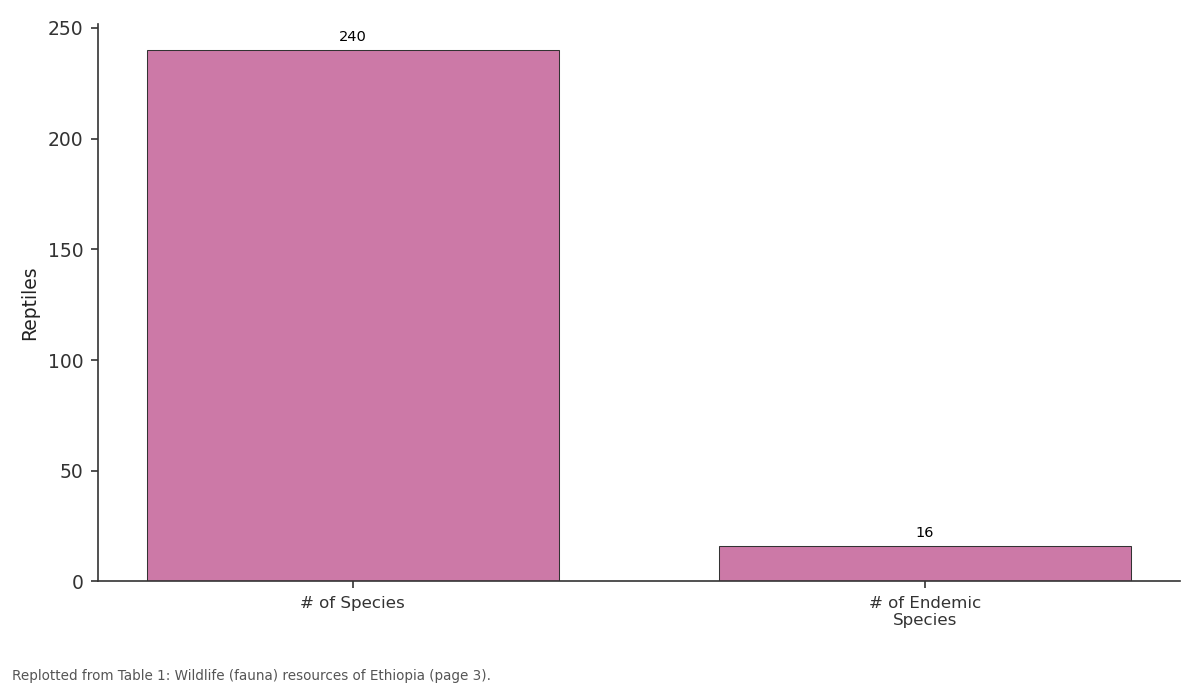
Reptiles: # of Species vs # of Endemic Species
Replotted from Table 1 (page 3) of the original paper. Every bar is the paper's own table value.
View source evidence ↗Figures & tables
From the original paper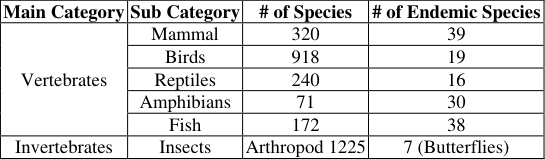 Table 1
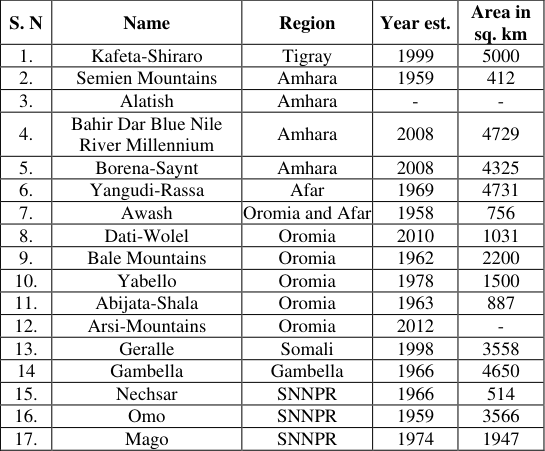 Table 2
Introduction
Ethiopia is one of the world's greatest biodiversity centers, located at 3 30'N and 15 00'N latitudes and 33 E and 48 E longitudes in the horn of Africa (Amare A, 2015) [2] . Ethiopia is one of the world's top 25 biodiversity hotspots, with two of the world's 34 biodiversity hotspots, the Eastern Afromontane and the Horn of Africa hotspots (EBI, 2014) [13] . The country's biogeography is characterized by two different features: the arid horn of Africa (Ogaden) and the mosaic highland plateau (Young J, 2012) [45] , which result in an exceptionally diverse and unique flora and fauna. This wildlife diversity is a big draw for tourists; nature-based tourism helps the country's economy and protects the country's future protected areas (Vreugdenhil et al., 2012) [41] . From the desert of the Danakil Depression, the world's lowest dry land point at 116 meters below sea level, to Ras Dashen Mountain (Africa's second-highest peak and roof) at 4543 meters above sea level, the country boasts a diverse and contrasting landscape (Tefera M, 2011) [35] . The country's 1.3 million hectares (of which 1.12 million are land) with a diverse climate, geography, and vegetation maintain the country's high indigenous flora and fauna, attracting regional and international tourists (Young J, 2012) [45] . Ethiopia has a land mass of around 1,127,127 km2 (IBC, 2014) [20] , with a very diverse topography. As a result, Ethiopia is endowed with tremendous wildlife potential, high endemism and breathtaking landscapes that can support a thriving tourism economy (SDPASE-EWCA, 2015) [33] . The existence of a diverse range of ecosystems has provided Ethiopia with a wide range of habitats, which has resulted in a high level of faunal diversity. However, data on the country's faunal resources is limited to mammals, birds, reptiles, amphibians, and a few categories of arthropods as a whole. Ethiopia is one of the world's most geographically and biologically varied countries. The country's biological resources are spread out throughout numerous biomes, including the Afro-Tropical Highlands, Sudan-Guinean, Sahel-Transitional Zone, and Somali Masai Biome. Within these major biomes, the country has a lot of potential and a wide range of national and global wildlife resources. Wildlife refers to the genetic, species, and environmental diversity of all living animals found in the wild on Earth. There are around 860 bird species (16 endemic species and two endemic genera), 279 mammalian species (31 endemic species and six endemic genera), 201 reptile species (14 endemic species), 23 amphibian species (23 endemic species) and 150 freshwater Fish species in Ethiopia (6 endemic species). Ethiopia is home to 279 mammalian species, 31 of which are endemic, including the Walia Ibex (Capra walie), Gelada Baboon (Theropithecus gelada), Mountain Nyala (Tragelaphusbuxtoni), Ethiopian Wolf (Canissimensis), Starcks Hare (Lepusstarcki), Ethiopian Wolf (Canissimensis), (EWCA, 2015) [33] . The legacy of wildlife resources exists partly due to a network of protection areas covering various biomes and habitats, and partly due to the fact that wild lands have been scarcely used or modified by humans. However, the obstacles facing Ethiopian wildlife conservation are growing increasingly formidable. Because agricultural productivity is so low, raising food production necessitates expanding the regions under cultivation and grazing. These expansions usually come at the expense of wildlife resources, resulting in the extinction of flora and fauna as well as their ecosystems (Amare, 2015) [2] . Laws aimed at conserving wildlife resources for the benefit of local people continue to be difficult to implement, and animal resources continue to be encroached upon and destroyed across the country. Furthermore, as a result of the regionalization process, the lack of defined policy and regulations defining the framework of administrative procedures has become crucial for the country's long-term management and development of natural resources. The responsibility for most of the protected areas has been transferred on to Regional Governments without a detailed review of the handover's feasibility. Regional governments, on the other hand, confront a lack of technical and management competence to carry out the additional obligations, or at the very least, will take a significant period of time to build up their capacity. As a result, the development of wildlife resources now requires a defined and realistic conservation policy based on nationally directed conservation principles. As a result, the issues that Ethiopia faces in terms of wildlife development necessitate a clear strategy with legal, administrative, technical, and planning frameworks (Tedla S, 1995) [34] . These should attempt to ensure the long-term usage and integrity of wildlife resources by harmonizing human and living resource relationships at both the national and international levels for long-term sustainability. In Ethiopia, the 1960s marked a turning point in the fight to save endangered wildlife species and their habitats. This was the time when the country established the groundwork for modern conceptions of nature and natural resource conservation. The first national park, awash, was established in 1966 as a result of the assessment's recommendations. Since then, a network of wildlife-protected areas has been established in several sections of the country, including ecologically diverse ecosystems. Previously, the central government was solely responsible for their governing system. However, this strategy has increasingly evolved into a decentralized and inclusive structure incorporating regional states, local communities, hunting operators, and, in particular, non-governmental organizations (NGOs) on a co-management basis. The conservation of Ethiopia's biodiversity and ecosystems is critical for ensuring sustainable development, mitigating and adapting to climate change, and preventing the collapse of lifesustaining ecosystem services (Young, 2012) [45] . Protected areas were established to conserve the world's important biodiversity, according to Gashaw (2015) [17] . As a result, these places play an important role in biodiversity conservation. However, it is a sad fact that these ecologically vital resources are frequently undervalued and are under threat as a result of population increase and rising human demand (Zerga, 2015) [46] . Protected areas are often referred to as "Paper parks" in poor nations like Ethiopia because the pressure from the poor rural population is greater than the ability to safeguard natural resources from exploitation. As a result, officially protected areas are frequently still used for traditional livelihood support, as they have been for a long time, and this is not necessarily detrimental if additional resource extraction intensification can be prevented. Rural settlements had frequently already established there when they were designated as protected areas, particularly in new parks, making it impossible to totally restrict their access to resources without compensation. An efficient protected area management approach is one of the greatest ways to achieve nature conservation in a particular ecosystem (Amare, 2015) [2] , which necessitates a thorough understanding of the primary elements that influence both the conservation and management of Ethiopian National Parks. The objective of the paper was to understand the Ethiopian wild life with their types and identify challenges affecting conservation and management of national parks.
Wild Animals in Ethiopia
Wildlife used to refer to undomesticated animal species, but it has now expanded to include all creatures that develop or exist in the wild without being introduced by people (Usher M. B, 1986) [40] . Wild animals are creatures that live in jungles, forests, or natural settings and search for their own food and water. Any mammal, bird, fish, or other wild species equipped with sensation and the ability to move freely is considered a wild animal. Ethiopia, nestled in Africa's horn, is a huge country with a wide range of topography, ancestral bedrocks, and temperatures. This topographic diversity has led in substantial differences in rainfall, humidity, temperature and soils throughout a 4620-meter altitude range. Six of the world's primary terrestrial biomes (alpine, coniferous forests, deciduous forest, tropical rain forest, savanna, and desert) and nine ecosystem types may be found in the country (BIDNTF, 2010) [8] . There are 52 conservation areas with formal protection status throughout these nine ecosystem types. Twenty national parks, three wildlife sanctuaries, two wildlife reserves, seventeen regulated hunting zones, seven open hunting areas, and three community conservation areas are among them (EWCA, 2015) [33] . A wildlife sanctuary does not allow people to live inside it, whereas a wildlife reserve allows people to live together while conserving animals (Vreugdenhil et al., 2012) [41] . National parks are regions of land that have been set aside to protect native flora and animals, as well as their habitats, natural beauty, historic significance and indigenous cultures (NSW, 2015) [31] . These places are also home to gene banks (for example, for wild coffee and enset) and traditional ecological knowledge, as well as providing a direct economic benefit to the country through tourism and carbon trading (Young, 2012) [45] . Four Ethiopian national parks, one wildlife sanctuaries, and three community conservation areas are currently undergoing various forms of international trade mechanisms for climate change mitigation, such as CDM (Clean Development Mechanism, e.g. Humbo) and REDD + (Reducing Emissions from Deforestation and Degradation) (e.g. BMNP). This means that international funding contributes to the protection funding. This is critical since Ethiopia is a low-income country with few resources for environmental protection. This is also the case when international conservation NGOs such as the Frankfurt Zoological Society or the WWF provide financing and management advice to national parks.
Types of Wild Life or Animals in Ethiopia
The tremendous diversity of topography, with wide differences in climate, soils, natural vegetation, and settlement patterns, dictates the richness and variety of Ethiopian wildlife. The southern and western areas of the country, in general, have the highest concentrations of wild life (Young J, 2012) [45] . Ethiopia's wild animals can be divided into five categories. These are: common wild animals (those that can be found in many sections of the country); common wild animals (those that can be found in many parts of the country); and common wild animals (those that (e.g. hyenas, jackals), Lowland game animal (which include many herbivores like giraffes, wild asses, zebras etc. and carnivores like lions, leopards, and cheetahs), Arboreal animals are animals that live in trees (which include monkeys, baboons), In the Rift Valley lakes, a variety of birds can be seen. In the highlands, rare animals (gelada baboon and Semien fox; walia-ibex in the Semien Massifs, Nyala in the Arsi Bale massifs) can be found (Amare, 2015) [2] . [45]
Challenges of Wildlife Conservation in Ethiopia
Conservation of Ethiopia's biodiversity and ecosystems is critical for ensuring sustainable development, mitigating and adapting to climate change and preventing the collapse of lifesustaining ecosystem services. Climate change, habitat loss, degradation and fragmentation, invasive species, novel pathogens, noise disturbance, light pollution, giant floating trash islands, anthropogenic alteration of the microbiome, ecological traps, inbreeding depression, road kill, microplastics, stressors, subsidized predators, bush meat crisis, wildlife trade, birdwindow collisions, trophic cascades The list could go on and on, but such is the litany of challenges that animal species are facing today (Ceballos et al., 2020) [10] . Even among species that aren't on the verge of extinction, numbers are dwindling (Dirzo et al., 2014) [12] : Furthermore, the causes of biodiversity loss are frequently intractable (Tittensor et al., 2014) [38] . There are multitudes of environmentally important resources that are frequently undervalued and under threat from a variety of causes. The following are some of the significant difficulties facing Ethiopia's protected areas:
Lack of Sense of Ownership
Local communities are one of the most affected stakeholders as a result of the creation of National Parks (Kebede et al., 2014) [23] . Local communities must thus be included as equal partners in the development and execution of conservation policies that influence their lands, territories, waters, coastal seas and other resources, particularly in the creation and maintenance of National Parks (Beltrán, 2000) [6] . The acceptance and collaboration of local communities in conservation operations is critical to the effectiveness of protected area management. Despite the fact that the local population is active in various conservation and management activities in Ethiopian national parks, such as providing information about unlawful activity in the parks (Gashaw, 2015) [17] , they are not included in park planning and management decisions. This could lead to a better understanding among most society members that the park belongs to the government, which could have an impact on local communities' acceptance and cooperation in current and future conservation activities, as well as their long-term viability, if local communities are fully compensated for their economic losses due to loss of access to natural resources.
Limited Awareness
The creation of awareness should be the initial step in any protected area protection effort (Gashaw, 2015) [17] . That is to say, before and after they are established, local populations should be aware of the environmental, social and economic significance of these regions (Kebede et al., 2014) [23] . However, the National Parks in Ethiopia are experiencing difficulties as a result of low awareness (Tesfaye, 2017) [37] of the role of these conservation areas for environmental (soil erosion control and getting reliable rain fall in the case of Bale Mountain national park (Asmamaw and Verma, 2013) [5] , biodiversity (Berihun, 2016) [7] , economic (ecoturism) in the case of Awash national park (Alemayehu, 2011) [1] and c (Aneseyee, 2016) [3] . Low community knowledge of the importance of national parks is another issue that impacts Ethiopia's protected regions in the east (Wale et al., 2017) [42] .
Population Growth
In Ethiopia, population increase has a significant impact on national park conservation and administration (Petros et al., 2016) [32] . Existing settlements are growing and new settlements are appearing in previously unsettled and environmentally sensitive areas in Ethiopian national parks (for example, Bale mountains national park (Gashaw, 2015) [17] , Awash national park (Zerga, 2015) [46] , Gambella national park (Aneseyee, 2016) [3] , Semien mountains national park (Aneseyee, 2016) [3] as a result of population growth (for example, Bale mountains national park (Gashaw, 2015) [17] , Awash national park (Zerga (UNESCO, 2015) [46] . Land-use conversion (conversion of natural vegetation cover to other use types such as farmland, grazing land, human settlements, and urban centers) has an impact on national park conservation and management (Milner et al., 2007), because increasing population density leads to increased demand for agricultural land and forest products, forcing people to clear woodland or natural forest for settlements and farmland expansion.
Lack of Coordination
Stakeholders are those who are affected by a proposed intervention, either negatively or favorably, or who can influence the outcome (Karl, 2000) [22] . Stakeholders are divided into primary and secondary stakeholders based on their direct or indirect interest (FAO, 1998) [15] . The local community and park management are good examples of primary stakeholders since they have a direct interest in the resource, either because they rely on it for their livelihoods or because they are directly involved in its exploitation (Karl, 2000) [22] . Secondary stakeholders, on the other hand, are those who have an indirect interest in natural resource management and conservation and/or rely at least partially on wealth or business generated by the resource, as well as intermediaries in the process of delivering aid to primary stakeholders; the best examples are local governments, cooperatives, and higher education institutions (Karl, 2000) [22] . Local communities, park management, EWCA, local governments, NGOs, higher education institutions, cooperatives, and the National Biodiversity Institute are among the various players participating in National Park management in Ethiopia (Zerga, 2015) [46] . According to Gashaw (2015) [17] and Zerga (2015) [46] , some of the causes of lack of coordination among stakeholders include the establishment of distinct objectives (including a difference in prioritizing objectives) and a lack of mutual respect.
Conflicts over Resources
Conflict refers to a situation in which two or more parties have opposing aims, values, interests, or actions (Teferra & Beyene, 2014) [36] . The outcome of rivalry and probable disagreement between two or more parties over the use of one or more scarce resources in the context of natural resource management indicates conflict (Grimble, 1998) [18] . As a result, disputes within national parks can be considered as the outcome of various interests, aims, and ambitions held by individuals or groups within legally constituted and isolated surroundings, which all too often result in either a good or negative impact on the resource's usage value (FAO, 2000) [16] . In Ethiopian national parks, there are three types of conflicts: 1. Conflict between humans and wild animals (Berihun et al., 2016) [7] . 2. Conflict between park managers (scouts and staff) and communities living in and around national parks (Asmamawu & Verma, 2013) [5] . 3. Conflict between different communities surrounding the park (Ashenafi & Leader, 2005) [4] .
Conflicts between humans and wildlife occur all around the world (IUCN, 2005) [21] ; nevertheless, developing countries are more vulnerable than developed countries (Berihun et al., 2016) [7] . Poverty, as well as fast growing human populations and expanding settlements, have been proposed as primary drivers of increased human-wildlife conflict in developing countries (Mwamidi et al., 2012) [30] . Conflict between park managers and community members is caused by resource usage exclusion, an illegal activity carried out by local or external persons (individually or in a group to obtain park resources) and agricultural damage by wild animals (Berihun et al., 2016) [7] . Border and resource competition (for example, for grazing land access) are two factors that contribute to conflict between communities surrounding parks (Mulualem & Tesfahunegny, 2016) [29] .
Issues of Boundary/Lack of Boundary
The boundary of a national park is critical for preparing its management plan and laying out potential conservation measures for its region, as well as for improving its management (Council of Ministers Regulations No. 163/2008). However, one of the issues that affect the maintenance and management of Ethiopian national parks is the lack of a well-defined and generally agreed-upon border (Petros et al., 2016) [32] .
Invasive Species
Invasive species are worldwide phenomenons in which exotic species struggle for resources and habitat, modifying the physical environment in such a way that native species are often forced to compete for resources and habitat, resulting in severe economic and ecological implications. There are currently 35 invasive weed species in Ethiopia (e.g. Opuntia ficus-indica, Prosopis juliflora, Argemone mexicana, Lantana camera, Eichhornia crassipes) that are causing harm to native species (Mulualem & Tesfahunegny, 2016; IBC, 2014) [29,20] . Invasive plants have left visible affects in most Ethiopian national parks, particularly in Omo (Opuntia), Awash, Babile Elephant Sanctuary (Prosopis juliflora, Lantana camara, and Parthenium hysterophorous), Yangudi-rasa, and Nechisar (Young, 2012) [45] . Some invasive species were purposely introduced as agroforestry species in the awash basin, but are now posing a threat to agricultural land-protected areas in the Awash National Park as an unwanted exotic guest.
Illegal Charcoal Production
In Ethiopia, charcoal is one of the traditional fuels. According to Guta (2012) [19] , charcoal production is a major source of income and energy in developing countries in general, and Ethiopia in particular (Chanie and Tesfaye, 2015) [11] . People cook with charcoal because it is a cheap commodity that requires low-cost, accessible, and widely available metal or ceramic stoves in the market, as opposed to electric and gas stoves (Luoga et al., 2000) [25] . Aside from its applications, charcoal manufacturing is currently posing a danger to Ethiopia's national park protection and administration (Berihun et al., 2016) [7] .
Climate Change
Climate change is having an influence on ecosystems and the services they provide (Keenleyside et al., 2014) [24] . Climate change, according to IBC (2014) [20] , is one of the most serious direct threats to Ethiopia's biodiversity, driven by greenhouse gas emissions, deforestation, and unsustainable land use practices. National parks and other conservation areas in the country are currently threatened by climate change (Mekonen et al., 2017) [26] . Climate change has caused a shift in species migration and distribution (by limiting suitable habitats and increasing the pace of habitat fragmentation), as well as an increase in invasive species such as acacia drepanolobium (IBC, 2014) [20] . Climate change, according to Biru et al. (2017) [9] , is one of the factors that has reduced the number of pastoralists' cattle in the Awash National Park area, which may increase the people's reliance on the park for their livelihoods in the future (Young, 2012) [45] .
Poverty
Ethiopia is one of the world's poorest countries, with low income and productivity, limited capital accumulation and investment, and high unemployment (Moges, 2013) [28] . Apart from poverty, the country is one of the world's top 25 biodiversity-rich countries, and it is home to two of the world's biodiversity hotspots, the Eastern Afromontane and the Horn of Africa (WCMC, 1994) [43] . However, the country's biodiversity is currently threatened and declining owing to a variety of factors. Poverty, according to IBC (2014) [20] , is one of the causes of biodiversity degradation since people are dependent on biodiversity or other natural resources in the country.
Wildlife Conservation in Ethiopia
The process of protecting animal and plant species in their native habitats is referred to as wildlife conservation. The primary goal of wildlife conservation is to protect animals while also preserving nature and natural habitats for humans and wildlife. Wildlife, as a component of the world's ecosystems, contributes to the balance and stability of natural processes. Protecting wildlife in their natural habitat can be accomplished by creating protected areas such as national parks and wildlife sanctuaries. Endangered and vulnerable species can be kept in captivity and reproduced to expand their population in places like zoos. Wildlife conservation strives to keep wildlife populations healthy, keep animal populations in harmony with their ecosystems, track current habitat conditions and breeding numbers, and prevent species extinction. Due to the harmful effects of human activities, wildlife conservation has become a more significant discipline. Wildlife discussion raises awareness of the significance of wildlife in terms of aesthetic, scientific, and ecological qualities (IBC, 2014) [20] . Wildlife is significant in a variety of ways. Wildlife's relevance can be classified as ecological, economic, investigative, and biological diversity conservation, among other things. Wild animals can be employed for scientific and educational research (useful information for medical and environmental studies), physical and mental recreation (aesthetic value), tourism marketing (economic value), domestication potential, and ecological balance maintenance. They cover around 8.3 percent of the country's total land mass (9, 3182 km2). This system of protected areas encompasses all of the country's key ecosystems. The high diversity of organisms has been attributed to the different ecosystems and changing climate conditions (Yalden, 1992) [44] . So far, 320 mammalian species (57 endemic), 926 bird species (18 endemic), 242 reptile species (15 endemic), 73 amphibian species (30 endemic), 180 fish species (41 endemic), roughly 6500 vascular plant species (700 endemic) and 6862 insect species have been identified (Usher M B, 1986) [40] . Ethiopia has taken a number of steps to protect wildlife and the environment. Institutional and policy structures, as well as legal mechanisms, are among them.
Since the mid-1980s, Ethiopia has been grappling with a wildlife conservation catastrophe. However, the Ethiopian Wildlife Conservation Authority's predecessor did not take many aggressive steps to register, establish institutional capacity, mobilize resources, re-examine wildlife conservation approaches and objectives, or formulate policy. As a result, the Ethiopian Wildlife Conservation Authority faces a difficult task in combating these underlying dangers. Indeed, several academic research works (Wale et al., 2017) [42] have underlined some of the key challenges to protected areas that must be seriously addressed. Attempts to address and mitigate these threats have been attempted, albeit with mixed results. Even in the years ahead, the current approach of using the same tactics across the existing protected area network to alleviate threats to wildlife and associated habitats or ecosystems will have no significant impact. Human encroachment on prime wildlife repository areas is one of Ethiopia's most serious wildlife conservation concerns. Poverty, a lack of law enforcement, a lack of awareness, a lack of integration and cooperation, a lack of political will, a lack of alternative livelihoods, and a lack of an integrated land use system exacerbate these issues. Illegal settlement, agricultural expansion, overgrazing, illegal hunting, deforestation, humanwildlife conflicts, and incompatible land investment have all resulted as a result of this. As a result of an ongoing trend of encroachment that has resulted in permanent habitat damage and obstruction of wildlife migratory routes and dispersing zones, some of these risks have reached an irreversible level (Vreugdenhil et al., 2012) [41] . As a result of this situation, the local community has progressively developed a negative attitude toward animal protection and management, putting their sense of ownership in jeopardy. Almost all of Ethiopia's protected areas are currently vulnerable to human-caused hazards. The enormous demand for land and biological resources is mostly due to the rapid growth of human and animal populations. The local community that surrounds the protected areas relies on them for their livelihood. This has put a tremendous amount of pressure on species and their habitats, as well as posing a serious threat to them. Most wildlife species have been nearly extinct in high-potential areas such as Awash, Rift Valley Lakes, Omo River Delta, Mount Bale Massif, Lake Stefanie, Maji, Dabus valley and Gambella region, where agriculture, pastoralism and land investment are the predominant land uses, with significant alteration, fragmentation, and loss of habitats.
Summary
In conclusion, Ethiopia is one of the few countries in the world with a distinct and distinctive fauna with a high level of endemicity. The primary goal of wildlife conservation is to protect animals while also preserving nature and natural habitats for humans and wildlife. Wildlife, as a component of the world's ecosystems, contributes to the balance and stability of natural processes. Protecting wildlife in their natural habitat can be accomplished by creating protected areas such as national parks and wildlife sanctuaries. Endangered and vulnerable species can be kept in captivity and reproduced to expand their population in places like zoos. Wildlife conservation strives to keep wildlife populations healthy, keep animal populations in harmony with their ecosystems, track current habitat conditions and breeding numbers, and prevent species extinction. Due to the harmful effects of human activities, wildlife conservation has become a more significant discipline. Wildlife discussion raises awareness of the significance of wildlife in terms of aesthetic, scientific, and ecological values. Ethiopia's wildlife tourist industry is largely reliant on protected areas (national parks and sanctuaries). The country is home to a diverse range of animals, primarily huge mammals, which draw a large number of tourists both locally and worldwide. National parks are regions of land that have been set aside to protect native flora and animals, as well as their habitats, natural beauty, historic heritage and indigenous cultures. Illegal human settlement, agricultural expansion, illegal hunting and fishing, fuel wood collection, forest logging, mining, infrastructure construction, overgrazing, human-wildlife conflict, humancaused fire, and the introduction of invasive alien species are all recognized as major wildlife threats in Ethiopia. This is linked to rising natural resource demands due to rapid human population increase.
Based on the review results, the following recommendations and suggestions for the sustainable use of wildlife, the reduction of threats, and the coexistence of wildlife and local people were made: raising awareness among various sectors and local communities should continue and be strengthened, communitybased conservation approaches should be strengthened, and the implementation of local and national conservation regulations should be maintained. Furthermore, higher education institutions should construct a conservation education center with governmental and nongovernmental conservation officials to help boost community knowledge and reduce wildlife conservation issues in the Ethiopian forest.
Figures and tables from the paper
| Main Category | Sub Category | # of Species | # of Endemic Species |
|---|---|---|---|
| Vertebrates | Mammal | 320 | 39 |
| Birds | 918 | 19 | |
| Reptiles | 240 | 16 | |
| Amphibians | 71 | 30 | |
| Fish | 172 | 38 | |
| Invertebrates | Insects | Arthropod 1225 | 7 (Butterflies) |
Table text extracted from the original PDF; superscript letters are shown inline. The original table image is below.
View original table image
| S. N | Name | Region | Year est. | Area in sq. km |
|---|---|---|---|---|
| 1. | Kafeta-Shiraro | Tigray | 1999 | 5000 |
| 2. | Semien Mountains | Amhara | 1959 | 412 |
| 3. | Alatish | Amhara | - | - |
| 4. | Bahir Dar Blue Nile River Millennium | Amhara | 2008 | 4729 |
| 5. | Borena-Saynt | Amhara | 2008 | 4325 |
| 6. | Yangudi-Rassa | Afar | 1969 | 4731 |
| 7. | Awash | Oromia and Afar | 1958 | 756 |
| 8. | Dati-Wolel | Oromia | 2010 | 1031 |
| 9. | Bale Mountains | Oromia | 1962 | 2200 |
| 10. | Yabello | Oromia | 1978 | 1500 |
| 11. | Abijata-Shala | Oromia | 1963 | 887 |
| 12. | Arsi-Mountains | Oromia | 2012 | - |
| 13. | Geralle | Somali | 1998 | 3558 |
| 14 | Gambella | Gambella | 1966 | 4650 |
| 15. | Nechsar | SNNPR | 1966 | 514 |
| 16. | Omo | SNNPR | 1959 | 3566 |
| 17. | Mago | SNNPR | 1974 | 1947 |
Table text extracted from the original PDF; superscript letters are shown inline. The original table image is below.
View original table image
References
30 in the original paper- Chabra Churchura SNNPR 1997 1190 Source: Ethiopian Protected Areas (Young J, 2012) [45]
- Amare A. Wildlife resources of Ethiopia: Opportunities, challenges and future directions: From ecotourism perspective: A review paper. Natural Resources. 2015;6(06):405.
- Aneseyee AB. Vegetation Composition and Deforestation Impact in Gambella National Park, Ethiopia. Journal of Energy and Natural Resources. 2016;5(3):30-36. https://doi.org/10.11648/j.jenr.20160503.11.
- Ashenafi ZT, Leader WN. Indigenous Common Property Resource Management in the Central Highlands of Ethiopia. Human Ecology. 2005;33(4):539-563. https://doi.org/10.1007/s10745-005-5159-9.
- Asmamawu D, Verma A. Ecotourism as a tool for environmental conservation and its implication to community livelihoods, the case of the Bale Mountains National Park, Ethiopia. Journal of Environmental Science and Water Resources. 2013;2(8):250-259.
- Beltrán J. Indigenous and Traditional Peoples and Protected Areas: Principles, Guidelines, and Case Studies. IUCN, Gland, Switzerland and Cambridge, the UK and WWF International, Gland, Switzerland; c2000. https://doi.org/10.2305/IUCN.CH.2000.PAG.4.en.
- Berihun A, Yirga G, Tesfay G. Human-Wildlife Conflict in Kafta-Sheraro National Park, Northern Ethiopia. World Journal of Zoology. 2016;11(3):154-159. https://doi.org/10.5829/idosi.wjz.2016.154.159.
- Biru Y, Tessema ZK, Urge M. Perception and attitude of pastoralists on livestock-wildlife interactions around Awash National Park, Ethiopia: implication for biodiversity conservation. Ecological Processes. 2017;6(1):13. https://doi.org/10.1186/s13717-017-0081-9.
- Ceballos G, Ehrlich PR, Raven PH. Vertebrates on the brink as indicators of biological annihilation and the sixth mass extinction. Proceedings of the National Academy of Sciences. 2020;117(24):13596-13602.
- Chanie S, Tesfaye D. Threats to biodiversity conservation and ecotourism activities in Nechsar National Park, Ethiopia. International Journal of Biodiversity and Conservation. 2015;7(2):130-139.
- Dirzo R, Young HS, Galetti M, Ceballos G, Isaac NJ, Collen B. Defaunation in the Anthropocene. Science. 2014;345(6195):401-406.
- Gashaw T. Threats of bale mountains National Park and solutions, Ethiopia. Journal of Physical Science and Environmental Studies. 2015;1(2):10-16.
- Guta DD. Assessment of biomass fuel resource potential and utilization in Ethiopia: Sourcing strategies for renewable energies. International Journal of Renewable Energy Research. 2012;2(1):131-139.
- Kebede AG, Bekele M, Woldeamanuel T. Natural resource use conflict in Bale Mountains National Park, Southeast Ethiopia. International Journal of Biodiversity and Conservation. 2014;6(12):814-822.
- Keenleyside K, Laberge MJ, Hal C, Waithaka J, Wanyony E, Kanga E, et al. Realizing the Potential of Protected Areas as Natural Solutions for Climate Change Adaptation: Insights from Kenya and the Americas. Parks. 2014;20(1):67-78. https://doi.org/10.2305/IUCN.CH.2014.PARKS-201.KK.en.
- Luoga EJ, Witkowski ETF, Balkwill K. Sustainable use of tree products and shifting cultivation within a miombo woodland of eastern Tanzania, with some notes on commercial uses. South African Journal of Botany. 2000;66:72-85. https://doi.org/10.1016/S0254-6299(15)31053-X.
- Mekonen S, Alefu C, Berhanu K, Tesfaye S. Threats and conservation challenges of wildlife in Harenna Forest, Harenna Buluk District, South East Ethiopia. International Journal of Biodiversity and Conservation. 2017;9(7):246255. https://doi.org/10.5897/IJBC2017.1075.
- Milner JM, Nilsen EB, Andreassen HP. Demographic side effects of selective hunting in ungulates and carnivores. Conservation Biology. 2007;21(1):36-47. https://doi.org/10.1111/j.1523-1739.2006. 00591.
- Moges A. The Challenges and Policies of Poverty Reduction in Ethiopia. Ethiopian E-Journal for Research and Innovation Foresight. 2013;5(1):94-117.
- Mulualem G, Tesfahunegny W. Review of Key Wildlife Threats Factors from Literature and Observation Perspectives: A way forward for sustainable wildlife genetic resource conservation practices in Ethiopia. Journal of Zoology Studies. 2016;3(5):01-12.
- Mwamidi D, Nunow A, Mwasi SH. The Use of Indigenous Knowledge in Minimizing Human-Wildlife Conflict: The Case of Taita Community, Kenya. International Journal of Current Research. 2012;4(02):026-030.
- Petros I, Abie K, Esubalew B. Threats, Opportunities and Community Perception of Biological resource conservation in Bale Mountains National Park, a case of Dinsho District, Ethiopia. International Research Journal of Biological Sciences. 2016;5(4):6-13.
- Tedla S. Protected Areas Management Crisis in Ethiopia. Walia. 1995;16:17-30.
- Tefera M. Wildlife in Ethiopia: Endemic Large Mammals. Current Zoology. 2011;6:108-116.
- Teferra F, Beyene F. Indigenous claims and conflicts in managing the Abijata-Shalla Lakes National Park, Ethiopia. International Journal of Biodiversity Science, Ecosystem Services, and Management. 2014;10(3):216-227. https://doi.org/10.1080/21513732.2014.942372.
- Tesfaye S. Challenges and Opportunities for Community Based Ecotourism Development in Ethiopia. African Journal of Hospitality, Tourism and Leisure. 2017;6(3):0110.
- Tittensor DP, Walpole M, Hill SL, Boyce DG, Britten GL, Burgess ND, et al., A mid-term analysis of progress toward international biodiversity targets. Science. 2014 Oct 10;346(6206):241-244.
- Wale M, Kassie A, Mulualem G, Tesfahunegny W, Assefa A. Wildlife threats and their relative severity of eastern Ethiopia protected areas. Ecology and Evolutionary Biology. 2017 Sep 22;2(4):59-67.
- Yalden DW, Largen MJ. The endemic mammals of Ethiopia. Mammal Review. 1992;22(3-4):115-150.
- Zerga B. Rangeland degradation and restoration: A global perspective. Point Journal of Agriculture and Biotechnology Research. 2015;1(2):37-54.
Cited by 1
From OpenAlex, OpenCitations and reference lists read by Scinovex
- Biodiversity of the Horn of Africa: Potentials and Threats ↗
Hassan Sh Abdirahman Elmi · Environmental sciences · 2025
The Horn of Africa, a global biodiversity hotspot, hosts unique ecosystems and high levels of endemism, making it vital for ecological, cultural, and economic sustainability. However, its biodiversity faces severe threats from habitat loss, climate change, overexploitation of resources, invasive species, pollution, and political instability. These interconnected challenges undermine ecological integrity and local livelihoods, requiring urgent and coordinated conservation efforts.…
❝ 0PDF