
Research article · 2022 · Full text
International Journal of Research in AgronomyThe role of home garden crop and horticulture species for conservation on farm in north western part of Ethiopia, district area Assosa zone
Volume 5(2) · Pages 169–173 · DOI: 10.33545/2618060x.2022.v5.i2c.150 ↗
Research areasAfrican Botany and Ecology StudiesUrban Agriculture and Sustainability
Abstract
Author-writtenCrop and horticulture has playing a significant role conservation of biological resource in agro biodiversity. This research work activities was undertaken in effect of plant diversity in home garden northern western part Ethiopia. The study were set at to vegetation types Combretum Terminalia and Acacia comiphora wood lands. Although study areas were randomly selected for 60 home garden survey. Data were subjected to analyzed using preference ranking, direct matrix ranking, and descriptive statistics. A total composition of 90 plant diversity re t species belonging to 63 genera and 15 families were identified which were classified to 14 functional groups. Out of which, 49 species (43%) were herbs, 32 species (29%) were trees, 28 species (25%) were shrubs, and (3%) species were climbers. The study of of the results showed that 70 species were cultivated, 35 were wild while 7 species were Ethiopia domesticated. Of the cultivated species, 79.1% were food crops and 20.9% were non-food crops. Family Fabaceae consisted of the highest number of species (11 species), whereas Abelmoschus esculentus was the most frequently occurring species (90%) dominated in the home gardens of the area. Direct matrix analysis showed that Millettia ferruginea was the most important versatile species followed by Cordia africana and juniperus procera. More over these results of this studies indicated that the role of home garden play significant role a crucial role in meeting desire need of food security of the households, income source mainly women harvest spices, horticulture buying in market serve as an income for holding small sized farmer and home garden grown crop also an effort to maintain on ecological balance of ecosystem. the result of this study confirmed that home gardens generally constitute about 90% of food plants and 9% t of medicinal plants known to exist in the study site, which is highly significant in terms of conserving Ethiopia’s plant biodiversity Even though lack of agricultural support, climate change and land slide affect the diversity of species. Moreover, home gardens could be regarded as live models of sustainable utilization of biodiversity that are managed and maintained by knowledgeable local communities. On the other hand, the most important threats to home gardens identified by those studies include displacement of crops by cash crops, climate change and land degradation. Though not significant, various on farm conservation measures are in place to revert the loss of plant agro biodiversity, particularly focused on key species of indigenous crops like, per millet, Common bean Mainze Sorghum, okra and Roselle in studied area.
Summary
Source-checkedPlain-language reading of the full paper, prepared with AI and checked against the text. Each point links to the authors' own words.
Why it matters
- Crop and horticulture species are important for the conservation of biological resources within agro-biodiversity. View evidence ↗
- Home gardens act as refuges for various plant species that are not commonly grown in larger agricultural ecosystems. View evidence ↗
- Home gardens face threats of genetic erosion due to the replacement of landraces with high-yielding varieties, loss of traditional knowledge, socioeconomic factors, and drought. View evidence ↗
The question
- The study aimed to increase knowledge regarding home gardens in northwestern Ethiopia, specifically in the western part. View evidence ↗
What they did
- Four sites were selected based on traditional home garden practices across different ethnic groups: Amhara, Bereta, Oromo, and Mixed communities. View evidence ↗
- The researchers selected 300 households to determine the frequency of home gardens and randomly selected 60 home gardens for detailed data collection. View evidence ↗
- Floristic composition was measured using 60 sample plots of 10m x 10m each, totaling 0.6 hectares. View evidence ↗
- Data collection methods included semi-structured interviews, field observations, market surveys, and ranking/scoring techniques. View evidence ↗
What they found
- A survey of 300 houses in the Assosa zone found that 81% (243 households) practiced home gardening. View evidence ↗
- The study identified 90 plant species belonging to 43 genera and 23 families. View evidence ↗
- The identified species consisted of 43% herbs (49 species), 29% trees (32 species), 25% shrubs (28 species), and 3% climbers. View evidence ↗
- The most represented plant families were Fabaceae (11 species), followed by Rutaceae and Poaceae (8 species each), and Solanaceae (7 species). View evidence ↗
- Based on direct matrix ranking, Millettia ferruginea was the most important versatile species (83.5%), followed by Cordia africana (81%) and Juniperus procera (78%). View evidence ↗
- Approximately 10% of the 90 identified plant species were used primarily as traditional medicinal plants. View evidence ↗
- The number of species per home garden ranged from 2 to 27, with an average of 12 species. View evidence ↗
What it means
- The authors conclude that home gardens contribute significantly to food security, provide a source of income, and help maintain ecological balance. View evidence ↗
- The authors recommend sharing indigenous knowledge about plant diversity with youth to ensure the continued conservation of agro-biodiversity on farms. View evidence ↗
- The authors state a need to extend agro-biodiversity studies to other parts of the Benishangul Gumuz region. View evidence ↗
Visual summary
3 visualsIllustrations explain the paper; charts are replotted from the paper's own table values.
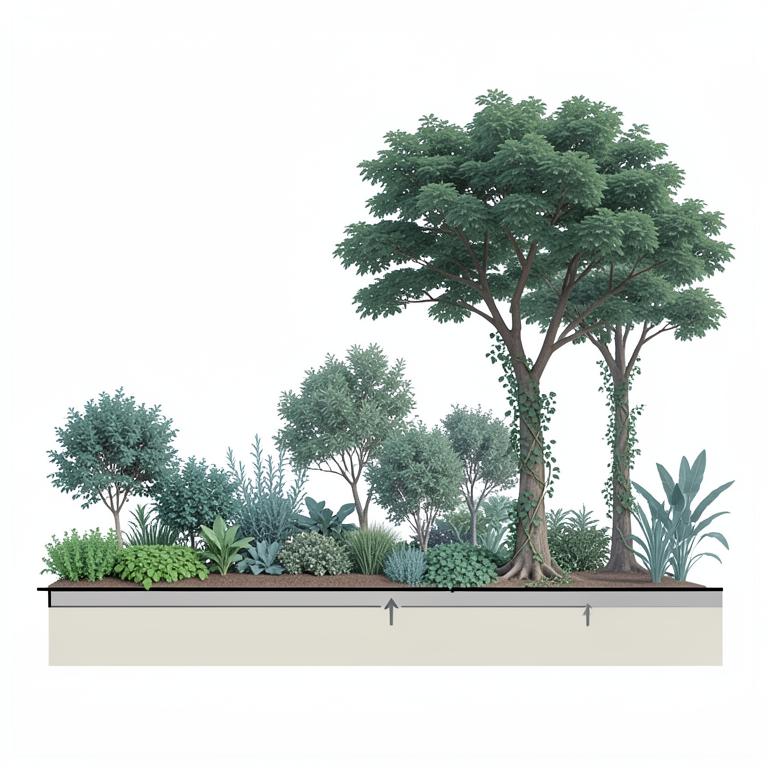
Composition of Home Garden Plant Growth Forms
AI-generated conceptual illustration (Ethiopian home garden plants including herbs, shrubs, trees, and climbers). It explains the idea and does not show study data.
View source evidence ↗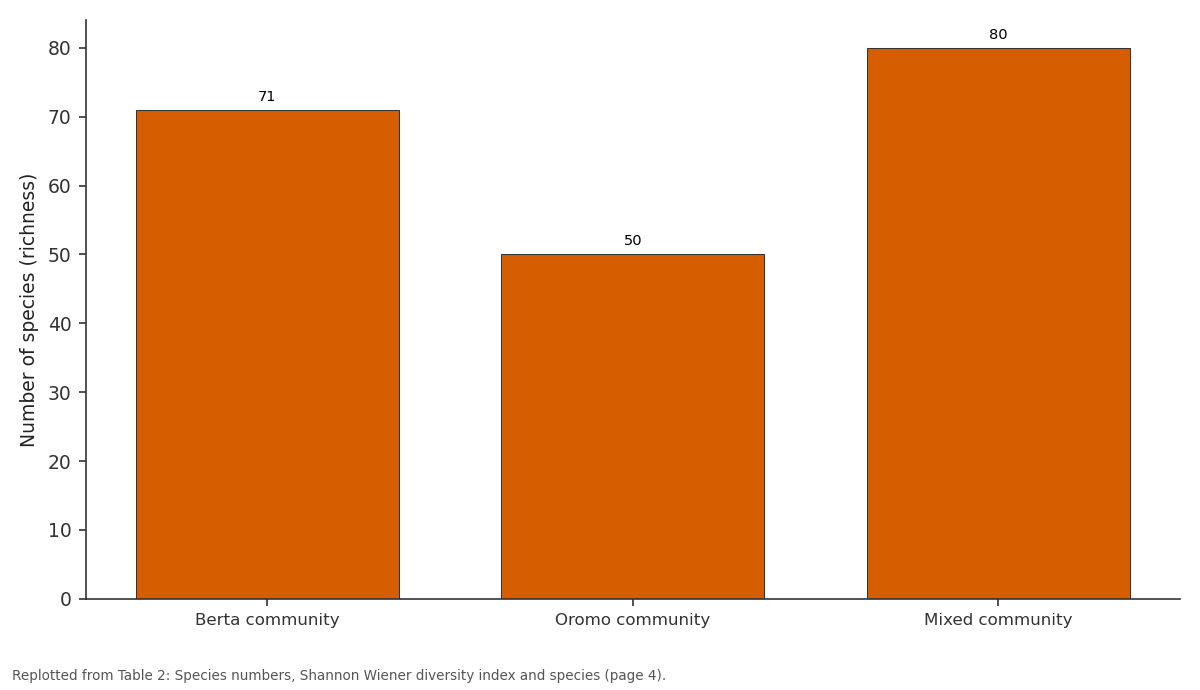
Number of species (richness): Berta community vs Oromo community vs Mixed community
Replotted from Table 2 (page 4) of the original paper. Every bar is the paper's own table value.
View source evidence ↗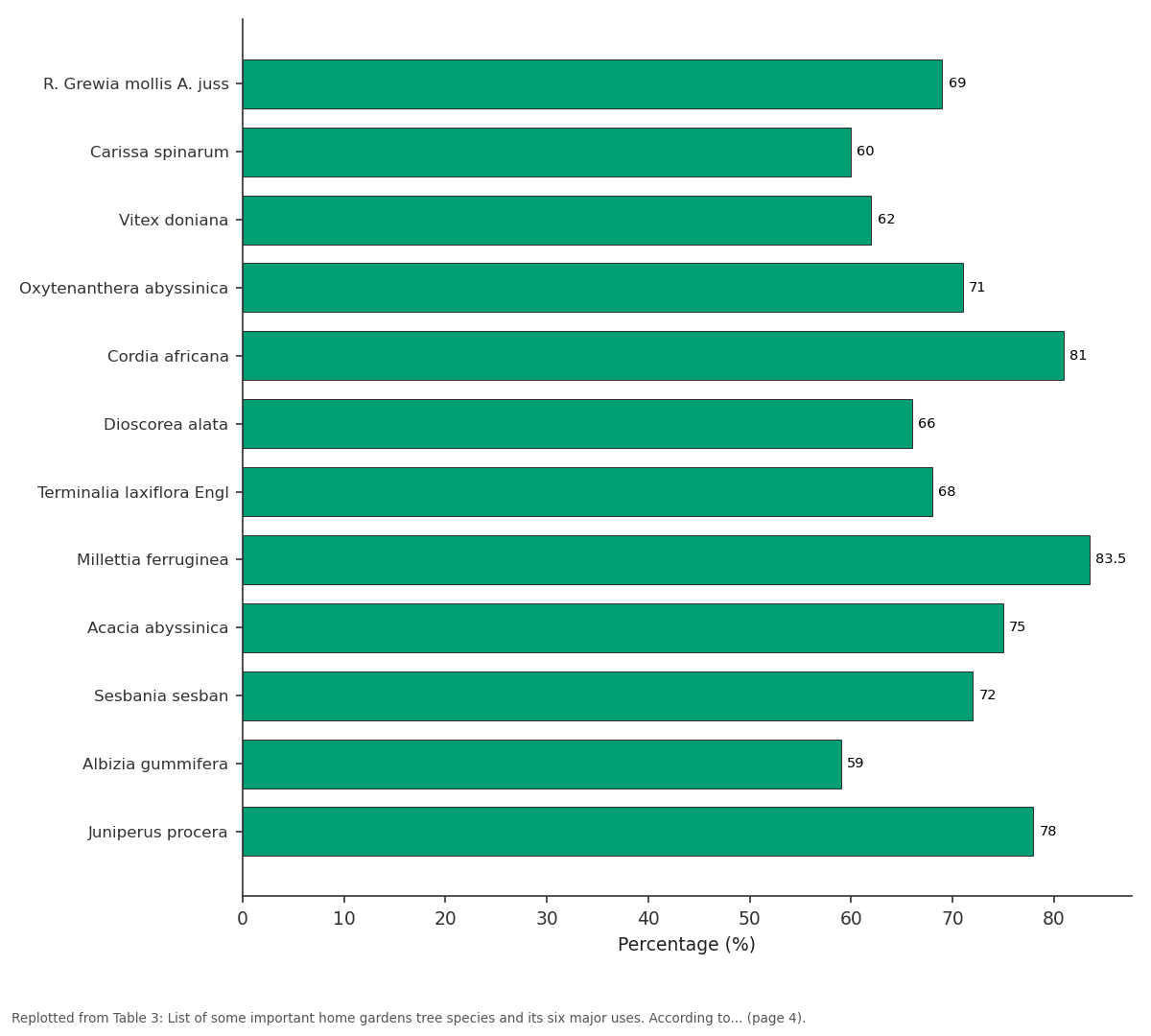
Percentage (%): R. Grewia mollis A. juss vs Carissa spinarum vs Vitex doniana vs Oxytenanthera abyssinica vs Cordia africana
Replotted from Table 3 (page 4) of the original paper. Every bar is the paper's own table value.
View source evidence ↗Figures & tables
From the original paper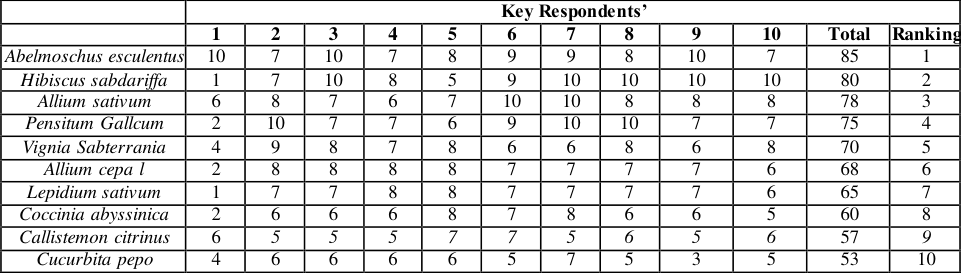 Table 1
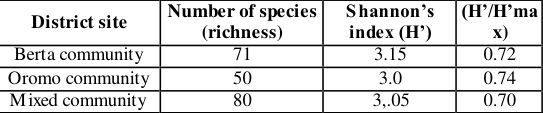 Table 2
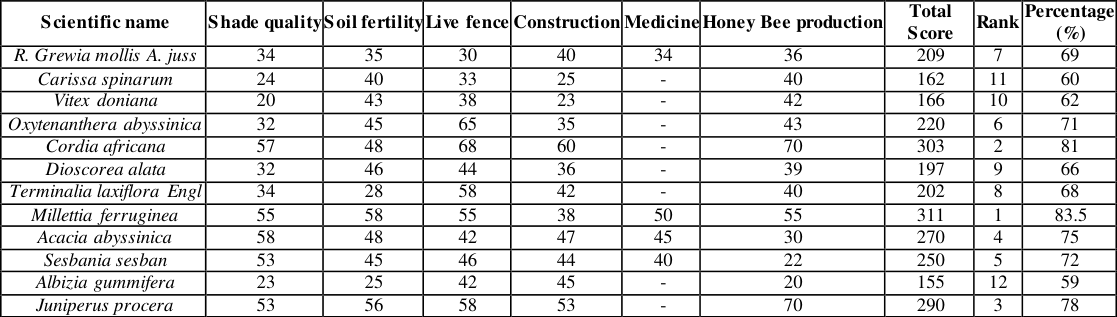 Table 3
 Table 4
Introduction
The beginning of Ethiopian home gardens is believed to be closely linked with the advent of agriculture from 5000 -7000 BC. Considering the long history of agriculture in Ethiopia and the presence of ancient crop domestication in home gardens, it could be presumed that gardening was probably the earliest form of farming ever practiced in the country (Zemede A sfaw, 2004) [16] . Detailed accounts of the history, origin and evolution of Ethiopian home gardens have been presented by Zemede Asfaw (2001b; 2002; 2004) [15,18,16] Biodiversity is crucial for survival, health and well-being of humans. It is giving greater resilience to ecosystems and organisms (Qualset et al., 1995) [19] . Complex, diversified and highly traditional rooted part of plant biodiversity conservation and utilization is found in home gardens (Kumar and Nair, 2006; Zemede, 2004) [7,16] . In Ethiopia, a very common Amharic vernacular name equivalent for the term home garden is "Yeguaro-ersha", in Oromo vernacular language is "eddo" means a land at a backyard of a house (Zemede, 2001) [14] .
Home garden is commonly defined as land use systems involving deliberate management of multipurpose trees and shrubs in intimate association with annual and perennial agricultural crops and invariably, livestock within the compounds of individual houses, the whole tree-are essentially man-made and reflect the wisdom of the traditional culture and ecological knowledge that have evolved over the years (Kumar and Nair, 2004; Abebe et al., 2010) [6,14] . Generally, home gardens serve as refuges to a number of plant species, particularly those not widely grown in the larger agro ecosystems. Moreover, they are the place of enormous indigenous knowledge (Eyzaguirre and Linares, 2004) [16] . Ethiopia is one of the eight world"s centers of origin and diversity of agricultural products. The tremendous variety and complexity of genetic resources results from in situ conservation of plants traditionally grown in home gardens home gardens are currently under threat of genetic erosion such as, the displacement great variety of landraces by few high -yielding varieties, loss of traditional knowledge of cropping patterns and management practices, socioeconomic factors and drought (Kumar and Nair, 2004; Zemede, 2004) [6,16] . In Ethiopia, inventory and documentation of home gardens are very few. It has been concentrated in south and southwestern parts of Ethiopia (Zemede and Zerihun, 1997; Tesfaye, 2005; Talemos Seta, 2013; Abebe et al., 2010) [17,11,10,14] . Thus, the study was initiated to increase the knowledge of home gardens of northwestern Ethiopia, specifically in west part of Ethiopia.
Materials and Methods
Materials and Methods
Description of the study area
The study site is undertaken in an availability of Agricultural site in Benishangul gmuze region since majority of woredas life hood predominately depend on mining of mineral. As result of these things, there is a need to select that were cultivation practices of agriculture practiced near around Assosa zone is located at a distance of 655 km North West of Addis Ababa and located at and 38°29" E longitude. The town has an area of 5550 ha.
Selection of study sites
The assessment on Home garden Crop primarily on experience in cultivating of crop species .The information was primarily obtained from four sites were identified and selected based on the presence of traditional home garden practices and various ethnic communities (languages). The selection site is depend on traditional culture potential in crops and horticulture were cultivated under three classes of ethnic communities group They are described as Amhara community site (A.C.S), Bereta community site (B.C.S), Oromo community site (O.C.S) and Mixed community site (M.C.S).
Sampling Method
This study site were under taken randomly sampling methods from the area were presence on back yard production and management system, before practicing survey, it was made reconnaissance survey conducted supposed to know to get sufficient information regarding on presence of home garden. In the first phase three locality were selected randomly from each target zone of woredas to carried out survey type research. From the three woredas Bambasi, Assosa zuria and in the second phase, Homesha woredas selected a totally of 300 house hold selected (100 total of were randomly selected to determine frequency of Home garden). The data recorded undergo data collection and analysis, 60 home gardens were selected randomly from houses that practice experience for long time home gardening. A total 10key informants were systematical had selected from different sites with the assistance of community elders and voluntary for providing investigation.
Data collection
Data were collected by using semi structured interviews, field observation, market survey and ranking and scoring methods (Martin, 1995; Cotton, 1996) [8,3] . Major home garden holding from each selected localities, Native languages in the two study areas are respectively the Rutanigha (Berta people) and Oromo (Assosa woreda). Interviews in both languages were conducted using a translator who live in close near the areas of Community. Direct matrix ranking was calculated for five multipurpose tree species in order to assess their relative importance to local people and to generate a matrix that represents the views of the entire community. Based on their relative uses, selected 10 key informants were asked to assign use values for each plant (using the following category 5 = best, 4 = very good, 3 = good, 2 = less used, 1 = least used and 0 = not used). In the end, the results of ten respondents were summed up to generate a matrix that represents the views of the entire community (Martin, 1995; Cotton, 1996) [8,3] . Preference ranking was calculated for ten food crops to determine the relative importance to local people. This technique was employed to rank some selected home garden species according to their significances. Based on their personal preference of efficacy, selected informants were asked to assign use values for each plant (Highest score (10), while the one with the least effectiveness given the lowest score (1). The numbers are summed for all respondents, giving an overall ranking for the items by the selected group of respondents
Floristic composition data and plant identification
Floristic composition data collection was conducted on 60 sample plots of 10 m×10 m (100 m 2 ) were delimited in 60 representative home gardens giving a total of 600 m 2 or 0.6 ha. Then, counts of each species (presence or absence) were conducted on each plot. Specimens of plants found to be the home gardens were collected and local names and habits of each plant were recorded with the help of key informants.
Data analysis
Data were analyzed and summarized using descriptive statistical methods (percentages) and floristic composition data were analyzed for species diversity using appropriate equations of the following parameters: Frequency, Frequency classes A -E, Density, Shannon and Wiener index (H"), evenness and species richness, and Sorensen"s Index of similarity (Kent and Coker, 1992; Shannon and Wiener, 1949; Whittaker, 1972) [5,9,13] .
Results and Discussion
The result of studied indicated that undertaking on Survey of 300 houses in Assosa zone indicated that 243 (81%) households were practicing home gardening. Also the location of home gardens' are multiple with increase in size more in species composition. This result of this study confirms with previously reported that similarly with Tesfaye (2005) [11] reported the same result in the study of diversity in home garden agro forestry system of southern Ethiopia. Home gardens in the study area are composed of trees, shrubs, herbs, climbing plants and food crops in different strata. They consist of trees approximately 10 to 15 m on the upper strata (Eucalyptus camaldulensis, Erythrina brucei, Cupressus lusitanica). Fruit crops (Prunus persica) and herbaceous plants up to 1 m from the ground strata (Brassica carinata, Cymbopogon citrates, Beta vulgaris, Brassica carinata, Brassica oleracea, Daucus carota, Lycopersicon esculentum). However, the horizontal structure of the species declines as one goes from home garden to the out fields. This was also reported by Talemos (2013) [10] enset-based home gardens in Woliyta.
Plant diversity and composition of the home gardens at Assosa Zone
A total of 90 plant species were identified and recorded from the study area. These plant species were classified into 43 genera and 23 families. The studies confirmed that 13 families, namely, the Asteraceae, Fabaceae, Lamiaceae, Solanaceae, Poaceae, Euphorbiaceae, Rutaceae, Malvaceae, Rosaceae, Rubiaceae, Moraceae, Brassicaceae and Myrtaceae accounted for 54 percent of the species richness. The commonly represented families were Fabaceae which contains 11 species, followed by Rutaceae and Poaceae in the second rank, which contain 8 species each, and Solanaceae in the third with 7 plant species. The richest home garden contained 27 species; whereas, the poorest garden contained 2 species and the mean was 12 species per home garden. Among the recorded species, only 24 species (21.7%) were found in all study sites and 3 species in only two home gardens. From 90 plants species identified, 6.25% were indigenous plants such as Abelmoschus esculentus, hibiscus sbuderafia, and 70 species were cultivated crops. The growth form of the species were 49 (43%) herb species, 32 (29%) tree species, 28 (25%) shrub species, and 3% were climber plants. E. camaldulensis, C. lusitanica, and Prunus persica were the top tree species. Rhamnus prinoides and were the most prominent shrub species in the study area. The home garden flora is composed of both food and non-food plants, accounting for 41.07% and 58.93% of the total of species respectively. Among the food crops 15 Species (1%) were fruit species, 10 species (11%) were vegetables and 6% pulses & cereals and ranked 1 to 3 in that order. nine percent of the Ethiopian higher flora. Fifty four percent of the species are herbs, followed by trees (22 percent), shrubs (18 percent) and climbers (five percent). In terms of use, 40 species were reported as food plants and 5 species as medicinal plants. This reveals that home gardens generally constitute about 80% of cultivated food plants and nine percent of medicinal plants known to exist in the country, which is highly significant in terms of conserving Ethiopia's plant biodiversity. Some medicinal plants have also additional use value such as for food, spices, condiments, construction and cultural values (Zemede Asfaw, 2001a) [14] . On the other hand, from non-food components of the garden grown species, medicinal plant were 13% and construction & building plants were 12% and miscellaneous consisting of 5% ranked 1 to 3, respectively. From the total number of species recorded in the study area,. These results indicated that diversity on crops and horticulture has grown on back yard play a vital role in situ conservation of agro biodiversity
Indigenous knowledge associated with home garden management practices in District areas of Assosa zone
The great effort has been done on keeping the diversity of Crop and horticulture around district areas of home garden species in Assosa zone particularly based on multiple ranges on various indigenous management activities. However before trail of this practice there haven't been any research activity under taken before around this areas. There are many underutilized and predominately known crop and horticulture species were nor recorded at regional and agricultural office among these some them including pear millet (Pennisetum glaucum), pigeon pea (Cajan cajan), yam (Dioscorea sp) Lupin (Lupinus albus), Ethiopian potato (plectranthus edulis) and anchote (Coccinia abyssinica). Therefor in order to know potential resource Crop and horticulture this sites is area which is crop grown in home garden and knowing indigenous knowledge associated with home garden management practices the study was initiated. Home garden holder of this sites home garden management of multipurpose trees, shrubs and annual crops connected with women practice since in Benishangul region cult women play major role for home garden cultural practice, communities sites developed indigenous knowledge about the preparation, classification and cultivating of crop and horticulture species as along unique ones grown in home garden differs from the rest regional part of country. The most known cultivating in this study were constituting of some crops and horticulture such as Abelmoschus esculentus, hibiscus subdariffia, Pennisetum glaucum. Abelmoschus esculentus or ladies finger is the most known horticulture maintained by women in home garden mainly used in different form as fresh and dried form into grounded as floor. The fresh form pod is cut in to pieces make mixed with chopped meat which is the delicious form prepared in home and hotels. Dried seed which is processed from pods grounded in to pieces as floor that is used for making of traditional wott which is waxes form mainly used for treating and smoothing stomach for enhancing digestion and also dried Seed rosten grounded in to in the form of floor which used as make of coffee. Cultivating subderafia also makes unique from the other rest regional part of country having for its multiple purpose of dual function. Its leaf part used part is the dried used to make for preparation of tea. The home garden encompasses agro ecosystem is an important traditional agricultural system in Ethiopia, which is managed through the use of indigenous knowledge, practices and skills (Zemede Asfaw, 2002) [18] . Our results confirmed home gardens are useful for the maintenance of good ecological balance of environment, it's also used for mainly for small holder farmers' as income source and enhancing food security problems around site of the study areas.
Benefits of home garden tree species with its major use in district areas of Assosa zone
The traditional method of hold on Home garden owners in Assosa zone have including diverse trees of using various tree species found in their home gardens ultimately used for multiple uses. The results of this study 10 key informants using direct matrix ranking in the four study sites showed that tree species have in their multiple range of categorized uses (Table 2). The tree species were chosen according to criteria for interviewing of an interviewer. The result this study Showed respondents responded as, Millettia ferruginea showed a total score of 311(83.5%) ranked first, Cordia africana and Juniperus procera with a total of 303(81%) and 290 (78%) second and third positions, respectively. Cultural practice of growing different diversity of plant species per unit of land may have grown in home gardens for medicinal purposes have a vital role to in situ conservation of agro biodiversity. From a total of plant species 90 identified in the present study, 10% were mainly as traditional medicinal plants
Factors that affect home garden diversity of crop and horticulture
Disease and pests are the main biotic biological factors of the study area in assosa zone, which damaged market and nonmarket crops like Mangifera indica, Abelmoschus esculentus, Hibiscus sabdariffa, Prunus persica, and S. tuberosum.
Home garden plant species of Assosa zone with medicinal values
The study were undertaken the people who have using cultivation practices in their plot of land the most trained people in the area constituting ethnic group of people engaged in this zone traditions of planting and plant species in home gardens for medicinal purposes have a vital role to in situ conservation of agro biodiversity. Survey result indicated a total of plant species 90 identified in the present study, 10% were used as predominately for traditional medicinal plants in distinct areas of studied among these, 33.33% were nutraceutical plants and 60% were wild plants. The result of this study was confirmed with previous research that was done obtained were similar to that of that reported 112 plant species grown in the Holeta. [17] reported similar perception with regard to the functions of this valuable crop. One of the best aspects of indigenous knowledge in the study area is work division in managing home gardens. Females managed (38.41%) vegetables, spices, and medicinal plants by planting, weeding, watering and selliand seedling. Zemede (2002) [18] remarked that the male family head is often accountable for designing homegarden structure, identifying suitable places for positioning the major crops, monitoring and strongly impacting the structure and direction of home garden development. Our results confirmed home gardens are useful for the maintenance of good health in developing countries as also reported by UNICEF (1982). This indigenous knowing. Males participated (47.93%) cultivating cash crop plants and digging, designinedge is also important in the of modern medicines as reported by Dawit et al. (2003) [4] .
Conclusion
The aim of this was study indicated or suggested knowing of diversity home garden consisting of plant species in northern western part of Ethiopia in Assosa zone Town need to have had high species diversity and a rich floristic composition that is numerous. relevant to this indigenous knowledge the relevant to sharing of culture from the area of along aside of community into another community could mainly involving, custom and economical benefit associated with food and medicinal uses in the area of the study an elderly people may become high potential uses of plant diversity and the best practice to maintain their agro biodiversity on farm conservation which enable to maintained agro biodiversity in the study areas. the value for home garden which express the management of multipurpose trees, shrubs, annual and perennial crops, herbs, and medicinal plants on the same land unit however there are diverse problems reducing plant diversity on farm conservation such as natural and manmade treating factors account for climate change, population pressure, disease, pest and land use aggregating problem. to tackle these problems around farmers' community though farmers' uses locally and culturally adaptive species effort was made for in situ conservation of plant biodiversity the the importance of home garden around back yard may also significant contribution primarily as meeting desire of food security, source of income and maintain ecological balance of environment vegetables and other species. In addition, home gardens provide significant contributions for the gardener and the society as source of supplementary food, medicinal functions, and income and maintain ecological balance of micro climate. But insufficient agricultural support, small sized garden and disease and pests affect the diversity of species. If these challenges receive attention by concerned institutions and researchers, the hotspot will maintain its existing biodiversity and traditional management systems on a sustainable basis in there is a need to extend studies on agro biodiversity over the rest part of beni shangul gumuz primarily based on culture, agro ecology. The results of various this studied plant diversity on home gardens need to be clearly shared indigenous knowledge to youths either or male female may ought to maintain and conserve agro biodiversity on farm conservation and decision makers as this is one of the ethical considerations of agro biodiversity studies.
Conflicts of Interest
Authors declare that they have no conflicts of interest
Acknowledgement
AcknowledgementsThe author owes My special gratitude from bottom line of heart to the Assosa zone informants who will have giving sharing valuable information on each items of plant diversity , their experience by showing home garden on farm demonstrating site and emphasizing each species uses and medicinal and food value
Figures and tables from the paper
| — | Key Respondents’ | — | — | — | — | — | — | — | — | — | — | — |
|---|---|---|---|---|---|---|---|---|---|---|---|---|
| 1 | 2 | 3 | 4 | 5 | 6 | 7 | 8 | 9 | 10 | Total | Ranking | |
| Abelmoschus esculentus | 10 | 7 | 10 | 7 | 8 | 9 | 9 | 8 | 10 | 7 | 85 | 1 |
| Hibiscus sabdariffa | 1 | 7 | 10 | 8 | 5 | 9 | 10 | 10 | 10 | 10 | 80 | 2 |
| Allium sativum | 6 | 8 | 7 | 6 | 7 | 10 | 10 | 8 | 8 | 8 | 78 | 3 |
| Pensitum Gallcum | 2 | 10 | 7 | 7 | 6 | 9 | 10 | 10 | 7 | 7 | 75 | 4 |
| Vignia Sabterrania | 4 | 9 | 8 | 7 | 8 | 6 | 6 | 8 | 6 | 8 | 70 | 5 |
| Allium cepa l | 2 | 8 | 8 | 8 | 8 | 7 | 7 | 7 | 7 | 6 | 68 | 6 |
| Lepidium sativum | 1 | 7 | 7 | 8 | 8 | 7 | 7 | 7 | 7 | 6 | 65 | 7 |
| Coccinia abyssinica | 2 | 6 | 6 | 6 | 8 | 7 | 8 | 6 | 6 | 5 | 60 | 8 |
| Callistemon citrinus | 6 | 5 | 5 | 5 | 7 | 7 | 5 | 6 | 5 | 6 | 57 | 9 |
| Cucurbita pepo | 4 | 6 | 6 | 6 | 6 | 5 | 7 | 5 | 3 | 5 | 53 | 10 |
Table text extracted from the original PDF; superscript letters are shown inline. The original table image is below.
View original table image
| Scientific name | Shade quality | Soil fertility | Live fence | Construction | Medicine | Honey Bee production | Total Score | Rank | Percentage (%) |
|---|---|---|---|---|---|---|---|---|---|
| R. Grewia mollis A. juss | 34 | 35 | 30 | 40 | 34 | 36 | 209 | 7 | 69 |
| Carissa spinarum | 24 | 40 | 33 | 25 | - | 40 | 162 | 11 | 60 |
| Vitex doniana | 20 | 43 | 38 | 23 | - | 42 | 166 | 10 | 62 |
| Oxytenanthera abyssinica | 32 | 45 | 65 | 35 | - | 43 | 220 | 6 | 71 |
| Cordia africana | 57 | 48 | 68 | 60 | - | 70 | 303 | 2 | 81 |
| Dioscorea alata | 32 | 46 | 44 | 36 | - | 39 | 197 | 9 | 66 |
| Terminalia laxiflora Engl | 34 | 28 | 58 | 42 | - | 40 | 202 | 8 | 68 |
| Millettia ferruginea | 55 | 58 | 55 | 38 | 50 | 55 | 311 | 1 | 83.5 |
| Acacia abyssinica | 58 | 48 | 42 | 47 | 45 | 30 | 270 | 4 | 75 |
| Sesbania sesban | 53 | 45 | 46 | 44 | 40 | 22 | 250 | 5 | 72 |
| Albizia gummifera | 23 | 25 | 42 | 45 | - | 20 | 155 | 12 | 59 |
| Juniperus procera | 53 | 56 | 58 | 53 | - | 70 | 290 | 3 | 78 |
Table text extracted from the original PDF; superscript letters are shown inline. The original table image is below.
View original table image
References
8 in the original paper- Belachew W, Zemede A, Sebsebe D. Ethno botanical Study of Useful Plants in Daniio Gade (Homegardens) In Southern Ethiopia. Ethiop. J Biol. Sci. 2003;2(2):119-141.
- Christanty L. Homegardens in Tropical Asia: A special reference to Indonesia. Proceedings of the First International Workshop on Tropical Homegarden, 2December, 1985, Bandung, Indonesia; c1985. p. 39-4.
- Kumar BM, Nair PKR. The enigma of tropical homegardens. Agroforestry Systems, Kluwer Academic Publisher. 2004;61:135-152.
- Talemos Seta, Sebsebe Demissew, Zemede Asfaw. Home gardens of Wolayta, southern Ethiopia: An ethno botanical profile. Acad. J Med. Plants. 2013;1(1):14-30.
- UNICEF. Homoegarden Handbook Biodiversity guide for Ethiopia. Word Conservation Monitering Center, Cambridge, Euphytica. 1982;96:1-2.
- Whittaker RH. Evolution and measurement of species diversity. Taxon. 1972;21:213-251.
- Zemede Asfaw, Zerihun Woldu. Crop association of homegardens in Walayta and Gurage in Southern Ethiopia. SINET: Ethiop. J Sci. 1997;20(1):73-90.
- Qualset C, McGuire P, Warburton M. In California: 'Agro biodiversity' key to agricultural productivity. California agriculture. 1995 Nov 1;49(6):45-9.
Cited by 1
From OpenAlex, OpenCitations and reference lists read by Scinovex
- Medicinal Plants: General Overview of Medicinal Plants in Ethiopia ↗
Girum Faris, Mesay Paulos, Crop and Horticulture Cease team, Ethiopian Biodiversity, Assosa Branch, Assosa, Ethiopia. · International Journal of Advanced Pharmaceutical Sciences and Research · 2025
In Ethiopia, Medicinal Plants have played a crucial role and should be used as a source of food for humans, preserving food and animal products, clothing, shelter, Flavours, and fragrances, as well as other essential items for earning economic benefits. This review aimed to utilise medicinal plant treatments to address human and animal problems. The use of medicinal plants for…
❝ 0PDF