
Research article · 2020 · Full text
International Journal of Advanced Biochemistry ResearchA 3 year retrospective study on the pattern and prevalence of extra pulmonary tuberculosis in JOS, Plateau state: Nigeria
Volume 4(1) · Pages 61–64 · DOI: 10.33545/26174693.2020.v4.i1a.126 ↗
Research areasTuberculosis Research and EpidemiologyDiagnosis and treatment of tuberculosis
Abstract
Author-writtenIn 2017, the World Health Organization reported that the prevalence of EPTB was 15% globally from amongst the world global burden of tuberculosis. Furthermore, researches done and ongoing have and are showing three main problems, challenges with accurate diagnosis, the low cure rate and the high death rate. The aim of this study was to retrospectively evaluate the pattern and prevalence of pulmonary tuberculosis in Jos, Plateau state; Nigeria. This was done using a quantitative analytical pattern to study the incidences of 862 patients, from which 127 were diagnosed with Extrapulmonary Tuberculosis. While we had a prevalence of 14.7%, we got an average cure rate of 1.6% and an average death rate of 23.6%.
Summary
Source-checkedPlain-language reading of the full paper, prepared with AI and checked against the text. Each point links to the authors' own words.
Why it matters
- Tuberculosis is a major global health threat, ranking as the ninth leading cause of death worldwide and the top cause of death from a single infectious agent. View evidence ↗
- Nigeria is one of the 30 high-burden countries for tuberculosis and leads the African continent in case burdens. View evidence ↗
- While tuberculosis primarily affects the lungs, it can also manifest in other organs or systems, a condition known as extrapulmonary tuberculosis (EPTB). View evidence ↗
The question
- The study aimed to retrospectively evaluate the prevalence and pattern of tuberculosis in Jos, Plateau state, Nigeria. View evidence ↗
What they did
- The researchers conducted a cross-sectional descriptive study evaluating 862 patients over a three-year period from 2016 to 2018. View evidence ↗
- Patient data were collected from the Directly Observed Treatment (DOT) clinics at the Plateau Specialist Hospital and Bingham University Teaching Hospital. View evidence ↗
- The study used Microsoft Excel and its statistical tools for data analysis. View evidence ↗
What they found
- Out of the total cases reported, 127 patients were diagnosed with extrapulmonary tuberculosis, resulting in an average prevalence of 14.7%. View evidence ↗
- Among the various forms of EPTB reported, TB adenitis was the most common. View evidence ↗
- The cure rate for patients treated for EPTB was very low, averaging 1.6%. View evidence ↗
- The mortality rate for EPTB patients was significantly higher than the cure rate, with an average death rate of 23.6%. View evidence ↗
- The study found that EPTB was more prevalent in women than in men. View evidence ↗
- EPTB deaths accounted for 20.0% of the total tuberculosis death pool in the study. View evidence ↗
What it means
- The authors conclude that the prevalence of extrapulmonary tuberculosis is increasing in Jos, Plateau state, Nigeria. View evidence ↗
- The authors state that the prognosis for EPTB patients is poor due to the very low cure rate. View evidence ↗
- Study limitations included a small sample size of EPTB-positive patients, a lack of detailed anatomical site data, and the absence of differential HIV prevalence data. View evidence ↗
Visual summary
3 visualsIllustrations explain the paper; charts are replotted from the paper's own table values.
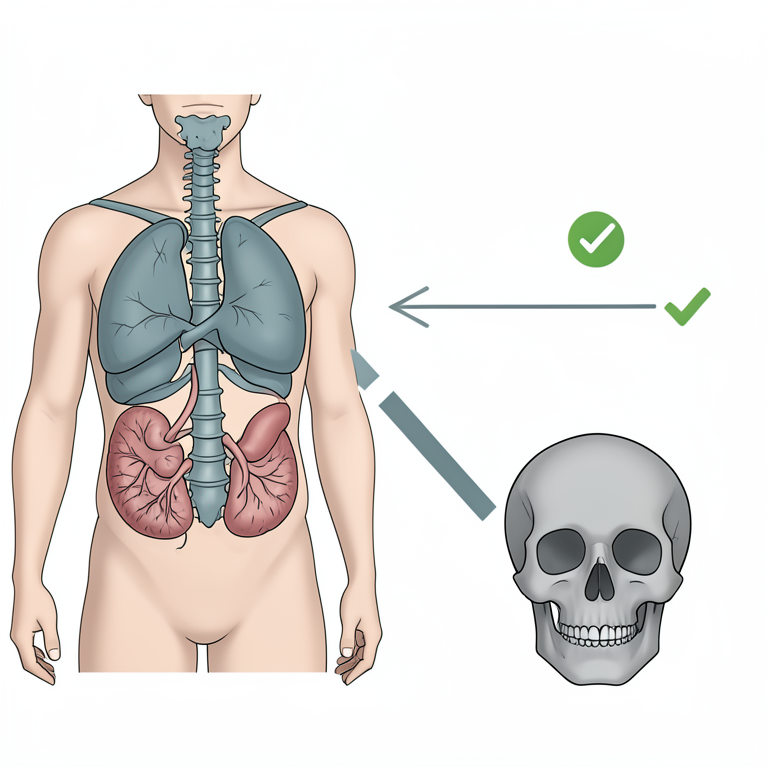
EPTB Outcome Comparison
AI-generated conceptual illustration (human organs affected by extrapulmonary tuberculosis). It explains the idea and does not show study data.
View source evidence ↗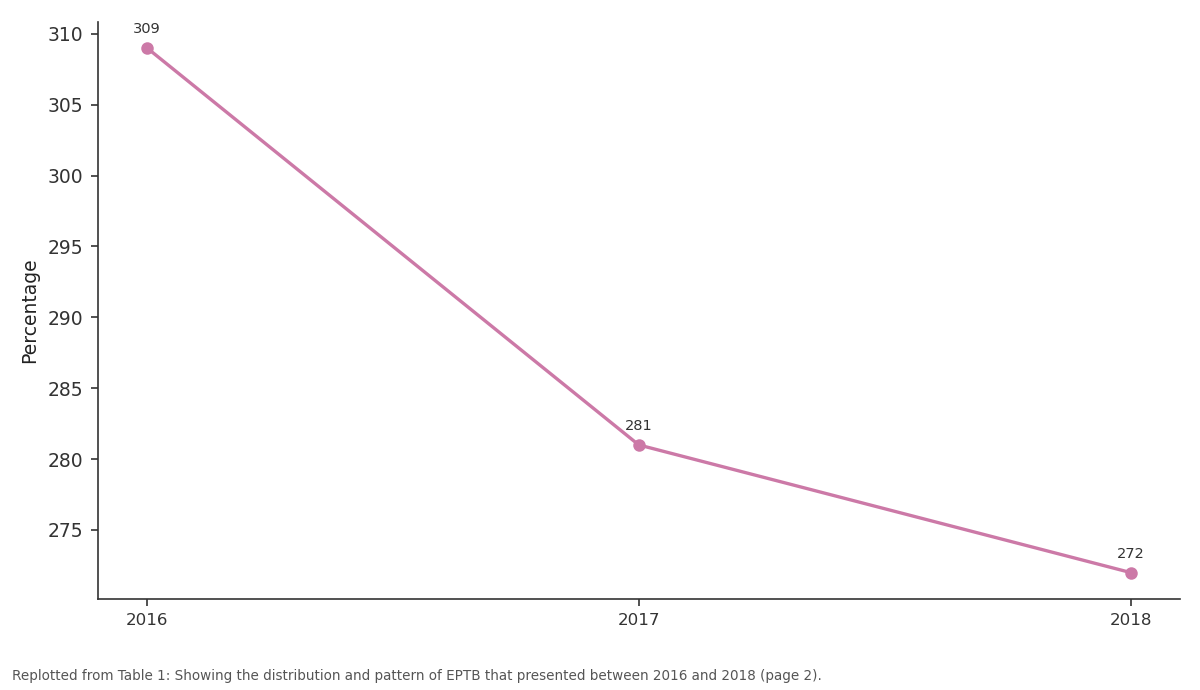
Total / Frequency: 2016 vs 2017 vs 2018
Replotted from Table 1 (page 2) of the original paper. Every bar is the paper's own table value.
View source evidence ↗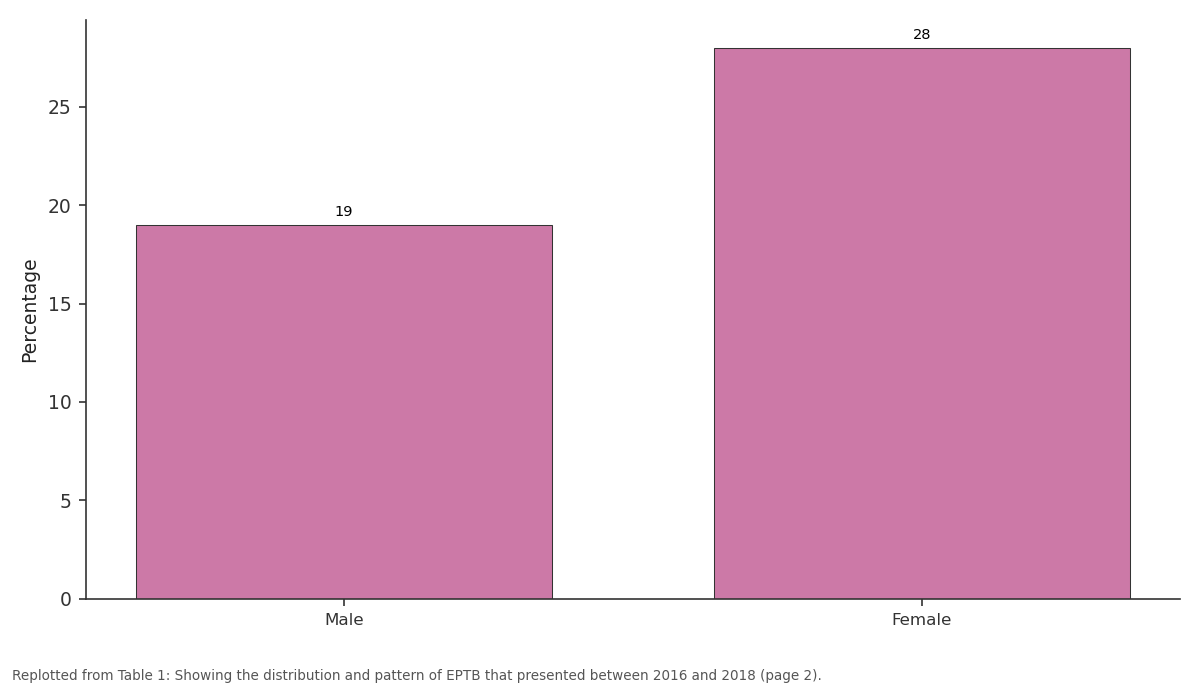
Total / Frequency: Male vs Female
Replotted from Table 1 (page 2) of the original paper. Every bar is the paper's own table value.
View source evidence ↗Figures & tables
From the original paper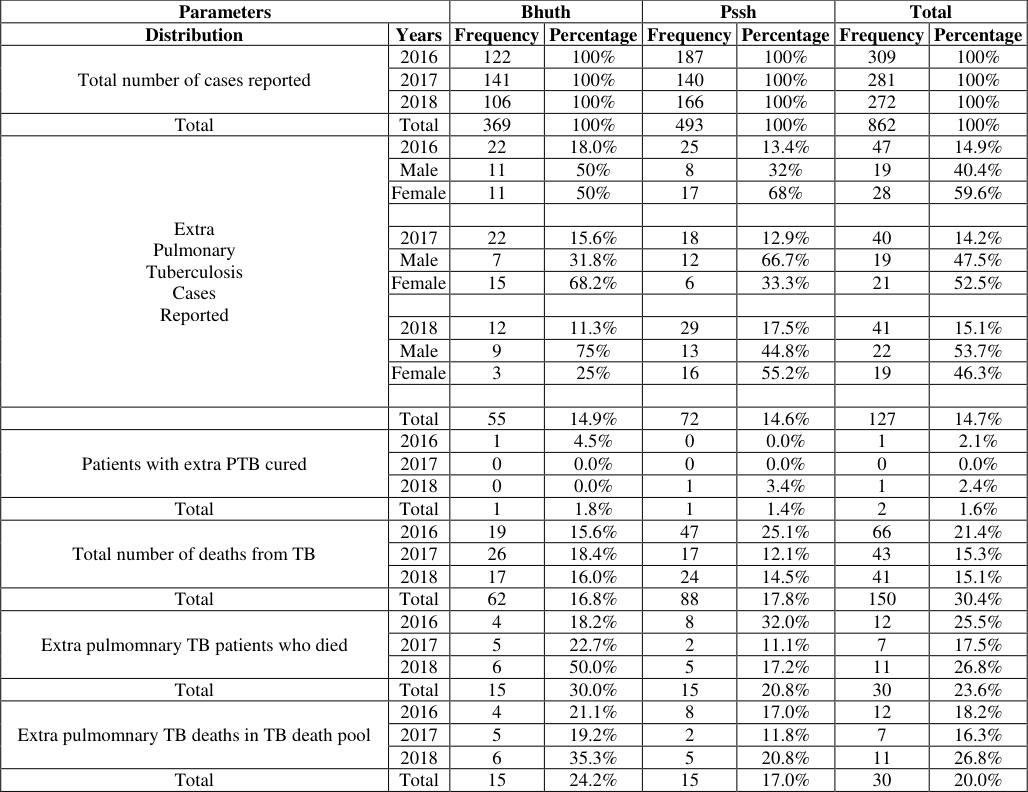 Table 1
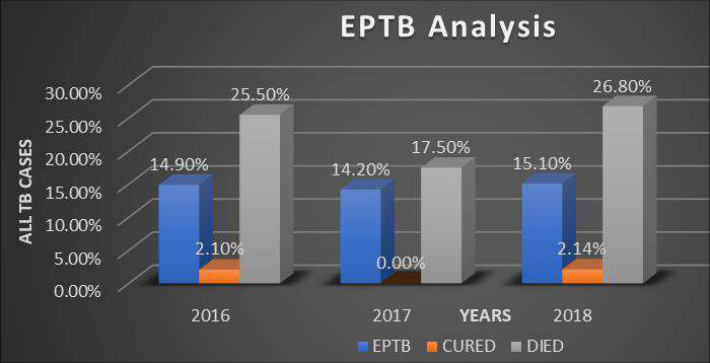 Figure 1
Introduction
About a third of the world's population is latently infected with Mycobacterium tuberculae. This simply means that though they have been infected with this bacterium, they are not yet sick with TB and hence can only act as carriers, and not transmitters of the disease in the time being [1] . There is tuberculosis in every part of the world. In fact, as at 2015 the largest number of new cases occurred in Asia, with over 61% of newly diagnosed cases. This was followed by Africa, where there were over 26% of the newly diagnosed cases. Tuberculosis (TB) is the ninth leading cause of death worldwide and the leading cause from a single infectious agent, even ranking higher than HIV/AIDS [2] . In 2016, about 2.5 million people came down with TB in Africa, accounting for over 25% of new TB cases worldwide. An estimated 417,000 people died from the disease in Africa in 2016, with about 1.7 million globally in the same year [3] . In the year 2015, 87% of new TB cases occurred in the 30 high TB burden countries. With only Six countries accounting for 60% of the new TB cases: India, Indonesia, China, Nigeria, Pakistan, and South Africa. A similar statistic was seen in the year 2017, where 87% of the global burden of TB was seen from amongst the 30 high burden countries. Nigeria is not just amongst the 30 high burden countries, it is leading Africa in case burdens [2,4] . About 407,000 people in Nigeria get infected with TB each year. This estimate covers only the people who are HIV negative. There is a whole different 63,000 HIV positive people that get TB each year. While an estimated 115,000 HIV negative people die from TB in Nigeria each year. Then an estimated 39,000 HIV positive people also die [5] . However, Since the year 2000, over 53 million lives have been saved through effective diagnosis and treatment. With Active, drug-sensitive TB disease is treated with a standard 6month course of 4 antimicrobial drugs that are provided with information, supervision and support to the patient by a health worker or trained volunteer. Hence, the vast majority of TB cases can be cured when medicines are provided and taken properly [2] . Although the main anatomical pathology of TB is often primarily t the lungs, it can also affect other areas of the body, this is known as extrapulmonary TB (EPTB). Extrapulmonary simply attests to the fact that TB is a multisystemic disease. It can affect any organ or system with an exclusion of the hair and nails.
Extra pulmonary TB is often poorly diagnosed in time and can thus lead to various complications. TB has not only been seen to lead to male and female infertility, some studies have even described sexually transmission of TB [68] . The prevalence of EPTB varies from region to region, country to country and continent to continent. In fact, while PTB is primarily often seen as a disease of the lower-class citizens, EPTB has been -in some studies-linked to an increase rate in immigration. Furthermore, in this same study an inference was made, stating that unlike PTB, EPTB was not on a decline. This was because the prevalence increased from 16.4% in 2002 to 22.4% in 2011in Europe. [9] . Due to the atypical presentations of EPTB, there are challenges with its diagnosis. This was studied by Solovic and colleague. Although they did state that there were regional variations in the incidence and prevalence of EPTB. In Australia, the incidence rate of EPTB was found to be 24.3%, at about the same time the same was seen to be 13.3% in Southern-Taiwan [10][11][12] . Mazza-Stalder and colleagues on concluding their study made the conclusion that the prevalence was actually on an increase, similar to the deduction made by Sandgren and colleagues [9] [11] . These findings were supported by another study by Garcia-Rodriguez and co when they found a significant increase in prevalence of EPTB from 30.6% between 1991-1996 to 37.6% in 2003-2008. They concluded that though there is a decline in the general prevalence of TB, this decline was more amongst PTB, as EPTB was in fact on a rise. They proposed that this may be linked to the decline in number of Bacillus Calmette-Guerin (BCG) vaccinated patients. They also linked this to the predominance of women in the population. Hence stating that the gender prevalence of EPTB is higher in the females. [13] . The aim of this study is to retrospectively evaluate the pattern and prevalence of pulmonary tuberculosis in Jos, Plateau state; Nigeria.
Methodology
It was a cross-sectional descriptive study that evaluate 862 patients over a period of 3 years (2016, 2017 and 2018). The study utilized a validated data tool to obtain the required information. Data was obtained from the DOT clinics of the Bingham University Teaching Hospital (BhUTH) and the Plateau Specialist Hospital (PSSH). Data was analyzed using a Microsoft excel and the MS excel statistical tools. Ethical clearance for this study was sought for and granted from the ethical committees of the Bingham University Teaching Hospital and that of the plateau Specialist Hospital.
Result
Of the 826 cases of Tuberculosis reported to between 2016 and 2018, 127 of them were diagnosed with EPTB. There were various forms reported, TB adenitis was the most prevalent. Others were Disseminated TB, Abdominal TB, TB meningitis and TB Arthritis. The table shows the EPTB distribution illustrates that averagely the prevalence of EPTB is 14.7%. There is a slow but evident increase in the prevalence of EPTB over the years. Furthermore, the probability of getting cured is as low as 2.1% This is accompanied by a more prevalent mortality probability of 20% of all TB deaths.
Fig 1:
Bar chart showing the graphical representation of the table above. Highlighting the Extra Pulmonary TB cases reported, the patients who were cured and those who died from Extra Pulmonary TB.
Discussion
The aim of this study was to retrospectively evaluate the pattern and prevalence of pulmonary tuberculosis in Jos, Plateau state; Nigeria. This was done using a quantitative analytical pattern to study the incidences of 862 patients, from which 127 were diagnosed with Extrapulmonary Tuberculosis.
From the study, it is clear that the prevalence of EPTB is on a rise. A deduction of the average annual prevalence was calculated to be 14.7%. Although the yearly prevalence between 2016 and 2018 ranged from 14.2%-15.1%. This was different from studies done in Australia and Europe who had higher yearly prevalence's; however, it was in keeping with a study done in Southern Taiwan. The findings in this study were also in keeping with the WHO report of 2017, that found the prevalence of EPTB globally to be 15% [14] . Nevertheless, there is a variation in prevalence of EPTB globally, as it is a whole pathology on its own with predisposing factors that vary in different regions and parts of the world [9][10][11][12] . As the ability to make an accurate and timely diagnosis is a challenge in most pasts of the world, as accurate diagnosis of EPTB is still in fact a global challenge [6] . As regards the prevalence by gender, women had a higher prevalence than men with EPTB. This is in keeping with findings similar to that done by Mazza and colleagues and also another 15 years retrospective study at Accra, Ghana by Ohene et al. in 2019. [11,15] . This was due to the fact that while PTB had a higher occurrence amongst men, EPTB generally has a higher occurrence amongst women. This was also offered as an explanation as to why the prevalence of EPTB was seen to be on a rise, in contrast to the general global burden of the TB disease. It was because the world has an ever-rising global numerical dominance of females [11] . Furthermore, it was discovered that there was a very low cure rate (1.6%) for people being treated for EPTB. This may be explained by the fact that most of those who come down with EPTB are often HIV positive and hence have a poorer outcome; there is a delay in diagnosis and presentation; The patients with EPTB have a higher chance of treatment failure in comparison to PTB; or the drugs available for treatment are not so effective. The findings in this study were similar to a study done by Ohene et al. in Accra, Ghana where they found out that the prevalence of cure amongst EPTB patients was 0.9%, which constituted 6 patients out of 728. This same study also discovered that older age groups and HIV positivity was associated with higher mortalities amongst EPTB patients [15] . Sadly, the death rate from EPTB was way more pronounced than the cure rate according to findings in this study. The death rates ranged from 17.5 to 26.8%, with and average death rate of 23.6%. This does not vary greatly from a similar study in Ghana, where their overall death rate was reported to be 28.7% [15] . The limitations of this study however were, a small sample load of EPTB positive patients, not fiving differential details as to the regional and anatomical sites associated with TB and also not making a differential HIV prevalence to help deduce the susceptibility of HIV patients to EPTB.
Conclusion
This study proves that there is an increase in the prevalence of EPTB in Jos, Plateau state; Nigeria. On an average, the percentage of EPTB amongst reported TB cases is 14.7%. However, the prognosis for these patients is not promising with a 1.6% cure rate. Furthermore, the study goes to show that while the cure rates are within lower decimals, the death rates are high (23.6%).
Abbreviations
Abbreviations
Conflict of interest
The Author declares no conflict of interest in this study.
Funding
No funding was received from any governmental or nongovernmental organization in cash or in kind for this study. All expenses incurred in the course of this work were selffunded.
Acknowledgement
AcknowledgementA special appreciation to the staff of the TB clinics at Bingham University teaching Hospital and those of the Plateau Specialist Hospital, especially the TB clinic Nursing staff. Furthermore, a very dear appreciation to my parents, Mr. and Mrs. OTOBO and brothers (Michael and Emmanuel) who stood by me through the intense phases of my work. I will also love to acknowledge the selfless work that the stop TB partnership Nigeria are doing, thank you so much for the inspiration. Finally, to Prof. Beatrice Makai and Prof. Loveth Lawson …. I am forever grateful, thank you.
Figures and tables from the paper
| Parameters | — | Bhuth | — | Pssh | — | Total | — |
|---|---|---|---|---|---|---|---|
| Distribution | Years | Frequency | Percentage | Frequency | Percentage | Frequency | Percentage |
| Total number of cases reported | 2016 | 122 | 100% | 187 | 100% | 309 | 100% |
| 2017 | 141 | 100% | 140 | 100% | 281 | 100% | |
| 2018 | 106 | 100% | 166 | 100% | 272 | 100% | |
| Total | Total | 369 | 100% | 493 | 100% | 862 | 100% |
| Extra Pulmonary Tuberculosis Cases Reported | 2016 | 22 | 18.0% | 25 | 13.4% | 47 | 14.9% |
| Male | 11 | 50% | 8 | 32% | 19 | 40.4% | |
| Female | 11 | 50% | 17 | 68% | 28 | 59.6% | |
| 2017 | 22 | 15.6% | 18 | 12.9% | 40 | 14.2% | |
| Male | 7 | 31.8% | 12 | 66.7% | 19 | 47.5% | |
| Female | 15 | 68.2% | 6 | 33.3% | 21 | 52.5% | |
| 2018 | 12 | 11.3% | 29 | 17.5% | 41 | 15.1% | |
| Male | 9 | 75% | 13 | 44.8% | 22 | 53.7% | |
| Female | 3 | 25% | 16 | 55.2% | 19 | 46.3% | |
| Total | 55 | 14.9% | 72 | 14.6% | 127 | 14.7% | |
| Patients with extra PTB cured | 2016 | 1 | 4.5% | 0 | 0.0% | 1 | 2.1% |
| 2017 | 0 | 0.0% | 0 | 0.0% | 0 | 0.0% | |
| 2018 | 0 | 0.0% | 1 | 3.4% | 1 | 2.4% | |
| Total | Total | 1 | 1.8% | 1 | 1.4% | 2 | 1.6% |
| Total number of deaths from TB | 2016 | 19 | 15.6% | 47 | 25.1% | 66 | 21.4% |
| 2017 | 26 | 18.4% | 17 | 12.1% | 43 | 15.3% | |
| 2018 | 17 | 16.0% | 24 | 14.5% | 41 | 15.1% | |
| Total | Total | 62 | 16.8% | 88 | 17.8% | 150 | 30.4% |
| Extra pulmomnary TB patients who died | 2016 | 4 | 18.2% | 8 | 32.0% | 12 | 25.5% |
| 2017 | 5 | 22.7% | 2 | 11.1% | 7 | 17.5% | |
| 2018 | 6 | 50.0% | 5 | 17.2% | 11 | 26.8% | |
| Total | Total | 15 | 30.0% | 15 | 20.8% | 30 | 23.6% |
| Extra pulmomnary TB deaths in TB death pool | 2016 | 4 | 21.1% | 8 | 17.0% | 12 | 18.2% |
| 2017 | 5 | 19.2% | 2 | 11.8% | 7 | 16.3% | |
| 2018 | 6 | 35.3% | 5 | 20.8% | 11 | 26.8% | |
| Total | Total | 15 | 24.2% | 15 | 17.0% | 30 | 20.0% |
Table text extracted from the original PDF; superscript letters are shown inline. The original table image is below.
View original table image
References
12 in the original paper- Cohen A, Mathiasen VD, Schon T, Wejse C. The global prevalence of latent tuberculosis: a systematic review and meta-analysis. European Respiratory Journal, 2019, 1900655. https://doi.10.1183/13993003.00655-2019
- World Health Organization (WHO). Tuberculosis. WHO, October 2016, Updated 2018 Jan. http://www.who.int/mediacentre/factsheets/fs104/en/
- World Health Organization (WHO) -Regional office for Africa. Tuberculosis. WHO, 2016 Oct. https://www.afro.who.int/health-topics/tuberculosis-tb
- World Health Organization. Global Tuberculosis Report 2018. World Health Organization; Geneva, Switzerland, 2018. https://www.who.int/tb/publications/global_report/Main Report_18Sept2018.pdt?ua=1]
- World Tuberculosis day 2018, on the search for TB leaders in Nigeria, 2018 Mar 16, ARFH, http://arfh-ngorg/world-tuberculosis-day-2018-on-the-search-for-tbleaders-in-nigeria/]
- Lubbe J, Ruef C, Spring W, Dubs M, Sigg C, Lubbe J. et al. Urol Int. 1996;56(3):204-6. https://doi:10.1159/000282842
- Sandgren A, Hollo V, Van der Werf M. Extrapulmonary tuberculosis in the European union and European economic area, 2022 to 2011. Euro Surveill. 2013 Mar 21;18(12):20431. PMID: 23557943.
- Solovic I, Johnson J, Korzeniewska-kosela M, Chiotan DI, Pace-Asciak A, Slump E, et al. Challenges in diagnosing extrapulmonary tuberculosis in the European Union, 2011. Euro Surveill. 2013 Mar 21;18(12):20432.
- Mazza-Stalder J, Nicod L, Janssens J. Extrapulmonary tuberculosis. Rev Mal Respir. 2012 Apr;29(4):566-78. https://doi:10.1016/j.rmr.2011.05.021.
- Lin J, Lai C, Chen Y, Lee S, Tsai S, Huang C, et al. Risk factors for extrapulmonary tuberculosis compared to pulmonary tuberculosis. Int J Tuberc Lung Dis. 2009 May;13(5):620-5.
- Garcia-Rodriguez J, Alvarez-Diaz H, Lorenzo-Garcia M, Marino-Callejo A, Fernandez-Rial A, SesmaSanchez P. Extrapulmonary tuberculosis: epidemiology and risk factors. Enferm Infec Microbiol Clin. 2011 Aug-Sep;29(7):502-9. https://doi:10.1016/j.emic.2011.03.005
- Ohene SA, Bakker MI. Extra-pulmonary tuberculosis: A retrospective study of patients in Accra, Ghana. PLoS One. 2019 Jan;14(1):e0209650. https://doi.101371/journal.pone.0209650.