
Research article · 2023 · Full text
International Journal of Horticulture and Food Scienceto evaluate the effect of different pre-chemical treatments and packing materials on the fruit quality of mosambi (Citrus limetta)
Volume 5(1) · Pages 91–95 · DOI: 10.33545/26631067.2023.v5.i1b.164 ↗
Research areasPlant Physiology and Cultivation StudiesPostharvest Quality and Shelf Life ManagementPlant Surface Properties and Treatments
Abstract
Author-writtenA study was carried\r\nout in entitled “To evaluate the effect of different pre-chemical treatments\r\nand packing materials on the fruit quality of Mosambi (Citrus limetta)” at the Agricultural laboratory of Sant Baba\r\nBhag Singh University, Jalandhar, Punjab (India) during the year 2020.\r\nCompletely Randomized Design (CRD) with 3 replications and 10 treatments was\r\nconstructed for the present study. Fruits were pre-treated in hot water (55 °C)\r\nwas given for 1 minute. Then, fruits were air dried and packed in packaging\r\nfilms viz. high-density polyethylene (HDPE) and other packaging\r\nmaterials, Low-density polyethylene (LDPE) with or without perforations) and\r\nsealed with an electronic sealing system after being dehumidified.\r\nAdditionally, chemically viz. 2, 4-dichlorophenoxyacetic acid (2, 4-D)\r\nand gibberellic acid (GA3), prepared fruits were also kept at (ambient) room\r\ntemperature. For analyzing, fruit samples were collected for various quality\r\nparameters after 7 days of interval of storage (0, 7th, 14th,\r\nand 21th). The results revealed that among the different treatments\r\nT4 (HDPE perforated) treatment was superior for characteristics like\r\nphenol content, TSS, total terrible acid, total sugars, reducing sugars, and\r\nnon-reducing sugars, as compared to other treatments studied. On the other\r\nhand, fruit pH and ascorbic acid were observed better in T6 and T3\r\nrespectively. It was concluded that the use of HDPE perforated packaging\r\nmaterial might be an effective and economical treatment for improving the\r\nquality of Mosambi fruit.
Summary
Source-checkedPlain-language reading of the full paper, prepared with AI and checked against the text. Each point links to the authors' own words.
Why it matters
- Citrus fruits are nutritionally dense, containing various minerals, vitamins, and phytochemicals that may help reduce inflammation and combat diseases like heart disease and cancer. View evidence ↗
- Post-harvest water vapor loss in fruits leads to peel shrinkage and reduced turgidity, which negatively impacts the fruit's taste and flavor. View evidence ↗
- Applying post-harvest treatments is essential for reducing losses and improving the overall keeping quality of citrus fruits. View evidence ↗
The question
- The study aimed to evaluate how various pre-chemical treatments and different packing materials affect the quality of Mosambi (Citrus limetta) fruit. View evidence ↗
What they did
- The researchers used a Completely Randomized Design (CRD) consisting of 10 different treatments with 3 replications. View evidence ↗
- Fruits were pre-treated in 55 °C hot water for 1 minute, air-dried, and then packed in either high-density polyethylene (HDPE) or low-density polyethylene (LDPE), with or without perforations. View evidence ↗
- Some fruits were treated chemically with 2, 4-dichlorophenoxyacetic acid (2, 4-D) or gibberellic acid (GA3) and stored at ambient room temperature. View evidence ↗
- Fruit quality parameters were analyzed at 7-day intervals over a 21-day storage period (days 0, 7, 14, and 21). View evidence ↗
What they found
- The lowest fruit pH was observed in refrigerated storage (T6) compared to other treatments like LDPE packaging (T1) or 100 ppm 2, 4-D treatment (T7). View evidence ↗
- Perforated HDPE (T4) resulted in a lower phenol content (at least 250) compared to the control (T0), which had the maximum value of 543. View evidence ↗
- At the end of storage, perforated HDPE (T4) showed the lowest total soluble solids (TSS) at 10.2 °Brix, while the control (T0) showed the highest. View evidence ↗
- The highest total titratable acidity (TTA) was found in fruits packed in perforated HDPE (T4), while the lowest was in the control (T0). View evidence ↗
- The lowest non-reducing sugar content (4.2%) was observed in perforated HDPE (T4), while the control (T0) had the highest (6.5%). View evidence ↗
- Perforated HDPE (T4) showed the lowest reducing sugar content (5.2%) compared to the control (T0), which was 6.4%. View evidence ↗
- The highest ascorbic acid levels (45) were found in HDPE packaging (T3), while the lowest (36) were in the control (T0). View evidence ↗
What it means
- The authors conclude that using perforated HDPE packaging is an effective and economical way to improve the quality of Mosambi fruit. View evidence ↗
Visual summary
1 visualsIllustrations explain the paper; they do not show study data.
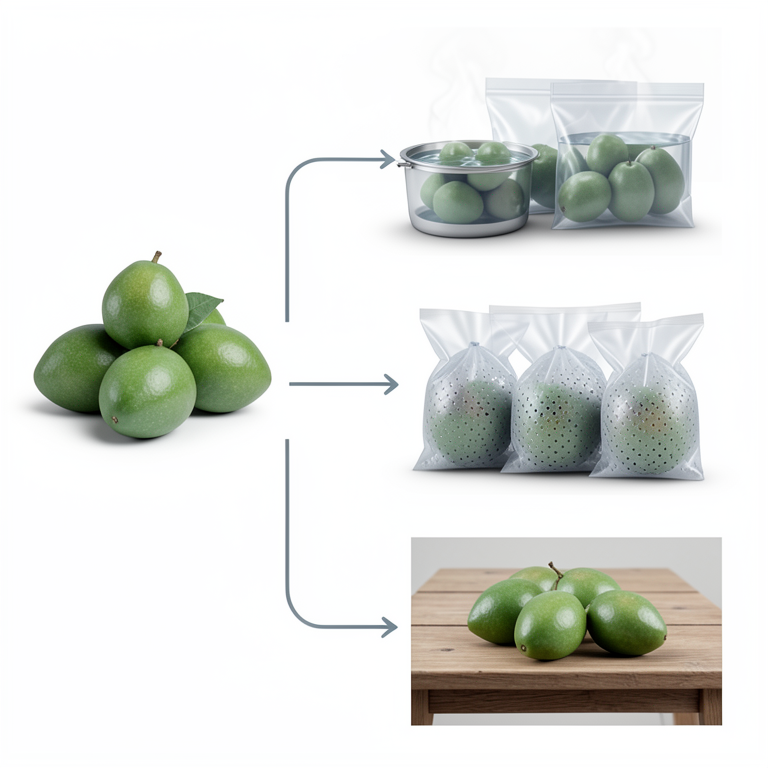
Experimental Treatment Workflow
AI-generated conceptual illustration (Mosambi (Citrus limetta) fruits). It explains the idea and does not show study data.
View source evidence ↗Figures & tables
From the original paper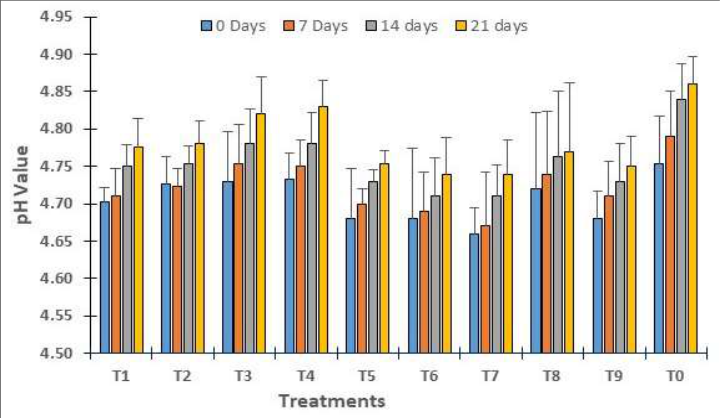 Figure 1
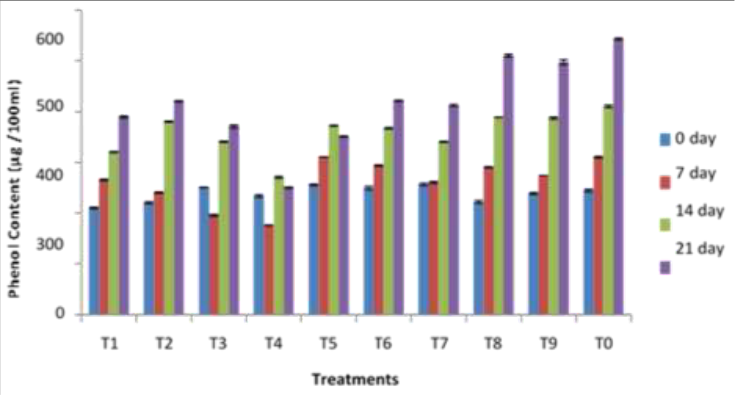 Figure 2
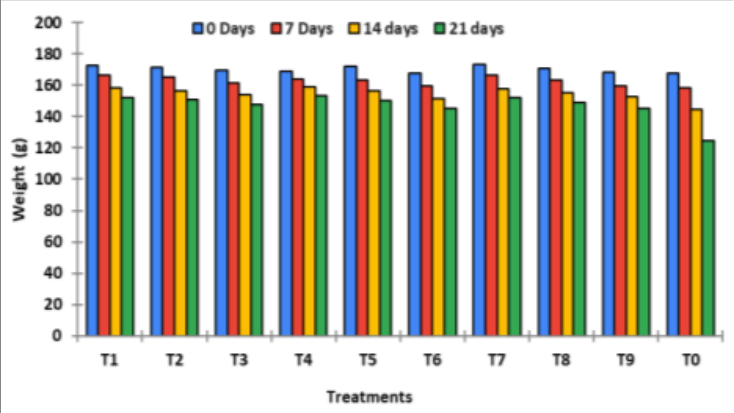 Figure 3
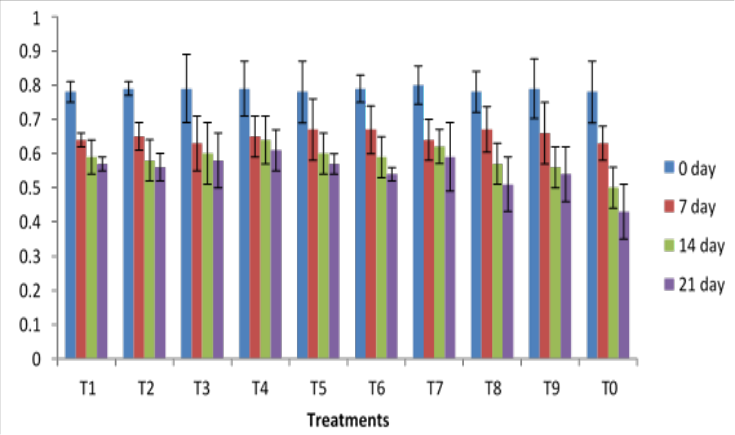 Figure 4
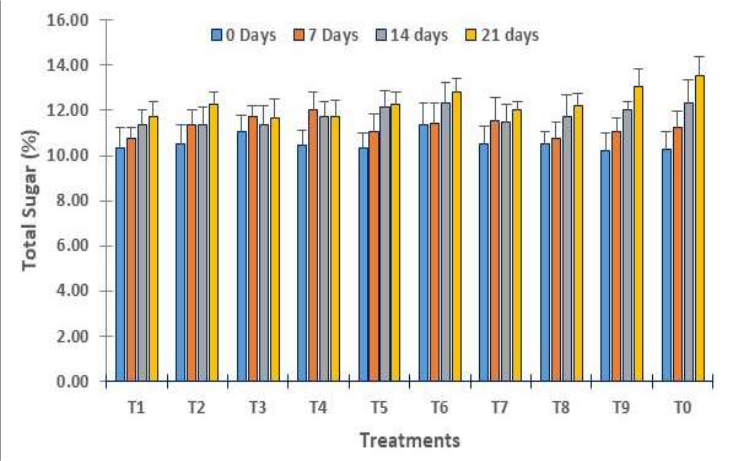 Figure 5
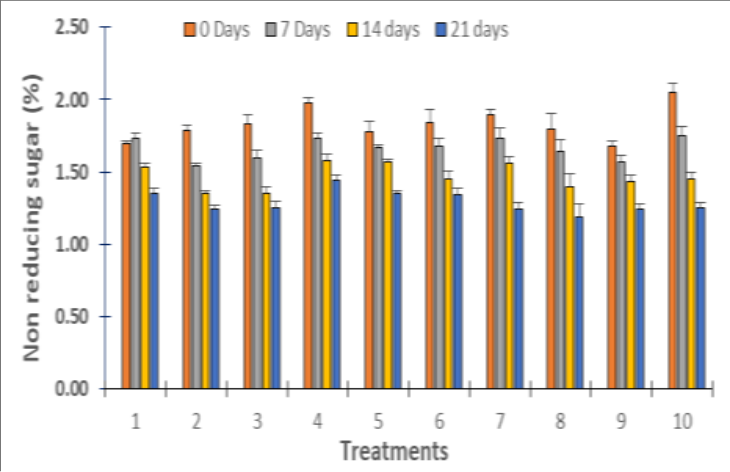 Figure 6
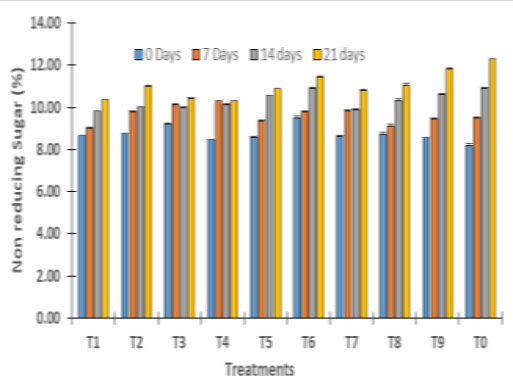 Figure 7
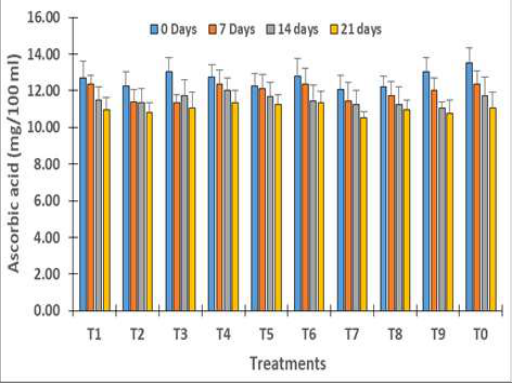 Figure 8
Introduction
Mosambi (Citrus limetta) belongs to the Rutaceae family which is a self-pollinated fruit crop and can be grown successfully in both tropical and sub-tropical areas. Citrus limetta is the result of the cross between citron (Citrus medica) and bitter orange (Citrus × aurantium) [2] . Citrus fruits are low in salt, fat, and cholesterol but high in minerals (potassium, calcium, phosphorus, magnesium, copper), vitamins (C, B1, B2, B3, B5, B6, B9), fiber, and phytochemicals (carotenoids, phenols, including flavonoids, coumarins, limonoids, alkaloids, and essential oils) all of which have been shown to reduce inflammation when taken alone or in combination with nervous system disorders, heart disease, and even cancer [13] . Citrus is one some of the most widely grown fruit crops in the international with an annual worldwide production of 102 MT approximately and in India region under citrus cultivation is 973 thousand hectares with an annual production of 122 lakh MT during 2018-19. [7] . In harvested fruits, loss in water vapour, results in shrinkage with peel, turgidity reduction, and lowered resistance to gas diffusion, resulting in negative consequences with the taste and flavour [4] . To reduces post-harvest losses and enhancing the keeping quality of citrus fruits, different post-harvest treatments play a vital role. Therefore, this current work was evaluated the effect of different pre-chemical treatments and packing materials on the fruit quality of Mosambi.
Methods and Materials
The experiment was conducted in a Completely Randomized Design with three replications and 10 treatments for analyzing the effect of different pre-chemical treatments and packaging material on qualitative traits of Mosambi in the laboratory of Punjab Agro. Juice ltd. Hoshiarpur FSSC LIC No. 10014063000386 and at Lal Path lab, Nandachor in December 2020.
The total number of treatments were analyzed for 7 days of intervals (0, 7 th , 14 th , and 21 th ). Pretreatment of hot water (55 °C) was given for 1 minute. Then treated fruits were air dried and packed in packaging films viz. high-density polyethylene (HDPE) and other packaging materials, Lowdensity polyethylene (LDPE) with or without perforations) and sealed with an electronic sealing system after being dehumidified. Chemically viz. 2, 4-dichlorophenoxyacetic acid (2, 4-D) and gibberellic acid (GA3), prepared fruits were also kept at (ambient) room temperature. The fruits samples were chopped with stainless steel knife and sample was pulped with pestle and mortar using distilled water for analyzing for biochemical characteristics viz. Fruit pH, Phenol content, total soluble solids (°Brix), Total titratable acidity (%), total sugars, reducing sugars, non-reducing sugars, and ascorbic acid. Therefore, present investigation was conducted with 10 different treatments viz., T 1 (LDPE), T 2 (LDPE perforated), T 3 (HDPE), T 4 (HDPE perforated), T 5 (Cold storage), T 6 (Treated with 2,4-D 50 ppm (without packaging)), T 7 (Treated with 2,4-D 100 ppm (without packaging)), T 8 (Treated with GA3 50 ppm (without packaging)), T 9 (Treated with GA3 100 ppm (without packaging), T 0 (Control).
Results and Discussion
The analysis of variance revealed significant differences among all the treatments and traits under the study. Data evaluated on the effect of different pre-chemical treatments and packing materials on the fruit quality of Mosambi.
FRUIT pH
The minimum pH recorded in refrigerated storage (T 6 ) compared with all treatments such as for low-density polyethylene (T 1 ) packaging and for fruit pre-chemically processed 2, 4-D 100 ppm (T 7 ), was the minimal value observed presented in Fig. 1. The maximum pH all through the test was recorded in the control (T 0 ). Sushma also studied that fruit pH fluctuated all through storage [16] .
Phenol content
The data from this phenol test showed that the phenol value increased with increasing storage time. The results showed that random and differential treatments had a significant effect on phenol levels in mosses on the last day or end of storage. In packaging materials, perforated high-density polyethylene (T 4 ) has a phenol content value of at least 250 compared to other equipment. The maximum value of phenol turned into shown in control (T 0 ) 543 as shown in Fig 2 . Ingle also said that the end result which are treated with the 2, 4-D chemical were effective in reducing the phenol content in citrus [8] .
Total soluble solids (TSS)
According to the results of this analysis, the total soluble solids (TSS) increase as the storage time increases, as shown in Fig 3 . Significantly minimum value of 10.2 0 Brix of total soluble solid was recorded in high-density polyethylene with perforation (T 4 ) at the end day of storage. Whereas, the maximum value of TSS recorded in control (T 0 ). Rab et al. [14] said that rapid growth in TSS at some stage in storage because of the decrease in acidity and this affected the TSS of the fruits. Saltviet [15] stated that fruits full of perforated high-density polyethylene at low temperatures confirmed low TSS levels due to the fact fruit packaging of decreased the respiratory and dehydration, it will greater effective while packed fruits stored in low temperatures.
Data pertaining to treatment means showed that the utmost worth of TTA was recorded in perforated high-density polyethylene (T 4 ). Minimum values were recorded within the control (T 0 ) compared to any or all treatments presented in Fig 4 . Echeverria and Villach investigated that the decrease in TTA throughout storage might be caused by fruit respiration through the employment of organic acids, resulting in quicker fruit ripening [5] . Vines and Ober Bacher said that [HDP] packaging is more effective or useful for holding the quantity of acid at low temperatures as a result of the changed atmosphere in polythene limiting the respiration rate [18] .
Total sugar
To maintain good fruit quality, it's necessary to prevent the expansion of total sugar. The data shown in Figure 5 indicates that the fruits treated with completely totally different treatments had a significant impact on the total sugar of mosambi fruit. The perforated high-density polyethylene (T 4 ) packaging material has a minimum value (10.4%) compared to any or all different treatments. The maximum (12.9%) recorded total sugar value was achieved in unprocessed fruit (T 0 ) compared to additional processed fruit. Keditsu investigated that high sugar content was noted within the controls because of moisture loss and reaction of starch (polysaccharide) to sugar (monosaccharide) in citrus fruit (Kinnow mandarin) [11] .
Non-reducing sugar
The minimal value (4.2%) of non-reducing sugar was recorded in HDPE perforated (T 4 ) and the maximum value (6.5%) was recorded in control (T 0 ) compared to other treatments shown in Fig 6 . Ali supports the current results, stating that the drop in non-reducing sugar may be attributed to the conversion of non-reducing sugar to reducing sugar [1] . Kaur also stated that a rapid decrease in non-reducing sugar might to ambient conditions because temperature in ambient conditions remains high compared to recommended storage and advanced temperature lowers the relative moisture results in a high transpiration rate or water loss [10] .
Reducing sugar
A small amount of sugar reduction (5.2%) was recorded on packaging made of high-density polyethylene with perforation (T 4 ) and a higher rate (6.4%) of sugar reduction was recorded in control (T 0 ) compared to all treatments shown in Figure 7. Jawanda studied the reason behind the rapid increase in reducing sugar might be respiration which results the dehydration of the juice content of fruit and the conversion of polysaccharides into monosaccharides [9] .
Ascorbic ACID
Based on this study, it was investigated that ascorbic acid in the fruit decreased with late-term growth and all different treatments had a significant effect on the ascorbic acid content in Mosambi fruit presented in Fig 8 . It was analyzed that high levels of ascorbic acid (45) was found in highdensity polyethylene (T 3 ). However, the minimum value (36) was recorded in control (T 0 ). The findings are currently supported by Das and Desh, Mapson, and Gimnez [3,6,12] suggesting a decrease in ascorbic acid may be due to oxidation of ascorbic acid in dehydro ascorbic acid ascorbic acid with the enzyme ascorbinase. Similar results were also reported by Tarkase and Desai [17] in mosambi.
Conclusion
It is concluded that among all treatments, T 4 (HDPE perforated) gave better results in traits like phenol content, TSS, total terrible acid, total sugars, reducing sugars, and non-reducing sugars, as compared to other treatments studied. On the other hand, fruit pH and ascorbic acid were observed better in T 6 and T 3 respectively. As a result of the above discussion, it was suggested that the use of HDPE perforated packaging material might be an effective and economical treatment for improving the quality of Mosambi fruit.
References
14 in the original paper- Ali MA, Raza H, Khan MA, Hussain M. Effect of Different Periods of Ambient Storage on Chemical Composition of Apple Fruit. International Journal of Agriculture and Biology. 2004;6(2):568-571.
- Curk F, Ollitrault F, Lor GA, Luro F, Navarro L, Ollitrault P. Phylogenetic origin of limes and lemons revealed by cytoplasmic and nuclear markers. Annals of botany. 2016;117(4):565-583.
- D'Aquino S, Molinu MG, Piga A, Agabbio M. Influence of film wrapping on quality maintenance of Salustiana orange under shelf-life conditions. Italian Journal of Food Science. 2001;1(13):87-100.
- Echeverria E, Valich J. Enzymes of sugars and acid metabolism in stored Valencia oranges. Journal of the American Society for Horticultural Science. 1989;114(3):445-449.
- Gimnez M, Olarte C, Sanz S, Lomas C, Echavarri L, Ayala F. Influence of packaging films on the sensory and microbiological evolution of minimally processed borage (Borago officinalis). J Food Sci. 2003;68:10511108.
- Ingel HV, Vivas L, Bertuzzi MA, Apella MC, Audisio MC. Edible Films with Anti-Listeria Monocytogenes Activity. International Journal of Food Science & Technology. 2010;45(7):1443-1449.
- Jawanda JS, Singh R, Vij VK. Studies on extending post-harvest life of Kinnow Mandarin. Punjab Horticultural Journal. 1978;18(3&4):149-153.
- Kaur S, Singh S. Effect of various post-harvest treatments on the shelf life of lemon (Citrus limon) Cv. Baramasi during Ambient Storage. Progressive Agriculture. 2012;12(2):277.
- Keditsu R, Sema A, Maiti CS. Effect of modified packaging and low temperature on post-harvest life of Khasi mandarin. J Food Sci. Tech. 2003;40:646-651.
- Peterson JJ, Beecher GR, Bhagwat SA, Dwyer JT, Gebhardt SE, Haytowitz Rab A, et al. Fruit quality and senescence-related changes in sweet orange cultivar blood red UNI-Packed in different packing materials. Sarhad Journal of Agriculture. 2010;26(2):221-228.
- Saltveit ME. Is it possible to find an optimal controlled atmosphere? Postharvest Biology and Technology. 2003;27:3-13.
- Mohd S, Khan A, Kumar M. Effect of storage on some biochemical parameters of selected fresh fruits juice. International Journal of Pharma and Bio Sciences. 2013;4(2B):659-663.
- Tarkase BG. Desai UT. Effect of packaging and chemicals on storage of orange cv. Mosambi. Journal of Maharashtra Agricultural Universities. 1989;14(1):1013.
- Vines HM, Oberbacher MF. Changes in carbon dioxide concentrations within fruit and containers during storage. Proceedings of the Florida State Horticultural Society. 1961;74:243-246.