
Research article · 2023 · Full text
International Journal of Veterinary Sciences and Animal HusbandryBalanites aegyptiaca (L.) Delile leaves nutritional value for local Mossi sheep in Burkina Faso
Volume 8(3) · Pages 85–89 · DOI: 10.22271/veterinary.2023.v8.i3b.527 ↗
Research areasAgriculture and Rural Development ResearchAfrican Botany and Ecology Studies
Abstract
Author-writtenAcross Sahel area of Burkina Faso, feeding small ruminants is a constant preoccupation of livestock farmers, especially during the dry season. This fact has led farmers to increasingly use fodder trees such as Balanites aegyptiaca. The present study was conducted to better understand the Balanites aegyptiaca fodder nutritive value in the hot dry season at Saria experimental station evaluating the nutritional activity of its dried leaves complementing a basic ration of crushed sorghum straw. Twelve local breed sheep of “Mossi breed” divided into three homogeneous batches in weight of four animals of which two batches were complemented (50 g and 100 g of leaves of B. aegyptiaca) and a control batch were included in experimentation for feeding test during 35 days. Analysis of the chemical composition of the dried leaves of B. aegyptiaca reveals that they are rich in crude protein (12.64% DM) and minerals (14.89% DM) with an average crude cellulose content (13.70% DM). During the experiment, the feed intake rate of dried leaves of B. aegyptiaca was very high (> 99%), and their consumption had a positive influence on the consumption of sorghum straw. The animals in the supplemented lots achieved higher straw intake rates than the control lot. Also, the batch of animals fed 50 g of B. aegyptiaca leaves per day gave the best average daily weight gain (20.7±12.4 g) compared to the batch fed 100 g (14.9±15.5 g). The control batch had a weight loss of 20.7±7.5 g. Regarding these results, we noticed that a rational use of B. aegyptiaca leaves in the diet of small ruminants in rural areas allows a better valorization of cereal straw in the hot dry season to induce an improvement of their zootechnical performances.
Summary
Source-checkedPlain-language reading of the full paper, prepared with AI and checked against the text. Each point links to the authors' own words.
Why it matters
- Feeding small ruminants in the Sahel area of Burkina Faso is a persistent challenge for farmers, particularly during the dry season. View evidence ↗
- Extensive livestock systems relying on natural pastures often result in low productivity for ruminants during the dry season. View evidence ↗
- Farmers are increasingly using fodder trees like Balanites aegyptiaca, which is highly palatable to domestic ruminants, to supplement feed during the dry season. View evidence ↗
The question
- The study aimed to evaluate the nutritional value and activity of dried Balanites aegyptiaca leaves when used to complement a basic ration of crushed sorghum straw during the hot dry season. View evidence ↗
What they did
- The experiment used Mossi sheep under 12 months of age with an average weight of 12.3±2.3 kg. View evidence ↗
- Twelve sheep were divided into three weight-homogeneous groups of four animals each and tested during April and May 2021. View evidence ↗
- The treatments consisted of a control group (Batch A) receiving only crushed sorghum straw with 2% salt, and two supplemented groups receiving 50 g (Batch B) and 100 g (Batch C) of dried B. aegyptiaca leaves daily. View evidence ↗
What they found
- Dried B. aegyptiaca leaves were significantly richer in crude protein (12.64% vs 1.74%), minerals (14.89% vs 11.29%), and acid detergent lignin (6.62% vs 4.43%) compared to Sariasso 16 sorghum straw. View evidence ↗
- The intake rate for dried B. aegyptiaca leaves was very high, exceeding 99% in both supplemented groups. View evidence ↗
- Supplementation with B. aegyptiaca leaves increased the intake of sorghum straw, with rates rising from 31.3% in the control group to 45.3% (50 g supplement) and 51.8% (100 g supplement). View evidence ↗
- The control group lost weight (-20.7±7.5 g), while supplemented groups gained weight; the 50 g dose resulted in the highest daily weight gain (20.7±12.4 g) compared to the 100 g dose (14.9±15.5 g). View evidence ↗
What it means
- B. aegyptiaca leaves are recommended as a potential source of nitrogen and mineral supplementation to improve growth performance. View evidence ↗
- The authors state that further studies are needed to determine the best conditions for planting and protecting B. aegyptiaca given the scarcity of natural resources in Burkina Faso. View evidence ↗
Visual summary
3 visualsIllustrations explain the paper; charts are replotted from the paper's own table values.
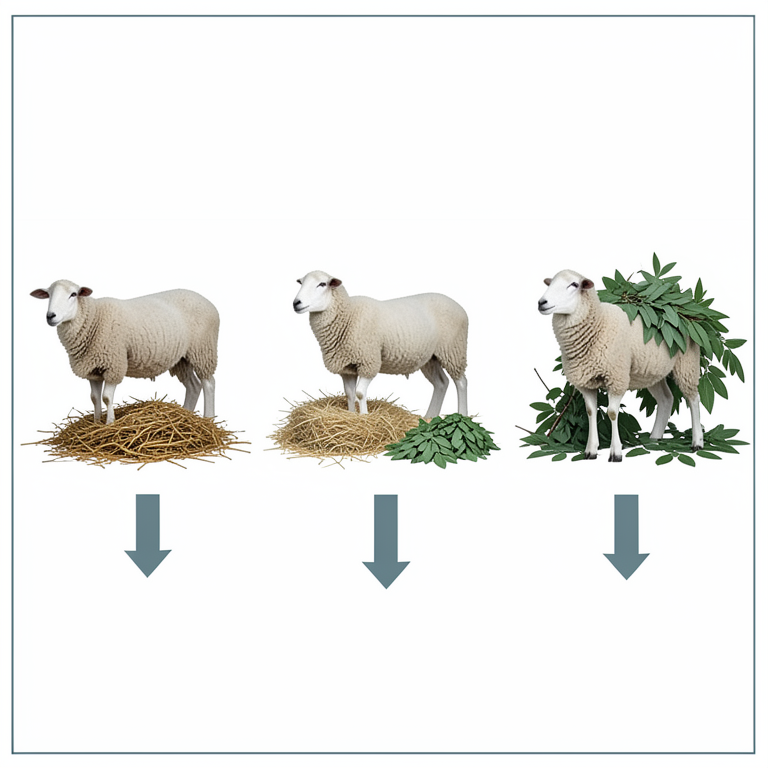
Experimental Treatment Comparison
AI-generated conceptual illustration (Mossi sheep and Balanites aegyptiaca leaves). It explains the idea and does not show study data.
View source evidence ↗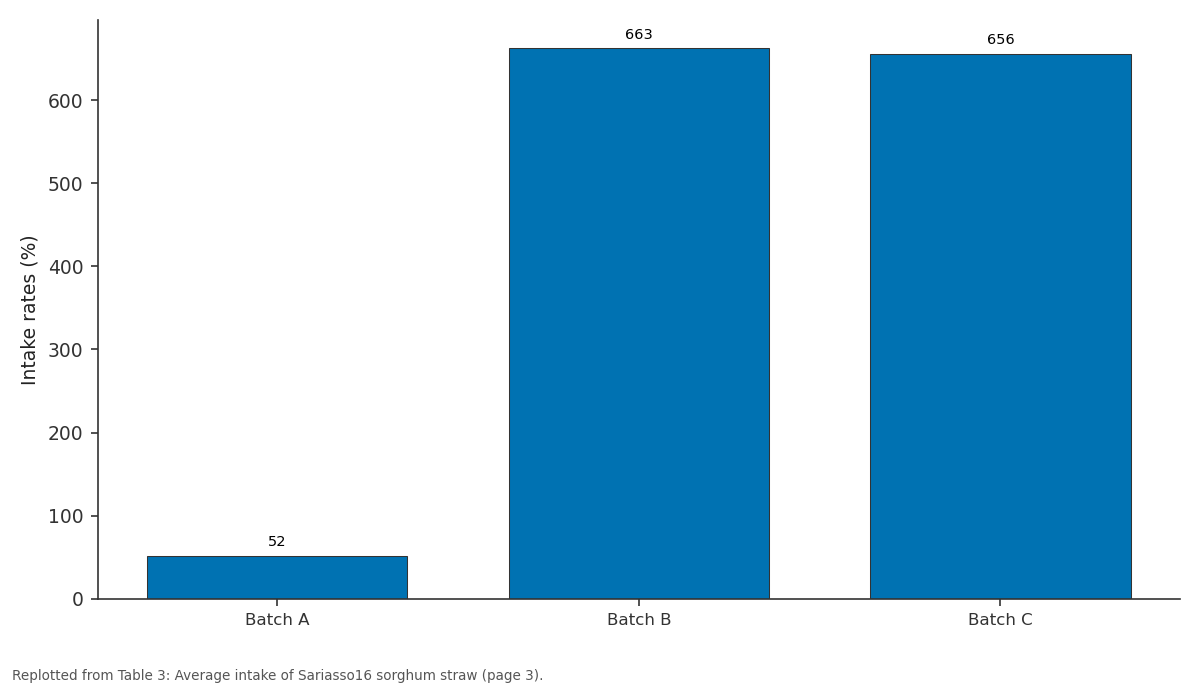
N: Batch A vs Batch B vs Batch C
Replotted from Table 3 (page 3) of the original paper. Every bar is the paper's own table value.
View source evidence ↗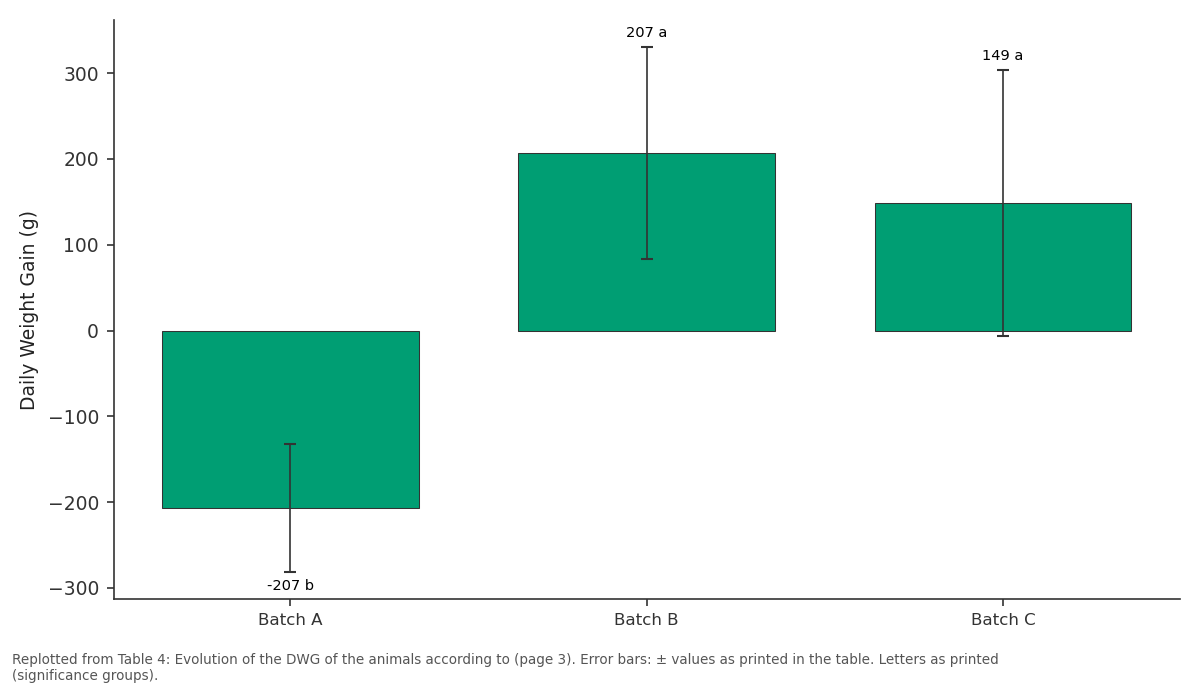
DWG (g): Batch A vs Batch B vs Batch C
Replotted from Table 4 (page 3) of the original paper. Every bar is the paper's own table value.
View source evidence ↗Figures & tables
From the original paper Table 1
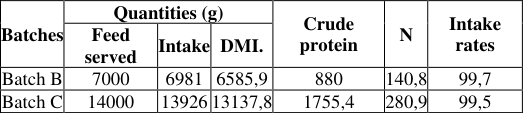 Table 2
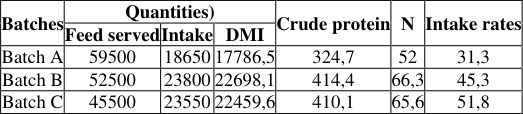 Table 3
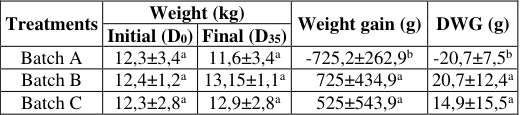 Table 4
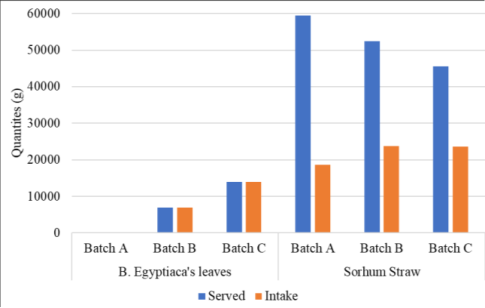 Figure 1
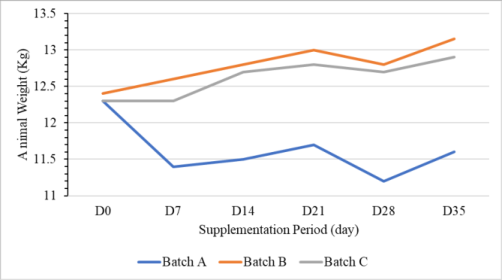 Figure 2
Introduction
In Burkina Faso, the livestock sector directly affects the largest proportion of the population after agriculture. Livestock is the primary source of cash income for rural households. Its relative contribution to the gross domestic product has varied between 18.3% and 19.5% over the period 2001 to 2008 (MRA, 2011) [1] . Livestock also plays an important role in agricultural production through animal traction, transport and the provision of manure for the restoration of soil fertility (Kagoné, 2001) [2] . Apart from poultry, small ruminants are the most important in terms of numbers in the national herd, followed by cattle (MRAH, 2019) [3] . In addition, sheep and goat's husbandry represents a national wealth in terms of the number of people involved in animal production and the place they occupy in the socio-economic life of households and the national economy of the country. The dominant livestock production system is the extensive one which is confronted to various constraints including feeding. Actually, the feeding system is essentially based on the exploitation of natural pasture, resulting in low zootechnical productivity of ruminants in the dry season. Faced with this situation, rural livestock farmers are increasingly turning to the use of fodder trees to feed their sheep and goats during the dry season (Kagoné, 2001) [2] . Among the fodder trees plants used in the field, Balanites aegyptiaca is one of the most appetizing to wild ungulates (Savadogo, 2004 [4] ) in general and domestic ruminants (Toutain, 1980) [5] in particular. It is in this context that the present study was conducted to evaluate the nutritional activity of B. aegyptiaca leaves in small ruminants.
It aims to valorize locally available natural resources in rural Burkina Faso that contribute to the improvement of the productivity of small ruminants in extensive livestock farming system.
Materials and Methods
Materials and Methods
Study area
The study was conducted at the Saria experimental station, located at 12°16' north latitude and 2°09' west longitude (Sedogo, 1993) [6] . The climate is North Sudanian, characterized by a long dry season from October to May and a rainy season from June to September. The average annual rainfall is 800 mm. Relative humidity is less than 20% in the dry season and more than 60% in the rainy season (Hien, 2004). The vegetation formation of Saria is of the North Sudanian type, characterized by the presence of savanna annual grass with trees and shrubs. The tree species encountered are essentially Vitellaria paradoxa, Parkia biglobosa, Faidherbia albida, Lannea microcarpa, Tamarindus indica and Adansonia digitata. The herbaceous layer is composed of Pennisetum pedicellatum, Crotalaria retusa, Andropogon gayanus and also some weed species, notably Striga senegalensis (Hien, 2004) [7] .
Animal
The study was conducted on 'Mossi sheep" less than 12 months old and with an average weight of 12.3±2.3 kg purchased in the peripheral markets of the village of Saria. Upon arrival at the sheepfold, they were dewormed after the application of antibiotic therapy before being vaccinated against pasteurellosis. The observation period lasted at least 15 days. Then, they were raised according to the traditional extensive system predominant in the study area after having been identified with numbered tags and housed in well ventilated boxes in the sheepfold of the Saria Experimental Station.
Plant
The staple feed for the animals during the trial was mainly straw of the Sariasso 16 sorghum variety produced at the Saria research station. The sorghum variety Sariasso 16 is an improved variety of botanical type caudatum, co-developed in Burkina Faso by the Institut de l'Environnement et de Recherches Agricoles and the Centre de Coopération Internationale en Recherche Agronomique pour le Développement, in 2008. To facilitate intake and avoid waste, sorghum straw was crushed with a grinding machine and mixed with 2% salt, then dried on a drying area before being stored in plastic bags. B. aegyptiaca leaves were harvested between October and November 2020 at the Saria Research Station. Drying was done in the shade and protected from dust by turning them twice a day (morning and noon). Depending on the time of harvesting, drying lasts an average of 72 hours. The storage is also done in plastic bags.
Design of experiment
The test was carried out in the dry and hot season of the year (during April -May 2021) on the twelve "Mossi sheep" divided into three homogeneous batches in weight of four animals to undergo the different treatments: Batch A (control lot): distribution of Sariasso 16 sorghum straw crushed and containing 2% salt.
Batch B: distribution of crushed Sariasso 16 sorghum straw containing approximately 2% salt + 50 g dried leaves of B. aegyptiaca per sheep per day. Batch C: distribution of ground Sariasso 16 sorghum straw containing 2% salt + 100 g dried leaves of B. aegyptiaca per sheep per day. All the sheep in the three (03) batches were kept according to the traditional (agro-pastoral) livestock production system, which is the most common system in the study area. During the study period, all animals were grazed daily from 8:00 am to 2:00 pm (6 hours of grazing per day). They were individually fed crushed sorghum straw each morning at 7:00 am (before going to pasture) and each afternoon at 2:00 pm (after returning from pasture). Dried leaves of B. aegyptiaca were fed daily at 5:00 pm. The basic ration (crushed Sariasso 16 sorghum straw) was calculated on the basis of 3% dry matter per kilogram of live weight with an estimated loss of 10% of the amount fed. All animals had water ad libitum. The different parameters studied were the following: the value of dry matter (DM) and constituent elements of the forages fed; the relative voluntary intake level of the forages fed; the growth in each batch. Each week, the weight of each animal was measured in the morning on an empty stomach to evaluate the evolution of body weight in each batch.
Proximate analysis of feed
The analysis of the chemical components of the dried leaves of B. aegyptiaca and sorghum straw was carried out in March 2021 at the laboratory of the Department of Animal Productions of the Institute of Environment and Agricultural Research (INERA). The dry matter (DM) value of the distributed forages was determined in an oven at 105°C for 24 hours following the AOAC method (1990) [8] . Total ash (TA) was obtained by calcining the dry matter at 550°C. Organic matter (OM) was calculated as the difference between dry matter and ash. Crude protein was determined by the Kjeldahl method.
Statistical analysis
The data collected were used to calculate the means (±standard deviation) of the different parameters measured before being subjected to a one-way analysis of variance to determine the effect of the treatments applied. The comparison of means was performed by the Tukey-Kramer test at the 5% threshold. All statistical analyses were performed with the CoStat software, version 6.204 and the Excel spreadsheet was used to make the graphs.
Results
Analysis of the chemical compositions of the two plants reveals that sorghum straw of the Sariasso 16 variety and the dried leaves of B. aegyptiaca at the time of their harvest had high dry matter contents (94 to 95%). As for other constituents, the dried leaves of B. aegyptiaca had higher values than those of sorghum straw of the Sariasso 16 variety in terms of minerals (ash) (14.89% vs. 11.29%), crude protein (12.64% vs. 1.74%) and in ADL (6.62% vs. 4.43%). However, sorghum straw of variety Sariasso 16 contains more cellulose (28.41% vs. 13.7%), NDF (62.99% vs. 28.31%) and ADF (33.2% vs. 14.29%) (Table 1). The consumption of dried leaves of B. aegyptiaca did not cause any toxicity effect in the animals of the treated batches. Analysis of means of the intake of this forage in relation to the quantities served (per batch and per day) shows a very high intake rate (> 99%) in all the two treated batches (Table 2). Sorghum straw of the Sariasso 16 variety was the basic feed for the animals. In all three experimental groups, the animals did not consume all the straw distributed. Analysis of the average feed intake values per batch per day shows an average feed intake rate of 42.8% for all three batches (Table 3). The analysis of the quantities served and ingested of the two types of forages distributed to the animals during the experiment shows that the ingestion rate of Sariasso 16 sorghum straw evolves progressively according to the quantity of B. aegyptiaca leaves ingested. The intake rates were 31.3% for batch A that received no supplement (negative control), 45.3% for batch B that received 50 g of B. aegyptiaca leaves per day and 51.8% for batch C that received 100 g of B. aegyptiaca leaves per day (Fig: 1). 4).
| Batches | Quantities) | — | — | Crude protein | N | Intake rates |
|---|---|---|---|---|---|---|
| Feed served | Intake | DMI | ||||
| Batch A | 59500 | 18650 | 17786,5 | 324,7 | 52 | 31,3 |
| Batch B | 52500 | 23800 | 22698,1 | 414,4 | 66,3 | 45,3 |
| Batch C | 45500 | 23550 | 22459,6 | 410,1 | 65,6 | 51,8 |
Table text extracted from the original PDF; superscript letters are shown inline. The original table image is below.
View original table image
| Batches | Quantities (g) | — | — | Crude protein | N | Intake rates |
|---|---|---|---|---|---|---|
| Feed served | Intake | DMI. | ||||
| Batch B | 7000 | 6981 | 6585,9 | 880 | 140,8 | 99,7 |
| Batch C | 14000 | 13926 | 13137,8 | 1755,4 | 280,9 | 99,5 |
Table text extracted from the original PDF; superscript letters are shown inline. The original table image is below.
View original table image
| Sample | % DM | % DM | — | — | — | — | — |
|---|---|---|---|---|---|---|---|
| % Ash | %Crude protein | %CB | %NDF | %ADF | %ADL | ||
| B. aegyptiaca dried leaves | |||||||
| Mean ±std | 94, 34±0, 00 | 14, 89±0, 04 | 12,64±0,23 | 13, 70±0, 11 | 28, 31±0, 32 | 14, 29±0, 00 | 6, 62±0, 13 |
| Sorghum sariasso 16 straws | |||||||
| Mean ±std | 95, 37±0, 00 | 11, 29±026 | 1,74±0,00 | 28, 41±0, 14 | 62, 99±0, 16 | 33, 20±0, 76 | 4, 43±0, 24 |
Table text extracted from the original PDF; superscript letters are shown inline. The original table image is below.
View original table image
Discussion
Proximate analysis showed that the leaves of B. aegyptiaca contain high levels of crude protein (12.64%) and Ash (14.89%) and low levels of CB (13.7%), NDF (28.31%) and ADF (14.29%). The values we found are slightly lower than those also found in Burkina Faso by Kaboré-Zoungrana et al. (2008) [9] on the same plant at the same harvest period (cold dry season). This difference could be explained by the drying conditions and especially the difference in harvesting locations. However, the average crude protein content remains higher than that of many woody forages such as Acacia seyal, Acacia machrostachya, Ziziphus mauritiana and Combretum aculeatum found in the same climatic zone (northern Sudan region) of Burkina Faso (Kaboré-Zoungrana, 1995) [10] . In our study, we found a high intake rate of dried B. aegyptiaca leaves (over 99%) in all treated batches. This reflects a good palatability of this fooder trees. This observation was also made by Toutain (1980) [5] among domestic ruminants and by Savadogo (2004) [4] on wild ungulates on the same plant. In addition, the consumption of B. aegyptiaca leaves had a positive influence on the consumption of Sariasso 16 sorghum straw; animals in the supplemented batches achieved higher intake rates than those in the control batch. Indeed, we recorded 31.3% for batch A (control) that received no supplementation, 45.3% for batch B that received 50 g of B. aegyptiaca leaves and 51.8% for batch C that received 100 g of B. aegyptiaca leaves per day. However, when feeding B. aegyptiaca leaves in combination with grass hay in 60/40 proportions, Kaboré-Zoungrana et al. (2008) [9] did not find a digestive interaction. This discrepancy could be explained by the difference in age and/or live weight of the animals, the nutrient composition of the feedstuffs used and the way the animals were kept. These authors worked with adult castrated male Djallonke sheep kept in individual metabolic cages with an average live weight of 21.67±1.18 kg, which is heavier than the animals in the present study. However, our results corroborate those found by Akourki et al. (2019) [11] who showed that goats fed a ration containing B. aegyptiaca cake consumed more feed (more than 35 g on average per animal) compared to goats in the control group. The same findings were made by Kanazoé et al. (2017) [12] who also found an increase in the rate of sorghum straw intake by sheep supplemented with dried Calotropis procera leaves, in Burkina Faso. We can therefore think that the consumption of dried leaves of B. aegyptiaca by sheep improves their consumption of sorghum straw. This could be explained by the high nitrogen content of this fodder trees. This observation was also made by Swanson et al. (2004) [13] who concluded that supplementing poor forages with high protein and high carbohydrate feeds promotes the proliferation of rumen microflora and thus increases its ability to degrade roughage. The analysis of the average DWG shows that the animals in the supplemented lots behaved differently depending on the amount of dried B. aegyptiaca leaves distributed. The control group that did not receive any supplementation showed a negative DWG (-20.7±7.5 g). This could be explained by the low nutritional quality of the sorghum straw distributed (1.74% crude protein) while the ration of the experimental bacthes was richer in protein (12.64% Crude protein). The animals of batch B (50 g of B. aegyptiaca) achieved a higher GMQ (20.7±12.4 g) than those of batch C (100 g of B. aegyptiaca) (14.9±15.5 g). The same finding was made by Kanazoé (2016) [14] with dried leaves of C. procera in sheep in Burkina Faso. A minimum quantity of B. aegyptiaca leaves (50 g) rendered the best DWG and may be the optimum level that can provide proteins capable of leading to a better digestion of the rumen, thus favoring an increase in the consumption and utilization of natural pasture fodder (straw) in dry season. Also, the presence of secondary metabolites in the leaves of B. aegyptiaca, notably condensed tannins, would have a negative effect on cellulolytic activity and could cause a decrease in digestibility (Fall et al., 1998) [15] . In addition, the DWG values in our study are lower than those found by (Kaboré-Zoungrana et al., 2008) [12] ; the association of B. aegyptiaca leaves with Pennisetum pedicellatum hay in 60/40 proportions and at a rate of 70 g DM/kg P 0.75 enabled them to obtain a DWG of 116 g with adult castrated male sheep of the Djallonké breed. This discrepancy could also be explained by the difference in physiological stages and the way the animals were managed. Regarding the results obtained, we believe that a rational use of B. aegyptiaca leaves in the feed of small ruminants allows a better valorization of cereal straw and consequently, an improvement of their zootechnical performances, especially in rural areas.
Conclusion
At the end of this study, it appears that the leaves of B. aegyptiaca are rich in nitrogen and mineral matter and are very well palatable by small ruminants. Moreover, the use of these leaves as the only feed supplement in sheep fed with sorghum straw induced a substantial weight gain of these animals, at an optimal quantity. The rational use of B. aegyptiaca leaves could therefore constitute a potential source of nitrogen and mineral supplementation that could contribute to the improvement of the growth performance of small ruminants. Considering the soundness of B. aegyptiaca leaves nutritional value in small ruminants feeding, additional studies are necessary to specify the conditions for its plantation and protection in a context of scarce natural resources in Burkina Faso.
Conflict of Interest
Conflict of Interest
Figures and tables from the paper
| Treatments | Weight (kg) | — | Weight gain (g) | DWG (g) |
|---|---|---|---|---|
| Initial (D0) | Final (D35) | |||
| Batch A | 12,3±3,4a | 11,6±3,4a | -725,2±262,9b | -20,7±7,5b |
| Batch B | 12,4±1,2a | 13,15±1,1a | 725±434,9a | 20,7±12,4a |
| Batch C | 12,3±2,8a | 12,9±2,8a | 525±543,9a | 14,9±15,5a |
Table text extracted from the original PDF; superscript letters are shown inline. The original table image is below.
View original table image
References
5 in the original paper- Kaboré-Zoungrana C, Diarra B, Adandedjan C, Savadogo S. Valeur nutritive de Balanites aegyptiaca pour l'alimentation des ruminants. Livestock Research for Rural Development. 2008;20(4):2008.
- Akourki A, Daka ARS, Sidikou DI, Chaïbou I. Effets du tourteau des graines de Balanites aegyptiaca sur la consommation alimentaire et les performances zootechniques des cabris roux de Maradi. International Journal of Biological and Chemical Sciences. 2019;13(7):3355-63.
- Kanazoe POO, Zabre G, Kabore A, Konate A, Traore A, Tamboura HH, et al. Effets de supplémentation des feuilles séchées de Calotropis procera (WILLD) R. Br. sur les performances de croissance et la charge parasitaire des ovins en saison pluvieuse au Burkina Faso. International Journal of Biological and Chemical Sciences. 2018;11(5):2028.
- Swanson KC, Freetly HC, Ferrell CL. Nitrogen balance in lambs fed low-quality brome hay and infused with differing proportions of casein in the rumen and abomasum. Journal of Animal Science. 2004;82(2):502-7.
- Touré SF, Michalet-Doreau B, Traoré E, Friot D, Richard D. Occurrence of digestive interactions in tree foragebased diets for sheep. Animal Feed Science and Technology. 1998;74(1):63-78.