
Research article · 2023 · Full text
International Journal of Veterinary Sciences and Animal HusbandryMolecular characterization of bluetongue virus serotype 2
Volume 8(3) · Pages 72–75 · DOI: 10.22271/veterinary.2023.v8.i3b.523 ↗
Research areasVector-Borne Animal DiseasesAnimal Disease Management and EpidemiologyViral Infections and Vectors
Abstract
Author-writtenBluetongue is an economically major infectious, arthropod vector borne, viral disease of many free ranging and captive wild animals as well as of domestic animals. There are many serotypes circulating in the world. The current study was undertaken having an objective to characterize the BTV 2(M11) isolate that engaged for the vaccine trial. BHK21 cell lines were utilized for cultivation of BTV serotype 2 and followed by its RNA was extracted. Further, Reverse Transcriptase-PCR was standardized for detection of BTV serotype 2by targeting segment 7 (VP7) gene. Characterization of isolate at molecular level was conducted by the sequencing of VP7 gene. By using the available sequences in Genbank database, the sequences were compared. Further analysis denoted that, all sequences of VP7 nucleotide was sequestered into seven phylogenetic clades. The homogeneity of BTV-2 (M11) with Australian and Chinese isolates of BTV-15 and BTV Taiwan isolate was 75%, 66%, and 74% respectively. Further analysis signified that, BTV-2 (M11) was nearly compared to BTV-12 Brazil and BTVTPT.
Summary
Source-checkedPlain-language reading of the full paper, prepared with AI and checked against the text. Each point links to the authors' own words.
Why it matters
- Bluetongue is a significant infectious viral disease transmitted by arthropod vectors that affects both domestic and wild animals, causing major economic impacts. View evidence ↗
- The disease is endemic in India and is listed by the World Organization for Animal Health as a disease of sheep and goats, leading to financial losses in the small ruminant industry. View evidence ↗
- Detailed genetic understanding of the VP7 gene (segment 7) is essential for tracking the spread and origin of the virus, characterizing strains, and developing vaccines and drugs. View evidence ↗
The question
- The study aimed to molecularly characterize the BTV 2(M11) isolate used in a vaccine trial. View evidence ↗
What they did
- The researchers used BHK21 cell lines to passage the Bluetongue virus five times. View evidence ↗
- RNA was extracted from infected cell cultures using the Acid Phenol method and verified via 1% agarose gel electrophoresis. View evidence ↗
- The segment 7 gene was amplified using a method based on the BTV-1 South Africa sequence. View evidence ↗
What they found
- Electrophoresis of the extracted dsRNA showed a segmented genome pattern with 10 bands, including two inseparable bands, which is characteristic of BTV. View evidence ↗
- RT-PCR optimization for the BTV serotype 2(M11) VP7 gene resulted in the identification of a specific 1156 bp band. View evidence ↗
- The BTV-2 (M11) isolate showed homogeneity levels of 75% with Australian BTV-15, 66% with Chinese BTV-15, and 74% with a Taiwan isolate. View evidence ↗
- Phylogenetic analysis grouped the BTV-2 (M11) and other serotypes into seven clades, with BTV-2 and BTV-15 isolates specifically segregated into clade 1. View evidence ↗
- The BTV-2 (M11) isolate was found to be closely related to BTV-12 Brazil and BTVTPT. View evidence ↗
What it means
- The authors conclude that the Indian BTV-2 (M11) isolate may have emerged from either the Brazil or Tirupati strain. View evidence ↗
- The authors state that current sequence data is insufficient for strong outcomes and suggest that analyzing other preserved BTV-2 genes might be more beneficial for topotyping than the VP7 gene. View evidence ↗
Visual summary
2 visualsIllustrations explain the paper; charts are replotted from the paper's own table values.
Phylogenetic Grouping of BTV
AI-generated conceptual illustration (Bluetongue virus particles). It explains the idea and does not show study data.
View source evidence ↗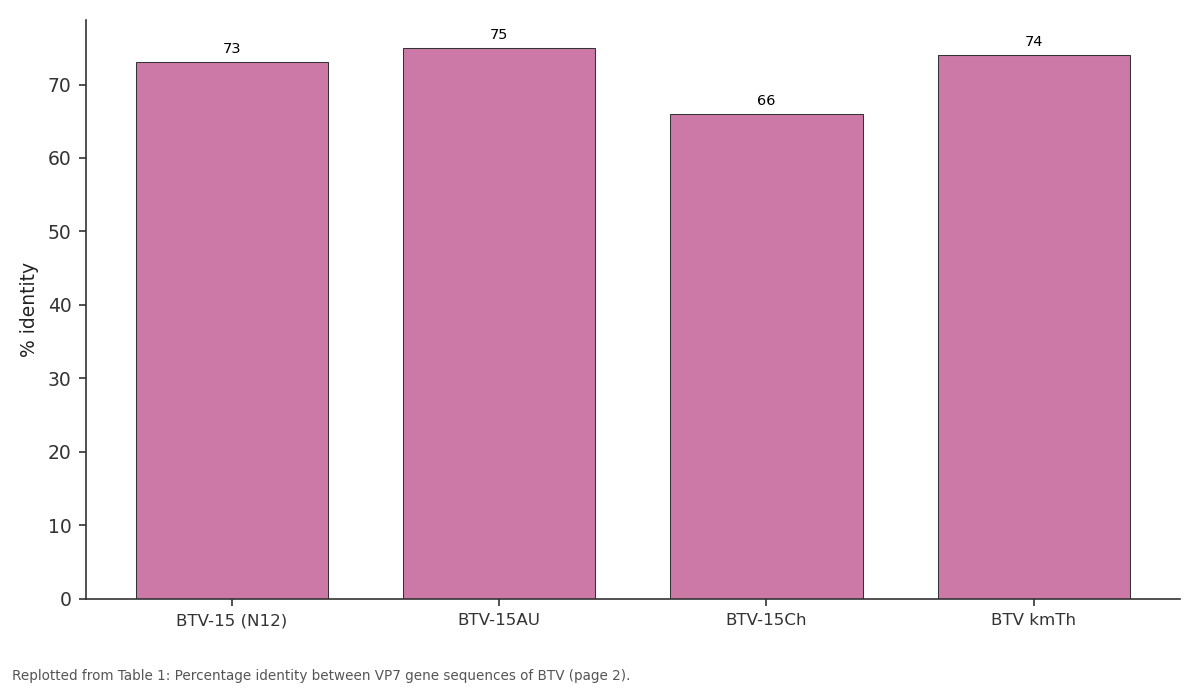
% identity: BTV-15 (N12) vs BTV-15AU vs BTV-15Ch vs BTV kmTh
Replotted from Table 1 (page 2) of the original paper. Every bar is the paper's own table value.
View source evidence ↗Figures & tables
From the original paper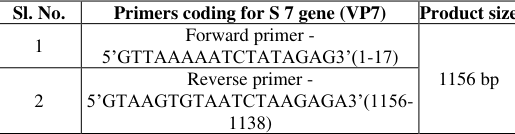 Table 1
 Table 3
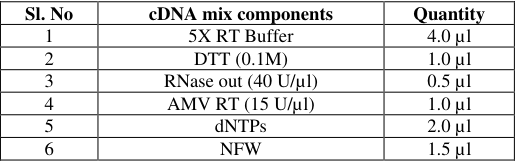 Table 4
 Table 5
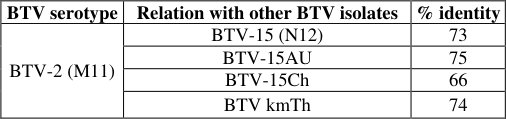 Table 1
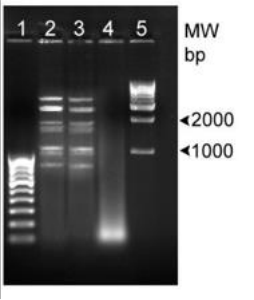 Figure 1
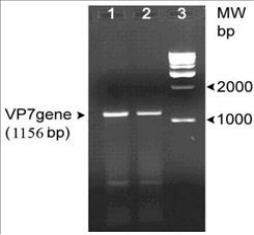 Figure 2
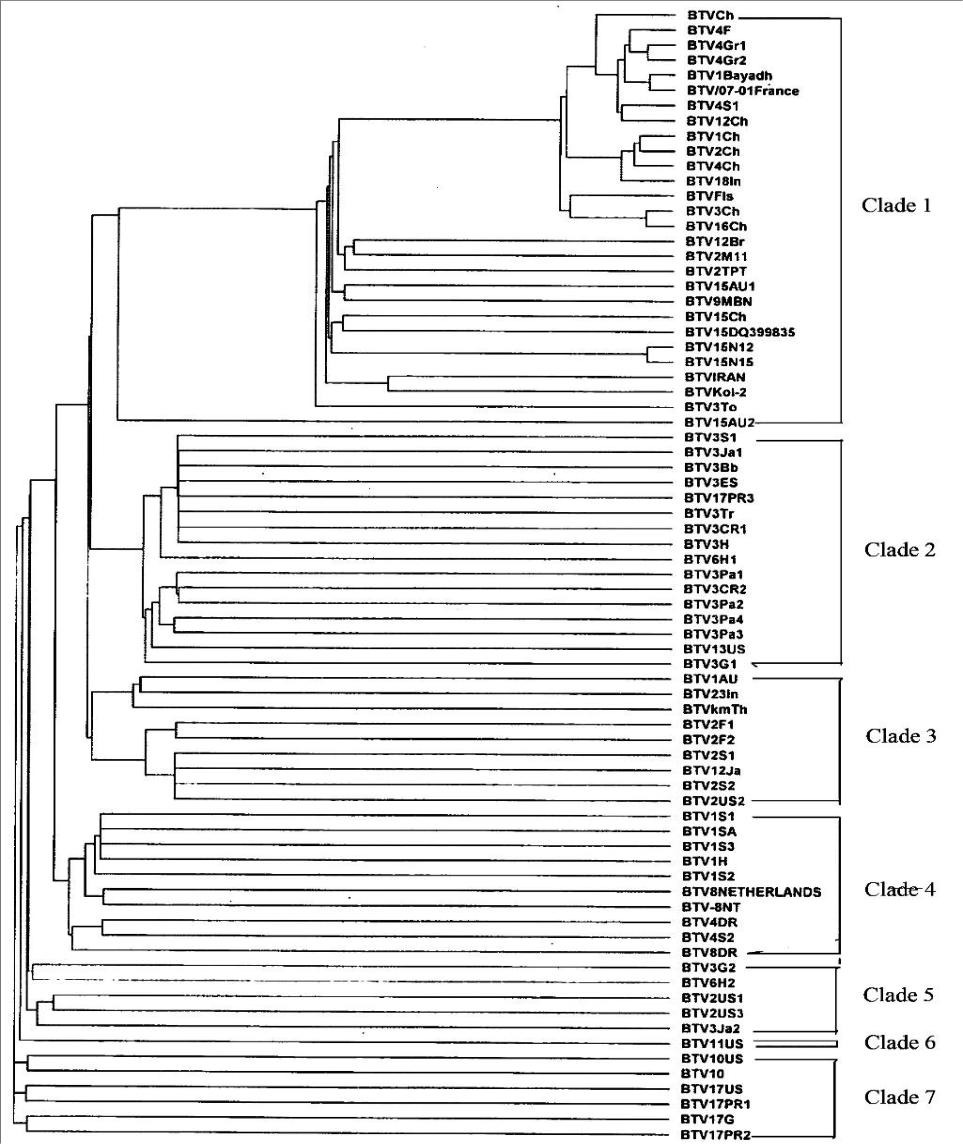 Figure 3
Introduction
Bluetongue (BT) is, one of the World Organization for Animal Health listed diseases of sheep and goats and also endemic to India, causing suggestive financial losses to the small ruminant industry (OIE 2018). The disease is caused by bluetongue virus (BTV) that belongs to the genus Orbivirus of family Reoviridae and subfamily Sedoreovirinae (ICTV 2011) [11] . The disease is chiefly transmitted by the bite of a Culicoides midge (Mellor P S et al., 1995) [14] , occasionally by direct contact (Battern C., 2014 and Breard et al., 2018) [1] and also by vertical (transplacently) routes (Saegerman C et al., 2011) [20] . Presently there are 29 different serotypes of BTV are circulating worldwide (Thota et al., 2021) [24] . This disease is endemic in India with a total of 24 serotypes reported and were predominantly reported from Southern states of Peninsular India (Thota et al., 2021 and Reddy Y V et al., 2016) [24,18] . The genome of BTV is consisting of double-stranded RNA (dsRNA) in the form of 10 linear segments. These 10 segments code for both nonstructural and structural proteins. (Bommineni et al., 2008. Rao PP et al., 2012 and Maan NS et al., 2012.) [2,17,13] . The VP7 protein is encoded by segment 7 of BTV genome and is reasonably conserved. Researchers observed that this VP7 protein is showing serological cross-reactions between different isolates within separate Orbivirus serogroups (Huismans and Erasmus, 1981; Gumn and Newman, 1982) [10,9] . For topotyping or geo-typing purposes, the serogroup specific genes such as VP3 (Gould and Pitchard, 1990) [8] VP7 (Bonneau et al., 2000 and Wilson et al., 2000) [4, 27] and S10 (Bonneau et al., 1999) [3] are considered as good targets. The VP7 protein, which is amenable for cell tropism of BTV in the insect vector, has been progressing with different species of culicoides existing in numerous regions of the world to configure diversified topotypes (Bonneau et al., 2000) [4] . Thorough genetic knowledge on segment 7 (VP7) gene may be helpful not only to anticipate variations among the Indian isolates but also to track the origin of BTV and its spread, to characterize the strain, to genotype, to produce vaccine and for development of drugs. The present study was taken up with the objectives of molecular characterization of Bluetongue virus serotype 2 based on VP7 gene.
Materials and Methods
In this study, BTV serotype 2 which we used was serotyped at serotyping Centre, Haryana Agricultural University, Hissar under All India Network Project on Bluetongue disease. BHK 21 cell lines were used for passaging of Bluetongue virus (for five times). Acid Phenol method was used for extraction of RNA from BTV infected cell cultures as described by earlier (Chomczynski and Sacchi, 1987) [6] and later the quality of extracted RNA was assessed by 1% agarose gel electrophoresis. The amplification method standardized by Wade Evans et al. (1990) [26] based on segment 7 sequence of BTV-1 South Africa (GenBank Acc. No. X53740) was used for multiplication of segment 7 gene. The primers used were mentioned in the table 1. Amplification of cDNA was done as described earlier (Sonali et al., 2017) [21] . The cycling conditions were mentioned in the table 5. The amplified product was confirmed by subjecting it to 1% agarose gel electrophoresis. The conformed amplicon was purified as per the method described earlier (Sonali et al., 2017) [21] and then sequenced at M/s Bioserve Biotechnologies Ltd, Hyderabad, using PCR sequencing method in Beckman CEQTM 8000 Genetic Analysis System using S7 gene specific primers. The obtained VP 7 gene sequence was aligned with the sequences available in the database by applying NCBI BLAST (www.ncbi.nlm.nih/gov/blast) to confirm their identity. Further, Multiple alignment was done with 75 different BTV segment 7 gene sequences obtained from Genbank and then cladogram was developed by loading the above sequences in the CLUSTAL W (www.ebi.ac.uk/clustalw) software (Thompson et al., 1997) [23] .
| BTV serotype | Relation with other BTV isolates | % identity |
|---|---|---|
| BTV-2 (M11) | BTV-15 (N12) | 73 |
| BTV-15AU | 75 | |
| BTV-15Ch | 66 | |
| BTV kmTh | 74 |
Table text extracted from the original PDF; superscript letters are shown inline. The original table image is below.
View original table image
Results and Discussion
The dsRNA was extracted from BTV-2isolate infected BHK 21 cell cultures and subjected to 1% agarose gel electrophoresis procedure, revealed the segmented genome pattern with 10 bands including two inseparable bands (Fig 1) which is a distinctive feature of BTV nucleic acid. Determining RNA bands were not clear for two segments. The RT-PCR was optimized for VP7gene of BTV serotype 2(M11) as a specific band of 1156 bp was identified by 1% agarose gel electrophoresis (Fig. 2). The sequencing of VP7 gene of BTV serotype 2 was performed by using VP7 gene specific forward (F) and reverse (R) primers and the reverse complementary sequence obtained using reverse primer was lined with the forward sequence to attain full length gene sequence. By using the available sequences in Genbank database, the sequences were compared with help of Clustal W software. The percentage of homogeneity was shown in table 1. [21] . Further analysis revealed that there was 73% homogeneousness between BTV-2 (M11) and BTV-15 (N12) isolates and the similar results were reported by Sonali et al., 2017 [21] . BTV-2 (M11) was closely compared to BTV-12 Brazil and BTVTPT. Nucleotide homology of segment 7
(S7) between Indian isolates of BTV-2, 9 and BTV-10 US was 79% (Prasad 2005). A close association was observed between BTV -15 isolate from Indian and BTV-10 and BTV-17 isolates from USA by Dalal et al. (2008) [7] . Kowalik et al.
(1990) [12] reported that there was 7-20% of divergence was observed among the BTV -2, 10, 11, 13 and 17 with BTV -13 and announced it is most divergent serotype after the supervising the cloning and sequencing of VP7 gene of all the 5 US serotypes. The results of this study reported that BTV-2 (M11) isolate (Indian) might have been emerged from Brazil or Tirupati strain. Currently, the data on available sequences is not reasonable to provide strong outcomes. Data of other preserved genes of BTV 2 might be more beneficial in to potyping than that of VP7 gene. Further the reassortment and genetic drift may be addressing a significant purpose in emergence of new BTV strains.
Figures and tables from the paper
| Sl. No. | Components to be added | Quantity |
|---|---|---|
| 1 | Forward primer (20 pmol/µl) | 1µl |
| 2 | Reverse primer (20 pmol/µl) | 1µl |
| 3 | RNA | 8µl |
Table text extracted from the original PDF; superscript letters are shown inline. The original table image is below.
View original table image
| Sl. No | cDNA mix components | Quantity |
|---|---|---|
| 1 | 5X RT Buffer | 4.0 µl |
| 2 | DTT (0.1M) | 1.0 µl |
| 3 | RNase out (40 U/µl) | 0.5 µl |
| 4 | AMV RT (15 U/µl) | 1.0 µl |
| 5 | dNTPs | 2.0 µl |
| 6 | NFW | 1.5 µl |
Table text extracted from the original PDF; superscript letters are shown inline. The original table image is below.
View original table image
References
25 in the original paper- Batten C, Darpel K, Henstock M, Fay P, Veronesi E, Gubbins S, et al. Evidence for transmission of bluetongue virus serotype 26 through direct contact. PLoS One. 2014;9(5):e96049.
- Bommineni YR, Reddy YN, Rao PP, Sudheer D, Susmitha B, Sarma BJ, et al. Isolation of bluetongue virus serotype 2, 9 and 15 from sheep in India. Veterinary Record. 2008;163(18):545-546.
- Bonneau KR, Zhang N, Zhu J, Zhang F, Li Z, Zhang K, et al. Sequence comparison of the L2 and S10 genes of bluetongue viruses from the United states and the people's republic China. Virus Research. 1999;61(2):153-60.
- Bonneau KR, Zhang NZ, Wilson WC, Zhu JB, Zhang FQ, Li ZH, et al. Phylogenetic analysis of the S7 gene does not segregate Chinese strains of bluetongue virus into a single topotype. Archives of Virology. 2000;145(6):1163-71.
- Bréard E, Schulz C, Sailleau C, Bernelin Cottet C, Viarouge C, Vitour D, et al. Bluetongue virus serotype 27: experimental infection of goats, sheep and cattle with three BTV27 variants reveal atypical characteristics and likely direct contact transmission BTV-27 between goats. Transbound. Emerging Infectious Diseases. 2018;65(2):e251-63.
- Chomczynski, Sacchi N. Single step method of RNA Isolation byAcid Guanidinium Thiocyanate-PhenolChloroform Extraction. Analytical Biochemistry. 1987;162(1):156-159.
- Dalal S, Prasad G, Minakshi Sushila M. VP7 Gene based molecular Characterization of two Indian isolates of bluetongue virus. Haryana Veterinarian. 2008;47:41-45.
- Gould AR, Pritchard LI. Relationships amongst bluetongue viruses revealed by comparisons of capsid and outer coat protein nucleotide sequences. Virus Research. 1990;17(1):31-52.
- Gumm ID, Newman JF. The preparation of purified bluetongue virus group antigen for use as a diagnostic reagent. Archives of Virology. 1982;72:83-93.
- Huismans H, Erasmus BJ. Identification of the serotype specific and group specific antigens of bluetongue virus. Onderstepoort Journal of Veterinary Research. 1981;48(2):51-58.
- ICTV. Reoviridae -dsRNA Viruses -dsRNA Viruses - International Committee on Taxonomy of Viruses (ICTV) [Internet]; c2019. [cited 2019 Nov 8], 2011. Available from: https: //talk.ictvonline.org/ictvreports/ictv_9th_report/dsrnaviruses2011/w/dsrnaviruses/188/ reoviridae.
- Kowalik FT, Yang Y, Li KJ. Molecular cloning and comparative sequence analysis of bluetongue virus S1 segments by selective synthesis of specific full-length DNA of dsRNA genes. Virology. 1990;177(2):820-823.
- Maan NS, Maan S, Belaganahalli MN, Ostlund EN, Johnson DJ, Nomikou K, et al. Identification and differentiation of the twenty-six bluetongue virus serotypes by RT-PCR amplification of the serotypespecific genome segment 2. PLOS ONE. 2012;7(2):e32601.
- Mellor PS, Boorman J. The transmission and geographical spread of African horse sickness and bluetongue viruses. Annals of Tropical Medicine and Parasitology. 1995;89(1):1-15.
- Rao PP, Reddy YN, Hedge NR. Complete Genome Sequence of Bluetongue virus Serotype 9: Implications for Serotyping. Journal of Virology. 2012;86(15):8333.
- Reddy YV, Krishnajyothi Y, Susmitha B, Devi BV, Brundavanam Y, Gollapalli SR, et al. Molecular typing of bluetongue viruses isolated over a decade in South India. Transboundary and Emerging Diseases. 2016;63(5):e412-8.
- Roy P. From genes to complex structure of bluetongue virus and their efficacy as vaccines. Veterinary Microbiology. 1992;33(1-4):155-168.
- Saegerman C, Bolkaerts B, Baricalla C, Raes M, Wiggers L, de Leeuw I, et al. The impact of naturally-occurring, trans-placental bluetongue virus serotype-8 infection on reproductive performance in sheep. Veterinary Journal. 2011;187(1):72-80.
- Sonali M, Reddy YN, Dhanalakshmi K, Reddy MR. Vp7 gene based phylogenetic analysis of blue tongue virus serotype 15. International Journal of Science, Environment and Technology. 2017;6(3):1660-1665
- Squire KRE, Chuang RY, Osburn BI, Knydson DL, Doi RH. Rapid methods for comparing the double stranded RNA genome profiles of bluetongue virus. Veterinary Microbiology. 1983;8(6):543-553.
- Thompson JD, Gibson TJ, Plewniak F, Jeanmougin F, Higgins DG. The Clustal X windows interface: flexible strategies for multiple sequence alignment aided by quality analysis tools. Nucleic Acids Research. 1997;25:4876-4882.
- Thota R, Ganji VK, Machanagari S, Yella NR, Buddala B, Yadlapati K, et al. VP2 Gene-Based Molecular Evolutionary Patterns of Major Circulating Bluetongue Virus Serotypes Isolated during 2014-2018 from Telangana and Andhra Pradesh States of India. Intervirology. 2021;64(1):8-15.
- Verwoerd DW. Purification and characterization of bluetongue virus. Virol. 1969;38(2):203-212.
- Wade Evans AM, Mertens PPC, Bostock CJ. Development of the polymerase chain reaction for the detection of bluetongue virus in tissue samples. Journal of Virological Methods. 1990;30(1):15-24.
- Wilson WC, Ma HC, Venter EH, vanDjik AA, Seal BS Mecham JO. Phylogenetic relationships of bluetongue viruses based on gene S7. Virus Research. 2000;67(2):141-51.